BINOCULAR
SINGLE VISION
MARIA SAEED
CONTENTS:
• Brief Introduction
• Development of BSV
• Pre-requisite of BSV
• Retinal Correspondence and types
• Grades
• Abnormalities of BSV
INTRODUCTION
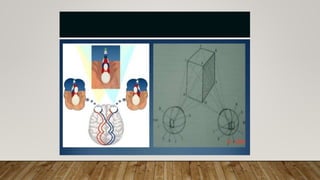
• BSV is a type of vision in which two eyes is able to perceive a single
three-dimensional image of its surroundings.
• A state of simultaneous vision which is achieved by co-ordinated use of
both eyes so that the separate and slightly dissimilar images arising in each
eye as a single image.
DEVELOPMENT OF BSV:
• 1-3 months: superimpose images are formed.
• 3 months: binouclar fusion.
• 3-6 months: stereopsis.
PRE- REQUISITE OF BINOCULAR VISION:
• Accurate co-ordination between two eyes in all direction of gaze.
• Ability of the brain to cause fusion o two slightly different images.
• Normal Visual Pathway.
RETINAL CORRESPONDENCE:
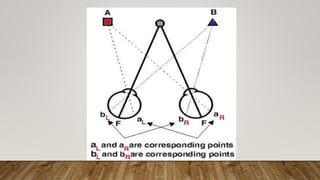
• Retinal elements of two eyes that share a common subjective visual direction is
called retinal correspondence.
• Retinal correspondence is of two types:
Normal Retinal Correspondence.
Abnormal Retinal Correspondence.
GRADES OF BSV:
• There are 3 grades of binocular vision that are given by Worth:
Grade 1: Simultaenous Perception
Grade 2: Fusion
Grade 3: Steropsis
SIMULTANEOUS PERCEPTION:
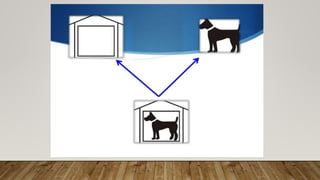
• Silmutaneous perception exists when signal transmitted from two eyes to
the visual cortex are preceived at the same time.
• Ability to see two dismiliar objects simultaneously.
• It does not imply superimposition of both objects.
FUSION:
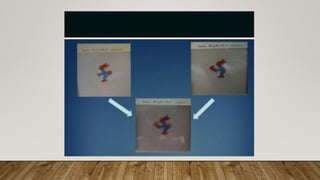
• It is ability of the two eyes to produce a composite picture from two
similiar pictures each of which is incomplete in a small detail.
• In other words, unification of visual objects into a single percpect that is
made possible by the simultaenous simulation of corresponding retinal
areas.
STEROPSIS:
• A greek word : stepos= solid, opsis= look.
• Viusal appreciation of three dimensions.
• Ability to obtain impression of depth by superimposition of rwo images of
same object, seen from two slightly different angle.
• Steropsis and depth perceptionare not synonymous.
DIPLOPIA:
• When non-corresponding retinal areas are not stimulated by similar stimuli.
• One object is seen at two different locations in the field.
Binocular Single Vision

Binocular Single Vision

  • 1.
  • 2.
    CONTENTS: • Brief Introduction •Development of BSV • Pre-requisite of BSV • Retinal Correspondence and types • Grades • Abnormalities of BSV
  • 3.
    INTRODUCTION • BSV isa type of vision in which two eyes is able to perceive a single three-dimensional image of its surroundings. • A state of simultaneous vision which is achieved by co-ordinated use of both eyes so that the separate and slightly dissimilar images arising in each eye as a single image.
  • 5.
    DEVELOPMENT OF BSV: •1-3 months: superimpose images are formed. • 3 months: binouclar fusion. • 3-6 months: stereopsis.
  • 6.
    PRE- REQUISITE OFBINOCULAR VISION: • Accurate co-ordination between two eyes in all direction of gaze. • Ability of the brain to cause fusion o two slightly different images. • Normal Visual Pathway.
  • 7.
    RETINAL CORRESPONDENCE: • Retinalelements of two eyes that share a common subjective visual direction is called retinal correspondence. • Retinal correspondence is of two types: Normal Retinal Correspondence. Abnormal Retinal Correspondence.
  • 9.
    GRADES OF BSV: •There are 3 grades of binocular vision that are given by Worth: Grade 1: Simultaenous Perception Grade 2: Fusion Grade 3: Steropsis
  • 10.
    SIMULTANEOUS PERCEPTION: • Silmutaneousperception exists when signal transmitted from two eyes to the visual cortex are preceived at the same time. • Ability to see two dismiliar objects simultaneously. • It does not imply superimposition of both objects.
  • 12.
    FUSION: • It isability of the two eyes to produce a composite picture from two similiar pictures each of which is incomplete in a small detail. • In other words, unification of visual objects into a single percpect that is made possible by the simultaenous simulation of corresponding retinal areas.
  • 14.
    STEROPSIS: • A greekword : stepos= solid, opsis= look. • Viusal appreciation of three dimensions. • Ability to obtain impression of depth by superimposition of rwo images of same object, seen from two slightly different angle. • Steropsis and depth perceptionare not synonymous.
  • 16.
    DIPLOPIA: • When non-correspondingretinal areas are not stimulated by similar stimuli. • One object is seen at two different locations in the field.