VISCERAL
LARVA
MIGRANS
 typically found in young children.
 occurs when a nematode larvae gain
entry to extraintestinal viscera of the
host.
 results in phagocytic attack on the
larvae.
 caused by: Toxocara canis
Toxocara cati
Toxocara canis (dog ascarid)
• DH: Dogs and other canids
• PH: Rodents
• AH: Human
Morphology
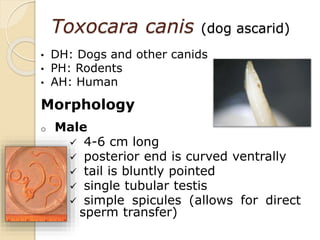
o Male
 4-6 cm long
 posterior end is curved ventrally
 tail is bluntly pointed
 single tubular testis
 simple spicules (allows for direct
sperm transfer)
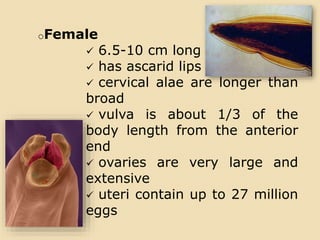
oFemale
 6.5-10 cm long
 has ascarid lips
 cervical alae are longer than
broad
 vulva is about 1/3 of the
body length from the anterior
end
 ovaries are very large and
extensive
 uteri contain up to 27 million
eggs
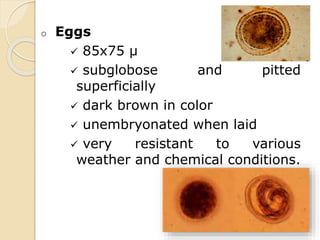
o Eggs
 85x75 µ
 subglobose and pitted
superficially
 dark brown in color
 unembryonated when laid
 very resistant to various
weather and chemical conditions.
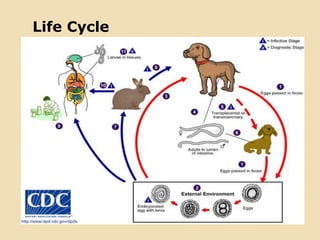
Life Cycle
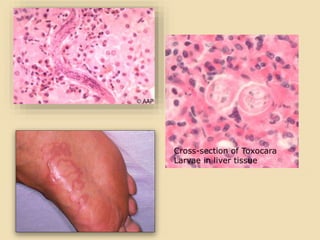
Cross-section of Toxocara
Larvae in liver tissue
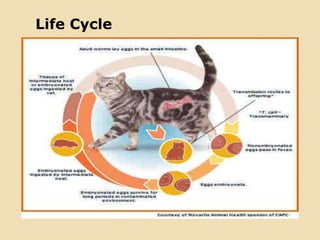
Toxocara cati (cat ascarid)
• DH: Cats
• PH: Earthworms, Ants and Other soil-
dwelling invertebrates
• AH: Human
Morphology
o Male
 4-6 cm long
 has typical slender shape
 thin head and tail
 has simple chitinous spicules
o Female
 4-12 cm long
 has ascarid lips
 pair of broad, lateral cervical
alae
 large ovaries
 uteri contain up to 30 million
eggs
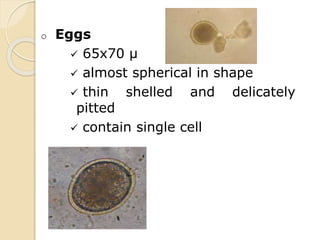
o Eggs
 65x70 µ
 almost spherical in shape
 thin shelled and delicately
pitted
 contain single cell
Life Cycle
Symptoms
 Physical symptoms: includes fatigue,
anorexia, weight loss, pneumonia, fever,
cough, bronchospasm, abdominal pain,
headaches, rashes, and, occasionally
seizures
 Clinical symptoms: depend on the
localization and degree of pathological
changes and include non-specific and
varied conditions such as eosinophilia,
leukocytosis, hepatomegaly, mild
gastrointestinal disorders, asthmatic
attacks, pneumonic symptoms, urticarial
skin changes, central nervous disorders
with paralyses
Diagnosis
 Clinical Picture – ectopic foci
 ELISA using secretory excretory
antigen
 Biopsy – liver (demonstrate the
characteristic granuloma surrounding
a juvenile)
 Serology – hemagglutination test
– microprecipitation test
Prevention
• Periodic deworming of household
dogs and cats
• Wash your hands with soap and
water after playing with your pets or
other animals, after outdoor
activities, and before handling food.
• Clean your pet's living area at least
once a week.
• Prevent children from eating dirt.

Visceral Larva Migrans

  • 1.
  • 2.
     typically foundin young children.  occurs when a nematode larvae gain entry to extraintestinal viscera of the host.  results in phagocytic attack on the larvae.  caused by: Toxocara canis Toxocara cati
  • 3.
    Toxocara canis (dogascarid) • DH: Dogs and other canids • PH: Rodents • AH: Human Morphology o Male  4-6 cm long  posterior end is curved ventrally  tail is bluntly pointed  single tubular testis  simple spicules (allows for direct sperm transfer)
  • 4.
    oFemale  6.5-10 cmlong  has ascarid lips  cervical alae are longer than broad  vulva is about 1/3 of the body length from the anterior end  ovaries are very large and extensive  uteri contain up to 27 million eggs
  • 5.
    o Eggs  85x75µ  subglobose and pitted superficially  dark brown in color  unembryonated when laid  very resistant to various weather and chemical conditions.
  • 6.
  • 7.
  • 8.
    Toxocara cati (catascarid) • DH: Cats • PH: Earthworms, Ants and Other soil- dwelling invertebrates • AH: Human Morphology o Male  4-6 cm long  has typical slender shape  thin head and tail  has simple chitinous spicules
  • 9.
    o Female  4-12cm long  has ascarid lips  pair of broad, lateral cervical alae  large ovaries  uteri contain up to 30 million eggs
  • 10.
    o Eggs  65x70µ  almost spherical in shape  thin shelled and delicately pitted  contain single cell
  • 11.
  • 12.
    Symptoms  Physical symptoms:includes fatigue, anorexia, weight loss, pneumonia, fever, cough, bronchospasm, abdominal pain, headaches, rashes, and, occasionally seizures  Clinical symptoms: depend on the localization and degree of pathological changes and include non-specific and varied conditions such as eosinophilia, leukocytosis, hepatomegaly, mild gastrointestinal disorders, asthmatic attacks, pneumonic symptoms, urticarial skin changes, central nervous disorders with paralyses
  • 13.
    Diagnosis  Clinical Picture– ectopic foci  ELISA using secretory excretory antigen  Biopsy – liver (demonstrate the characteristic granuloma surrounding a juvenile)  Serology – hemagglutination test – microprecipitation test
  • 14.
    Prevention • Periodic dewormingof household dogs and cats • Wash your hands with soap and water after playing with your pets or other animals, after outdoor activities, and before handling food. • Clean your pet's living area at least once a week. • Prevent children from eating dirt.