

Viral gastrointestinal infections
(polio & echoviruses)
Submitted to Madam Saba Farooq
Submitted by: Shumailah Nayab
Roll # AP402818
Gastrointestinal infections
Infections caused by microorganisms in gastrointestinal
tract by the organisms which are not resident flora of
individual
These infections may be
 Confined to GI tract
Or
 initiated in the gut before spreading to other parts of
the body
Terms used in GI tract infections
 Gastroenteritis: inflammation of the stomach and intestines
rotaviruses, noroviruses
 Diarrhoea: a condition in which faeces are discharged from
the bowels frequently and in a liquid form rotaviruses,
caliciviruses, adenoviruses, parvoviruses
 Dysentery: inflammatory disorder of GI tract (large intestine)
associated with pus and blood in faeces
 Enterocolitis: inflammation involving the mucosa of intestines
enteroviruses, rotaviruses, Norwalk virus, adenoviruses
Enteroviruses
 genus of the family picornaviridae (70 serotypes)
 ss RNA,+ sense, naked virus with icosahedral symmetry
 stable to acid pH and resistant to lipid solvents since there is no envelope
 capsid has 60 copies each of 4 proteins, VP1, VP2, VP3 and VP4
 Enterovirus is divided into following groups
 Poliovirus
 Echovirus
 Coxsackievirus (a & b)
poliovirus
3 serotypes (distinct variations within a specie)
Humans are the only natural hosts for
polioviruses
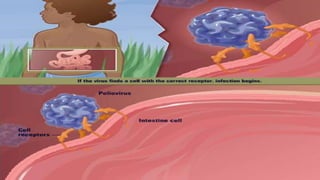
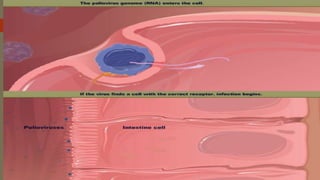
Infection occurs via the faecal–oral route and
replication occurs in the alimentary tract
poliovirus infection is asymptomatic
Pathogenesis
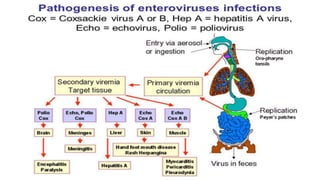
 replication occurs in the alimentary tract
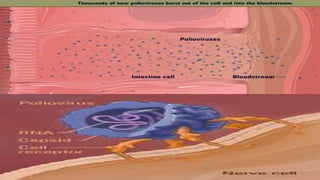
 Virus is shed in the faeces of infected individuals
 presence of viremia (virus in the bloodstream) occurs for
short time period
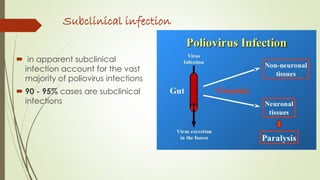
Subclinical infection
 in apparent subclinical
infection account for the vast
majority of poliovirus infections
 90 - 95% cases are subclinical
infections
Abortive infection
 4 - 8% cases are abortive infections
 virus spreads and replicates in other sites such as brown
fat, reticuloendothelial tissue, and muscles
 causes secondary viremia
symptoms
 fever
 headache
 sore throat
Paralytic poliomyelitis (Major illness)
 occurs in less than 1% of poliovirus infections
 virus enters the CNS and replicates in motor neurons within the spinal
cord, brain stem, or motor cortex
 cause the selective destruction of motor neurons leading to temporary or
permanent paralysis
 muscle pain and spasms are observed in paralysis
 it leads to respiratory arrest and death (rare)
How a gastrointestinal infection cause neurological
infection ????????
 This mechanism is poorly understood, but 3 hypothesis have been
suggested
primary viremia is required
1-virions pass directly from the blood into the central nervous system by
crossing the blood–brain barrier independent of CD155
2- virions are transported from peripheral tissues that have been bathed in the
viremic blood, for example muscle tissue, to the spinal cord through nerve
pathways via retrograde axonal transport
3- virus is imported into the CNS via infected monocytes or macrophages
Laboratory Diagnosis
Virus isolation:
 Cerebrospinal fluid usually show the changes typical for that of viral
meningitis with lymphocytosis and a high protein level
 molecular assays
 Specific sera neutralize the cytopathic effects, it can be identified
Serology:
 not widely used
Prevention
1. Inactivated Salk Vaccine:
formalin inactivated intramuscular polio vaccine (IPV)
It contains an injected dose of three antigenic strains of killed polio virus
2. Live Attenuated Vaccine:
live attenuated oral polio vaccine (OPV)
induces long lasting immunity
induces IgA formation
Epidemiology
 Polioviruses are disseminated globally
 densely populated developing countries, almost 100% of the
population have Abs to all 3 types of the virus before 5 years of age
 Epidemics do not occur and paralytic disease is rare as the
incidence of paralytic poliomyelitis increases with age, especially
after 15 years of age
 Pakistan is one of three countries in the world where poliomyelitis is
still categorized as an endemic viral infection
ECHOvirus
 enteric cytopathic human orphan (ECHO) virus
 largest Enterovirus subgroup, 34 serotypes
 Cause opportunistic infections and diseases
 faecal-oral transmission
 its primary target is children and immuno compromised
people
 resistant to pH (3-10) and are ether and alcohol
pathogenesis
 replication begins in the pharynx or gut (M cells) after ingestion of
contaminated material
 virus spread to regional lymph nodes and cause subclinical transient
viremia, spread to liver, spleen, bone marrow, and distant lymph nodes
 Secondary sites of infection include the CNS, liver, spleen, bone marrow,
heart, and lungs
Epidemiology
 associated with both epidemic and endemic patterns of infection
 Infection rates vary with the season, geography, and the age and
socioeconomic status of the population
 Echovirus 9 was the most commonly reported enterovirus from 1970-2005
and accounted for 11.8% of reports with known serotypes
 Epidemics have been reported in Panama, Mexico, Switzerland, Cuba, the
United States, and Turkey. Asian-Pacific countries have reported major
enteroviral epidemics with significant morbidity and mortality
Diseases caused by echovirus
 Acute aseptic meningitis
 Encephalitis
 Rash
 Respiratory illness
 Herpangina
 Epidemic pleurodynia (Bornholm disease)- disease of muscle
 Paralysis
 Myocardial/pericardial disease
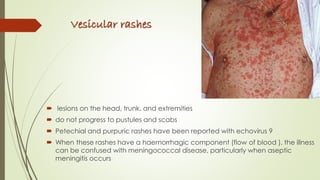
Vesicular rashes
 lesions on the head, trunk, and extremities
 do not progress to pustules and scabs
 Petechial and purpuric rashes have been reported with echovirus 9
 When these rashes have a haemorrhagic component (flow of blood ), the illness
can be confused with meningococcal disease, particularly when aseptic
meningitis occurs
Laboratory Diagnosis
Virus Isolation from
 faecal samples
 from the pharynx during the acute phase of the illness, especially in cases
with respiratory infections
Serological Techniques
 Neutralization tests are generally the best serological tests available
Direct detection of viral genomes
 PCR assays are becoming increasingly used
Prevention
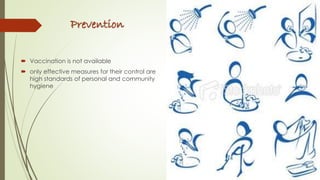
 Vaccination is not available
 only effective measures for their control are
high standards of personal and community
hygiene
References
 Acute Poliomyelitis at eMedicine Pediatric Poliomyelitis at eMedicine
 Charles Chan and Roberto Neisa. "Poliomyelitis". Brown University.
 ped/629 at eMedicine
 Ryan KJ; Ray CG, ed. (2004). Sherris Medical Microbiology (4th ed.).
McGraw Hill. pp. 537–9. ISBN 0-8385-8529-9.
 Yin-Murphy M, Almond JW (1996). Baron S; et al.,
eds. Picornavirues. in:Baron's Medical Microbiology (4th ed.). Univ of Texas
Medical Branch. ISBN 0-9631172-1-1.
 The facts about enterovirus D68". http://www.childrensmn.org/. Children's
Hospitals and Clinics of Minnesota.
Any question?????????
Viral gastrointestinal infections

Viral gastrointestinal infections

  • 1.
    Viral gastrointestinal infections (polio& echoviruses) Submitted to Madam Saba Farooq Submitted by: Shumailah Nayab Roll # AP402818
  • 2.
    Gastrointestinal infections Infections causedby microorganisms in gastrointestinal tract by the organisms which are not resident flora of individual These infections may be  Confined to GI tract Or  initiated in the gut before spreading to other parts of the body
  • 3.
    Terms used inGI tract infections  Gastroenteritis: inflammation of the stomach and intestines rotaviruses, noroviruses  Diarrhoea: a condition in which faeces are discharged from the bowels frequently and in a liquid form rotaviruses, caliciviruses, adenoviruses, parvoviruses  Dysentery: inflammatory disorder of GI tract (large intestine) associated with pus and blood in faeces  Enterocolitis: inflammation involving the mucosa of intestines enteroviruses, rotaviruses, Norwalk virus, adenoviruses
  • 4.
    Enteroviruses  genus ofthe family picornaviridae (70 serotypes)  ss RNA,+ sense, naked virus with icosahedral symmetry  stable to acid pH and resistant to lipid solvents since there is no envelope  capsid has 60 copies each of 4 proteins, VP1, VP2, VP3 and VP4  Enterovirus is divided into following groups  Poliovirus  Echovirus  Coxsackievirus (a & b)
  • 6.
    poliovirus 3 serotypes (distinctvariations within a specie) Humans are the only natural hosts for polioviruses Infection occurs via the faecal–oral route and replication occurs in the alimentary tract poliovirus infection is asymptomatic
  • 7.
    Pathogenesis  replication occursin the alimentary tract  Virus is shed in the faeces of infected individuals  presence of viremia (virus in the bloodstream) occurs for short time period
  • 11.
    Subclinical infection  inapparent subclinical infection account for the vast majority of poliovirus infections  90 - 95% cases are subclinical infections
  • 12.
    Abortive infection  4- 8% cases are abortive infections  virus spreads and replicates in other sites such as brown fat, reticuloendothelial tissue, and muscles  causes secondary viremia symptoms  fever  headache  sore throat
  • 13.
    Paralytic poliomyelitis (Majorillness)  occurs in less than 1% of poliovirus infections  virus enters the CNS and replicates in motor neurons within the spinal cord, brain stem, or motor cortex  cause the selective destruction of motor neurons leading to temporary or permanent paralysis  muscle pain and spasms are observed in paralysis  it leads to respiratory arrest and death (rare)
  • 14.
    How a gastrointestinalinfection cause neurological infection ????????  This mechanism is poorly understood, but 3 hypothesis have been suggested primary viremia is required 1-virions pass directly from the blood into the central nervous system by crossing the blood–brain barrier independent of CD155 2- virions are transported from peripheral tissues that have been bathed in the viremic blood, for example muscle tissue, to the spinal cord through nerve pathways via retrograde axonal transport 3- virus is imported into the CNS via infected monocytes or macrophages
  • 15.
    Laboratory Diagnosis Virus isolation: Cerebrospinal fluid usually show the changes typical for that of viral meningitis with lymphocytosis and a high protein level  molecular assays  Specific sera neutralize the cytopathic effects, it can be identified Serology:  not widely used
  • 16.
    Prevention 1. Inactivated SalkVaccine: formalin inactivated intramuscular polio vaccine (IPV) It contains an injected dose of three antigenic strains of killed polio virus 2. Live Attenuated Vaccine: live attenuated oral polio vaccine (OPV) induces long lasting immunity induces IgA formation
  • 17.
    Epidemiology  Polioviruses aredisseminated globally  densely populated developing countries, almost 100% of the population have Abs to all 3 types of the virus before 5 years of age  Epidemics do not occur and paralytic disease is rare as the incidence of paralytic poliomyelitis increases with age, especially after 15 years of age  Pakistan is one of three countries in the world where poliomyelitis is still categorized as an endemic viral infection
  • 18.
    ECHOvirus  enteric cytopathichuman orphan (ECHO) virus  largest Enterovirus subgroup, 34 serotypes  Cause opportunistic infections and diseases  faecal-oral transmission  its primary target is children and immuno compromised people  resistant to pH (3-10) and are ether and alcohol
  • 19.
    pathogenesis  replication beginsin the pharynx or gut (M cells) after ingestion of contaminated material  virus spread to regional lymph nodes and cause subclinical transient viremia, spread to liver, spleen, bone marrow, and distant lymph nodes  Secondary sites of infection include the CNS, liver, spleen, bone marrow, heart, and lungs
  • 20.
    Epidemiology  associated withboth epidemic and endemic patterns of infection  Infection rates vary with the season, geography, and the age and socioeconomic status of the population  Echovirus 9 was the most commonly reported enterovirus from 1970-2005 and accounted for 11.8% of reports with known serotypes  Epidemics have been reported in Panama, Mexico, Switzerland, Cuba, the United States, and Turkey. Asian-Pacific countries have reported major enteroviral epidemics with significant morbidity and mortality
  • 21.
    Diseases caused byechovirus  Acute aseptic meningitis  Encephalitis  Rash  Respiratory illness  Herpangina  Epidemic pleurodynia (Bornholm disease)- disease of muscle  Paralysis  Myocardial/pericardial disease
  • 22.
    Vesicular rashes  lesionson the head, trunk, and extremities  do not progress to pustules and scabs  Petechial and purpuric rashes have been reported with echovirus 9  When these rashes have a haemorrhagic component (flow of blood ), the illness can be confused with meningococcal disease, particularly when aseptic meningitis occurs
  • 23.
    Laboratory Diagnosis Virus Isolationfrom  faecal samples  from the pharynx during the acute phase of the illness, especially in cases with respiratory infections Serological Techniques  Neutralization tests are generally the best serological tests available Direct detection of viral genomes  PCR assays are becoming increasingly used
  • 24.
    Prevention  Vaccination isnot available  only effective measures for their control are high standards of personal and community hygiene
  • 25.
    References  Acute Poliomyelitisat eMedicine Pediatric Poliomyelitis at eMedicine  Charles Chan and Roberto Neisa. "Poliomyelitis". Brown University.  ped/629 at eMedicine  Ryan KJ; Ray CG, ed. (2004). Sherris Medical Microbiology (4th ed.). McGraw Hill. pp. 537–9. ISBN 0-8385-8529-9.  Yin-Murphy M, Almond JW (1996). Baron S; et al., eds. Picornavirues. in:Baron's Medical Microbiology (4th ed.). Univ of Texas Medical Branch. ISBN 0-9631172-1-1.  The facts about enterovirus D68". http://www.childrensmn.org/. Children's Hospitals and Clinics of Minnesota.
  • 26.