
Vestibulo-Ocular Reflex
Asad Iqbal
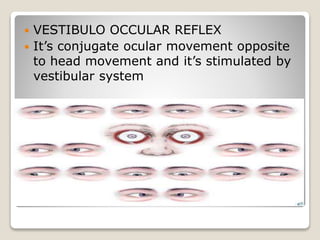
 VESTIBULO OCCULAR REFLEX
 It’s conjugate ocular movement opposite
to head movement and it’s stimulated by
vestibular system
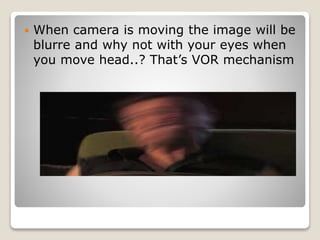
 When camera is moving the image will be
blurre and why not with your eyes when
you move head..? That’s VOR mechanism
 VOR is reflex where Activation of
vestibular system causes eye movements
 This Reflex function stabilize image on
retina
 During head movements producing eyes
movements in opposite direction to head
movement thus preservering(orginal
state) on the central visual field
 Vestibular apartus has sensory system
(semicircular canals) which is located in
inner layer of ear which can detect the
rotational movement
 Whenever head move the motion sensor
activited and vestibular stimulate the
nerves which control extra ocular muscle.
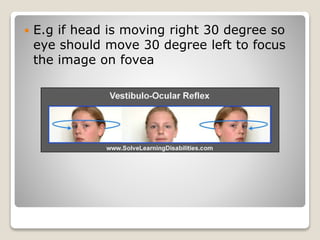
 E.g if head is moving right 30 degree so
eye should move 30 degree left to focus
the image on fovea
 HEAD THRUST
 We give a target to patient to fix eye and
we move the patient head to check VOR
where eyes will be moving opposite
direction to fix the image on fovea.
Vestibulo ocular reflex

Vestibulo ocular reflex

  • 1.
  • 2.
     VESTIBULO OCCULARREFLEX  It’s conjugate ocular movement opposite to head movement and it’s stimulated by vestibular system
  • 3.
     When camerais moving the image will be blurre and why not with your eyes when you move head..? That’s VOR mechanism
  • 4.
     VOR isreflex where Activation of vestibular system causes eye movements  This Reflex function stabilize image on retina  During head movements producing eyes movements in opposite direction to head movement thus preservering(orginal state) on the central visual field
  • 5.
     Vestibular apartushas sensory system (semicircular canals) which is located in inner layer of ear which can detect the rotational movement  Whenever head move the motion sensor activited and vestibular stimulate the nerves which control extra ocular muscle.
  • 6.
     E.g ifhead is moving right 30 degree so eye should move 30 degree left to focus the image on fovea
  • 7.
     HEAD THRUST We give a target to patient to fix eye and we move the patient head to check VOR where eyes will be moving opposite direction to fix the image on fovea.