How to distinguish different verb tenses
when tutoring
 Clear

and easy to understand
 Consistency
 To express the event with proper verb tenses
 Underline

the possible verbs that show or
imply some action.
 Change the time of the sentence and find
the word that changes.
 *Some verbs may contain two words “ex: I
am going to school.”
Do all the verbs belong to the time cluster
(present, past, or future) in one paragraph?
 If yes, ask yourself that does each verb convey
precisely the time you had in mind, the
relationship to other times or actions, and the
idea of an action completed or in progress?
 If no, look carefully at the verbs that do not fit.
Is there a reason for the switch in time? Then,
rewrite the verb that provides the appropriate
indication of time.

1. Present
2. Past
3. future
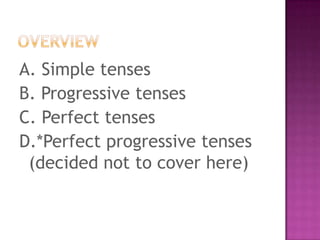
A. Simple tenses
B. Progressive tenses
C. Perfect tenses
D.*Perfect progressive tenses
(decided not to cover here)
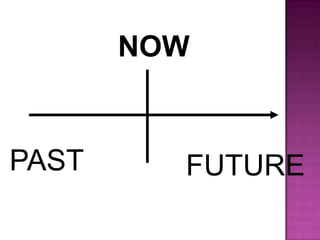
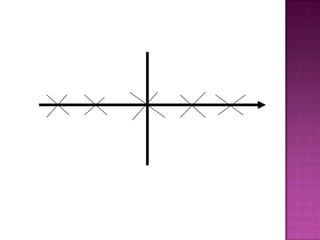
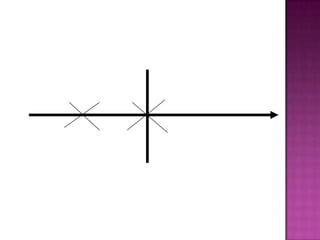
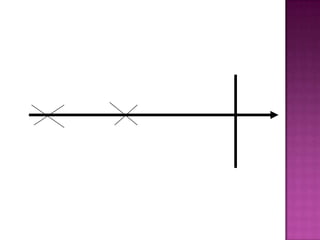
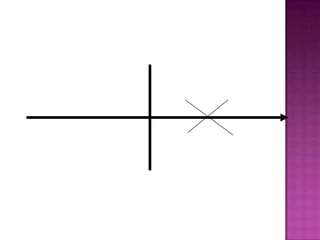
NOW

PAST

FUTURE
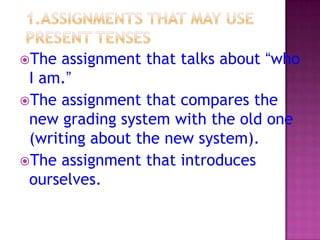
The

assignment that talks about “who
I am.”
The assignment that compares the
new grading system with the old one
(writing about the new system).
The assignment that introduces
ourselves.
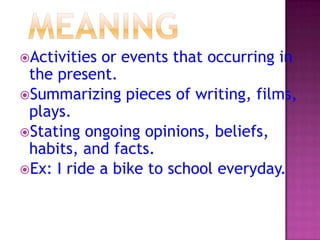
Activities

or events that occurring in
the present.
Summarizing pieces of writing, films,
plays.
Stating ongoing opinions, beliefs,
habits, and facts.
Ex: I ride a bike to school everyday.
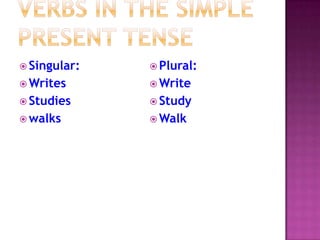
 Singular:

 Plural:

 Writes

 Write

 Studies

 Study

 walks

 Walk
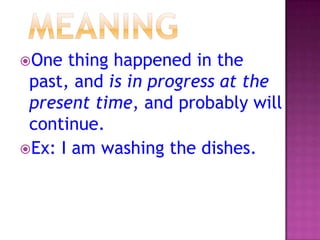
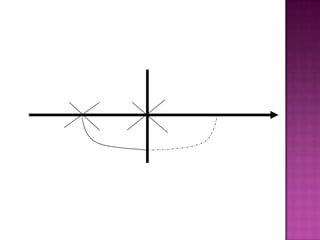
One

thing happened in the
past, and is in progress at the
present time, and probably will
continue.
Ex: I am washing the dishes.
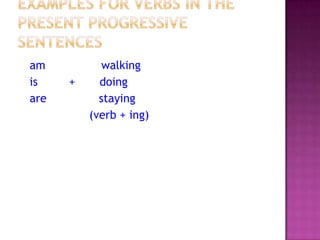
am
is
are

+

walking
doing
staying
(verb + ing)
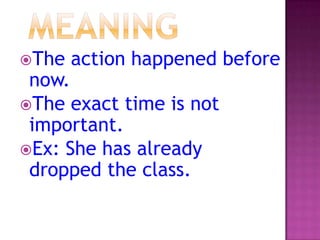
The

action happened before

now.
The exact time is not
important.
Ex: She has already
dropped the class.
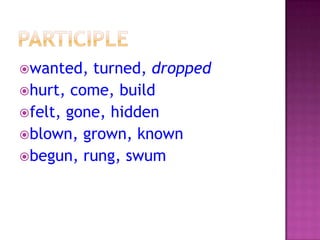
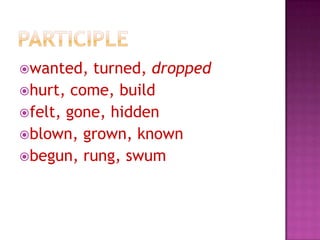
wanted,

turned, dropped
hurt, come, build
felt, gone, hidden
blown, grown, known
begun, rung, swum
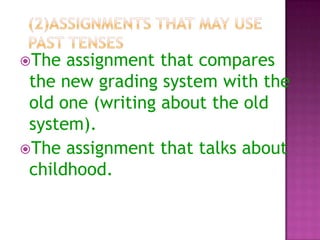
The

assignment that compares
the new grading system with the
old one (writing about the old
system).
The assignment that talks about
childhood.
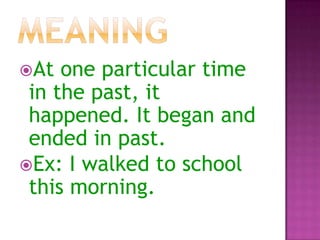
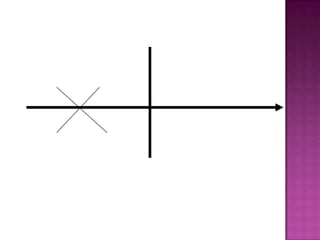
At

one particular time
in the past, it
happened. It began and
ended in past.
Ex: I walked to school
this morning.
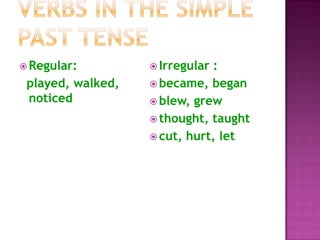
 Regular:

played, walked,
noticed

 Irregular

:
 became, began
 blew, grew
 thought, taught
 cut, hurt, let
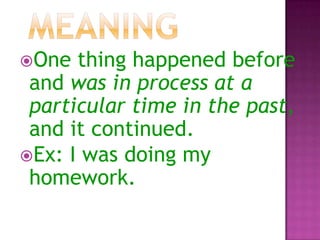
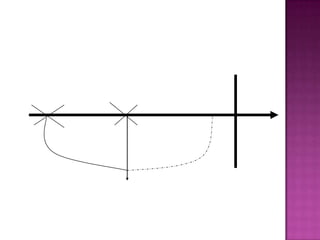
One

thing happened before
and was in process at a
particular time in the past,
and it continued.
Ex: I was doing my
homework.
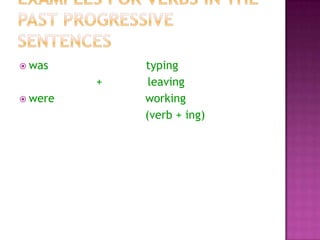
 was

+
 were

typing
leaving
working
(verb + ing)
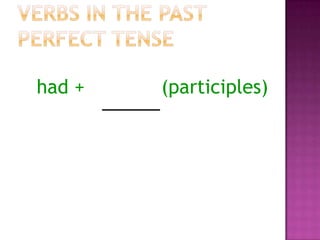
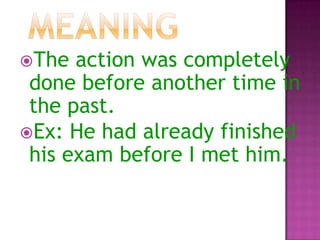
The

action was completely
done before another time in
the past.
Ex: He had already finished
his exam before I met him.
had +

(participles)
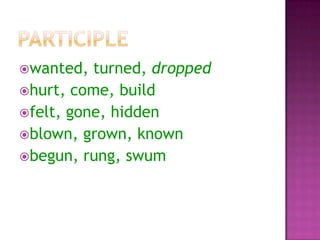
wanted,

turned, dropped
hurt, come, build
felt, gone, hidden
blown, grown, known
begun, rung, swum
The

assignment that talks about
what do we want to do in the
future.
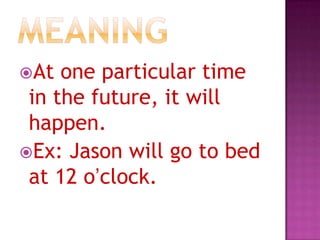
At

one particular time
in the future, it will
happen.
Ex: Jason will go to bed
at 12 o’clock.
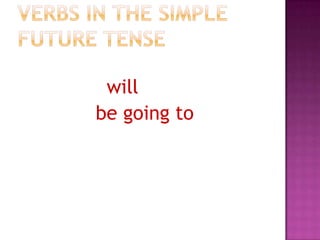
will
be going to
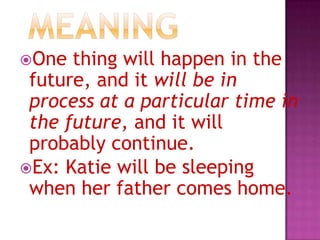
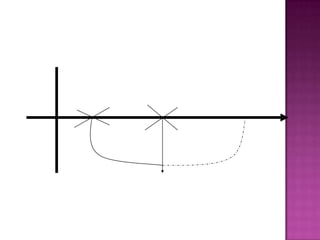
One

thing will happen in the
future, and it will be in
process at a particular time in
the future, and it will
probably continue.
Ex: Katie will be sleeping
when her father comes home.
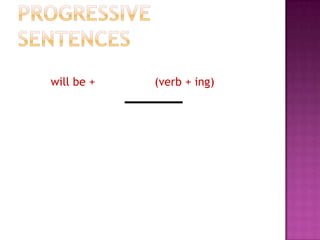
will be +

(verb + ing)
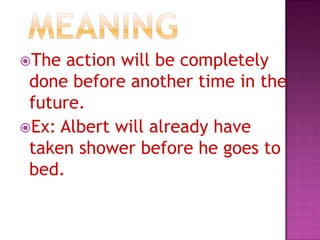
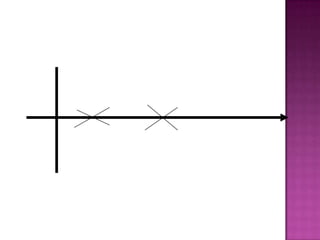
The

action will be completely
done before another time in the
future.
Ex: Albert will already have
taken shower before he goes to
bed.
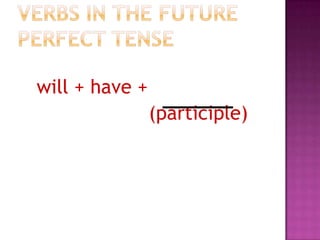
will + have +
(participle)
wanted,

turned, dropped
hurt, come, build
felt, gone, hidden
blown, grown, known
begun, rung, swum
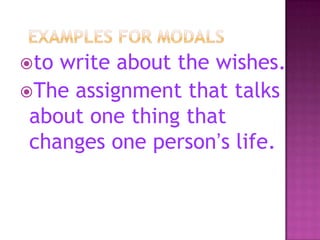
to

write about the wishes.
The assignment that talks
about one thing that
changes one person’s life.





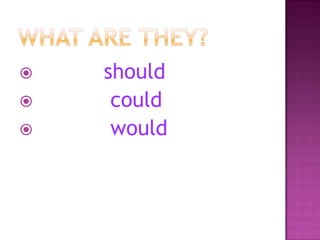
should
could
would
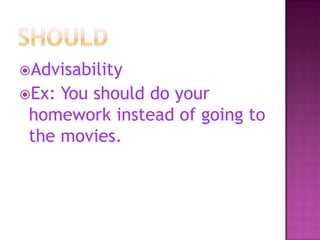
Advisability
Ex:

You should do your
homework instead of going to
the movies.
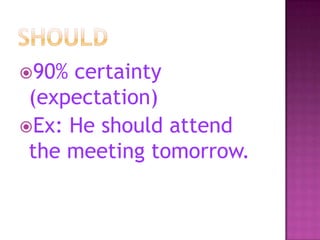
90%

certainty
(expectation)
Ex: He should attend
the meeting tomorrow.
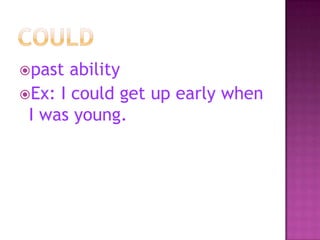
past

ability
Ex: I could get up early when
I was young.
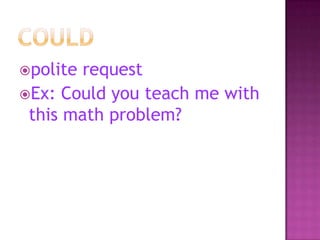
polite

request
Ex: Could you teach me with
this math problem?
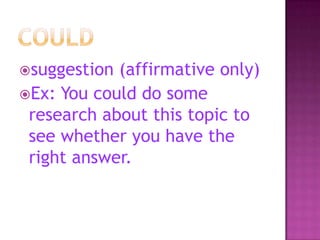
suggestion

(affirmative only)
Ex: You could do some
research about this topic to
see whether you have the
right answer.
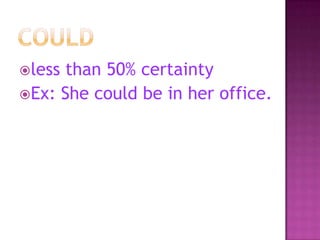
less

than 50% certainty
Ex: She could be in her office.
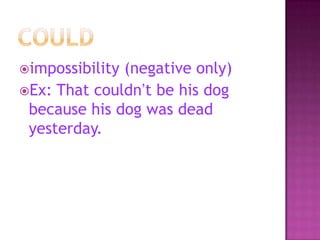
impossibility

(negative only)
Ex: That couldn’t be his dog
because his dog was dead
yesterday.
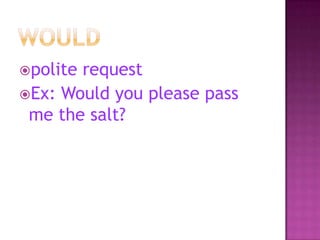
polite

request
Ex: Would you please pass
me the salt?
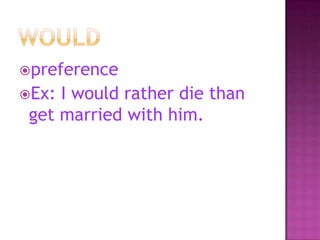
preference
Ex:

I would rather die than
get married with him.
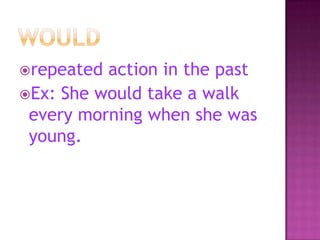
repeated

action in the past
Ex: She would take a walk
every morning when she was
young.
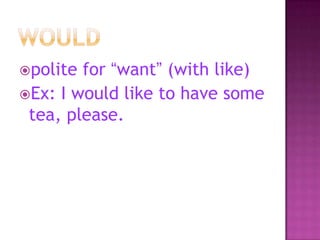
polite

for “want” (with like)
Ex: I would like to have some
tea, please.
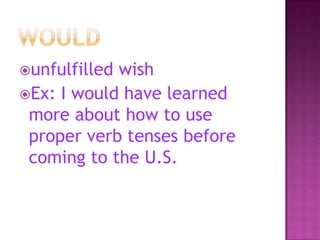
unfulfilled

wish
Ex: I would have learned
more about how to use
proper verb tenses before
coming to the U.S.
Verb tenses-English Grammer

Verb tenses-English Grammer