República Bolivariana de Venezuela
      Universidad Yacambú
         Cabudare – Lara


                       Alumna:
                      Eddimar Garcés
                     Sección: MA01TOS
                     Área: idioma básico intensivo
                     Prof.: Olga M Reinoso
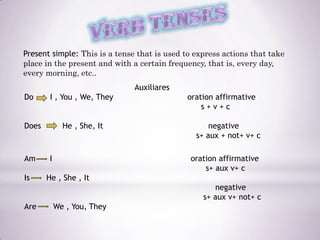
Present simple: This is a tense that is used to express actions that take
place in the present and with a certain frequency, that is, every day,
every morning, etc..
                               Auxiliares
Do      I , You , We, They                   oration affirmative
                                                 s+v+c

Does          He , She, It                          negative
                                                s+ aux + not+ v+ c

Am      I                                     oration affirmative
                                                  s+ aux v+ c
Is     He , She , It
                                                     negative
                                                  s+ aux v+ not+ c
Are         We , You, They
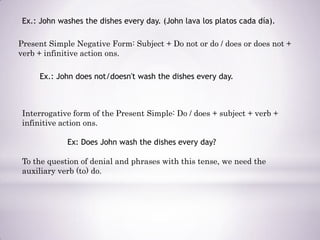
Ex.: John washes the dishes every day. (John lava los platos cada día).

Present Simple Negative Form: Subject + Do not or do / does or does not +
verb + infinitive action ons.

     Ex.: John does not/doesn't wash the dishes every day.


 Interrogative form of the Present Simple: Do / does + subject + verb +
 infinitive action ons.

             Ex: Does John wash the dishes every day?

 To the question of denial and phrases with this tense, we need the
 auxiliary verb (to) do.
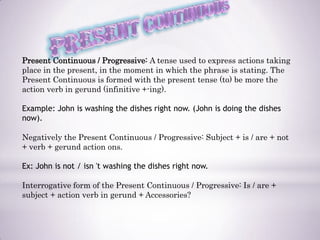
Present Continuous / Progressive: A tense used to express actions taking
place in the present, in the moment in which the phrase is stating. The
Present Continuous is formed with the present tense (to) be more the
action verb in gerund (infinitive +-ing).

Example: John is washing the dishes right now. (John is doing the dishes
now).

Negatively the Present Continuous / Progressive: Subject + is / are + not
+ verb + gerund action ons.

Ex: John is not / isn 't washing the dishes right now.

Interrogative form of the Present Continuous / Progressive: Is / are +
subject + action verb in gerund + Accessories?
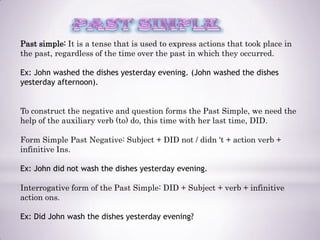
Past simple: It is a tense that is used to express actions that took place in
the past, regardless of the time over the past in which they occurred.

Ex: John washed the dishes yesterday evening. (John washed the dishes
yesterday afternoon).


To construct the negative and question forms the Past Simple, we need the
help of the auxiliary verb (to) do, this time with her last time, DID.

Form Simple Past Negative: Subject + DID not / didn 't + action verb +
infinitive Ins.

Ex: John did not wash the dishes yesterday evening.

Interrogative form of the Past Simple: DID + Subject + verb + infinitive
action ons.

Ex: Did John wash the dishes yesterday evening?
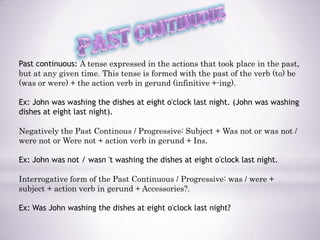
Past continuous: A tense expressed in the actions that took place in the past,
but at any given time. This tense is formed with the past of the verb (to) be
(was or were) + the action verb in gerund (infinitive +-ing).

Ex: John was washing the dishes at eight o'clock last night. (John was washing
dishes at eight last night).

Negatively the Past Continous / Progressive: Subject + Was not or was not /
were not or Were not + action verb in gerund + Ins.

Ex: John was not / wasn 't washing the dishes at eight o'clock last night.

Interrogative form of the Past Continuous / Progressive: was / were +
subject + action verb in gerund + Accessories?.

Ex: Was John washing the dishes at eight o'clock last night?
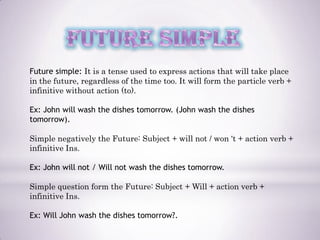
Future simple: It is a tense used to express actions that will take place
in the future, regardless of the time too. It will form the particle verb +
infinitive without action (to).

Ex: John will wash the dishes tomorrow. (John wash the dishes
tomorrow).

Simple negatively the Future: Subject + will not / won 't + action verb +
infinitive Ins.

Ex: John will not / Will not wash the dishes tomorrow.

Simple question form the Future: Subject + Will + action verb +
infinitive Ins.

Ex: Will John wash the dishes tomorrow?.

Verb tenses

  • 1.
    República Bolivariana deVenezuela Universidad Yacambú Cabudare – Lara Alumna: Eddimar Garcés Sección: MA01TOS Área: idioma básico intensivo Prof.: Olga M Reinoso
  • 2.
    Present simple: Thisis a tense that is used to express actions that take place in the present and with a certain frequency, that is, every day, every morning, etc.. Auxiliares Do I , You , We, They oration affirmative s+v+c Does He , She, It negative s+ aux + not+ v+ c Am I oration affirmative s+ aux v+ c Is He , She , It negative s+ aux v+ not+ c Are We , You, They
  • 3.
    Ex.: John washesthe dishes every day. (John lava los platos cada día). Present Simple Negative Form: Subject + Do not or do / does or does not + verb + infinitive action ons. Ex.: John does not/doesn't wash the dishes every day. Interrogative form of the Present Simple: Do / does + subject + verb + infinitive action ons. Ex: Does John wash the dishes every day? To the question of denial and phrases with this tense, we need the auxiliary verb (to) do.
  • 4.
    Present Continuous /Progressive: A tense used to express actions taking place in the present, in the moment in which the phrase is stating. The Present Continuous is formed with the present tense (to) be more the action verb in gerund (infinitive +-ing). Example: John is washing the dishes right now. (John is doing the dishes now). Negatively the Present Continuous / Progressive: Subject + is / are + not + verb + gerund action ons. Ex: John is not / isn 't washing the dishes right now. Interrogative form of the Present Continuous / Progressive: Is / are + subject + action verb in gerund + Accessories?
  • 5.
    Past simple: Itis a tense that is used to express actions that took place in the past, regardless of the time over the past in which they occurred. Ex: John washed the dishes yesterday evening. (John washed the dishes yesterday afternoon). To construct the negative and question forms the Past Simple, we need the help of the auxiliary verb (to) do, this time with her last time, DID. Form Simple Past Negative: Subject + DID not / didn 't + action verb + infinitive Ins. Ex: John did not wash the dishes yesterday evening. Interrogative form of the Past Simple: DID + Subject + verb + infinitive action ons. Ex: Did John wash the dishes yesterday evening?
  • 6.
    Past continuous: Atense expressed in the actions that took place in the past, but at any given time. This tense is formed with the past of the verb (to) be (was or were) + the action verb in gerund (infinitive +-ing). Ex: John was washing the dishes at eight o'clock last night. (John was washing dishes at eight last night). Negatively the Past Continous / Progressive: Subject + Was not or was not / were not or Were not + action verb in gerund + Ins. Ex: John was not / wasn 't washing the dishes at eight o'clock last night. Interrogative form of the Past Continuous / Progressive: was / were + subject + action verb in gerund + Accessories?. Ex: Was John washing the dishes at eight o'clock last night?
  • 7.
    Future simple: Itis a tense used to express actions that will take place in the future, regardless of the time too. It will form the particle verb + infinitive without action (to). Ex: John will wash the dishes tomorrow. (John wash the dishes tomorrow). Simple negatively the Future: Subject + will not / won 't + action verb + infinitive Ins. Ex: John will not / Will not wash the dishes tomorrow. Simple question form the Future: Subject + Will + action verb + infinitive Ins. Ex: Will John wash the dishes tomorrow?.