1) VEPs are electrophysiological signals extracted from the EEG activity in the visual cortex in response to visual stimulation. They provide an objective measure of visual pathway integrity from the eye to the occipital cortex.
2) VEP waveform and components mature during early childhood, peaking around ages 5-8 years, then stabilize until aging effects begin around age 55. The "P1" component can be seen in infants by 5 weeks of age.
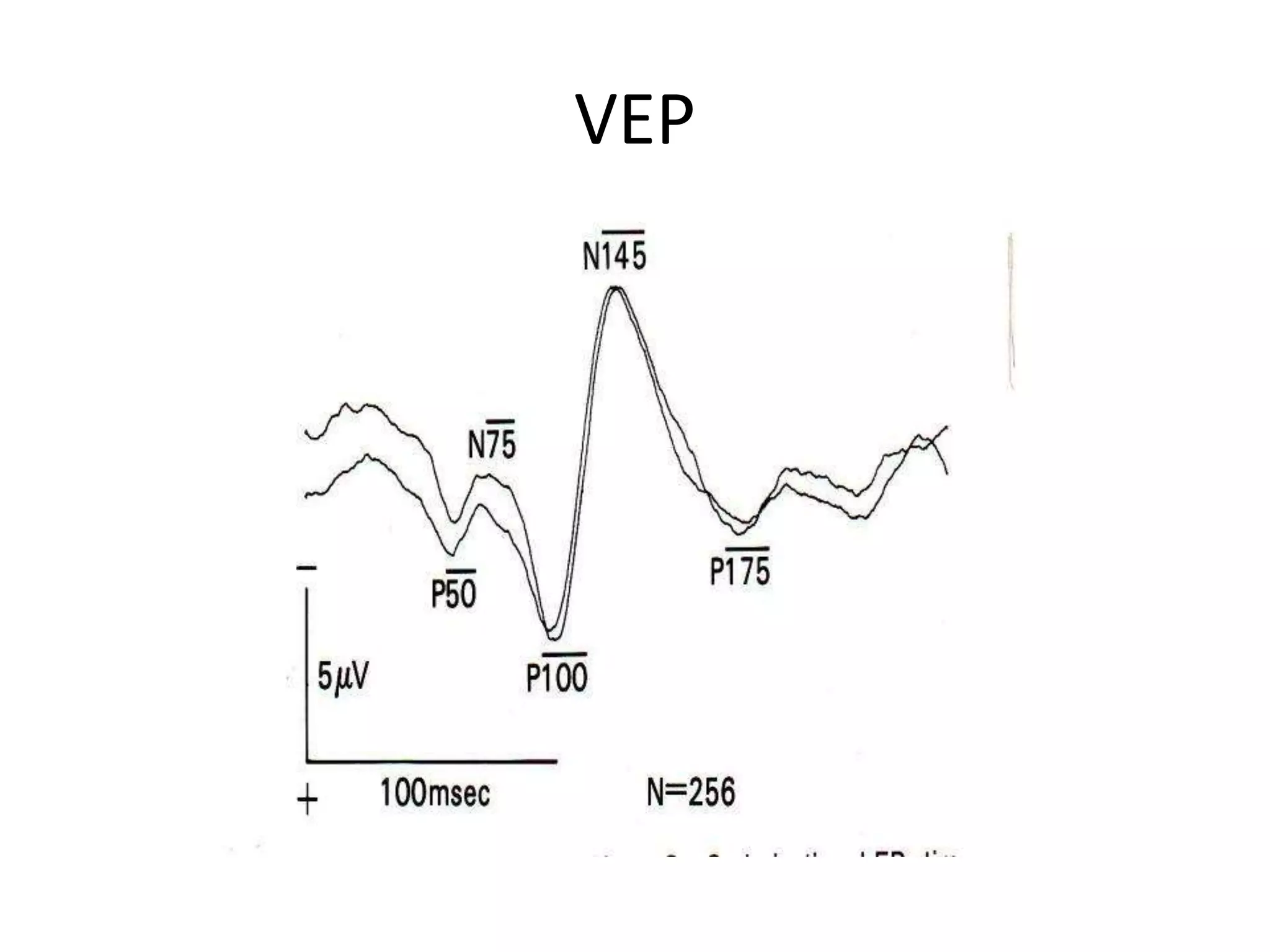
3) Pattern-reversal stimulation with checkerboards is most commonly used clinically. It elicits a reproducible P100 component around 100ms. Hemifield stimulation can localize lesions to the pre- or retrochiasmatic regions.