In culinary terms , a vegetable is an edible
plant or its part, used for cooking or eating
raw.
Vegetables are particularly rich in vitamins and
minerals.
Vegetables are organized into 4 subgroups
bassed on their nutrient content.
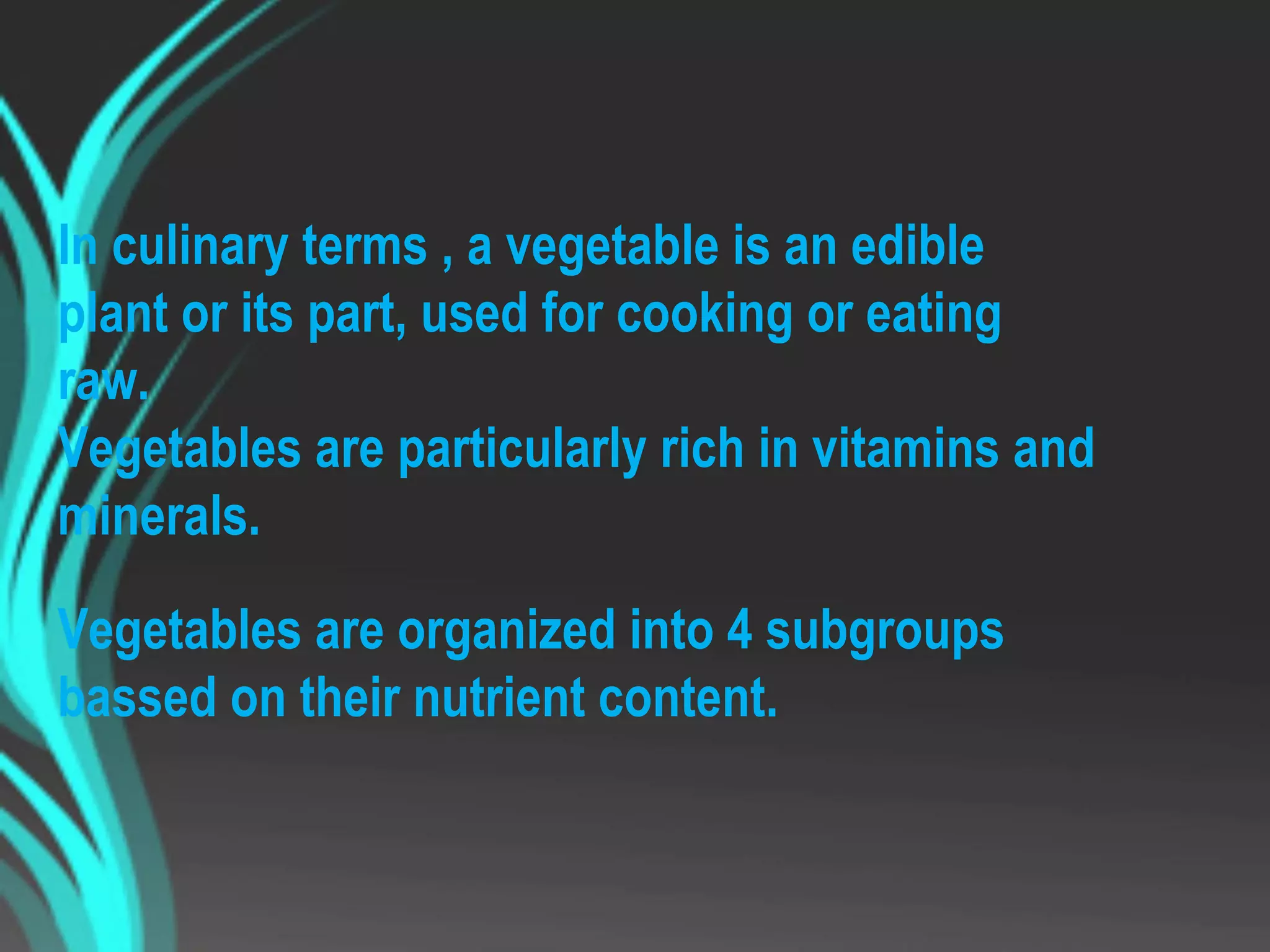
DARK GREEN
VEGETABLES
-Broccoli
-collard greens
-kale
-romaine lettuce
-spinach
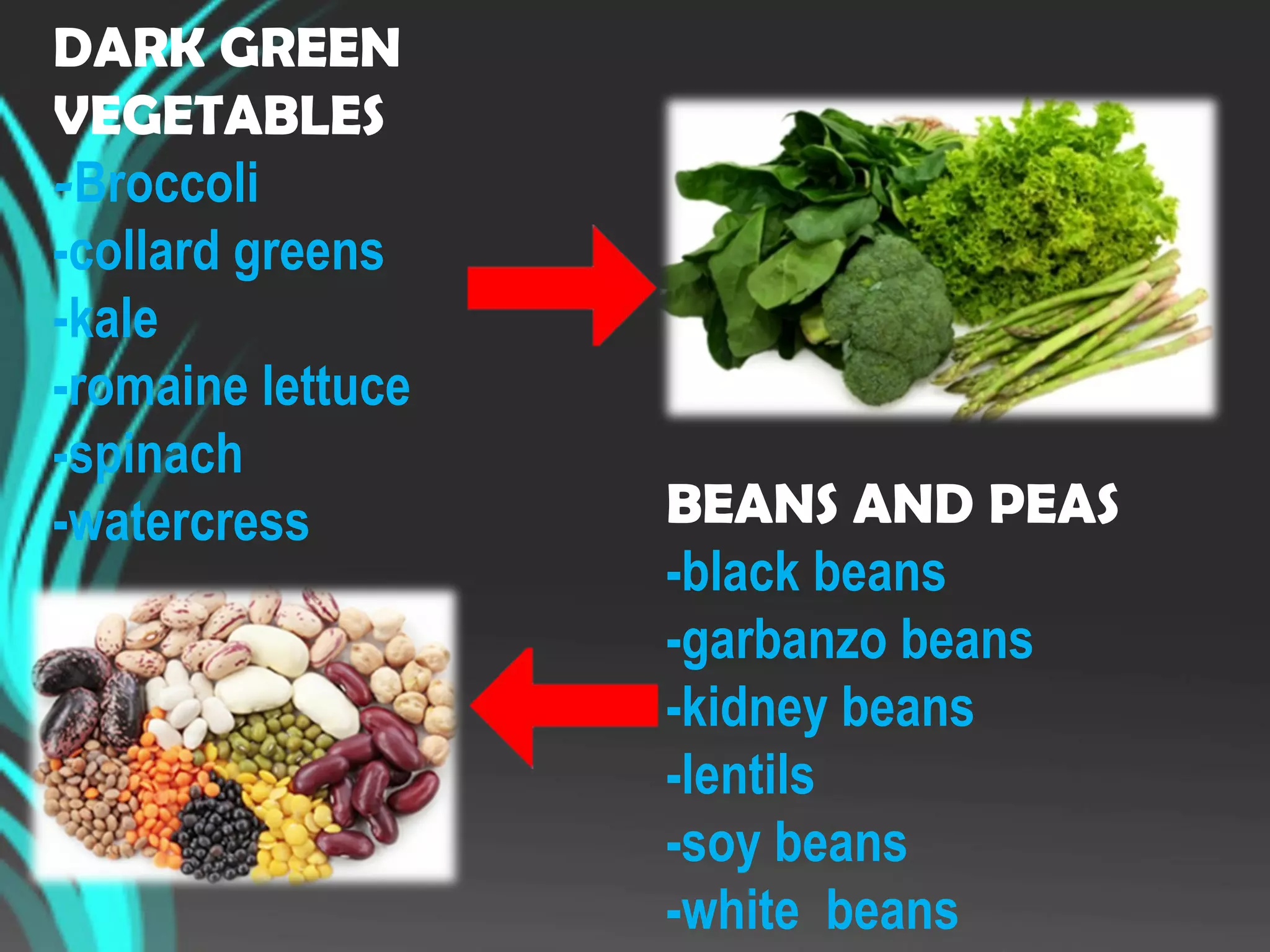
-watercress BEANS AND PEAS
-black beans
-garbanzo beans
-kidney beans
-lentils
-soy beans
-white beans
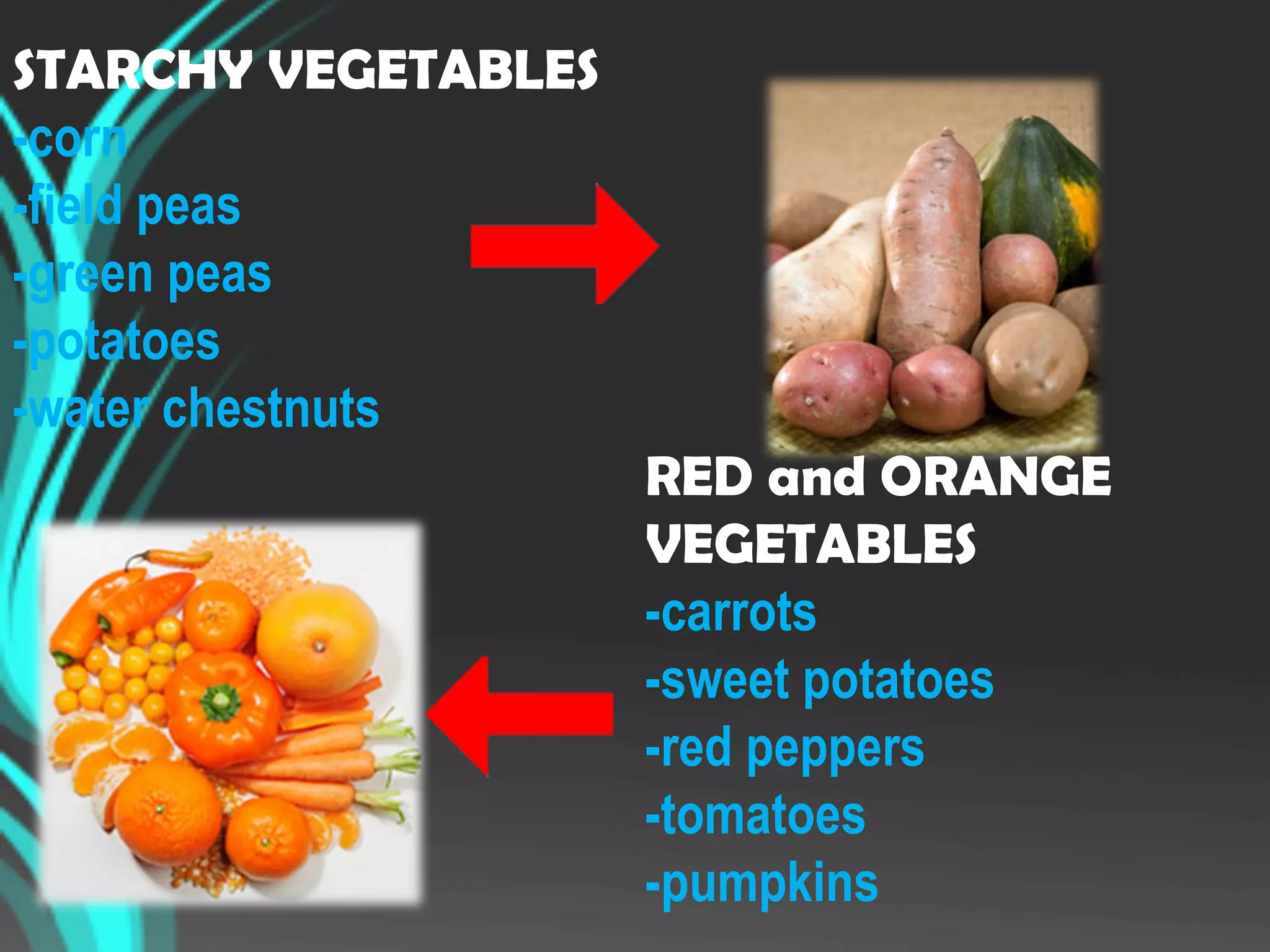
STARCHY VEGETABLES
-corn
-field peas
-green peas
-potatoes
-water chestnuts
RED and ORANGE
VEGETABLES
-carrots
-sweet potatoes
-red peppers
-tomatoes
-pumpkins
NUTRIENTS OF THE VEGETABLES
Most vegetables are naturally low in fat calories
Vegetables contain many nutrients, including
potassium, dietary fiber, foliate, vitamin A, and
vitamin C
Vegetable sources of potassium include sweet
potatoes, white beans, spinach, lentils, etc
SPECIFIC CONSIDERATIONS
-Fiber
comes from plants, therefore fruits and vegetables
are naturally good sources of dietary fiber
In some cases fruits and vegetables with the skin
have more fiber and antioxidants than their peeled
counterparts, so wash them well and eat the skins
-Calcium
For individuals who do not consume dairy
products, vegetables can be a good source of calcium
Many dark green leafy vegetables including
mustard greens, turnip greens, and bok choy are good
sources of calcium
-Glycemic Index
Fruits and vegetables are generally low on the
glycaemic index and, therefore, cause a gradual increase in
blood sugar
Tropical fruits, carrots and beets have received a bad
name for having a high glycaemic index
Most of them have a low glycaemic load, so the amount
of sugar provided in an average serving is very low.
-Antioxidants
Research shows antioxidants play a role in preventing
prostate, lung, mouth, and throat cancers. Research also
suggests antioxidants are helpful in the prevention and
management of Alzheimer’s disease, cancer, arthritis and
aging
SOME GENERAL RULES ABOUT VEGETABLES
Whenever possible, don't peel your veggies -- the skin
contains lots of nutrients.
Avoid overcooking them.
When making a dish with more than one veggie
(recommended!), be sure to cut them all about the same
size ,so they cook up in the same amount of time (or
close to it).
To clean root vegetables, simply scrub with a brush under
cold running water.
Cook only the veggies you need at each meal -- leftover
cooked veggies loses their vitality.
Whenever possible, select fresh, local, seasonal,
organic veggies
To clean root vegetables, simply scrub with a brush under
cold running water.
Cook only the veggies you need at each meal -- leftover
cooked veggies loses their vitality.
Whenever possible, select fresh, local, seasonal,
organic veggies

Vegetables

  • 2.
    In culinary terms, a vegetable is an edible plant or its part, used for cooking or eating raw. Vegetables are particularly rich in vitamins and minerals. Vegetables are organized into 4 subgroups bassed on their nutrient content.
  • 3.
    DARK GREEN VEGETABLES -Broccoli -collard greens -kale -romainelettuce -spinach -watercress BEANS AND PEAS -black beans -garbanzo beans -kidney beans -lentils -soy beans -white beans
  • 4.
    STARCHY VEGETABLES -corn -field peas -greenpeas -potatoes -water chestnuts RED and ORANGE VEGETABLES -carrots -sweet potatoes -red peppers -tomatoes -pumpkins
  • 5.
    NUTRIENTS OF THEVEGETABLES Most vegetables are naturally low in fat calories Vegetables contain many nutrients, including potassium, dietary fiber, foliate, vitamin A, and vitamin C Vegetable sources of potassium include sweet potatoes, white beans, spinach, lentils, etc
  • 6.
    SPECIFIC CONSIDERATIONS -Fiber comes fromplants, therefore fruits and vegetables are naturally good sources of dietary fiber In some cases fruits and vegetables with the skin have more fiber and antioxidants than their peeled counterparts, so wash them well and eat the skins -Calcium For individuals who do not consume dairy products, vegetables can be a good source of calcium Many dark green leafy vegetables including mustard greens, turnip greens, and bok choy are good sources of calcium
  • 7.
    -Glycemic Index Fruits andvegetables are generally low on the glycaemic index and, therefore, cause a gradual increase in blood sugar Tropical fruits, carrots and beets have received a bad name for having a high glycaemic index Most of them have a low glycaemic load, so the amount of sugar provided in an average serving is very low. -Antioxidants Research shows antioxidants play a role in preventing prostate, lung, mouth, and throat cancers. Research also suggests antioxidants are helpful in the prevention and management of Alzheimer’s disease, cancer, arthritis and aging
  • 8.
    SOME GENERAL RULESABOUT VEGETABLES Whenever possible, don't peel your veggies -- the skin contains lots of nutrients. Avoid overcooking them. When making a dish with more than one veggie (recommended!), be sure to cut them all about the same size ,so they cook up in the same amount of time (or close to it).
  • 9.
    To clean rootvegetables, simply scrub with a brush under cold running water. Cook only the veggies you need at each meal -- leftover cooked veggies loses their vitality. Whenever possible, select fresh, local, seasonal, organic veggies
  • 10.
    To clean rootvegetables, simply scrub with a brush under cold running water. Cook only the veggies you need at each meal -- leftover cooked veggies loses their vitality. Whenever possible, select fresh, local, seasonal, organic veggies