IMPORTANCE OF VEGETABLES
• Vegetables are important for human health because of
their vitamins, minerals, phytochemical compounds,
and dietary fiber content.
• Especially antioxidant vitamins (vitamin A, vitamin C,
and vitamin E).
• Adequate vegetable consumption protects from some
chronic diseases such as diabetes, cancer, obesity,
cardiovascular diseases.
Green vegetables
Leaf vegetables
Stalk vegetables
Fruit and flower vegetables
Root vegetables
Root, bulb, and tuber vegetables
CLASSIFICATION OF VEGETABLES
Green vegetables
• Leaf vegetables
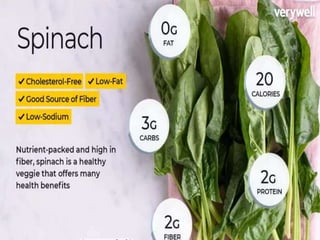
• This group includes spinach, lettuce, curly lettuce, etc.
• These are sources of important minerals (iron and calcium), vitamins (A, C,
and riboflavin) and fiber.
• Young fresh leaves contain more vitamin C than mature plants.
• Recommended daily intake of green leafy vegetables is 40 g for an adult.
• Stalk vegetables
• The best examples to be given to stalk vegetables are celery and
asparagus.
• They contain minerals and vitamins in proportion to the green color.
• Asparagus is a particularly rich source of folic acid.
• Fruit and flower vegetables
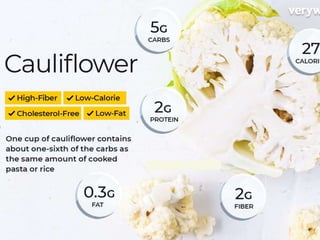
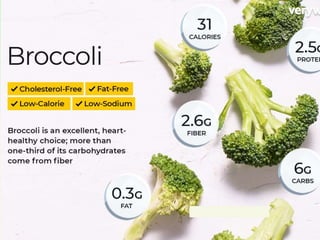
• Broccoli & cauliflower are frequently consumed flowering vegetables.
• Broccoli is a good source of iron, phosphorus, vitamins A and C, and
riboflavin.
• Cauliflower is also a good source of vitamin C. The nutritional value of the
outer leaves of cauliflower and broccoli is much higher than the flower
buds. They can be consumed raw in salads or cooked.
• Tomatoes and peppers are the most common fruit vegetables. Both are
rich in vitamin C.
• A dark green or yellow color indicates high β-carotene content. The
darker the yellow color, the higher the content of β-carotene.
Root vegetables
• Root, bulb, and tuber vegetables
• Carrot, beetroot, turnip, onion, radish, and potato are examples of
this group of vegetables.
• Yellow and orange varieties are rich in β-carotene, which is the
precursor of vitamin A. Carrots are exceptionally high in beta
carotene.
• Onion is an extraordinary example of root vegetables and contains
moderate levels of vitamin C.
• Recommended daily intake of root vegetables is 50-60 g for an
adult
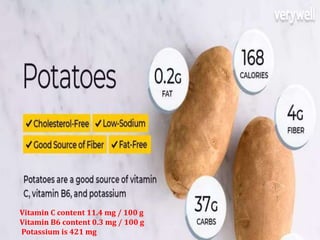
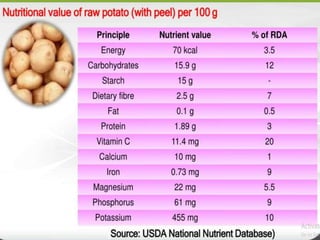
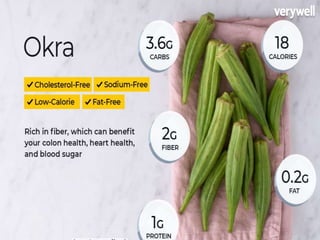
Vitamin C content 11.4 mg / 100 g
Vitamin B6 content 0.3 mg / 100 g
Potassium is 421 mg
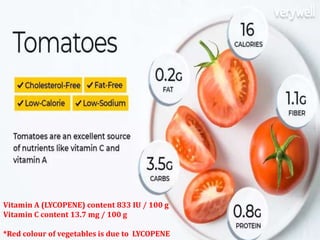
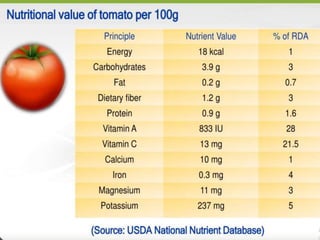
Vitamin A (LYCOPENE) content 833 IU / 100 g
Vitamin C content 13.7 mg / 100 g
*Red colour of vegetables is due to LYCOPENE
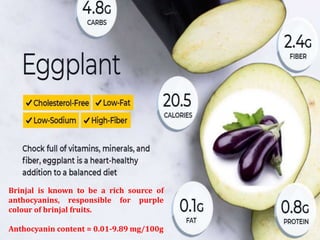
Brinjal is known to be a rich source of
anthocyanins, responsible for purple
colour of brinjal fruits.
Anthocyanin content = 0.01-9.89 mg/100g
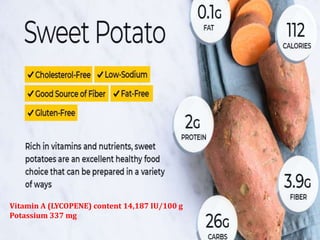
Vitamin A (LYCOPENE) content 14,187 IU/100 g
Potassium 337 mg
ANTI-NUTRIENTS
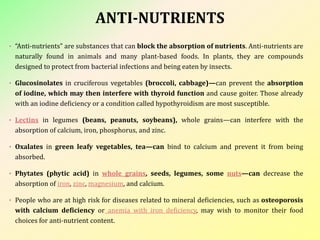
• “Anti-nutrients” are substances that can block the absorption of nutrients. Anti-nutrients are
naturally found in animals and many plant-based foods. In plants, they are compounds
designed to protect from bacterial infections and being eaten by insects.
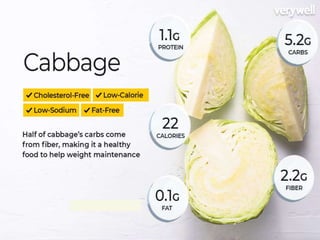
• Glucosinolates in cruciferous vegetables (broccoli, cabbage)—can prevent the absorption
of iodine, which may then interfere with thyroid function and cause goiter. Those already
with an iodine deficiency or a condition called hypothyroidism are most susceptible.
• Lectins in legumes (beans, peanuts, soybeans), whole grains—can interfere with the
absorption of calcium, iron, phosphorus, and zinc.
• Oxalates in green leafy vegetables, tea—can bind to calcium and prevent it from being
absorbed.
• Phytates (phytic acid) in whole grains, seeds, legumes, some nuts—can decrease the
absorption of iron, zinc, magnesium, and calcium.
• People who are at high risk for diseases related to mineral deficiencies, such as osteoporosis
with calcium deficiency or anemia with iron deficiency, may wish to monitor their food
choices for anti-nutrient content.
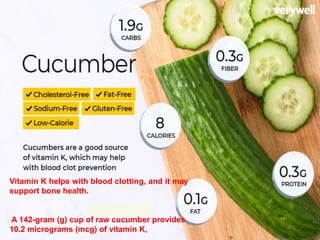
Vitamin K helps with blood clotting, and it may
support bone health.
A 142-gram (g) cup of raw cucumber provides
10.2 micrograms (mcg) of vitamin K,
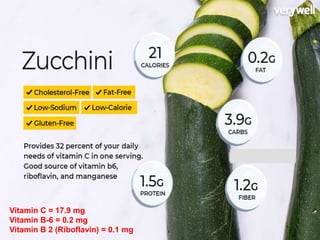
Vitamin C = 17.9 mg
Vitamin B-6 = 0.2 mg
Vitamin B 2 (Riboflavin) = 0.1 mg
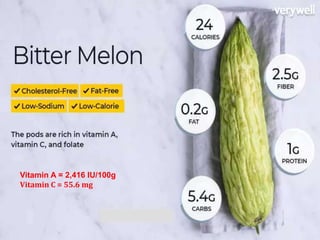
Vitamin A = 2,416 IU/100g
Vitamin C = 55.6 mg
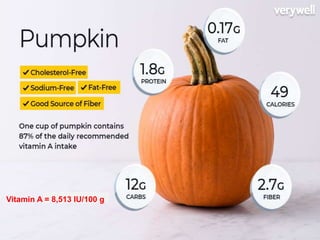
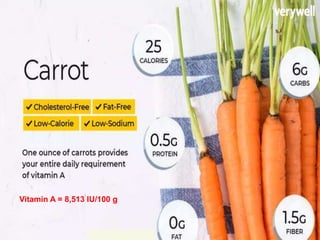
Vitamin A = 8,513 IU/100 g
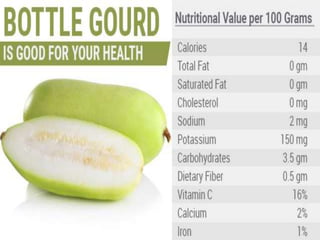
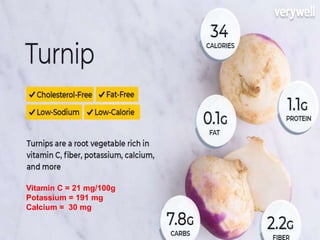
Vitamin C = 21 mg/100g
Potassium = 191 mg
Calcium = 30 mg
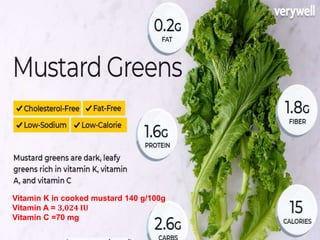
Vitamin K in cooked mustard 140 g/100g
Vitamin A = 3,024 IU
Vitamin C =70 mg
THANK
YOU

Nutritional Aspects of Vegetables

  • 3.
    IMPORTANCE OF VEGETABLES •Vegetables are important for human health because of their vitamins, minerals, phytochemical compounds, and dietary fiber content. • Especially antioxidant vitamins (vitamin A, vitamin C, and vitamin E). • Adequate vegetable consumption protects from some chronic diseases such as diabetes, cancer, obesity, cardiovascular diseases.
  • 4.
    Green vegetables Leaf vegetables Stalkvegetables Fruit and flower vegetables Root vegetables Root, bulb, and tuber vegetables CLASSIFICATION OF VEGETABLES
  • 5.
    Green vegetables • Leafvegetables • This group includes spinach, lettuce, curly lettuce, etc. • These are sources of important minerals (iron and calcium), vitamins (A, C, and riboflavin) and fiber. • Young fresh leaves contain more vitamin C than mature plants. • Recommended daily intake of green leafy vegetables is 40 g for an adult.
  • 6.
    • Stalk vegetables •The best examples to be given to stalk vegetables are celery and asparagus. • They contain minerals and vitamins in proportion to the green color. • Asparagus is a particularly rich source of folic acid.
  • 7.
    • Fruit andflower vegetables • Broccoli & cauliflower are frequently consumed flowering vegetables. • Broccoli is a good source of iron, phosphorus, vitamins A and C, and riboflavin. • Cauliflower is also a good source of vitamin C. The nutritional value of the outer leaves of cauliflower and broccoli is much higher than the flower buds. They can be consumed raw in salads or cooked. • Tomatoes and peppers are the most common fruit vegetables. Both are rich in vitamin C. • A dark green or yellow color indicates high β-carotene content. The darker the yellow color, the higher the content of β-carotene.
  • 8.
    Root vegetables • Root,bulb, and tuber vegetables • Carrot, beetroot, turnip, onion, radish, and potato are examples of this group of vegetables. • Yellow and orange varieties are rich in β-carotene, which is the precursor of vitamin A. Carrots are exceptionally high in beta carotene. • Onion is an extraordinary example of root vegetables and contains moderate levels of vitamin C. • Recommended daily intake of root vegetables is 50-60 g for an adult
  • 11.
    Vitamin C content11.4 mg / 100 g Vitamin B6 content 0.3 mg / 100 g Potassium is 421 mg
  • 13.
    Vitamin A (LYCOPENE)content 833 IU / 100 g Vitamin C content 13.7 mg / 100 g *Red colour of vegetables is due to LYCOPENE
  • 15.
    Brinjal is knownto be a rich source of anthocyanins, responsible for purple colour of brinjal fruits. Anthocyanin content = 0.01-9.89 mg/100g
  • 16.
    Vitamin A (LYCOPENE)content 14,187 IU/100 g Potassium 337 mg
  • 19.
    ANTI-NUTRIENTS • “Anti-nutrients” aresubstances that can block the absorption of nutrients. Anti-nutrients are naturally found in animals and many plant-based foods. In plants, they are compounds designed to protect from bacterial infections and being eaten by insects. • Glucosinolates in cruciferous vegetables (broccoli, cabbage)—can prevent the absorption of iodine, which may then interfere with thyroid function and cause goiter. Those already with an iodine deficiency or a condition called hypothyroidism are most susceptible. • Lectins in legumes (beans, peanuts, soybeans), whole grains—can interfere with the absorption of calcium, iron, phosphorus, and zinc. • Oxalates in green leafy vegetables, tea—can bind to calcium and prevent it from being absorbed. • Phytates (phytic acid) in whole grains, seeds, legumes, some nuts—can decrease the absorption of iron, zinc, magnesium, and calcium. • People who are at high risk for diseases related to mineral deficiencies, such as osteoporosis with calcium deficiency or anemia with iron deficiency, may wish to monitor their food choices for anti-nutrient content.
  • 21.
    Vitamin K helpswith blood clotting, and it may support bone health. A 142-gram (g) cup of raw cucumber provides 10.2 micrograms (mcg) of vitamin K,
  • 22.
    Vitamin C =17.9 mg Vitamin B-6 = 0.2 mg Vitamin B 2 (Riboflavin) = 0.1 mg
  • 23.
    Vitamin A =2,416 IU/100g Vitamin C = 55.6 mg
  • 25.
    Vitamin A =8,513 IU/100 g
  • 26.
    Vitamin A =8,513 IU/100 g
  • 27.
    Vitamin C =21 mg/100g Potassium = 191 mg Calcium = 30 mg
  • 31.
    Vitamin K incooked mustard 140 g/100g Vitamin A = 3,024 IU Vitamin C =70 mg
  • 33.