7D               Summary Sheets
             Variation
             A species is a group of organisms that can reproduce with one another to produce offspring that
             will also be able to reproduce. The differences between organisms are known as variation. There is
             variation between different species and between members of the same species.


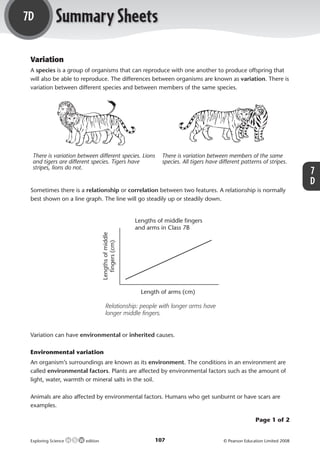
              There is variation between different species. Lions          There is variation between members of the same
              and tigers are different species. Tigers have                species. All tigers have different patterns of stripes.
              stripes, lions do not.
                                                                                                                                                   7
                                                                                                                                                   D
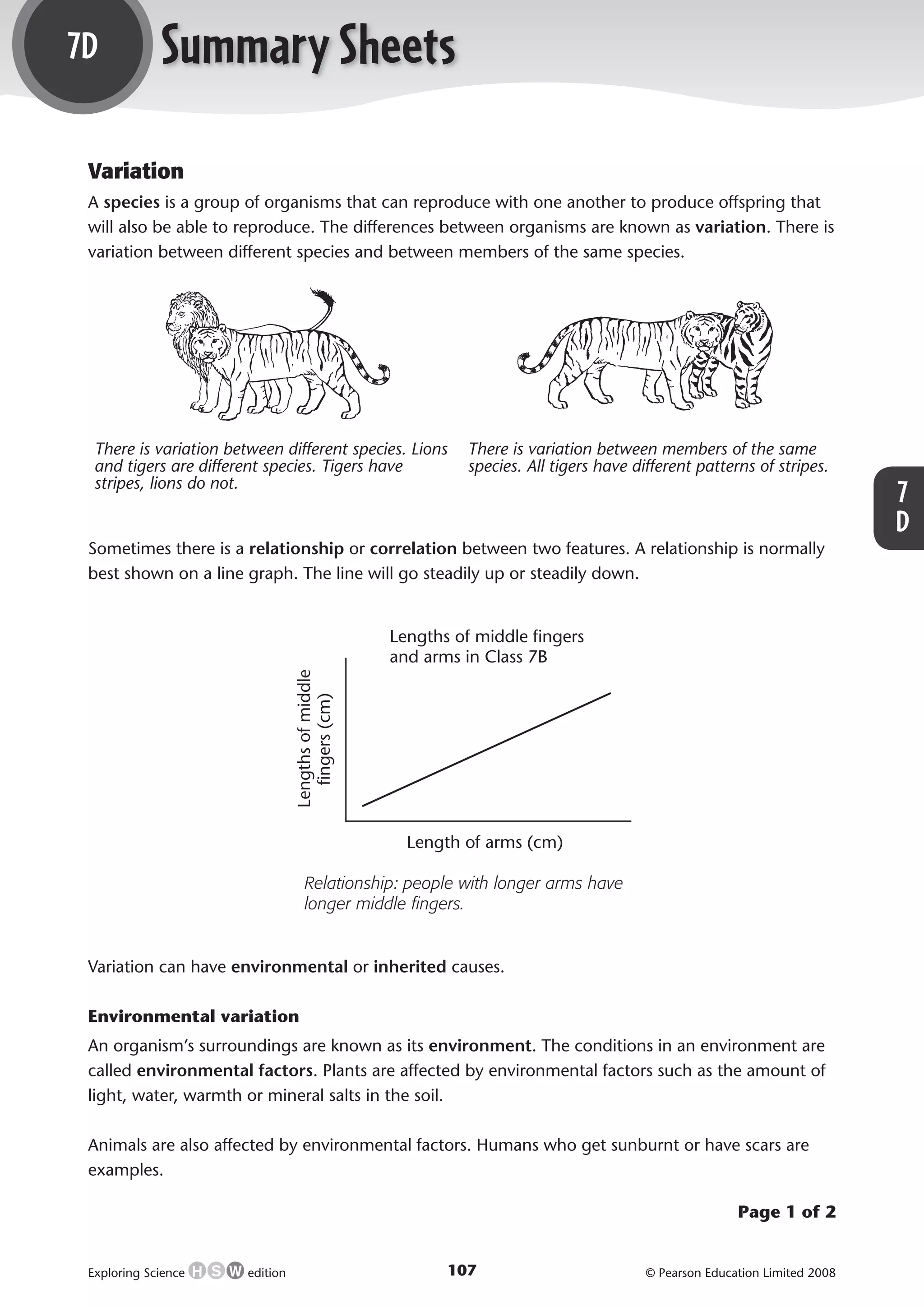
             Sometimes there is a relationship or correlation between two features. A relationship is normally
             best shown on a line graph. The line will go steadily up or steadily down.


                                                                  Lengths of middle fingers
                                                                  and arms in Class 7B
                                              Lengths of middle
                                                 fingers (cm)


                                                                    Length of arms (cm)

                                                  Relationship: people with longer arms have
                                                  longer middle fingers.


             Variation can have environmental or inherited causes.

             Environmental variation
             An organism’s surroundings are known as its environment. The conditions in an environment are
             called environmental factors. Plants are affected by environmental factors such as the amount of
             light, water, warmth or mineral salts in the soil.

             Animals are also affected by environmental factors. Humans who get sunburnt or have scars are
             examples.

                                                                                                                     Page 1 of 2


             Exploring Science      edition                              107                          © Pearson Education Limited 2008


M04_ES_AB_Y7_2445_U7D.indd 107                                                                                                           4/3/08 10:27:52
7D               Summary Sheets (continued)


              The cress seedlings on the left have not had                         The plant on the left has not had enough water.
              enough light.                                                        It has wilted.


             Inherited variation
             This is caused by features being passed from parents to their offspring. In humans, natural eye
             colour and natural hair colour are both examples of inherited variation.
7
             Classification
D            There are so many species that we need to put them into groups. This is called classification.

             The first set of groups that organisms are put into are called kingdoms. The two largest are the
             plant kingdom and the animal kingdom. One big difference between these two kingdoms is that
             plants can make their own food and animals cannot.

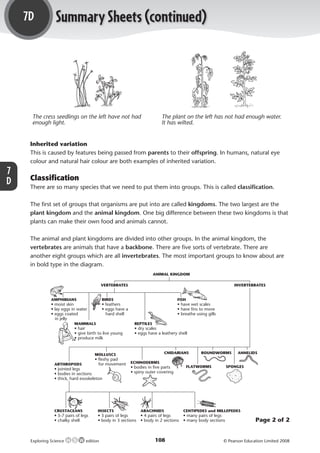
             The animal and plant kingdoms are divided into other groups. In the animal kingdom, the
             vertebrates are animals that have a backbone. There are five sorts of vertebrate. There are
             another eight groups which are all invertebrates. The most important groups to know about are
             in bold type in the diagram.
                                                                                ANIMAL KINGDOM

                                                    VERTEBRATES                                                           INVERTEBRATES


                        AMPHIBIANS                  BIRDS                                    FISH
                        • moist skin                • feathers                               • have wet scales
                        • lay eggs in water         • eggs have a                            • have fins to move
                        • eggs coated                 hard shell                             • breathe using gills
                          in jelly
                                    MAMMALS                          REPTILES
                                    • hair                           • dry scales
                                    • give birth to live young       • eggs have a leathery shell
                                    • produce milk


                                               MOLLUSCS                              CNIDARIANS           ROUNDWORMS       ANNELIDS
                                               • fleshy pad
                         ARTHROPODS              for movement       ECHINODERMS
                                                                    • bodies in five parts           FLATWORMS         SPONGES
                         • jointed legs
                         • bodies in sections                       • spiny outer covering
                         • thick, hard exoskeleton


                         CRUSTACEANS            INSECTS                  ARACHNIDS              CENTIPEDES and MILLEPEDES
                         • 5-7 pairs of legs    • 3 pairs of legs    • 4 pairs of legs    • many pairs of legs
                         • chalky shell         • body in 3 sections • body in 2 sections • many body sections                      Page 2 of 2


             Exploring Science            edition                               108                                  © Pearson Education Limited 2008


M04_ES_AB_Y7_2445_U7D.indd 108                                                                                                                          4/3/08 10:27:53

Variation and classification

  • 1.
    7D Summary Sheets Variation A species is a group of organisms that can reproduce with one another to produce offspring that will also be able to reproduce. The differences between organisms are known as variation. There is variation between different species and between members of the same species. There is variation between different species. Lions There is variation between members of the same and tigers are different species. Tigers have species. All tigers have different patterns of stripes. stripes, lions do not. 7 D Sometimes there is a relationship or correlation between two features. A relationship is normally best shown on a line graph. The line will go steadily up or steadily down. Lengths of middle fingers and arms in Class 7B Lengths of middle fingers (cm) Length of arms (cm) Relationship: people with longer arms have longer middle fingers. Variation can have environmental or inherited causes. Environmental variation An organism’s surroundings are known as its environment. The conditions in an environment are called environmental factors. Plants are affected by environmental factors such as the amount of light, water, warmth or mineral salts in the soil. Animals are also affected by environmental factors. Humans who get sunburnt or have scars are examples. Page 1 of 2 Exploring Science edition 107 © Pearson Education Limited 2008 M04_ES_AB_Y7_2445_U7D.indd 107 4/3/08 10:27:52
  • 2.
    7D Summary Sheets (continued) The cress seedlings on the left have not had The plant on the left has not had enough water. enough light. It has wilted. Inherited variation This is caused by features being passed from parents to their offspring. In humans, natural eye colour and natural hair colour are both examples of inherited variation. 7 Classification D There are so many species that we need to put them into groups. This is called classification. The first set of groups that organisms are put into are called kingdoms. The two largest are the plant kingdom and the animal kingdom. One big difference between these two kingdoms is that plants can make their own food and animals cannot. The animal and plant kingdoms are divided into other groups. In the animal kingdom, the vertebrates are animals that have a backbone. There are five sorts of vertebrate. There are another eight groups which are all invertebrates. The most important groups to know about are in bold type in the diagram. ANIMAL KINGDOM VERTEBRATES INVERTEBRATES AMPHIBIANS BIRDS FISH • moist skin • feathers • have wet scales • lay eggs in water • eggs have a • have fins to move • eggs coated hard shell • breathe using gills in jelly MAMMALS REPTILES • hair • dry scales • give birth to live young • eggs have a leathery shell • produce milk MOLLUSCS CNIDARIANS ROUNDWORMS ANNELIDS • fleshy pad ARTHROPODS for movement ECHINODERMS • bodies in five parts FLATWORMS SPONGES • jointed legs • bodies in sections • spiny outer covering • thick, hard exoskeleton CRUSTACEANS INSECTS ARACHNIDS CENTIPEDES and MILLEPEDES • 5-7 pairs of legs • 3 pairs of legs • 4 pairs of legs • many pairs of legs • chalky shell • body in 3 sections • body in 2 sections • many body sections Page 2 of 2 Exploring Science edition 108 © Pearson Education Limited 2008 M04_ES_AB_Y7_2445_U7D.indd 108 4/3/08 10:27:53