UNIT 7 - Evolution
“TO BE OR NOT TO BE”
EVOLUTION
 Definition:
     evolution is any change in the frequency of an
      allele in a gene pool
     Theory – a collection of carefully reasoned
      and tested hypothesis about how evolutionary
      change occurred
I. Ancient Earth
 A.   Atmospheric Conditions                     (pg 342)

      1. Gases (notice no oxygen)
        • Large %
              Carbon dioxide (CO2), Nitrogen (N2), Water vapor
        • Small %
              Methane(CH4), Ammonia(NH3), Hydrogen Sulfide (H2S)
      2. Miller -Urey Experiment
        • Synthesized complex organic molecules by mixing
          and electrically stimulating a mixture gases (pg 344)
        • Urea, acetic acid, amino acids, lactic acid, adenine,
          ATP were produced
I. Ancient Earth
 3.   Other Experiments
      No oxygen in mixture allowed the formation of
        • Polypeptides - amino acids linked together
I. Ancient Earth
   B. The First Cells –
       3.5 bya - anaerobic, prokaryotic (like today’s
        bacteria), heterotrophic, high competition for food
       3.4 bya – autotrophic, probably photosynthesis with
        H2S instead of water
       2.2 bya – modern photosynthesis, use H2O, releasing
        O2 into the atmosphere, ozone layer formed
       1.5 bya – eukaryotic cells, sexual reproduction,
        increased genetic diversity
       1.3 bya – multicellular organisms
I. Ancient Earth
 C.   Age of the Earth
     1. Formation of Earth - 4.5 billions years ago
     2. Relative dating - geologic time scale (pg 23 UP)
     3. Absolute dating - half-life
       • Half-life = time it takes for 1/2 of a radioactive
         substance to decay (breakdown)
       • Carbon-14 1/2 life = 5770 years
       • Potassium-40 1/2 life = 1.3 billion years
II. Evolution
 D.   Evidence for Evolution
     1. Fossil record      (pg 278)
       • Fossils are any preserved remains or evidence of
         an ancient organism
       • Examples - insects in amber, frozen mammoth,
         petrified wood or bones, imprints in rock
       • Not complete - many organisms do not become
         fossilized
       • Not all specimens are the same quality
       • Record does indicate what did live at different times
       • Record does show that living things changed with
         changes on the Earth
II. Evolution
 D.   Evidence for Evolution
     2. Living organisms
       • Embryology - development of embryos very similar
         in different species
       • Body Structure
             Homologous structures - bones in the legs and arms of
              vertebrates are very similar in structure but not always
              function(lab 38)
             Vestigial organs - organs that remain in an organism but
              seem to have no obvious function
                • leg bones in pythons, muscles that move the ears in
                  humans, appendix in humans
       • Biochemistry - similar chemicals found in living
         things, DNA sequence, blood antigens (lab 28)
III.Theories of Evolution
 A.   Lamarck
      1. Desire to change
        • Animals changed in structure because of a desire to
          improve
        • Giraffe’s necks got longer because they stretched to
          get the leaves at the top branches,
      2. Use and Disuse
        • Use it or lose it - through disuse things would be lost
      3. Acquired characteristics were inherited
        • Any changes in the adult were passed on to the
          offspring
        • Example - stretched necks of adult giraffes were
          inherited by young
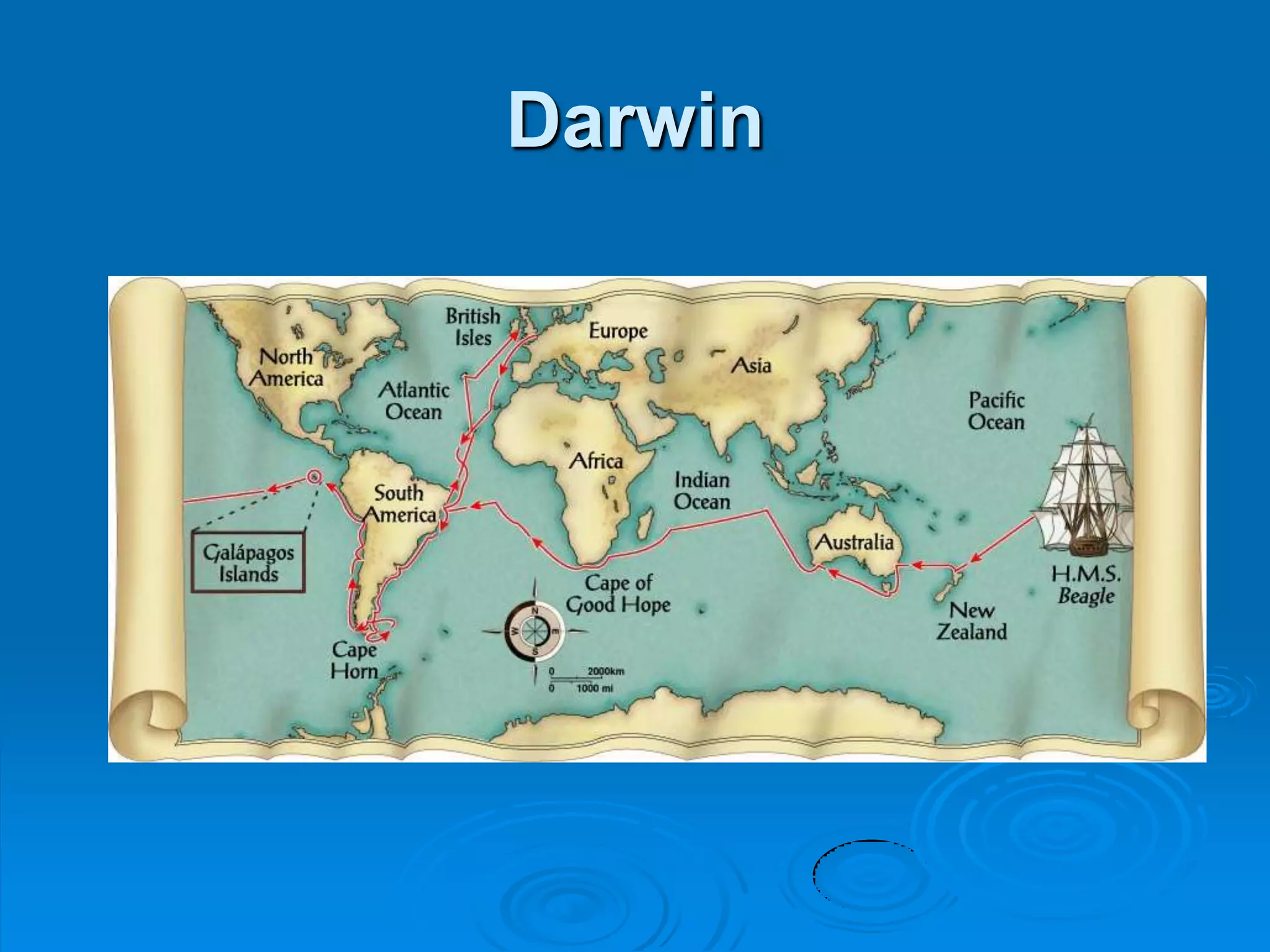
Darwin
III.Theories of Evolution
 B.   Darwin
      1. Overproduction of offspring
        • Organisms tend to produce more offspring than
          needed to replace numbers
      2. Struggle for existence
        • Competition for resources is always present
        • Predation always present
      3. Variations in populations exist
        • Differences in structure exist at birth not acquired
        • These variations are inherited from the parents
III.Theories of Evolution
   C. Natural Selection
       1. Definition - the organisms that are best suited for the
        present environmental conditions will survive to
        reproduce therefore passing on their characteristics to
        their offspring
         • “Survival of the Fittest” - not necessarily the strongest or
           fastest.
       2. Conditions that help
         • Mutation - source of variation in genes
         • Gene flow - genes moving between populations
       3. Adaptations
         • - traits that survive from one generation to the next
       4. Example - Peppered Moth / industrial revolution in England
         • Two phenotypes for moth = Black and speckled
         • When the bark of the trees got discolored the population changed from mostly
           speckled to mostly black
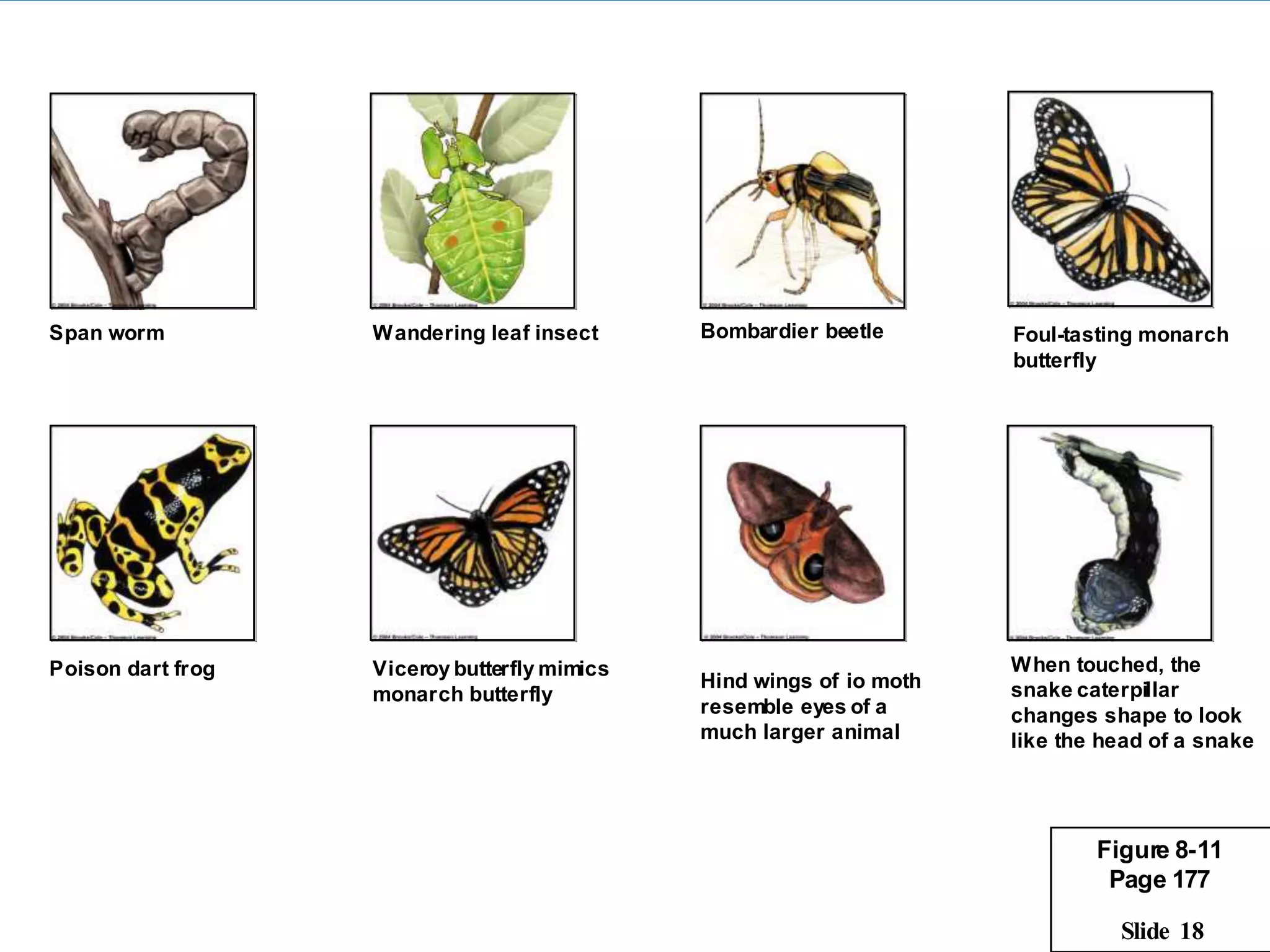
Span worm          Wandering leaf insect      Bombardier beetle       Foul-tasting monarch
                                                                      butterfly


Poison dart frog   Viceroy butterfly mimics                           When touched, the
                                              Hind wings of io moth   snake caterpillar
                   monarch butterfly
                                              resemble eyes of a      changes shape to look
                                              much larger animal      like the head of a snake


                                                                              Figure 8-11
                                                                               Page 177

                                                                                Slide 18
IV. Types of Evolution
 A.Microevolution - changes that take place
 within a single species to form variations in
 populations.

 B.Macroevolution - changes that have
 taken place in a species that leads to two
 or more different species (common
 descent)
IV.Types of Macroevolution
 1.   Gradualism
      One species gradually changes into a new species
 2.   Divergent Evolution or Speciation
      a. Definition - the development of two or more
       species from a common ancestral species
        • Adaptive radiation - a habitat opens up that permits many
          new niches to be occupied allowing many variations to
          survive.
      b. Processes that need to occur
        • Geographical isolation - members of a species is
          separated from others due to physical barriers
              Mountain ranges, oceans, canyons
        • Reproductive Isolation - species are separated by the
          ability to reproduce
              Mating behaviors, physical structures, genetic make-up
IV.Types of Macroevolution
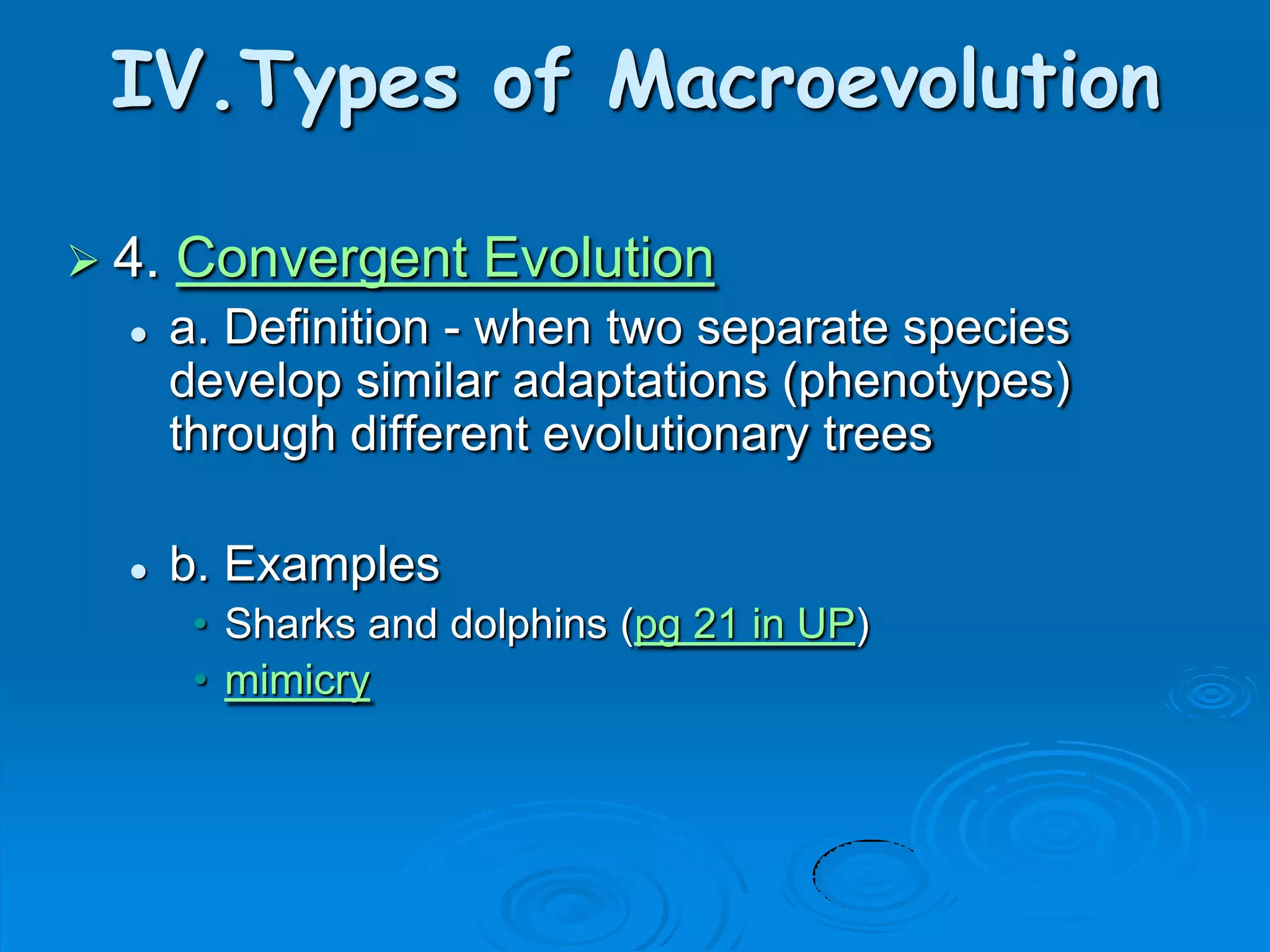
 3.   Punctuated equilibria
      Tempo of speciation: gradual vs. divergence in rapid
       bursts; Eldredge and Gould (1972); helped explain the non-
       gradual appearance of species in the fossil record
IV.Types of Macroevolution

 4.   Convergent Evolution
      a. Definition - when two separate species
       develop similar adaptations (phenotypes)
       through different evolutionary trees

      b. Examples
        • Sharks and dolphins (pg 21 in UP)
        • mimicry
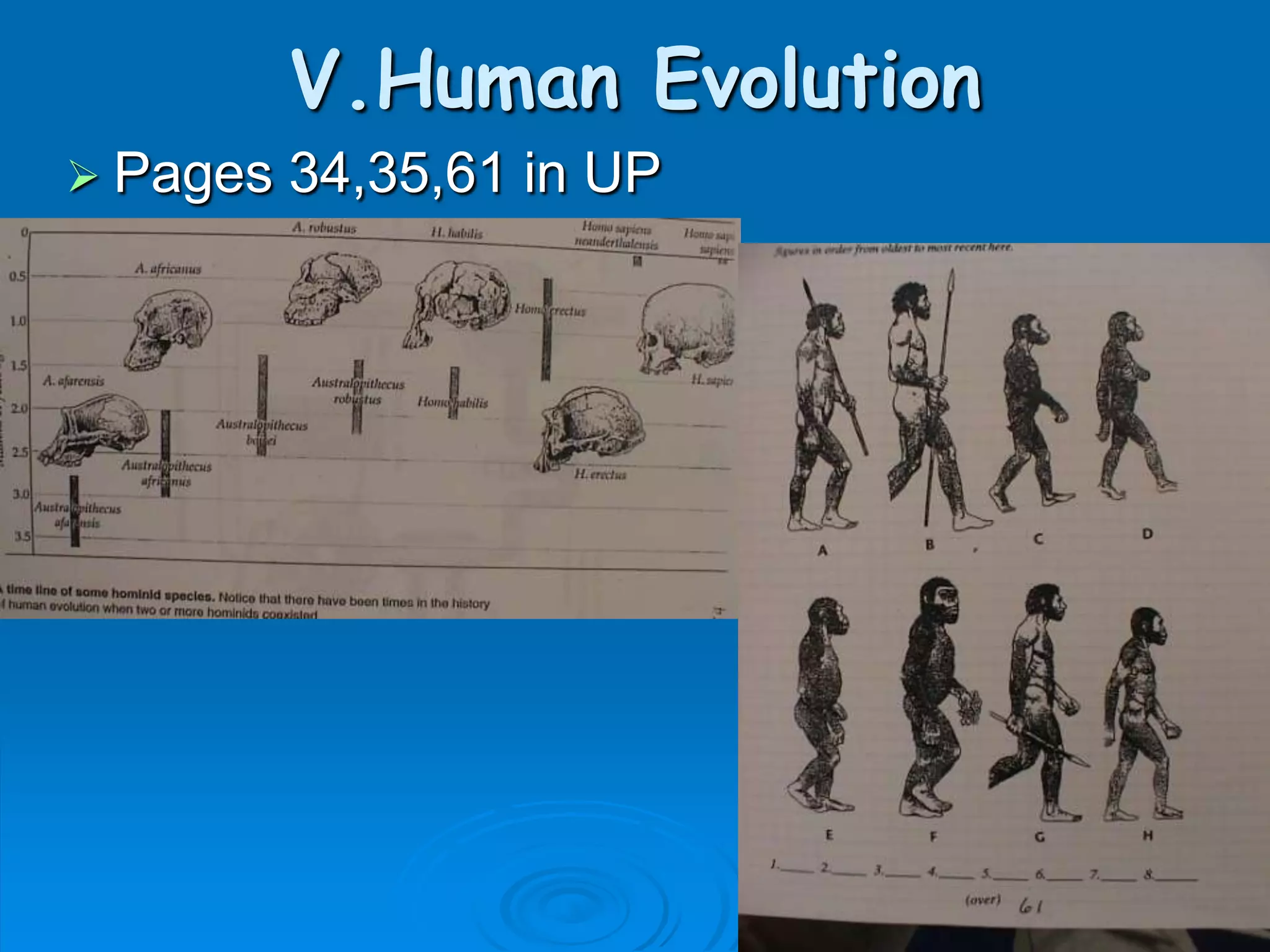
V.Human Evolution
 Pages   34,35,61 in UP

Unit 7 evolution 1

  • 1.
    UNIT 7 -Evolution “TO BE OR NOT TO BE”
  • 2.
    EVOLUTION  Definition:  evolution is any change in the frequency of an allele in a gene pool  Theory – a collection of carefully reasoned and tested hypothesis about how evolutionary change occurred
  • 3.
    I. Ancient Earth A. Atmospheric Conditions (pg 342)  1. Gases (notice no oxygen) • Large %  Carbon dioxide (CO2), Nitrogen (N2), Water vapor • Small %  Methane(CH4), Ammonia(NH3), Hydrogen Sulfide (H2S)  2. Miller -Urey Experiment • Synthesized complex organic molecules by mixing and electrically stimulating a mixture gases (pg 344) • Urea, acetic acid, amino acids, lactic acid, adenine, ATP were produced
  • 4.
    I. Ancient Earth 3. Other Experiments  No oxygen in mixture allowed the formation of • Polypeptides - amino acids linked together
  • 5.
    I. Ancient Earth  B. The First Cells –  3.5 bya - anaerobic, prokaryotic (like today’s bacteria), heterotrophic, high competition for food  3.4 bya – autotrophic, probably photosynthesis with H2S instead of water  2.2 bya – modern photosynthesis, use H2O, releasing O2 into the atmosphere, ozone layer formed  1.5 bya – eukaryotic cells, sexual reproduction, increased genetic diversity  1.3 bya – multicellular organisms
  • 6.
    I. Ancient Earth C. Age of the Earth  1. Formation of Earth - 4.5 billions years ago  2. Relative dating - geologic time scale (pg 23 UP)  3. Absolute dating - half-life • Half-life = time it takes for 1/2 of a radioactive substance to decay (breakdown) • Carbon-14 1/2 life = 5770 years • Potassium-40 1/2 life = 1.3 billion years
  • 7.
    II. Evolution  D. Evidence for Evolution  1. Fossil record (pg 278) • Fossils are any preserved remains or evidence of an ancient organism • Examples - insects in amber, frozen mammoth, petrified wood or bones, imprints in rock • Not complete - many organisms do not become fossilized • Not all specimens are the same quality • Record does indicate what did live at different times • Record does show that living things changed with changes on the Earth
  • 8.
    II. Evolution  D. Evidence for Evolution  2. Living organisms • Embryology - development of embryos very similar in different species • Body Structure  Homologous structures - bones in the legs and arms of vertebrates are very similar in structure but not always function(lab 38)  Vestigial organs - organs that remain in an organism but seem to have no obvious function • leg bones in pythons, muscles that move the ears in humans, appendix in humans • Biochemistry - similar chemicals found in living things, DNA sequence, blood antigens (lab 28)
  • 9.
    III.Theories of Evolution A. Lamarck  1. Desire to change • Animals changed in structure because of a desire to improve • Giraffe’s necks got longer because they stretched to get the leaves at the top branches,  2. Use and Disuse • Use it or lose it - through disuse things would be lost  3. Acquired characteristics were inherited • Any changes in the adult were passed on to the offspring • Example - stretched necks of adult giraffes were inherited by young
  • 10.
  • 11.
    III.Theories of Evolution B. Darwin  1. Overproduction of offspring • Organisms tend to produce more offspring than needed to replace numbers  2. Struggle for existence • Competition for resources is always present • Predation always present  3. Variations in populations exist • Differences in structure exist at birth not acquired • These variations are inherited from the parents
  • 12.
    III.Theories of Evolution  C. Natural Selection  1. Definition - the organisms that are best suited for the present environmental conditions will survive to reproduce therefore passing on their characteristics to their offspring • “Survival of the Fittest” - not necessarily the strongest or fastest.  2. Conditions that help • Mutation - source of variation in genes • Gene flow - genes moving between populations  3. Adaptations • - traits that survive from one generation to the next  4. Example - Peppered Moth / industrial revolution in England • Two phenotypes for moth = Black and speckled • When the bark of the trees got discolored the population changed from mostly speckled to mostly black
  • 15.
    Span worm Wandering leaf insect Bombardier beetle Foul-tasting monarch butterfly Poison dart frog Viceroy butterfly mimics When touched, the Hind wings of io moth snake caterpillar monarch butterfly resemble eyes of a changes shape to look much larger animal like the head of a snake Figure 8-11 Page 177 Slide 18
  • 16.
    IV. Types ofEvolution  A.Microevolution - changes that take place within a single species to form variations in populations.  B.Macroevolution - changes that have taken place in a species that leads to two or more different species (common descent)
  • 17.
    IV.Types of Macroevolution 1. Gradualism  One species gradually changes into a new species  2. Divergent Evolution or Speciation  a. Definition - the development of two or more species from a common ancestral species • Adaptive radiation - a habitat opens up that permits many new niches to be occupied allowing many variations to survive.  b. Processes that need to occur • Geographical isolation - members of a species is separated from others due to physical barriers  Mountain ranges, oceans, canyons • Reproductive Isolation - species are separated by the ability to reproduce  Mating behaviors, physical structures, genetic make-up
  • 18.
    IV.Types of Macroevolution 3. Punctuated equilibria  Tempo of speciation: gradual vs. divergence in rapid bursts; Eldredge and Gould (1972); helped explain the non- gradual appearance of species in the fossil record
  • 19.
    IV.Types of Macroevolution 4. Convergent Evolution  a. Definition - when two separate species develop similar adaptations (phenotypes) through different evolutionary trees  b. Examples • Sharks and dolphins (pg 21 in UP) • mimicry
  • 20.