Note to teachers
Thank you for downloading this presentation from the Young
People’s Trust for the Environment. You are welcome to
modify it by adding your own slides or deleting ones you don’t
need.
Please do not remove the photo credits from any of the
photos you use and we would be very grateful if you could
leave YPTE’s logo and web address on the relevant pages. We
want to encourage more and more young people to learn
more about taking care of our world for the future, and the
website is a great starting point for this.
You can find lots more supporting information on plants and
animals by visiting the ‘Explore’ section of https://ypte.org.uk
Registered charity number 1153740
LIVING THINGS AND THEIR HABITATS: YEAR 4
ypte.org.uk
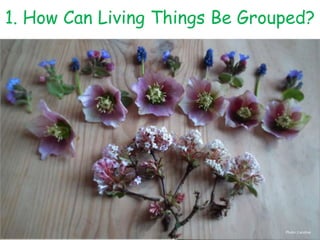
1. How Can Living Things Be Grouped?
Photo: Caroline
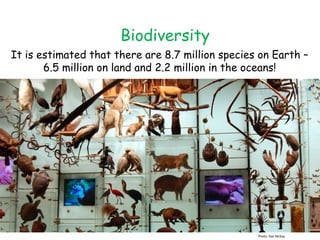
Biodiversity
It is estimated that there are 8.7 million species on Earth –
6.5 million on land and 2.2 million in the oceans!
Photo: Dan McKay
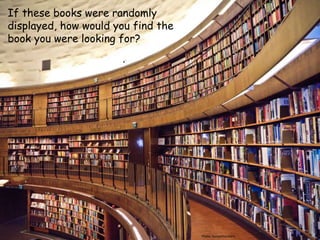
If these books were randomly
displayed, how would you find the
book you were looking for?
Photo: Samantha Marx
Photo: Sergey Yeliseev Photo: Dan Foy
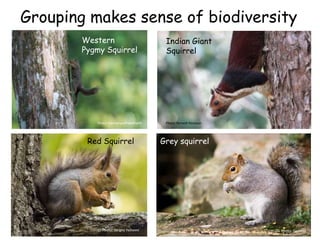
Grouping makes sense of biodiversity
Red Squirrel Grey squirrel
Western
Pygmy Squirrel
Photo: HarmonyonPlanetEarth
Indian Giant
Squirrel
Photo: Ramesh Rasaiyan
Photo: Tambako The Jaguar
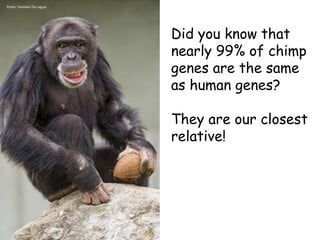
Did you know that
nearly 99% of chimp
genes are the same
as human genes?
They are our closest
relative!
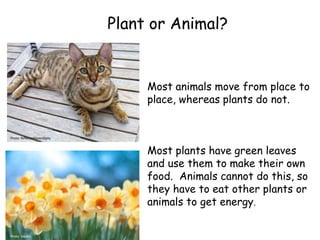
Plant or Animal?
Photo: 3dpete
Photo: ReflectedSerendipity
Most animals move from place to
place, whereas plants do not.
Most plants have green leaves
and use them to make their own
food. Animals cannot do this, so
they have to eat other plants or
animals to get energy.
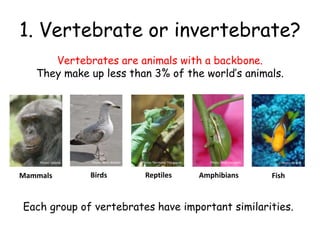
1. Vertebrate or invertebrate?
Vertebrates are animals with a backbone.
They make up less than 3% of the world’s animals.
Photo: Valerie
Mammals
Photo: Berit Watkin
Birds
Photo: Tambako The Jaguar
Reptiles
Photo: Vicki DeLoach
Amphibians Fish
Photo: SF Brit
Each group of vertebrates have important similarities.
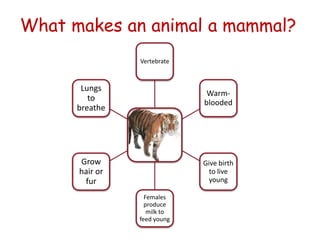
What makes an animal a mammal?
Vertebrate
Warm-
blooded
Give birth
to live
young
Females
produce
milk to
feed young
Grow
hair or
fur
Lungs
to
breathe
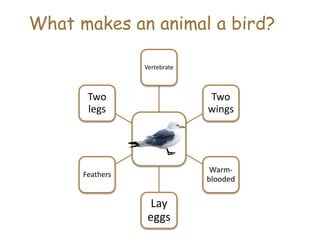
What makes an animal a bird?
Vertebrate
Two
wings
Warm-
blooded
Lay
eggs
Feathers
Two
legs
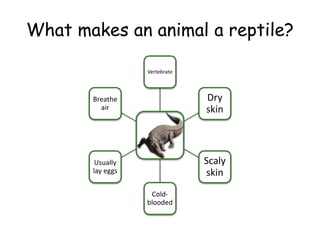
What makes an animal a reptile?
Vertebrate
Dry
skin
Scaly
skin
Cold-
blooded
Usually
lay eggs
Breathe
air
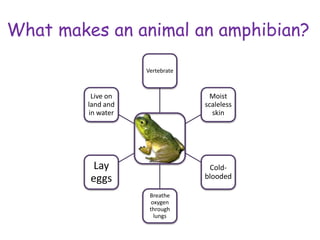
What makes an animal an amphibian?
Vertebrate
Moist
scaleless
skin
Cold-
blooded
Breathe
oxygen
through
lungs
Lay
eggs
Live on
land and
in water
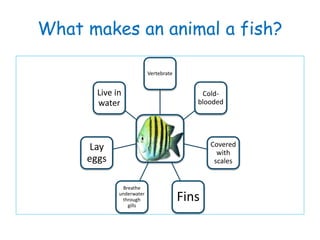
What makes an animal a fish?
Vertebrate
Cold-
blooded
Covered
with
scales
Fins
Breathe
underwater
through
gills
Lay
eggs
Live in
water
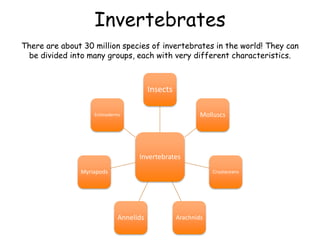
Invertebrates
There are about 30 million species of invertebrates in the world! They can
be divided into many groups, each with very different characteristics.
Invertebrates
Insects
Molluscs
Crustaceans
Arachnids
Annelids
Myriapods
Echinoderms
Photo: Kathi
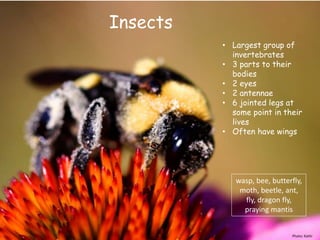
Insects
• Largest group of
invertebrates
• 3 parts to their
bodies
• 2 eyes
• 2 antennae
• 6 jointed legs at
some point in their
lives
• Often have wings
wasp, bee, butterfly,
moth, beetle, ant,
fly, dragon fly,
praying mantis
Photo: Martin Cooper
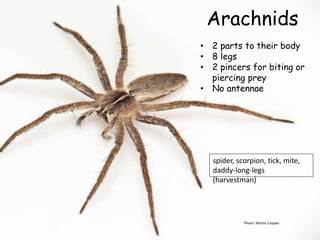
Arachnids
• 2 parts to their body
• 8 legs
• 2 pincers for biting or
piercing prey
• No antennae
spider, scorpion, tick, mite,
daddy-long-legs
(harvestman)
Photo: sankax
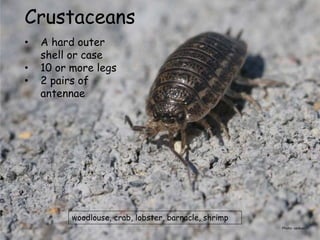
Crustaceans
• A hard outer
shell or case
• 10 or more legs
• 2 pairs of
antennae
woodlouse, crab, lobster, barnacle, shrimp
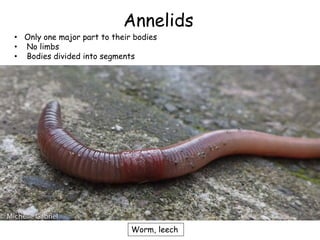
Annelids
• Only one major part to their bodies
• No limbs
• Bodies divided into segments
Worm, leech
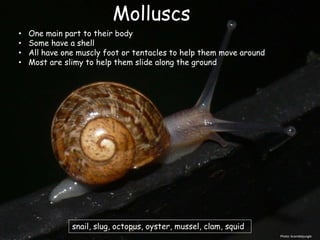
Molluscs
• One main part to their body
• Some have a shell
• All have one muscly foot or tentacles to help them move around
• Most are slimy to help them slide along the ground
Photo: bramblejungle
snail, slug, octopus, oyster, mussel, clam, squid
Photo: bramblejungle
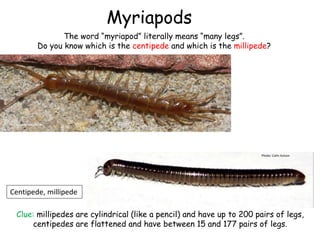
Myriapods
The word “myriapod” literally means “many legs”.
Do you know which is the centipede and which is the millipede?
Clue: millipedes are cylindrical (like a pencil) and have up to 200 pairs of legs,
centipedes are flattened and have between 15 and 177 pairs of legs.
Centipede, millipede
Photo: Colin Avison
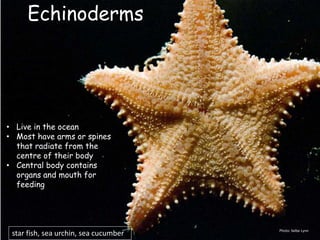
Photo: Selbe Lynn
• Live in the ocean
• Most have arms or spines
that radiate from the
centre of their body
• Central body contains
organs and mouth for
feeding
Echinoderms
star fish, sea urchin, sea cucumber
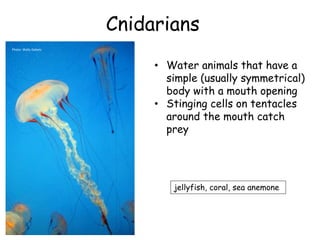
Cnidarians
Photo: Wally Gobetz
• Water animals that have a
simple (usually symmetrical)
body with a mouth opening
• Stinging cells on tentacles
around the mouth catch
prey
jellyfish, coral, sea anemone
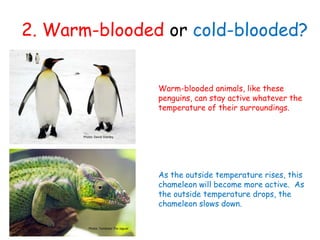
2. Warm-blooded or cold-blooded?
Photo: David Stanley
Warm-blooded animals, like these
penguins, can stay active whatever the
temperature of their surroundings.
As the outside temperature rises, this
chameleon will become more active. As
the outside temperature drops, the
chameleon slows down.
Photo: Tambako The Jaguar
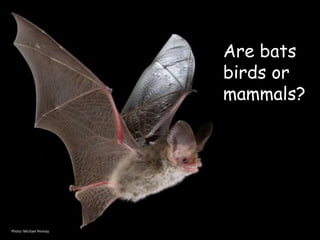
Photo: Michael Pennay
Are bats
birds or
mammals?
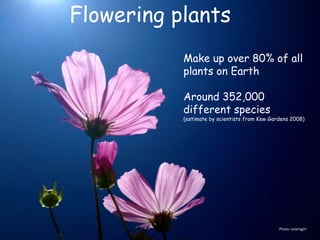
Flowering plants
Make up over 80% of all
plants on Earth
Around 352,000
different species
(estimate by scientists from Kew Gardens 2008)
Photo: solarisgirl
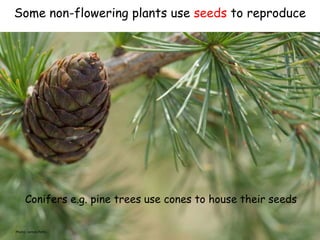
Photo: James Petts
Conifers e.g. pine trees use cones to house their seeds
Some non-flowering plants use seeds to reproduce
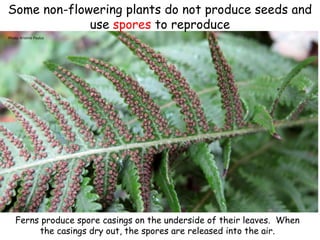
Some non-flowering plants do not produce seeds and
use spores to reproduce
Photo: Kristine Paulus
Ferns produce spore casings on the underside of their leaves. When
the casings dry out, the spores are released into the air.
2. How Can Classification Keys Be Used To
Help Group, Identify and Name Living Things?
Photo: Alexandra Gomez
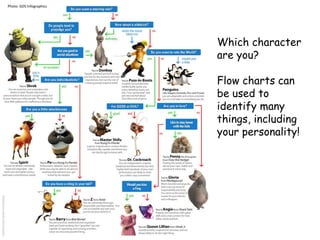
Which character
are you?
Flow charts can
be used to
identify many
things, including
your personality!
Photo: GDS Infographics
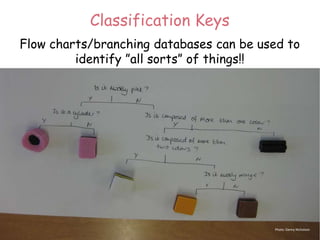
Classification Keys
Flow charts/branching databases can be used to
identify ”all sorts” of things!!
Photo: Danny Nicholson
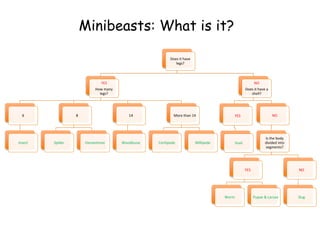
Does it have
legs?
YES
How many
legs?
6
Insect
8
Spider Harvestman
14
Woodlouse
More than 14
Centipede Millipede
NO
Does it have a
shell?
YES
Snail
NO
Is the body
divided into
segments?
YES
Worm Pupae & Larvae
NO
Slug
Minibeasts: What is it?
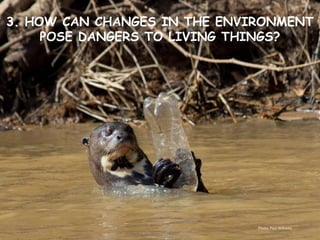
3. HOW CAN CHANGES IN THE ENVIRONMENT
POSE DANGERS TO LIVING THINGS?
Photo: Paul Williams
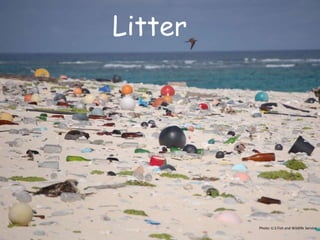
Litter
Photo: U.S Fish and Wildlife Service
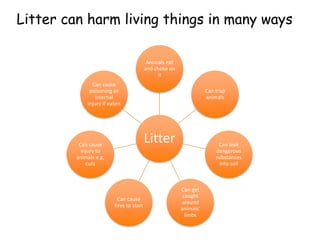
Litter
Animals eat
and choke on
it
Can trap
animals
Can leak
dangerous
substances
into soil
Can get
caught
around
animals’
limbs
Can cause
fires to start
Can cause
injury to
animals e.g.
cuts
Can cause
poisoning or
internal
injury if eaten
Litter can harm living things in many ways
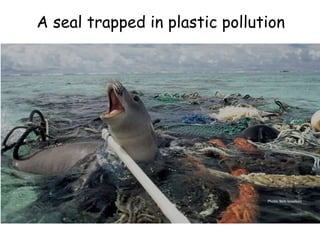
A seal trapped in plastic pollution
Photo: Nels Israelson
Photo: EsotericSapience
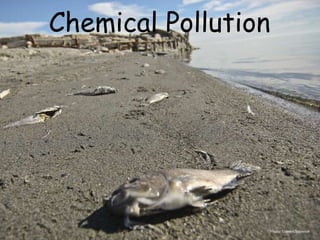
Chemical Pollution
Photo: Marine Photobank
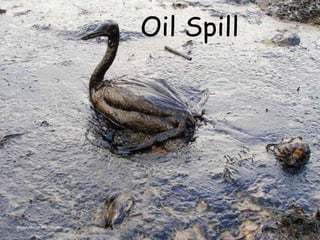
Oil Spill
Photo: crustmania
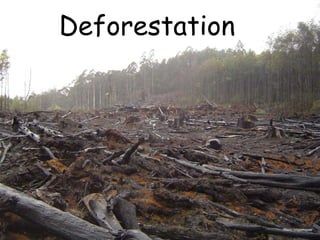
Deforestation
Development
Photo: Dickson Phua
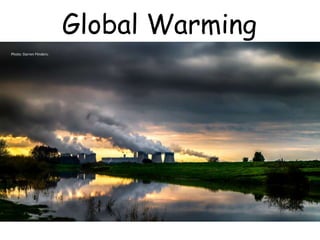
Global Warming
Photo: Darren Flinders:
Photo: Eliott Brown
Photo: Elliott Brown
Photo: Peter O’Connor
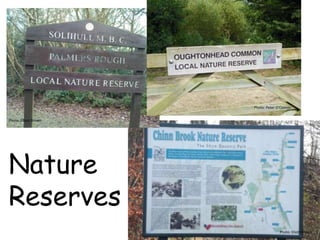
Nature
Reserves
Photo: Elliott Brown Photo: Jon Anderson
Photo: Pat Joyce
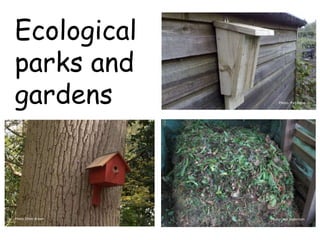
Ecological
parks and
gardens
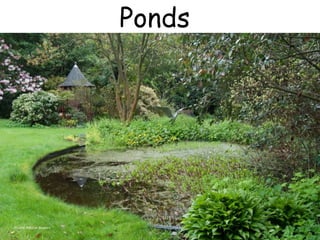
Ponds
Photo: Natalie Bowers
Photo: DncnH
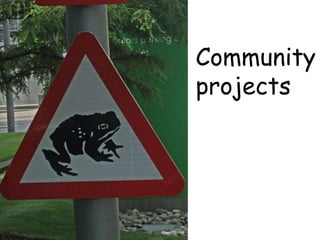
Community
projects
To find out more, please visit
ypte.org.uk
Registered charity number 1153740
Creating a better future by inspiring young people to look after our world
Credits
YPTE would like to thank all the amazing
photographers on Flickr who allow the use of
their photos for non-commercial purposes.
Your photos are helping young people to learn
more about environmental issues. We couldn’t
have created this presentation without you!

LivingthingsYear4presentationforgra.pptx

  • 1.
    Note to teachers Thankyou for downloading this presentation from the Young People’s Trust for the Environment. You are welcome to modify it by adding your own slides or deleting ones you don’t need. Please do not remove the photo credits from any of the photos you use and we would be very grateful if you could leave YPTE’s logo and web address on the relevant pages. We want to encourage more and more young people to learn more about taking care of our world for the future, and the website is a great starting point for this. You can find lots more supporting information on plants and animals by visiting the ‘Explore’ section of https://ypte.org.uk
  • 2.
    Registered charity number1153740 LIVING THINGS AND THEIR HABITATS: YEAR 4 ypte.org.uk
  • 3.
    1. How CanLiving Things Be Grouped? Photo: Caroline
  • 4.
    Biodiversity It is estimatedthat there are 8.7 million species on Earth – 6.5 million on land and 2.2 million in the oceans! Photo: Dan McKay
  • 5.
    If these bookswere randomly displayed, how would you find the book you were looking for? Photo: Samantha Marx
  • 6.
    Photo: Sergey YeliseevPhoto: Dan Foy Grouping makes sense of biodiversity Red Squirrel Grey squirrel Western Pygmy Squirrel Photo: HarmonyonPlanetEarth Indian Giant Squirrel Photo: Ramesh Rasaiyan
  • 7.
    Photo: Tambako TheJaguar Did you know that nearly 99% of chimp genes are the same as human genes? They are our closest relative!
  • 8.
    Plant or Animal? Photo:3dpete Photo: ReflectedSerendipity Most animals move from place to place, whereas plants do not. Most plants have green leaves and use them to make their own food. Animals cannot do this, so they have to eat other plants or animals to get energy.
  • 9.
    1. Vertebrate orinvertebrate? Vertebrates are animals with a backbone. They make up less than 3% of the world’s animals. Photo: Valerie Mammals Photo: Berit Watkin Birds Photo: Tambako The Jaguar Reptiles Photo: Vicki DeLoach Amphibians Fish Photo: SF Brit Each group of vertebrates have important similarities.
  • 10.
    What makes ananimal a mammal? Vertebrate Warm- blooded Give birth to live young Females produce milk to feed young Grow hair or fur Lungs to breathe
  • 11.
    What makes ananimal a bird? Vertebrate Two wings Warm- blooded Lay eggs Feathers Two legs
  • 12.
    What makes ananimal a reptile? Vertebrate Dry skin Scaly skin Cold- blooded Usually lay eggs Breathe air
  • 13.
    What makes ananimal an amphibian? Vertebrate Moist scaleless skin Cold- blooded Breathe oxygen through lungs Lay eggs Live on land and in water
  • 14.
    What makes ananimal a fish? Vertebrate Cold- blooded Covered with scales Fins Breathe underwater through gills Lay eggs Live in water
  • 15.
    Invertebrates There are about30 million species of invertebrates in the world! They can be divided into many groups, each with very different characteristics. Invertebrates Insects Molluscs Crustaceans Arachnids Annelids Myriapods Echinoderms
  • 16.
    Photo: Kathi Insects • Largestgroup of invertebrates • 3 parts to their bodies • 2 eyes • 2 antennae • 6 jointed legs at some point in their lives • Often have wings wasp, bee, butterfly, moth, beetle, ant, fly, dragon fly, praying mantis
  • 17.
    Photo: Martin Cooper Arachnids •2 parts to their body • 8 legs • 2 pincers for biting or piercing prey • No antennae spider, scorpion, tick, mite, daddy-long-legs (harvestman)
  • 18.
    Photo: sankax Crustaceans • Ahard outer shell or case • 10 or more legs • 2 pairs of antennae woodlouse, crab, lobster, barnacle, shrimp
  • 19.
    Annelids • Only onemajor part to their bodies • No limbs • Bodies divided into segments Worm, leech
  • 20.
    Molluscs • One mainpart to their body • Some have a shell • All have one muscly foot or tentacles to help them move around • Most are slimy to help them slide along the ground Photo: bramblejungle snail, slug, octopus, oyster, mussel, clam, squid
  • 21.
    Photo: bramblejungle Myriapods The word“myriapod” literally means “many legs”. Do you know which is the centipede and which is the millipede? Clue: millipedes are cylindrical (like a pencil) and have up to 200 pairs of legs, centipedes are flattened and have between 15 and 177 pairs of legs. Centipede, millipede Photo: Colin Avison
  • 22.
    Photo: Selbe Lynn •Live in the ocean • Most have arms or spines that radiate from the centre of their body • Central body contains organs and mouth for feeding Echinoderms star fish, sea urchin, sea cucumber
  • 23.
    Cnidarians Photo: Wally Gobetz •Water animals that have a simple (usually symmetrical) body with a mouth opening • Stinging cells on tentacles around the mouth catch prey jellyfish, coral, sea anemone
  • 24.
    2. Warm-blooded orcold-blooded? Photo: David Stanley Warm-blooded animals, like these penguins, can stay active whatever the temperature of their surroundings. As the outside temperature rises, this chameleon will become more active. As the outside temperature drops, the chameleon slows down. Photo: Tambako The Jaguar
  • 25.
    Photo: Michael Pennay Arebats birds or mammals?
  • 26.
    Flowering plants Make upover 80% of all plants on Earth Around 352,000 different species (estimate by scientists from Kew Gardens 2008) Photo: solarisgirl
  • 27.
    Photo: James Petts Coniferse.g. pine trees use cones to house their seeds Some non-flowering plants use seeds to reproduce
  • 28.
    Some non-flowering plantsdo not produce seeds and use spores to reproduce Photo: Kristine Paulus Ferns produce spore casings on the underside of their leaves. When the casings dry out, the spores are released into the air.
  • 29.
    2. How CanClassification Keys Be Used To Help Group, Identify and Name Living Things? Photo: Alexandra Gomez
  • 30.
    Which character are you? Flowcharts can be used to identify many things, including your personality! Photo: GDS Infographics
  • 31.
    Classification Keys Flow charts/branchingdatabases can be used to identify ”all sorts” of things!! Photo: Danny Nicholson
  • 32.
    Does it have legs? YES Howmany legs? 6 Insect 8 Spider Harvestman 14 Woodlouse More than 14 Centipede Millipede NO Does it have a shell? YES Snail NO Is the body divided into segments? YES Worm Pupae & Larvae NO Slug Minibeasts: What is it?
  • 33.
    3. HOW CANCHANGES IN THE ENVIRONMENT POSE DANGERS TO LIVING THINGS? Photo: Paul Williams
  • 34.
    Litter Photo: U.S Fishand Wildlife Service
  • 35.
    Litter Animals eat and chokeon it Can trap animals Can leak dangerous substances into soil Can get caught around animals’ limbs Can cause fires to start Can cause injury to animals e.g. cuts Can cause poisoning or internal injury if eaten Litter can harm living things in many ways
  • 36.
    A seal trappedin plastic pollution Photo: Nels Israelson
  • 37.
  • 38.
  • 39.
  • 40.
  • 41.
  • 42.
    Photo: Eliott Brown Photo:Elliott Brown Photo: Peter O’Connor Nature Reserves
  • 43.
    Photo: Elliott BrownPhoto: Jon Anderson Photo: Pat Joyce Ecological parks and gardens
  • 44.
  • 45.
  • 46.
    To find outmore, please visit ypte.org.uk Registered charity number 1153740 Creating a better future by inspiring young people to look after our world
  • 47.
    Credits YPTE would liketo thank all the amazing photographers on Flickr who allow the use of their photos for non-commercial purposes. Your photos are helping young people to learn more about environmental issues. We couldn’t have created this presentation without you!