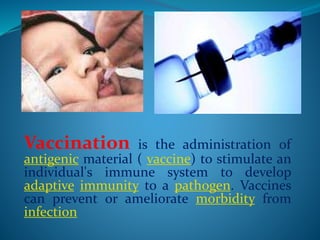
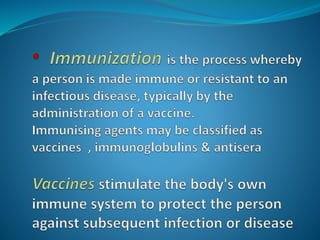
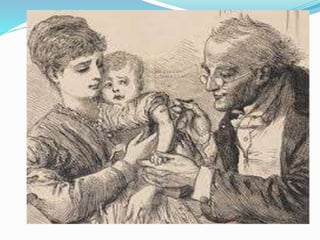
Vaccination is the administration of
antigenic material ( vaccine) to stimulate an
individual's immune system to develop
adaptive immunity to a pathogen. Vaccines

can prevent or ameliorate morbidity from
infection
 It is an immuno biological

substance designed to produce
specific protection against a given
disease .
It stimulate the production of
protective antibody & other
immune mechanisms
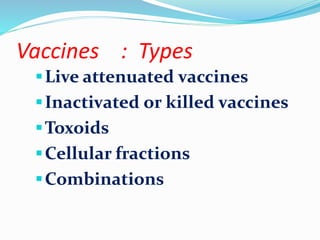
Vaccines : Types
Live attenuated vaccines
Inactivated or killed vaccines
Toxoids
Cellular fractions
Combinations
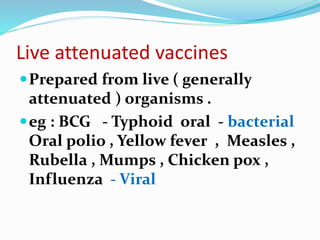
Live attenuated vaccines
Prepared from live ( generally
attenuated ) organisms .
eg : BCG - Typhoid oral - bacterial
Oral polio , Yellow fever , Measles ,
Rubella , Mumps , Chicken pox ,
Influenza - Viral
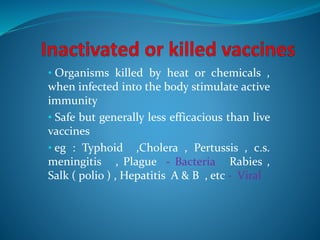
• Organisms killed by heat or chemicals ,
when infected into the body stimulate active
immunity
• Safe but generally less efficacious than live
vaccines
• eg : Typhoid ,Cholera , Pertussis , c.s.
meningitis , Plague - Bacteria Rabies ,
Salk ( polio ) , Hepatitis A & B , etc - Viral
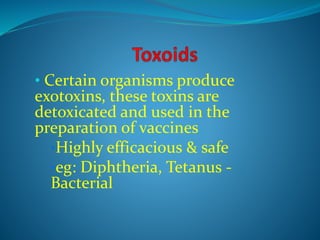
• Certain organisms produce
exotoxins, these toxins are
detoxicated and used in the
preparation of vaccines
•Highly efficacious & safe
•eg: Diphtheria, Tetanus -
Bacterial
• Vaccines which are prepared from
extracted cellular fractions
• Duration of experience is limitted&
their efficacy and safety is high
•eg: Meningococcal vaccine ,
Pneumococcal vaccine, Hepatitis B
polypeptide vaccine
•If more than one kind of immunising agent is
included in the vaccine it is called mixed or
combined vaccine
• eg: DPT- Diphtheria-pertussis-tetanus
• DT- Diphtheria-tetanus
• Hepatitis A& B
• Hepatitis A & typhoid
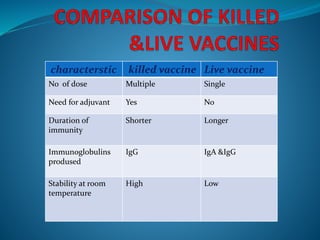
characterstic killed vaccine Live vaccine
No of dose Multiple Single
Need for adjuvant Yes No
Duration of
immunity
Shorter Longer
Immunoglobulins
prodused
IgG IgA &IgG
Stability at room
temperature
High Low
Vaccine reaction
 Common , minor , more serious - reactions
 Local reacton , fever & systemic symptoms can result
as a part of immune responds .
 A successful vaccine reduces these reactions to a
minimum while producing the best possible
immunity.
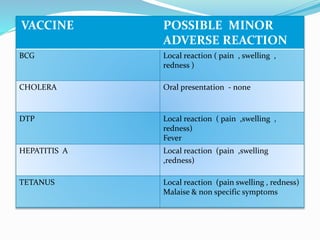
VACCINE POSSIBLE MINOR
ADVERSE REACTION
BCG Local reaction ( pain , swelling ,
redness )
CHOLERA Oral presentation - none
DTP Local reaction ( pain ,swelling ,
redness)
Fever
HEPATITIS A Local reaction (pain ,swelling
,redness)
TETANUS Local reaction (pain swelling , redness)
Malaise & non specific symptoms
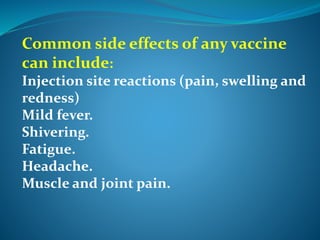
Common side effects of any vaccine
can include:
Injection site reactions (pain, swelling and
redness)
Mild fever.
Shivering.
Fatigue.
Headache.
Muscle and joint pain.
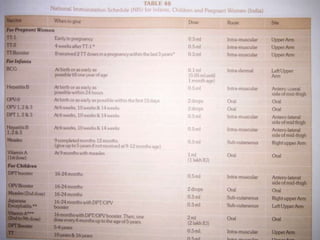
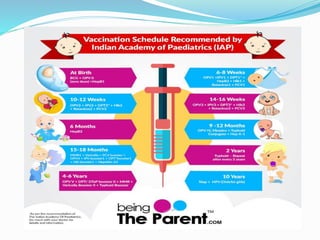
Natonal Immunization Shedule
 The first visit when infant is 6 weeks old
 2 &3 rd visits - at intervals of 1 to 2 months
 Oral polio vaccine may be given concurrently
with DPT
IMMUNOGLOBULINS
 Human immunoglobulin system - 5 major classes -
IgG , IgM , IgA , IgD , IgE & their subclasses
IMMUNITY
 Immunity is defined as the capacity of the body to
resist pathogenic agents.
 It is an ability of body to resist the entry of different
types of foreignbodies.
Antisera or antitoxins
 The term antiserum is applied to materials prepared in
animals
 Originally passive immunisation was achieved by the
administration of antisera or antitoxins prepared from
non human sources (horse)
 Administration of antisera may occasionally give rise
to serum sickness & anaphylactic shock
due to abnormal sensitivity of the recipient .
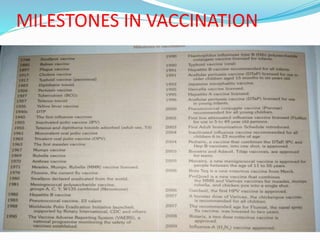
MILESTONES IN VACCINATION
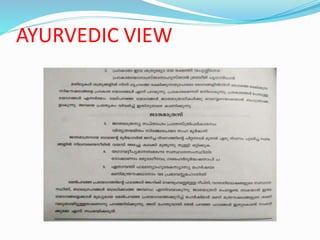
AYURVEDIC VIEW
Vaccines
Vaccines
Vaccines
Vaccines
Vaccines
Vaccines
Vaccines
Vaccines
Vaccines
Vaccines
Vaccines
Vaccines

Vaccines

  • 4.
    Vaccination is theadministration of antigenic material ( vaccine) to stimulate an individual's immune system to develop adaptive immunity to a pathogen. Vaccines can prevent or ameliorate morbidity from infection
  • 6.
     It isan immuno biological substance designed to produce specific protection against a given disease . It stimulate the production of protective antibody & other immune mechanisms
  • 7.
    Vaccines : Types Liveattenuated vaccines Inactivated or killed vaccines Toxoids Cellular fractions Combinations
  • 8.
    Live attenuated vaccines Preparedfrom live ( generally attenuated ) organisms . eg : BCG - Typhoid oral - bacterial Oral polio , Yellow fever , Measles , Rubella , Mumps , Chicken pox , Influenza - Viral
  • 9.
    • Organisms killedby heat or chemicals , when infected into the body stimulate active immunity • Safe but generally less efficacious than live vaccines • eg : Typhoid ,Cholera , Pertussis , c.s. meningitis , Plague - Bacteria Rabies , Salk ( polio ) , Hepatitis A & B , etc - Viral
  • 10.
    • Certain organismsproduce exotoxins, these toxins are detoxicated and used in the preparation of vaccines •Highly efficacious & safe •eg: Diphtheria, Tetanus - Bacterial
  • 11.
    • Vaccines whichare prepared from extracted cellular fractions • Duration of experience is limitted& their efficacy and safety is high •eg: Meningococcal vaccine , Pneumococcal vaccine, Hepatitis B polypeptide vaccine
  • 12.
    •If more thanone kind of immunising agent is included in the vaccine it is called mixed or combined vaccine • eg: DPT- Diphtheria-pertussis-tetanus • DT- Diphtheria-tetanus • Hepatitis A& B • Hepatitis A & typhoid
  • 14.
    characterstic killed vaccineLive vaccine No of dose Multiple Single Need for adjuvant Yes No Duration of immunity Shorter Longer Immunoglobulins prodused IgG IgA &IgG Stability at room temperature High Low
  • 15.
    Vaccine reaction  Common, minor , more serious - reactions  Local reacton , fever & systemic symptoms can result as a part of immune responds .  A successful vaccine reduces these reactions to a minimum while producing the best possible immunity.
  • 16.
    VACCINE POSSIBLE MINOR ADVERSEREACTION BCG Local reaction ( pain , swelling , redness ) CHOLERA Oral presentation - none DTP Local reaction ( pain ,swelling , redness) Fever HEPATITIS A Local reaction (pain ,swelling ,redness) TETANUS Local reaction (pain swelling , redness) Malaise & non specific symptoms
  • 17.
    Common side effectsof any vaccine can include: Injection site reactions (pain, swelling and redness) Mild fever. Shivering. Fatigue. Headache. Muscle and joint pain.
  • 18.
    Natonal Immunization Shedule The first visit when infant is 6 weeks old  2 &3 rd visits - at intervals of 1 to 2 months  Oral polio vaccine may be given concurrently with DPT
  • 23.
    IMMUNOGLOBULINS  Human immunoglobulinsystem - 5 major classes - IgG , IgM , IgA , IgD , IgE & their subclasses IMMUNITY  Immunity is defined as the capacity of the body to resist pathogenic agents.  It is an ability of body to resist the entry of different types of foreignbodies.
  • 24.
    Antisera or antitoxins The term antiserum is applied to materials prepared in animals  Originally passive immunisation was achieved by the administration of antisera or antitoxins prepared from non human sources (horse)  Administration of antisera may occasionally give rise to serum sickness & anaphylactic shock due to abnormal sensitivity of the recipient .
  • 26.
  • 29.