VACCINES
BY HASNAT TARIQ
VACCINES
 Vaccines are parts of a pathogen or whole
organisms that can be given to human or animals
by mouth or by injection to stimulate the immune
system against infection by those pathogens.
HOW VACCINE WORKS?
 When foreign invaders such as bacteria or viruses enter the body, immune cells
respond by producing antibodies. These antibodies fight the invader known as an
antigen and protect against further infection.
 The first time the body faces a particular invader, it can take several days to
ramp up this antibody response.
 That's where vaccines come in. Vaccines are made of dead or weakened antigens.
They can't cause an infection, but the immune system still sees them as an enemy
and produces antibodies in response. After the threat has passed, many of the
antibodies will break down, but immune cells called memory cells remain in the
body.
 When the body encounters that antigen again, the memory cells produce
antibodies fast and strike down the invader before it's too late.
CLASSIFICATION OF VACCINES
1. SUBUNIT VACCINES
2. ATTENUATED VACCINES
3. INACTIVATED (KILLED) VACCINES
4. DNA BASED VACCINES
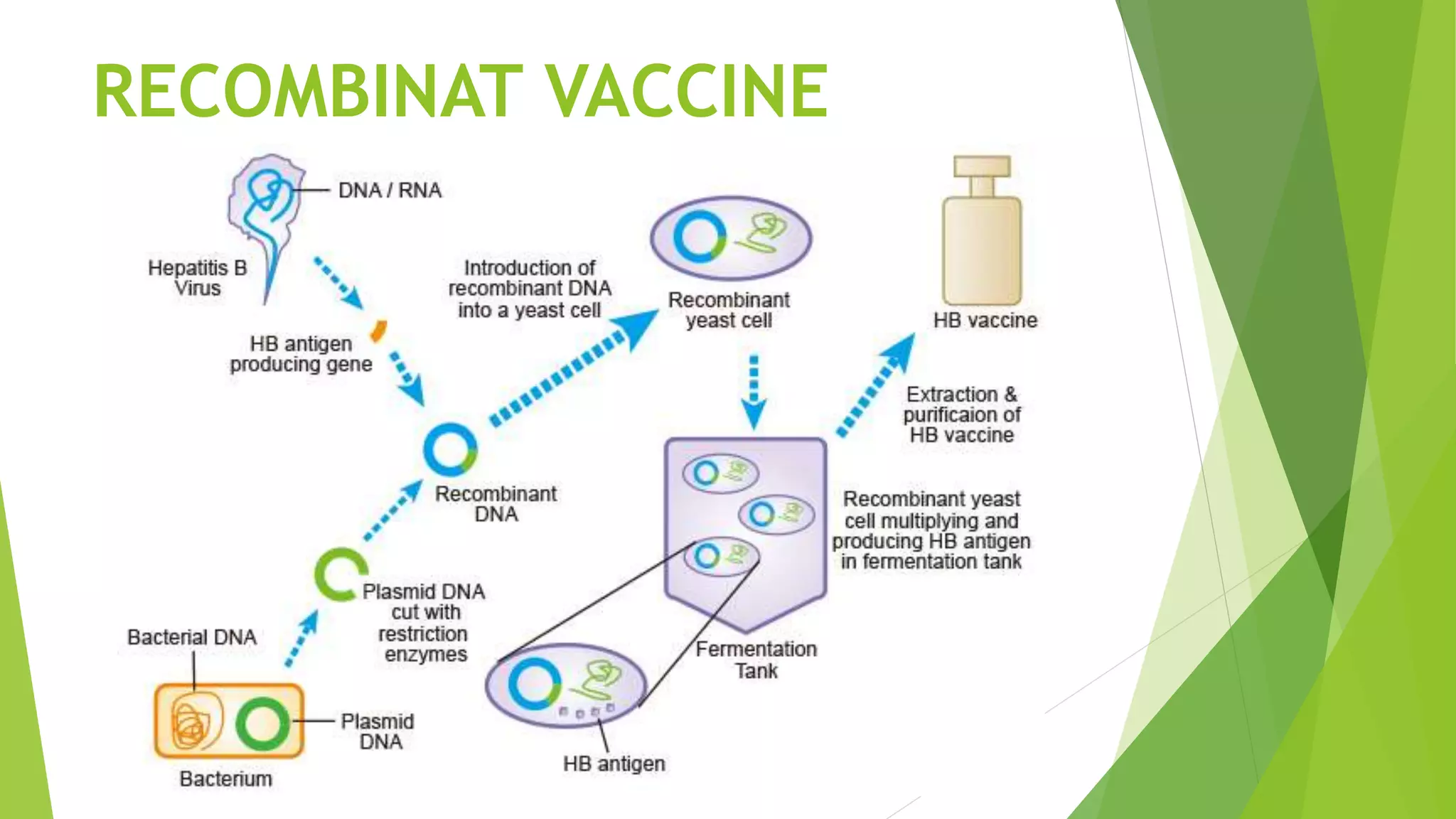
1. SUBUNIT VACCINES
 Subunit vaccines are vaccines
that use only part of the disease-
causing virus or bacteria such as
proteins or lipids.
 Example: Hepatitis B virus
vaccine.
RECOMBINAT VACCINE
2. ATTENUATED VACCINES
 Attenuated vaccines are made using
‘wild’ viruses or bacteria that have been
attenuated, or weakened, before being
included in the vaccine.
 Rotavirus, chickenpox, and measles,
mumps and rubella vaccines are live
attenuated vaccines.
3. INACTIVATED VACCINES
 An inactivated vaccine (or killed vaccine) is a vaccine consisting
of virus particles, bacteria, or other pathogens that have been grown
in culture and then killed using a method such as heat or formaldehyde.
 These types of vaccine can be safely given to a person with an impaired
immune system response.
 Hepatitis A, influenza and polio vaccines are inactivated vaccines.
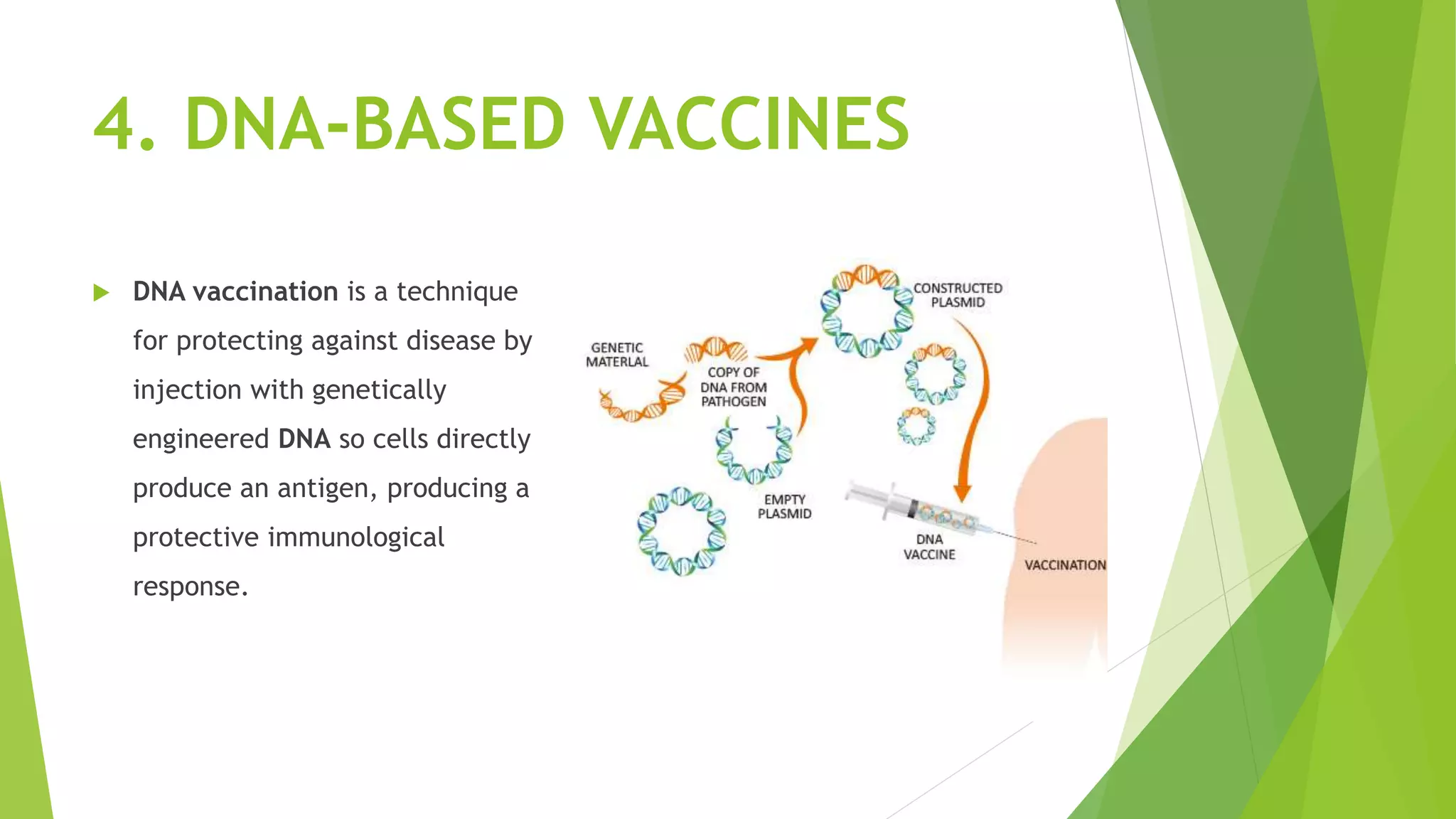
4. DNA-BASED VACCINES
 DNA vaccination is a technique
for protecting against disease by
injection with genetically
engineered DNA so cells directly
produce an antigen, producing a
protective immunological
response.
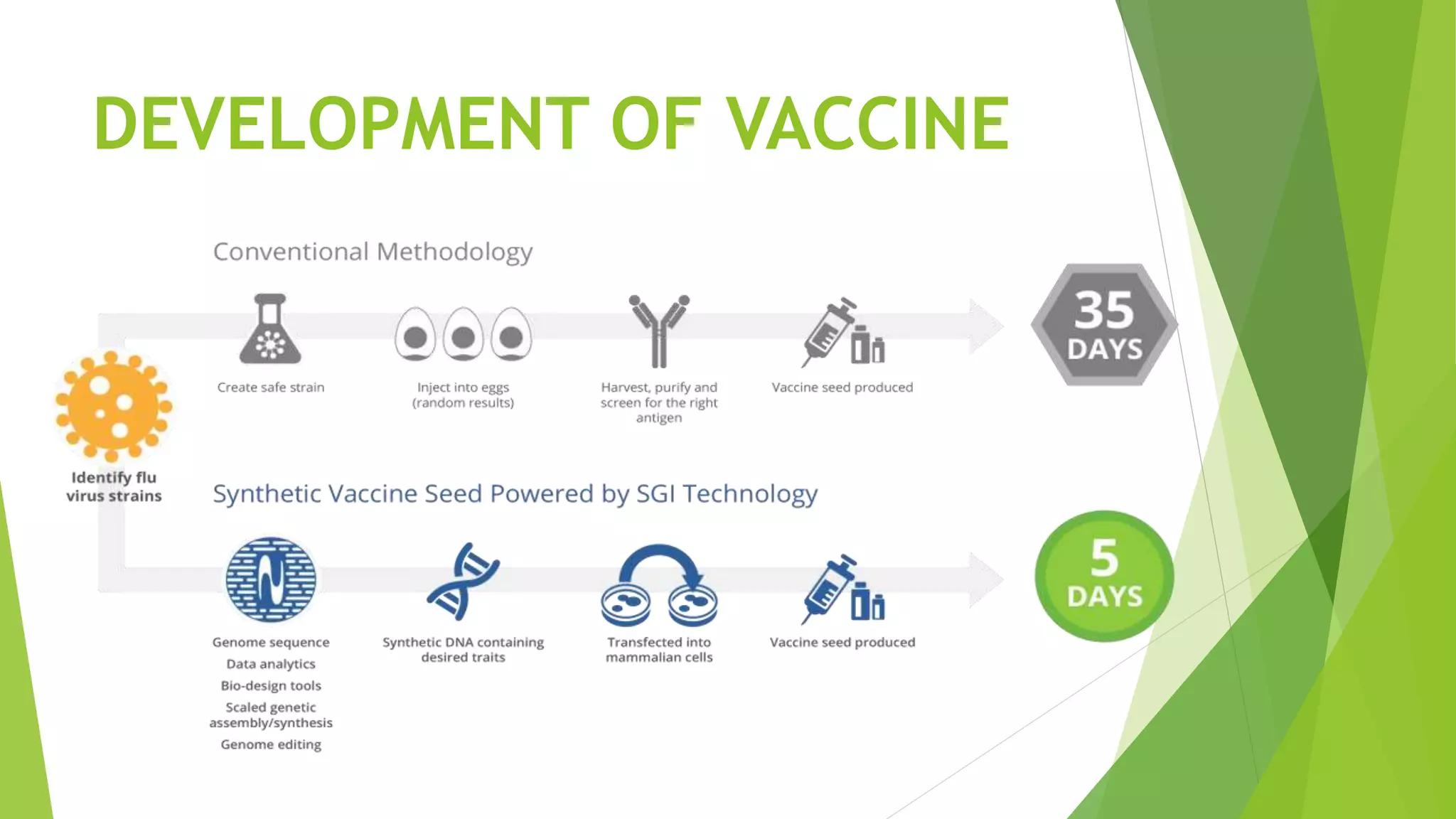
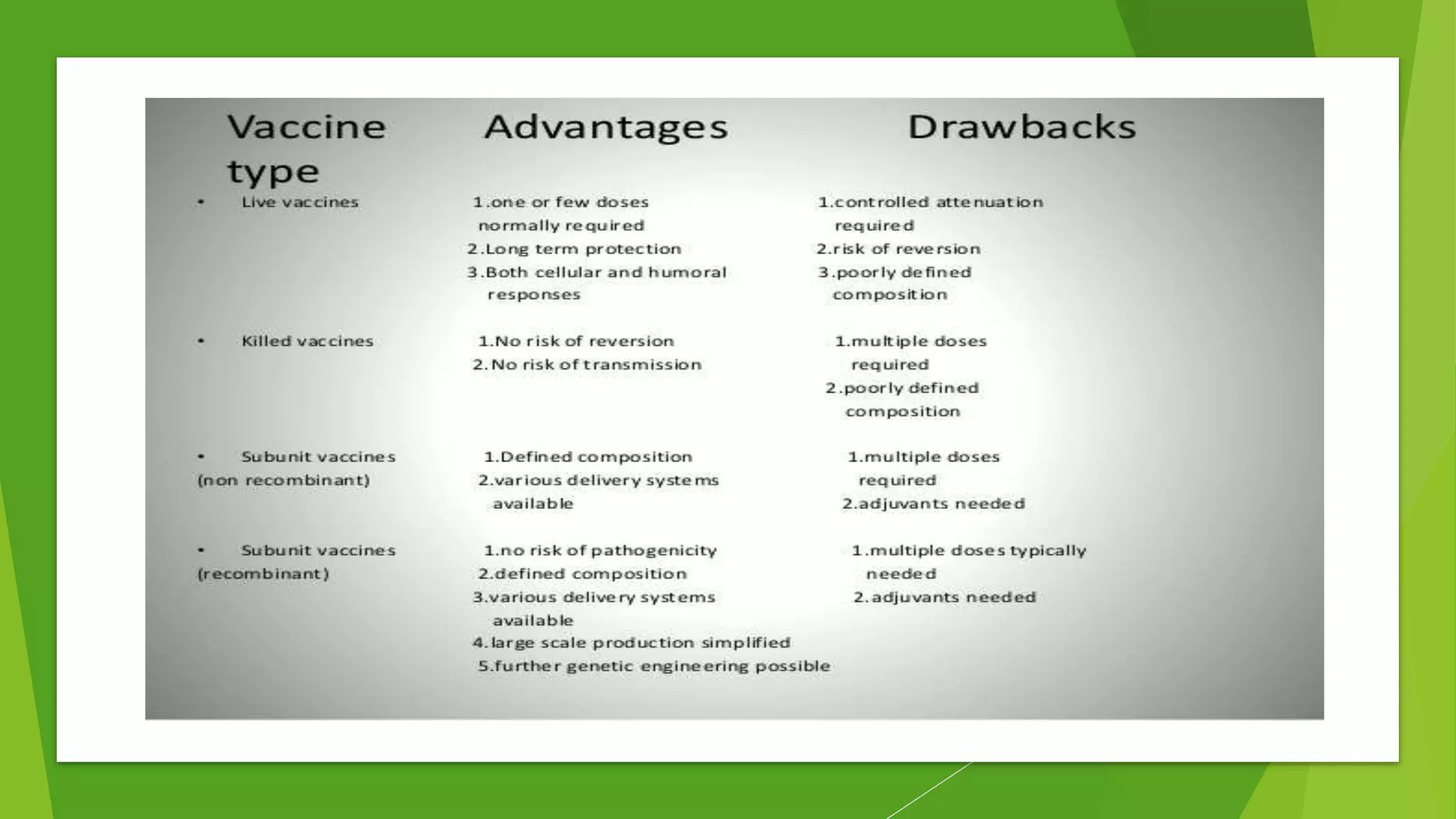
DEVELOPMENT OF VACCINE
FUTURE OF VACCINATION
 New Development Techniques (Live recombinant vaccines, DNA
vaccines)
 New Delivery Techniques
 HIV Vaccines
 Cancer Vaccines
 Novel Influenza Vaccines
 TB Vaccines
THANK YOU

Vaccines

  • 1.
  • 2.
    VACCINES  Vaccines areparts of a pathogen or whole organisms that can be given to human or animals by mouth or by injection to stimulate the immune system against infection by those pathogens.
  • 3.
    HOW VACCINE WORKS? When foreign invaders such as bacteria or viruses enter the body, immune cells respond by producing antibodies. These antibodies fight the invader known as an antigen and protect against further infection.  The first time the body faces a particular invader, it can take several days to ramp up this antibody response.  That's where vaccines come in. Vaccines are made of dead or weakened antigens. They can't cause an infection, but the immune system still sees them as an enemy and produces antibodies in response. After the threat has passed, many of the antibodies will break down, but immune cells called memory cells remain in the body.  When the body encounters that antigen again, the memory cells produce antibodies fast and strike down the invader before it's too late.
  • 4.
    CLASSIFICATION OF VACCINES 1.SUBUNIT VACCINES 2. ATTENUATED VACCINES 3. INACTIVATED (KILLED) VACCINES 4. DNA BASED VACCINES
  • 5.
    1. SUBUNIT VACCINES Subunit vaccines are vaccines that use only part of the disease- causing virus or bacteria such as proteins or lipids.  Example: Hepatitis B virus vaccine.
  • 6.
  • 7.
    2. ATTENUATED VACCINES Attenuated vaccines are made using ‘wild’ viruses or bacteria that have been attenuated, or weakened, before being included in the vaccine.  Rotavirus, chickenpox, and measles, mumps and rubella vaccines are live attenuated vaccines.
  • 8.
    3. INACTIVATED VACCINES An inactivated vaccine (or killed vaccine) is a vaccine consisting of virus particles, bacteria, or other pathogens that have been grown in culture and then killed using a method such as heat or formaldehyde.  These types of vaccine can be safely given to a person with an impaired immune system response.  Hepatitis A, influenza and polio vaccines are inactivated vaccines.
  • 9.
    4. DNA-BASED VACCINES DNA vaccination is a technique for protecting against disease by injection with genetically engineered DNA so cells directly produce an antigen, producing a protective immunological response.
  • 10.
  • 12.
    FUTURE OF VACCINATION New Development Techniques (Live recombinant vaccines, DNA vaccines)  New Delivery Techniques  HIV Vaccines  Cancer Vaccines  Novel Influenza Vaccines  TB Vaccines
  • 13.