ALLPPT.com _ Free PowerPoint Templates, Diagrams and Charts
V- MODEL
DESIGN
Lecture 2 part 2
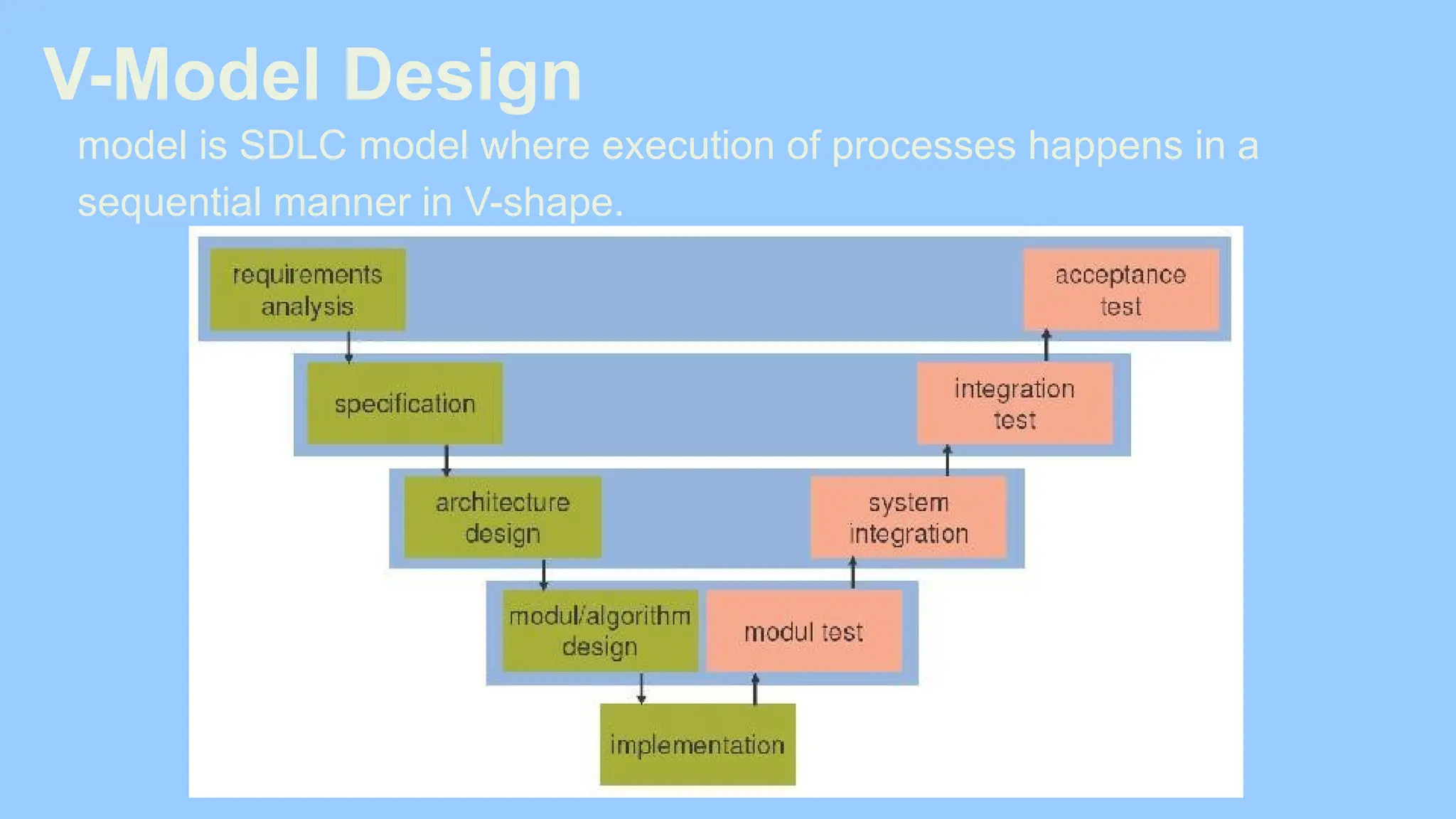
model is SDLC model where execution of processes happens in a
sequential manner in V-shape.
V-Model Design
V-Model
V- model means Verification and Validation
model. Just like the waterfall model, the
V-Shaped life cycle is a sequential path of
execution of processes.
Testing of the product is planned in parallel
with a corresponding phase of development
in V-model.
V-Model
Business Requirement Analysis
This is the first phase in the development
cycle where the product requirements are
understood from the customer perspective
V-Model
System Design
Once you have the clear and detailed
product requirements, it’s time to design
the complete system.
V-Model
Architectural Design
Architectural specifications are understood
and designed in this phase. This is also
referred to as High Level Design
(HLD).
V-Model
Module Design
In this phase the detailed internal design
for all the system modules is specified,
referred to as Low Level Design (LLD).
V-Model
Coding Phase
-The actual coding of the system modules
designed in the design phase is taken up in the
Coding phase.
V-Model
Acceptance Testing
Acceptance testing is associated with the
business requirement analysis phase and involves
testing the product in user environment.
System Testing
System testing is directly associated with
the System design phase. System tests check the
entire system functionality and the communication
of the system under development with external
systems.
V-Model
Unit Testing:
Unit tests designed in the module design phase are
executed on the code during this validation phase.
Integration Testing
Integration testing is associated with the architectural
design phase. Integration tests are performed to test
the coexistence and communication of the internal
modules within the system.
V-Model
Disadvantages of V-model:
•Very rigid and least flexible.
•Software is developed during the implementation
phase, so no early prototypes of the software are
produced.
•If any changes happen in midway, then the test
documents along with requirement documents
has to be updated.
V-Model
Advantages of V-model:
•Simple and easy to use.
•Testing activities like planning, test designing
happens well before coding. This saves a lot of
time. Hence higher chance of success over the
waterfall model.
•Proactive defect tracking – that is defects are
found at early stage.
•Avoids the downward flow of the defects.
•Works well for small projects where
requirements are easily understood.
V-Model
-Proactive defect tracking – that is defects
are found at early stage.
-Avoids the downward flow of the defects.
-Works well for small projects where
requirements are easily understood.
V-Model
When to use the V-model:
-The V-shaped model should be used for small
to medium sized projects where requirements
are clearly defined and fixed.
-The V-Shaped model should be chosen when
ample technical resources are available with
needed technical expertise.
SE lect2_2.pptxv model design software models

  • 1.
    ALLPPT.com _ FreePowerPoint Templates, Diagrams and Charts V- MODEL DESIGN Lecture 2 part 2
  • 2.
    model is SDLCmodel where execution of processes happens in a sequential manner in V-shape. V-Model Design
  • 3.
    V-Model V- model meansVerification and Validation model. Just like the waterfall model, the V-Shaped life cycle is a sequential path of execution of processes. Testing of the product is planned in parallel with a corresponding phase of development in V-model.
  • 4.
    V-Model Business Requirement Analysis Thisis the first phase in the development cycle where the product requirements are understood from the customer perspective
  • 5.
    V-Model System Design Once youhave the clear and detailed product requirements, it’s time to design the complete system.
  • 6.
    V-Model Architectural Design Architectural specificationsare understood and designed in this phase. This is also referred to as High Level Design (HLD).
  • 7.
    V-Model Module Design In thisphase the detailed internal design for all the system modules is specified, referred to as Low Level Design (LLD).
  • 8.
    V-Model Coding Phase -The actualcoding of the system modules designed in the design phase is taken up in the Coding phase.
  • 9.
    V-Model Acceptance Testing Acceptance testingis associated with the business requirement analysis phase and involves testing the product in user environment. System Testing System testing is directly associated with the System design phase. System tests check the entire system functionality and the communication of the system under development with external systems.
  • 10.
    V-Model Unit Testing: Unit testsdesigned in the module design phase are executed on the code during this validation phase. Integration Testing Integration testing is associated with the architectural design phase. Integration tests are performed to test the coexistence and communication of the internal modules within the system.
  • 11.
    V-Model Disadvantages of V-model: •Veryrigid and least flexible. •Software is developed during the implementation phase, so no early prototypes of the software are produced. •If any changes happen in midway, then the test documents along with requirement documents has to be updated.
  • 12.
    V-Model Advantages of V-model: •Simpleand easy to use. •Testing activities like planning, test designing happens well before coding. This saves a lot of time. Hence higher chance of success over the waterfall model. •Proactive defect tracking – that is defects are found at early stage. •Avoids the downward flow of the defects. •Works well for small projects where requirements are easily understood.
  • 13.
    V-Model -Proactive defect tracking– that is defects are found at early stage. -Avoids the downward flow of the defects. -Works well for small projects where requirements are easily understood.
  • 14.
    V-Model When to usethe V-model: -The V-shaped model should be used for small to medium sized projects where requirements are clearly defined and fixed. -The V-Shaped model should be chosen when ample technical resources are available with needed technical expertise.