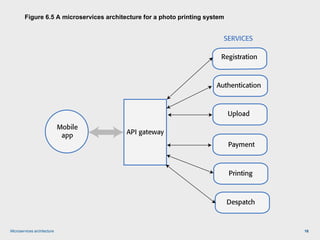
- Microservices architecture involves breaking down applications into small, independent services that communicate with each other. Each service runs in its own process and focuses on doing a small job well.
- Key benefits include increased modularity, independent deployability of services, and ability to scale services independently as demand changes. However, increased communication between services adds complexity.
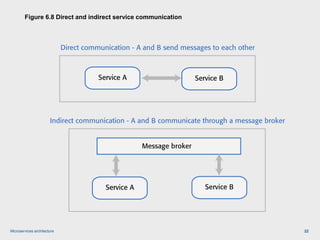
- Services communicate asynchronously using lightweight protocols like REST and HTTP. Data is kept locally within each service and eventual consistency between services is acceptable.