
PULSE OXIMETRY
• Pulse oximetry is a non-invasive method of
indirectly evaluating arterial oxygenation through
measurement of peripheral saturation of
haemoglobin.
• Provides an estimate of arterial oxyhemoglobin
saturation by using selected wavelengths of light to
noninvasively determine the saturation of
oxyhemoglobin.
RED FLAG!
• Values obtained by pulse oximetry are unreliable in the
presence of vasoconstricting medications, IV
dyes, shock, cardiac arrest, severe anemia, and
dyshemoglobins
(eg, carboxyhemoglobin, methemoglobin).
Indication

– The basic rationale behind pulse oximetry is that
hypoxaemia may be detected early and treatment can
begin before serious or irreversible adverse effects occur.
– Because pulse oximetry is non-invasive it can used in
wards, continuously thus reducing the need for arterial
blood gases (ABGs), Extremely important for critically ill
patients & in smaller facilities with limited pathology
support.
– Monitor adequacy of oxygen saturation &Evaluate response
to therapy.
– Monitor unstable patient who may experience sudden
changes in blood oxygen level.
– Determine supplemental oxygen needs at rest, with
exercise, and during sleep.
– In many situations, such as during the admission process or
when the client is receiving supplemental oxygen, pulse
oximetry is considered a component of baseline vital signs.
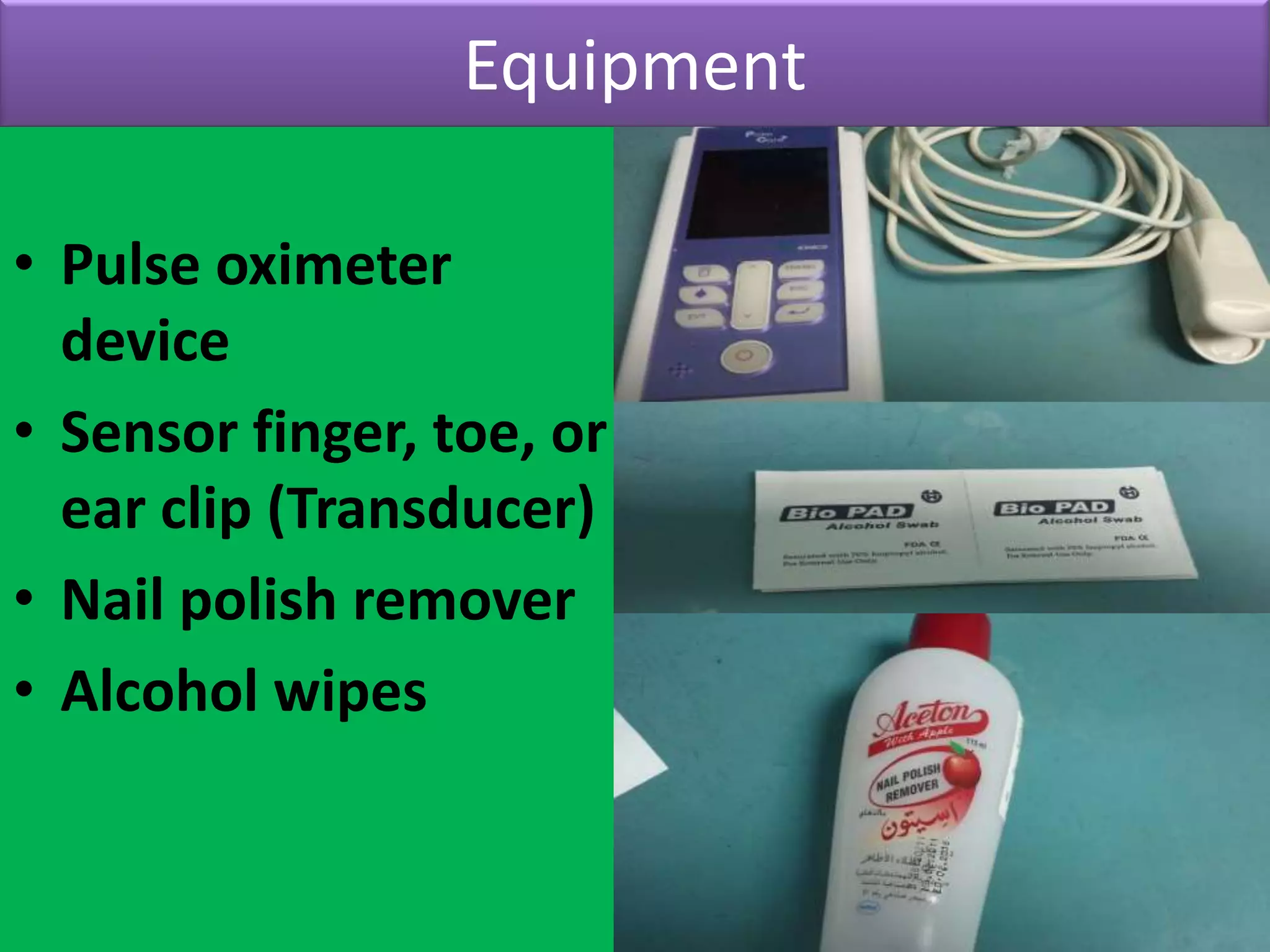
Equipment
• Pulse oximeter
device
• Sensor finger, toe, or
ear clip (Transducer)
• Nail polish remover
• Alcohol wipes
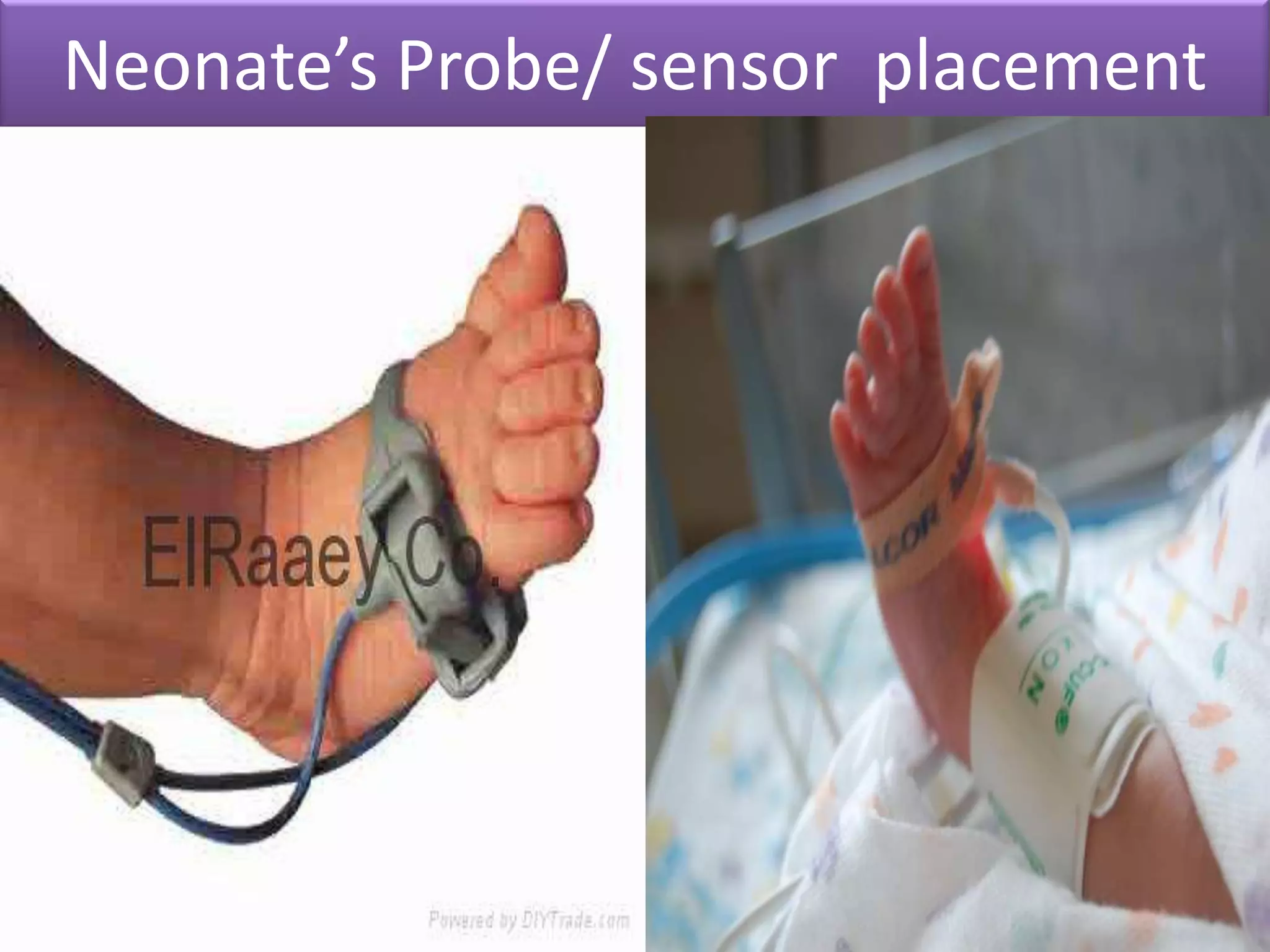
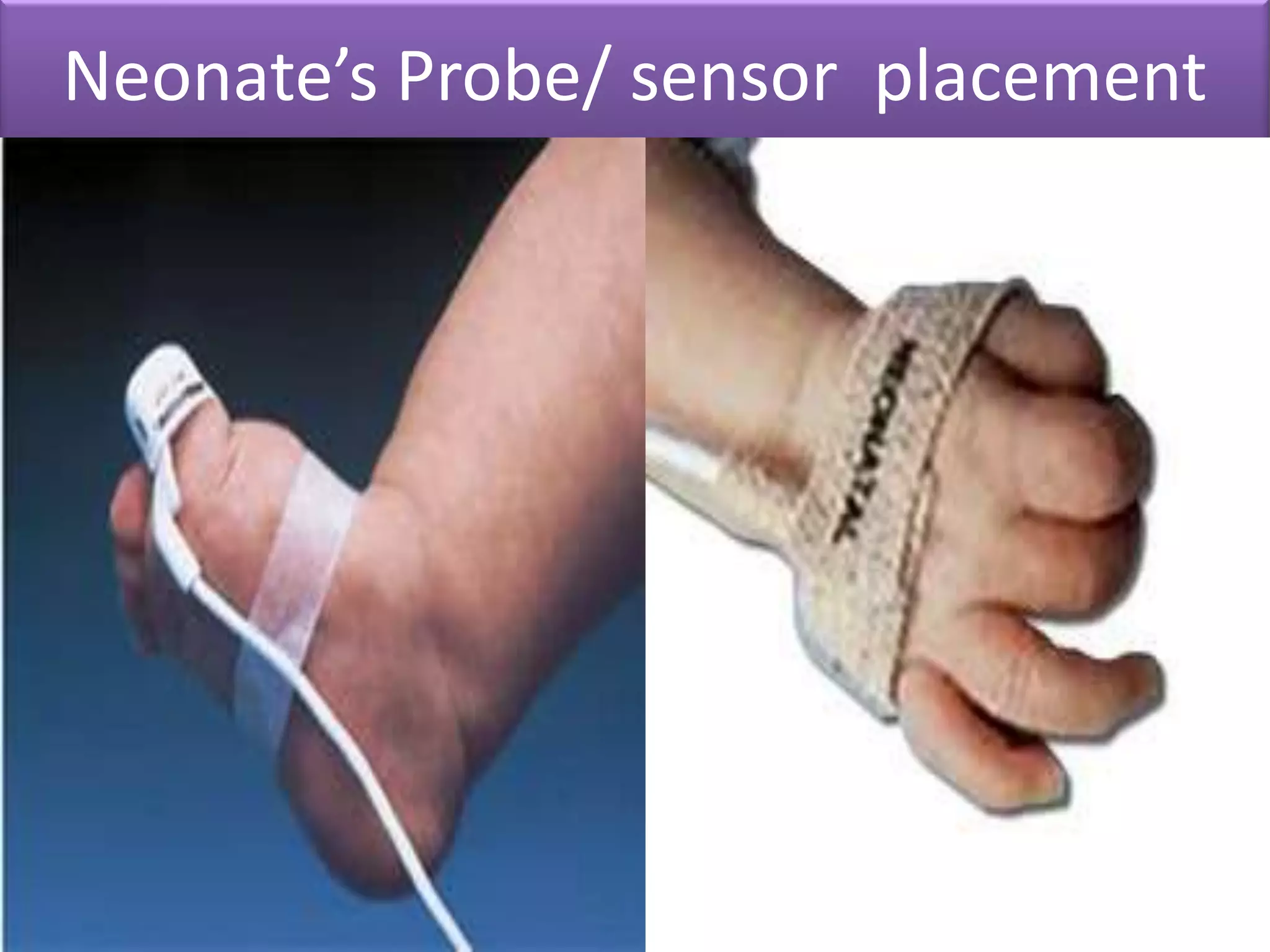
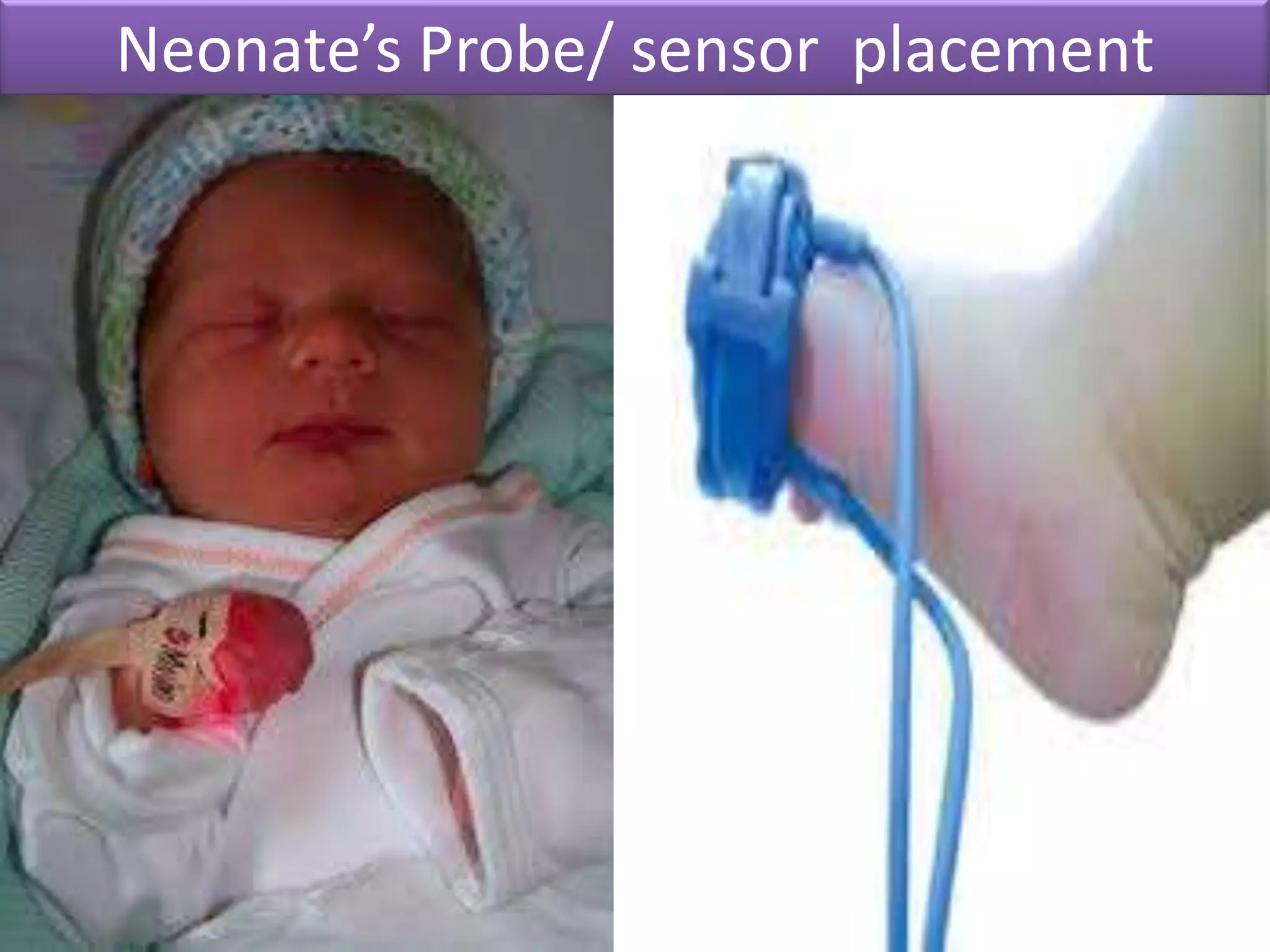
Neonate’s Probe/ sensor placement
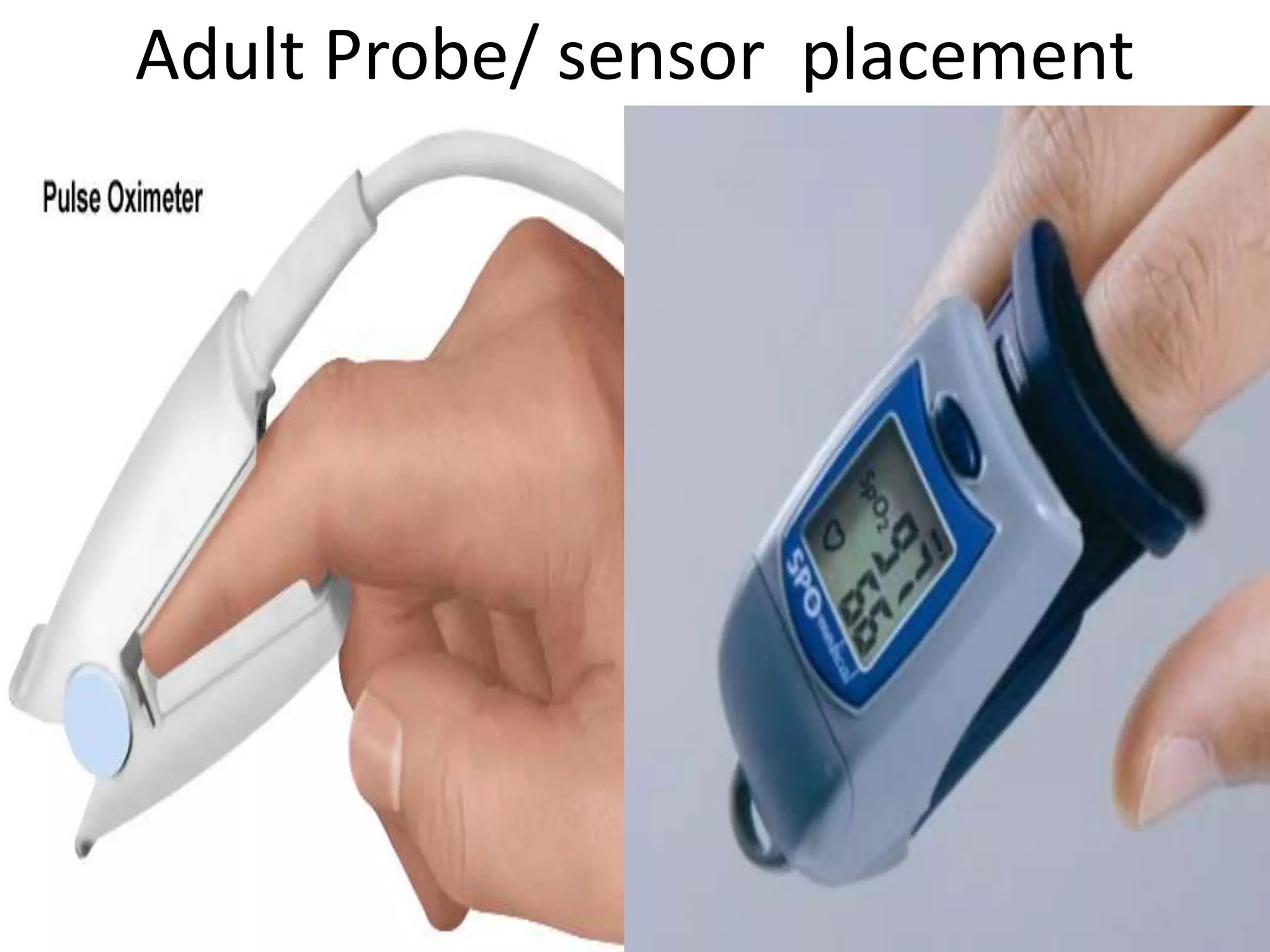
Adult Probe/ sensor placement
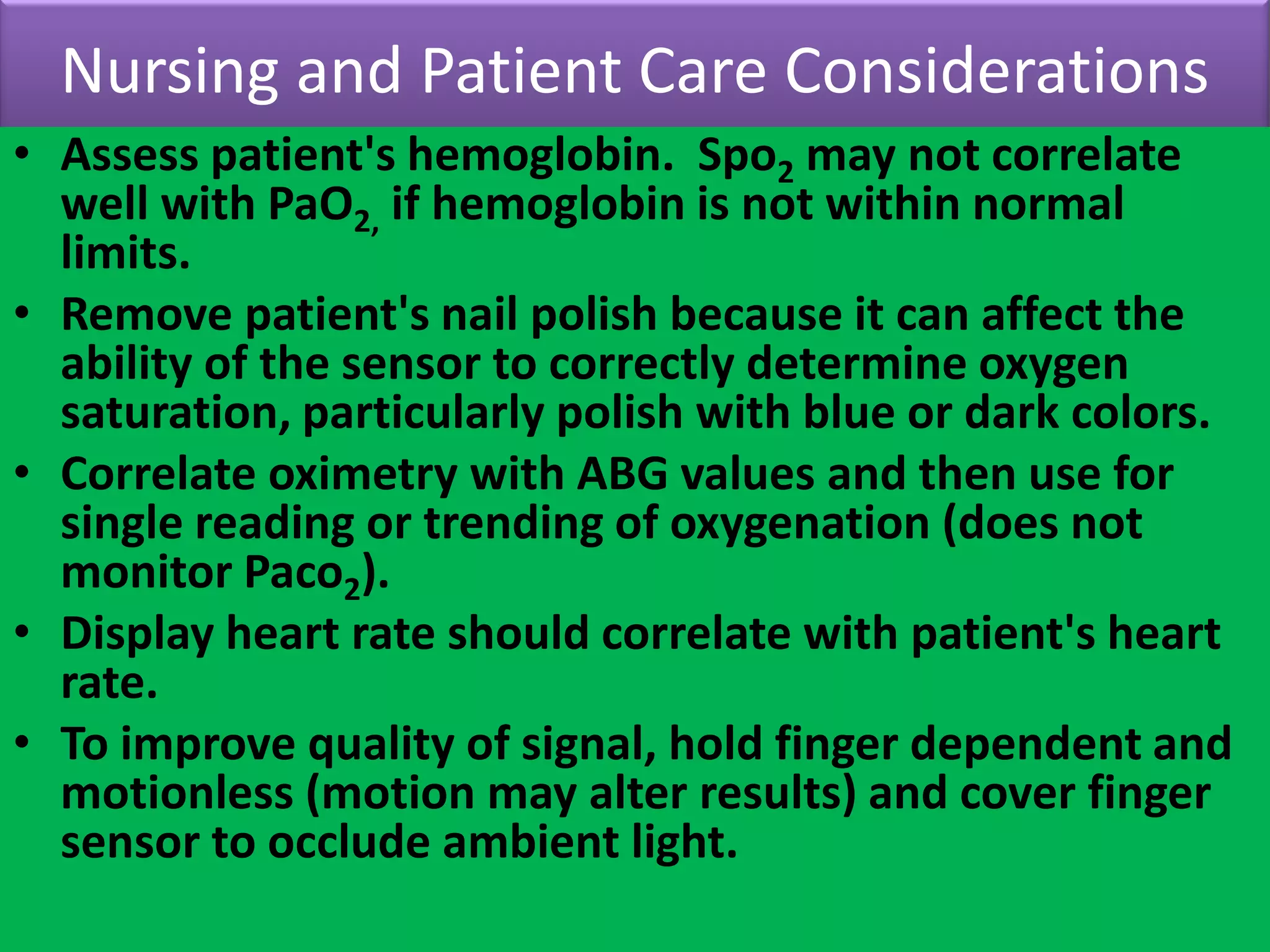
Nursing and Patient Care Considerations
• Assess patient's hemoglobin. Spo2 may not correlate
well with PaO2, if hemoglobin is not within normal
limits.
• Remove patient's nail polish because it can affect the
ability of the sensor to correctly determine oxygen
saturation, particularly polish with blue or dark colors.
• Correlate oximetry with ABG values and then use for
single reading or trending of oxygenation (does not
monitor Paco2).
• Display heart rate should correlate with patient's heart
rate.
• To improve quality of signal, hold finger dependent and
motionless (motion may alter results) and cover finger
sensor to occlude ambient light.
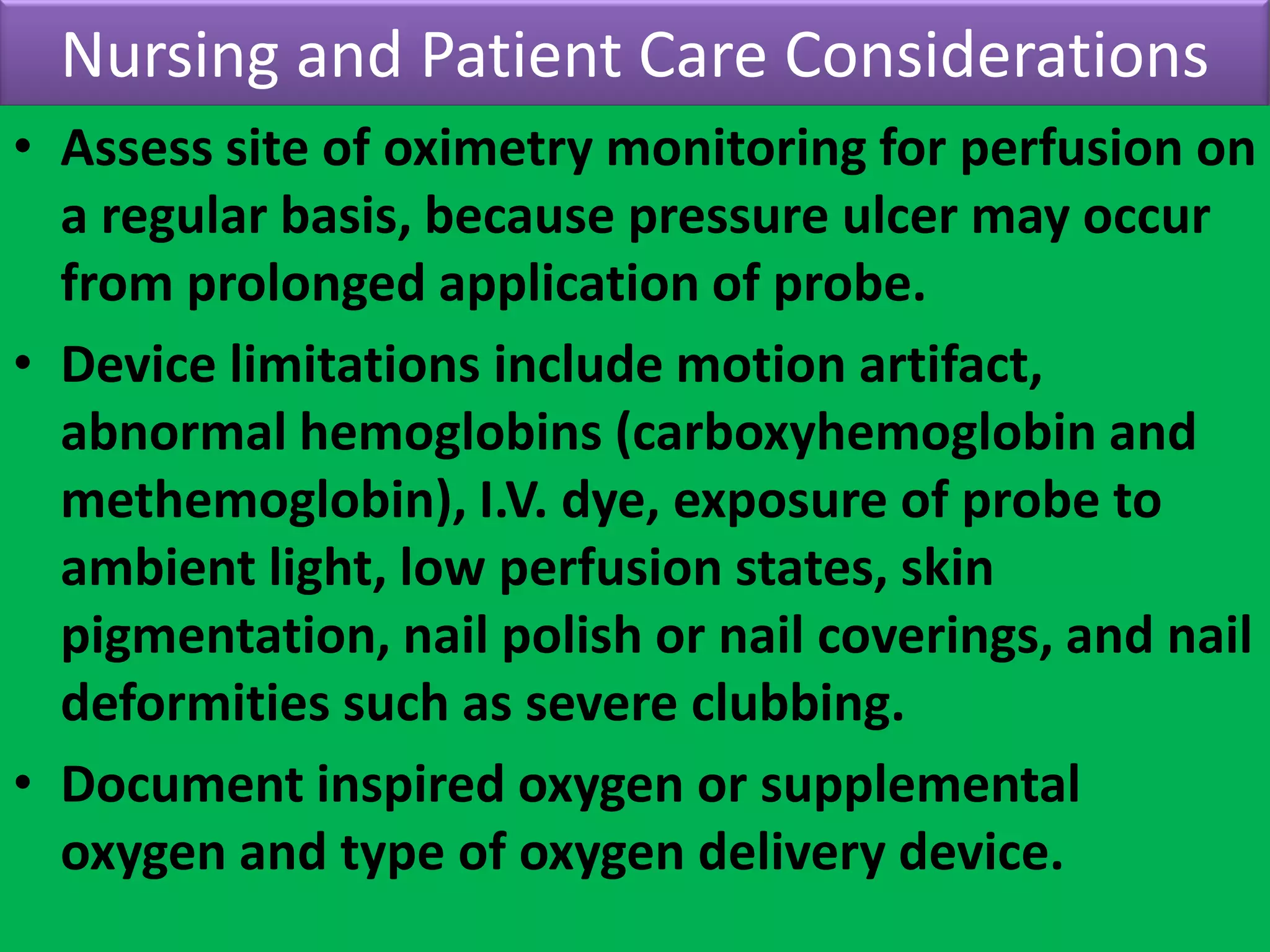
Nursing and Patient Care Considerations
• Assess site of oximetry monitoring for perfusion on
a regular basis, because pressure ulcer may occur
from prolonged application of probe.
• Device limitations include motion artifact,
abnormal hemoglobins (carboxyhemoglobin and
methemoglobin), I.V. dye, exposure of probe to
ambient light, low perfusion states, skin
pigmentation, nail polish or nail coverings, and nail
deformities such as severe clubbing.
• Document inspired oxygen or supplemental
oxygen and type of oxygen delivery device.
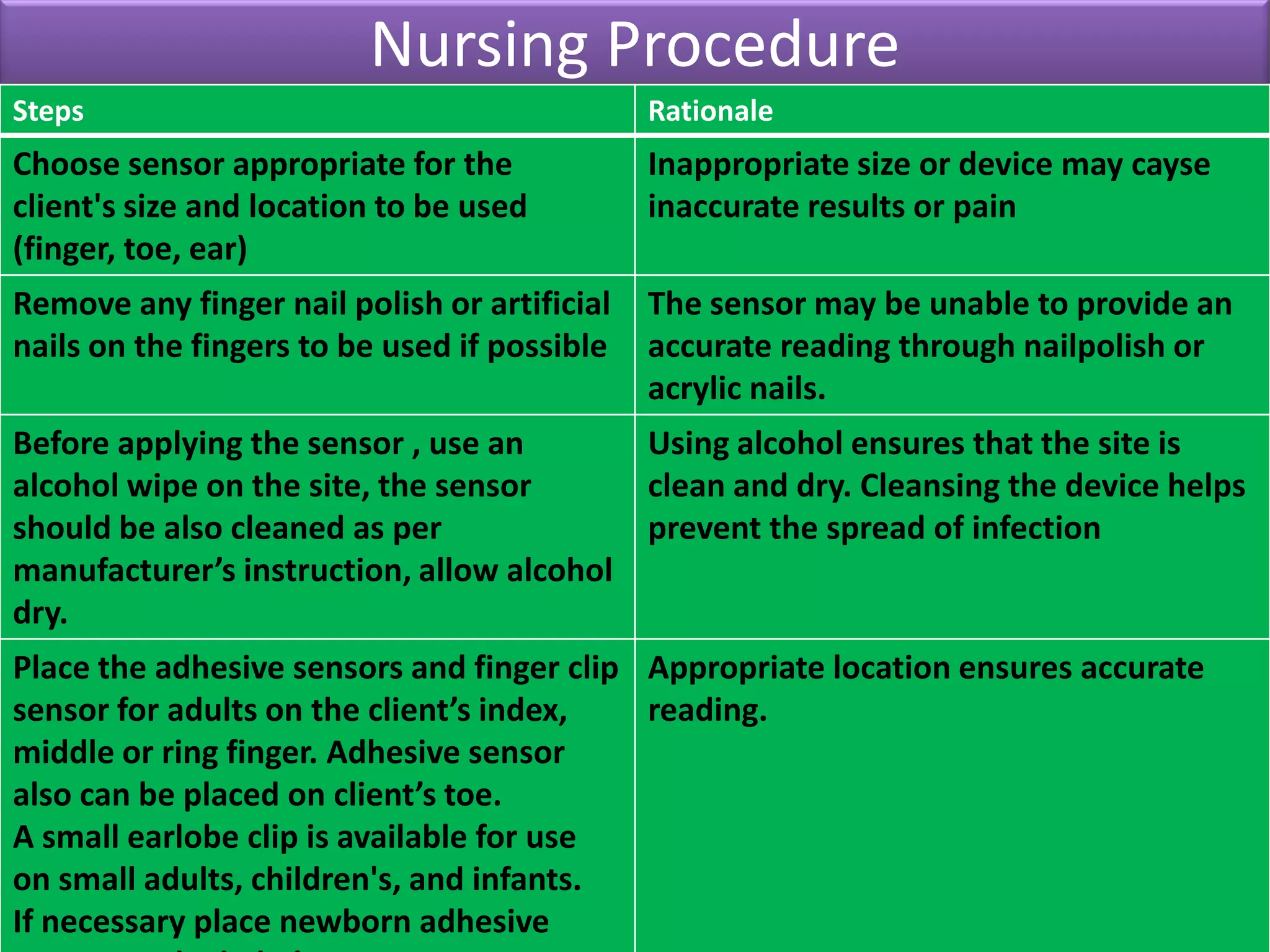
Nursing Procedure
Steps

Rationale

Choose sensor appropriate for the
client's size and location to be used
(finger, toe, ear)

Inappropriate size or device may cayse
inaccurate results or pain

Remove any finger nail polish or artificial
nails on the fingers to be used if possible

The sensor may be unable to provide an
accurate reading through nailpolish or
acrylic nails.

Before applying the sensor , use an
Using alcohol ensures that the site is
alcohol wipe on the site, the sensor
clean and dry. Cleansing the device helps
should be also cleaned as per
prevent the spread of infection
manufacturer’s instruction, allow alcohol
dry.
Place the adhesive sensors and finger clip Appropriate location ensures accurate
sensor for adults on the client’s index,
reading.
middle or ring finger. Adhesive sensor
also can be placed on client’s toe.
A small earlobe clip is available for use
on small adults, children's, and infants.
If necessary place newborn adhesive
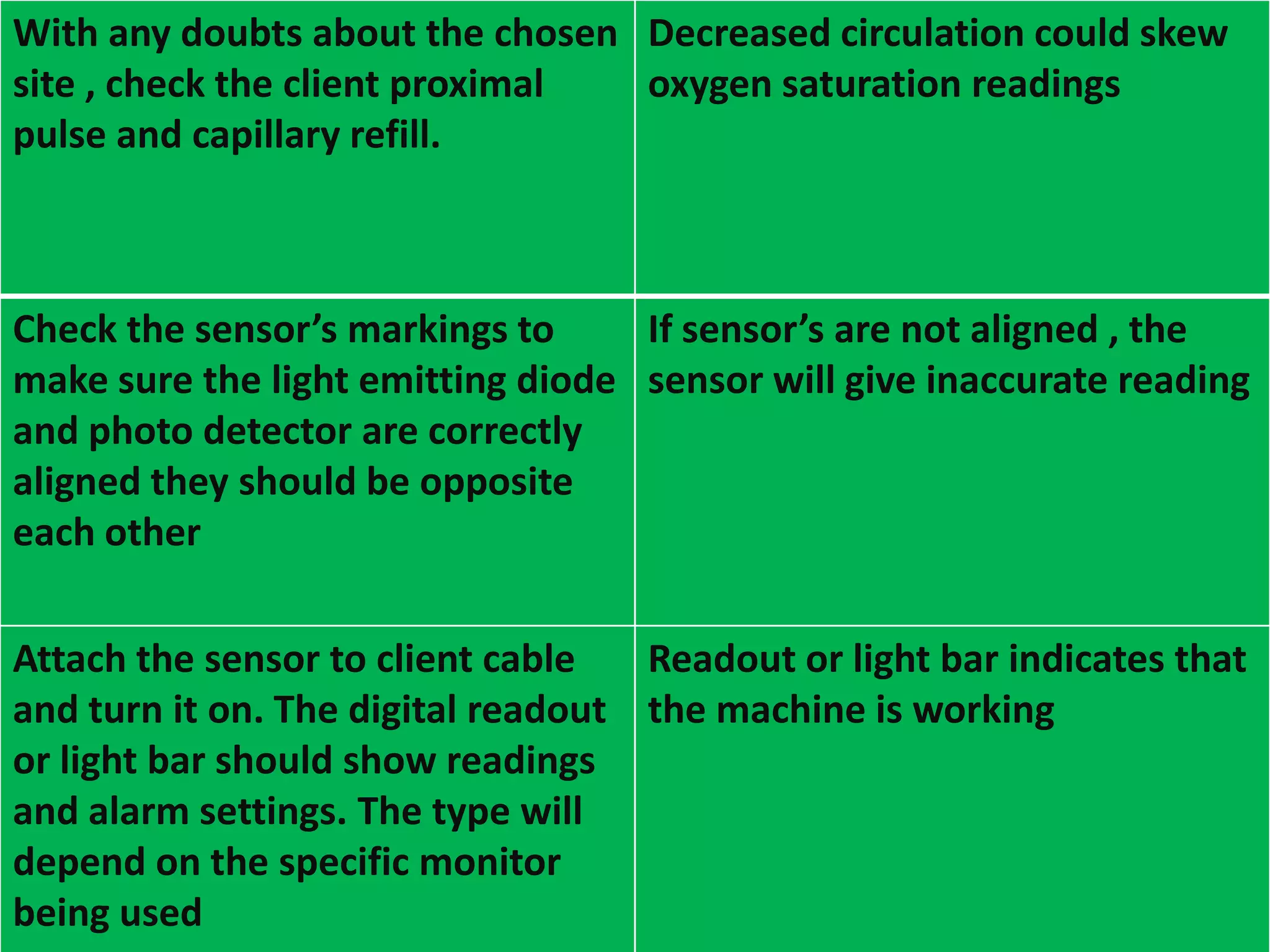
With any doubts about the chosen Decreased circulation could skew
site , check the client proximal
oxygen saturation readings
pulse and capillary refill.

Check the sensor’s markings to
If sensor’s are not aligned , the
make sure the light emitting diode sensor will give inaccurate reading
and photo detector are correctly
aligned they should be opposite
each other
Attach the sensor to client cable
Readout or light bar indicates that
and turn it on. The digital readout the machine is working
or light bar should show readings
and alarm settings. The type will
depend on the specific monitor
being used
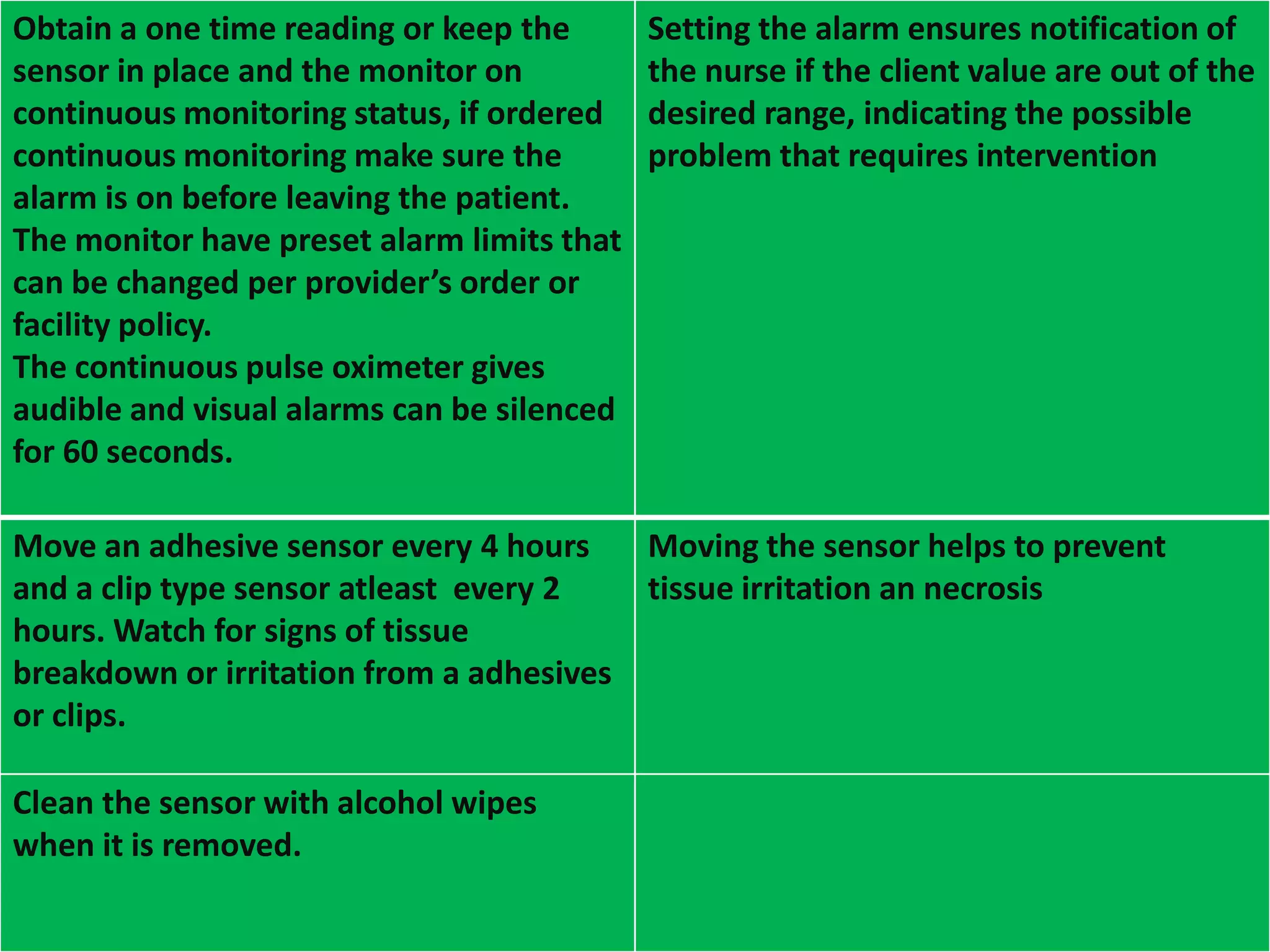
Obtain a one time reading or keep the
sensor in place and the monitor on
continuous monitoring status, if ordered
continuous monitoring make sure the
alarm is on before leaving the patient.
The monitor have preset alarm limits that
can be changed per provider’s order or
facility policy.
The continuous pulse oximeter gives
audible and visual alarms can be silenced
for 60 seconds.

Setting the alarm ensures notification of
the nurse if the client value are out of the
desired range, indicating the possible
problem that requires intervention

Move an adhesive sensor every 4 hours
and a clip type sensor atleast every 2
hours. Watch for signs of tissue
breakdown or irritation from a adhesives
or clips.

Moving the sensor helps to prevent
tissue irritation an necrosis

Clean the sensor with alcohol wipes
when it is removed.
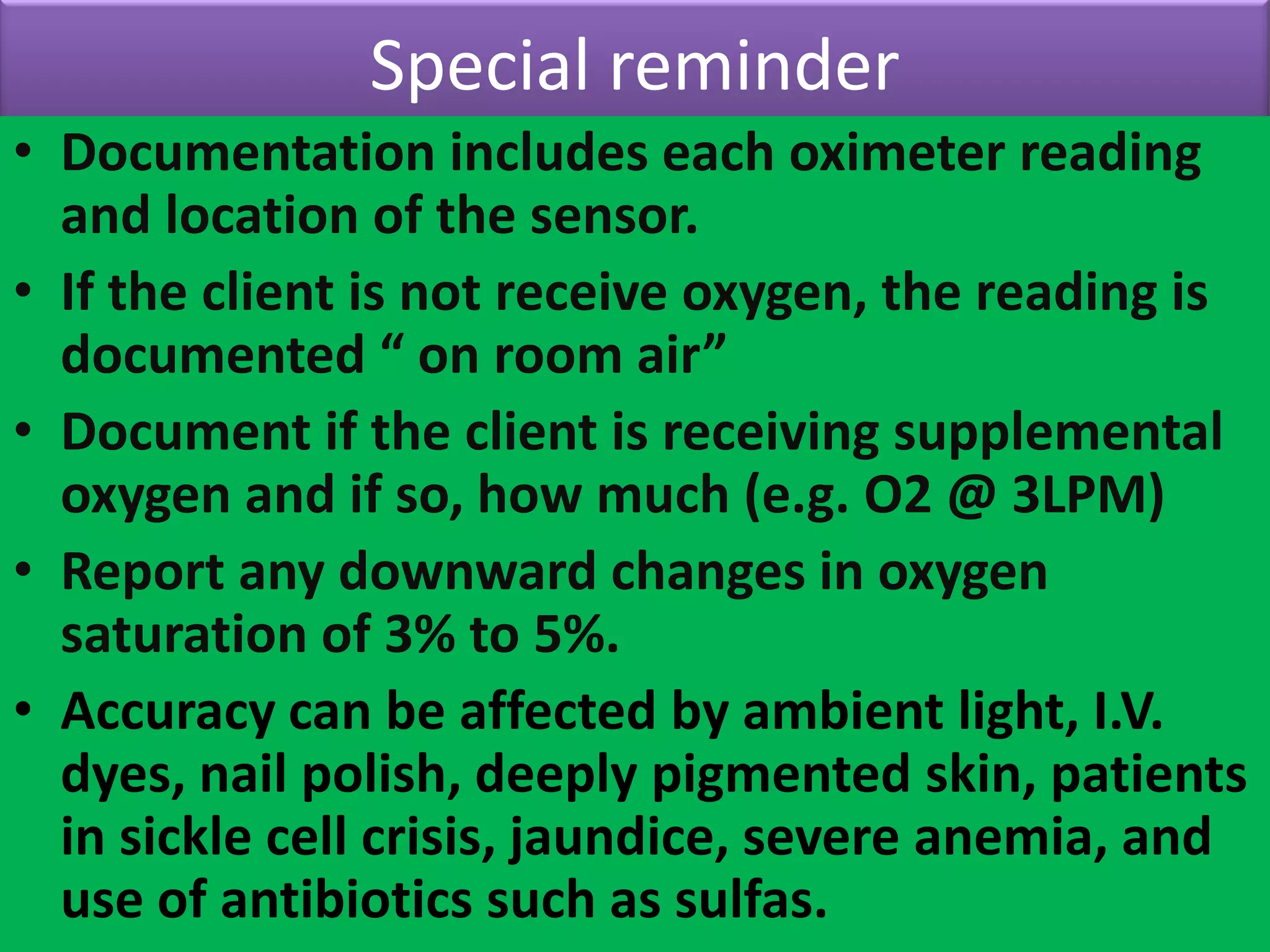
Special reminder
• Documentation includes each oximeter reading
and location of the sensor.
• If the client is not receive oxygen, the reading is
documented “ on room air”
• Document if the client is receiving supplemental
oxygen and if so, how much (e.g. O2 @ 3LPM)
• Report any downward changes in oxygen
saturation of 3% to 5%.
• Accuracy can be affected by ambient light, I.V.
dyes, nail polish, deeply pigmented skin, patients
in sickle cell crisis, jaundice, severe anemia, and
use of antibiotics such as sulfas.
use of pulse oximetry

use of pulse oximetry

  • 2.
    PULSE OXIMETRY • Pulseoximetry is a non-invasive method of indirectly evaluating arterial oxygenation through measurement of peripheral saturation of haemoglobin. • Provides an estimate of arterial oxyhemoglobin saturation by using selected wavelengths of light to noninvasively determine the saturation of oxyhemoglobin. RED FLAG! • Values obtained by pulse oximetry are unreliable in the presence of vasoconstricting medications, IV dyes, shock, cardiac arrest, severe anemia, and dyshemoglobins (eg, carboxyhemoglobin, methemoglobin).
  • 3.
    Indication – The basicrationale behind pulse oximetry is that hypoxaemia may be detected early and treatment can begin before serious or irreversible adverse effects occur. – Because pulse oximetry is non-invasive it can used in wards, continuously thus reducing the need for arterial blood gases (ABGs), Extremely important for critically ill patients & in smaller facilities with limited pathology support. – Monitor adequacy of oxygen saturation &Evaluate response to therapy. – Monitor unstable patient who may experience sudden changes in blood oxygen level. – Determine supplemental oxygen needs at rest, with exercise, and during sleep. – In many situations, such as during the admission process or when the client is receiving supplemental oxygen, pulse oximetry is considered a component of baseline vital signs.
  • 4.
    Equipment • Pulse oximeter device •Sensor finger, toe, or ear clip (Transducer) • Nail polish remover • Alcohol wipes
  • 5.
  • 6.
  • 7.
  • 8.
  • 9.
    Nursing and PatientCare Considerations • Assess patient's hemoglobin. Spo2 may not correlate well with PaO2, if hemoglobin is not within normal limits. • Remove patient's nail polish because it can affect the ability of the sensor to correctly determine oxygen saturation, particularly polish with blue or dark colors. • Correlate oximetry with ABG values and then use for single reading or trending of oxygenation (does not monitor Paco2). • Display heart rate should correlate with patient's heart rate. • To improve quality of signal, hold finger dependent and motionless (motion may alter results) and cover finger sensor to occlude ambient light.
  • 10.
    Nursing and PatientCare Considerations • Assess site of oximetry monitoring for perfusion on a regular basis, because pressure ulcer may occur from prolonged application of probe. • Device limitations include motion artifact, abnormal hemoglobins (carboxyhemoglobin and methemoglobin), I.V. dye, exposure of probe to ambient light, low perfusion states, skin pigmentation, nail polish or nail coverings, and nail deformities such as severe clubbing. • Document inspired oxygen or supplemental oxygen and type of oxygen delivery device.
  • 11.
    Nursing Procedure Steps Rationale Choose sensorappropriate for the client's size and location to be used (finger, toe, ear) Inappropriate size or device may cayse inaccurate results or pain Remove any finger nail polish or artificial nails on the fingers to be used if possible The sensor may be unable to provide an accurate reading through nailpolish or acrylic nails. Before applying the sensor , use an Using alcohol ensures that the site is alcohol wipe on the site, the sensor clean and dry. Cleansing the device helps should be also cleaned as per prevent the spread of infection manufacturer’s instruction, allow alcohol dry. Place the adhesive sensors and finger clip Appropriate location ensures accurate sensor for adults on the client’s index, reading. middle or ring finger. Adhesive sensor also can be placed on client’s toe. A small earlobe clip is available for use on small adults, children's, and infants. If necessary place newborn adhesive
  • 12.
    With any doubtsabout the chosen Decreased circulation could skew site , check the client proximal oxygen saturation readings pulse and capillary refill. Check the sensor’s markings to If sensor’s are not aligned , the make sure the light emitting diode sensor will give inaccurate reading and photo detector are correctly aligned they should be opposite each other Attach the sensor to client cable Readout or light bar indicates that and turn it on. The digital readout the machine is working or light bar should show readings and alarm settings. The type will depend on the specific monitor being used
  • 13.
    Obtain a onetime reading or keep the sensor in place and the monitor on continuous monitoring status, if ordered continuous monitoring make sure the alarm is on before leaving the patient. The monitor have preset alarm limits that can be changed per provider’s order or facility policy. The continuous pulse oximeter gives audible and visual alarms can be silenced for 60 seconds. Setting the alarm ensures notification of the nurse if the client value are out of the desired range, indicating the possible problem that requires intervention Move an adhesive sensor every 4 hours and a clip type sensor atleast every 2 hours. Watch for signs of tissue breakdown or irritation from a adhesives or clips. Moving the sensor helps to prevent tissue irritation an necrosis Clean the sensor with alcohol wipes when it is removed.
  • 14.
    Special reminder • Documentationincludes each oximeter reading and location of the sensor. • If the client is not receive oxygen, the reading is documented “ on room air” • Document if the client is receiving supplemental oxygen and if so, how much (e.g. O2 @ 3LPM) • Report any downward changes in oxygen saturation of 3% to 5%. • Accuracy can be affected by ambient light, I.V. dyes, nail polish, deeply pigmented skin, patients in sickle cell crisis, jaundice, severe anemia, and use of antibiotics such as sulfas.