DEMONSTRATION
ON
COLOSTOMY CARE
MR. SAM ASIR SUGANTHARAJ.R,
M.SC(N),
DEPT OF MEDICAL SURGICAL
NURSING,
SHNC.
OSTOMY
 An ostomy is the surgery to create an
opening between an internal organ and
the body surface.
Types of intestinal ostomies
gastrostomy,
Jejunostomy,
Ileostomy,
Colostomy.
Gastrostomy
 It is an opening through the abdominal
wall into the stomach.
Jejunostomy
 Opens through the abdominal wall
into the jejunum.
ileostomy
 Opening of the abdominal wall into the
ileum.
COLOSTOMY
 Opening of the abdominal wall into
the colon
PURPOSE OF BOWEL
OSTOMIES To divert the bowel to an opening in the
abdomen
 To drain faecal material,
Bowel diversion ostomies are classified
according to their:
 Status ie: temporary or permanent.
 Anatomic location,
 Construction of stoma.
COLOSTOMY
 Colostomy is a surgical procedure that
brings one end of the large intestine
out through an opening (stoma) made
in the abdominal wall.
 Stools moving through the intestine
drain through the stoma into a bag
attached to the abdomen.
Types of colostomy
TRANSVERSE
A. LOOP
B. DOUBLE BARREL
ASCENDING
DESCENDING
SIGMOID
TRANSVERSE COLOSTOMIES
 Transverse colostomies
 The transverse colostomy is in the
 upper abdomen,
 either in the middle or toward the right
side of the body.
 This type of colostomy allows the stool to
leave the body before it reaches the
descending colon.
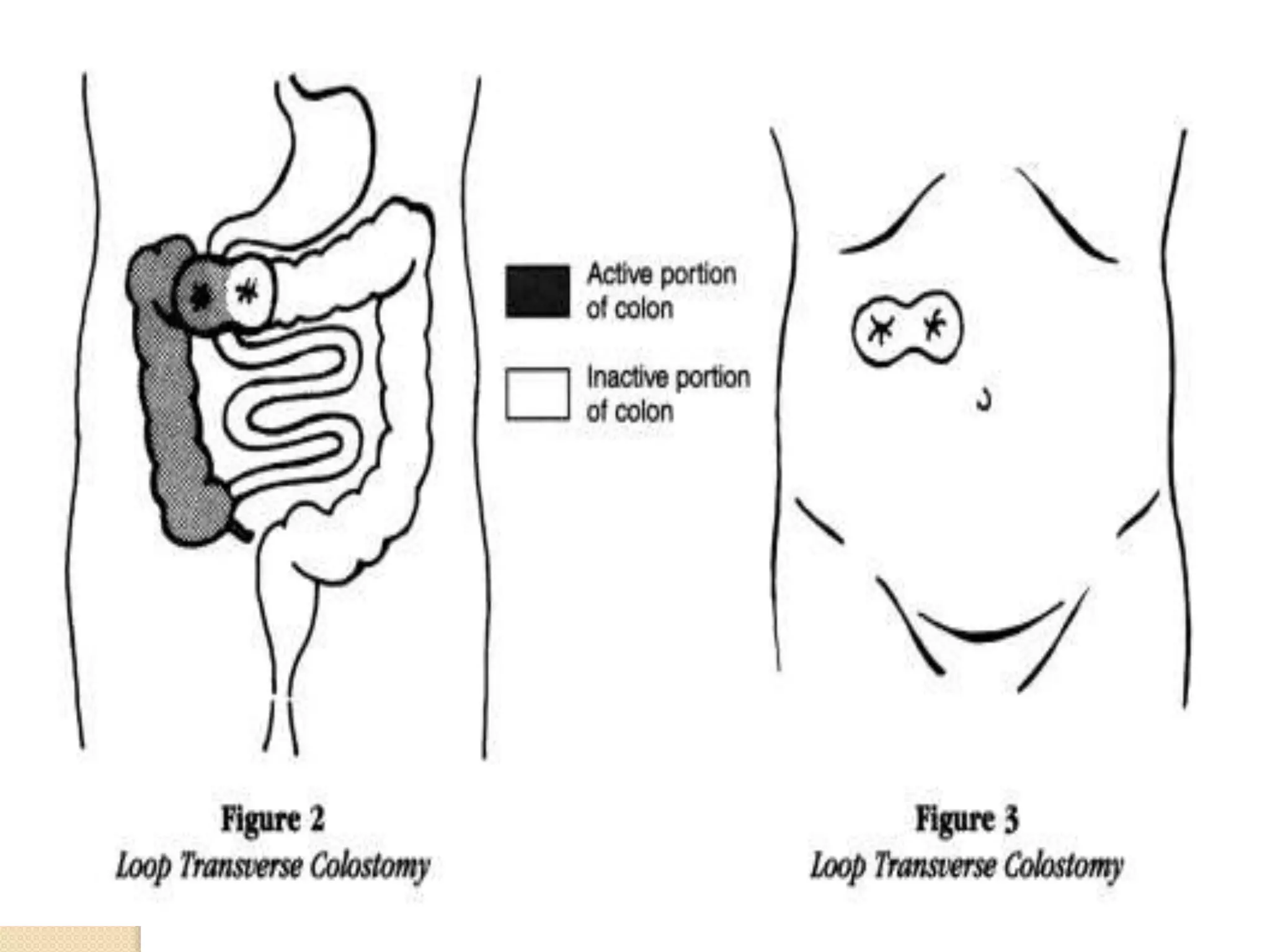
LOOP COLOSTOMY
 The loop colostomy may look like one
very large stoma, but it has 2
openings.
 One opening puts out stool, the other
only puts out mucus. .
DOUBLE-BARREL
COLOSTOMY
 In a double-barrel colostomy, the
surgeon divides the bowel completely.
 Each opening is brought to the surface as
a separate stoma.
 The 2 stomas may or may not be
separated by skin.
 one opening puts out stool and the other
puts out only mucus
 (this smaller stoma is called a mucus
fistula).
ASCENDING COLOSTOMY
 The ascending colostomy is placed
on the right side of the belly.
 Only a short portion of colon
remains active. This means that the
output is liquid and contains many
digestive enzymes.
 A drainable pouch must be worn at
all times, and the skin must be
protected from the output.
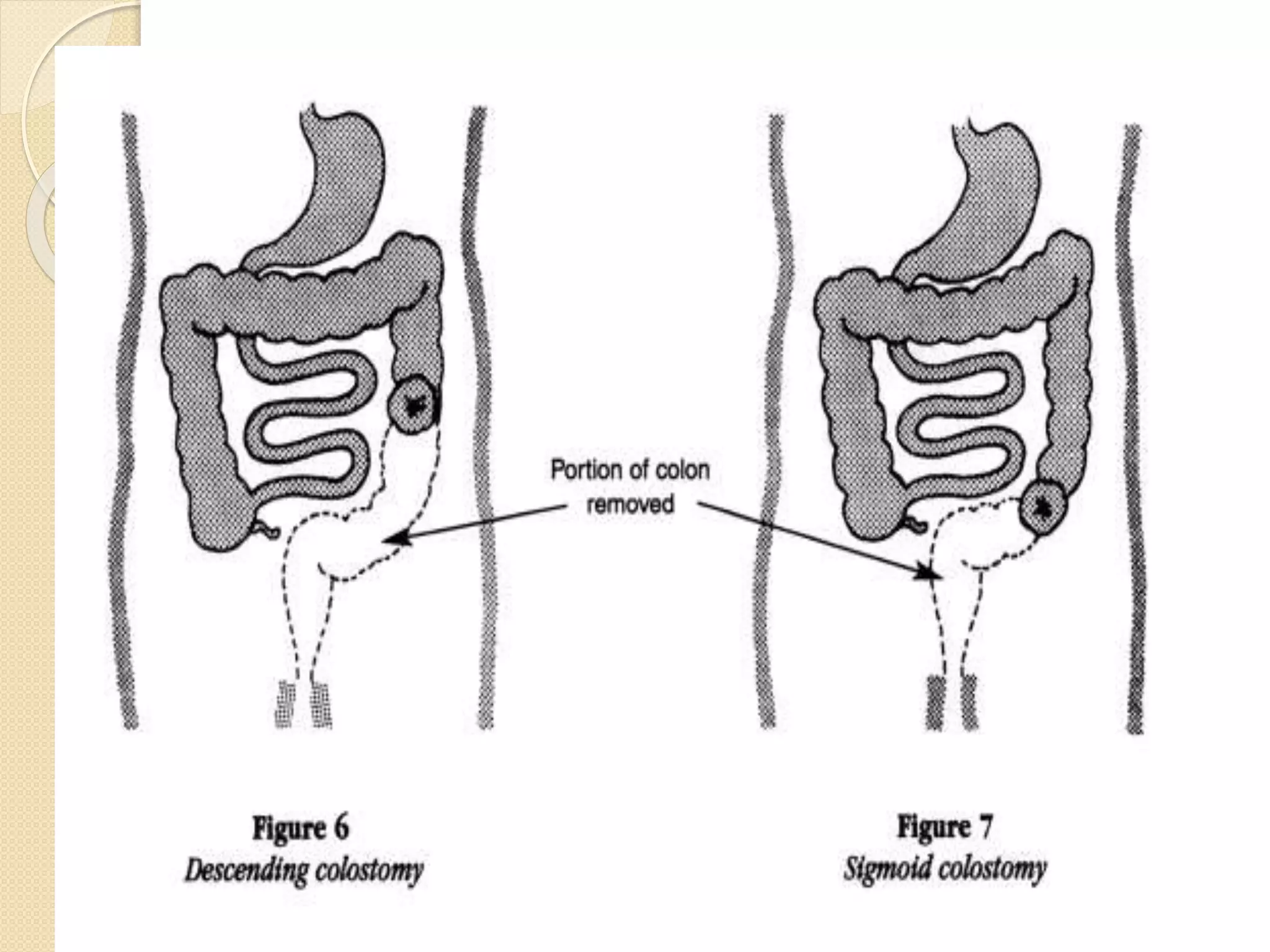
Descending and sigmoid
colostomies In the descending colon, the descending
colostomy is placed on the lower left side of the
belly.
 Most often, the output is firm and can be
controlled.
 A sigmoid colostomy is the most common type
of colostomy.
 It’s made in the sigmoid colon, and located just a
few inches lower than a descending colostomy.
 Because there’s more working colon, it may put
out solid stool on a more regular schedule.
 Both the descending and the sigmoid
colostomies can have a double-barrel or
single-barrel opening.
 The single-barrel, or end colostomy, is
more common.
 The stool of a descending or sigmoid
colostomy is firmer than the stool of the
transverse colostomy.
PERMANENT COLOSTOMY
 Blockage
 Injury
 Colorectal cancer
 Colonic polyps
 Diverticulitis
 Imperforate anus
 Irritable bowel syndrome
 Ulcerative colitis
ARTICLES REQUIRED FOR
COLOSTOMY CARE
 A clean tray containing
 Mackintosh with draw sheet,
 Kidney tray / paper bag ,
 Pair of clean gloves,
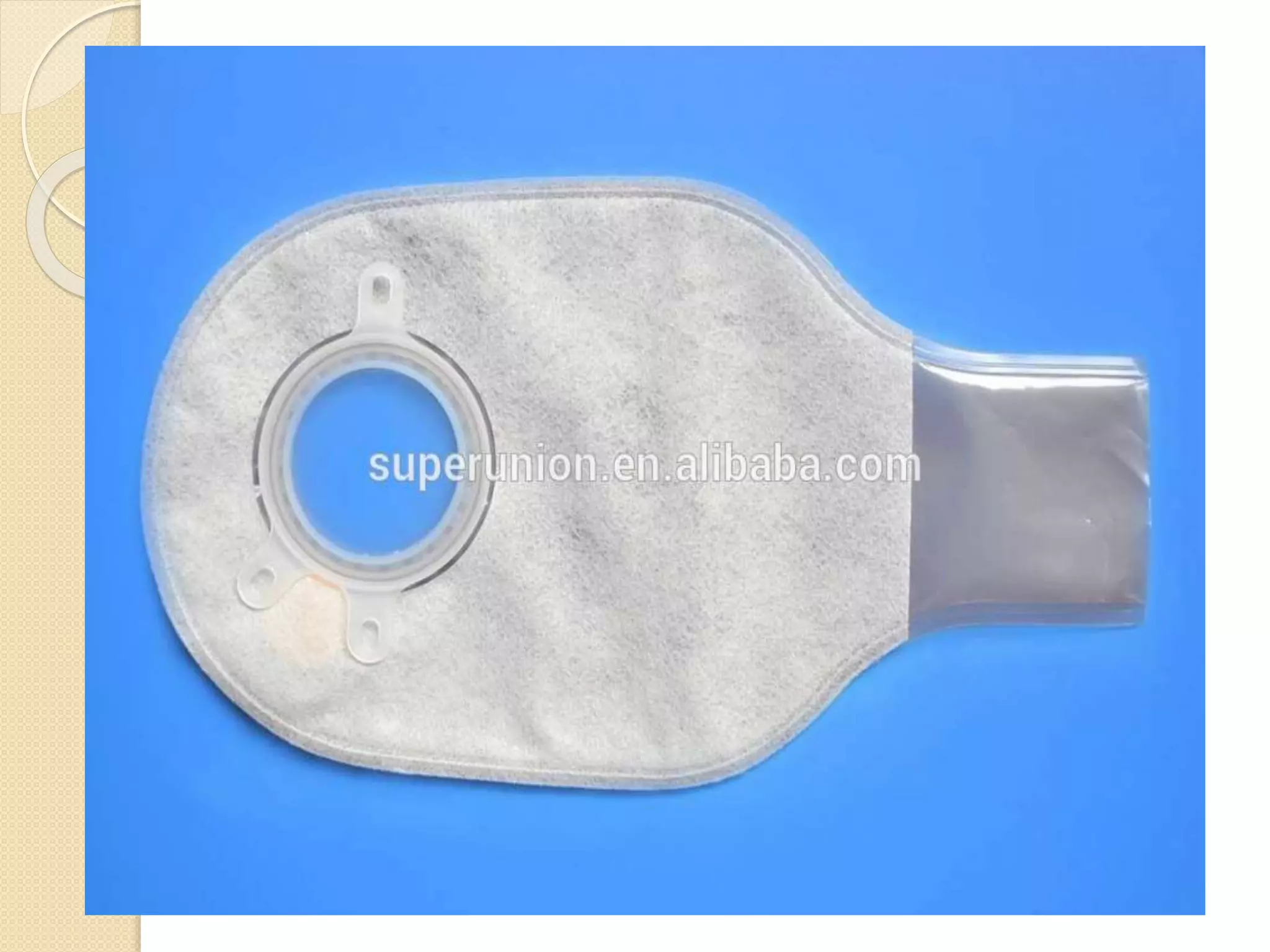
 Colostomy bag,
 Normal saline / basin with warm tap water,
 Gauze pieces,
 Gauze pad / tissue paper,
 Skin barrier,
 Stoma measuring guide,
 Pen or pencil and scissors.
 Bed pan.
ASSESSMENT
1. Identify the type & location of
ostomy in the patient.
2. Assess the skin integrity around the
stoma and appearance.
3. Note the amount and character of
fecal material in pouch.
PROCEDURE
 Arrange the all necessary articles.
 Explain the procedure to the patient.
 Provide privacy and assist patient to a
comfortable position.
 Wash hands & wear gloves to prevent infection.
 Spread Mackintosh & draw sheet to protect linen
 Remove used pouch & skin barrier gently by
pushing the skin away from the barrier.
 Reduces trauma,jerking, irritates skin and can
cause tear.
 Remove clamp and empty the contents into the
bed pan.rinse the pouch with tepid water or
normal saline to minimize the odour & growth of
microbes
 Discard the disposable pouch in paper bag.
PROCEDURE
 Observe stoma for
 colour,
 swelling,
 trauma,& healing. Stoma should be moist and pink
 Cover the stoma with a gauze piece to prevent the
fecal matters from contacting with skin
 Clean stomal region gently with warm tap water
using gauze pad.
 Do not scrub the skin, dry completely by patting the
skin with gauze.
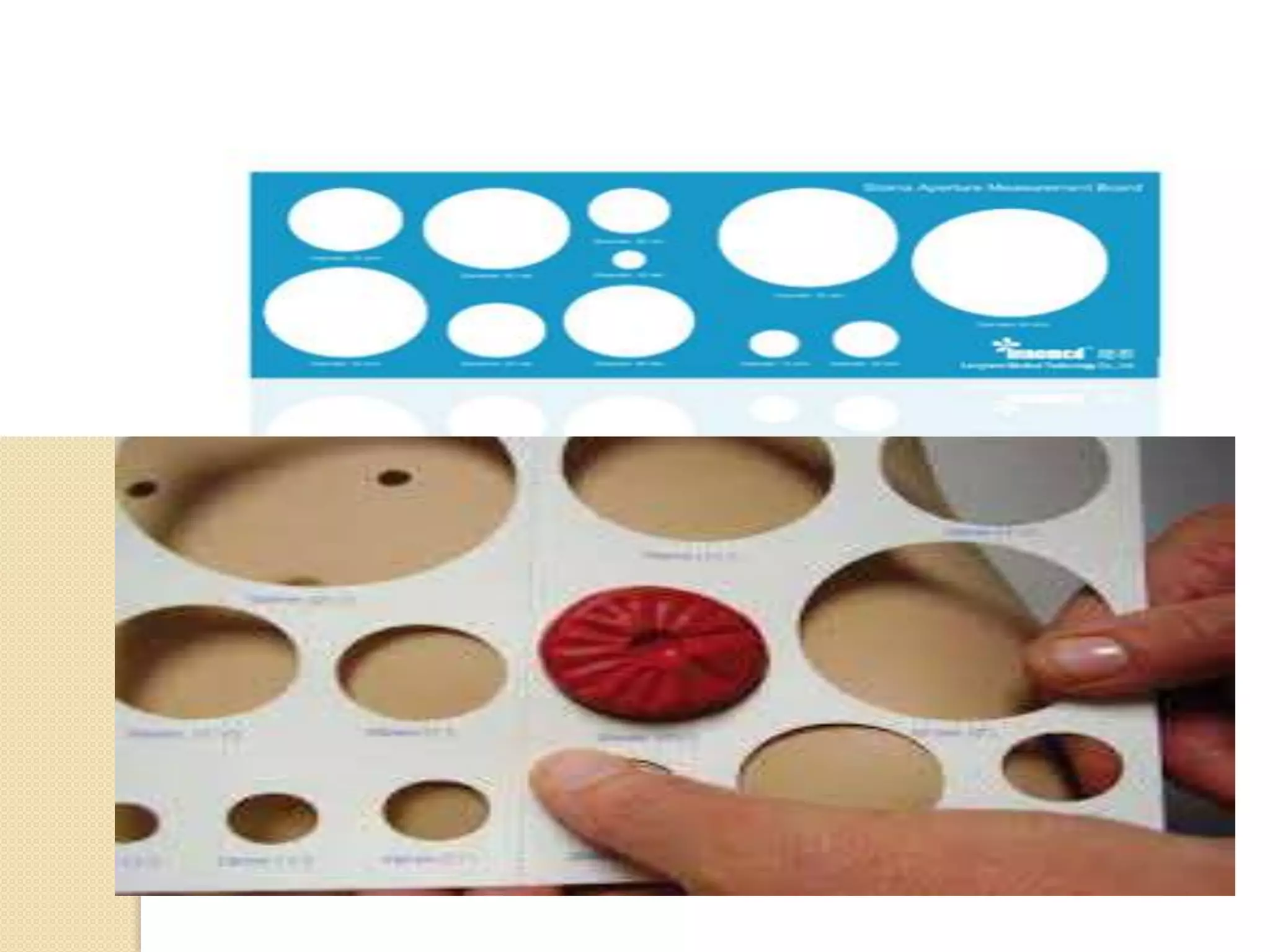
 Remove gauze and clean stoma with gauze and pat
dry.
 Measure the stoma using measuring guide.
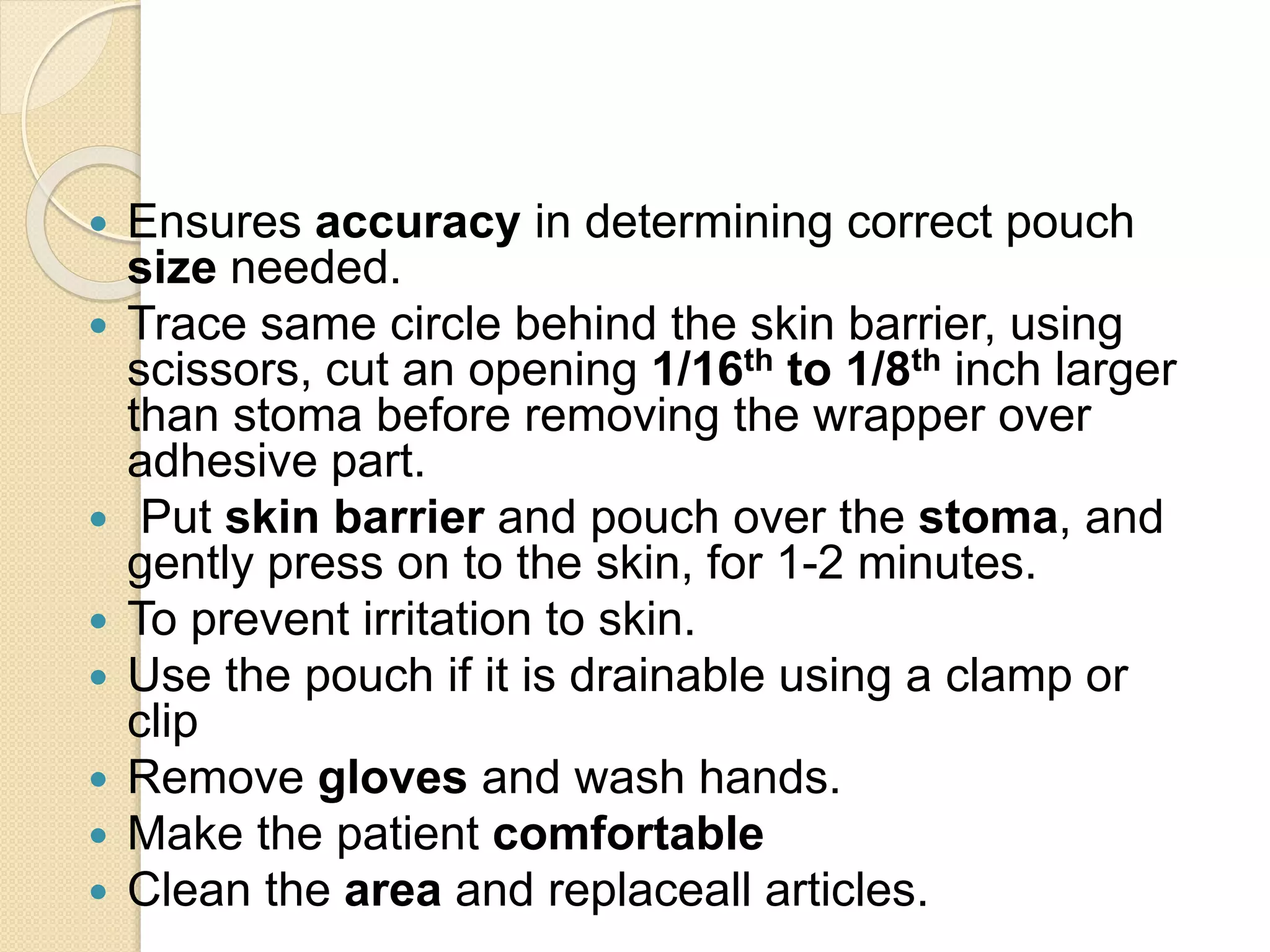
 Ensures accuracy in determining correct pouch
size needed.
 Trace same circle behind the skin barrier, using
scissors, cut an opening 1/16th to 1/8th inch larger
than stoma before removing the wrapper over
adhesive part.
 Put skin barrier and pouch over the stoma, and
gently press on to the skin, for 1-2 minutes.
 To prevent irritation to skin.
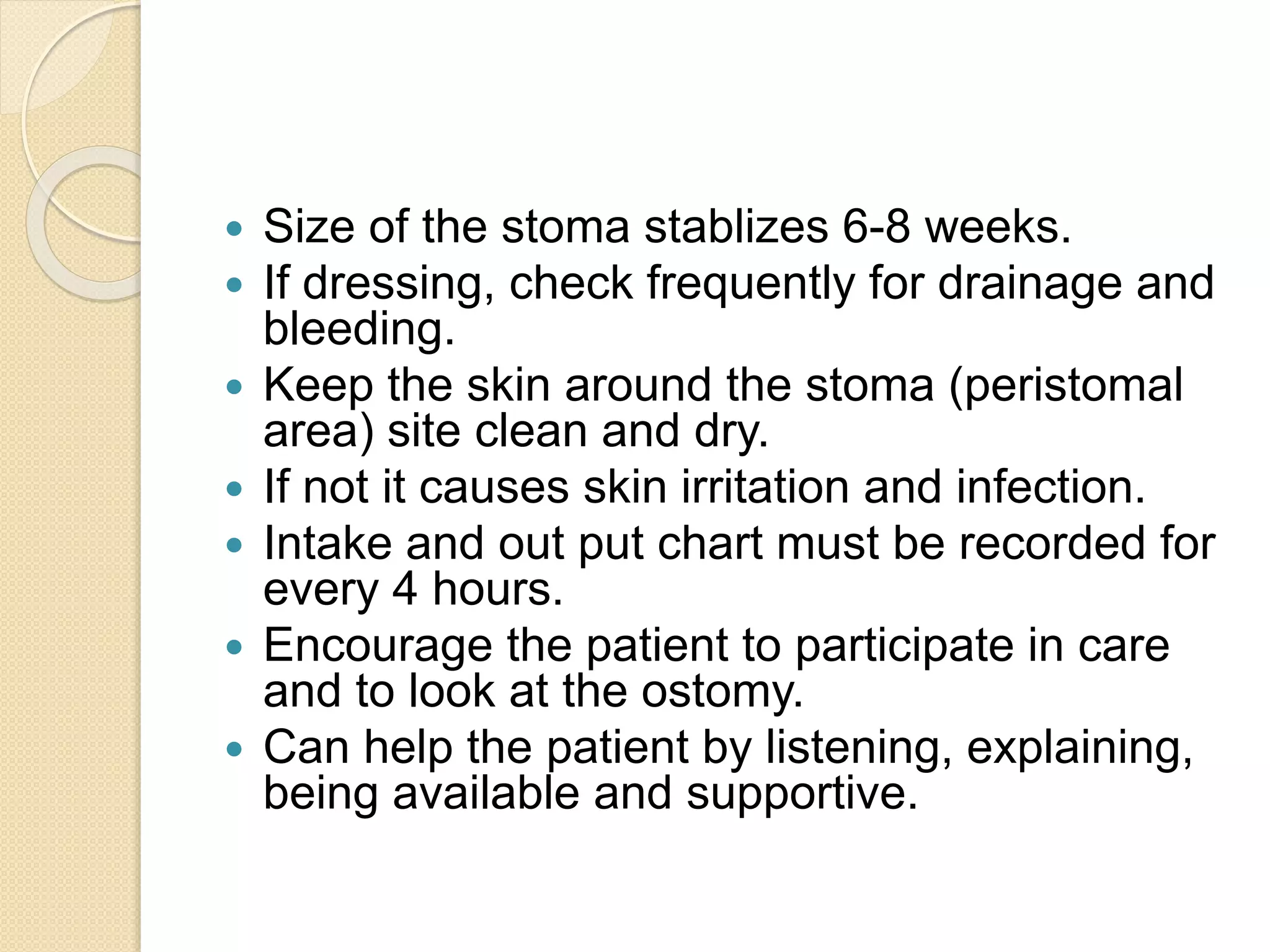
 Use the pouch if it is drainable using a clamp or
clip
 Remove gloves and wash hands.
 Make the patient comfortable
 Clean the area and replaceall articles.
Guidelines
 Keep odour as free of odors as possible.
 Ostomy bag should be emptied frequently.
 Check the stoma regularly, the colour
should be dark pink to red and moist.
 Pale colour indicates anaemia,
 Dark or purple blue indicates
compromised circulation.
 Size of the stoma stablizes 6-8 weeks.
 If dressing, check frequently for drainage and
bleeding.
 Keep the skin around the stoma (peristomal
area) site clean and dry.
 If not it causes skin irritation and infection.
 Intake and out put chart must be recorded for
every 4 hours.
 Encourage the patient to participate in care
and to look at the ostomy.
 Can help the patient by listening, explaining,
being available and supportive.
 Encourage the patient to avoid fibre
rich diets.
 Encourage the patient to drink fluids.
 Educate the patient about the various
methods of odor control measures.
 Chlorophyll rich diet will deodorise the
feces.
 Direct contact sports and heavy lifting
must be avoided.
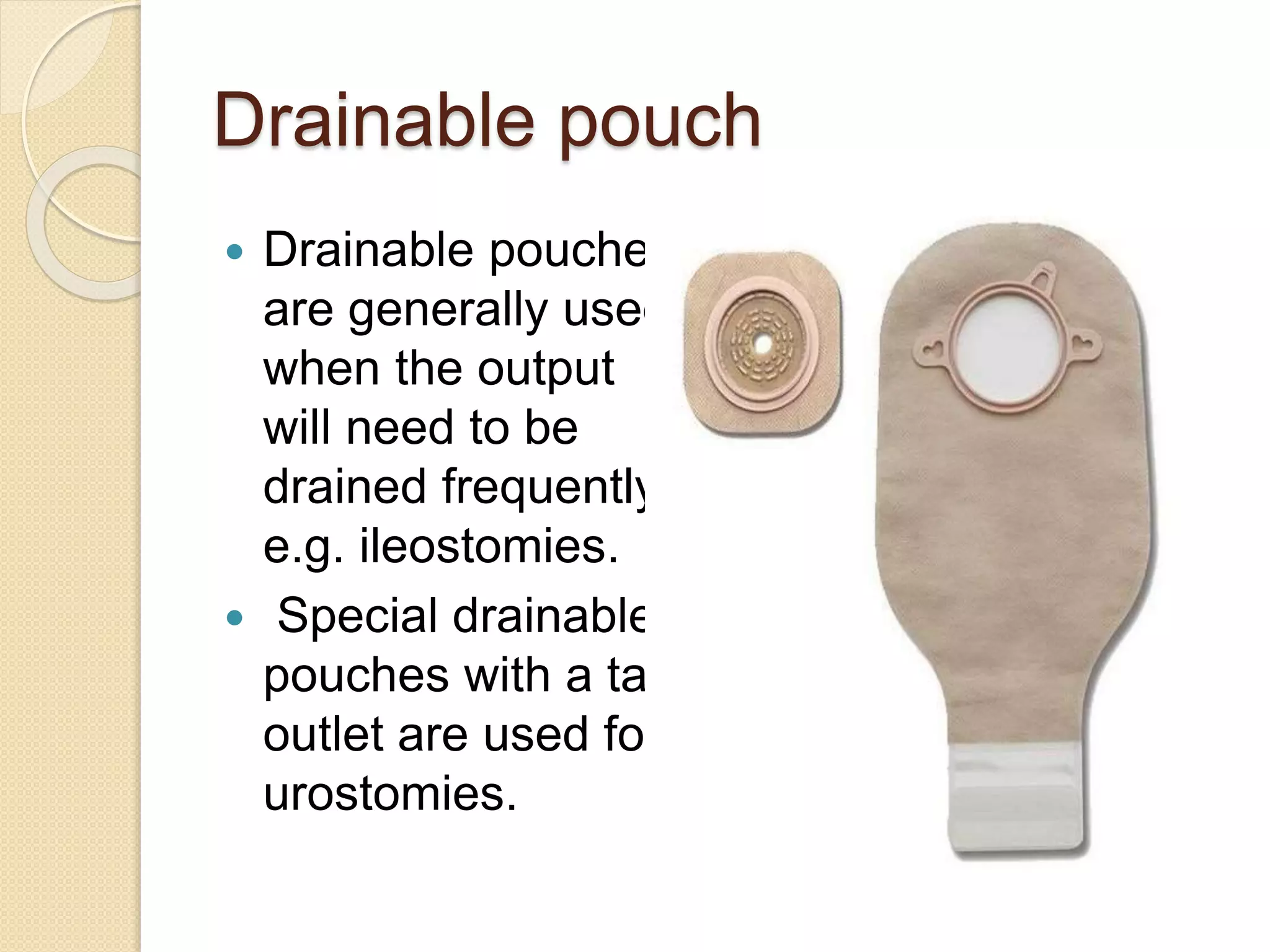
Drainable pouch
 Drainable pouches
are generally used
when the output
will need to be
drained frequently,
e.g. ileostomies.
 Special drainable
pouches with a tap
outlet are used for
urostomies.
One piece pouch
 One-piece
pouches, as the
name suggests,
are all in one piece,
i.e. the whole thing
is removed when
the pouch is
changed.
Two-piece pouch
 Two-piece pouches – available for all
types of stoma – have a separate
base plate flange to which a pouch is
fitted.
 The base plate flange is left in place
on the abdomen, with a new pouch
fitted when necessary. Every 2-4 days
the base plate flange will need to be
changed too.
DOCUMENTATION
 Record the
procedure with
following details
(with date & time ).
 Amount,
 colour,
 and consistency of
the fecal matter in
the pouch.

Colostomy care

  • 1.
    DEMONSTRATION ON COLOSTOMY CARE MR. SAMASIR SUGANTHARAJ.R, M.SC(N), DEPT OF MEDICAL SURGICAL NURSING, SHNC.
  • 2.
    OSTOMY  An ostomyis the surgery to create an opening between an internal organ and the body surface.
  • 3.
    Types of intestinalostomies gastrostomy, Jejunostomy, Ileostomy, Colostomy.
  • 6.
    Gastrostomy  It isan opening through the abdominal wall into the stomach.
  • 7.
    Jejunostomy  Opens throughthe abdominal wall into the jejunum.
  • 8.
    ileostomy  Opening ofthe abdominal wall into the ileum.
  • 9.
    COLOSTOMY  Opening ofthe abdominal wall into the colon
  • 10.
    PURPOSE OF BOWEL OSTOMIESTo divert the bowel to an opening in the abdomen  To drain faecal material, Bowel diversion ostomies are classified according to their:  Status ie: temporary or permanent.  Anatomic location,  Construction of stoma.
  • 11.
    COLOSTOMY  Colostomy isa surgical procedure that brings one end of the large intestine out through an opening (stoma) made in the abdominal wall.  Stools moving through the intestine drain through the stoma into a bag attached to the abdomen.
  • 12.
    Types of colostomy TRANSVERSE A.LOOP B. DOUBLE BARREL ASCENDING DESCENDING SIGMOID
  • 13.
    TRANSVERSE COLOSTOMIES  Transversecolostomies  The transverse colostomy is in the  upper abdomen,  either in the middle or toward the right side of the body.  This type of colostomy allows the stool to leave the body before it reaches the descending colon.
  • 15.
    LOOP COLOSTOMY  Theloop colostomy may look like one very large stoma, but it has 2 openings.  One opening puts out stool, the other only puts out mucus. .
  • 17.
    DOUBLE-BARREL COLOSTOMY  In adouble-barrel colostomy, the surgeon divides the bowel completely.  Each opening is brought to the surface as a separate stoma.  The 2 stomas may or may not be separated by skin.  one opening puts out stool and the other puts out only mucus  (this smaller stoma is called a mucus fistula).
  • 19.
    ASCENDING COLOSTOMY  Theascending colostomy is placed on the right side of the belly.  Only a short portion of colon remains active. This means that the output is liquid and contains many digestive enzymes.  A drainable pouch must be worn at all times, and the skin must be protected from the output.
  • 21.
    Descending and sigmoid colostomiesIn the descending colon, the descending colostomy is placed on the lower left side of the belly.  Most often, the output is firm and can be controlled.  A sigmoid colostomy is the most common type of colostomy.  It’s made in the sigmoid colon, and located just a few inches lower than a descending colostomy.  Because there’s more working colon, it may put out solid stool on a more regular schedule.
  • 23.
     Both thedescending and the sigmoid colostomies can have a double-barrel or single-barrel opening.  The single-barrel, or end colostomy, is more common.  The stool of a descending or sigmoid colostomy is firmer than the stool of the transverse colostomy.
  • 26.
    PERMANENT COLOSTOMY  Blockage Injury  Colorectal cancer  Colonic polyps  Diverticulitis  Imperforate anus  Irritable bowel syndrome  Ulcerative colitis
  • 28.
    ARTICLES REQUIRED FOR COLOSTOMYCARE  A clean tray containing  Mackintosh with draw sheet,  Kidney tray / paper bag ,  Pair of clean gloves,  Colostomy bag,  Normal saline / basin with warm tap water,  Gauze pieces,  Gauze pad / tissue paper,  Skin barrier,  Stoma measuring guide,  Pen or pencil and scissors.  Bed pan.
  • 29.
    ASSESSMENT 1. Identify thetype & location of ostomy in the patient. 2. Assess the skin integrity around the stoma and appearance. 3. Note the amount and character of fecal material in pouch.
  • 30.
    PROCEDURE  Arrange theall necessary articles.  Explain the procedure to the patient.  Provide privacy and assist patient to a comfortable position.  Wash hands & wear gloves to prevent infection.  Spread Mackintosh & draw sheet to protect linen  Remove used pouch & skin barrier gently by pushing the skin away from the barrier.  Reduces trauma,jerking, irritates skin and can cause tear.  Remove clamp and empty the contents into the bed pan.rinse the pouch with tepid water or normal saline to minimize the odour & growth of microbes  Discard the disposable pouch in paper bag.
  • 31.
    PROCEDURE  Observe stomafor  colour,  swelling,  trauma,& healing. Stoma should be moist and pink  Cover the stoma with a gauze piece to prevent the fecal matters from contacting with skin  Clean stomal region gently with warm tap water using gauze pad.  Do not scrub the skin, dry completely by patting the skin with gauze.  Remove gauze and clean stoma with gauze and pat dry.  Measure the stoma using measuring guide.
  • 32.
     Ensures accuracyin determining correct pouch size needed.  Trace same circle behind the skin barrier, using scissors, cut an opening 1/16th to 1/8th inch larger than stoma before removing the wrapper over adhesive part.  Put skin barrier and pouch over the stoma, and gently press on to the skin, for 1-2 minutes.  To prevent irritation to skin.  Use the pouch if it is drainable using a clamp or clip  Remove gloves and wash hands.  Make the patient comfortable  Clean the area and replaceall articles.
  • 33.
    Guidelines  Keep odouras free of odors as possible.  Ostomy bag should be emptied frequently.  Check the stoma regularly, the colour should be dark pink to red and moist.  Pale colour indicates anaemia,  Dark or purple blue indicates compromised circulation.
  • 35.
     Size ofthe stoma stablizes 6-8 weeks.  If dressing, check frequently for drainage and bleeding.  Keep the skin around the stoma (peristomal area) site clean and dry.  If not it causes skin irritation and infection.  Intake and out put chart must be recorded for every 4 hours.  Encourage the patient to participate in care and to look at the ostomy.  Can help the patient by listening, explaining, being available and supportive.
  • 36.
     Encourage thepatient to avoid fibre rich diets.  Encourage the patient to drink fluids.  Educate the patient about the various methods of odor control measures.  Chlorophyll rich diet will deodorise the feces.  Direct contact sports and heavy lifting must be avoided.
  • 41.
    Drainable pouch  Drainablepouches are generally used when the output will need to be drained frequently, e.g. ileostomies.  Special drainable pouches with a tap outlet are used for urostomies.
  • 42.
    One piece pouch One-piece pouches, as the name suggests, are all in one piece, i.e. the whole thing is removed when the pouch is changed.
  • 43.
    Two-piece pouch  Two-piecepouches – available for all types of stoma – have a separate base plate flange to which a pouch is fitted.  The base plate flange is left in place on the abdomen, with a new pouch fitted when necessary. Every 2-4 days the base plate flange will need to be changed too.
  • 44.
    DOCUMENTATION  Record the procedurewith following details (with date & time ).  Amount,  colour,  and consistency of the fecal matter in the pouch.