The changing
face of
agriculture:
Use of ICTs
Case Study of a farmer
Name: Balram Kumar
Occupation: Farmer, crops dependent on monsoon
Lives in: Arunachal Pradesh
Problem : Inaccessible terrain , excessive slope
susceptibility to land slides
Change: Came to know about e – arik-got
information about- "climate smart agriculture"
climate change, improved cultivation & day-to-day
market information
Result
Able to made changes in practices and the timing of sowing seeds .
Helped in to be less affected by irregular patterns of monsoon
Happy & satisfied from the results-enhanced crop productivity &
profit
What are ICTs?
Information & communication technologies
- an umbrella term
• Includes radio, television, cellular phones, satellite
systems etc
• Applied for processing, exchanging & managing data,
information & knowledge
• To communicate desired information to the target
audience in a participative way
Need of ICTs in agriculture
• Many Farmers are not educated
• Cut off from cites & information
• Lack of extension faclities
• Lack of knowledge of modern technologies & market prices
• Inability to compete with modern farmers
• There is a gap b/w traditional & modern technology
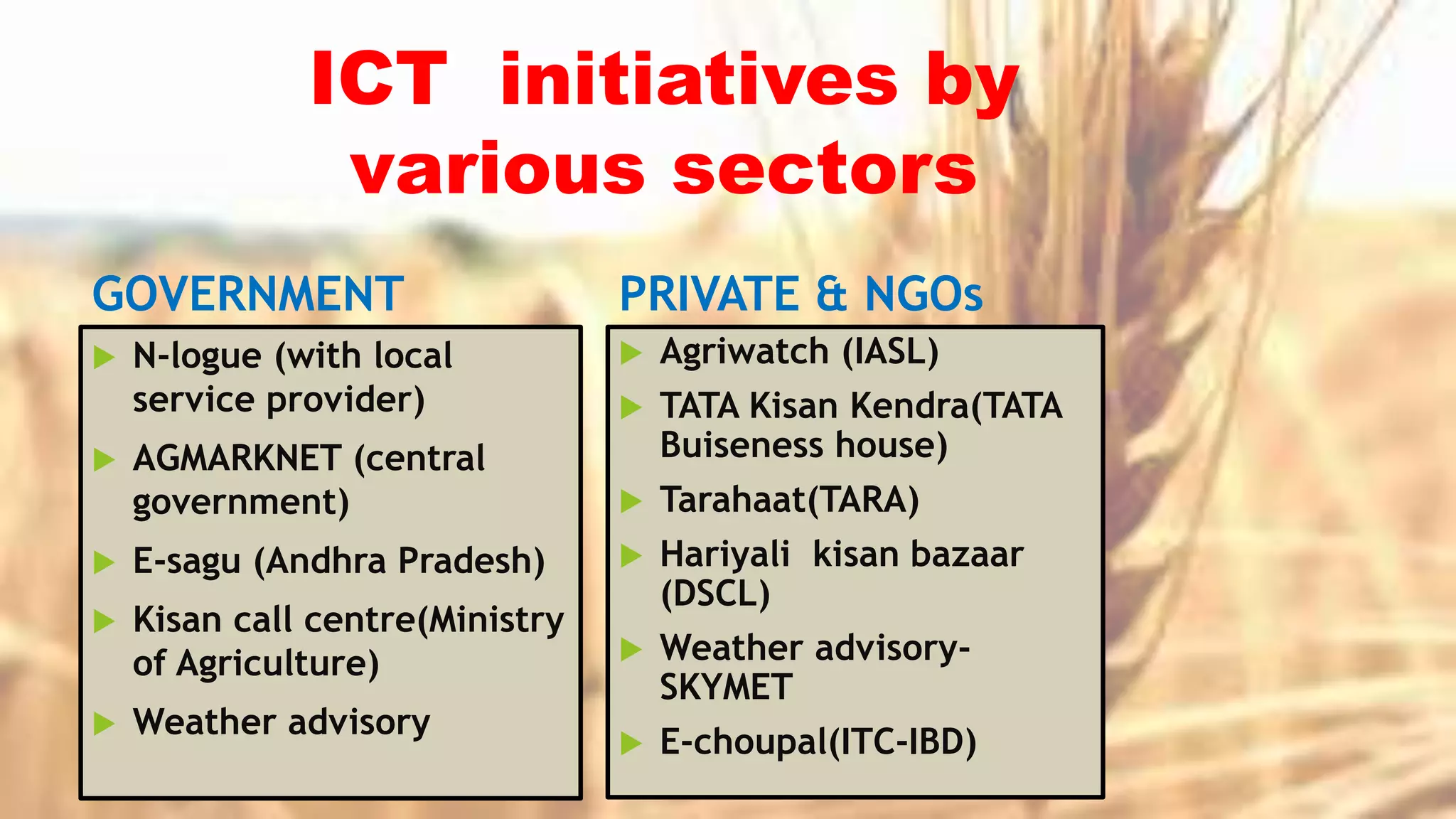
ICT initiatives by
various sectors
GOVERNMENT
 N-logue (with local
service provider)
 AGMARKNET (central
government)
 E-sagu (Andhra Pradesh)
 Kisan call centre(Ministry
of Agriculture)
 Weather advisory
PRIVATE & NGOs
 Agriwatch (IASL)
 TATA Kisan Kendra(TATA
Buiseness house)
 Tarahaat(TARA)
 Hariyali kisan bazaar
(DSCL)
 Weather advisory-
SKYMET
 E-choupal(ITC-IBD)
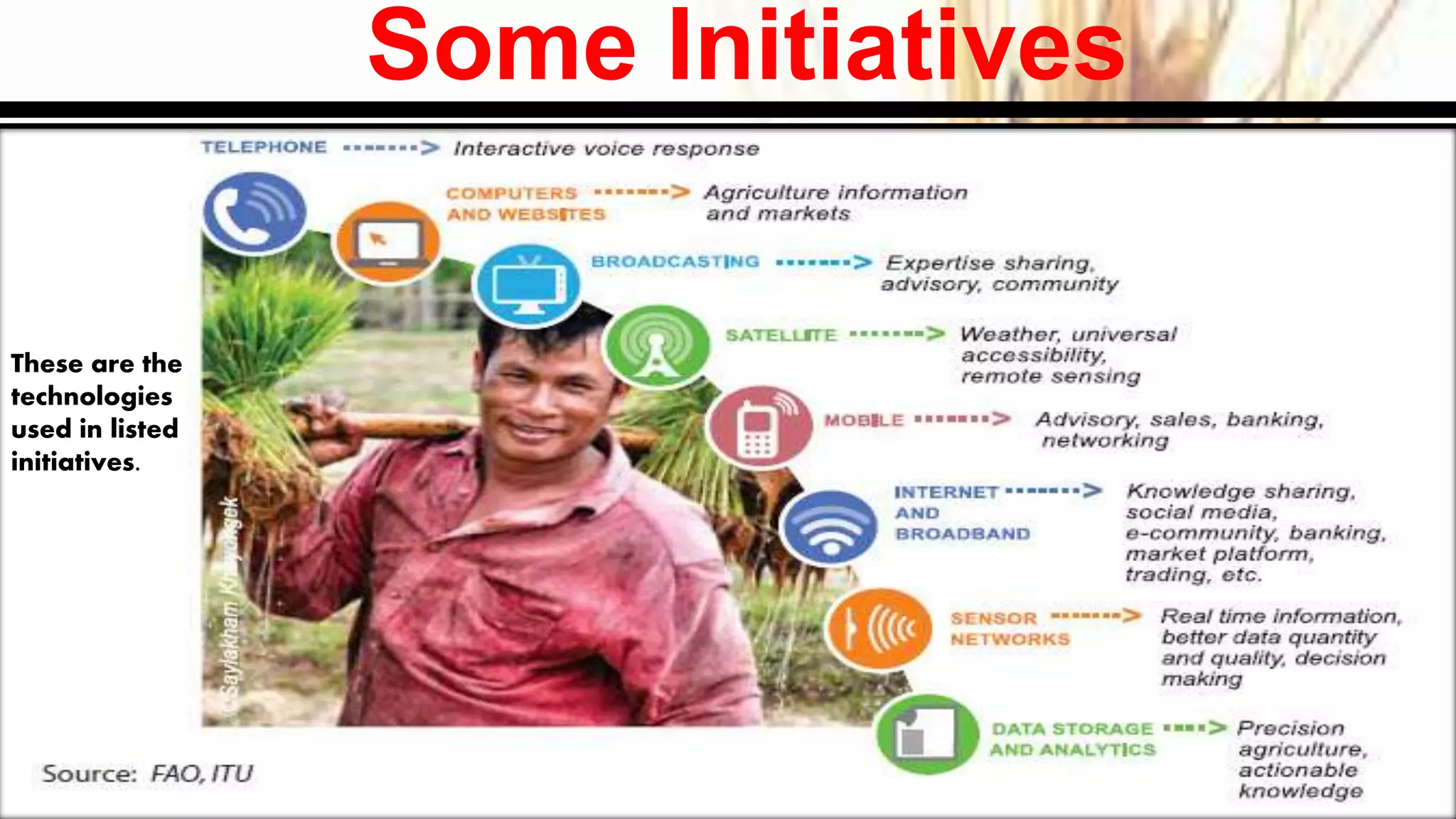
Some Initiatives
These are the
technologies
used in listed
initiatives.
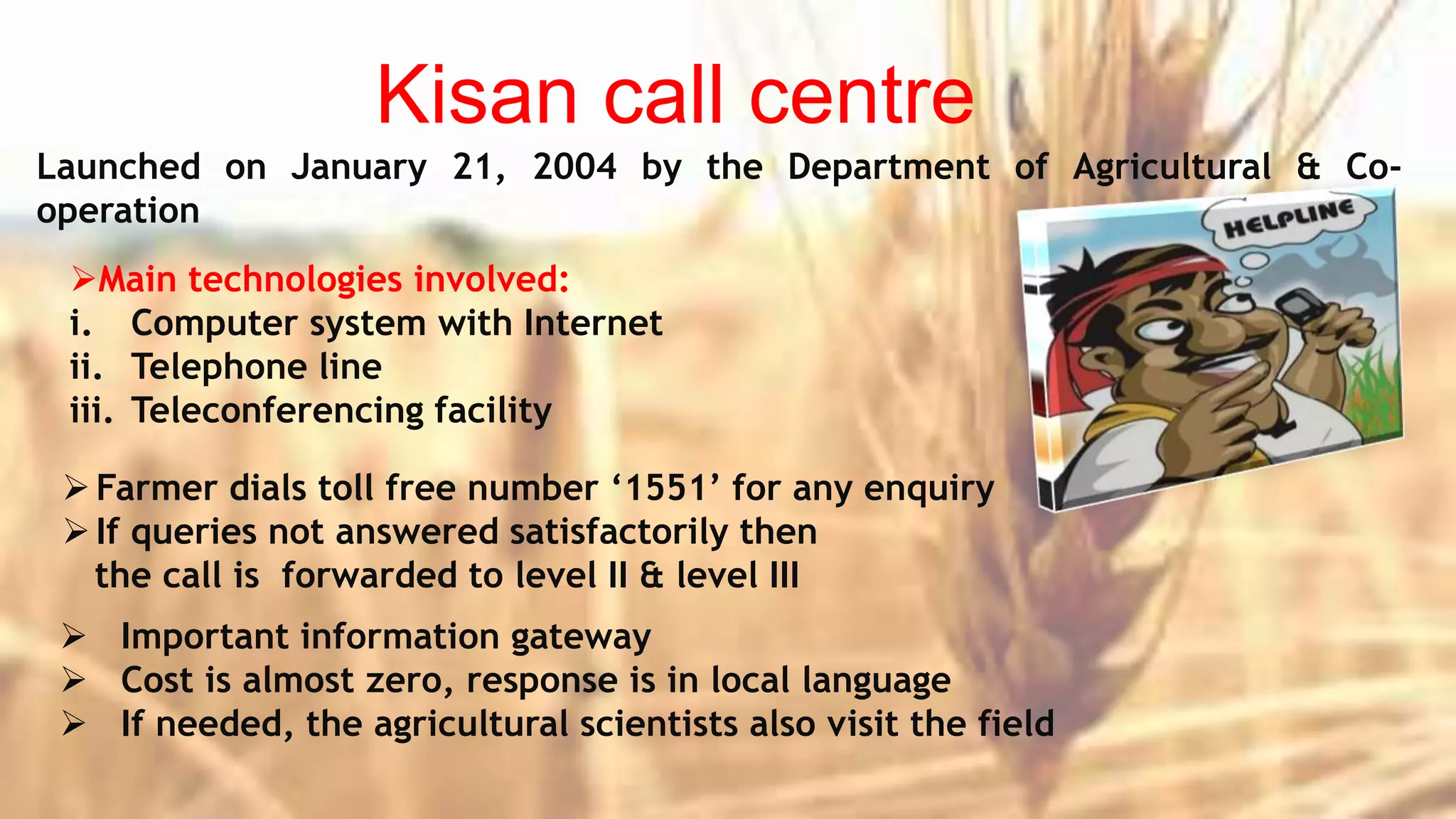
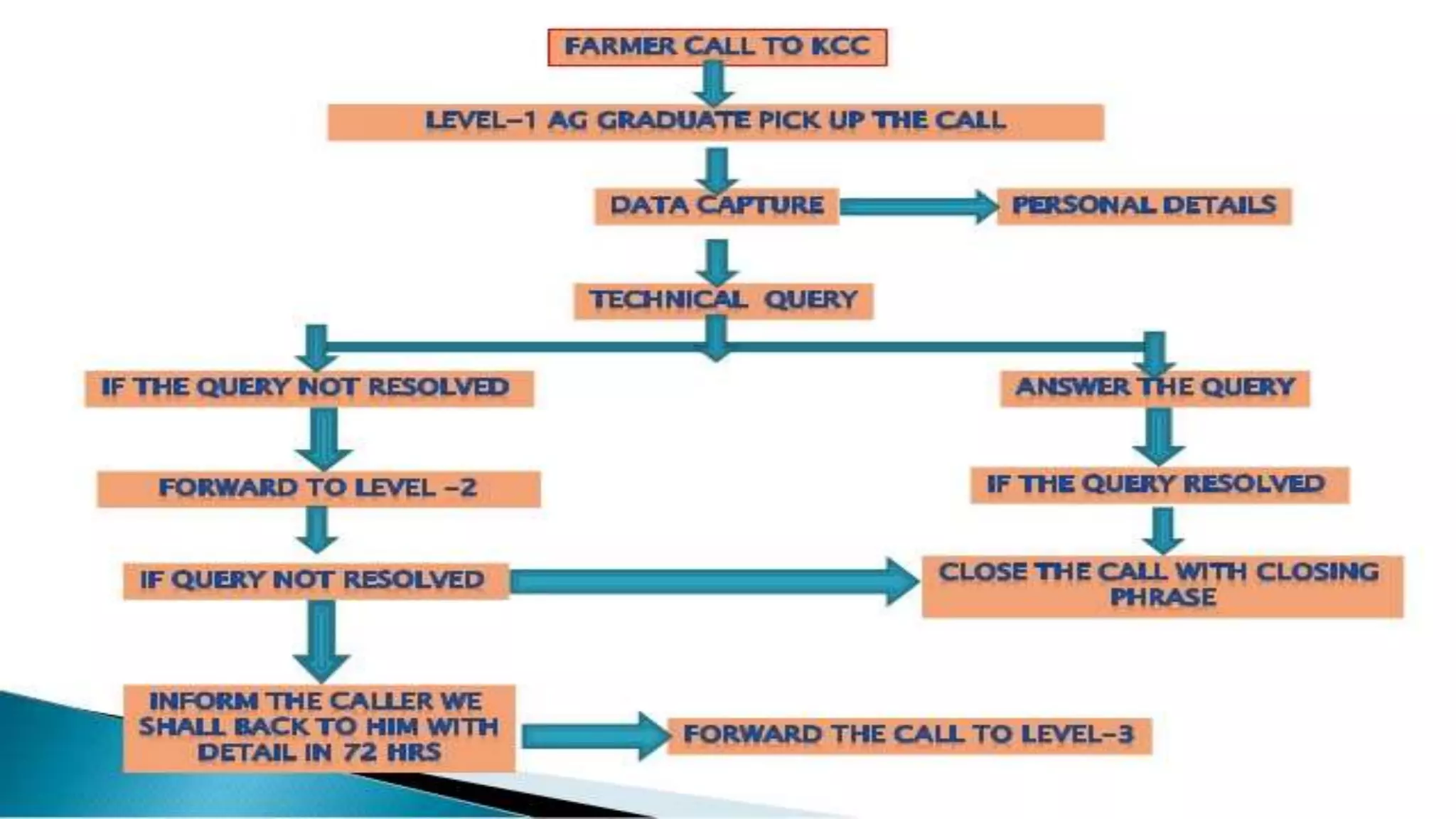
Kisan call centre
Launched on January 21, 2004 by the Department of Agricultural & Co-
operation
Farmer dials toll free number ‘1551’ for any enquiry
If queries not answered satisfactorily then
the call is forwarded to level II & level III
Main technologies involved:
i. Computer system with Internet
ii. Telephone line
iii. Teleconferencing facility
 Important information gateway
 Cost is almost zero, response is in local language
 If needed, the agricultural scientists also visit the field
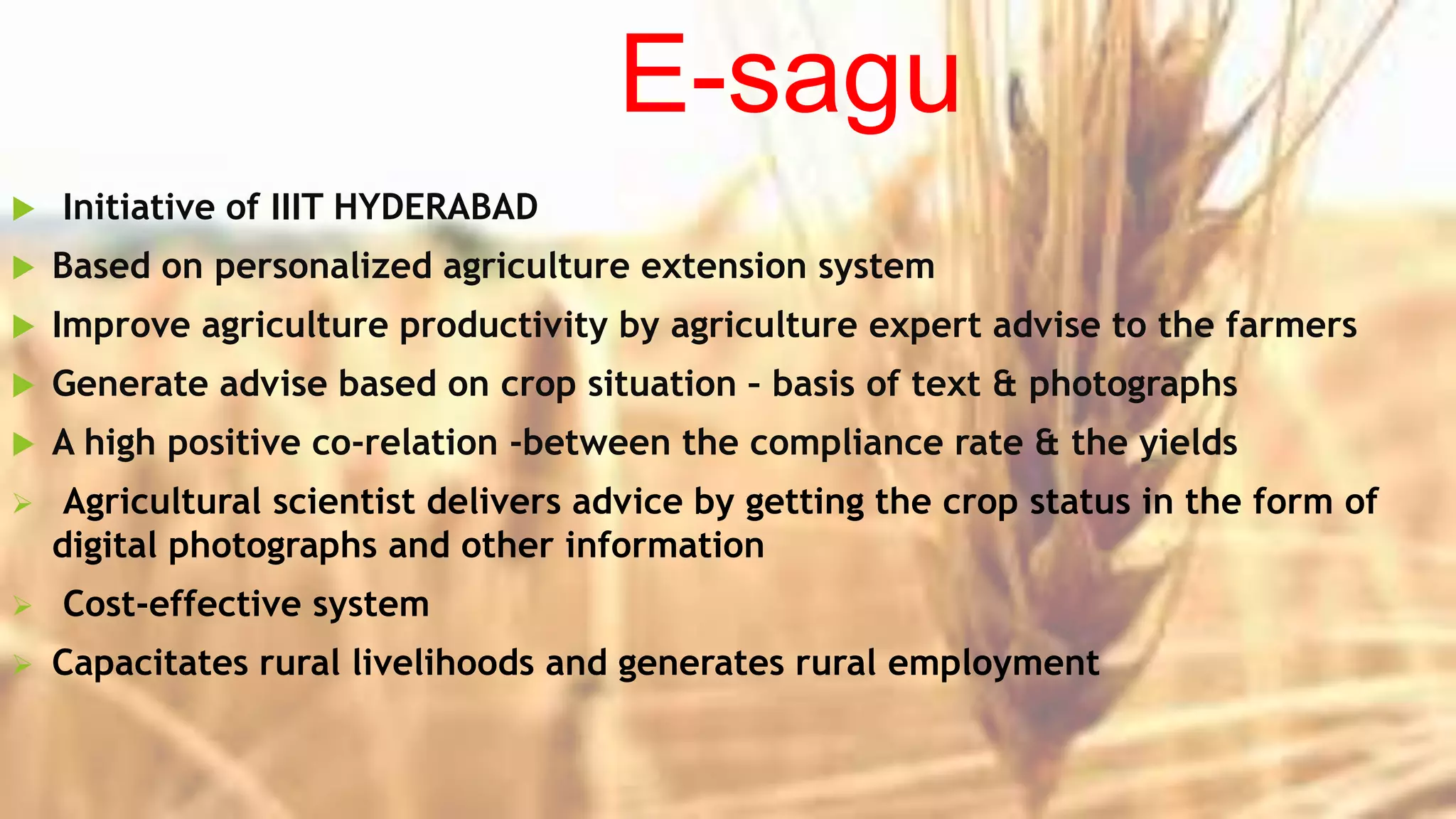
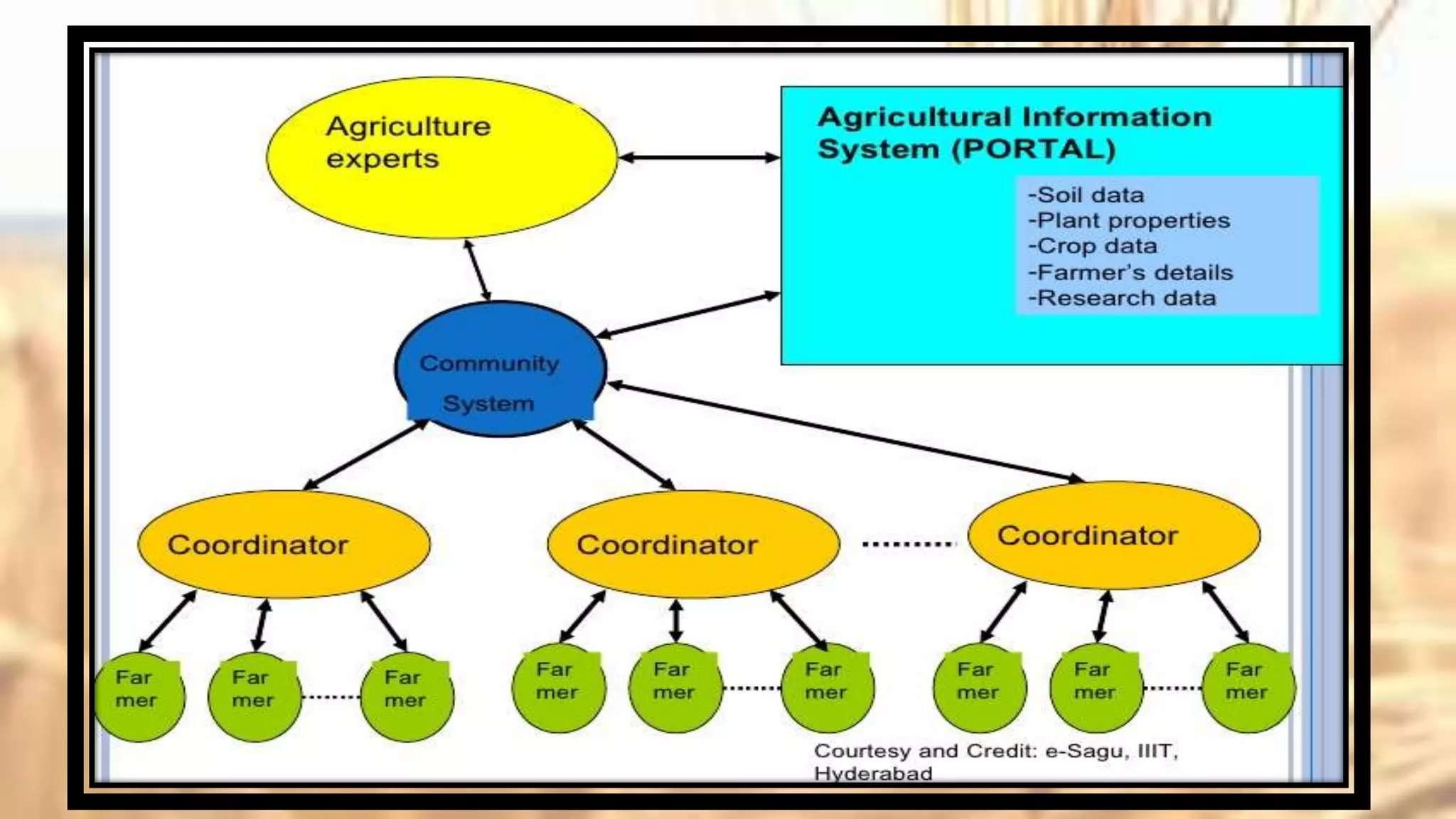
E-sagu
 Initiative of IIIT HYDERABAD
 Based on personalized agriculture extension system
 Improve agriculture productivity by agriculture expert advise to the farmers
 Generate advise based on crop situation – basis of text & photographs
 A high positive co-relation -between the compliance rate & the yields
 Agricultural scientist delivers advice by getting the crop status in the form of
digital photographs and other information
 Cost-effective system
 Capacitates rural livelihoods and generates rural employment
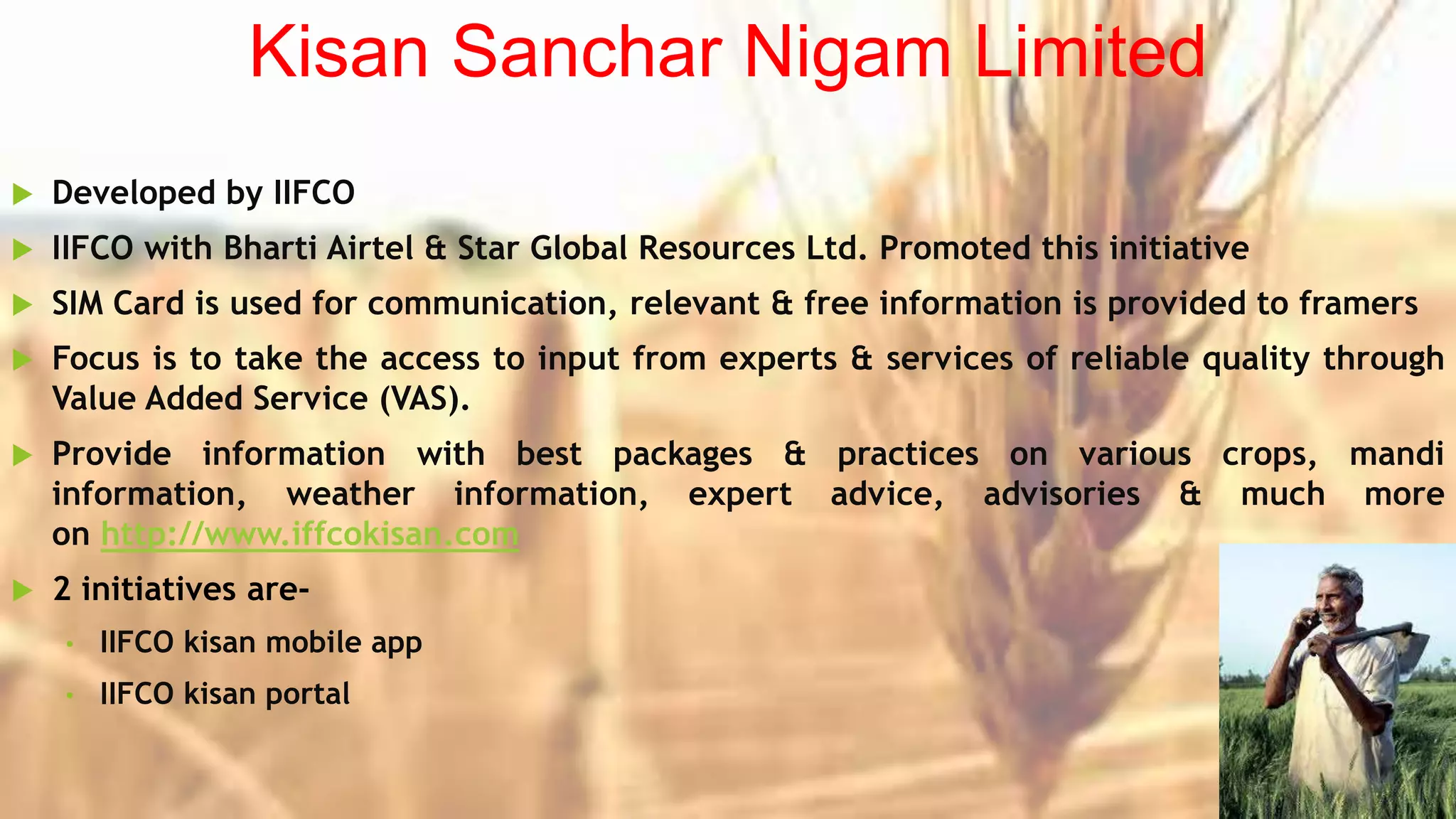
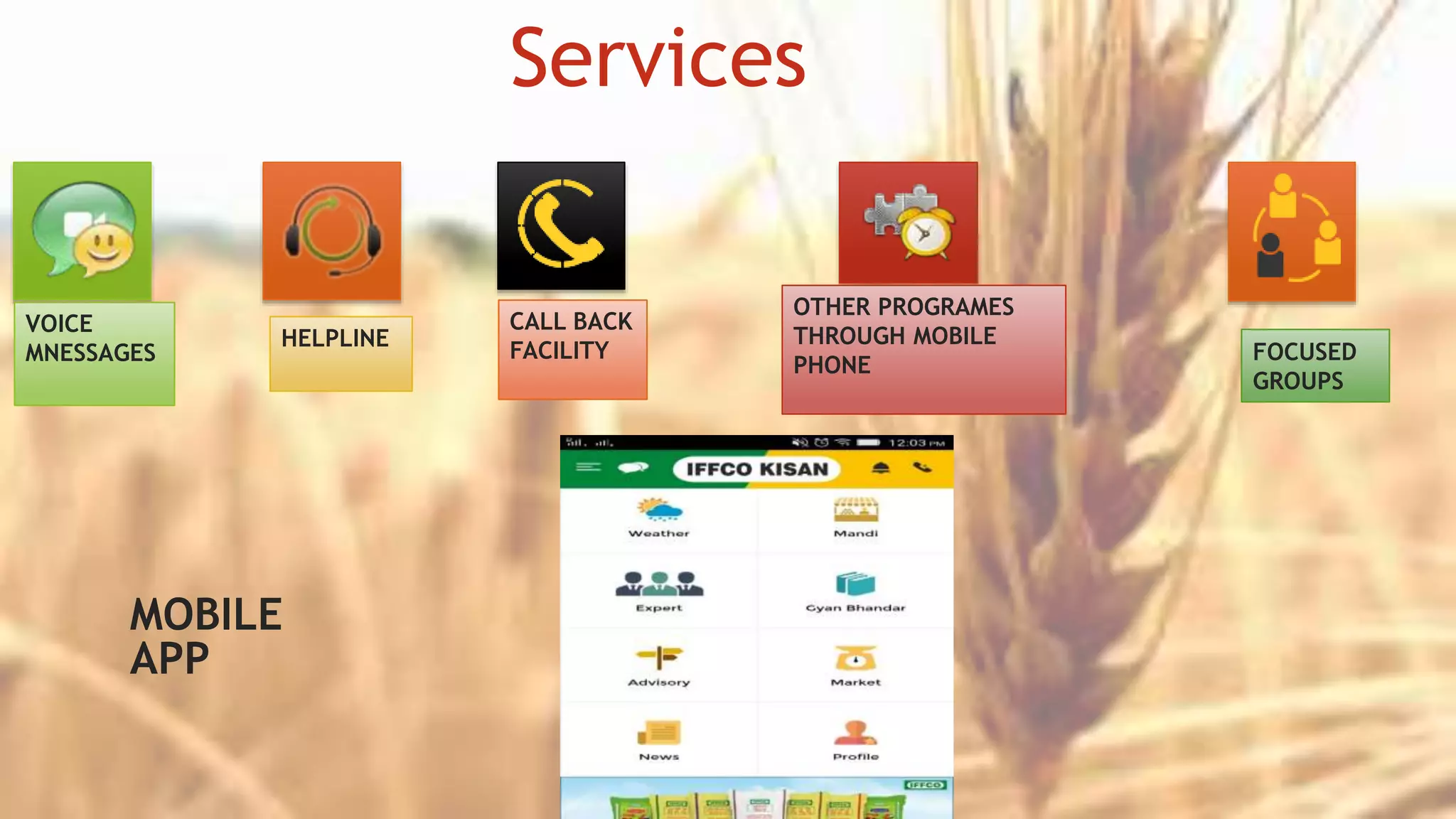
Kisan Sanchar Nigam Limited
 Developed by IIFCO
 IIFCO with Bharti Airtel & Star Global Resources Ltd. Promoted this initiative
 SIM Card is used for communication, relevant & free information is provided to framers
 Focus is to take the access to input from experts & services of reliable quality through
Value Added Service (VAS).
 Provide information with best packages & practices on various crops, mandi
information, weather information, expert advice, advisories & much more
on http://www.iffcokisan.com
 2 initiatives are-
• IIFCO kisan mobile app
• IIFCO kisan portal
Services
VOICE
MNESSAGES
HELPLINE
CALL BACK
FACILITY
OTHER PROGRAMES
THROUGH MOBILE
PHONE
FOCUSED
GROUPS
MOBILE
APP
Benefits of ICTs in agriculture
 Enhanced productivity
 Quick accomplishment of work
 Strengthen the seed sector: timely & updated information on seed related
issues such as new varieties release , fake seeds etc.
 Emergence of new threats such as diseases
 Reduce the gap between information rich & information poor & support
sustainable development in rural & agricultural communities
 Weather forecast ,Pricing control & Warning alerts
Limitations of ICTs in Agriculture
 Illiteracy/ low level of literacy of farmers
 Digital illiteracy
 Poverty
 Poor infrastructure such as internet connectivity
 Non ownership of computers, tablets and other digital devices
 Lack of awareness of farmers
 Lack of satisfaction with use of ICTs
 Several farming related issues unaddressed by ICTs
 Lack of access to markets and prices
 Challenges need to be addressed
THANK YOU
Made by:
MEETIKA (15)
SHALINI(150)
SUBJECT-ICT4D
B.Sc. HOME SCIENCE (HONS)
SEMESTER III
Department of Development Communication and Extension
Institute of Home Economics
University of Delhi

Use of ICT in Agriculture field

  • 1.
  • 2.
    Case Study ofa farmer Name: Balram Kumar Occupation: Farmer, crops dependent on monsoon Lives in: Arunachal Pradesh Problem : Inaccessible terrain , excessive slope susceptibility to land slides Change: Came to know about e – arik-got information about- "climate smart agriculture" climate change, improved cultivation & day-to-day market information Result Able to made changes in practices and the timing of sowing seeds . Helped in to be less affected by irregular patterns of monsoon Happy & satisfied from the results-enhanced crop productivity & profit
  • 3.
    What are ICTs? Information& communication technologies - an umbrella term • Includes radio, television, cellular phones, satellite systems etc • Applied for processing, exchanging & managing data, information & knowledge • To communicate desired information to the target audience in a participative way
  • 5.
    Need of ICTsin agriculture • Many Farmers are not educated • Cut off from cites & information • Lack of extension faclities • Lack of knowledge of modern technologies & market prices • Inability to compete with modern farmers • There is a gap b/w traditional & modern technology
  • 6.
    ICT initiatives by varioussectors GOVERNMENT  N-logue (with local service provider)  AGMARKNET (central government)  E-sagu (Andhra Pradesh)  Kisan call centre(Ministry of Agriculture)  Weather advisory PRIVATE & NGOs  Agriwatch (IASL)  TATA Kisan Kendra(TATA Buiseness house)  Tarahaat(TARA)  Hariyali kisan bazaar (DSCL)  Weather advisory- SKYMET  E-choupal(ITC-IBD)
  • 7.
    Some Initiatives These arethe technologies used in listed initiatives.
  • 8.
    Kisan call centre Launchedon January 21, 2004 by the Department of Agricultural & Co- operation Farmer dials toll free number ‘1551’ for any enquiry If queries not answered satisfactorily then the call is forwarded to level II & level III Main technologies involved: i. Computer system with Internet ii. Telephone line iii. Teleconferencing facility  Important information gateway  Cost is almost zero, response is in local language  If needed, the agricultural scientists also visit the field
  • 10.
    E-sagu  Initiative ofIIIT HYDERABAD  Based on personalized agriculture extension system  Improve agriculture productivity by agriculture expert advise to the farmers  Generate advise based on crop situation – basis of text & photographs  A high positive co-relation -between the compliance rate & the yields  Agricultural scientist delivers advice by getting the crop status in the form of digital photographs and other information  Cost-effective system  Capacitates rural livelihoods and generates rural employment
  • 12.
    Kisan Sanchar NigamLimited  Developed by IIFCO  IIFCO with Bharti Airtel & Star Global Resources Ltd. Promoted this initiative  SIM Card is used for communication, relevant & free information is provided to framers  Focus is to take the access to input from experts & services of reliable quality through Value Added Service (VAS).  Provide information with best packages & practices on various crops, mandi information, weather information, expert advice, advisories & much more on http://www.iffcokisan.com  2 initiatives are- • IIFCO kisan mobile app • IIFCO kisan portal
  • 13.
  • 14.
    Benefits of ICTsin agriculture  Enhanced productivity  Quick accomplishment of work  Strengthen the seed sector: timely & updated information on seed related issues such as new varieties release , fake seeds etc.  Emergence of new threats such as diseases  Reduce the gap between information rich & information poor & support sustainable development in rural & agricultural communities  Weather forecast ,Pricing control & Warning alerts
  • 15.
    Limitations of ICTsin Agriculture  Illiteracy/ low level of literacy of farmers  Digital illiteracy  Poverty  Poor infrastructure such as internet connectivity  Non ownership of computers, tablets and other digital devices  Lack of awareness of farmers  Lack of satisfaction with use of ICTs  Several farming related issues unaddressed by ICTs  Lack of access to markets and prices  Challenges need to be addressed
  • 16.
    THANK YOU Made by: MEETIKA(15) SHALINI(150) SUBJECT-ICT4D B.Sc. HOME SCIENCE (HONS) SEMESTER III Department of Development Communication and Extension Institute of Home Economics University of Delhi