Go Through
By: Rohan Choudhary
College Of Architecture, IET Bhaddal

 Principles of interior design are achieved through the
application of the elements of design.
 It also help us to achieve our objectives of Interior
Design.
Principles Of Interior Design

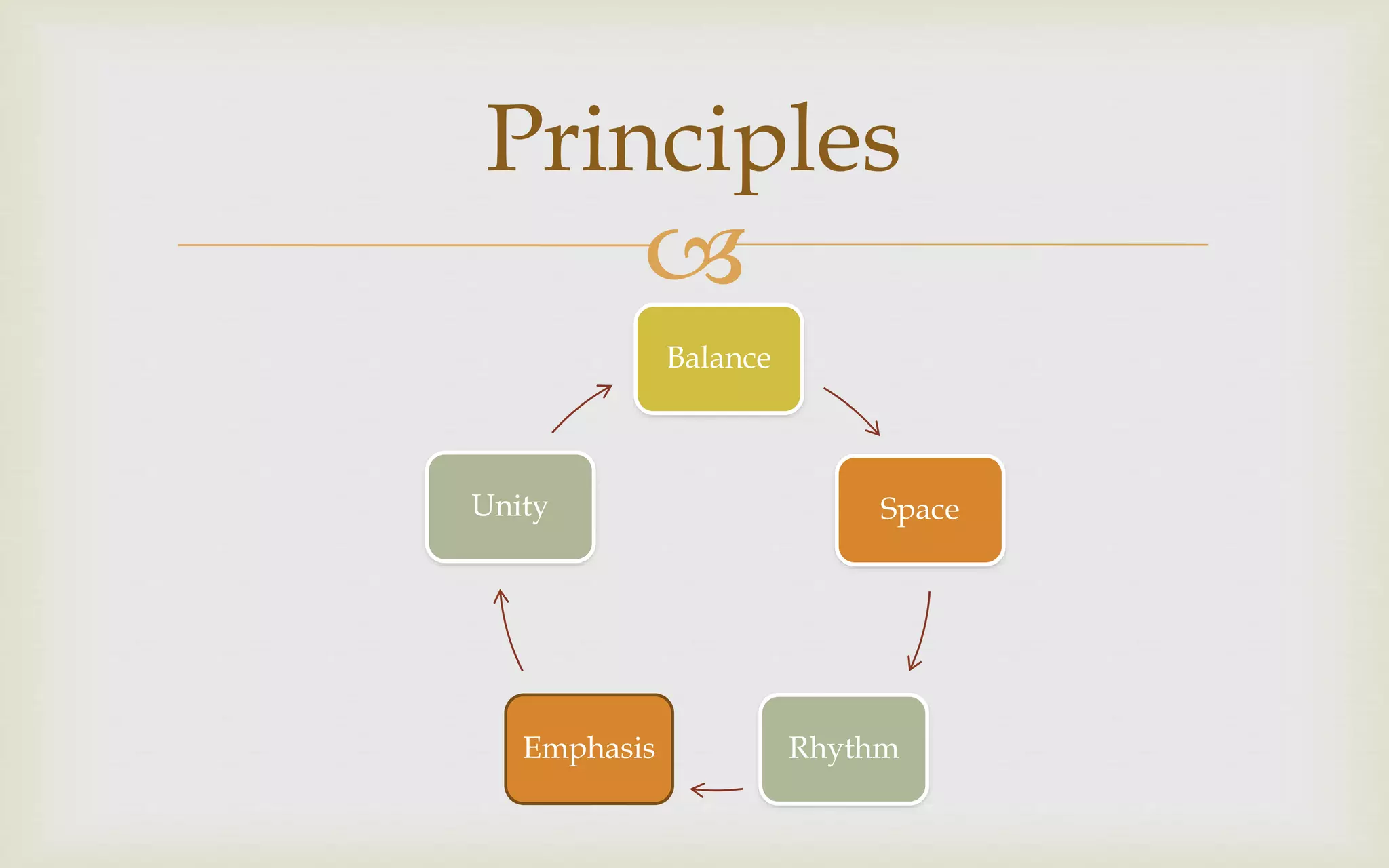
Principles
Balance
Space
RhythmEmphasis
Unity

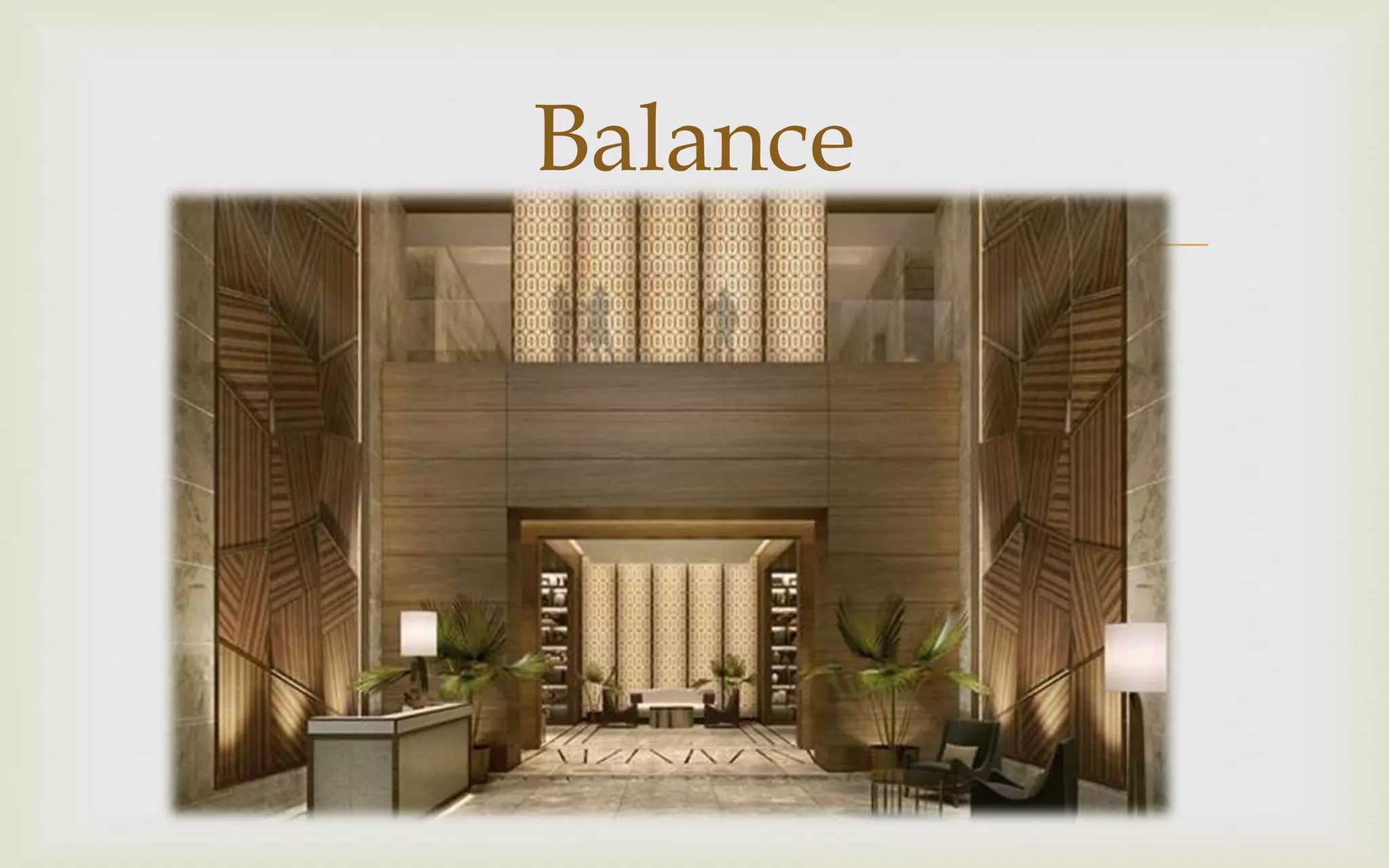
Balance

Symmetrical Balance

Asymmetrical Balance
• Asymmetrical balance relates
very strongly to the visual
weight of objects.
• Complex shapes often feel
heavier and for that reason
are commonly used to
achieve asymmetrical
balance.

Radial Balance
• Radial balance is almost
circular.
• Distributed arrangement
of items around a central
point either extending
outward or inward.
• This principle is
commonly used to create
focus on an object!

Rhythm
• Rhythm can be applied to
interior spaces as a way to
introduce order, interest
and focus.

Repetition
• Repetition is the simplest
way to attain rhythm and
can be achieved by
repeating any of the
elements of design.

Alternation
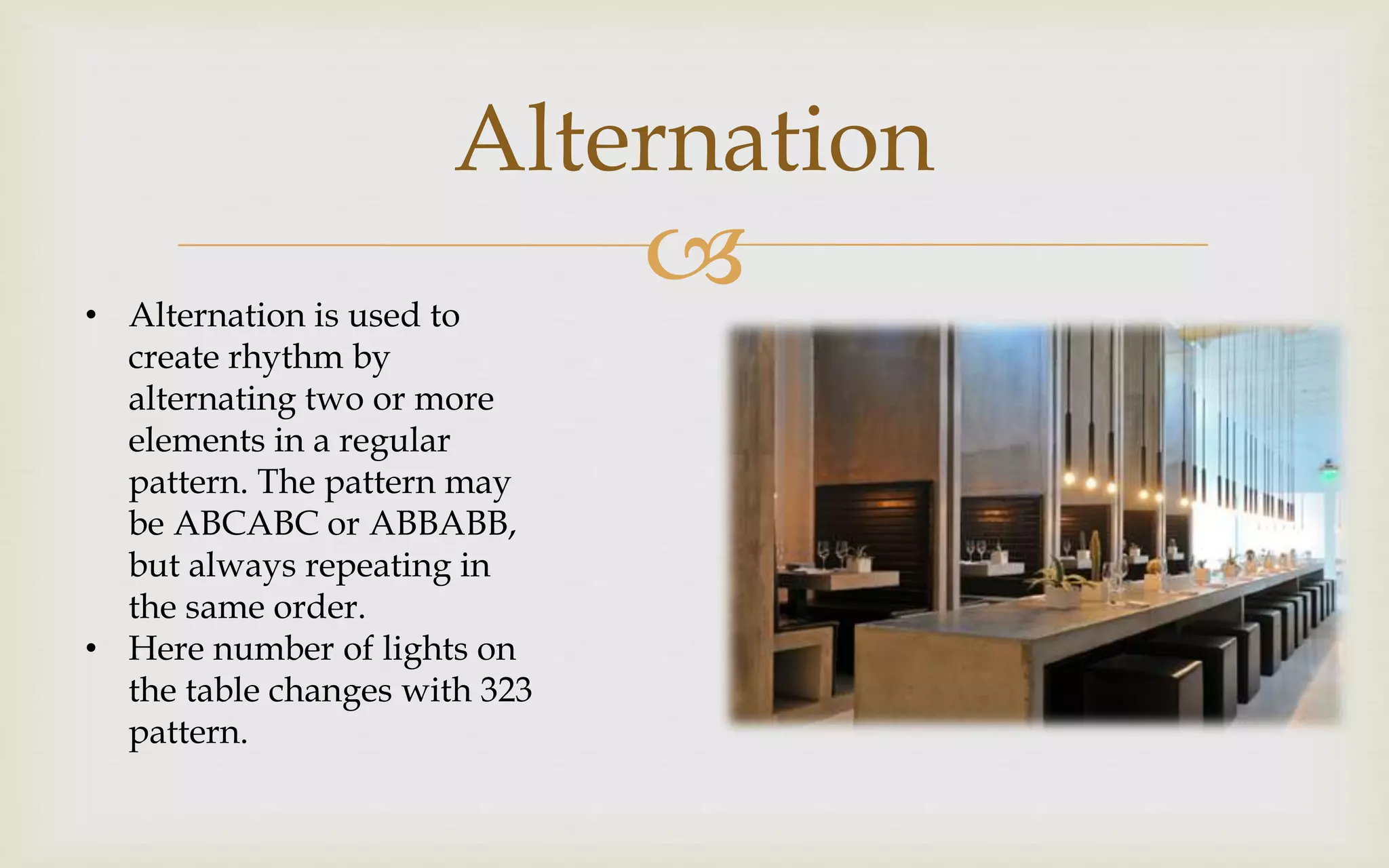
• Alternation is used to
create rhythm by
alternating two or more
elements in a regular
pattern. The pattern may
be ABCABC or ABBABB,
but always repeating in
the same order.
• Here number of lights on
the table changes with 323
pattern.

Space
• Space is the area in and
around something.
• Space indicates the 3
dimensional area
which have form,
length width and
height.

Focus/Emphasis
• Emphasis in interior
design is used to create
focal point in design.
• In this picture the red
wall is emphasizing the
conference room.

Unity
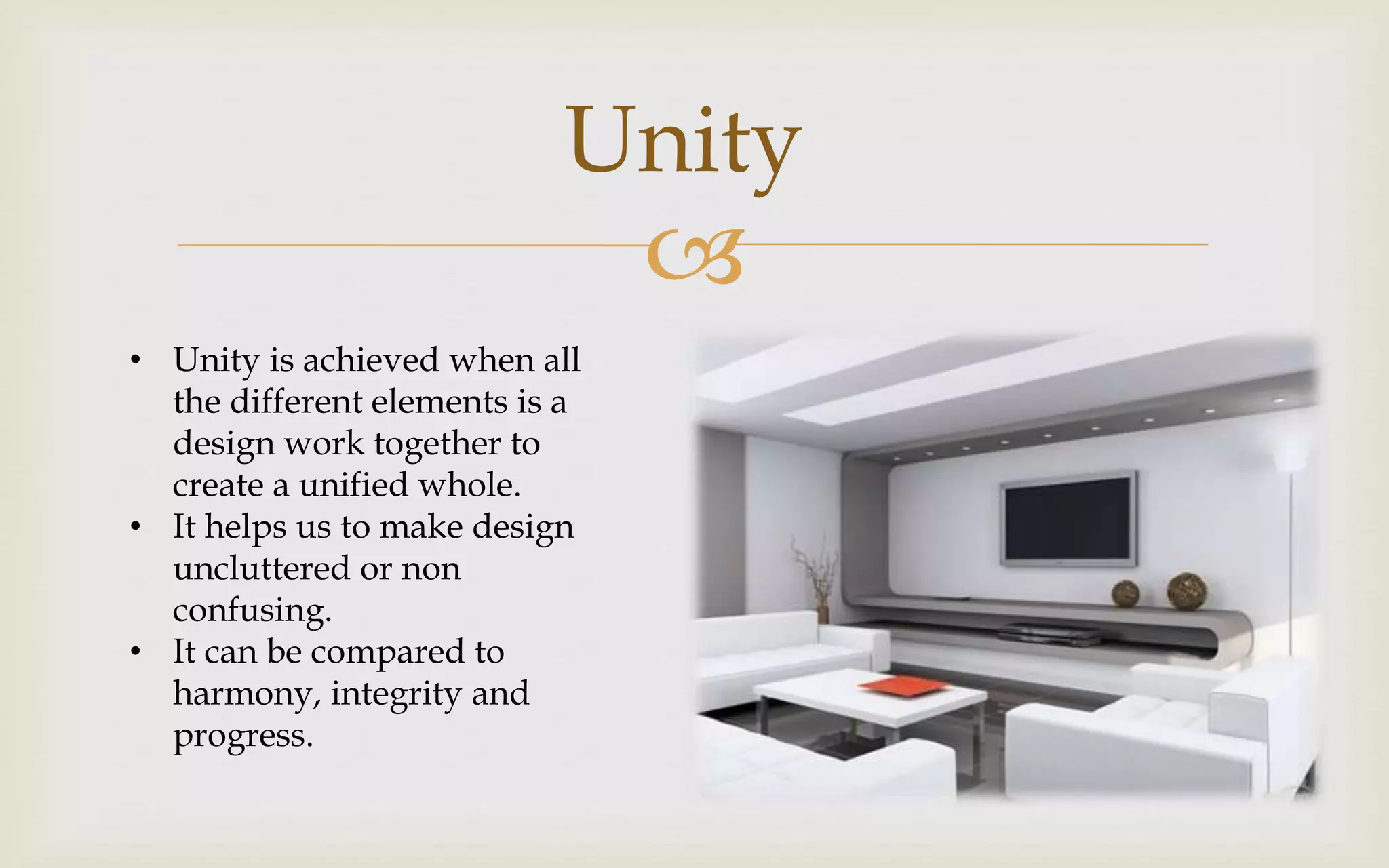
• Unity is achieved when all
the different elements is a
design work together to
create a unified whole.
• It helps us to make design
uncluttered or non
confusing.
• It can be compared to
harmony, integrity and
progress.

Thank you….
Principles Of Interior Design

Principles of Interior design