Dr. BARUN KUMAR
MBBS,
MS (general surgery)
MCh urology
Male sexual health specialist
Contact:
barunkumar_urology@outlook.com
Teleconsult @ LYBRATE app
Code: BK5A76
Can also Book appointment through practo or curefit
app.
What is urinary tract ?
• The urinary tract includes the
kidneys (which filter the blood
to produce urine),
• the ureters (the tubes that
carry urine from the kidneys to
the bladder),
• the bladder (which stores
urine), and
• the urethra (the tube that
carries urine from the bladder
to the outside)
WHAT IS UTI?
• Urinary tract infections (UTIs)
happen when bacteria get
into the urethra and travel up
into the bladder or above to
the kidney.
What causes UTI?
Factors that increase the risk of developing a UTIs include:
• Sexual intercourse ( in newly married women )
• Having diabetes (increases the risk )
• Having a bladder or kidney infection in the past 12 months
• Using a spermicide for birth control
• For men, not being circumcised or having insertive anal sex
• Improper local hygiene
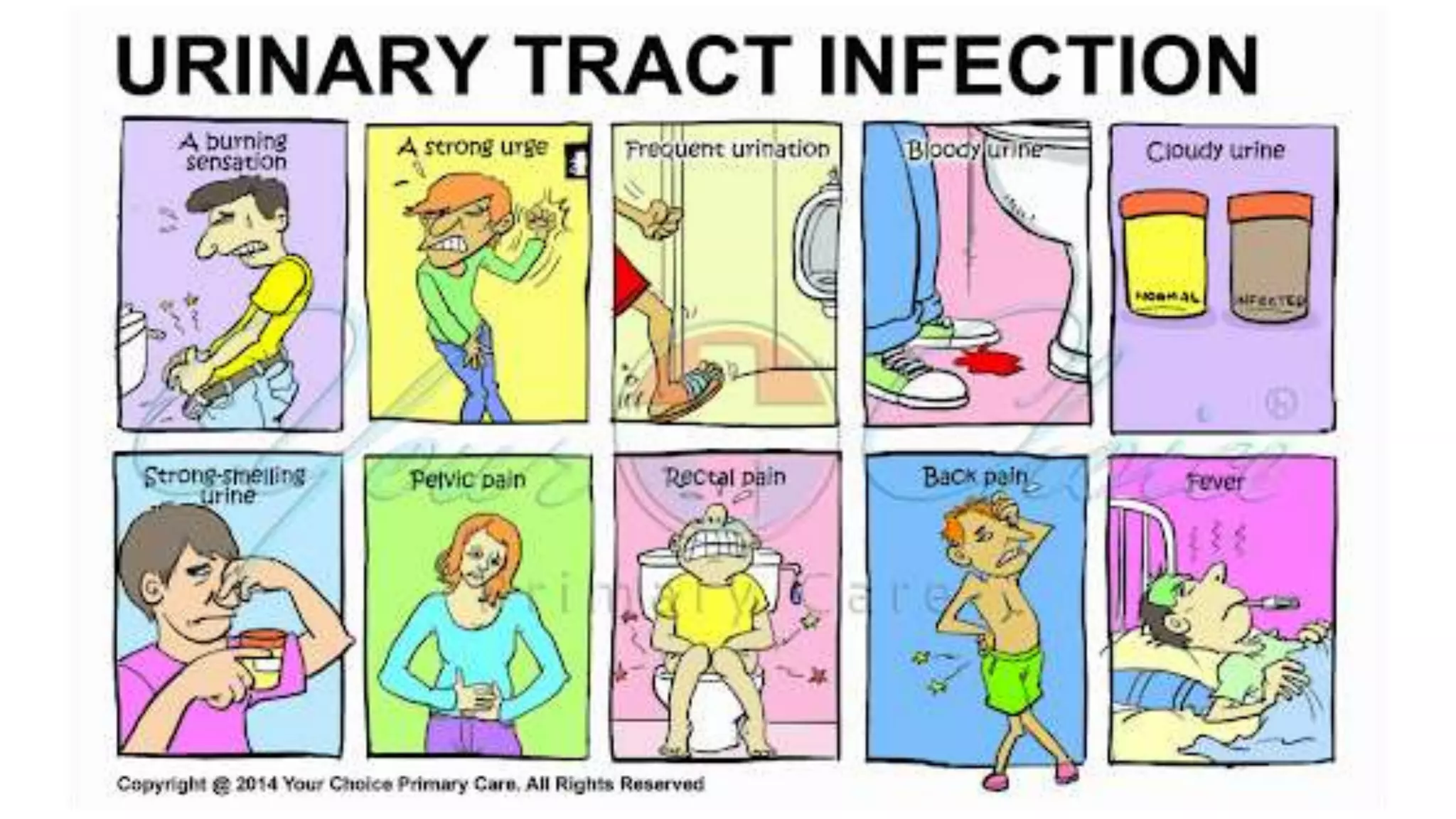
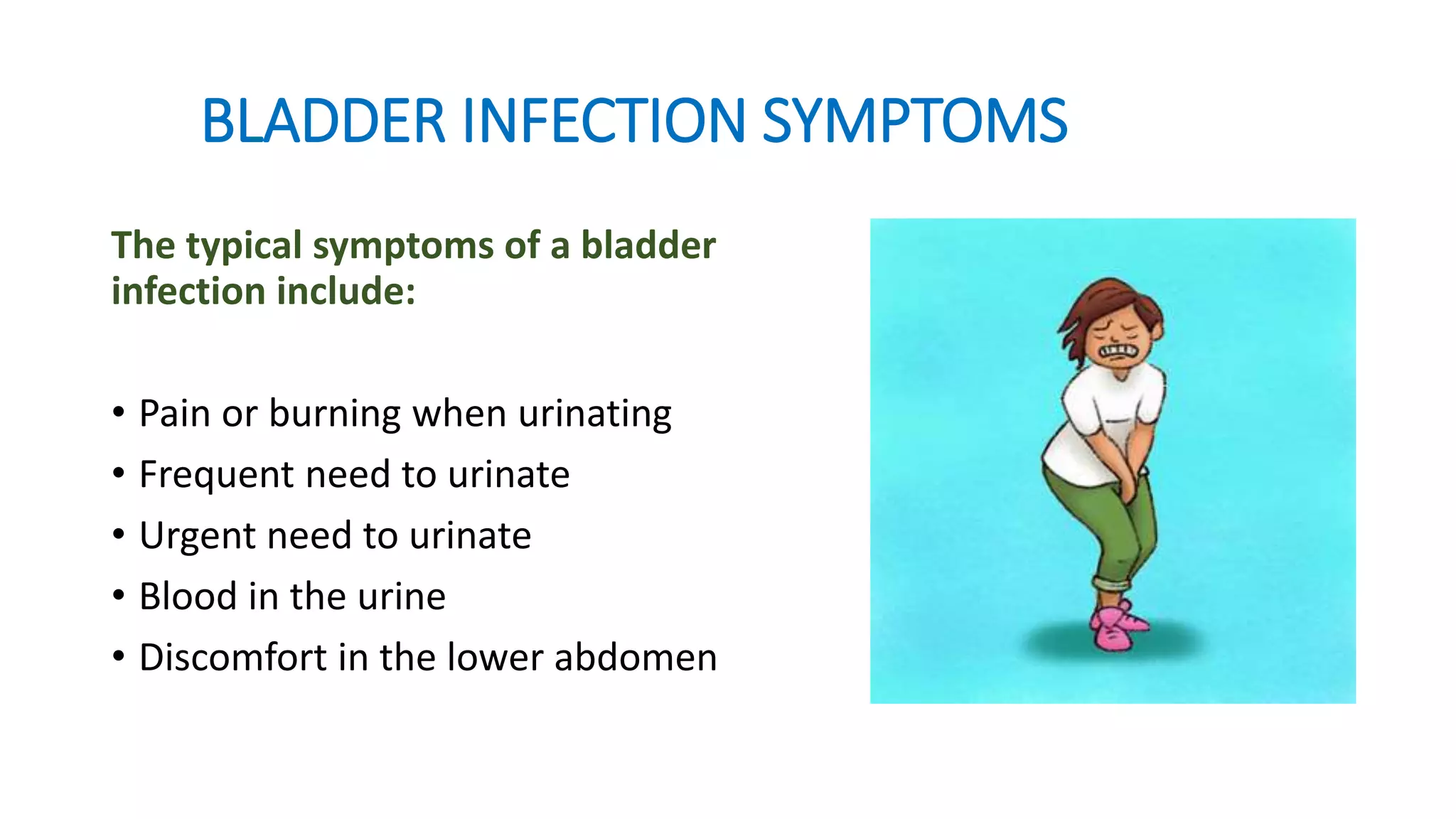
BLADDER INFECTION SYMPTOMS
The typical symptoms of a bladder
infection include:
• Pain or burning when urinating
• Frequent need to urinate
• Urgent need to urinate
• Blood in the urine
• Discomfort in the lower abdomen
KIDNEY INFECTION SYMPTOMS
Kidney infections can sometimes cause the same
symptoms as those of a bladder infection (listed above),
but they can also cause:
• Fever (temperature higher than 99.9◦F or 37.7◦C)
• Pain in the flank (one or both sides of the lower back,
where the kidneys are located)
• Nausea or vomiting
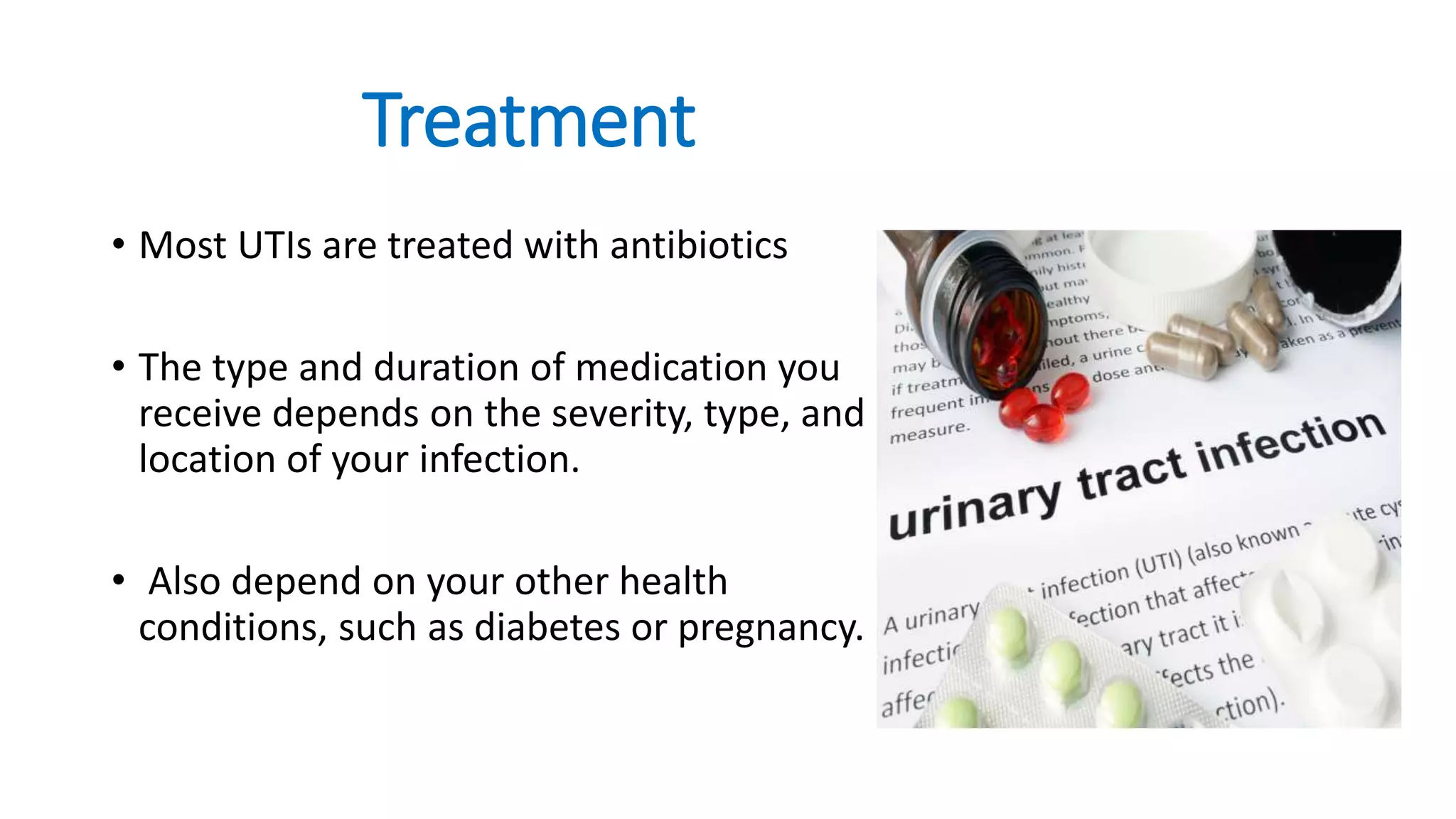
Treatment
• Most UTIs are treated with antibiotics
• The type and duration of medication you
receive depends on the severity, type, and
location of your infection.
• Also depend on your other health
conditions, such as diabetes or pregnancy.
Prevention
• Keep your genital area clean and wear clean
• Use dry cotton underwear.
• Drink plenty of fluids.
• Women prone to UTIs should avoid using birth control methods such as a
contraceptive diaphragm and spermicidal jelly.
• You should urinate after sexual intercourse.

Urinary tract infection patient education

  • 1.
    Dr. BARUN KUMAR MBBS, MS(general surgery) MCh urology Male sexual health specialist Contact: barunkumar_urology@outlook.com Teleconsult @ LYBRATE app Code: BK5A76 Can also Book appointment through practo or curefit app.
  • 3.
    What is urinarytract ? • The urinary tract includes the kidneys (which filter the blood to produce urine), • the ureters (the tubes that carry urine from the kidneys to the bladder), • the bladder (which stores urine), and • the urethra (the tube that carries urine from the bladder to the outside)
  • 4.
    WHAT IS UTI? •Urinary tract infections (UTIs) happen when bacteria get into the urethra and travel up into the bladder or above to the kidney.
  • 5.
    What causes UTI? Factorsthat increase the risk of developing a UTIs include: • Sexual intercourse ( in newly married women ) • Having diabetes (increases the risk ) • Having a bladder or kidney infection in the past 12 months • Using a spermicide for birth control • For men, not being circumcised or having insertive anal sex • Improper local hygiene
  • 6.
    BLADDER INFECTION SYMPTOMS Thetypical symptoms of a bladder infection include: • Pain or burning when urinating • Frequent need to urinate • Urgent need to urinate • Blood in the urine • Discomfort in the lower abdomen
  • 7.
    KIDNEY INFECTION SYMPTOMS Kidneyinfections can sometimes cause the same symptoms as those of a bladder infection (listed above), but they can also cause: • Fever (temperature higher than 99.9◦F or 37.7◦C) • Pain in the flank (one or both sides of the lower back, where the kidneys are located) • Nausea or vomiting
  • 8.
    Treatment • Most UTIsare treated with antibiotics • The type and duration of medication you receive depends on the severity, type, and location of your infection. • Also depend on your other health conditions, such as diabetes or pregnancy.
  • 9.
    Prevention • Keep yourgenital area clean and wear clean • Use dry cotton underwear. • Drink plenty of fluids. • Women prone to UTIs should avoid using birth control methods such as a contraceptive diaphragm and spermicidal jelly. • You should urinate after sexual intercourse.