Understanding
Urethritis
Vishwadeep Rana
Group 332
Introduction to Urethritis
• Urethritis is the inflammation of the urethra, commonly caused by
infectious agents such as bacteria or viruses.
• Types of Urethritis: Urethritis can be categorized into infectious and
non-infectious types. Infectious urethritis is typically caused by
bacteria (e.g., Neisseria gonorrhoeae, Chlamydia trachomatis) or
viruses (e.g., Herpes simplex virus), while non-infectious urethritis can
result from trauma, chemical irritants, or autoimmune conditions.
• Complications: While urethritis is usually a self-limiting condition,
untreated cases can lead to complications such as epididymitis
(inflammation of the epididymis) in males and pelvic inflammatory
disease (PID) in females. Chronic urethritis may also increase the risk
of infertility.
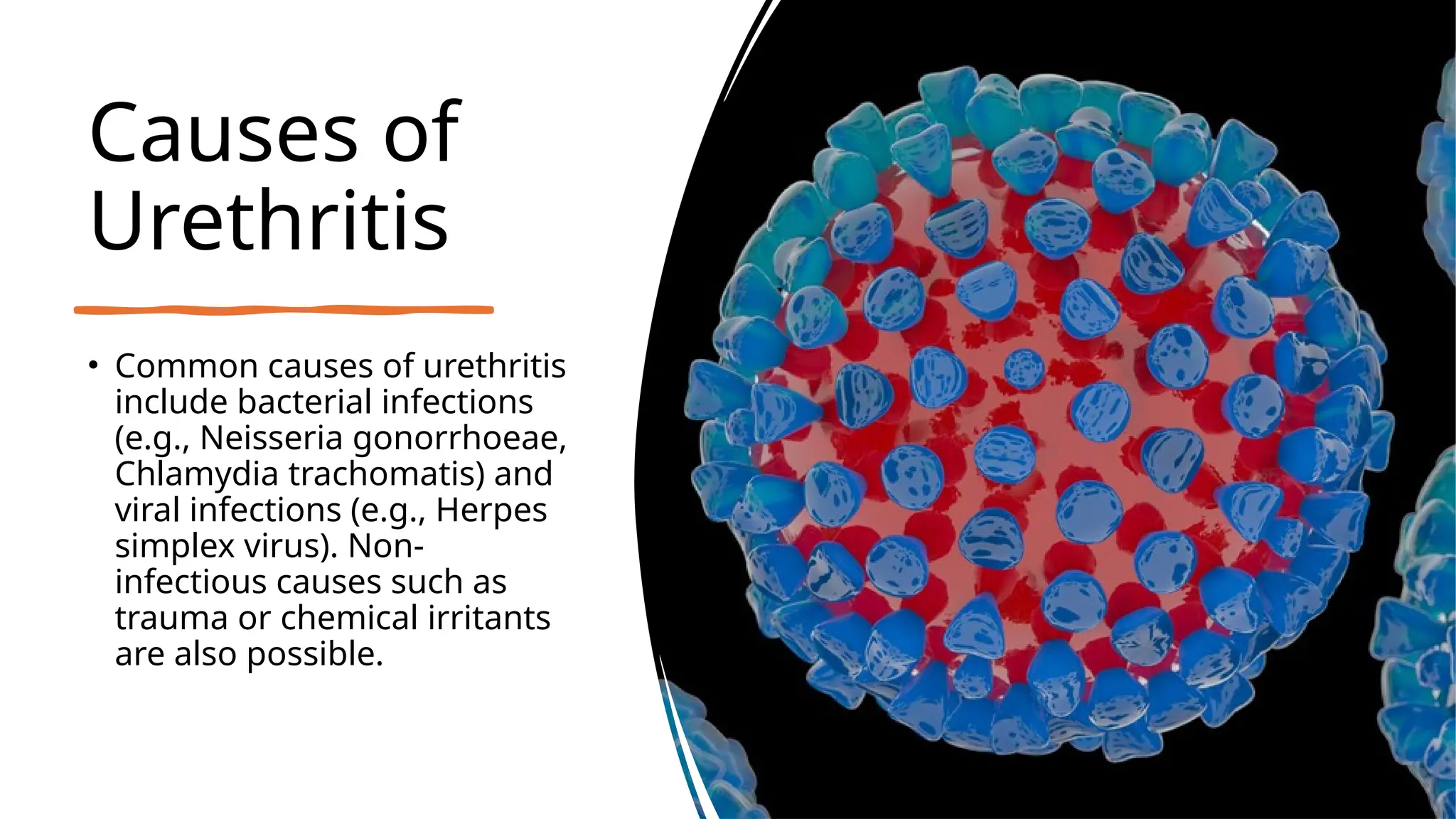
Causes of
Urethritis
• Common causes of urethritis
include bacterial infections
(e.g., Neisseria gonorrhoeae,
Chlamydia trachomatis) and
viral infections (e.g., Herpes
simplex virus). Non-
infectious causes such as
trauma or chemical irritants
are also possible.
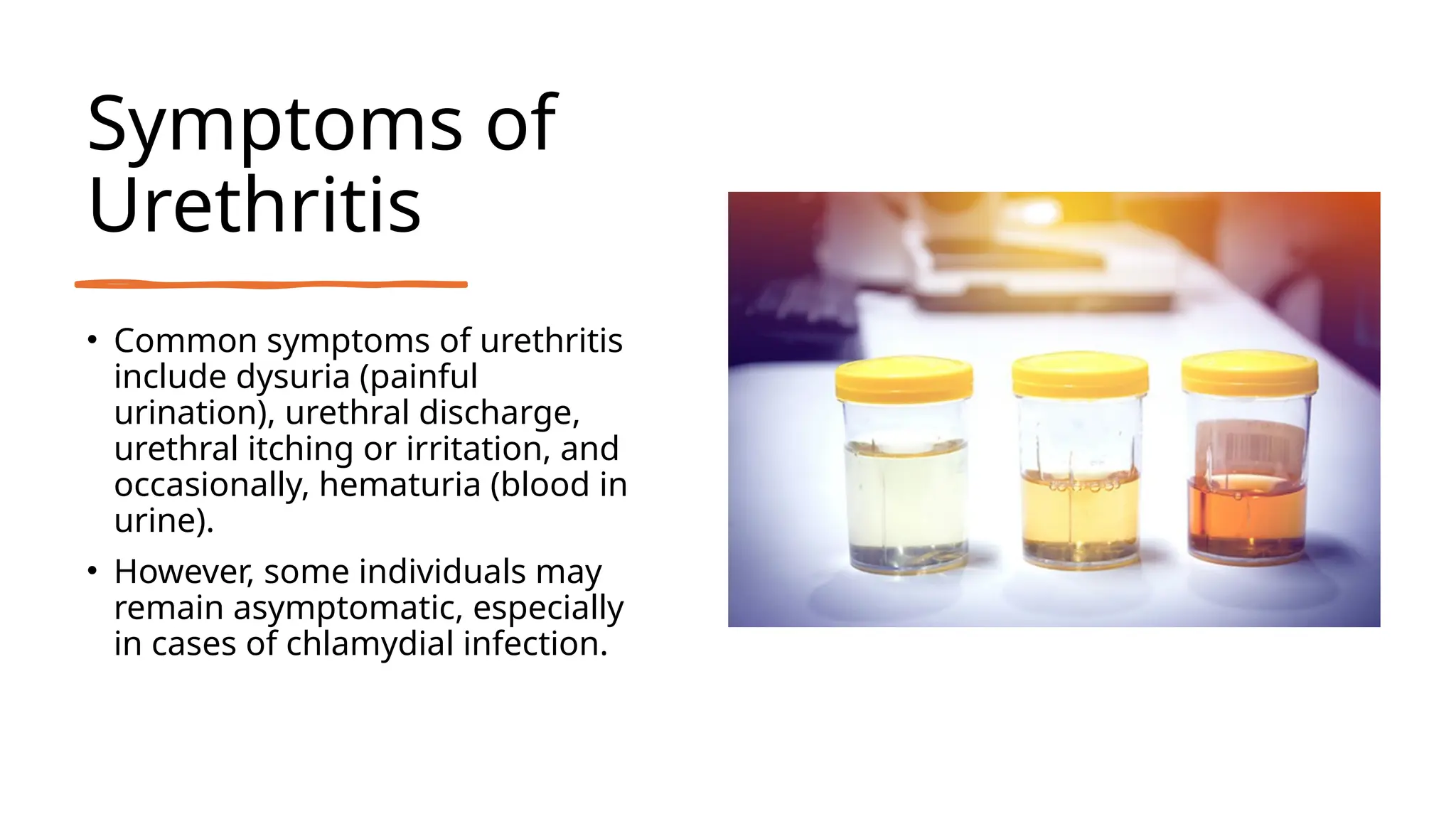
Symptoms of
Urethritis
• Common symptoms of urethritis
include dysuria (painful
urination), urethral discharge,
urethral itching or irritation, and
occasionally, hematuria (blood in
urine).
• However, some individuals may
remain asymptomatic, especially
in cases of chlamydial infection.
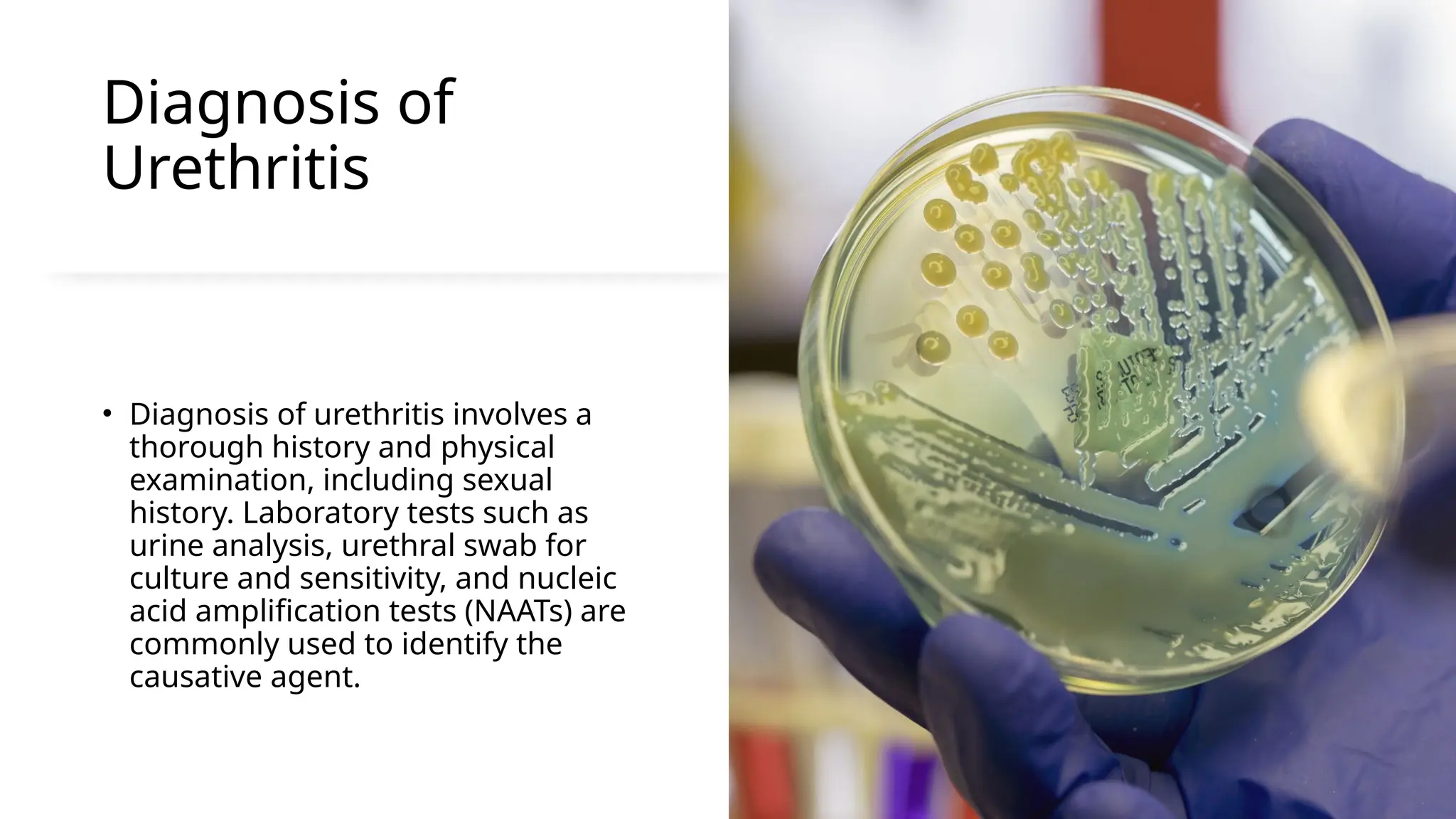
Diagnosis of
Urethritis
• Diagnosis of urethritis involves a
thorough history and physical
examination, including sexual
history. Laboratory tests such as
urine analysis, urethral swab for
culture and sensitivity, and nucleic
acid amplification tests (NAATs) are
commonly used to identify the
causative agent.
Treatment Options
for Urethritis
• Treatment of urethritis typically involves
antibiotics targeted at the suspected or
confirmed pathogen. Empiric therapy
with broad-spectrum antibiotics such as
Azithromycin or Doxycycline is often
initiated, with adjustments made based
on culture and sensitivity results.
Symptomatic relief with analgesics may
also be provided to alleviate discomfort.
Prevention of
Urethritis
• Preventive measures for urethritis
include practicing safe sexual
behaviors such as consistent and
correct condom use, reducing the
number of sexual partners, and
avoiding high-risk sexual activities.
Regular screening for STIs,
especially among sexually active
individuals and those at high risk,
is essential for early detection and
treatment..
Any Questions?

Understanding Urethritis Urology Medicine

  • 1.
  • 2.
    Introduction to Urethritis •Urethritis is the inflammation of the urethra, commonly caused by infectious agents such as bacteria or viruses. • Types of Urethritis: Urethritis can be categorized into infectious and non-infectious types. Infectious urethritis is typically caused by bacteria (e.g., Neisseria gonorrhoeae, Chlamydia trachomatis) or viruses (e.g., Herpes simplex virus), while non-infectious urethritis can result from trauma, chemical irritants, or autoimmune conditions. • Complications: While urethritis is usually a self-limiting condition, untreated cases can lead to complications such as epididymitis (inflammation of the epididymis) in males and pelvic inflammatory disease (PID) in females. Chronic urethritis may also increase the risk of infertility.
  • 3.
    Causes of Urethritis • Commoncauses of urethritis include bacterial infections (e.g., Neisseria gonorrhoeae, Chlamydia trachomatis) and viral infections (e.g., Herpes simplex virus). Non- infectious causes such as trauma or chemical irritants are also possible.
  • 4.
    Symptoms of Urethritis • Commonsymptoms of urethritis include dysuria (painful urination), urethral discharge, urethral itching or irritation, and occasionally, hematuria (blood in urine). • However, some individuals may remain asymptomatic, especially in cases of chlamydial infection.
  • 5.
    Diagnosis of Urethritis • Diagnosisof urethritis involves a thorough history and physical examination, including sexual history. Laboratory tests such as urine analysis, urethral swab for culture and sensitivity, and nucleic acid amplification tests (NAATs) are commonly used to identify the causative agent.
  • 6.
    Treatment Options for Urethritis •Treatment of urethritis typically involves antibiotics targeted at the suspected or confirmed pathogen. Empiric therapy with broad-spectrum antibiotics such as Azithromycin or Doxycycline is often initiated, with adjustments made based on culture and sensitivity results. Symptomatic relief with analgesics may also be provided to alleviate discomfort.
  • 7.
    Prevention of Urethritis • Preventivemeasures for urethritis include practicing safe sexual behaviors such as consistent and correct condom use, reducing the number of sexual partners, and avoiding high-risk sexual activities. Regular screening for STIs, especially among sexually active individuals and those at high risk, is essential for early detection and treatment..
  • 8.