
URBAN SETTLEMENT
EVOLUTION OF THE URBAN 
POPULATION 
• Link
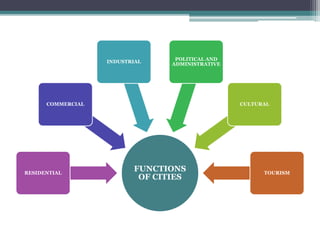
FUNCTIONS 
OF CITIES 
COMMERCIAL 
RESIDENTIAL 
INDUSTRIAL 
POLITICAL AND 
ADMINISTRATIVE 
CULTURAL 
TOURISM
THE URBAN POPULATION 
• Most of the population lives in towns and 
medium-sized cities (less than 500,000 
inhabitants). 
▫ Salamanca has more than 152,000 inhabitants. 
▫ Valladolid has 312,000 inhabitants. 
▫ Palencia has around 82,000 inhabitants.
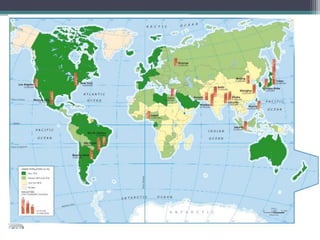
THE URBAN POPULATION 
•However, the number of cities 
with more than 10 million 
inhabitants has increased in 
the past few decades: 
MEGACITIES
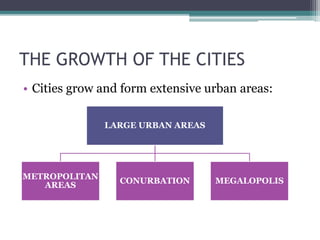
THE GROWTH OF THE CITIES 
• Cities grow and form extensive urban areas: 
LARGE URBAN AREAS 
METROPOLITAN 
AREAS 
CONURBATION MEGALOPOLIS
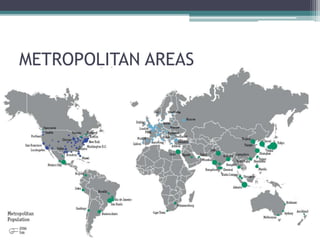
METROPOLITAN AREAS
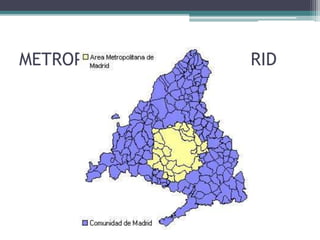
METROPOLITAN AREA OF MADRID
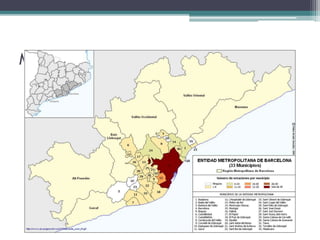
METROPOLITAN AREA OF BARCELONA
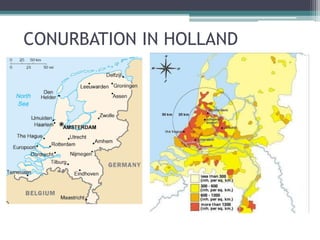
CONURBATION IN HOLLAND
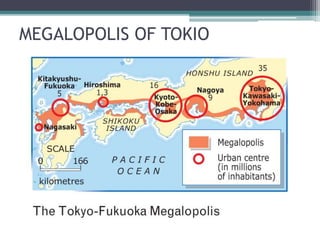
MEGALOPOLIS OF TOKIO
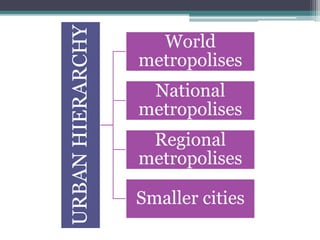
URBAN HIERARCHY 
• It´s the organisation of cities in ranks or 
categories. 
• The number of inhabitants and the extension of 
a city´s sphere of influence determine its rank in 
the urban hierarchy (worldwide, national, 
regional, county or district, etc.) 
• A number of urban nuclei, ranked and 
interconnected, form an urban network.
URBAN HIERARCHY 
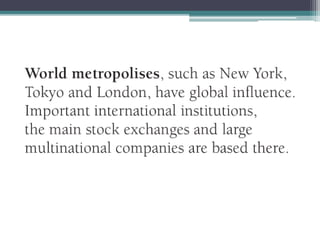
World 
metropolises 
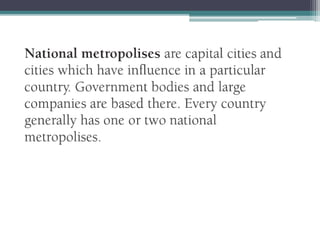
National 
metropolises 
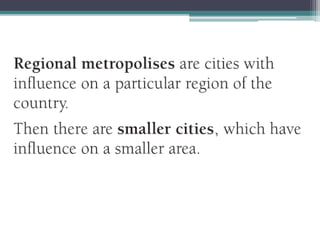
Regional 
metropolises 
Smaller cities
HOMEWORK 
• Page 67: ex. 6 and 7 
• Page 74: ex. 2 and 3
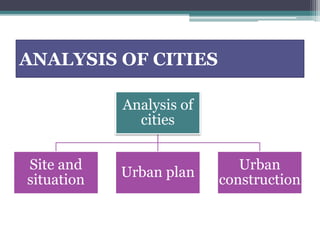
ANALYSIS OF CITIES 
Analysis of 
cities 
Site and 
situation 
Urban plan 
Urban 
construction
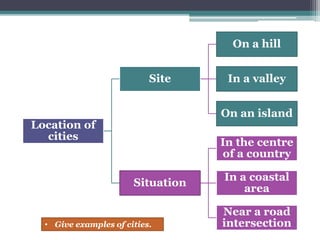
Location of 
cities 
Site 
On a hill 
In a valley 
On an island 
Situation 
In the centre 
of a country 
In a coastal 
area 
Near a road 
• Give examples of cities. intersection
URBAN PLAN 
• What is an urban plan? 
• How many types of plan can we distinguish? 
• Name the three types of plan, according to 
the overall shape and the arrangement of 
roads.
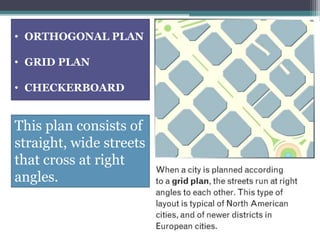
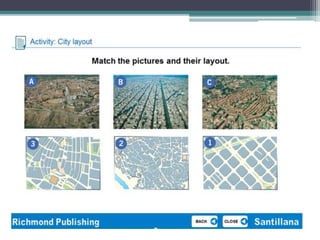
• ORTHOGONAL PLAN 
• GRID PLAN 
• CHECKERBOARD 
This plan consists of 
straight, wide streets 
that cross at right 
angles.
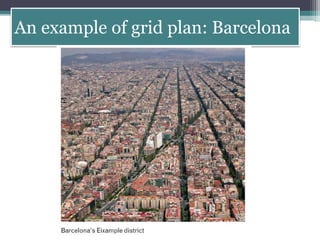
An example of grid plan: Barcelona
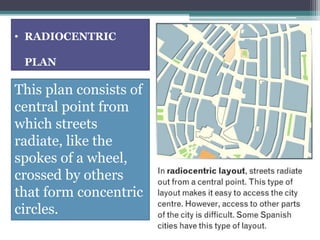
• RADIOCENTRIC 
PLAN 
This plan consists of 
central point from 
which streets 
radiate, like the 
spokes of a wheel, 
crossed by others 
that form concentric 
circles.
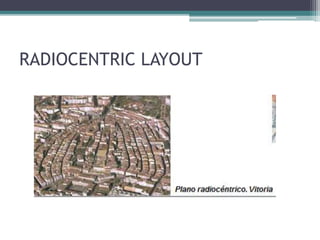
RADIOCENTRIC LAYOUT
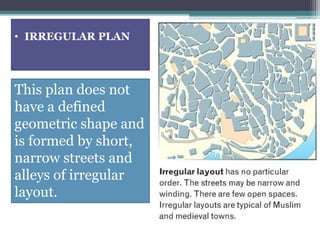
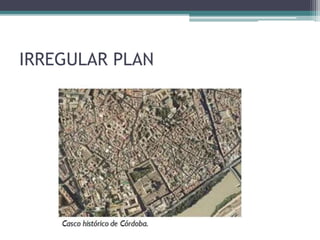
• IRREGULAR PLAN 
This plan does not 
have a defined 
geometric shape and 
is formed by short, 
narrow streets and 
alleys of irregular 
layout.
IRREGULAR PLAN
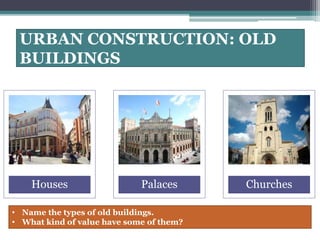
URBAN CONSTRUCTION: OLD 
BUILDINGS 
Houses Palaces Churches 
• Name the types of old buildings. 
• What kind of value have some of them?
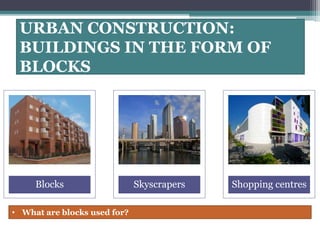
URBAN CONSTRUCTION: 
BUILDINGS IN THE FORM OF 
BLOCKS 
Blocks Skyscrapers Shopping centres 
• What are blocks used for?
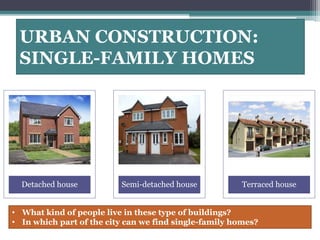
URBAN CONSTRUCTION: 
SINGLE-FAMILY HOMES 
Detached house Semi-detached house Terraced house 
• What kind of people live in these type of buildings? 
• In which part of the city can we find single-family homes?
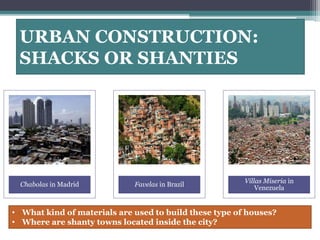
URBAN CONSTRUCTION: 
SHACKS OR SHANTIES 
Chabolas in Madrid Favelas in Brazil 
Villas Miseria in 
Venezuela 
• What kind of materials are used to build these type of houses? 
• Where are shanty towns located inside the city?
HOMEWORK 
• Page 67: ex. 8 and 9
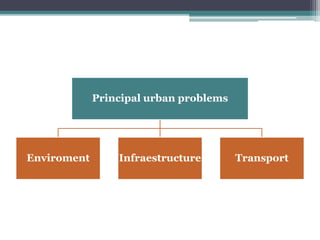
Principal urban problems 
Enviroment Infraestructure Transport
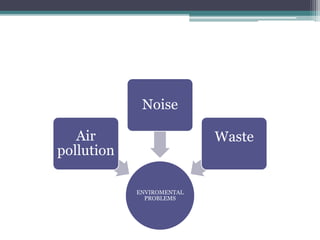
ENVIROMENTAL 
PROBLEMS 
Air 
pollution 
Noise 
Waste

Urban habitats

  • 1.
  • 2.
    EVOLUTION OF THEURBAN POPULATION • Link
  • 3.
    FUNCTIONS OF CITIES COMMERCIAL RESIDENTIAL INDUSTRIAL POLITICAL AND ADMINISTRATIVE CULTURAL TOURISM
  • 4.
    THE URBAN POPULATION • Most of the population lives in towns and medium-sized cities (less than 500,000 inhabitants). ▫ Salamanca has more than 152,000 inhabitants. ▫ Valladolid has 312,000 inhabitants. ▫ Palencia has around 82,000 inhabitants.
  • 5.
    THE URBAN POPULATION •However, the number of cities with more than 10 million inhabitants has increased in the past few decades: MEGACITIES
  • 7.
    THE GROWTH OFTHE CITIES • Cities grow and form extensive urban areas: LARGE URBAN AREAS METROPOLITAN AREAS CONURBATION MEGALOPOLIS
  • 8.
  • 9.
  • 10.
  • 11.
  • 12.
  • 13.
    URBAN HIERARCHY •It´s the organisation of cities in ranks or categories. • The number of inhabitants and the extension of a city´s sphere of influence determine its rank in the urban hierarchy (worldwide, national, regional, county or district, etc.) • A number of urban nuclei, ranked and interconnected, form an urban network.
  • 14.
    URBAN HIERARCHY World metropolises National metropolises Regional metropolises Smaller cities
  • 18.
    HOMEWORK • Page67: ex. 6 and 7 • Page 74: ex. 2 and 3
  • 19.
    ANALYSIS OF CITIES Analysis of cities Site and situation Urban plan Urban construction
  • 20.
    Location of cities Site On a hill In a valley On an island Situation In the centre of a country In a coastal area Near a road • Give examples of cities. intersection
  • 21.
    URBAN PLAN •What is an urban plan? • How many types of plan can we distinguish? • Name the three types of plan, according to the overall shape and the arrangement of roads.
  • 22.
    • ORTHOGONAL PLAN • GRID PLAN • CHECKERBOARD This plan consists of straight, wide streets that cross at right angles.
  • 23.
    An example ofgrid plan: Barcelona
  • 24.
    • RADIOCENTRIC PLAN This plan consists of central point from which streets radiate, like the spokes of a wheel, crossed by others that form concentric circles.
  • 25.
  • 26.
    • IRREGULAR PLAN This plan does not have a defined geometric shape and is formed by short, narrow streets and alleys of irregular layout.
  • 27.
  • 29.
    URBAN CONSTRUCTION: OLD BUILDINGS Houses Palaces Churches • Name the types of old buildings. • What kind of value have some of them?
  • 30.
    URBAN CONSTRUCTION: BUILDINGSIN THE FORM OF BLOCKS Blocks Skyscrapers Shopping centres • What are blocks used for?
  • 31.
    URBAN CONSTRUCTION: SINGLE-FAMILYHOMES Detached house Semi-detached house Terraced house • What kind of people live in these type of buildings? • In which part of the city can we find single-family homes?
  • 32.
    URBAN CONSTRUCTION: SHACKSOR SHANTIES Chabolas in Madrid Favelas in Brazil Villas Miseria in Venezuela • What kind of materials are used to build these type of houses? • Where are shanty towns located inside the city?
  • 33.
    HOMEWORK • Page67: ex. 8 and 9
  • 34.
    Principal urban problems Enviroment Infraestructure Transport
  • 35.
    ENVIROMENTAL PROBLEMS Air pollution Noise Waste