J.D. McCourt, MD, FACEP
Associate Professor
Department of Emergency Medicine
University of Nevada School of Medicine
ED Medical Director, University Medical Center So. Nevada
ITE Review

Thoracic / Respiratory

A 10 year old present to ED with SOB and central
cyanosis. Which of the following would be the
most likely cause?
A. Sicle cell anemia
B. Polycythemia
C. Methemoglobinemia
D. L to R Congenital heart defect

Practice Question: 1
ITE Review

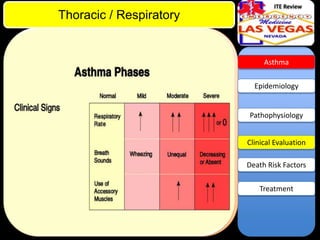
Thoracic / Respiratory

A 10 year old present to ED with fatigue and
central cyanosis. Which of the following would be
the most likely cause?
A. Sicle cell anemia
B. Polycythemia
C. Methemoglobinemia
D. L to R Congenital heart defect

Practice Question: 1
ITE Review

Thoracic / Respiratory
Central cyanosis
• Impaired Ventilation
– Neurologic
– Pulmonary
– Cardiac
• Congenital heart disease (R to L
shunt)
• Hemoglobin abnormalities
– Methemaglobin

Cyanosis
Causes
ITE Review

Thoracic / Respiratory
• Central cyanosis only clinically apparent
with >5g/dL desaturated Hb
• Cannot be anemic and cyanotic
– cyanosis requires an absolute amount of
desaturated Hb
– Getting >5g/dl desat with a total Hb of 8 is
clinically impossible

• Cyanosis more likely if also polycythemic
(e.g. the blue bloater) – easy to have
>5g/dl of hemoglobin desaturated with a
total Hb of 18

Cyanosis
Causes
+ Anemia
ITE Review

Thoracic / Respiratory
• Anemia
– Pulse ox does not consider Hgb level

• Supplemental O2
– Can mask severe pulmonary process (i.e.
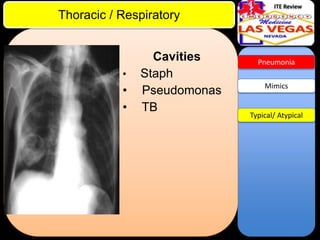
when there is an ↑ A-a gradient)

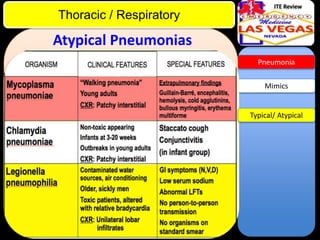
• Carboxyhemoglobinemia (CO)
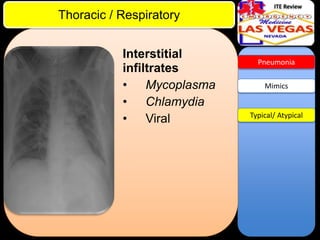
– Looks like 100% oxyhemoglobin
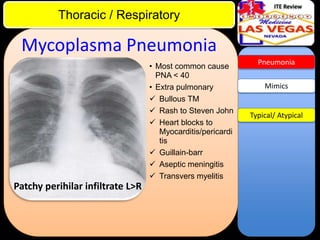
(e.g. false sat of 100%)

• Methemoglobinemia
– Looks like 85% oxyhemoglobin
(e.g. false sat of 85%)

Pulse Oximetry

Fundamentals
ITE Review

Thoracic / Respiratory
After 2 hrs of treatment Which asthma
patient needs immediate attention
A. 7.40-40-95, wheezes, room air, no
accessory muscle use
B. 7.45-35-85, wheezes, 100% fio2,
moderate accessory muscle use
C. 7.40-40-85, wheezes, 100% fio2,
moderate accessory muscle use
D. 7.5-30-85, wheezes, 100% fio2,
moderate accessory muscle use

Practice Question: 2
ITE Review

Thoracic / Respiratory
After 2 hrs of treatment Which asthma
patient needs immediate attention
A. 7.40-40-95, wheezes, room air, no
accessory muscle use
B. 7.45-35-85, wheezes, 100% fio2,
moderate accessory muscle use
C. 7.40-40-85, wheezes, 100% fio2,
moderate accessory muscle use
D. 7.5-30-85, wheezes, 100% fio2,
moderate accessory muscle use

Practice Question: 2
ITE Review

Thoracic / Respiratory
• Mortality greater in:
– African American and Latinos
– Females
– Adults

• Factors associated with asthma prevalence
– Developed nations
– Urban areas

• Factors associated with
mortality/morbidity:
– Poverty / lack of access
– Overuse of OTC inhalers / episodic treatment
– Under use of early steroids

Asthma

Epidemiology

Pathophysiology

Clinical Evaluation
Death Risk Factors
Treatment
ITE Review

Thoracic / Respiratory

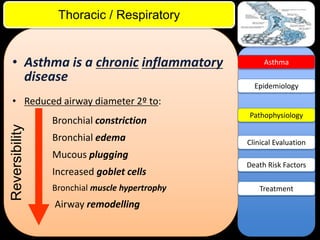
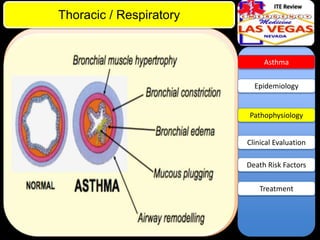
• Asthma is a chronic inflammatory
disease

Asthma

Epidemiology

Reversibility

• Reduced airway diameter 2º to:

Bronchial constriction
Bronchial edema

Pathophysiology

Clinical Evaluation

Mucous plugging

Increased goblet cells
Bronchial muscle hypertrophy

Airway remodelling

Death Risk Factors
Treatment
ITE Review

Thoracic / Respiratory

Asthma

Epidemiology

Pathophysiology

Clinical Evaluation
Death Risk Factors
Treatment
ITE Review

Thoracic / Respiratory
Precipitants
– URI (#1)
– Allergy
– Respiratory irritants
(smoke, chemicals)
– Cold
– Exercise
– GERD
– Beta blockers (even
eye drops)
– Methacholine
– ASA, NSAIDs (triad
with nasal polyps)
– Menstruation
– Psychological

Asthma

Epidemiology

Pathophysiology

Clinical Evaluation
Death Risk Factors
Treatment
ITE Review

Thoracic / Respiratory

Clinical Features
– Decreased expiratory flow
– Air trapping & barotrauma
Pneumothorax
Pneumomediastinum
– Decreased venous return
Hypotension
Pulsus paradoxus
– Hypercarbiahypoxemia
– Muscle fatigue
Respiratory failure

Asthma

Epidemiology

Pathophysiology

Clinical Evaluation
Death Risk Factors
Treatment
ITE Review

Thoracic / Respiratory

• Bedside spirometry (PEFR, FEV1)
– Measures large airway obstruction
– Measures severity and response to
therapy
– Predicts need for admission

Asthma

Epidemiology

Pathophysiology

• Pulse oximetry
– Does not aid in predicting clinical
outcome
– O2 saturation may paradoxically drop in
improving patient due to transient VQ
mismatch

Clinical Evaluation
Death Risk Factors
Treatment
ITE Review

Thoracic / Respiratory
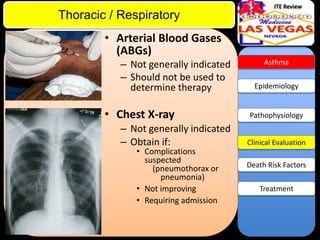
• Arterial Blood Gases
(ABGs)
– Not generally indicated
– Should not be used to
determine therapy

• Chest X-ray
– Not generally indicated
– Obtain if:
• Complications
suspected
(pneumothorax or
pneumonia)
• Not improving
• Requiring admission

Asthma

Epidemiology

Pathophysiology

Clinical Evaluation
Death Risk Factors
Treatment
ITE Review

Thoracic / Respiratory

Asthma

Epidemiology

Pathophysiology

Clinical Evaluation
Death Risk Factors
Treatment
ITE Review

Thoracic / Respiratory

Asthma

Epidemiology

Pathophysiology

Clinical Evaluation
Death Risk Factors
Treatment
ITE Review

Thoracic / Respiratory
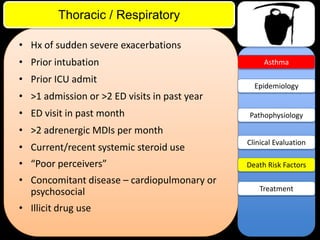
• Hx of sudden severe exacerbations
• Prior intubation
• Prior ICU admit
• >1 admission or >2 ED visits in past year
• ED visit in past month

Asthma

Epidemiology

Pathophysiology

• >2 adrenergic MDIs per month
• Current/recent systemic steroid use
• “Poor perceivers”

• Concomitant disease – cardiopulmonary or
psychosocial
• Illicit drug use

Clinical Evaluation
Death Risk Factors
Treatment
ITE Review

Thoracic / Respiratory

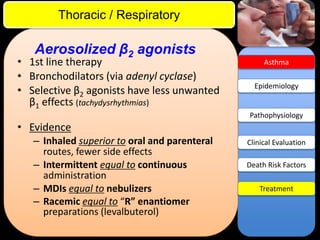
Aerosolized β2 agonists

• 1st line therapy
• Bronchodilators (via adenyl cyclase)
• Selective β2 agonists have less unwanted
β1 effects (tachydysrhythmias)

Asthma

Epidemiology

Pathophysiology

• Evidence
– Inhaled superior to oral and parenteral
routes, fewer side effects
– Intermittent equal to continuous
administration
– MDIs equal to nebulizers
– Racemic equal to “R” enantiomer
preparations (levalbuterol)

Clinical Evaluation
Death Risk Factors
Treatment
ITE Review

Thoracic / Respiratory

Steroids
• Dual Action
– Delayed (hours)
• Principal Mechanism
– Immunomodulatory
– Up-regulate β-receptors

– Immediate (minutes)
• Vasoconstriction (“Blanching Effect”)
•

Evidence
– Oral equal to IV administration
– Systemic (PO and IV) superior to inhaled
route

Asthma

Epidemiology

Pathophysiology

Clinical Evaluation
Death Risk Factors
Treatment
ITE Review

Thoracic / Respiratory
Aerosolized Anticholinergics
– Ipratropium bromide
(Atrovent)
– Block tone in bronchial
smooth muscle
– Modest effect when added
to β-agonists

Asthma

Epidemiology

Pathophysiology

Clinical Evaluation

Magnesium
– IV infusion (2-3g IV over 10
minutes)
– Smooth muscle relaxant
– Incremental benefit in most
severe presentations

Death Risk Factors
Treatment
ITE Review

Thoracic / Respiratory
Not Indicated for Acute Treatment
• Theophylline
– No benefit over β2 agonists
– Narrow therapeutic index

Asthma

Epidemiology

• Long-Acting β2 agonists (Salmeterol)
– Long term treatment only

Pathophysiology

• Leukotriene modifying agents (Montelukast)
and mast cell stabilizers
– Long term preventive treatment only

• Heliox
– Balance of studies find no benefit
– More convincing role in upper airway
obstruction

Clinical Evaluation
Death Risk Factors
Treatment
ITE Review

Thoracic / Respiratory
Critical Care
• Mechanical Ventilation
– Does not treat obstruction (e.g. the
1° problem!)
– Barotrauma is big concern
– Low rate/ Low TV (8cc/kg)

IV Ketamine
–Sedation and bronchodilation
–Increases secretions

Anesthetic gases/ECMO
–Transfer to the OR!

Asthma

Epidemiology

Pathophysiology

Clinical Evaluation
Death Risk Factors
Treatment
ITE Review

Thoracic / Respiratory
Critical Care
Preventing and Managing Barotrauma

•
•

•
•
•
•

May use paralytics initially to facilitate
ventilation
Continue aggressive in-line nebulizer
therapy
Increase time for expiratory phase
(e.g. ↑ inspiratory flow rate, ↓ respiratory
rate, ↓ I:E ratio)
Permissive hypercapnia (allow pCO2 to
rise), pOx>88%
Diligent pulmonary toilet, may need
bronchoscopy
External chest compression

Asthma

Epidemiology

Pathophysiology

Clinical Evaluation
Death Risk Factors
Treatment
ITE Review

Thoracic / Respiratory
Critical Care
Asthma

Epidemiology

Asthma Arrest
1 Disconnect ventilator
3 Bilateral chest tubes

2 Compress chest
4 Fluid bolus

Pathophysiology

Clinical Evaluation
Death Risk Factors
Treatment
ITE Review

Thoracic / Respiratory
A 60 year old Man with COPD presents with
severe shortness of breath. Which of the
following would indicate respiratory failure?
A. Pulse ox 88%
B. Severe anxiety
C. Perioral cyanosis
D. ABG: 7.28-55-60 (RA)
E. ABG: 7.38-65-60 (RA)

Practice Question: 3
ITE Review

Thoracic / Respiratory
A 60 year old Man with COPD presents with
severe shortness of breath. Which of the
following would indicate respiratory failure?
A. Pulse ox 88%
B. Severe anxiety
C. Perioral cyanosis
D. ABG: 7.28-55-60 (RA)
E. ABG: 7.38-65-60 (RA)

Practice Question: 3
ITE Review

Thoracic / Respiratory

• Definition
– Chronic, inflammatory disease
– Airflow limitation that is not fully
reversible and is progressive

• Pathophysiology
– Different inflammatory markers
from asthma (e.g. neutrophils,
not eosinophils)
– Proteases and oxidants result in
tissue destruction

COPD

Pathophysiology

Exacerbation

Treatment
ITE Review

Thoracic / Respiratory

• Natural History
– Hypoxemia and hypercapnia
– Destruction of pulmonary
vascular bed and thickened
vessel walls
– Pulmonary hypertension
– Polycythemia
– Right sided heart failure
(cor pulmonale)

COPD

Pathophysiology

Exacerbation

Treatment
ITE Review

Thoracic / Respiratory
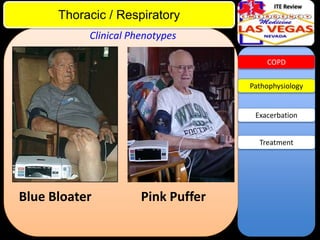
Clinical Phenotypes
COPD

Pathophysiology

Exacerbation

Treatment

Blue Bloater

Pink Puffer
ITE Review

Thoracic / Respiratory
Consider Mimics
• Definition
– Progressive onset
– ↑ Dyspnea
– ↑ Sputum volume • Pneumonia
• CHF
– ↑ Sputum
purulence
– Sudden onset
• Causes
• Pneumothorax
• PE
– Viruses
• Lobar atelectasis
– Role of bacteria
controversial
– Environmental

COPD

Pathophysiology

Exacerbation

Treatment
ITE Review

Thoracic / Respiratory
Aerosolized β-agonists and anticholinergics
– First line therapy

Steroids
– Systemic steroids (IV in ED followed by
PO course) reduce rates of relapse and
improve dyspnea following ED visit

COPD

Pathophysiology

Exacerbation

Antibiotics
– Indicated in cases with ↑sputum
volume and purulence

Non-Invasive ventilation
– Improves acidosis, decreases respiratory distress
– Effective at avoiding intubation if initiated early
– Not appropriate in patients with respiratory arrest
or hemodynamic instability

Treatment
ITE Review

Thoracic / Respiratory
Long Term Interventions

Disease Altering Interventions
– Only 2 interventions proven to reduce
mortality:
• Smoking cessation
• Home oxygen
(for PaO2 < 55 or signs of cor pulmonale)

Pneumococcal Vaccination

COPD

Pathophysiology

Exacerbation

Treatment
ITE Review

Thoracic / Respiratory
3 y/o brought in by mom for persistent
cough. Exam finds wheezing in right lung
field. Which is the most appropriate?
A. CXR
B. Bronchoscopy
C. Inspiratory Xray + Neb TX
D. Amoxicillin and F/U with pediatritian

Practice Question: 4
ITE Review

Thoracic / Respiratory
3 y/o brought in by mom for persistent
cough. Exam finds wheezing in right lung
field. Which is the most appropriate?
A. CXR
B. Bronchoscopy
C. Inspiratory Xray + Neb TX
D. Amoxicillin and F/U with pediatrician

Practice Question: 4
ITE Review

Thoracic / Respiratory
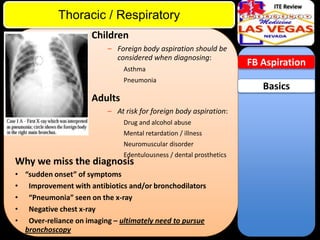
Children
– Foreign body aspiration should be
considered when diagnosing:
Asthma
Pneumonia

Adults
– At risk for foreign body aspiration:
Drug and alcohol abuse
Mental retardation / illness
Neuromuscular disorder
Edentulousness / dental prosthetics

Why we miss the diagnosis

• “sudden onset” of symptoms
• Improvement with antibiotics and/or bronchodilators
• “Pneumonia” seen on the x-ray
• Negative chest x-ray
• Over-reliance on imaging – ultimately need to pursue
bronchoscopy

FB Aspiration

Basics
ITE Review

Thoracic / Respiratory
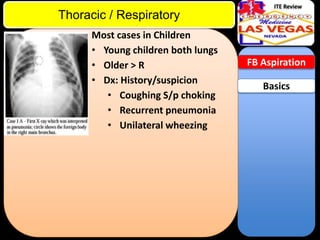
Most cases in Children
• Young children both lungs
• Older > R
• Dx: History/suspicion
• Coughing S/p choking
• Recurrent pneumonia
• Unilateral wheezing

FB Aspiration

Basics
ITE Review

Thoracic / Respiratory

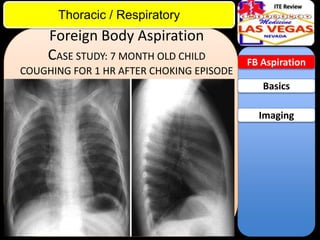
Foreign Body Aspiration
CASE STUDY: 7 MONTH OLD CHILD
COUGHING FOR 1 HR AFTER CHOKING EPISODE

FB Aspiration

Basics
Imaging
ITE Review

Thoracic / Respiratory

FB Aspiration

Basics
Imaging

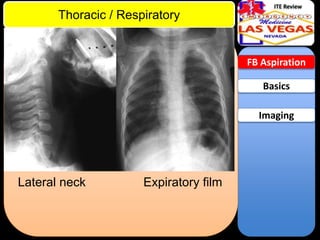
Lateral neck

Expiratory film
ITE Review

Thoracic / Respiratory

FB Aspiration

Basics
Imaging

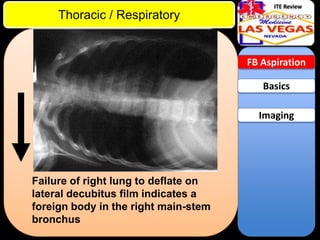
Failure of right lung to deflate on
lateral decubitus film indicates a
foreign body in the right main-stem
bronchus
ITE Review

Thoracic / Respiratory
• Definition
– Acute Lung Injury (ALI) and ARDS are
clinical diagnoses along a spectrum
• Pathogenesis

– Noncardiogenic pulmonary edema due
to leaky alveolar capillary membranes
• Diagnostic criteria
1

Hypoxia
• PaO2 < 60 mm Hg
with FiO2 > 0.5

2

Normal ventricular function
• PCWP < 18 mm Hg

3

Diffuse alveolar infiltrates
• With normal heart size

ARDS

BASICS
ITE Review

Thoracic / Respiratory

•
•
•
•
•
•
•
•
•

Sepsis (most common)
Trauma
Near-drowning
Aspiration
Toxicologic (ASA, opiates,
hydrocarbons)
Pancreatitis
Environmental (high-altitude)
Fat or amniotic fluid embolus
CNS catastrophe (e.g. SAH)

ARDS

BASICS
Causes
ITE Review

Thoracic / Respiratory

• Supportive
– Maintain O2 sat >85% while
minimizing FiO2 and airway
pressures
– PEEP or CPAP
– Pressure controlled or high
frequency ventilation
• Recent Literature
– Lower mortality with low tidal
volume ventilation (6mL/kg)
– Prone position improves
oxygenation

ARDS

BASICS
Causes

Treatment
ITE Review

Thoracic / Respiratory

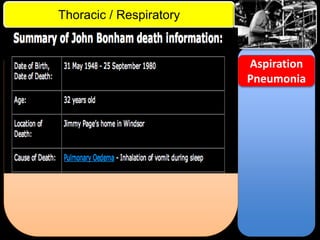
Aspiration
Pneumonia
ITE Review

Thoracic / Respiratory

• Risk factors
– Seizure, alcoholic, obtunded,
depressed gag reflex

• Severity of syndrome depend on:
– pH of aspirate (lower is worse – less
than 2.5)
– Volume of aspirate (>25 mL)
– Presence of particles such as food
(bad)
– Bacterial contamination (usually
anaerobes)

Aspiration
Pneumonia
ITE Review

Thoracic / Respiratory

• Clinical features

– Immediate respiratory difficulty
due to chemical burn
– Hypoxemia and respiratory
alkalosis
– Wheezes, rales, hypotension
– CXR often negative initially
– Localization related to dependent
lung

• Treatment

– Supportive
– Hold antibiotics until febrile to
avoid selecting out resistant
organisms

Aspiration
Pneumonia
ITE Review

Thoracic / Respiratory
A nurse from 35 year old nurse from 5S is sent
down to the ED because her mandatory PPD test
measured 11mm. What is the most appropriate
next step?
A. Move the patient to isolation immediately
B. Order cxr and if normal start on INH, D/c
C. Order cxr if Ca++ nodule admit to hospital for
active TB, notify health department
D. No Tx necessary because TB result is negative
for this patient.

Practice Question: 5
ITE Review

Thoracic / Respiratory
A nurse from 35 year old nurse from 5S is sent
down to the ED because her mandatory PPD test
measured 11mm. What is the most appropriate
next step?
A. Move the patient to isolation immediately
B. Order cxr and if normal start on INH, D/c
C. Order cxr if Ca++ nodule admit to hospital for
active TB, notify health department
D. No Tx necessary because TB result is negative
for this patient.

Practice Question: 5
ITE Review

Thoracic / Respiratory

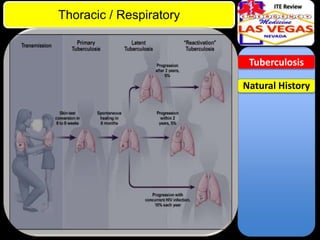
Tuberculosis

Natural History
ITE Review

Thoracic / Respiratory

Tuberculosis

Natural History

CXR

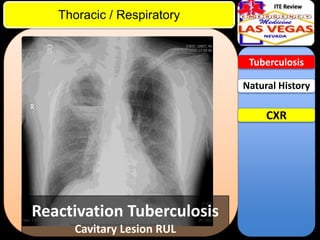
Reactivation Tuberculosis
Cavitary Lesion RUL
ITE Review

Thoracic / Respiratory

Tuberculosis

Natural History

CXR

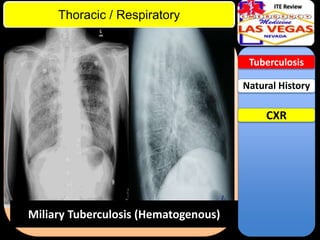
Miliary Tuberculosis (Hematogenous)
ITE Review

Thoracic / Respiratory

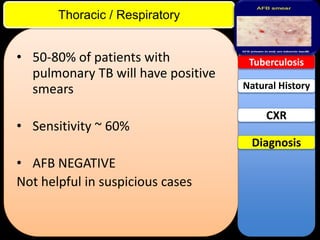
• 50-80% of patients with
pulmonary TB will have positive
smears

• Sensitivity ~ 60%

Tuberculosis

Natural History

CXR

Diagnosis

• AFB NEGATIVE
Not helpful in suspicious cases
ITE Review

Thoracic / Respiratory
• Hepatitis
– Isoniazid (INH), Rifampin (RIF) and Pyrazinamide
(PZA)

• Peripheral Neuropathy

Tuberculosis

Natural History

– Isoniazid (INH)

• Optic neuritis
– Ethambutol (EMB)

• Gout
– Pyrazinamide (PZA)

• Ototoxicity and renal toxicity
– Streptomycin and other aminoglycosides

• Discolored body fluids
– Rifampin (reddish-orange urine, feces, saliva,
sweat, tears)

CXR

Diagnosis
TX: Side effects
ITE Review

Thoracic / Respiratory

Tuberculosis

Natural History

CXR

Diagnosis
TX: Side effects
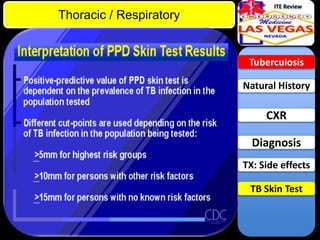
TB Skin Test
ITE Review

Thoracic / Respiratory
•
•
•
•

Cancer
Tuberculosis
Pulmonary embolus
Toxicologic / environmental
– Chlorine gas, Farmer’s lung (allergic reaction to
inhalation of moldy crops – hay, grain, tobacco)

• ARDS
– e.g. from chronic ASA toxicity or other treatable
cause

• Atelectasis
• Right-sided endocarditis
– Septic emboli

• Diffuse alveolar hemorrhage
– Low hemoglobin, immune disease

Pneumonia

Mimics
ITE Review

Thoracic / Respiratory

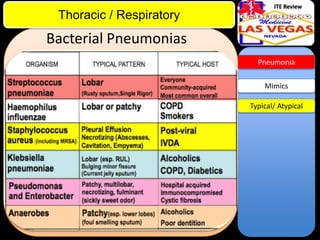
Bacterial Pneumonias
Pneumonia

Mimics
Typical/ Atypical
ITE Review

Thoracic / Respiratory

Pneumonia

Mimics

Typical/ Atypical

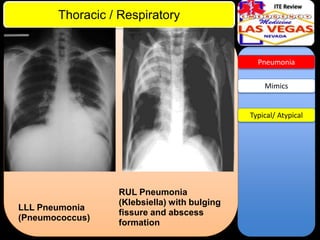
LLL Pneumonia
(Pneumococcus)

RUL Pneumonia
(Klebsiella) with bulging
fissure and abscess
formation
ITE Review

Thoracic / Respiratory

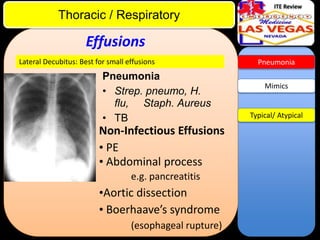
Effusions
Lateral Decubitus: Best for small effusions

Pneumonia
• Strep. pneumo, H.
flu, Staph. Aureus
• TB

Non-Infectious Effusions
• PE
• Abdominal process
e.g. pancreatitis

•Aortic dissection
• Boerhaave’s syndrome
(esophageal rupture)

Pneumonia

Mimics

Typical/ Atypical
ITE Review

Thoracic / Respiratory
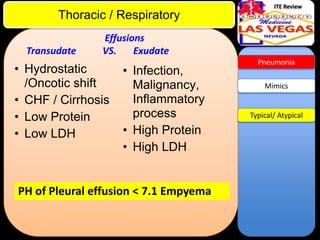
Transudate

Effusions
VS.
Exudate

• Hydrostatic
/Oncotic shift
• CHF / Cirrhosis
• Low Protein
• Low LDH

• Infection,
Malignancy,
Inflammatory
process
• High Protein
• High LDH

PH of Pleural effusion < 7.1 Empyema

Pneumonia

Mimics

Typical/ Atypical
ITE Review

Thoracic / Respiratory

•

•
•

Cavities
Staph
Pseudomonas
TB

Pneumonia

Mimics

Typical/ Atypical
ITE Review

Thoracic / Respiratory

Atypical Pneumonias
Pneumonia

Mimics

Typical/ Atypical
ITE Review

Thoracic / Respiratory
Interstitial
infiltrates
• Mycoplasma
• Chlamydia
• Viral

Pneumonia

Mimics

Typical/ Atypical
ITE Review

Thoracic / Respiratory

Mycoplasma Pneumonia
• Most common cause
PNA < 40
• Extra pulmonary
 Bullous TM
 Rash to Steven John
 Heart blocks to
Myocarditis/pericardi
tis
 Guillain-barr
 Aseptic meningitis
 Transvers myelitis

Patchy perihilar infiltrate L>R

Pneumonia

Mimics

Typical/ Atypical
ITE Review

Thoracic / Respiratory

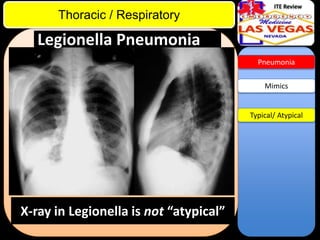
Legionella Pneumonia
Pneumonia

Mimics

Typical/ Atypical

X-ray in Legionella is not “atypical”
ITE Review

Thoracic / Respiratory

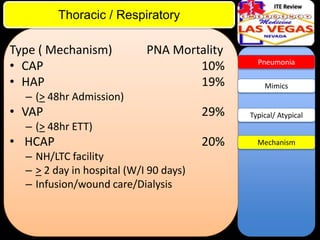
Type ( Mechanism)
• CAP
• HAP

PNA Mortality
10%
19%

– (> 48hr Admission)

• VAP
– NH/LTC facility
– > 2 day in hospital (W/I 90 days)
– Infusion/wound care/Dialysis

Mimics

29%

Typical/ Atypical

20%

Mechanism

– (> 48hr ETT)

• HCAP

Pneumonia
ITE Review

Thoracic / Respiratory
Which of the following is not a factor to consider
for ICU admission of a patient with pneumonia?
A. Temperature
B. Multipolar involvement
C. Systolic B/P
D. Albumin level

Practice Question: 6
ITE Review

Thoracic / Respiratory
Which of the following is not a factor to consider
for ICU admission of a patient with pneumonia?
A. Temperature
B. Multipolar involvement
C. Systolic B/P
D. Albumin level

Practice Question: 6
ITE Review

Thoracic / Respiratory

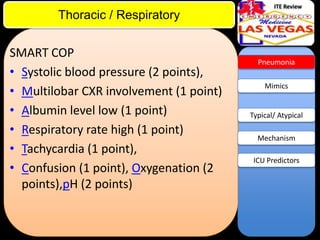
SMART COP
• Systolic blood pressure (2 points),
• Multilobar CXR involvement (1 point)
• Albumin level low (1 point)
• Respiratory rate high (1 point)
• Tachycardia (1 point),
• Confusion (1 point), Oxygenation (2
points),pH (2 points)

Pneumonia

Mimics

Typical/ Atypical
Mechanism

ICU Predictors
ITE Review

Thoracic / Respiratory
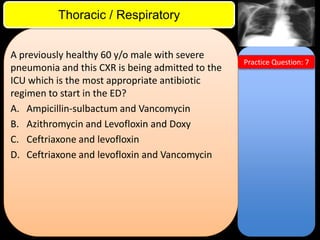
A previously healthy 60 y/o male with severe
pneumonia and this CXR is being admitted to the
ICU which is the most appropriate antibiotic
regimen to start in the ED?
A. Ampicillin-sulbactum and Vancomycin
B. Azithromycin and Levofloxin and Doxy
C. Ceftriaxone and levofloxin
D. Ceftriaxone and levofloxin and Vancomycin

Practice Question: 7
ITE Review

Thoracic / Respiratory
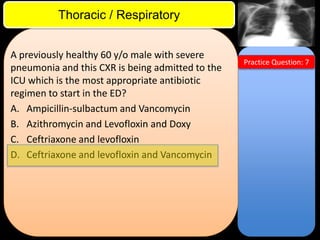
A previously healthy 60 y/o male with severe
pneumonia and this CXR is being admitted to the
ICU which is the most appropriate antibiotic
regimen to start in the ED?
A. Ampicillin-sulbactum and Vancomycin
B. Azithromycin and Levofloxin and Doxy
C. Ceftriaxone and levofloxin
D. Ceftriaxone and levofloxin and Vancomycin

Practice Question: 7
ITE Review

Thoracic / Respiratory
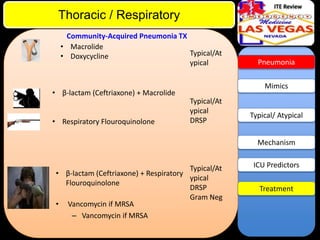
Community-Acquired Pneumonia TX
• Macrolide
Typical/At
• Doxycycline
ypical

Mimics

• β-lactam (Ceftriaxone) + Macrolide
• Respiratory Flouroquinolone

Pneumonia

Typical/At
ypical
DRSP

Typical/ Atypical

Mechanism
Typical/At
• β-lactam (Ceftriaxone) + Respiratory
ypical
Flouroquinolone
DRSP
Gram Neg
• Vancomycin if MRSA
– Vancomycin if MRSA

ICU Predictors
Treatment
ITE Review

Thoracic / Respiratory
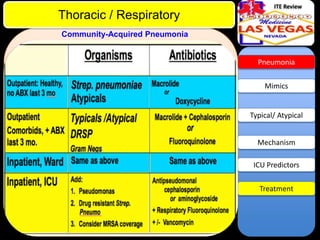
Community-Acquired Pneumonia

Pneumonia

Mimics

Community-Acquired
Pneumonia

Typical/ Atypical

Mechanism
ICU Predictors
Treatment
ITE Review

Thoracic / Respiratory

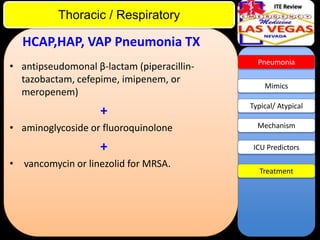
HCAP,HAP, VAP Pneumonia TX
• antipseudomonal β-lactam (piperacillintazobactam, cefepime, imipenem, or
meropenem)

Pneumonia

+

Typical/ Atypical

• aminoglycoside or fluoroquinolone

+
• vancomycin or linezolid for MRSA.

Mimics

Mechanism
ICU Predictors
Treatment
ITE Review

Thoracic / Respiratory
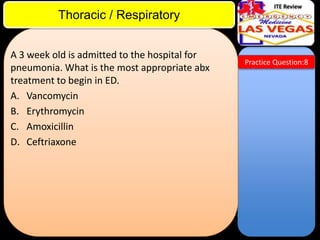
A 3 week old is admitted to the hospital for
pneumonia. What is the most appropriate abx
treatment to begin in ED.
A. Vancomycin
B. Erythromycin
C. Amoxicillin
D. Ceftriaxone

Practice Question:8
ITE Review

Thoracic / Respiratory
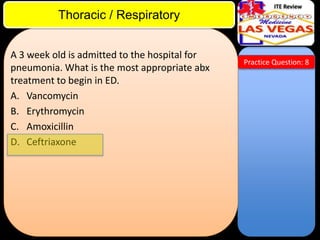
A 3 week old is admitted to the hospital for
pneumonia. What is the most appropriate abx
treatment to begin in ED.
A. Vancomycin
B. Erythromycin
C. Amoxicillin
D. Ceftriaxone

Practice Question: 8
ITE Review

Thoracic / Respiratory
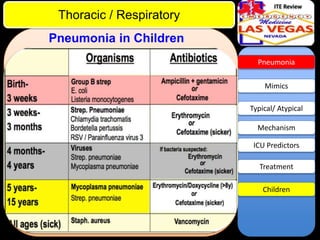
Pneumonia in Children
Pneumonia

Mimics
Typical/ Atypical
Mechanism
ICU Predictors
Treatment
Children
ITE Review

Thoracic / Respiratory
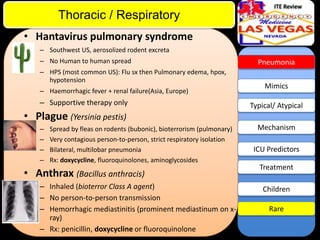
• Hantavirus pulmonary syndrome
– Southwest US, aerosolized rodent excreta
– No Human to human spread

– HPS (most common US): Flu sx then Pulmonary edema, hpox,
hypotension
– Haemorrhagic fever + renal failure(Asia, Europe)

– Supportive therapy only

• Plague (Yersinia pestis)
–
–
–
–

Spread by fleas on rodents (bubonic), bioterrorism (pulmonary)
Very contagious person-to-person, strict respiratory isolation
Bilateral, multilobar pneumonia
Rx: doxycycline, fluoroquinolones, aminoglycosides

• Anthrax (Bacillus anthracis)
– Inhaled (bioterror Class A agent)
– No person-to-person transmission
– Hemorrhagic mediastinitis (prominent mediastinum on xray)
– Rx: penicillin, doxycycline or fluoroquinolone

Pneumonia

Mimics
Typical/ Atypical
Mechanism

ICU Predictors
Treatment

Children
Rare
ITE Review

Thoracic / Respiratory

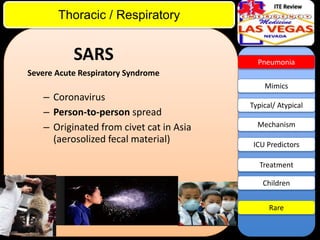
SARS

Pneumonia

Severe Acute Respiratory Syndrome
Mimics

– Coronavirus
– Person-to-person spread
– Originated from civet cat in Asia
(aerosolized fecal material)

Typical/ Atypical
Mechanism

ICU Predictors
Treatment
Children
Rare
ITE Review

Thoracic / Respiratory
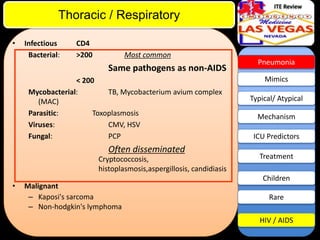
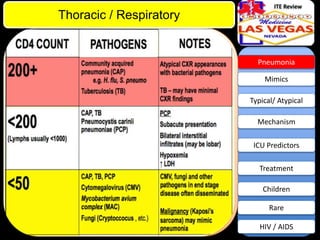
•

Infectious
Bacterial:

CD4
>200

Most common

Same pathogens as non-AIDS
< 200
Mycobacterial:
TB, Mycobacterium avium complex
(MAC)
Parasitic:
Toxoplasmosis
Viruses:
CMV, HSV
Fungal:
PCP

Often disseminated
Cryptococcosis,
histoplasmosis,aspergillosis, candidiasis
•

Malignant
– Kaposi's sarcoma
– Non-hodgkin's lymphoma

Pneumonia
Mimics
Typical/ Atypical
Mechanism
ICU Predictors
Treatment
Children

Rare
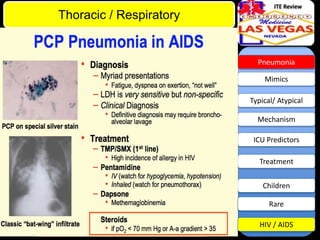
HIV / AIDS
ITE Review

Thoracic / Respiratory

Pneumonia
Mimics
Typical/ Atypical
Mechanism
ICU Predictors
Treatment

Children
Rare
HIV / AIDS
ITE Review

Thoracic / Respiratory

Pneumonia
Mimics
Typical/ Atypical
Mechanism
ICU Predictors

Treatment
Children
Rare
HIV / AIDS
ITE Review

Thoracic / Respiratory
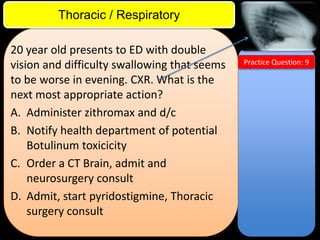
20 year old presents to ED with double
vision and difficulty swallowing that seems
to be worse in evening. CXR. What is the
next most appropriate action?
A. Administer zithromax and d/c
B. Notify health department of potential
Botulinum toxicicity
C. Order a CT Brain, admit and
neurosurgery consult
D. Admit, start pyridostigmine, Thoracic
surgery consult

Practice Question: 9
ITE Review

Thoracic / Respiratory
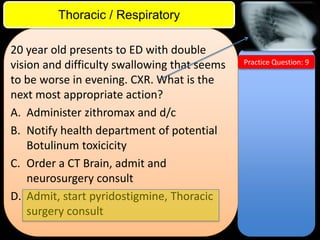
20 year old presents to ED with double
vision and difficulty swallowing that seems
to be worse in evening. CXR. What is the
next most appropriate action?
A. Administer zithromax and d/c
B. Notify health department of potential
Botulinum toxicicity
C. Order a CT Brain, admit and
neurosurgery consult
D. Admit, start pyridostigmine, Thoracic
surgery consult

Practice Question: 9
ITE Review

Thoracic / Respiratory

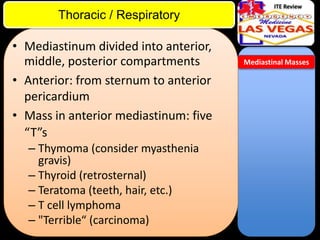
• Mediastinum divided into anterior,
middle, posterior compartments
• Anterior: from sternum to anterior
pericardium
• Mass in anterior mediastinum: five
“T”s
– Thymoma (consider myasthenia
gravis)
– Thyroid (retrosternal)
– Teratoma (teeth, hair, etc.)
– T cell lymphoma
– "Terrible“ (carcinoma)

Mediastinal Masses
ITE Review

Thoracic / Respiratory

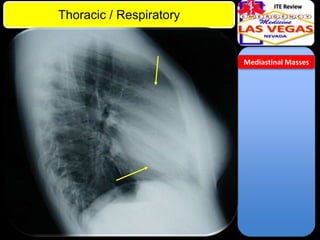
Mediastinal Masses
ITE Review

Thoracic / Respiratory
A 60 year old Man with hx/o lung cancer presents
to ED coughing up large amounts of blood every
3-5 minutes Patient is in moderate to severe
extremis. Which of the following would be the
most helpful information at this time?
A. Where is your lung cancer?
B. Are you a Jehovah's witness?
C. Do you have a oncologist?
D. Do you have TB?

Practice Question: 10
ITE Review

Thoracic / Respiratory
A 60 year old Man with hx/o lung cancer presents
to ED coughing up large amounts of blood every
3-5 minutes Patient is in moderate to severe
extremis. Which of the following would be the
most helpful information at this time?
A. Where is your lung cancer?
B. Are you a Jehovah's witness?
C. Do you have a oncologist?
D. Do you have TB?

Practice Question: 10
ITE Review

Thoracic / Respiratory

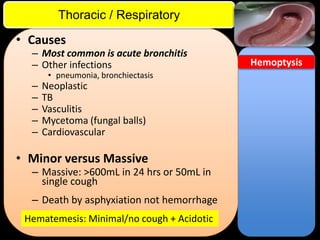
• Causes

– Most common is acute bronchitis
– Other infections
–
–
–
–
–

• pneumonia, bronchiectasis

Neoplastic
TB
Vasculitis
Mycetoma (fungal balls)
Cardiovascular

• Minor versus Massive

– Massive: >600mL in 24 hrs or 50mL in
single cough
– Death by asphyxiation not hemorrhage

Hematemesis: Minimal/no cough + Acidotic

Hemoptysis
ITE Review

Thoracic / Respiratory

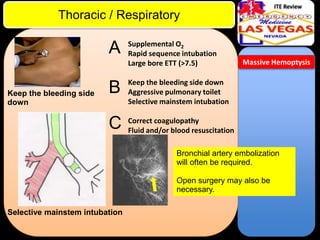
A

Supplemental O2
Rapid sequence intubation
Large bore ETT (>7.5)

B

Keep the bleeding side down
Aggressive pulmonary toilet
Selective mainstem intubation

C

Keep the bleeding side
down

Massive Hemoptysis

Correct coagulopathy
Fluid and/or blood resuscitation
Bronchial artery embolization
will often be required.
Open surgery may also be
necessary.

Selective mainstem intubation
ITE Review

Thoracic / Respiratory

END

?

UNSOM ITE Review: Pulmonary

  • 1.
    J.D. McCourt, MD,FACEP Associate Professor Department of Emergency Medicine University of Nevada School of Medicine ED Medical Director, University Medical Center So. Nevada
  • 2.
    ITE Review Thoracic /Respiratory A 10 year old present to ED with SOB and central cyanosis. Which of the following would be the most likely cause? A. Sicle cell anemia B. Polycythemia C. Methemoglobinemia D. L to R Congenital heart defect Practice Question: 1
  • 3.
    ITE Review Thoracic /Respiratory A 10 year old present to ED with fatigue and central cyanosis. Which of the following would be the most likely cause? A. Sicle cell anemia B. Polycythemia C. Methemoglobinemia D. L to R Congenital heart defect Practice Question: 1
  • 4.
    ITE Review Thoracic /Respiratory Central cyanosis • Impaired Ventilation – Neurologic – Pulmonary – Cardiac • Congenital heart disease (R to L shunt) • Hemoglobin abnormalities – Methemaglobin Cyanosis Causes
  • 5.
    ITE Review Thoracic /Respiratory • Central cyanosis only clinically apparent with >5g/dL desaturated Hb • Cannot be anemic and cyanotic – cyanosis requires an absolute amount of desaturated Hb – Getting >5g/dl desat with a total Hb of 8 is clinically impossible • Cyanosis more likely if also polycythemic (e.g. the blue bloater) – easy to have >5g/dl of hemoglobin desaturated with a total Hb of 18 Cyanosis Causes + Anemia
  • 6.
    ITE Review Thoracic /Respiratory • Anemia – Pulse ox does not consider Hgb level • Supplemental O2 – Can mask severe pulmonary process (i.e. when there is an ↑ A-a gradient) • Carboxyhemoglobinemia (CO) – Looks like 100% oxyhemoglobin (e.g. false sat of 100%) • Methemoglobinemia – Looks like 85% oxyhemoglobin (e.g. false sat of 85%) Pulse Oximetry Fundamentals
  • 7.
    ITE Review Thoracic /Respiratory After 2 hrs of treatment Which asthma patient needs immediate attention A. 7.40-40-95, wheezes, room air, no accessory muscle use B. 7.45-35-85, wheezes, 100% fio2, moderate accessory muscle use C. 7.40-40-85, wheezes, 100% fio2, moderate accessory muscle use D. 7.5-30-85, wheezes, 100% fio2, moderate accessory muscle use Practice Question: 2
  • 8.
    ITE Review Thoracic /Respiratory After 2 hrs of treatment Which asthma patient needs immediate attention A. 7.40-40-95, wheezes, room air, no accessory muscle use B. 7.45-35-85, wheezes, 100% fio2, moderate accessory muscle use C. 7.40-40-85, wheezes, 100% fio2, moderate accessory muscle use D. 7.5-30-85, wheezes, 100% fio2, moderate accessory muscle use Practice Question: 2
  • 9.
    ITE Review Thoracic /Respiratory • Mortality greater in: – African American and Latinos – Females – Adults • Factors associated with asthma prevalence – Developed nations – Urban areas • Factors associated with mortality/morbidity: – Poverty / lack of access – Overuse of OTC inhalers / episodic treatment – Under use of early steroids Asthma Epidemiology Pathophysiology Clinical Evaluation Death Risk Factors Treatment
  • 10.
    ITE Review Thoracic /Respiratory • Asthma is a chronic inflammatory disease Asthma Epidemiology Reversibility • Reduced airway diameter 2º to: Bronchial constriction Bronchial edema Pathophysiology Clinical Evaluation Mucous plugging Increased goblet cells Bronchial muscle hypertrophy Airway remodelling Death Risk Factors Treatment
  • 11.
    ITE Review Thoracic /Respiratory Asthma Epidemiology Pathophysiology Clinical Evaluation Death Risk Factors Treatment
  • 12.
    ITE Review Thoracic /Respiratory Precipitants – URI (#1) – Allergy – Respiratory irritants (smoke, chemicals) – Cold – Exercise – GERD – Beta blockers (even eye drops) – Methacholine – ASA, NSAIDs (triad with nasal polyps) – Menstruation – Psychological Asthma Epidemiology Pathophysiology Clinical Evaluation Death Risk Factors Treatment
  • 13.
    ITE Review Thoracic /Respiratory Clinical Features – Decreased expiratory flow – Air trapping & barotrauma Pneumothorax Pneumomediastinum – Decreased venous return Hypotension Pulsus paradoxus – Hypercarbiahypoxemia – Muscle fatigue Respiratory failure Asthma Epidemiology Pathophysiology Clinical Evaluation Death Risk Factors Treatment
  • 14.
    ITE Review Thoracic /Respiratory • Bedside spirometry (PEFR, FEV1) – Measures large airway obstruction – Measures severity and response to therapy – Predicts need for admission Asthma Epidemiology Pathophysiology • Pulse oximetry – Does not aid in predicting clinical outcome – O2 saturation may paradoxically drop in improving patient due to transient VQ mismatch Clinical Evaluation Death Risk Factors Treatment
  • 15.
    ITE Review Thoracic /Respiratory • Arterial Blood Gases (ABGs) – Not generally indicated – Should not be used to determine therapy • Chest X-ray – Not generally indicated – Obtain if: • Complications suspected (pneumothorax or pneumonia) • Not improving • Requiring admission Asthma Epidemiology Pathophysiology Clinical Evaluation Death Risk Factors Treatment
  • 16.
    ITE Review Thoracic /Respiratory Asthma Epidemiology Pathophysiology Clinical Evaluation Death Risk Factors Treatment
  • 17.
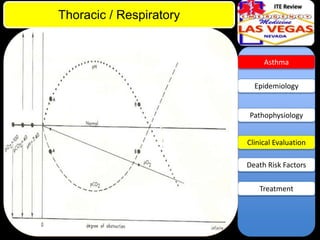
    ITE Review Thoracic /Respiratory Asthma Epidemiology Pathophysiology Clinical Evaluation Death Risk Factors Treatment
  • 18.
    ITE Review Thoracic /Respiratory • Hx of sudden severe exacerbations • Prior intubation • Prior ICU admit • >1 admission or >2 ED visits in past year • ED visit in past month Asthma Epidemiology Pathophysiology • >2 adrenergic MDIs per month • Current/recent systemic steroid use • “Poor perceivers” • Concomitant disease – cardiopulmonary or psychosocial • Illicit drug use Clinical Evaluation Death Risk Factors Treatment
  • 19.
    ITE Review Thoracic /Respiratory Aerosolized β2 agonists • 1st line therapy • Bronchodilators (via adenyl cyclase) • Selective β2 agonists have less unwanted β1 effects (tachydysrhythmias) Asthma Epidemiology Pathophysiology • Evidence – Inhaled superior to oral and parenteral routes, fewer side effects – Intermittent equal to continuous administration – MDIs equal to nebulizers – Racemic equal to “R” enantiomer preparations (levalbuterol) Clinical Evaluation Death Risk Factors Treatment
  • 20.
    ITE Review Thoracic /Respiratory Steroids • Dual Action – Delayed (hours) • Principal Mechanism – Immunomodulatory – Up-regulate β-receptors – Immediate (minutes) • Vasoconstriction (“Blanching Effect”) • Evidence – Oral equal to IV administration – Systemic (PO and IV) superior to inhaled route Asthma Epidemiology Pathophysiology Clinical Evaluation Death Risk Factors Treatment
  • 21.
    ITE Review Thoracic /Respiratory Aerosolized Anticholinergics – Ipratropium bromide (Atrovent) – Block tone in bronchial smooth muscle – Modest effect when added to β-agonists Asthma Epidemiology Pathophysiology Clinical Evaluation Magnesium – IV infusion (2-3g IV over 10 minutes) – Smooth muscle relaxant – Incremental benefit in most severe presentations Death Risk Factors Treatment
  • 22.
    ITE Review Thoracic /Respiratory Not Indicated for Acute Treatment • Theophylline – No benefit over β2 agonists – Narrow therapeutic index Asthma Epidemiology • Long-Acting β2 agonists (Salmeterol) – Long term treatment only Pathophysiology • Leukotriene modifying agents (Montelukast) and mast cell stabilizers – Long term preventive treatment only • Heliox – Balance of studies find no benefit – More convincing role in upper airway obstruction Clinical Evaluation Death Risk Factors Treatment
  • 23.
    ITE Review Thoracic /Respiratory Critical Care • Mechanical Ventilation – Does not treat obstruction (e.g. the 1° problem!) – Barotrauma is big concern – Low rate/ Low TV (8cc/kg) IV Ketamine –Sedation and bronchodilation –Increases secretions Anesthetic gases/ECMO –Transfer to the OR! Asthma Epidemiology Pathophysiology Clinical Evaluation Death Risk Factors Treatment
  • 24.
    ITE Review Thoracic /Respiratory Critical Care Preventing and Managing Barotrauma • • • • • • May use paralytics initially to facilitate ventilation Continue aggressive in-line nebulizer therapy Increase time for expiratory phase (e.g. ↑ inspiratory flow rate, ↓ respiratory rate, ↓ I:E ratio) Permissive hypercapnia (allow pCO2 to rise), pOx>88% Diligent pulmonary toilet, may need bronchoscopy External chest compression Asthma Epidemiology Pathophysiology Clinical Evaluation Death Risk Factors Treatment
  • 25.
    ITE Review Thoracic /Respiratory Critical Care Asthma Epidemiology Asthma Arrest 1 Disconnect ventilator 3 Bilateral chest tubes 2 Compress chest 4 Fluid bolus Pathophysiology Clinical Evaluation Death Risk Factors Treatment
  • 26.
    ITE Review Thoracic /Respiratory A 60 year old Man with COPD presents with severe shortness of breath. Which of the following would indicate respiratory failure? A. Pulse ox 88% B. Severe anxiety C. Perioral cyanosis D. ABG: 7.28-55-60 (RA) E. ABG: 7.38-65-60 (RA) Practice Question: 3
  • 27.
    ITE Review Thoracic /Respiratory A 60 year old Man with COPD presents with severe shortness of breath. Which of the following would indicate respiratory failure? A. Pulse ox 88% B. Severe anxiety C. Perioral cyanosis D. ABG: 7.28-55-60 (RA) E. ABG: 7.38-65-60 (RA) Practice Question: 3
  • 28.
    ITE Review Thoracic /Respiratory • Definition – Chronic, inflammatory disease – Airflow limitation that is not fully reversible and is progressive • Pathophysiology – Different inflammatory markers from asthma (e.g. neutrophils, not eosinophils) – Proteases and oxidants result in tissue destruction COPD Pathophysiology Exacerbation Treatment
  • 29.
    ITE Review Thoracic /Respiratory • Natural History – Hypoxemia and hypercapnia – Destruction of pulmonary vascular bed and thickened vessel walls – Pulmonary hypertension – Polycythemia – Right sided heart failure (cor pulmonale) COPD Pathophysiology Exacerbation Treatment
  • 30.
    ITE Review Thoracic /Respiratory Clinical Phenotypes COPD Pathophysiology Exacerbation Treatment Blue Bloater Pink Puffer
  • 31.
    ITE Review Thoracic /Respiratory Consider Mimics • Definition – Progressive onset – ↑ Dyspnea – ↑ Sputum volume • Pneumonia • CHF – ↑ Sputum purulence – Sudden onset • Causes • Pneumothorax • PE – Viruses • Lobar atelectasis – Role of bacteria controversial – Environmental COPD Pathophysiology Exacerbation Treatment
  • 32.
    ITE Review Thoracic /Respiratory Aerosolized β-agonists and anticholinergics – First line therapy Steroids – Systemic steroids (IV in ED followed by PO course) reduce rates of relapse and improve dyspnea following ED visit COPD Pathophysiology Exacerbation Antibiotics – Indicated in cases with ↑sputum volume and purulence Non-Invasive ventilation – Improves acidosis, decreases respiratory distress – Effective at avoiding intubation if initiated early – Not appropriate in patients with respiratory arrest or hemodynamic instability Treatment
  • 33.
    ITE Review Thoracic /Respiratory Long Term Interventions Disease Altering Interventions – Only 2 interventions proven to reduce mortality: • Smoking cessation • Home oxygen (for PaO2 < 55 or signs of cor pulmonale) Pneumococcal Vaccination COPD Pathophysiology Exacerbation Treatment
  • 34.
    ITE Review Thoracic /Respiratory 3 y/o brought in by mom for persistent cough. Exam finds wheezing in right lung field. Which is the most appropriate? A. CXR B. Bronchoscopy C. Inspiratory Xray + Neb TX D. Amoxicillin and F/U with pediatritian Practice Question: 4
  • 35.
    ITE Review Thoracic /Respiratory 3 y/o brought in by mom for persistent cough. Exam finds wheezing in right lung field. Which is the most appropriate? A. CXR B. Bronchoscopy C. Inspiratory Xray + Neb TX D. Amoxicillin and F/U with pediatrician Practice Question: 4
  • 36.
    ITE Review Thoracic /Respiratory Children – Foreign body aspiration should be considered when diagnosing: Asthma Pneumonia Adults – At risk for foreign body aspiration: Drug and alcohol abuse Mental retardation / illness Neuromuscular disorder Edentulousness / dental prosthetics Why we miss the diagnosis • “sudden onset” of symptoms • Improvement with antibiotics and/or bronchodilators • “Pneumonia” seen on the x-ray • Negative chest x-ray • Over-reliance on imaging – ultimately need to pursue bronchoscopy FB Aspiration Basics
  • 37.
    ITE Review Thoracic /Respiratory Most cases in Children • Young children both lungs • Older > R • Dx: History/suspicion • Coughing S/p choking • Recurrent pneumonia • Unilateral wheezing FB Aspiration Basics
  • 38.
    ITE Review Thoracic /Respiratory Foreign Body Aspiration CASE STUDY: 7 MONTH OLD CHILD COUGHING FOR 1 HR AFTER CHOKING EPISODE FB Aspiration Basics Imaging
  • 39.
    ITE Review Thoracic /Respiratory FB Aspiration Basics Imaging Lateral neck Expiratory film
  • 40.
    ITE Review Thoracic /Respiratory FB Aspiration Basics Imaging Failure of right lung to deflate on lateral decubitus film indicates a foreign body in the right main-stem bronchus
  • 41.
    ITE Review Thoracic /Respiratory • Definition – Acute Lung Injury (ALI) and ARDS are clinical diagnoses along a spectrum • Pathogenesis – Noncardiogenic pulmonary edema due to leaky alveolar capillary membranes • Diagnostic criteria 1 Hypoxia • PaO2 < 60 mm Hg with FiO2 > 0.5 2 Normal ventricular function • PCWP < 18 mm Hg 3 Diffuse alveolar infiltrates • With normal heart size ARDS BASICS
  • 42.
    ITE Review Thoracic /Respiratory • • • • • • • • • Sepsis (most common) Trauma Near-drowning Aspiration Toxicologic (ASA, opiates, hydrocarbons) Pancreatitis Environmental (high-altitude) Fat or amniotic fluid embolus CNS catastrophe (e.g. SAH) ARDS BASICS Causes
  • 43.
    ITE Review Thoracic /Respiratory • Supportive – Maintain O2 sat >85% while minimizing FiO2 and airway pressures – PEEP or CPAP – Pressure controlled or high frequency ventilation • Recent Literature – Lower mortality with low tidal volume ventilation (6mL/kg) – Prone position improves oxygenation ARDS BASICS Causes Treatment
  • 44.
    ITE Review Thoracic /Respiratory Aspiration Pneumonia
  • 45.
    ITE Review Thoracic /Respiratory • Risk factors – Seizure, alcoholic, obtunded, depressed gag reflex • Severity of syndrome depend on: – pH of aspirate (lower is worse – less than 2.5) – Volume of aspirate (>25 mL) – Presence of particles such as food (bad) – Bacterial contamination (usually anaerobes) Aspiration Pneumonia
  • 46.
    ITE Review Thoracic /Respiratory • Clinical features – Immediate respiratory difficulty due to chemical burn – Hypoxemia and respiratory alkalosis – Wheezes, rales, hypotension – CXR often negative initially – Localization related to dependent lung • Treatment – Supportive – Hold antibiotics until febrile to avoid selecting out resistant organisms Aspiration Pneumonia
  • 47.
    ITE Review Thoracic /Respiratory A nurse from 35 year old nurse from 5S is sent down to the ED because her mandatory PPD test measured 11mm. What is the most appropriate next step? A. Move the patient to isolation immediately B. Order cxr and if normal start on INH, D/c C. Order cxr if Ca++ nodule admit to hospital for active TB, notify health department D. No Tx necessary because TB result is negative for this patient. Practice Question: 5
  • 48.
    ITE Review Thoracic /Respiratory A nurse from 35 year old nurse from 5S is sent down to the ED because her mandatory PPD test measured 11mm. What is the most appropriate next step? A. Move the patient to isolation immediately B. Order cxr and if normal start on INH, D/c C. Order cxr if Ca++ nodule admit to hospital for active TB, notify health department D. No Tx necessary because TB result is negative for this patient. Practice Question: 5
  • 49.
    ITE Review Thoracic /Respiratory Tuberculosis Natural History
  • 50.
    ITE Review Thoracic /Respiratory Tuberculosis Natural History CXR Reactivation Tuberculosis Cavitary Lesion RUL
  • 51.
    ITE Review Thoracic /Respiratory Tuberculosis Natural History CXR Miliary Tuberculosis (Hematogenous)
  • 52.
    ITE Review Thoracic /Respiratory • 50-80% of patients with pulmonary TB will have positive smears • Sensitivity ~ 60% Tuberculosis Natural History CXR Diagnosis • AFB NEGATIVE Not helpful in suspicious cases
  • 53.
    ITE Review Thoracic /Respiratory • Hepatitis – Isoniazid (INH), Rifampin (RIF) and Pyrazinamide (PZA) • Peripheral Neuropathy Tuberculosis Natural History – Isoniazid (INH) • Optic neuritis – Ethambutol (EMB) • Gout – Pyrazinamide (PZA) • Ototoxicity and renal toxicity – Streptomycin and other aminoglycosides • Discolored body fluids – Rifampin (reddish-orange urine, feces, saliva, sweat, tears) CXR Diagnosis TX: Side effects
  • 54.
    ITE Review Thoracic /Respiratory Tuberculosis Natural History CXR Diagnosis TX: Side effects TB Skin Test
  • 55.
    ITE Review Thoracic /Respiratory • • • • Cancer Tuberculosis Pulmonary embolus Toxicologic / environmental – Chlorine gas, Farmer’s lung (allergic reaction to inhalation of moldy crops – hay, grain, tobacco) • ARDS – e.g. from chronic ASA toxicity or other treatable cause • Atelectasis • Right-sided endocarditis – Septic emboli • Diffuse alveolar hemorrhage – Low hemoglobin, immune disease Pneumonia Mimics
  • 56.
    ITE Review Thoracic /Respiratory Bacterial Pneumonias Pneumonia Mimics Typical/ Atypical
  • 57.
    ITE Review Thoracic /Respiratory Pneumonia Mimics Typical/ Atypical LLL Pneumonia (Pneumococcus) RUL Pneumonia (Klebsiella) with bulging fissure and abscess formation
  • 58.
    ITE Review Thoracic /Respiratory Effusions Lateral Decubitus: Best for small effusions Pneumonia • Strep. pneumo, H. flu, Staph. Aureus • TB Non-Infectious Effusions • PE • Abdominal process e.g. pancreatitis •Aortic dissection • Boerhaave’s syndrome (esophageal rupture) Pneumonia Mimics Typical/ Atypical
  • 59.
    ITE Review Thoracic /Respiratory Transudate Effusions VS. Exudate • Hydrostatic /Oncotic shift • CHF / Cirrhosis • Low Protein • Low LDH • Infection, Malignancy, Inflammatory process • High Protein • High LDH PH of Pleural effusion < 7.1 Empyema Pneumonia Mimics Typical/ Atypical
  • 60.
    ITE Review Thoracic /Respiratory • • • Cavities Staph Pseudomonas TB Pneumonia Mimics Typical/ Atypical
  • 61.
    ITE Review Thoracic /Respiratory Atypical Pneumonias Pneumonia Mimics Typical/ Atypical
  • 62.
    ITE Review Thoracic /Respiratory Interstitial infiltrates • Mycoplasma • Chlamydia • Viral Pneumonia Mimics Typical/ Atypical
  • 63.
    ITE Review Thoracic /Respiratory Mycoplasma Pneumonia • Most common cause PNA < 40 • Extra pulmonary  Bullous TM  Rash to Steven John  Heart blocks to Myocarditis/pericardi tis  Guillain-barr  Aseptic meningitis  Transvers myelitis Patchy perihilar infiltrate L>R Pneumonia Mimics Typical/ Atypical
  • 64.
    ITE Review Thoracic /Respiratory Legionella Pneumonia Pneumonia Mimics Typical/ Atypical X-ray in Legionella is not “atypical”
  • 65.
    ITE Review Thoracic /Respiratory Type ( Mechanism) • CAP • HAP PNA Mortality 10% 19% – (> 48hr Admission) • VAP – NH/LTC facility – > 2 day in hospital (W/I 90 days) – Infusion/wound care/Dialysis Mimics 29% Typical/ Atypical 20% Mechanism – (> 48hr ETT) • HCAP Pneumonia
  • 66.
    ITE Review Thoracic /Respiratory Which of the following is not a factor to consider for ICU admission of a patient with pneumonia? A. Temperature B. Multipolar involvement C. Systolic B/P D. Albumin level Practice Question: 6
  • 67.
    ITE Review Thoracic /Respiratory Which of the following is not a factor to consider for ICU admission of a patient with pneumonia? A. Temperature B. Multipolar involvement C. Systolic B/P D. Albumin level Practice Question: 6
  • 68.
    ITE Review Thoracic /Respiratory SMART COP • Systolic blood pressure (2 points), • Multilobar CXR involvement (1 point) • Albumin level low (1 point) • Respiratory rate high (1 point) • Tachycardia (1 point), • Confusion (1 point), Oxygenation (2 points),pH (2 points) Pneumonia Mimics Typical/ Atypical Mechanism ICU Predictors
  • 69.
    ITE Review Thoracic /Respiratory A previously healthy 60 y/o male with severe pneumonia and this CXR is being admitted to the ICU which is the most appropriate antibiotic regimen to start in the ED? A. Ampicillin-sulbactum and Vancomycin B. Azithromycin and Levofloxin and Doxy C. Ceftriaxone and levofloxin D. Ceftriaxone and levofloxin and Vancomycin Practice Question: 7
  • 70.
    ITE Review Thoracic /Respiratory A previously healthy 60 y/o male with severe pneumonia and this CXR is being admitted to the ICU which is the most appropriate antibiotic regimen to start in the ED? A. Ampicillin-sulbactum and Vancomycin B. Azithromycin and Levofloxin and Doxy C. Ceftriaxone and levofloxin D. Ceftriaxone and levofloxin and Vancomycin Practice Question: 7
  • 71.
    ITE Review Thoracic /Respiratory Community-Acquired Pneumonia TX • Macrolide Typical/At • Doxycycline ypical Mimics • β-lactam (Ceftriaxone) + Macrolide • Respiratory Flouroquinolone Pneumonia Typical/At ypical DRSP Typical/ Atypical Mechanism Typical/At • β-lactam (Ceftriaxone) + Respiratory ypical Flouroquinolone DRSP Gram Neg • Vancomycin if MRSA – Vancomycin if MRSA ICU Predictors Treatment
  • 72.
    ITE Review Thoracic /Respiratory Community-Acquired Pneumonia Pneumonia Mimics Community-Acquired Pneumonia Typical/ Atypical Mechanism ICU Predictors Treatment
  • 73.
    ITE Review Thoracic /Respiratory HCAP,HAP, VAP Pneumonia TX • antipseudomonal β-lactam (piperacillintazobactam, cefepime, imipenem, or meropenem) Pneumonia + Typical/ Atypical • aminoglycoside or fluoroquinolone + • vancomycin or linezolid for MRSA. Mimics Mechanism ICU Predictors Treatment
  • 74.
    ITE Review Thoracic /Respiratory A 3 week old is admitted to the hospital for pneumonia. What is the most appropriate abx treatment to begin in ED. A. Vancomycin B. Erythromycin C. Amoxicillin D. Ceftriaxone Practice Question:8
  • 75.
    ITE Review Thoracic /Respiratory A 3 week old is admitted to the hospital for pneumonia. What is the most appropriate abx treatment to begin in ED. A. Vancomycin B. Erythromycin C. Amoxicillin D. Ceftriaxone Practice Question: 8
  • 76.
    ITE Review Thoracic /Respiratory Pneumonia in Children Pneumonia Mimics Typical/ Atypical Mechanism ICU Predictors Treatment Children
  • 77.
    ITE Review Thoracic /Respiratory • Hantavirus pulmonary syndrome – Southwest US, aerosolized rodent excreta – No Human to human spread – HPS (most common US): Flu sx then Pulmonary edema, hpox, hypotension – Haemorrhagic fever + renal failure(Asia, Europe) – Supportive therapy only • Plague (Yersinia pestis) – – – – Spread by fleas on rodents (bubonic), bioterrorism (pulmonary) Very contagious person-to-person, strict respiratory isolation Bilateral, multilobar pneumonia Rx: doxycycline, fluoroquinolones, aminoglycosides • Anthrax (Bacillus anthracis) – Inhaled (bioterror Class A agent) – No person-to-person transmission – Hemorrhagic mediastinitis (prominent mediastinum on xray) – Rx: penicillin, doxycycline or fluoroquinolone Pneumonia Mimics Typical/ Atypical Mechanism ICU Predictors Treatment Children Rare
  • 78.
    ITE Review Thoracic /Respiratory SARS Pneumonia Severe Acute Respiratory Syndrome Mimics – Coronavirus – Person-to-person spread – Originated from civet cat in Asia (aerosolized fecal material) Typical/ Atypical Mechanism ICU Predictors Treatment Children Rare
  • 79.
    ITE Review Thoracic /Respiratory • Infectious Bacterial: CD4 >200 Most common Same pathogens as non-AIDS < 200 Mycobacterial: TB, Mycobacterium avium complex (MAC) Parasitic: Toxoplasmosis Viruses: CMV, HSV Fungal: PCP Often disseminated Cryptococcosis, histoplasmosis,aspergillosis, candidiasis • Malignant – Kaposi's sarcoma – Non-hodgkin's lymphoma Pneumonia Mimics Typical/ Atypical Mechanism ICU Predictors Treatment Children Rare HIV / AIDS
  • 80.
    ITE Review Thoracic /Respiratory Pneumonia Mimics Typical/ Atypical Mechanism ICU Predictors Treatment Children Rare HIV / AIDS
  • 81.
    ITE Review Thoracic /Respiratory Pneumonia Mimics Typical/ Atypical Mechanism ICU Predictors Treatment Children Rare HIV / AIDS
  • 82.
    ITE Review Thoracic /Respiratory 20 year old presents to ED with double vision and difficulty swallowing that seems to be worse in evening. CXR. What is the next most appropriate action? A. Administer zithromax and d/c B. Notify health department of potential Botulinum toxicicity C. Order a CT Brain, admit and neurosurgery consult D. Admit, start pyridostigmine, Thoracic surgery consult Practice Question: 9
  • 83.
    ITE Review Thoracic /Respiratory 20 year old presents to ED with double vision and difficulty swallowing that seems to be worse in evening. CXR. What is the next most appropriate action? A. Administer zithromax and d/c B. Notify health department of potential Botulinum toxicicity C. Order a CT Brain, admit and neurosurgery consult D. Admit, start pyridostigmine, Thoracic surgery consult Practice Question: 9
  • 84.
    ITE Review Thoracic /Respiratory • Mediastinum divided into anterior, middle, posterior compartments • Anterior: from sternum to anterior pericardium • Mass in anterior mediastinum: five “T”s – Thymoma (consider myasthenia gravis) – Thyroid (retrosternal) – Teratoma (teeth, hair, etc.) – T cell lymphoma – "Terrible“ (carcinoma) Mediastinal Masses
  • 85.
    ITE Review Thoracic /Respiratory Mediastinal Masses
  • 86.
    ITE Review Thoracic /Respiratory A 60 year old Man with hx/o lung cancer presents to ED coughing up large amounts of blood every 3-5 minutes Patient is in moderate to severe extremis. Which of the following would be the most helpful information at this time? A. Where is your lung cancer? B. Are you a Jehovah's witness? C. Do you have a oncologist? D. Do you have TB? Practice Question: 10
  • 87.
    ITE Review Thoracic /Respiratory A 60 year old Man with hx/o lung cancer presents to ED coughing up large amounts of blood every 3-5 minutes Patient is in moderate to severe extremis. Which of the following would be the most helpful information at this time? A. Where is your lung cancer? B. Are you a Jehovah's witness? C. Do you have a oncologist? D. Do you have TB? Practice Question: 10
  • 88.
    ITE Review Thoracic /Respiratory • Causes – Most common is acute bronchitis – Other infections – – – – – • pneumonia, bronchiectasis Neoplastic TB Vasculitis Mycetoma (fungal balls) Cardiovascular • Minor versus Massive – Massive: >600mL in 24 hrs or 50mL in single cough – Death by asphyxiation not hemorrhage Hematemesis: Minimal/no cough + Acidotic Hemoptysis
  • 89.
    ITE Review Thoracic /Respiratory A Supplemental O2 Rapid sequence intubation Large bore ETT (>7.5) B Keep the bleeding side down Aggressive pulmonary toilet Selective mainstem intubation C Keep the bleeding side down Massive Hemoptysis Correct coagulopathy Fluid and/or blood resuscitation Bronchial artery embolization will often be required. Open surgery may also be necessary. Selective mainstem intubation
  • 90.
    ITE Review Thoracic /Respiratory END ?

Editor's Notes

  • #28 For every 1o increase in co2 ph drops by 0.08COPD allows kidneys to compensate by retaining bicarb. Keeping a relatively normal ph
  • #39 PLAIN FILMS - NormalThese plain films were interpreted as within normal limits by a radiologist. Most common FBs are not radiolucent (e.g. peanuts)
  • #40 THE SEARCH CONTINUESThe lateral soft tissue neck film is also normal - the metallic object overlying the mandible is part of the watch band of the adult holding the patient.The expiratory film shows symmetry of the two sides - but the lungs don’t appear to deflate normally (e.g. is this really an expiratory film?)
  • #41 AHA - AN ABNORMALITY !Abnormalities on these films can be very subtle - in this case, the right lung does not decrease in size with gravity in the way it should - bronchoscopy in this case led to the discovery of nut particles in both major bronchi.(Credit: Dr. RB Boychuk, Kapiolani Med Center - http://www2.hawaii.edu/medicine/pediatrics/pemxray/v1c08.html)
  • #59 End expiratory cxr best for PTX
  • #69 intensive respiratory or vasodepressor support is predicted A SMART-COP score above 3 points identified 92% of patients who received intensive respiratory or vasodepressor support, including 84% of patients who did not need immediate admission to the ICU.38