ASSESSMENT
&
MANAGEMENT OF
ACUTE PANCREATITISBy: R. Nandinii
Case study:
◦ Mr T, 56 y.o, Indian Male, taxi driver
◦ Presented to ED with 8 hours history of epigastric pain that radiates to the back
◦ Also complaint of nausea and vomiting
◦ Moderate drinker in the past, free of alcohol for the past 3 years
◦ No history of gall stone previously
◦ No hematemesis, no melena, normal bowel habit
◦ PMHx: nil
◦ PSHx: nil
◦ Meds: nil
◦ O/E:
◦ BP:110/80, HR:85, RR:18, afebrile
◦ Looks distressed, sitting up
◦ Resp: normal
◦ CVS: normal
◦ Abdomen: decreased bowel sound, mildly distended, severe LUQ tenderness, no
peritoneal signs, Murphy sign: negative
Investigations:
◦ Hb: 13.5
◦ HCT: 42
◦ TWC: 6.3
◦ Platelet: 233
◦ DXT: 9.1
◦ Urea:4.9
◦ Creatinine: 97
◦ Abdominal xray: unremarkable
◦ USG: pending
◦ Amylase: 1164
◦ AST: 77
◦ ALT: 73
◦ ALP: 61
◦ Albumin:35
◦ Calcium: 1.99
◦ LDH: 164
◦ Lactate: 4.6
◦ ABG: 7.336/ 37.4/69.9/20.1/-4.5
WHAT IS YOUR WORKING
DIAGNOSIS?
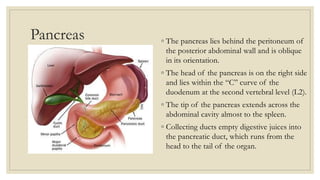
Pancreas ◦ The pancreas lies behind the peritoneum of
the posterior abdominal wall and is oblique
in its orientation.
◦ The head of the pancreas is on the right side
and lies within the “C” curve of the
duodenum at the second vertebral level (L2).
◦ The tip of the pancreas extends across the
abdominal cavity almost to the spleen.
◦ Collecting ducts empty digestive juices into
the pancreatic duct, which runs from the
head to the tail of the organ.
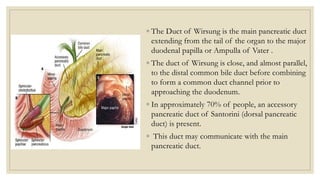
◦ The Duct of Wirsung is the main pancreatic duct
extending from the tail of the organ to the major
duodenal papilla or Ampulla of Vater .
◦ The duct of Wirsung is close, and almost parallel,
to the distal common bile duct before combining
to form a common duct channel prior to
approaching the duodenum.
◦ In approximately 70% of people, an accessory
pancreatic duct of Santorini (dorsal pancreatic
duct) is present.
◦ This duct may communicate with the main
pancreatic duct.
◦ Definition
◦ A group of reversible lesions characterised by inflammation of the pancreas
Incidence
◦ Male:female ratio is 1:3- in those with gallstones and 6:1 in those with alcoholism
Etiology:
 Non-traumatic(75%)
Biliary tract diseases
Alcohol
Viral infection(EBV, CMV, mumps)
Drugs(steroid, thiazide, furosemide)
Scorpion bites
Hyperlipidemia
Hyperparathyroidism
 Traumatic (5%)
Operative trauma
Blunt/penetrating trauma
Lab test(ERCP / angiography)
 Idiopathic(20%)
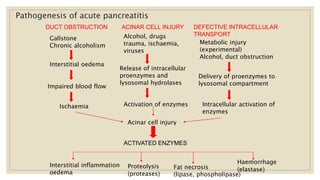
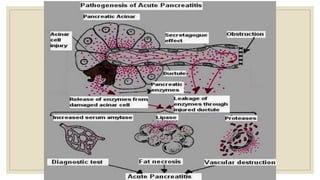
Pathogenesis of acute pancreatitis
Interstitial oedema
Impaired blood flow
Ischaemia
Acinar cell injury
Interstitial inflammation
oedema
Gallstone
Chronic alcoholism
Release of intracellular
proenzymes and
lysosomal hydrolases
Activation of enzymes
ACTIVATED ENZYMES
Delivery of proenzymes to
lysosomal compartment
Intracellular activation of
enzymes
Proteolysis
(proteases)
Fat necrosis
(lipase, phospholipase)
Haemorrhage
(elastase)
Alcohol, drugs
trauma, ischaemia,
viruses
Metabolic injury
(experimental)
Alcohol, duct obstruction
DUCT OBSTRUCTION ACINAR CELL INJURY DEFECTIVE INTRACELLULAR
TRANSPORT
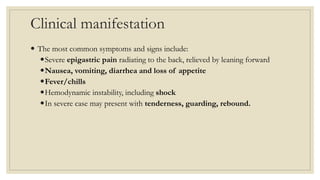
Clinical manifestation
 The most common symptoms and signs include:
Severe epigastric pain radiating to the back, relieved by leaning forward
Nausea, vomiting, diarrhea and loss of appetite
Fever/chills
Hemodynamic instability, including shock
In severe case may present with tenderness, guarding, rebound.
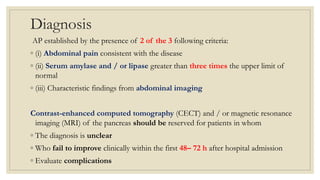
Diagnosis
AP established by the presence of 2 of the 3 following criteria:
◦ (i) Abdominal pain consistent with the disease
◦ (ii) Serum amylase and / or lipase greater than three times the upper limit of
normal
◦ (iii) Characteristic findings from abdominal imaging
Contrast-enhanced computed tomography (CECT) and / or magnetic resonance
imaging (MRI) of the pancreas should be reserved for patients in whom
◦ The diagnosis is unclear
◦ Who fail to improve clinically within the first 48– 72 h after hospital admission
◦ Evaluate complications
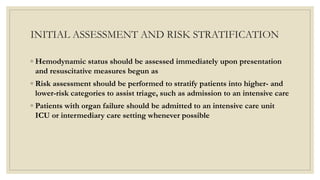
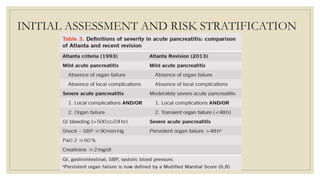
INITIAL ASSESSMENT AND RISK STRATIFICATION
◦ Hemodynamic status should be assessed immediately upon presentation
and resuscitative measures begun as
◦ Risk assessment should be performed to stratify patients into higher- and
lower-risk categories to assist triage, such as admission to an intensive care
◦ Patients with organ failure should be admitted to an intensive care unit
ICU or intermediary care setting whenever possible
INITIAL ASSESSMENT AND RISK STRATIFICATION
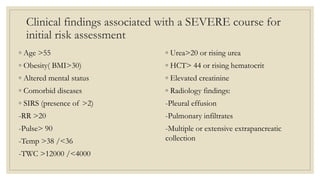
Clinical findings associated with a SEVERE course for
initial risk assessment
◦ Age >55
◦ Obesity( BMI>30)
◦ Altered mental status
◦ Comorbid diseases
◦ SIRS (presence of >2)
-RR >20
-Pulse> 90
-Temp >38 /<36
-TWC >12000 /<4000
◦ Urea>20 or rising urea
◦ HCT> 44 or rising hematocrit
◦ Elevated creatinine
◦ Radiology findings:
-Pleural effusion
-Pulmonary infiltrates
-Multiple or extensive extrapancreatic
collection
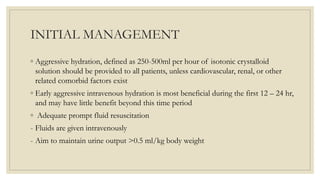
INITIAL MANAGEMENT
◦ Aggressive hydration, defined as 250-500ml per hour of isotonic crystalloid
solution should be provided to all patients, unless cardiovascular, renal, or other
related comorbid factors exist
◦ Early aggressive intravenous hydration is most beneficial during the first 12 – 24 hr,
and may have little benefit beyond this time period
◦ Adequate prompt fluid resuscitation
- Fluids are given intravenously
- Aim to maintain urine output >0.5 ml/kg body weight
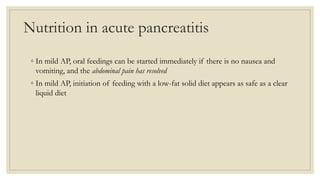
Nutrition in acute pancreatitis
◦ In mild AP, oral feedings can be started immediately if there is no nausea and
vomiting, and the abdominal pain has resolved
◦ In mild AP, initiation of feeding with a low-fat solid diet appears as safe as a clear
liquid diet
Management in a nutshell.
◦ Fluid resuscitation and correction of electrolyte imbalance
◦ Analgesia
◦ Bowel rest
◦ Strict urine output measuring
◦ DXT monitoring
◦ Stress ulcer prophylaxis
◦ **Ryles tube
◦ **Antibiotic
Case study: Mr T (Day 2)
◦ Overnight patient was oliguric ++, tachypneic, hypotensive
◦ IV infusing around 300 cc/H –over 7L of fluid given
◦ Transferred to ICU for intensive monitoring, fluid resuscitation & was
subsequently intubated
◦ Blood works were repeated
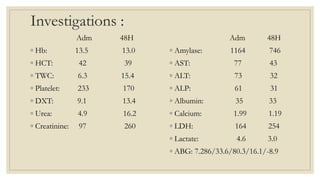
Investigations :
Adm 48H
◦ Hb: 13.5 13.0
◦ HCT: 42 39
◦ TWC: 6.3 15.4
◦ Platelet: 233 170
◦ DXT: 9.1 13.4
◦ Urea: 4.9 16.2
◦ Creatinine: 97 260
Adm 48H
◦ Amylase: 1164 746
◦ AST: 77 43
◦ ALT: 73 32
◦ ALP: 61 31
◦ Albumin: 35 33
◦ Calcium: 1.99 1.19
◦ LDH: 164 254
◦ Lactate: 4.6 3.0
◦ ABG: 7.286/33.6/80.3/16.1/-8.9
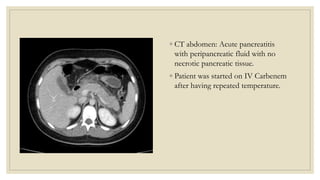
◦ CT abdomen: Acute pancreatitis
with peripancreatic fluid with no
necrotic pancreatic tissue.
◦ Patient was started on IV Carbenem
after having repeated temperature.
Complication:
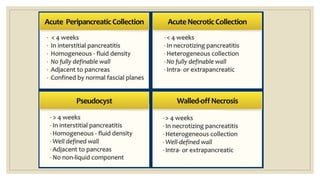
◦ Acute pancreatic collection
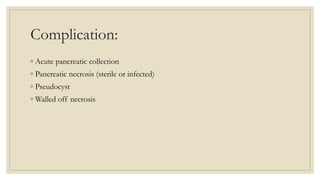
◦ Pancreatic necrosis (sterile or infected)
◦ Pseudocyst
◦ Walled off necrosis
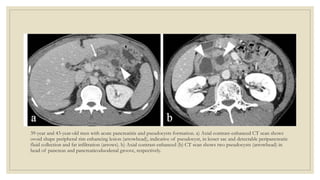
39-year and 43-year-old men with acute pancreatitis and pseudocysts formation. a) Axial contrast-enhanced CT scan shows
ovoid shape peripheral rim enhancing lesion (arrowhead), indicative of pseudocyst, in lesser sac and detectable peripancreatic
fluid collection and fat infiltration (arrows). b) Axial contrast-enhanced (b) CT scan shows two pseudocysts (arrowhead) in
head of pancreas and pancreaticoduodenal groove, respectively.
THE ROLE OF ANTIBIOTICS IN AP
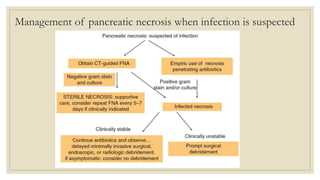
◦ Infected necrosis should be considered in patients with pancreatic or extrapancreatic necrosis
who deteriorate or fail to improve after 7– 1 0 days of hospitalization
◦ Once blood and other cultures are found to be negative and no source of infection is identified,
antibiotics should be discontinued.
◦ In stable patients with infected necrosis, surgical, radiologic, and/ or endoscopic drainage should
be delayed by preferably 4 weeks to allow the development of a wall around the necrosis (walled-
off pancreatic necrosis).
Management of pancreatic necrosis when infection is suspected
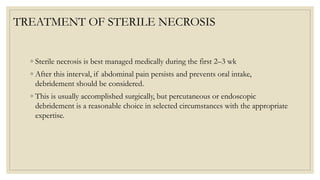
TREATMENT OF STERILE NECROSIS
◦ Sterile necrosis is best managed medically during the first 2–3 wk
◦ After this interval, if abdominal pain persists and prevents oral intake,
debridement should be considered.
◦ This is usually accomplished surgically, but percutaneous or endoscopic
debridement is a reasonable choice in selected circumstances with the appropriate
expertise.
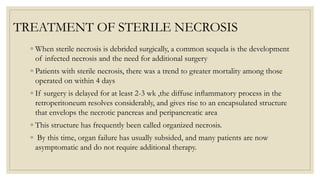
TREATMENT OF STERILE NECROSIS
◦ When sterile necrosis is debrided surgically, a common sequela is the development
of infected necrosis and the need for additional surgery
◦ Patients with sterile necrosis, there was a trend to greater mortality among those
operated on within 4 days
◦ If surgery is delayed for at least 2-3 wk ,the diffuse inflammatory process in the
retroperitoneum resolves considerably, and gives rise to an encapsulated structure
that envelops the necrotic pancreas and peripancreatic area
◦ This structure has frequently been called organized necrosis.
◦ By this time, organ failure has usually subsided, and many patients are now
asymptomatic and do not require additional therapy.
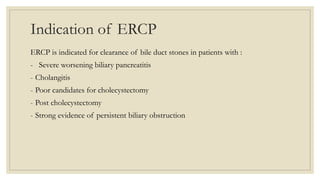
Indication of ERCP
ERCP is indicated for clearance of bile duct stones in patients with :
- Severe worsening biliary pancreatitis
- Cholangitis
- Poor candidates for cholecystectomy
- Post cholecystectomy
- Strong evidence of persistent biliary obstruction
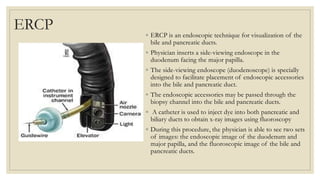
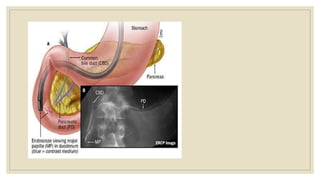
ERCP ◦ ERCP is an endoscopic technique for visualization of the
bile and pancreatic ducts.
◦ Physician inserts a side-viewing endoscope in the
duodenum facing the major papilla.
◦ The side-viewing endoscope (duodenoscope) is specially
designed to facilitate placement of endoscopic accessories
into the bile and pancreatic duct.
◦ The endoscopic accessories may be passed through the
biopsy channel into the bile and pancreatic ducts.
◦ A catheter is used to inject dye into both pancreatic and
biliary ducts to obtain x-ray images using fluoroscopy
◦ During this procedure, the physician is able to see two sets
of images: the endoscopic image of the duodenum and
major papilla, and the fluoroscopic image of the bile and
pancreatic ducts.
THANK YOU

Acute pancreatitis

  • 1.
  • 2.
    Case study: ◦ MrT, 56 y.o, Indian Male, taxi driver ◦ Presented to ED with 8 hours history of epigastric pain that radiates to the back ◦ Also complaint of nausea and vomiting ◦ Moderate drinker in the past, free of alcohol for the past 3 years ◦ No history of gall stone previously ◦ No hematemesis, no melena, normal bowel habit ◦ PMHx: nil ◦ PSHx: nil ◦ Meds: nil
  • 3.
    ◦ O/E: ◦ BP:110/80,HR:85, RR:18, afebrile ◦ Looks distressed, sitting up ◦ Resp: normal ◦ CVS: normal ◦ Abdomen: decreased bowel sound, mildly distended, severe LUQ tenderness, no peritoneal signs, Murphy sign: negative
  • 4.
    Investigations: ◦ Hb: 13.5 ◦HCT: 42 ◦ TWC: 6.3 ◦ Platelet: 233 ◦ DXT: 9.1 ◦ Urea:4.9 ◦ Creatinine: 97 ◦ Abdominal xray: unremarkable ◦ USG: pending ◦ Amylase: 1164 ◦ AST: 77 ◦ ALT: 73 ◦ ALP: 61 ◦ Albumin:35 ◦ Calcium: 1.99 ◦ LDH: 164 ◦ Lactate: 4.6 ◦ ABG: 7.336/ 37.4/69.9/20.1/-4.5
  • 5.
    WHAT IS YOURWORKING DIAGNOSIS?
  • 6.
    Pancreas ◦ Thepancreas lies behind the peritoneum of the posterior abdominal wall and is oblique in its orientation. ◦ The head of the pancreas is on the right side and lies within the “C” curve of the duodenum at the second vertebral level (L2). ◦ The tip of the pancreas extends across the abdominal cavity almost to the spleen. ◦ Collecting ducts empty digestive juices into the pancreatic duct, which runs from the head to the tail of the organ.
  • 7.
    ◦ The Ductof Wirsung is the main pancreatic duct extending from the tail of the organ to the major duodenal papilla or Ampulla of Vater . ◦ The duct of Wirsung is close, and almost parallel, to the distal common bile duct before combining to form a common duct channel prior to approaching the duodenum. ◦ In approximately 70% of people, an accessory pancreatic duct of Santorini (dorsal pancreatic duct) is present. ◦ This duct may communicate with the main pancreatic duct.
  • 8.
    ◦ Definition ◦ Agroup of reversible lesions characterised by inflammation of the pancreas Incidence ◦ Male:female ratio is 1:3- in those with gallstones and 6:1 in those with alcoholism
  • 9.
    Etiology:  Non-traumatic(75%) Biliary tractdiseases Alcohol Viral infection(EBV, CMV, mumps) Drugs(steroid, thiazide, furosemide) Scorpion bites Hyperlipidemia Hyperparathyroidism  Traumatic (5%) Operative trauma Blunt/penetrating trauma Lab test(ERCP / angiography)  Idiopathic(20%)
  • 10.
    Pathogenesis of acutepancreatitis Interstitial oedema Impaired blood flow Ischaemia Acinar cell injury Interstitial inflammation oedema Gallstone Chronic alcoholism Release of intracellular proenzymes and lysosomal hydrolases Activation of enzymes ACTIVATED ENZYMES Delivery of proenzymes to lysosomal compartment Intracellular activation of enzymes Proteolysis (proteases) Fat necrosis (lipase, phospholipase) Haemorrhage (elastase) Alcohol, drugs trauma, ischaemia, viruses Metabolic injury (experimental) Alcohol, duct obstruction DUCT OBSTRUCTION ACINAR CELL INJURY DEFECTIVE INTRACELLULAR TRANSPORT
  • 12.
    Clinical manifestation  Themost common symptoms and signs include: Severe epigastric pain radiating to the back, relieved by leaning forward Nausea, vomiting, diarrhea and loss of appetite Fever/chills Hemodynamic instability, including shock In severe case may present with tenderness, guarding, rebound.
  • 13.
    Diagnosis AP established bythe presence of 2 of the 3 following criteria: ◦ (i) Abdominal pain consistent with the disease ◦ (ii) Serum amylase and / or lipase greater than three times the upper limit of normal ◦ (iii) Characteristic findings from abdominal imaging Contrast-enhanced computed tomography (CECT) and / or magnetic resonance imaging (MRI) of the pancreas should be reserved for patients in whom ◦ The diagnosis is unclear ◦ Who fail to improve clinically within the first 48– 72 h after hospital admission ◦ Evaluate complications
  • 14.
    INITIAL ASSESSMENT ANDRISK STRATIFICATION ◦ Hemodynamic status should be assessed immediately upon presentation and resuscitative measures begun as ◦ Risk assessment should be performed to stratify patients into higher- and lower-risk categories to assist triage, such as admission to an intensive care ◦ Patients with organ failure should be admitted to an intensive care unit ICU or intermediary care setting whenever possible
  • 15.
    INITIAL ASSESSMENT ANDRISK STRATIFICATION
  • 16.
    Clinical findings associatedwith a SEVERE course for initial risk assessment ◦ Age >55 ◦ Obesity( BMI>30) ◦ Altered mental status ◦ Comorbid diseases ◦ SIRS (presence of >2) -RR >20 -Pulse> 90 -Temp >38 /<36 -TWC >12000 /<4000 ◦ Urea>20 or rising urea ◦ HCT> 44 or rising hematocrit ◦ Elevated creatinine ◦ Radiology findings: -Pleural effusion -Pulmonary infiltrates -Multiple or extensive extrapancreatic collection
  • 17.
    INITIAL MANAGEMENT ◦ Aggressivehydration, defined as 250-500ml per hour of isotonic crystalloid solution should be provided to all patients, unless cardiovascular, renal, or other related comorbid factors exist ◦ Early aggressive intravenous hydration is most beneficial during the first 12 – 24 hr, and may have little benefit beyond this time period ◦ Adequate prompt fluid resuscitation - Fluids are given intravenously - Aim to maintain urine output >0.5 ml/kg body weight
  • 18.
    Nutrition in acutepancreatitis ◦ In mild AP, oral feedings can be started immediately if there is no nausea and vomiting, and the abdominal pain has resolved ◦ In mild AP, initiation of feeding with a low-fat solid diet appears as safe as a clear liquid diet
  • 19.
    Management in anutshell. ◦ Fluid resuscitation and correction of electrolyte imbalance ◦ Analgesia ◦ Bowel rest ◦ Strict urine output measuring ◦ DXT monitoring ◦ Stress ulcer prophylaxis ◦ **Ryles tube ◦ **Antibiotic
  • 20.
    Case study: MrT (Day 2) ◦ Overnight patient was oliguric ++, tachypneic, hypotensive ◦ IV infusing around 300 cc/H –over 7L of fluid given ◦ Transferred to ICU for intensive monitoring, fluid resuscitation & was subsequently intubated ◦ Blood works were repeated
  • 21.
    Investigations : Adm 48H ◦Hb: 13.5 13.0 ◦ HCT: 42 39 ◦ TWC: 6.3 15.4 ◦ Platelet: 233 170 ◦ DXT: 9.1 13.4 ◦ Urea: 4.9 16.2 ◦ Creatinine: 97 260 Adm 48H ◦ Amylase: 1164 746 ◦ AST: 77 43 ◦ ALT: 73 32 ◦ ALP: 61 31 ◦ Albumin: 35 33 ◦ Calcium: 1.99 1.19 ◦ LDH: 164 254 ◦ Lactate: 4.6 3.0 ◦ ABG: 7.286/33.6/80.3/16.1/-8.9
  • 22.
    ◦ CT abdomen:Acute pancreatitis with peripancreatic fluid with no necrotic pancreatic tissue. ◦ Patient was started on IV Carbenem after having repeated temperature.
  • 23.
    Complication: ◦ Acute pancreaticcollection ◦ Pancreatic necrosis (sterile or infected) ◦ Pseudocyst ◦ Walled off necrosis
  • 25.
    39-year and 43-year-oldmen with acute pancreatitis and pseudocysts formation. a) Axial contrast-enhanced CT scan shows ovoid shape peripheral rim enhancing lesion (arrowhead), indicative of pseudocyst, in lesser sac and detectable peripancreatic fluid collection and fat infiltration (arrows). b) Axial contrast-enhanced (b) CT scan shows two pseudocysts (arrowhead) in head of pancreas and pancreaticoduodenal groove, respectively.
  • 26.
    THE ROLE OFANTIBIOTICS IN AP ◦ Infected necrosis should be considered in patients with pancreatic or extrapancreatic necrosis who deteriorate or fail to improve after 7– 1 0 days of hospitalization ◦ Once blood and other cultures are found to be negative and no source of infection is identified, antibiotics should be discontinued. ◦ In stable patients with infected necrosis, surgical, radiologic, and/ or endoscopic drainage should be delayed by preferably 4 weeks to allow the development of a wall around the necrosis (walled- off pancreatic necrosis).
  • 27.
    Management of pancreaticnecrosis when infection is suspected
  • 28.
    TREATMENT OF STERILENECROSIS ◦ Sterile necrosis is best managed medically during the first 2–3 wk ◦ After this interval, if abdominal pain persists and prevents oral intake, debridement should be considered. ◦ This is usually accomplished surgically, but percutaneous or endoscopic debridement is a reasonable choice in selected circumstances with the appropriate expertise.
  • 29.
    TREATMENT OF STERILENECROSIS ◦ When sterile necrosis is debrided surgically, a common sequela is the development of infected necrosis and the need for additional surgery ◦ Patients with sterile necrosis, there was a trend to greater mortality among those operated on within 4 days ◦ If surgery is delayed for at least 2-3 wk ,the diffuse inflammatory process in the retroperitoneum resolves considerably, and gives rise to an encapsulated structure that envelops the necrotic pancreas and peripancreatic area ◦ This structure has frequently been called organized necrosis. ◦ By this time, organ failure has usually subsided, and many patients are now asymptomatic and do not require additional therapy.
  • 30.
    Indication of ERCP ERCPis indicated for clearance of bile duct stones in patients with : - Severe worsening biliary pancreatitis - Cholangitis - Poor candidates for cholecystectomy - Post cholecystectomy - Strong evidence of persistent biliary obstruction
  • 31.
    ERCP ◦ ERCPis an endoscopic technique for visualization of the bile and pancreatic ducts. ◦ Physician inserts a side-viewing endoscope in the duodenum facing the major papilla. ◦ The side-viewing endoscope (duodenoscope) is specially designed to facilitate placement of endoscopic accessories into the bile and pancreatic duct. ◦ The endoscopic accessories may be passed through the biopsy channel into the bile and pancreatic ducts. ◦ A catheter is used to inject dye into both pancreatic and biliary ducts to obtain x-ray images using fluoroscopy ◦ During this procedure, the physician is able to see two sets of images: the endoscopic image of the duodenum and major papilla, and the fluoroscopic image of the bile and pancreatic ducts.
  • 33.

Editor's Notes

  • #5 IMRIE: age, calcium (2)
  • #7 The gland has both exocrine and endocrine functions. In its exocrine capacity, the acinar cells produce digestive juices, which are secreted into the intestine and are essential in the breakdown and metabolism of proteins, fats, and carbohydrates . In its endocrine function capacity, the pancreas also produces insulin and glucagon, which are secreted into the blood to regulate glucose levels.
  • #8 The pancreas receives blood from branches of both the coeliac artery and superior mesenteric artery. The splenic artery runs along the top margin of the pancreas, and supplies the neck, body and tail of the pancreas through its pancreatic branches, the largest of which is called the greater pancreatic artery. The superior pancreaticoduodenal artery and inferior pancreaticoduodenal artery runs along the anterior and posterior surfaces of the head of the pancreas at its border with the duodenum. These supply the head of the pancreas.[4] The body and neck of the pancreas drain into the splenic vein; the head drains into the superior mesenteric and portal veins.
  • #14 Serum amylase alone cannot be used reliably for the diagnosis of AP and serum lipase is preferred. Serum lipase appears to be more specific and remains elevated longer than amylase after disease presentation. Upper limit of normal greater than 3– 5 times may be needed in diabetics who appear to have higher median lipase compared with nondiabetic patients for unclear reasons
  • #18 Transfer to ICU) (or possibly a step-down care unit should be considered If there are : Signs that suggest that the pancreatitis is severe or is likely to be severe Need for very aggressive fluid resuscitation to overcome hemoconcentration, especially in an older person who may have underlying cardiovascular disease If a patient does not have hypoxemia but is showing signs of labored respiration, transfer should be considered to monitor pulmonary status carefully in anticipation An early elevated : Hematocrit Blood urea nitrogen Creatinine Should prompt clinicians to institute more intensive early resuscitation measures.
  • #20 Antibiotics should be given for an extrapancreatic infection, such as cholangitis, catheter-acquired infections, bacteremia, urinary tract infections, pneumonia Routine use of prophylactic antibiotics in patients with severe AP is not recommended The use of antibiotics in patients with sterile necrosis to prevent the development of infected necrosis is not recommended
  • #22 IMRIE: age, twc, calcium,urea,glucose Kidney shutting down
  • #27 After 1: Initial CT-guided (FNA) for Gram stain and culture to guide use of appropriate antibiotics or Empiric use of antibiotics after obtaining necessary cultures for infectious agents, without CT FNA, should be given In patients with infected necrosis, antibiotics known to penetrate pancreatic necrosis, such as carbapenems, quinolones, and metronidazole
  • #31 Guidewire cannulation Pancreatic duct stents in pt doin ampullectomy, endoscopic sphincter of oddi manometry / or post-procedure rectal (NSAID) suppositories should be utilized to lower the risk of severe post-ERCP pancreatitis in high-risk patients :diclofenac/indomethacin
  • #33 Sphincter of Oddi dysfunction is diagnosed when the basal sphincter pressure is greater than 40 mm Hg.