DRUGS ACTING ON RESPIRATORY SYSTEM
CONTENT OUTLINE
• Parts of Respiratory System
• Diseases of respiratory System
• Principles of RT system diseases
• Commonly Used Drugs
• Their MOA & Indications
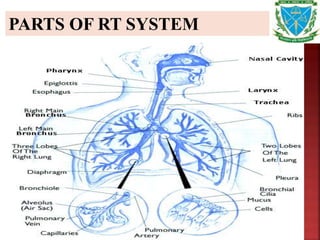
PARTS OF RT SYSTEM
DISEASES OF RT SYSTEM
 Cough
 Asthma
 Bronchitis
 COPD
 Cystic Fibrosis
 Pneumonia
 Tuberculosis
 Pulmonary Emphysema
 Pasteurellosis etc.
PRINCIPLES…..
 Early Stage
Dry harsh, painful & entirely useless cough
TREATMENT:
i. To increase mucous Secretion
ii. Reduce frequency of cough
iii. Prevent stimulation on mucosa by coating the
mucosa
iv. Centrally depressing cough center
CONTD..
 Recovery Stage
Excess mucus & Tissue debris in airways
Prevent the free air passage & stimulate coughing
TREATMENT:
i. To increase the fluidity of mucus
ii. Stimulate the activity of cilia thus all debris
expelled by coughing
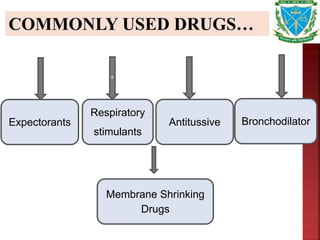
e
Expectorants
Respiratory
stimulants
Antitussive Bronchodilator
COMMONLY USED DRUGS…
Membrane Shrinking
Drugs
Expectorants
Expectorants are drugs that increase
 The bronchial secretion
 Enhance the expulsion of mucus by air
passages of the lung.
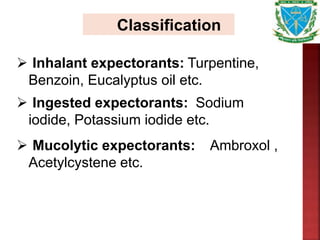
Classification
 Inhalant expectorants: Turpentine,
Benzoin, Eucalyptus oil etc.
 Ingested expectorants: Sodium
iodide, Potassium iodide etc.
 Mucolytic expectorants: Ambroxol ,
Acetylcystene etc.
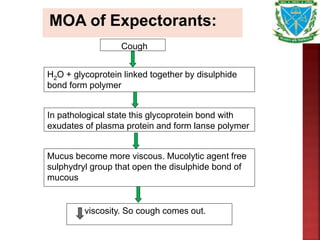
Cough
H2O + glycoprotein linked together by disulphide
bond form polymer
In pathological state this glycoprotein bond with
exudates of plasma protein and form lanse polymer
Mucus become more viscous. Mucolytic agent free
sulphydryl group that open the disulphide bond of
mucous
viscosity. So cough comes out.
MOA of Expectorants:
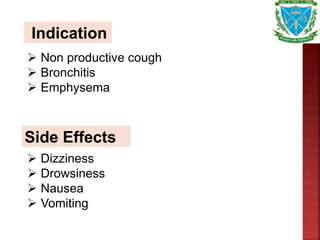
Indication
 Non productive cough
 Bronchitis
 Emphysema
Side Effects
 Dizziness
 Drowsiness
 Nausea
 Vomiting
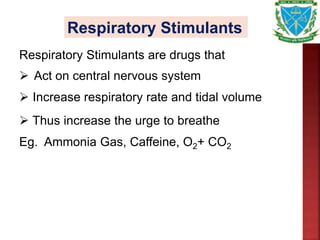
Respiratory Stimulants
Respiratory Stimulants are drugs that
 Act on central nervous system
 Increase respiratory rate and tidal volume
 Thus increase the urge to breathe
Eg. Ammonia Gas, Caffeine, O2+ CO2
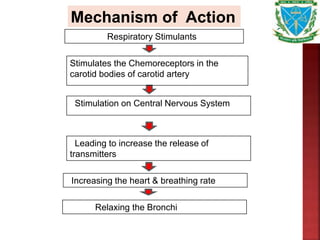
Mechanism of Action
Respiratory Stimulants
Stimulation on Central Nervous System
Stimulates the Chemoreceptors in the
carotid bodies of carotid artery
Leading to increase the release of
transmitters
Increasing the heart & breathing rate
Relaxing the Bronchi
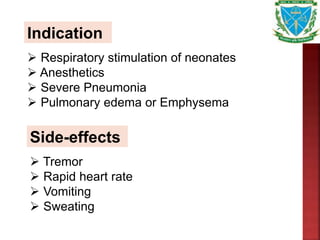
Indication
 Respiratory stimulation of neonates
 Anesthetics
 Severe Pneumonia
 Pulmonary edema or Emphysema
Side-effects
 Tremor
 Rapid heart rate
 Vomiting
 Sweating
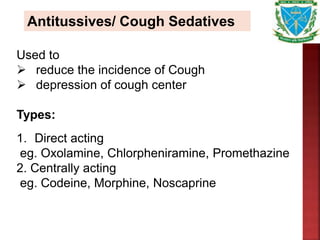
Antitussives/ Cough Sedatives
Used to
 reduce the incidence of Cough
 depression of cough center
Types:
1. Direct acting
eg. Oxolamine, Chlorpheniramine, Promethazine
2. Centrally acting
eg. Codeine, Morphine, Noscaprine
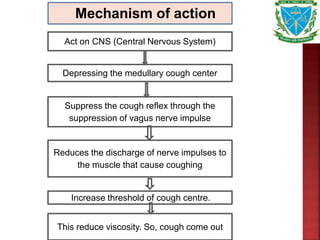
Mechanism of action
Act on CNS (Central Nervous System)
Depressing the medullary cough center
Suppress the cough reflex through the
suppression of vagus nerve impulse
Reduces the discharge of nerve impulses to
the muscle that cause coughing
Increase threshold of cough centre.
This reduce viscosity. So, cough come out
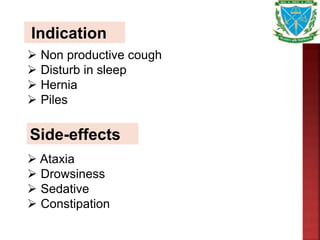
Indication
 Non productive cough
 Disturb in sleep
 Hernia
 Piles
Side-effects
 Ataxia
 Drowsiness
 Sedative
 Constipation
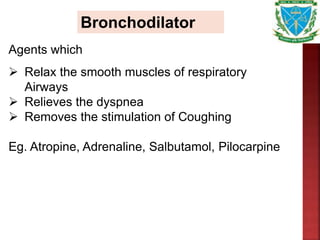
Bronchodilator
Agents which
 Relax the smooth muscles of respiratory
Airways
 Relieves the dyspnea
 Removes the stimulation of Coughing
Eg. Atropine, Adrenaline, Salbutamol, Pilocarpine
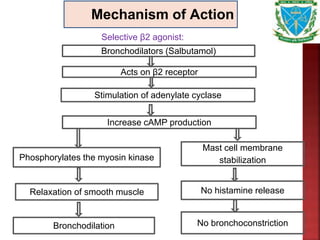
Mechanism of Action
Bronchodilators (Salbutamol)
Acts on β2 receptor
Stimulation of adenylate cyclase
Increase cAMP production
Phosphorylates the myosin kinase
Mast cell membrane
stabilization
No histamine release
No bronchoconstriction
Relaxation of smooth muscle
Bronchodilation
Selective β2 agonist:
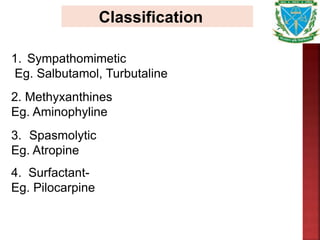
Classification
1. Sympathomimetic
Eg. Salbutamol, Turbutaline
2. Methyxanthines
Eg. Aminophyline
3. Spasmolytic
Eg. Atropine
4. Surfactant-
Eg. Pilocarpine
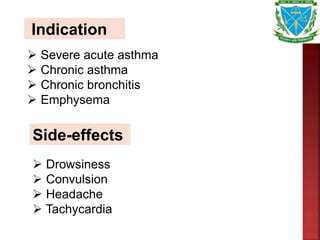
Indication
 Severe acute asthma
 Chronic asthma
 Chronic bronchitis
 Emphysema
Side-effects
 Drowsiness
 Convulsion
 Headache
 Tachycardia
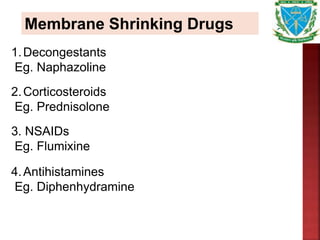
Membrane Shrinking Drugs
1.Decongestants
Eg. Naphazoline
2.Corticosteroids
Eg. Prednisolone
3. NSAIDs
Eg. Flumixine
4.Antihistamines
Eg. Diphenhydramine

Respiraratory system pharmacology

  • 1.
    DRUGS ACTING ONRESPIRATORY SYSTEM
  • 2.
    CONTENT OUTLINE • Partsof Respiratory System • Diseases of respiratory System • Principles of RT system diseases • Commonly Used Drugs • Their MOA & Indications
  • 3.
  • 4.
    DISEASES OF RTSYSTEM  Cough  Asthma  Bronchitis  COPD  Cystic Fibrosis  Pneumonia  Tuberculosis  Pulmonary Emphysema  Pasteurellosis etc.
  • 5.
    PRINCIPLES…..  Early Stage Dryharsh, painful & entirely useless cough TREATMENT: i. To increase mucous Secretion ii. Reduce frequency of cough iii. Prevent stimulation on mucosa by coating the mucosa iv. Centrally depressing cough center
  • 6.
    CONTD..  Recovery Stage Excessmucus & Tissue debris in airways Prevent the free air passage & stimulate coughing TREATMENT: i. To increase the fluidity of mucus ii. Stimulate the activity of cilia thus all debris expelled by coughing
  • 7.
  • 8.
    Expectorants Expectorants are drugsthat increase  The bronchial secretion  Enhance the expulsion of mucus by air passages of the lung.
  • 9.
    Classification  Inhalant expectorants:Turpentine, Benzoin, Eucalyptus oil etc.  Ingested expectorants: Sodium iodide, Potassium iodide etc.  Mucolytic expectorants: Ambroxol , Acetylcystene etc.
  • 10.
    Cough H2O + glycoproteinlinked together by disulphide bond form polymer In pathological state this glycoprotein bond with exudates of plasma protein and form lanse polymer Mucus become more viscous. Mucolytic agent free sulphydryl group that open the disulphide bond of mucous viscosity. So cough comes out. MOA of Expectorants:
  • 11.
    Indication  Non productivecough  Bronchitis  Emphysema Side Effects  Dizziness  Drowsiness  Nausea  Vomiting
  • 12.
    Respiratory Stimulants Respiratory Stimulantsare drugs that  Act on central nervous system  Increase respiratory rate and tidal volume  Thus increase the urge to breathe Eg. Ammonia Gas, Caffeine, O2+ CO2
  • 13.
    Mechanism of Action RespiratoryStimulants Stimulation on Central Nervous System Stimulates the Chemoreceptors in the carotid bodies of carotid artery Leading to increase the release of transmitters Increasing the heart & breathing rate Relaxing the Bronchi
  • 14.
    Indication  Respiratory stimulationof neonates  Anesthetics  Severe Pneumonia  Pulmonary edema or Emphysema Side-effects  Tremor  Rapid heart rate  Vomiting  Sweating
  • 15.
    Antitussives/ Cough Sedatives Usedto  reduce the incidence of Cough  depression of cough center Types: 1. Direct acting eg. Oxolamine, Chlorpheniramine, Promethazine 2. Centrally acting eg. Codeine, Morphine, Noscaprine
  • 16.
    Mechanism of action Acton CNS (Central Nervous System) Depressing the medullary cough center Suppress the cough reflex through the suppression of vagus nerve impulse Reduces the discharge of nerve impulses to the muscle that cause coughing Increase threshold of cough centre. This reduce viscosity. So, cough come out
  • 17.
    Indication  Non productivecough  Disturb in sleep  Hernia  Piles Side-effects  Ataxia  Drowsiness  Sedative  Constipation
  • 18.
    Bronchodilator Agents which  Relaxthe smooth muscles of respiratory Airways  Relieves the dyspnea  Removes the stimulation of Coughing Eg. Atropine, Adrenaline, Salbutamol, Pilocarpine
  • 19.
    Mechanism of Action Bronchodilators(Salbutamol) Acts on β2 receptor Stimulation of adenylate cyclase Increase cAMP production Phosphorylates the myosin kinase Mast cell membrane stabilization No histamine release No bronchoconstriction Relaxation of smooth muscle Bronchodilation Selective β2 agonist:
  • 20.
    Classification 1. Sympathomimetic Eg. Salbutamol,Turbutaline 2. Methyxanthines Eg. Aminophyline 3. Spasmolytic Eg. Atropine 4. Surfactant- Eg. Pilocarpine
  • 21.
    Indication  Severe acuteasthma  Chronic asthma  Chronic bronchitis  Emphysema Side-effects  Drowsiness  Convulsion  Headache  Tachycardia
  • 22.
    Membrane Shrinking Drugs 1.Decongestants Eg.Naphazoline 2.Corticosteroids Eg. Prednisolone 3. NSAIDs Eg. Flumixine 4.Antihistamines Eg. Diphenhydramine