Energetics
BMR
Represented By,
Mr. Audumbar Mali,
(Asst. Prof.)
Sahyadri College of Pharmacy Methwade
1
BODY WEIGHT
Body composition is the proportion of muscle,
bone, fat and other tissues that make up body
weight.
Achieving and maintaining a healthy weight is
about managing energy balance and increasing
the proportion of fat tissue.
Energy balance = energy in – energy out.
ENERGY BALANCE
Energy in = calories consumed per
day.
Energy out = basal metabolic rate
(BMR) + thermic effect of foods, +
physical activity per day.
Small increments in calories
consumed per day or week can
contribute to weight gain over time.
ENERGY REQUIREMENT OF A NORMAL
PERSON
While calculating the energy
requirements, we have to consider
the energy required for:
Maintenance of basal metabolic
rate (BMR)
i. The Basal Metabolic Rate (BMR) is the energy
required by an individual during physical, emotional and digestive
rest. It is the minimum amount of energy required to maintain life or
sustain vital functions like the working of the heart, circulation,
brain function, respiration, etc. The metabolic rate during sleep is
less than BMR.
ii. Resting metabolic rate (RMR) is the measure of energy
required to maintain life or vital functions. It is approximately about
3% higher than the BMR.
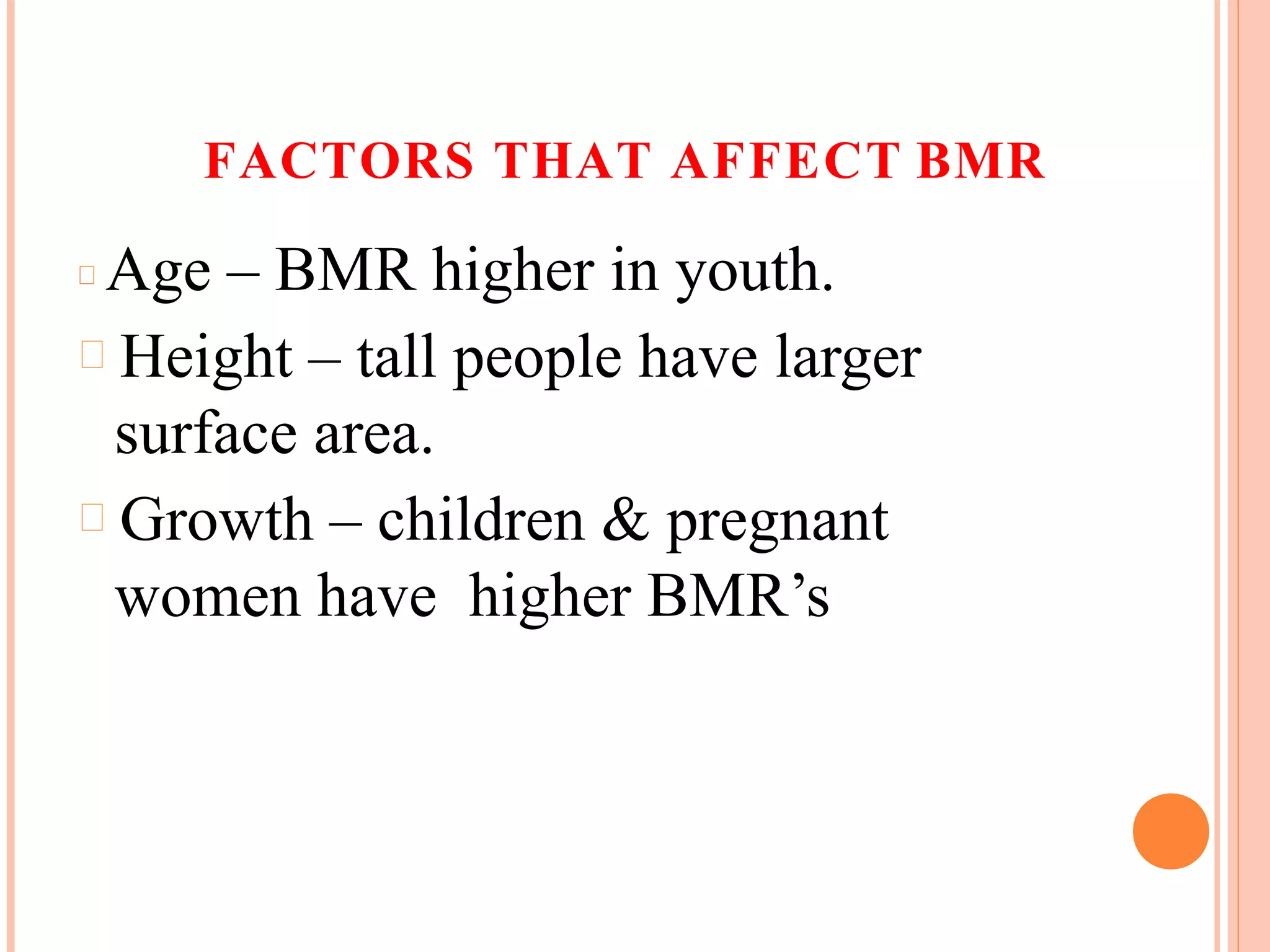
FACTORS THAT AFFECT BMR
Age – BMR higher in youth.
Height – tall people have larger
surface area.
Growth – children & pregnant
women have higher BMR’s
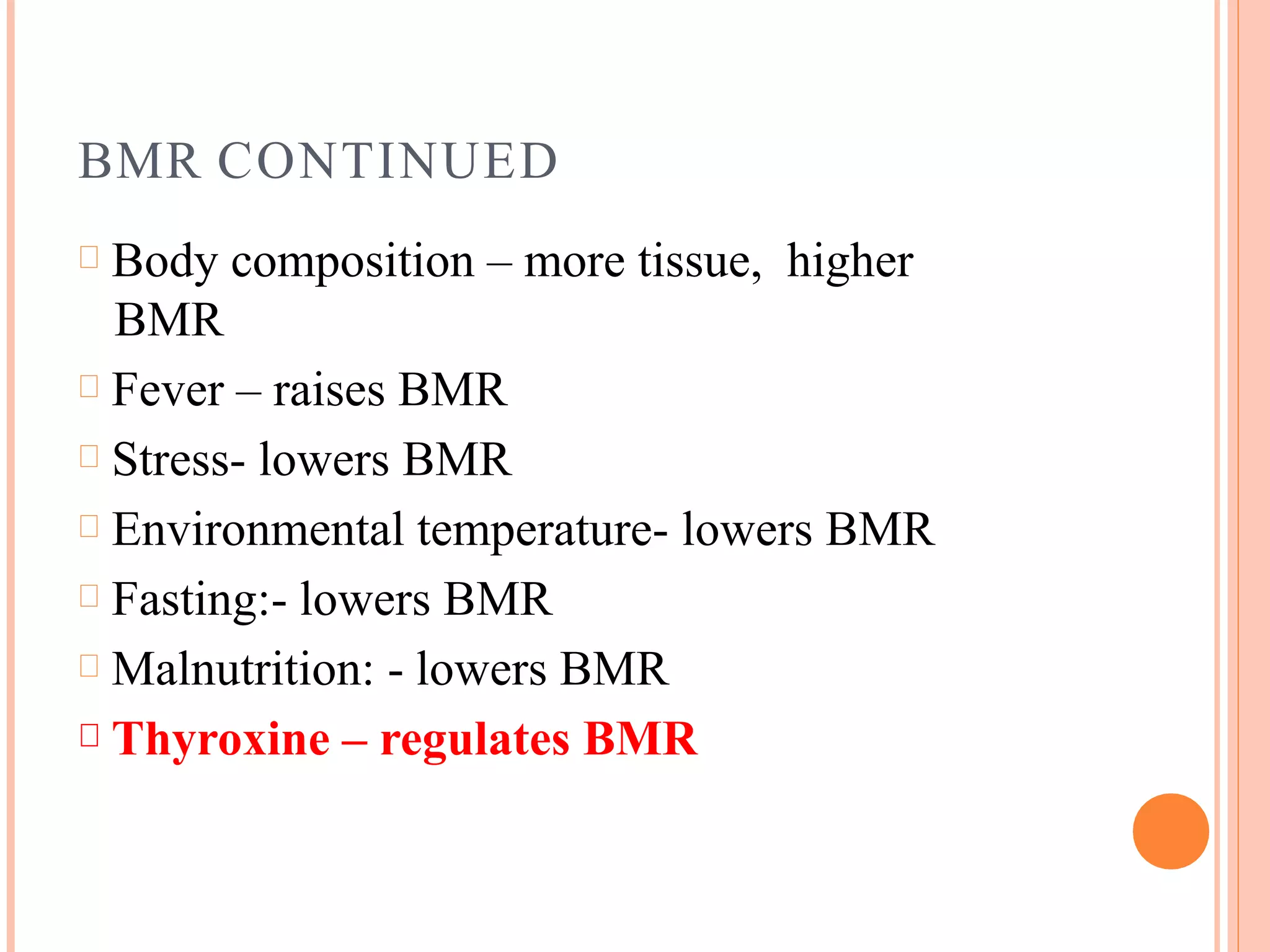
BMR CONTINUED
Body composition – more tissue, higher
BMR
Fever – raises BMR
Stress- lowers BMR
Environmental temperature- lowers BMR
Fasting:- lowers BMR
Malnutrition: - lowers BMR
Thyroxine – regulates BMR
•
•
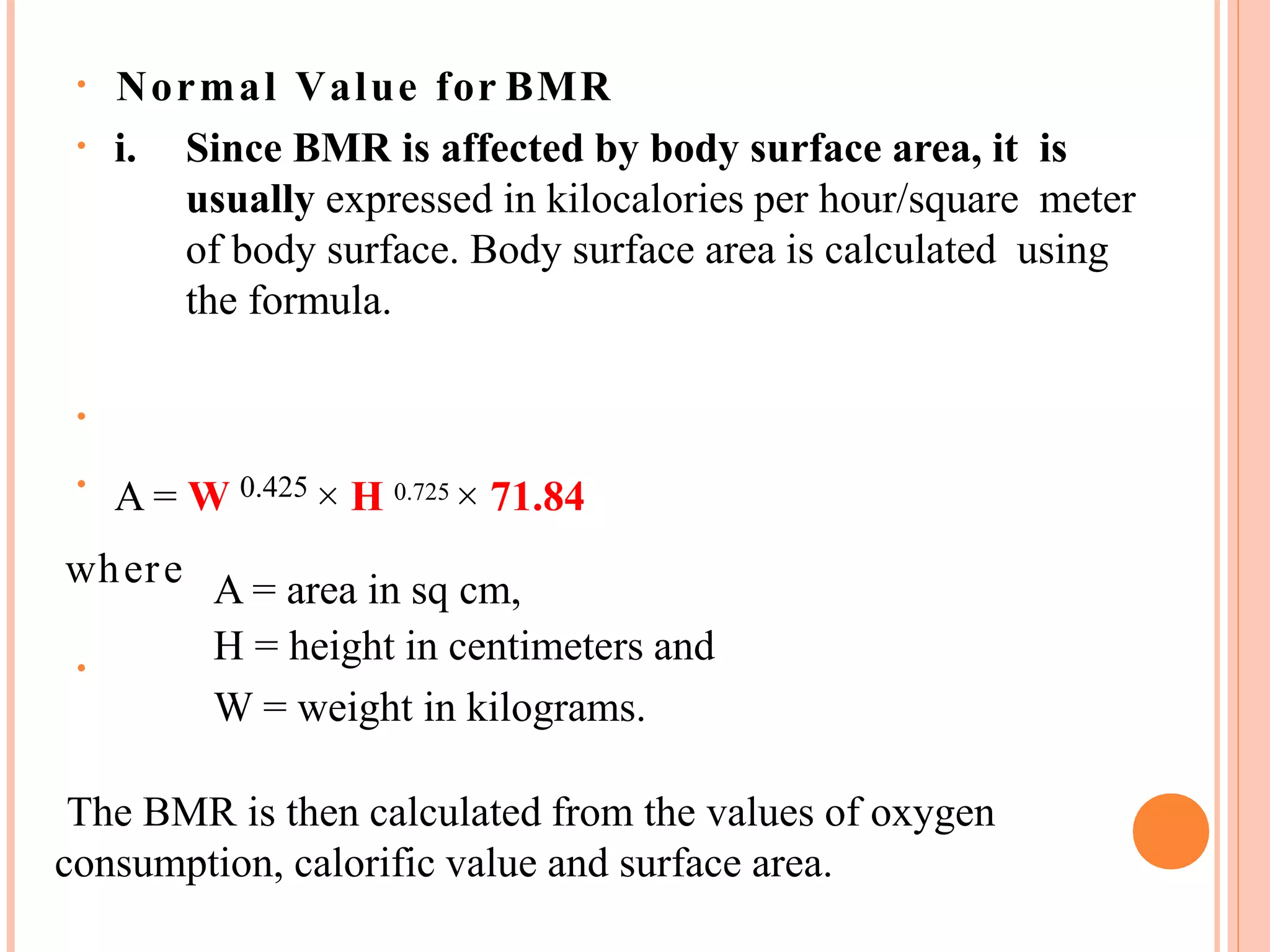
Normal Value for BMR
i. Since BMR is affected by body surface area, it is
usually expressed in kilocalories per hour/square meter
of body surface. Body surface area is calculated using
the formula.
A = W 0.425 × H 0.725 × 71.84
•
•
where A = area in sq cm,
H = height in centimeters and
W = weight in kilograms.
•
The BMR is then calculated from the values of oxygen
consumption, calorific value and surface area.
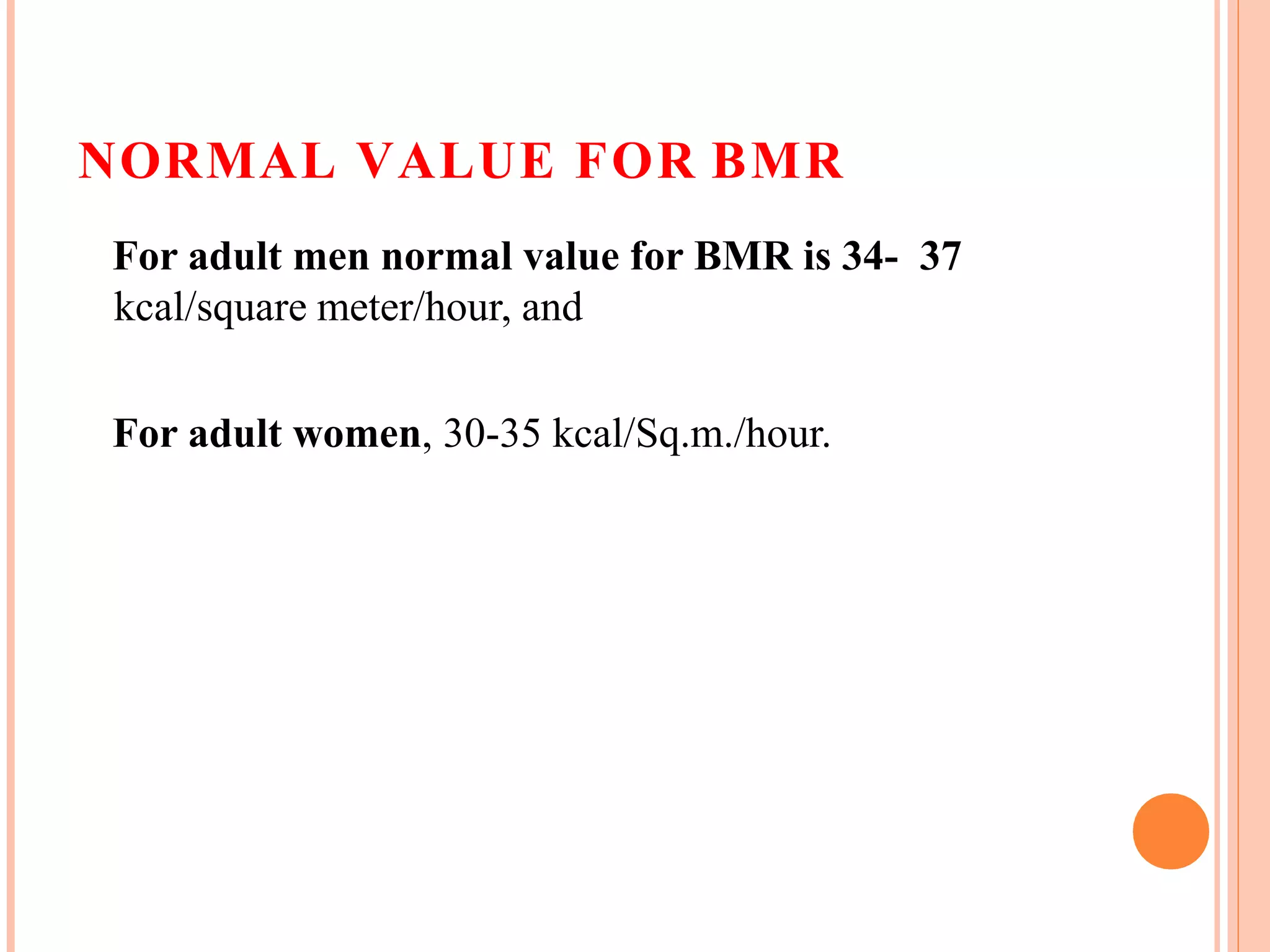
NORMAL VALUE FOR BMR
For adult men normal value for BMR is 34- 37
kcal/square meter/hour, and
For adult women, 30-35 kcal/Sq.m./hour.
References:
Human Anatomy and Physiology, By
Dr. S. B. Bhise, Dr. A. V. Yadav. Nirali
Prakashan, As per PCI Syllabus,
Page No. 3.6-3.9.
https://www.slideshare.net/niazaham
med/basal-metabolic-rate
https://www.slideshare.net/namarta2
8/basal-metabolic-rate-bmr-factors-
affecting-bmr-measurement-and-
clinical-significance
11

Unit-II, Chapter_1.3- BMR.ppt

  • 1.
    Energetics BMR Represented By, Mr. AudumbarMali, (Asst. Prof.) Sahyadri College of Pharmacy Methwade 1
  • 2.
    BODY WEIGHT Body compositionis the proportion of muscle, bone, fat and other tissues that make up body weight. Achieving and maintaining a healthy weight is about managing energy balance and increasing the proportion of fat tissue. Energy balance = energy in – energy out.
  • 3.
    ENERGY BALANCE Energy in= calories consumed per day. Energy out = basal metabolic rate (BMR) + thermic effect of foods, + physical activity per day. Small increments in calories consumed per day or week can contribute to weight gain over time.
  • 4.
    ENERGY REQUIREMENT OFA NORMAL PERSON While calculating the energy requirements, we have to consider the energy required for: Maintenance of basal metabolic rate (BMR)
  • 5.
    i. The BasalMetabolic Rate (BMR) is the energy required by an individual during physical, emotional and digestive rest. It is the minimum amount of energy required to maintain life or sustain vital functions like the working of the heart, circulation, brain function, respiration, etc. The metabolic rate during sleep is less than BMR. ii. Resting metabolic rate (RMR) is the measure of energy required to maintain life or vital functions. It is approximately about 3% higher than the BMR.
  • 6.
    FACTORS THAT AFFECTBMR Age – BMR higher in youth. Height – tall people have larger surface area. Growth – children & pregnant women have higher BMR’s
  • 7.
    BMR CONTINUED Body composition– more tissue, higher BMR Fever – raises BMR Stress- lowers BMR Environmental temperature- lowers BMR Fasting:- lowers BMR Malnutrition: - lowers BMR Thyroxine – regulates BMR
  • 8.
    • • Normal Value forBMR i. Since BMR is affected by body surface area, it is usually expressed in kilocalories per hour/square meter of body surface. Body surface area is calculated using the formula. A = W 0.425 × H 0.725 × 71.84 • • where A = area in sq cm, H = height in centimeters and W = weight in kilograms. • The BMR is then calculated from the values of oxygen consumption, calorific value and surface area.
  • 9.
    NORMAL VALUE FORBMR For adult men normal value for BMR is 34- 37 kcal/square meter/hour, and For adult women, 30-35 kcal/Sq.m./hour.
  • 10.
    References: Human Anatomy andPhysiology, By Dr. S. B. Bhise, Dr. A. V. Yadav. Nirali Prakashan, As per PCI Syllabus, Page No. 3.6-3.9. https://www.slideshare.net/niazaham med/basal-metabolic-rate https://www.slideshare.net/namarta2 8/basal-metabolic-rate-bmr-factors- affecting-bmr-measurement-and- clinical-significance
  • 11.