Factors Affecting
Basal Metabolic
Rate
Basal Metabolic Rate (BMR) is the minimum
amount of energy your body needs to
function at rest. Understanding the key
factors that influence BMR can help you
manage your energy levels and maintain a
healthy weight.
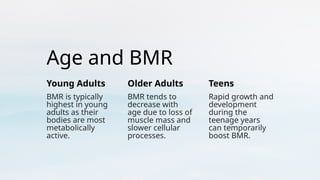
Age and BMR
Young Adults
BMR is typically
highest in young
adults as their
bodies are most
metabolically
active.
Older Adults
BMR tends to
decrease with
age due to loss of
muscle mass and
slower cellular
processes.
Teens
Rapid growth and
development
during the
teenage years
can temporarily
boost BMR.
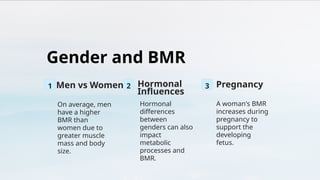
Gender and BMR
1 Men vs Women
On average, men
have a higher
BMR than
women due to
greater muscle
mass and body
size.
2 Hormonal
Influences
Hormonal
differences
between
genders can also
impact
metabolic
processes and
BMR.
3 Pregnancy
A woman's BMR
increases during
pregnancy to
support the
developing
fetus.
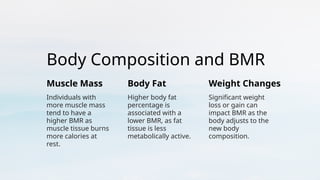
Body Composition and BMR
Muscle Mass
Individuals with
more muscle mass
tend to have a
higher BMR as
muscle tissue burns
more calories at
rest.
Body Fat
Higher body fat
percentage is
associated with a
lower BMR, as fat
tissue is less
metabolically active.
Weight Changes
Significant weight
loss or gain can
impact BMR as the
body adjusts to the
new body
composition.
Physical Activity and BMR
Aerobic Exercise
Engaging in regular
aerobic activities like
running, cycling, or
swimming can increase
BMR for several hours
after exercise.
Strength Training
Building muscle mass through
resistance training can elevate
BMR as the body works to
maintain and repair muscle
tissue.
Sedentary Lifestyle
A lack of physical activity can lead to a lower BMR as the
body becomes more efficient at conserving energy.
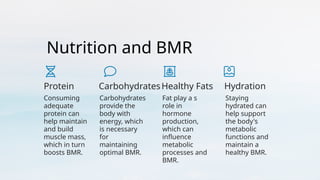
Nutrition and BMR
Protein
Consuming
adequate
protein can
help maintain
and build
muscle mass,
which in turn
boosts BMR.
Carbohydrates
Carbohydrates
provide the
body with
energy, which
is necessary
for
maintaining
optimal BMR.
Healthy Fats
Fat play a s
role in
hormone
production,
which can
influence
metabolic
processes and
BMR.
Hydration
Staying
hydrated can
help support
the body's
metabolic
functions and
maintain a
healthy BMR.
Conclusion and Takeaways
Understand Factors
Knowing the key
factors that
influence BMR can
help you manage
your energy levels
and maintain a
healthy weight.
Adopt Healthy Habits
Incorporating
regular exercise, a
balanced diet, and
staying hydrated
can help optimize
your BMR.
Consult Experts
If you have
concerns about
your BMR, consult a
healthcare
professional or
nutritionist for
personalized
guidance.

Factors Affecting Basal Metabolic rate.pptx

  • 1.
    Factors Affecting Basal Metabolic Rate BasalMetabolic Rate (BMR) is the minimum amount of energy your body needs to function at rest. Understanding the key factors that influence BMR can help you manage your energy levels and maintain a healthy weight.
  • 2.
    Age and BMR YoungAdults BMR is typically highest in young adults as their bodies are most metabolically active. Older Adults BMR tends to decrease with age due to loss of muscle mass and slower cellular processes. Teens Rapid growth and development during the teenage years can temporarily boost BMR.
  • 3.
    Gender and BMR 1Men vs Women On average, men have a higher BMR than women due to greater muscle mass and body size. 2 Hormonal Influences Hormonal differences between genders can also impact metabolic processes and BMR. 3 Pregnancy A woman's BMR increases during pregnancy to support the developing fetus.
  • 4.
    Body Composition andBMR Muscle Mass Individuals with more muscle mass tend to have a higher BMR as muscle tissue burns more calories at rest. Body Fat Higher body fat percentage is associated with a lower BMR, as fat tissue is less metabolically active. Weight Changes Significant weight loss or gain can impact BMR as the body adjusts to the new body composition.
  • 5.
    Physical Activity andBMR Aerobic Exercise Engaging in regular aerobic activities like running, cycling, or swimming can increase BMR for several hours after exercise. Strength Training Building muscle mass through resistance training can elevate BMR as the body works to maintain and repair muscle tissue. Sedentary Lifestyle A lack of physical activity can lead to a lower BMR as the body becomes more efficient at conserving energy.
  • 6.
    Nutrition and BMR Protein Consuming adequate proteincan help maintain and build muscle mass, which in turn boosts BMR. Carbohydrates Carbohydrates provide the body with energy, which is necessary for maintaining optimal BMR. Healthy Fats Fat play a s role in hormone production, which can influence metabolic processes and BMR. Hydration Staying hydrated can help support the body's metabolic functions and maintain a healthy BMR.
  • 7.
    Conclusion and Takeaways UnderstandFactors Knowing the key factors that influence BMR can help you manage your energy levels and maintain a healthy weight. Adopt Healthy Habits Incorporating regular exercise, a balanced diet, and staying hydrated can help optimize your BMR. Consult Experts If you have concerns about your BMR, consult a healthcare professional or nutritionist for personalized guidance.