Rishabh Lala
VI SEM
Rajiv Gandhi Technological University,Bhopal
The following are the concrete that we are
going to discuss in this chapter:

Ready Mix

Vacuum
Concrete

Shortcrete

Ferrocement

Fiber Reinforced
Concrete

Polymer
Concrete

Light weight
concrete

Air Entrained
Concrete
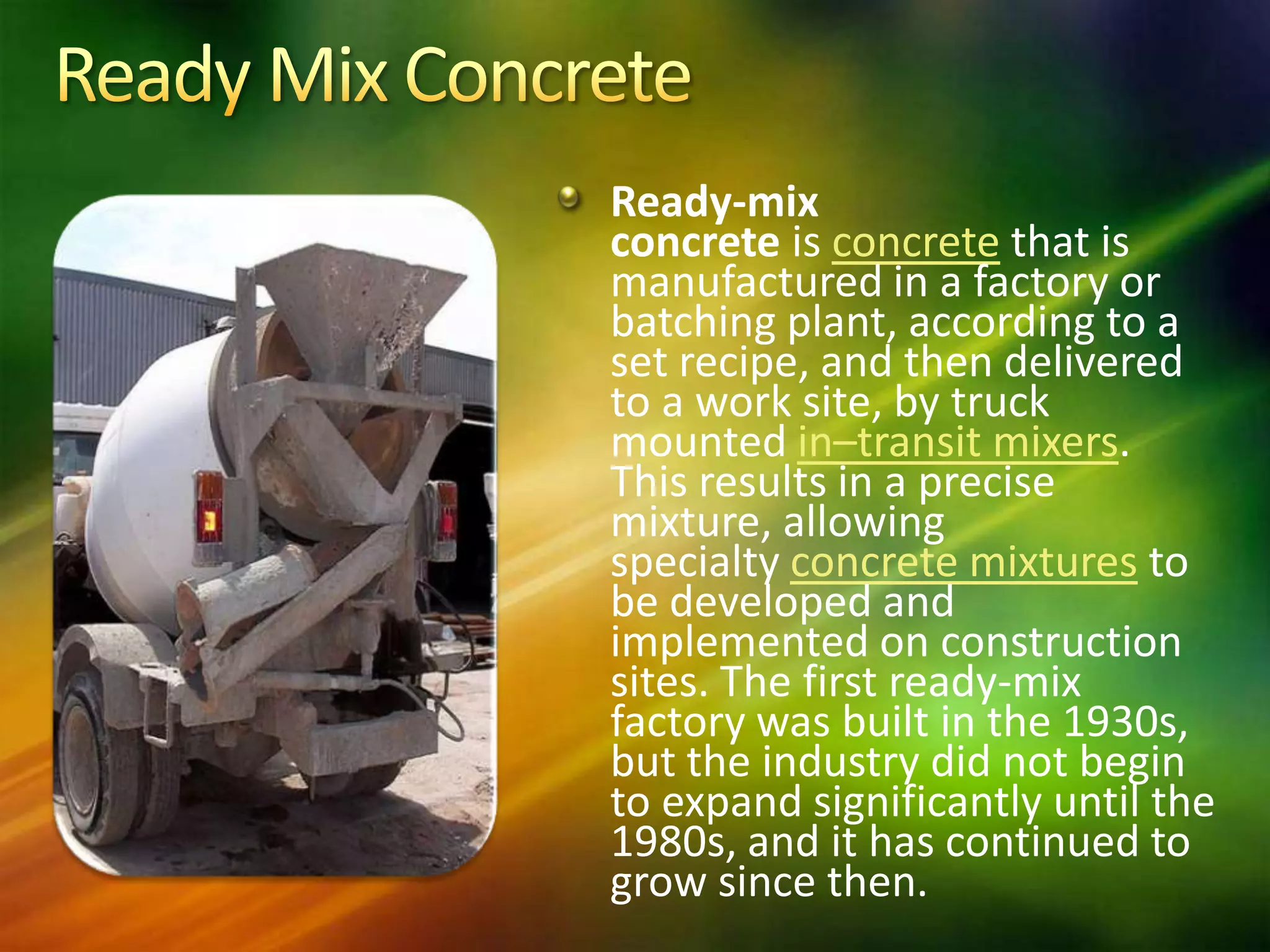
Ready-mix
concrete is concrete that is
manufactured in a factory or
batching plant, according to a
set recipe, and then delivered
to a work site, by truck
mounted in–transit mixers.
This results in a precise
mixture, allowing
specialty concrete mixtures to
be developed and
implemented on construction
sites. The first ready-mix
factory was built in the 1930s,
but the industry did not begin
to expand significantly until the
1980s, and it has continued to
grow since then.
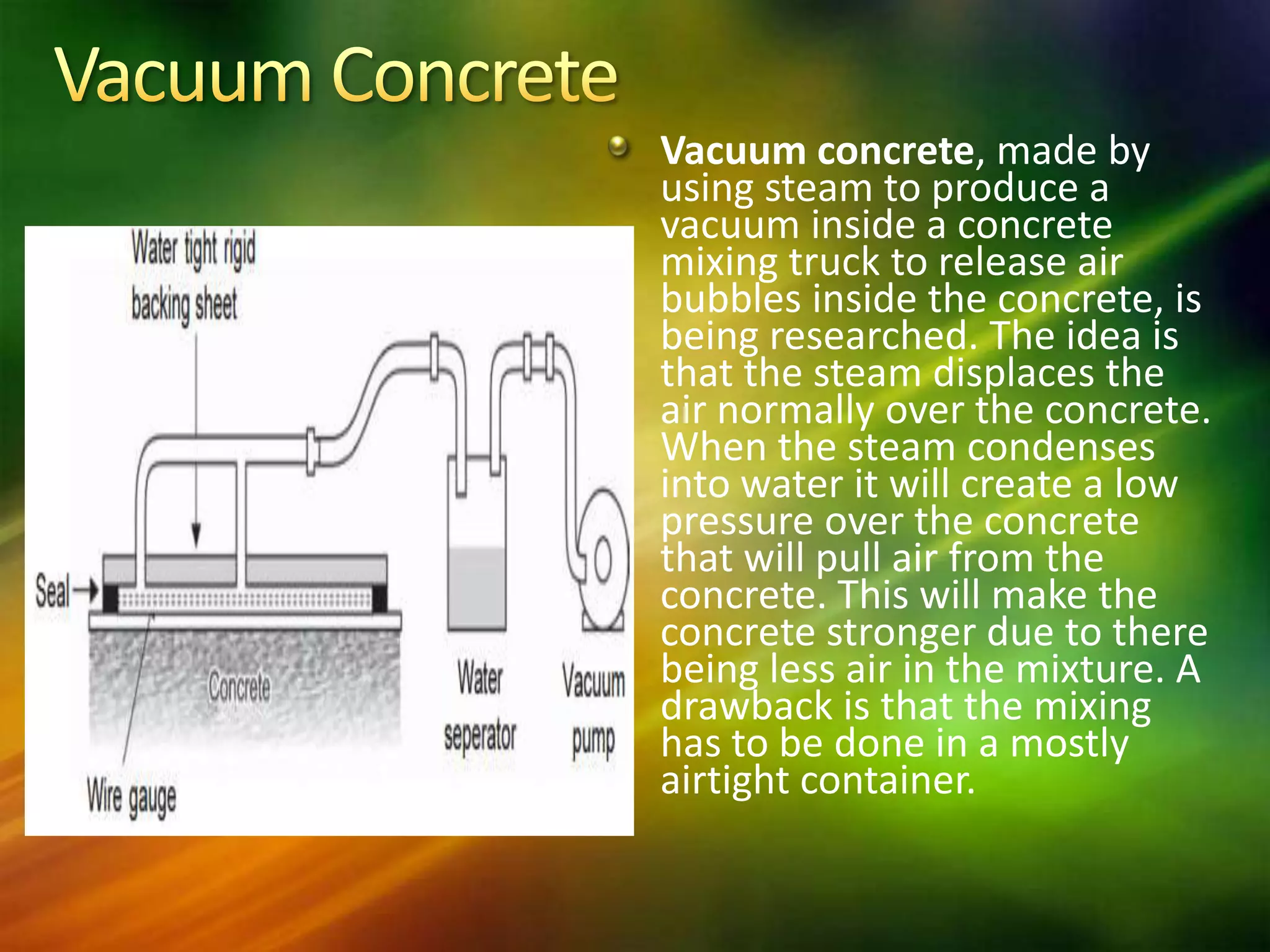
Vacuum concrete, made by
using steam to produce a
vacuum inside a concrete
mixing truck to release air
bubbles inside the concrete, is
being researched. The idea is
that the steam displaces the
air normally over the concrete.
When the steam condenses
into water it will create a low
pressure over the concrete
that will pull air from the
concrete. This will make the
concrete stronger due to there
being less air in the mixture. A
drawback is that the mixing
has to be done in a mostly
airtight container.
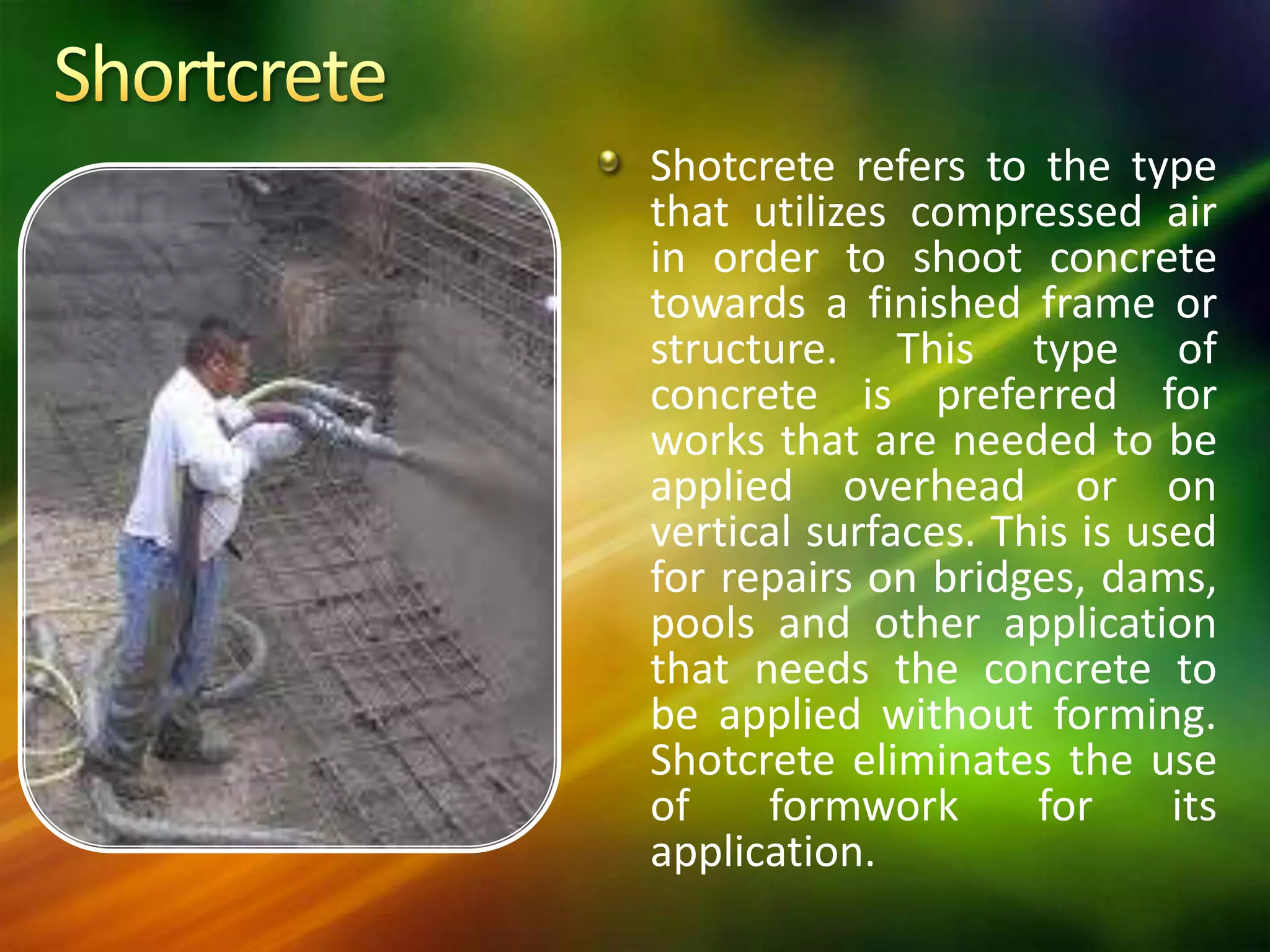
Shotcrete refers to the type
that utilizes compressed air
in order to shoot concrete
towards a finished frame or
structure. This type of
concrete is preferred for
works that are needed to be
applied overhead or on
vertical surfaces. This is used
for repairs on bridges, dams,
pools and other application
that needs the concrete to
be applied without forming.
Shotcrete eliminates the use
of
formwork
for
its
application.
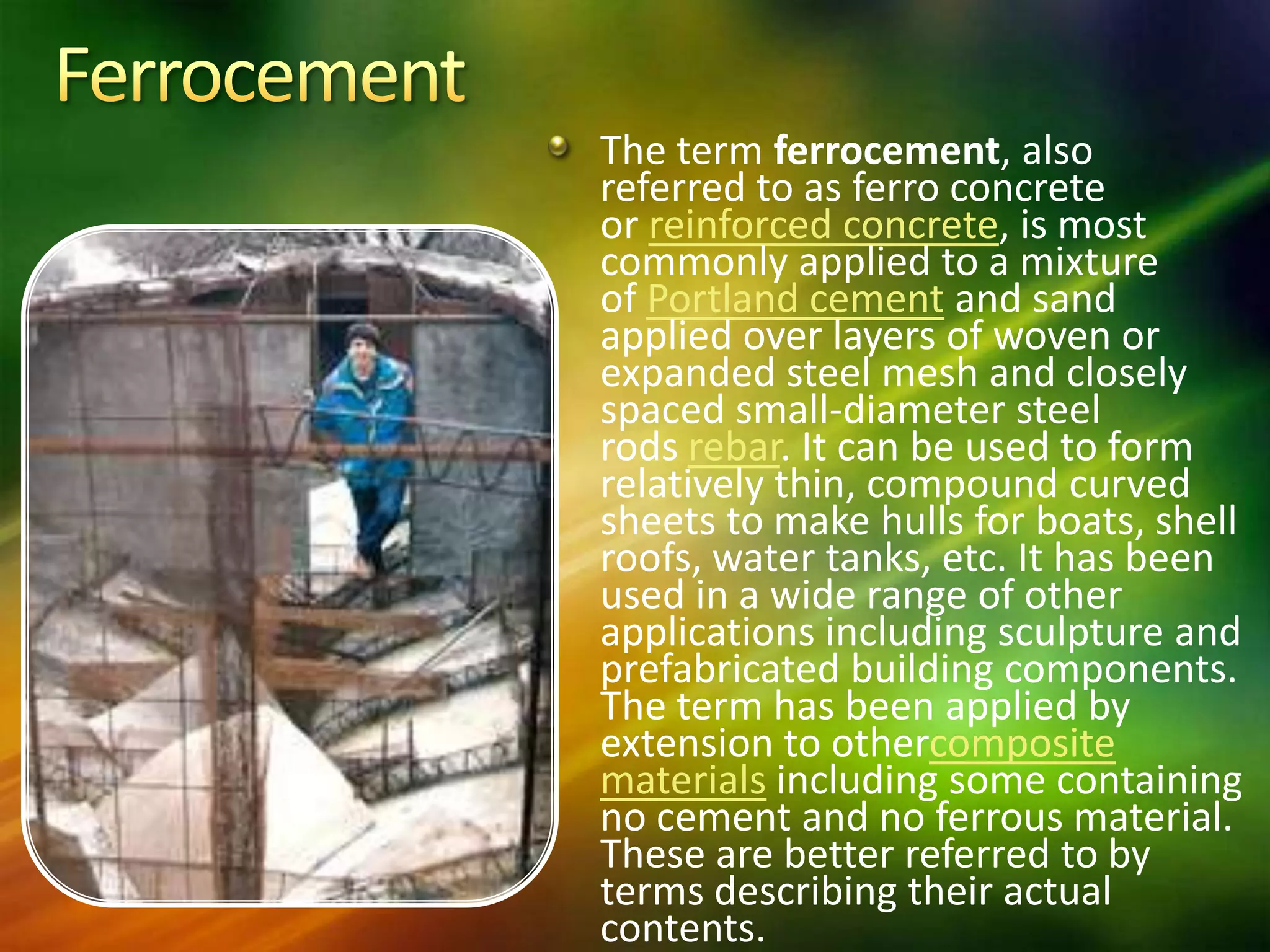
The term ferrocement, also
referred to as ferro concrete
or reinforced concrete, is most
commonly applied to a mixture
of Portland cement and sand
applied over layers of woven or
expanded steel mesh and closely
spaced small-diameter steel
rods rebar. It can be used to form
relatively thin, compound curved
sheets to make hulls for boats, shell
roofs, water tanks, etc. It has been
used in a wide range of other
applications including sculpture and
prefabricated building components.
The term has been applied by
extension to othercomposite
materials including some containing
no cement and no ferrous material.
These are better referred to by
terms describing their actual
contents.
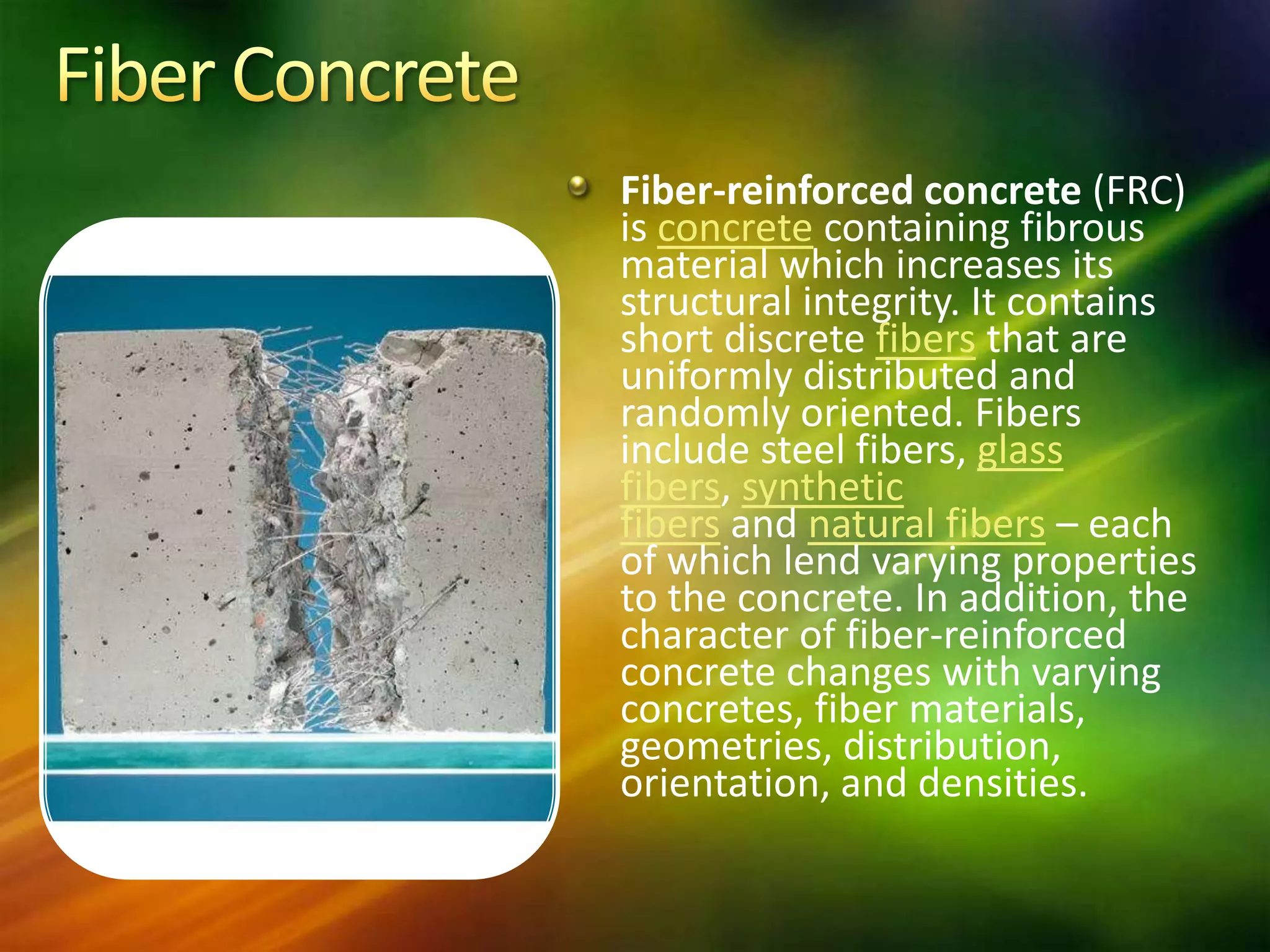
Fiber-reinforced concrete (FRC)
is concrete containing fibrous
material which increases its
structural integrity. It contains
short discrete fibers that are
uniformly distributed and
randomly oriented. Fibers
include steel fibers, glass
fibers, synthetic
fibers and natural fibers – each
of which lend varying properties
to the concrete. In addition, the
character of fiber-reinforced
concrete changes with varying
concretes, fiber materials,
geometries, distribution,
orientation, and densities.
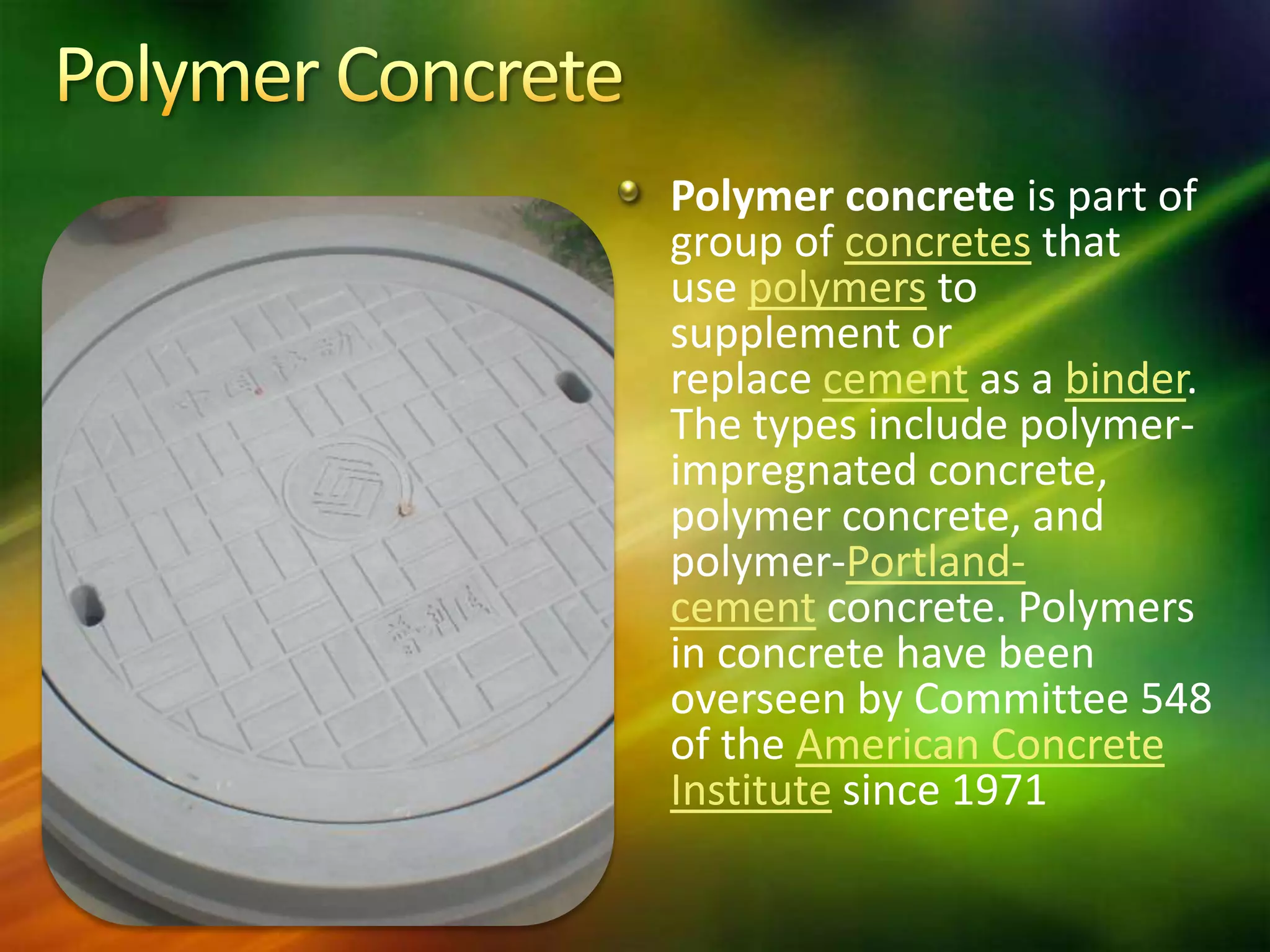
Polymer concrete is part of
group of concretes that
use polymers to
supplement or
replace cement as a binder.
The types include polymerimpregnated concrete,
polymer concrete, and
polymer-Portlandcement concrete. Polymers
in concrete have been
overseen by Committee 548
of the American Concrete
Institute since 1971
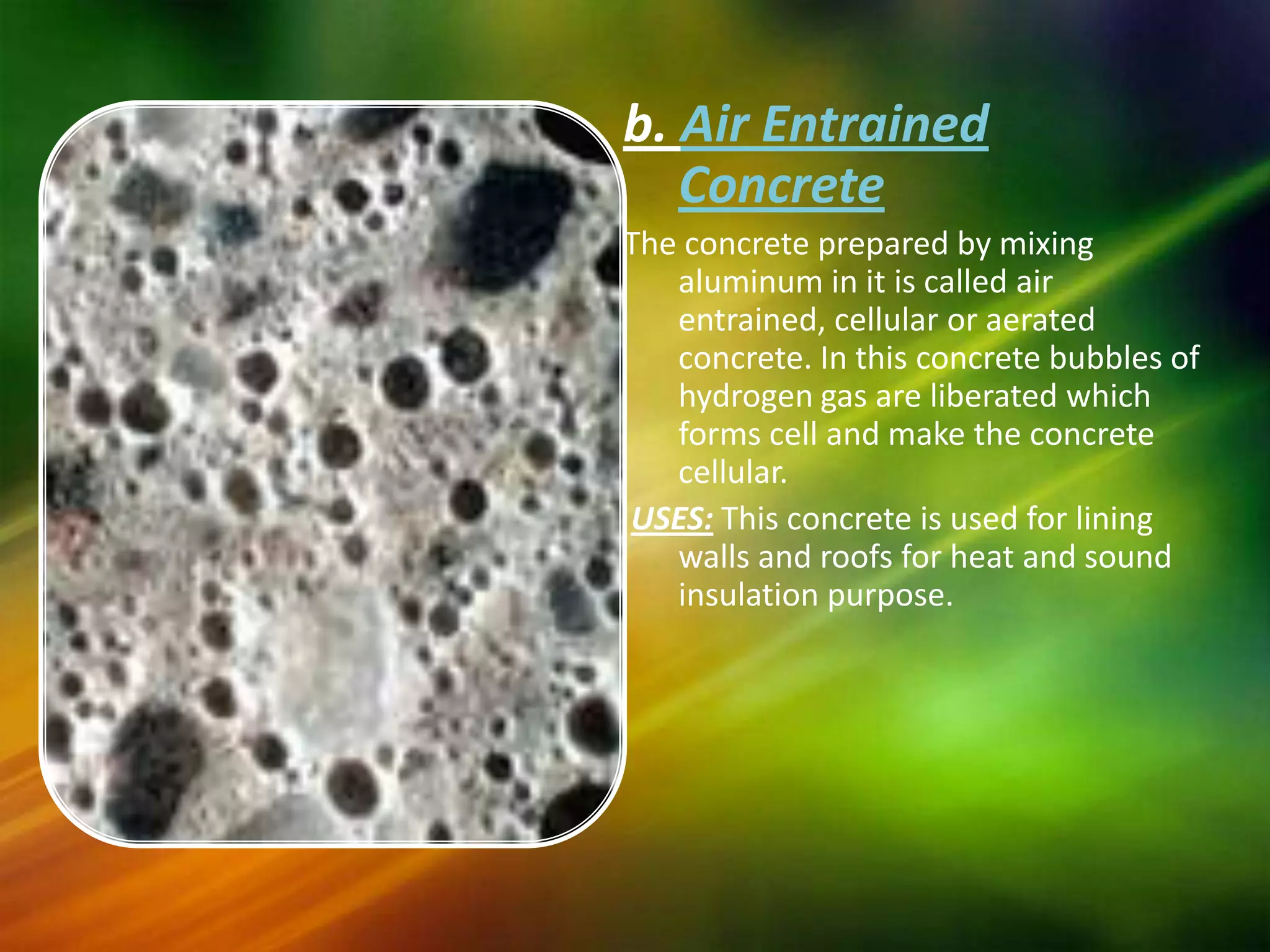
b. Air Entrained
Concrete
The concrete prepared by mixing
aluminum in it is called air
entrained, cellular or aerated
concrete. In this concrete bubbles of
hydrogen gas are liberated which
forms cell and make the concrete
cellular.
USES: This concrete is used for lining
walls and roofs for heat and sound
insulation purpose.
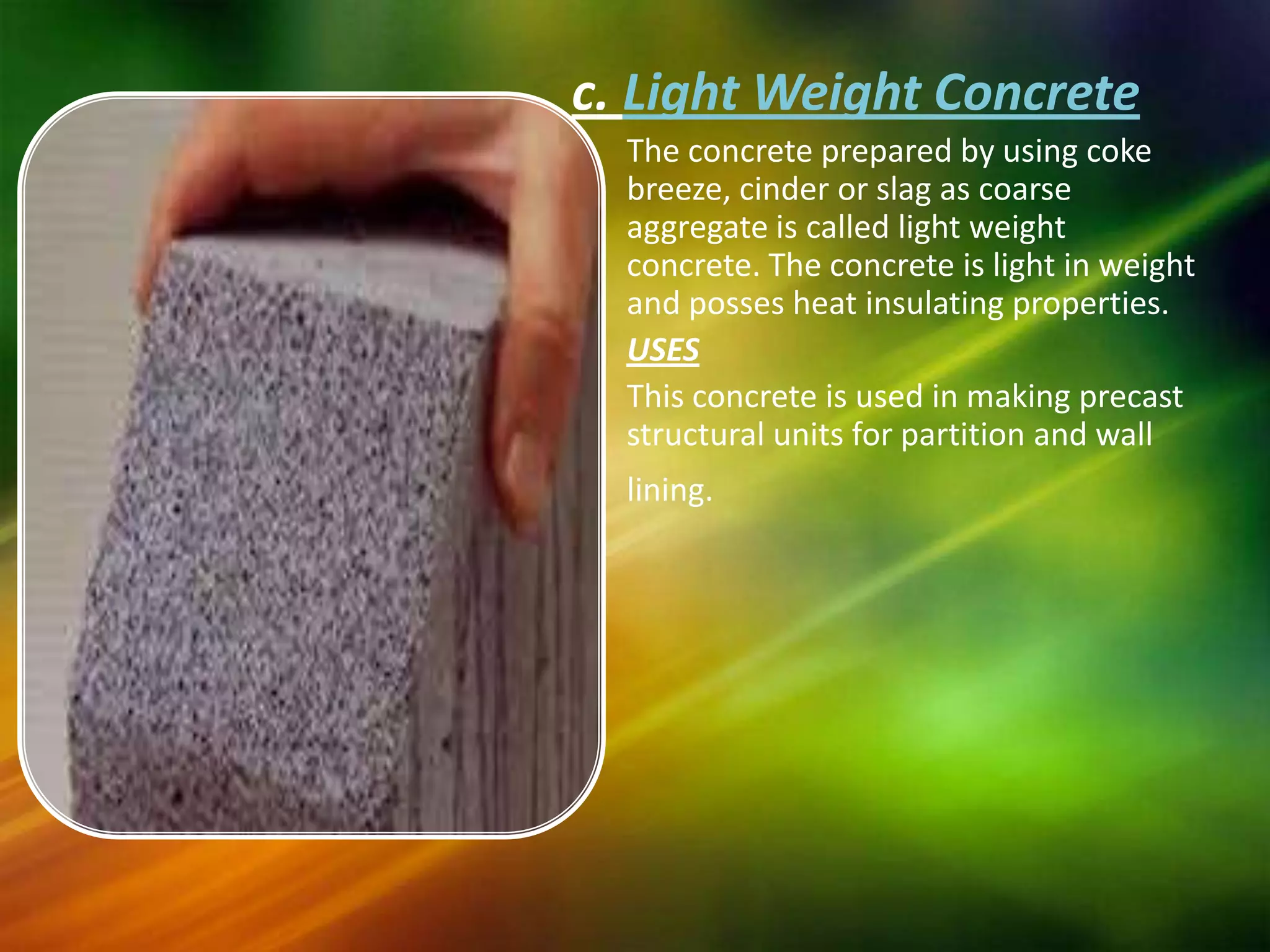
c. Light Weight Concrete
The concrete prepared by using coke
breeze, cinder or slag as coarse
aggregate is called light weight
concrete. The concrete is light in weight
and posses heat insulating properties.
USES
This concrete is used in making precast
structural units for partition and wall
lining.

Special Types of Concrete

  • 1.
    Rishabh Lala VI SEM RajivGandhi Technological University,Bhopal
  • 2.
    The following arethe concrete that we are going to discuss in this chapter: Ready Mix Vacuum Concrete Shortcrete Ferrocement Fiber Reinforced Concrete Polymer Concrete Light weight concrete Air Entrained Concrete
  • 3.
    Ready-mix concrete is concretethat is manufactured in a factory or batching plant, according to a set recipe, and then delivered to a work site, by truck mounted in–transit mixers. This results in a precise mixture, allowing specialty concrete mixtures to be developed and implemented on construction sites. The first ready-mix factory was built in the 1930s, but the industry did not begin to expand significantly until the 1980s, and it has continued to grow since then.
  • 4.
    Vacuum concrete, madeby using steam to produce a vacuum inside a concrete mixing truck to release air bubbles inside the concrete, is being researched. The idea is that the steam displaces the air normally over the concrete. When the steam condenses into water it will create a low pressure over the concrete that will pull air from the concrete. This will make the concrete stronger due to there being less air in the mixture. A drawback is that the mixing has to be done in a mostly airtight container.
  • 5.
    Shotcrete refers tothe type that utilizes compressed air in order to shoot concrete towards a finished frame or structure. This type of concrete is preferred for works that are needed to be applied overhead or on vertical surfaces. This is used for repairs on bridges, dams, pools and other application that needs the concrete to be applied without forming. Shotcrete eliminates the use of formwork for its application.
  • 6.
    The term ferrocement,also referred to as ferro concrete or reinforced concrete, is most commonly applied to a mixture of Portland cement and sand applied over layers of woven or expanded steel mesh and closely spaced small-diameter steel rods rebar. It can be used to form relatively thin, compound curved sheets to make hulls for boats, shell roofs, water tanks, etc. It has been used in a wide range of other applications including sculpture and prefabricated building components. The term has been applied by extension to othercomposite materials including some containing no cement and no ferrous material. These are better referred to by terms describing their actual contents.
  • 7.
    Fiber-reinforced concrete (FRC) isconcrete containing fibrous material which increases its structural integrity. It contains short discrete fibers that are uniformly distributed and randomly oriented. Fibers include steel fibers, glass fibers, synthetic fibers and natural fibers – each of which lend varying properties to the concrete. In addition, the character of fiber-reinforced concrete changes with varying concretes, fiber materials, geometries, distribution, orientation, and densities.
  • 8.
    Polymer concrete ispart of group of concretes that use polymers to supplement or replace cement as a binder. The types include polymerimpregnated concrete, polymer concrete, and polymer-Portlandcement concrete. Polymers in concrete have been overseen by Committee 548 of the American Concrete Institute since 1971
  • 9.
    b. Air Entrained Concrete Theconcrete prepared by mixing aluminum in it is called air entrained, cellular or aerated concrete. In this concrete bubbles of hydrogen gas are liberated which forms cell and make the concrete cellular. USES: This concrete is used for lining walls and roofs for heat and sound insulation purpose.
  • 10.
    c. Light WeightConcrete The concrete prepared by using coke breeze, cinder or slag as coarse aggregate is called light weight concrete. The concrete is light in weight and posses heat insulating properties. USES This concrete is used in making precast structural units for partition and wall lining.