
1
K.GOVINDRAJ
ASSISTANT PROFESSOR
DEPARTMENT OF MECHANICAL ENGINEERING
KIT-KALAIGNAR KARUNANIDHI INSTITUTE OF TECHNOLOGY
COIMBATORE641402
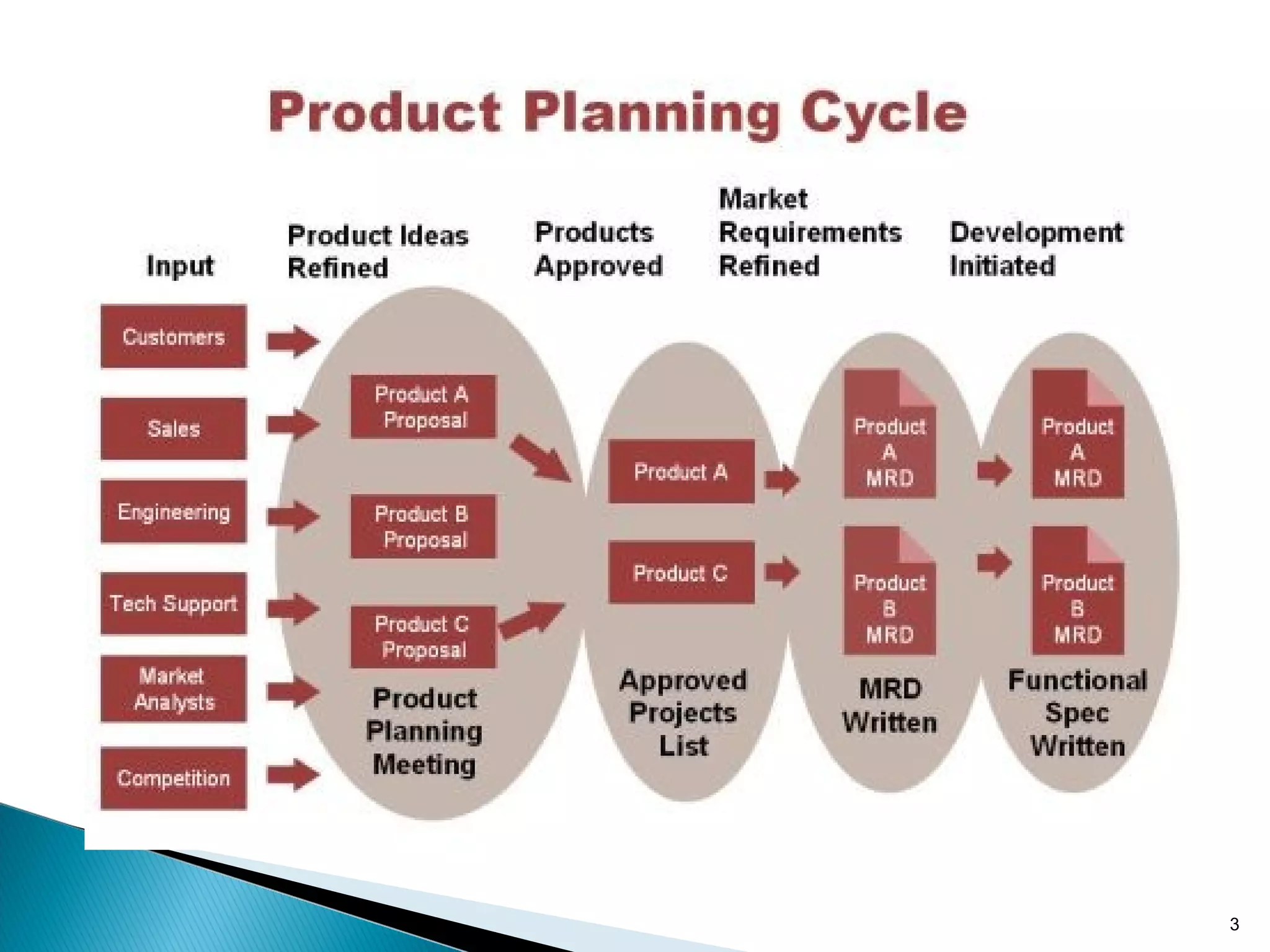
 Product Planning is the ongoing process of
identifying and articulating market
requirements that define a product’s feature set.
 Product planning serves as the basis for decisions
about price, distribution and promotion.
2
3
4
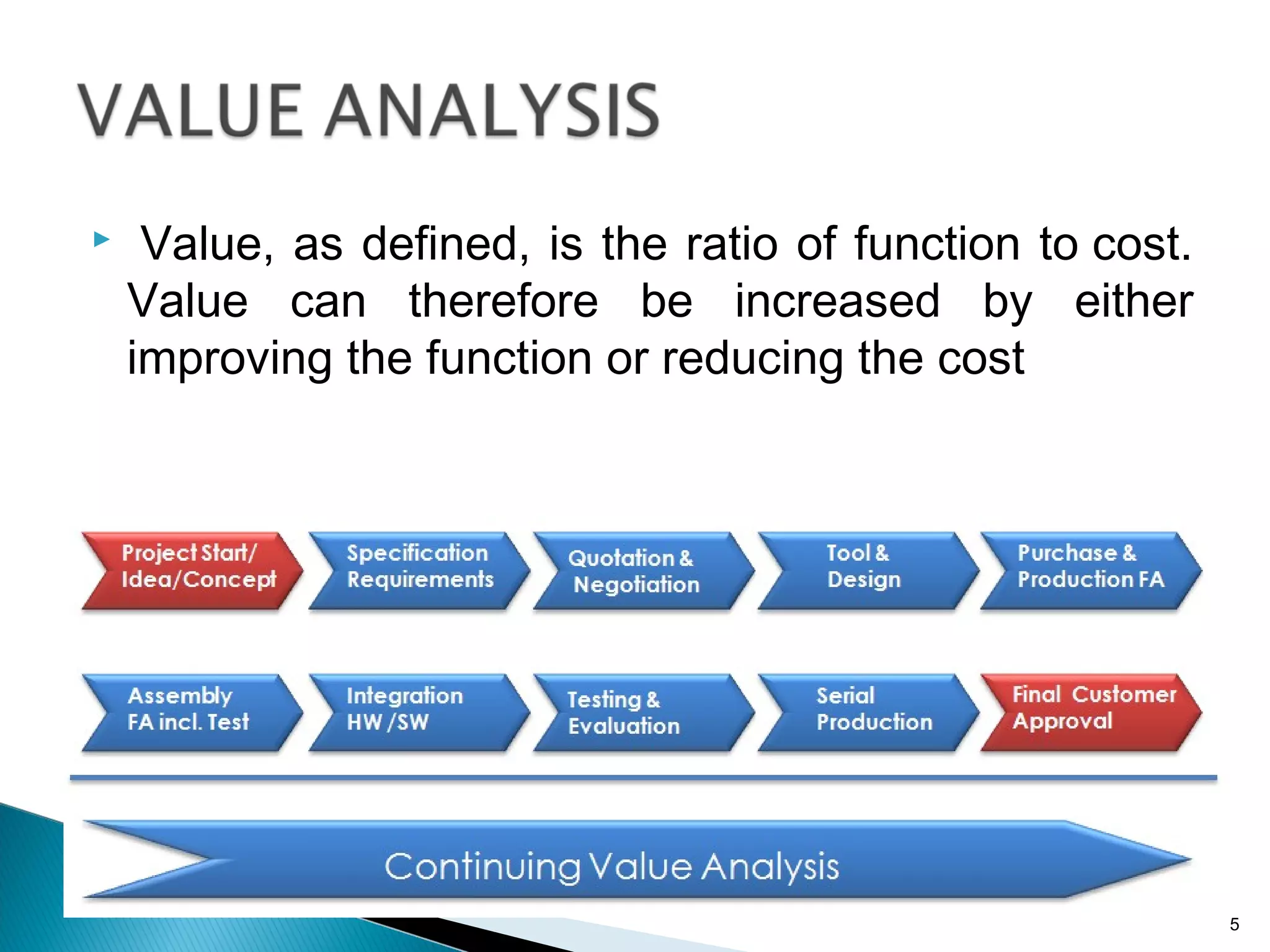
  Value, as defined, is the ratio of function to cost.
Value can therefore be increased by either
improving the function or reducing the cost
5
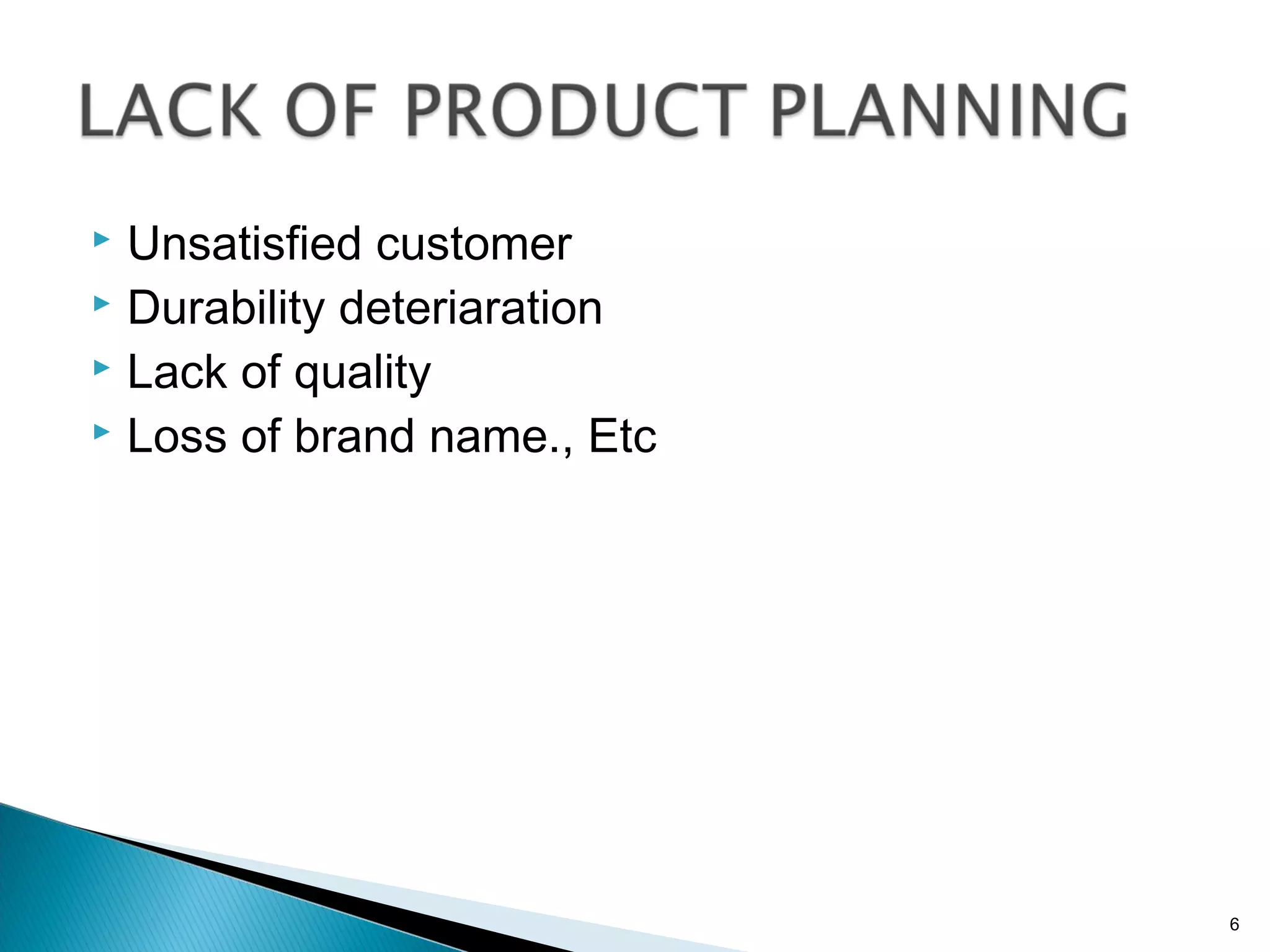
 Unsatisfied customer
 Durability deteriaration
 Lack of quality
 Loss of brand name., Etc
6
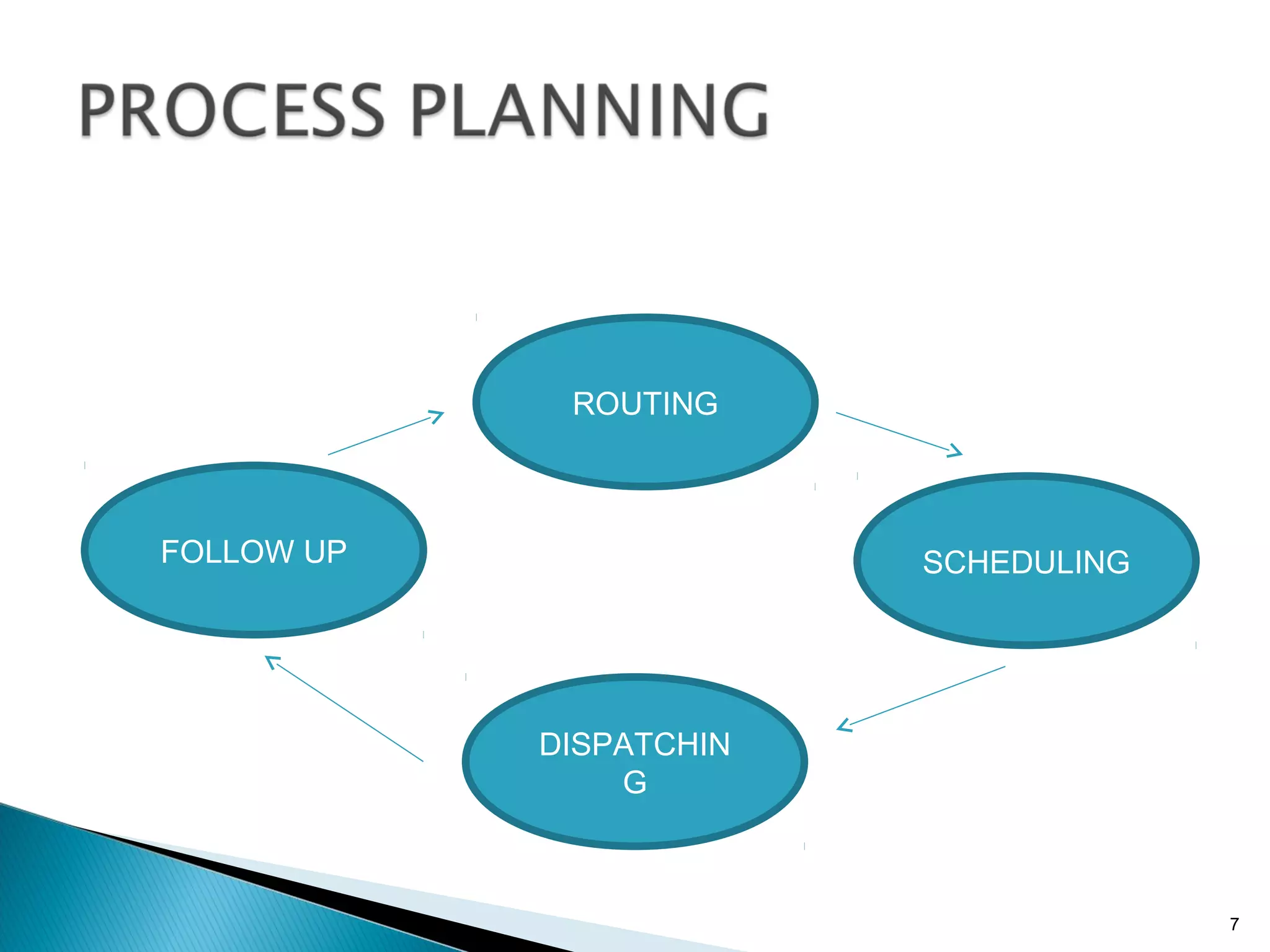
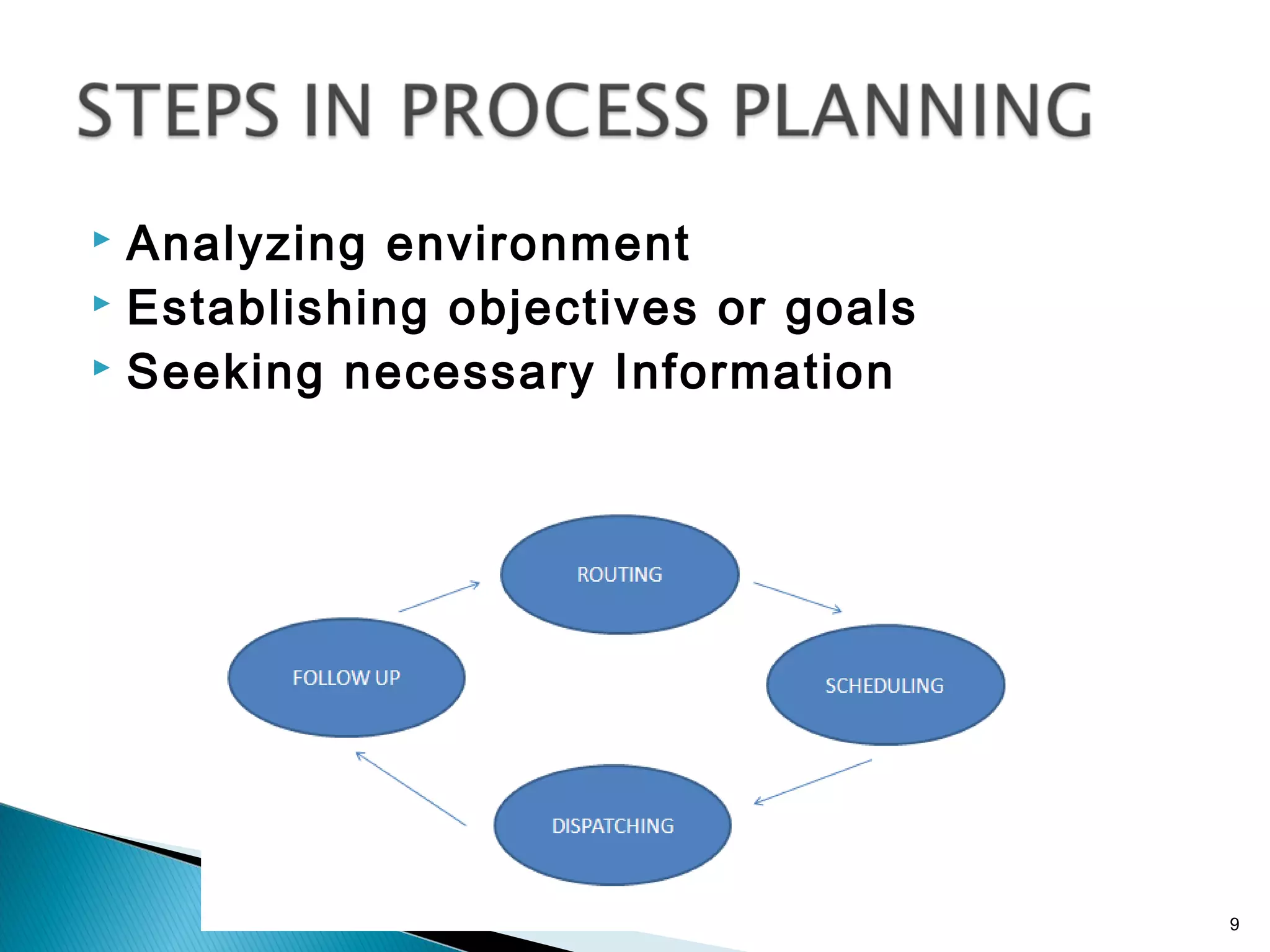
ROUTING
SCHEDULING
DISPATCHIN
G
FOLLOW UP
7
 PRODUCT
 PROCESS
 CAPACITY
 ORDERS
 DUE DATES
 RESOURCES
 ETC.,
8
 Analyzing environment
 Establishing objectives or goals
 Seeking necessary Information 
9
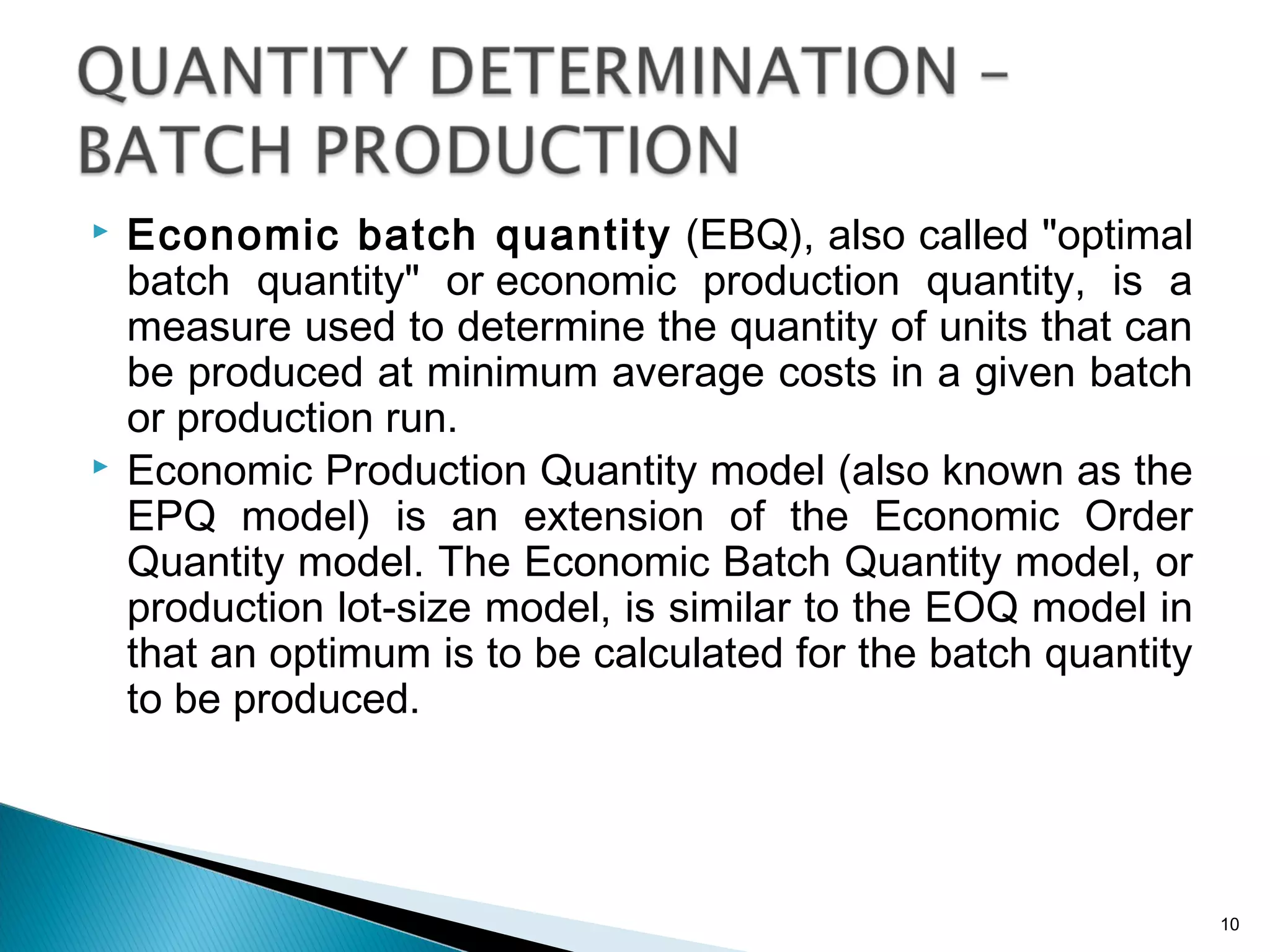
 Economic batch quantity (EBQ), also called "optimal
batch quantity" or economic production quantity, is a
measure used to determine the quantity of units that can
be produced at minimum average costs in a given batch
or production run.
 Economic Production Quantity model (also known as the
EPQ model) is an extension of the Economic Order
Quantity model. The Economic Batch Quantity model, or
production lot-size model, is similar to the EOQ model in
that an optimum is to be calculated for the batch quantity
to be produced.
10
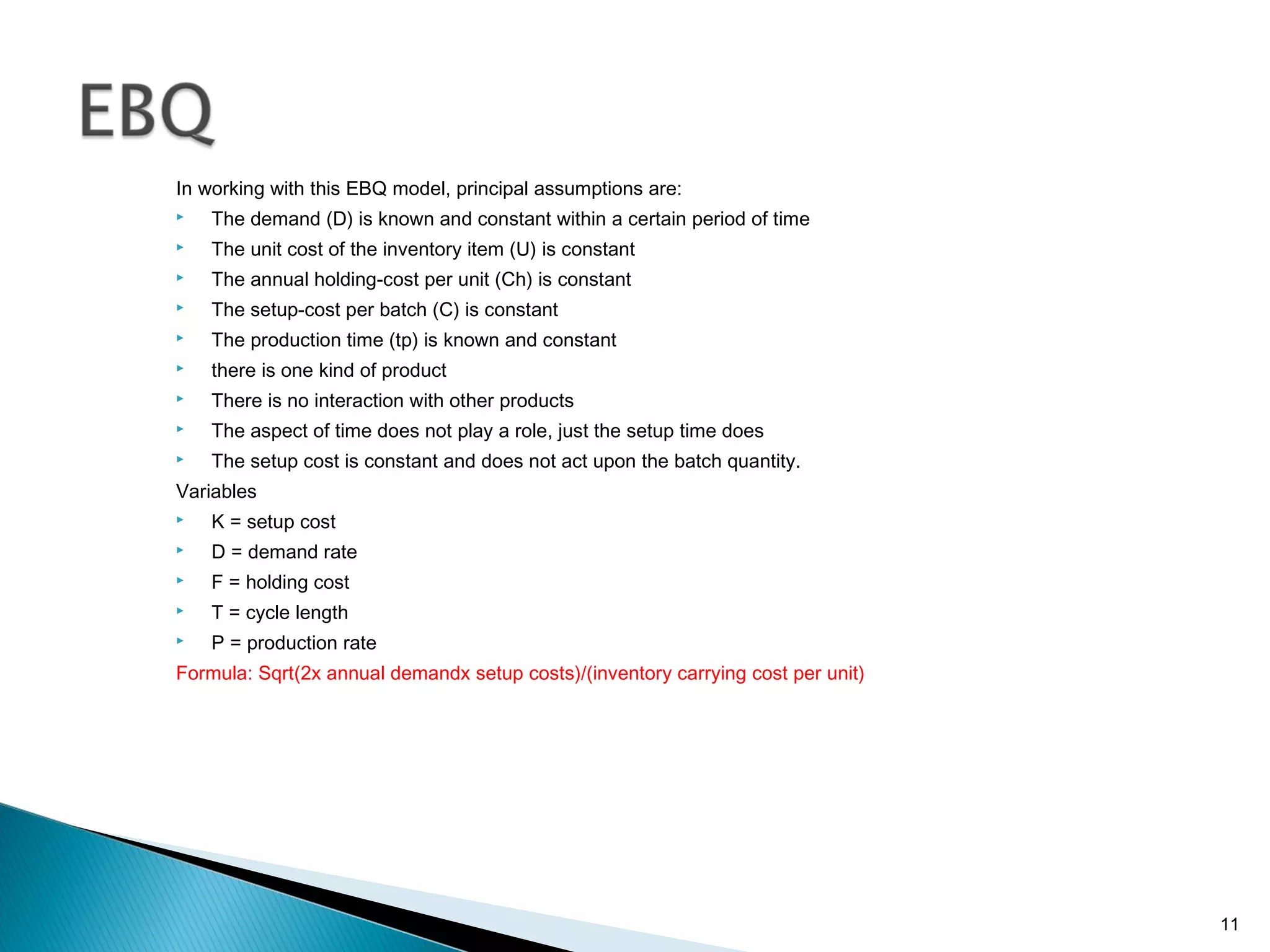
In working with this EBQ model, principal assumptions are:
 The demand (D) is known and constant within a certain period of time
 The unit cost of the inventory item (U) is constant
 The annual holding-cost per unit (Ch) is constant
 The setup-cost per batch (C) is constant
 The production time (tp) is known and constant
 there is one kind of product
 There is no interaction with other products
 The aspect of time does not play a role, just the setup time does
 The setup cost is constant and does not act upon the batch quantity.
Variables
 K = setup cost
 D = demand rate
 F = holding cost
 T = cycle length
 P = production rate
Formula: Sqrt(2x annual demandx setup costs)/(inventory carrying cost per unit)
11

UNIT 3 - PRODUCTION PLANNING AND PROCESS PLANNING

  • 1.
    1 K.GOVINDRAJ ASSISTANT PROFESSOR DEPARTMENT OFMECHANICAL ENGINEERING KIT-KALAIGNAR KARUNANIDHI INSTITUTE OF TECHNOLOGY COIMBATORE641402
  • 2.
     Product Planning isthe ongoing process of identifying and articulating market requirements that define a product’s feature set.  Product planning serves as the basis for decisions about price, distribution and promotion. 2
  • 3.
  • 4.
  • 5.
      Value, asdefined, is the ratio of function to cost. Value can therefore be increased by either improving the function or reducing the cost 5
  • 6.
     Unsatisfied customer Durability deteriaration  Lack of quality  Loss of brand name., Etc 6
  • 7.
  • 8.
     PRODUCT  PROCESS CAPACITY  ORDERS  DUE DATES  RESOURCES  ETC., 8
  • 9.
     Analyzing environment Establishing objectives or goals  Seeking necessary Information  9
  • 10.
     Economic batchquantity (EBQ), also called "optimal batch quantity" or economic production quantity, is a measure used to determine the quantity of units that can be produced at minimum average costs in a given batch or production run.  Economic Production Quantity model (also known as the EPQ model) is an extension of the Economic Order Quantity model. The Economic Batch Quantity model, or production lot-size model, is similar to the EOQ model in that an optimum is to be calculated for the batch quantity to be produced. 10
  • 11.
    In working withthis EBQ model, principal assumptions are:  The demand (D) is known and constant within a certain period of time  The unit cost of the inventory item (U) is constant  The annual holding-cost per unit (Ch) is constant  The setup-cost per batch (C) is constant  The production time (tp) is known and constant  there is one kind of product  There is no interaction with other products  The aspect of time does not play a role, just the setup time does  The setup cost is constant and does not act upon the batch quantity. Variables  K = setup cost  D = demand rate  F = holding cost  T = cycle length  P = production rate Formula: Sqrt(2x annual demandx setup costs)/(inventory carrying cost per unit) 11