Unit 3: Communication and 
Conflict 
Part 4: Conflict 
© Jenison International Academy 
Melissa Rodgers
What are some things that you 
argue about in your relationships? 
Can you relate to any of these? 
Home 
Parents 
Brother / Sister 
Boy / girl friend 
Best friend 
Neighbor 
School
Effects of Conflict 
Conflict, which is unavoidable in human 
life, is disruptive at best and horribly 
destructive at worst – yet, some forms of 
conflict have important benefits when 
handled skillfully. 
A value of conflict is the prevention of 
stagnation. It “stirs things up” and in 
some cases causes changes in a system to 
occur and can make the situation better 
for those involved.
Effects of Conflict 
Conflict can destroy a relationship if 
handled improperly 
The challenge is to learn to manage 
conflict in such a way as to minimize the 
risks and maximize the benefits
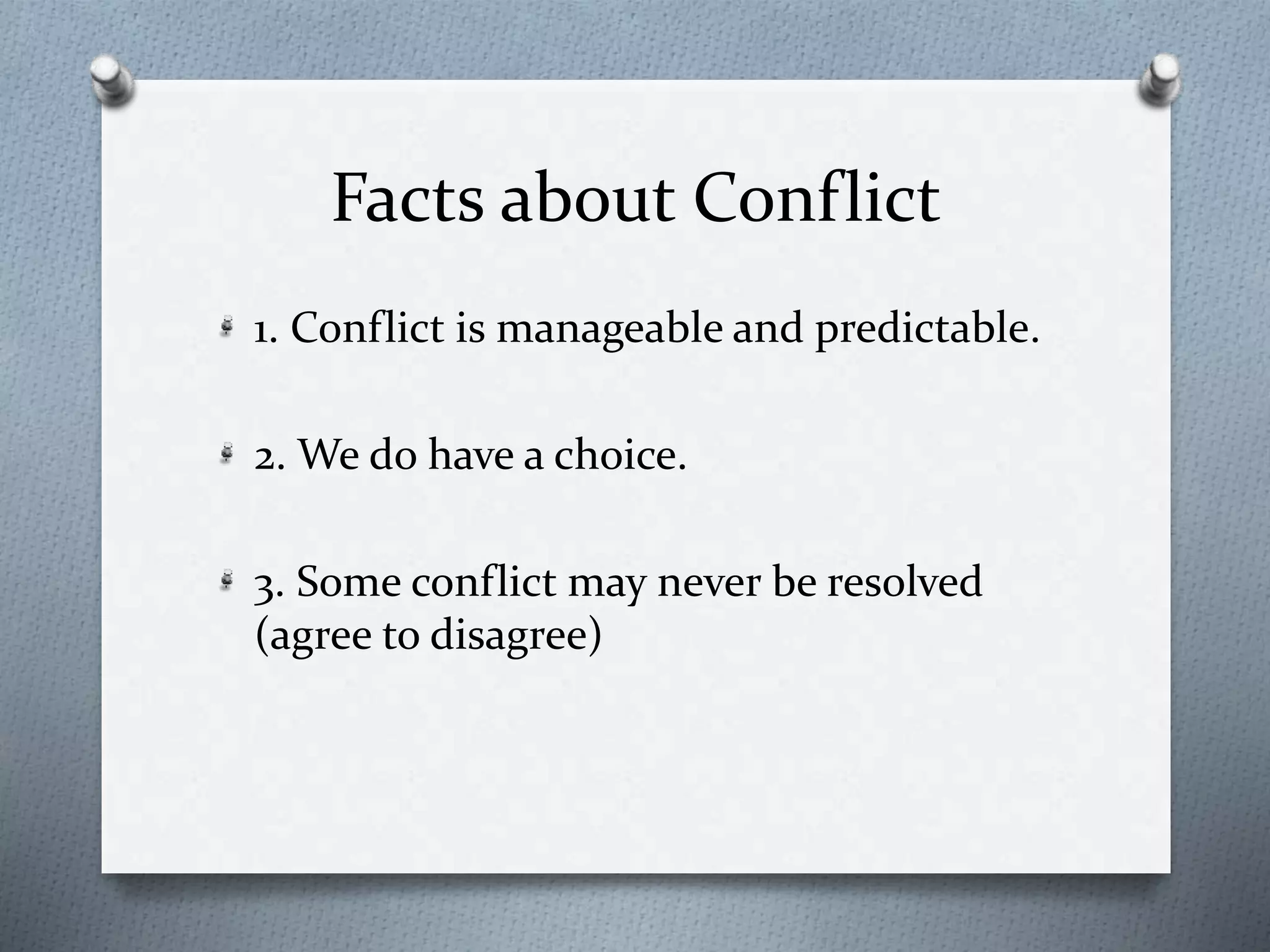
Facts about Conflict 
1. Conflict is manageable and predictable. 
2. We do have a choice. 
3. Some conflict may never be resolved 
(agree to disagree)
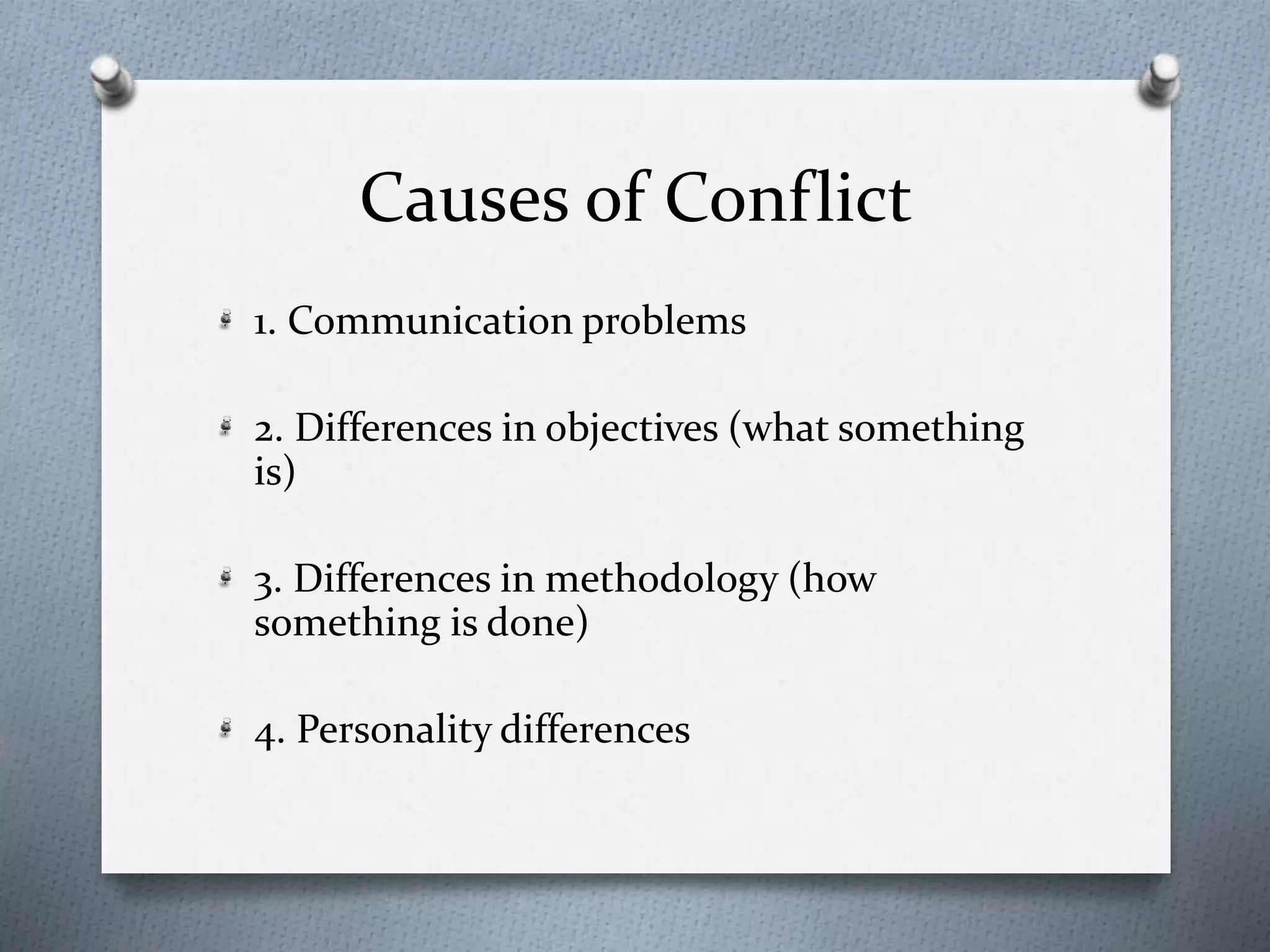
Causes of Conflict 
1. Communication problems 
2. Differences in objectives (what something 
is) 
3. Differences in methodology (how 
something is done) 
4. Personality differences
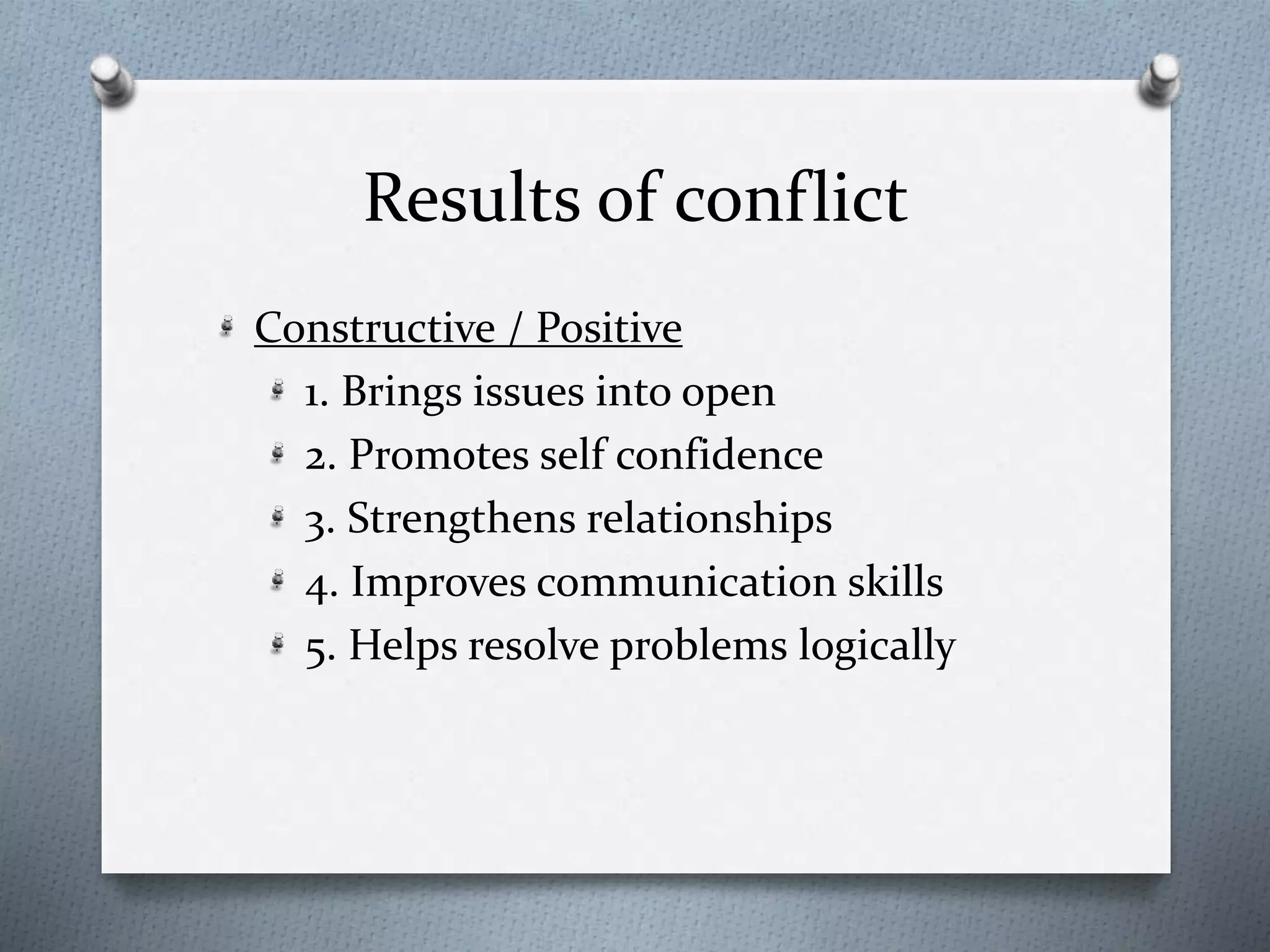
Results of conflict 
Constructive / Positive 
1. Brings issues into open 
2. Promotes self confidence 
3. Strengthens relationships 
4. Improves communication skills 
5. Helps resolve problems logically
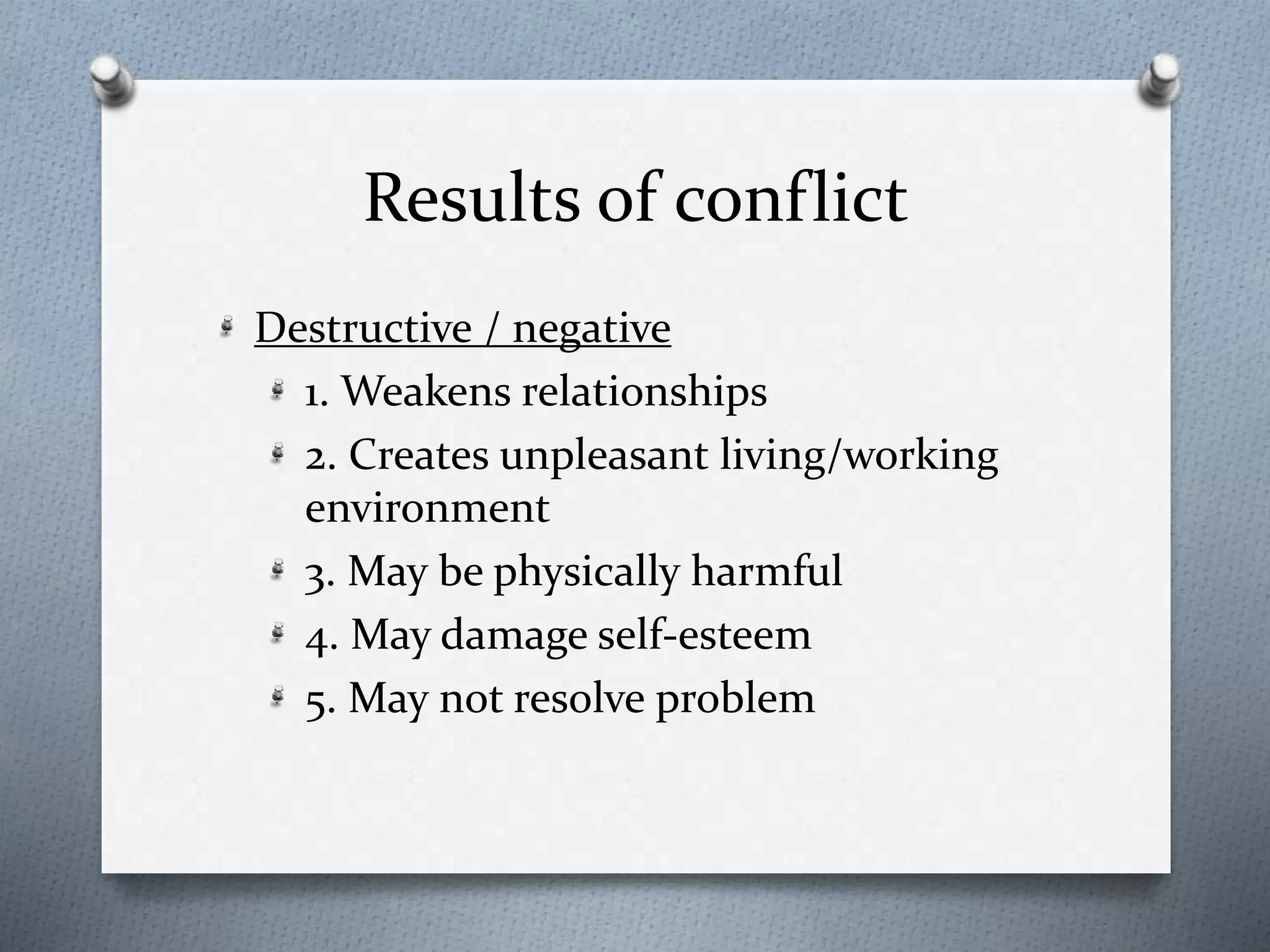
Results of conflict 
Destructive / negative 
1. Weakens relationships 
2. Creates unpleasant living/working 
environment 
3. May be physically harmful 
4. May damage self-esteem 
5. May not resolve problem
Types of Conflict 
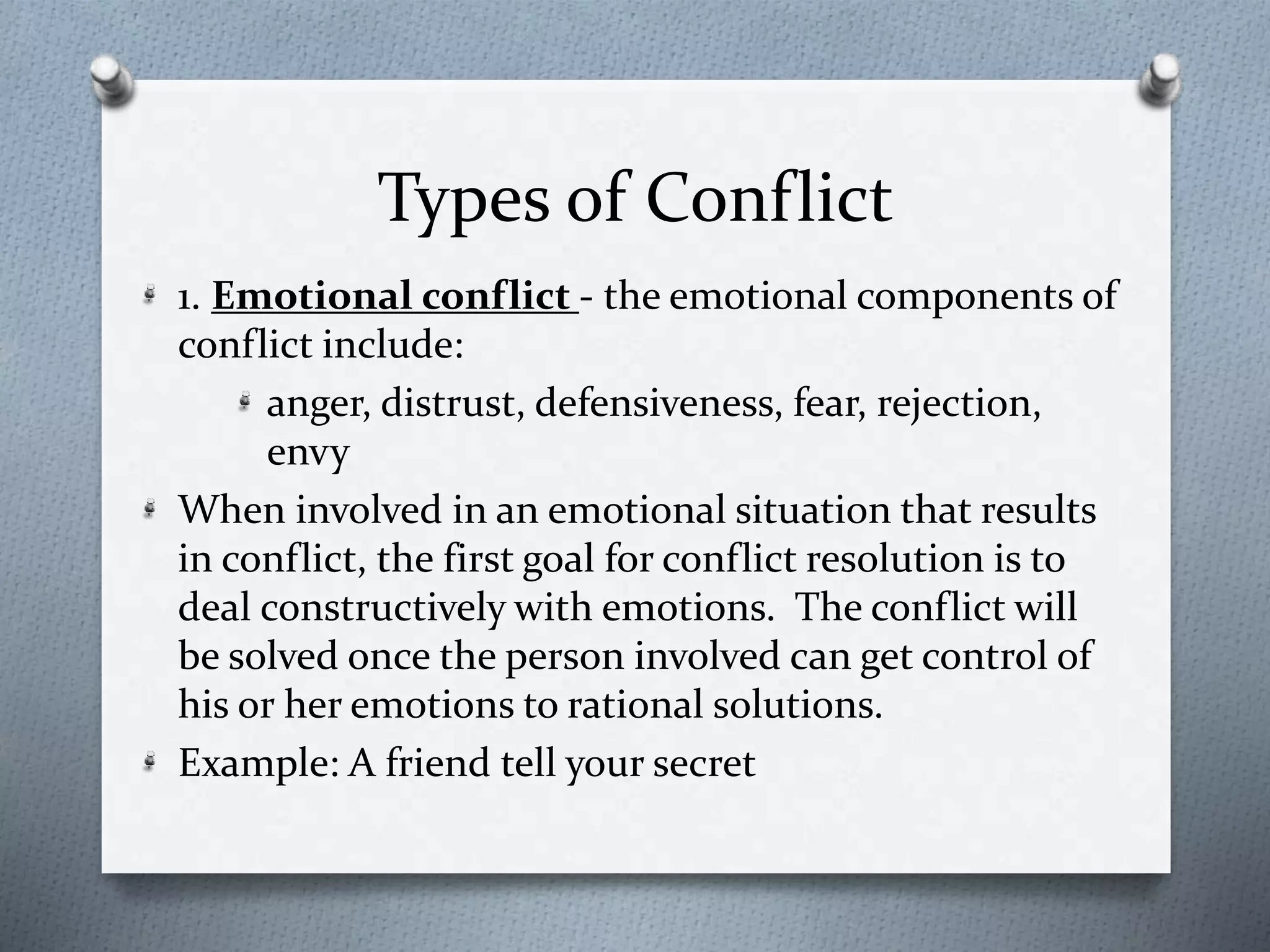
1. Emotional conflict - the emotional components of 
conflict include: 
anger, distrust, defensiveness, fear, rejection, 
envy 
When involved in an emotional situation that results 
in conflict, the first goal for conflict resolution is to 
deal constructively with emotions. The conflict will 
be solved once the person involved can get control of 
his or her emotions to rational solutions. 
Example: A friend tell your secret
Types of Conflict 
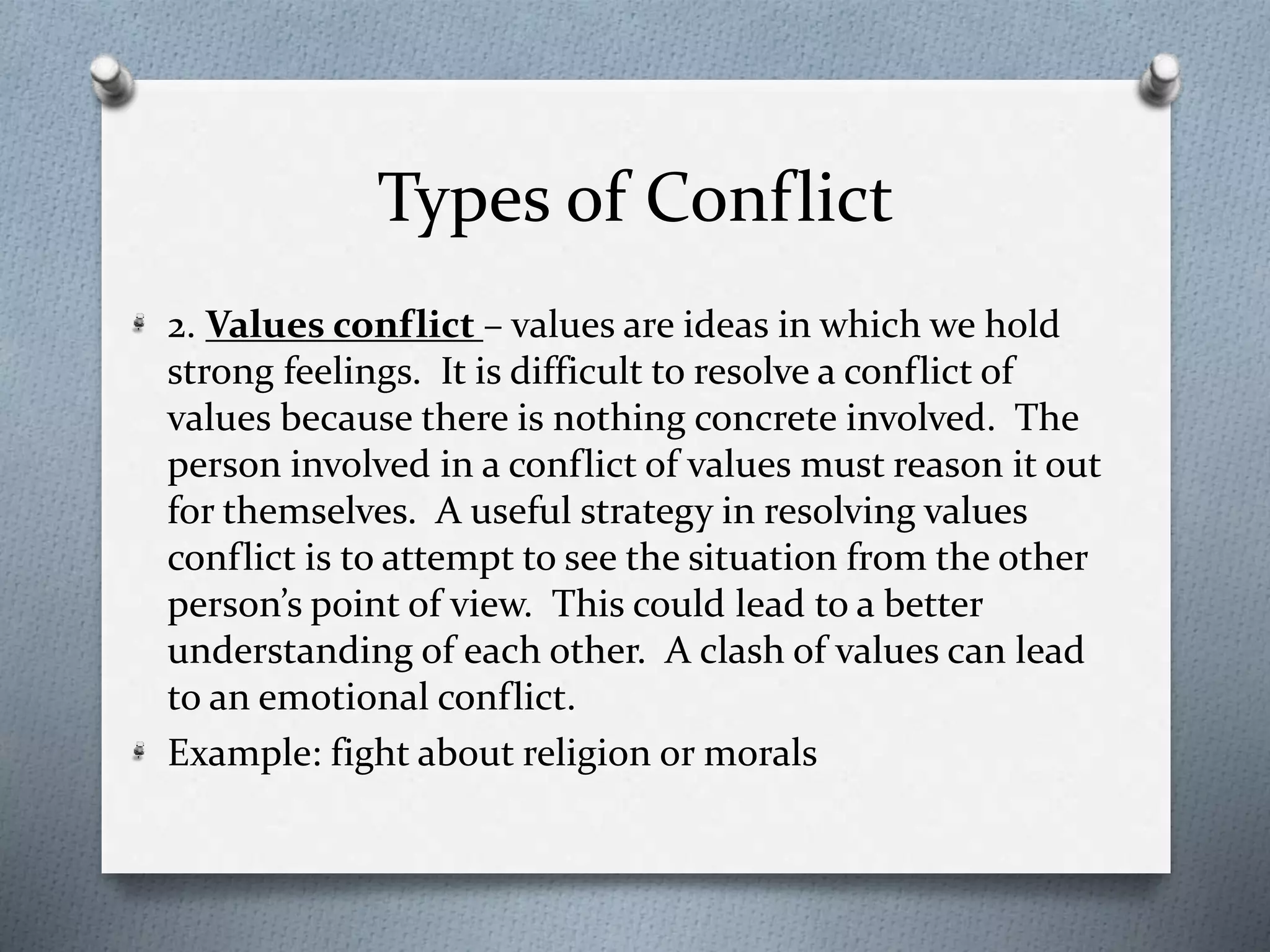
2. Values conflict – values are ideas in which we hold 
strong feelings. It is difficult to resolve a conflict of 
values because there is nothing concrete involved. The 
person involved in a conflict of values must reason it out 
for themselves. A useful strategy in resolving values 
conflict is to attempt to see the situation from the other 
person’s point of view. This could lead to a better 
understanding of each other. A clash of values can lead 
to an emotional conflict. 
Example: fight about religion or morals
Types of Conflict 
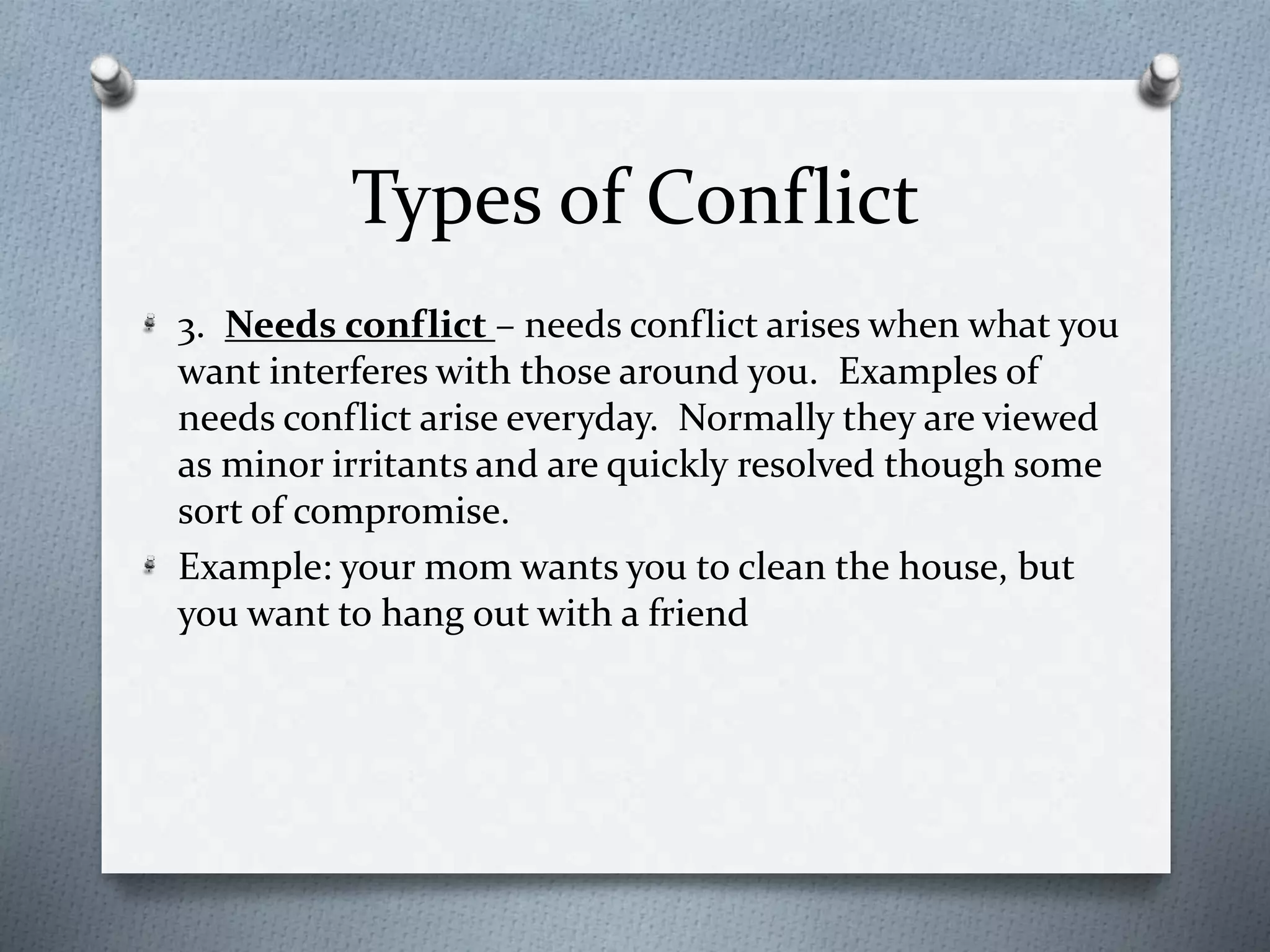
3. Needs conflict – needs conflict arises when what you 
want interferes with those around you. Examples of 
needs conflict arise everyday. Normally they are viewed 
as minor irritants and are quickly resolved though some 
sort of compromise. 
Example: your mom wants you to clean the house, but 
you want to hang out with a friend
Rules for managing conflict 
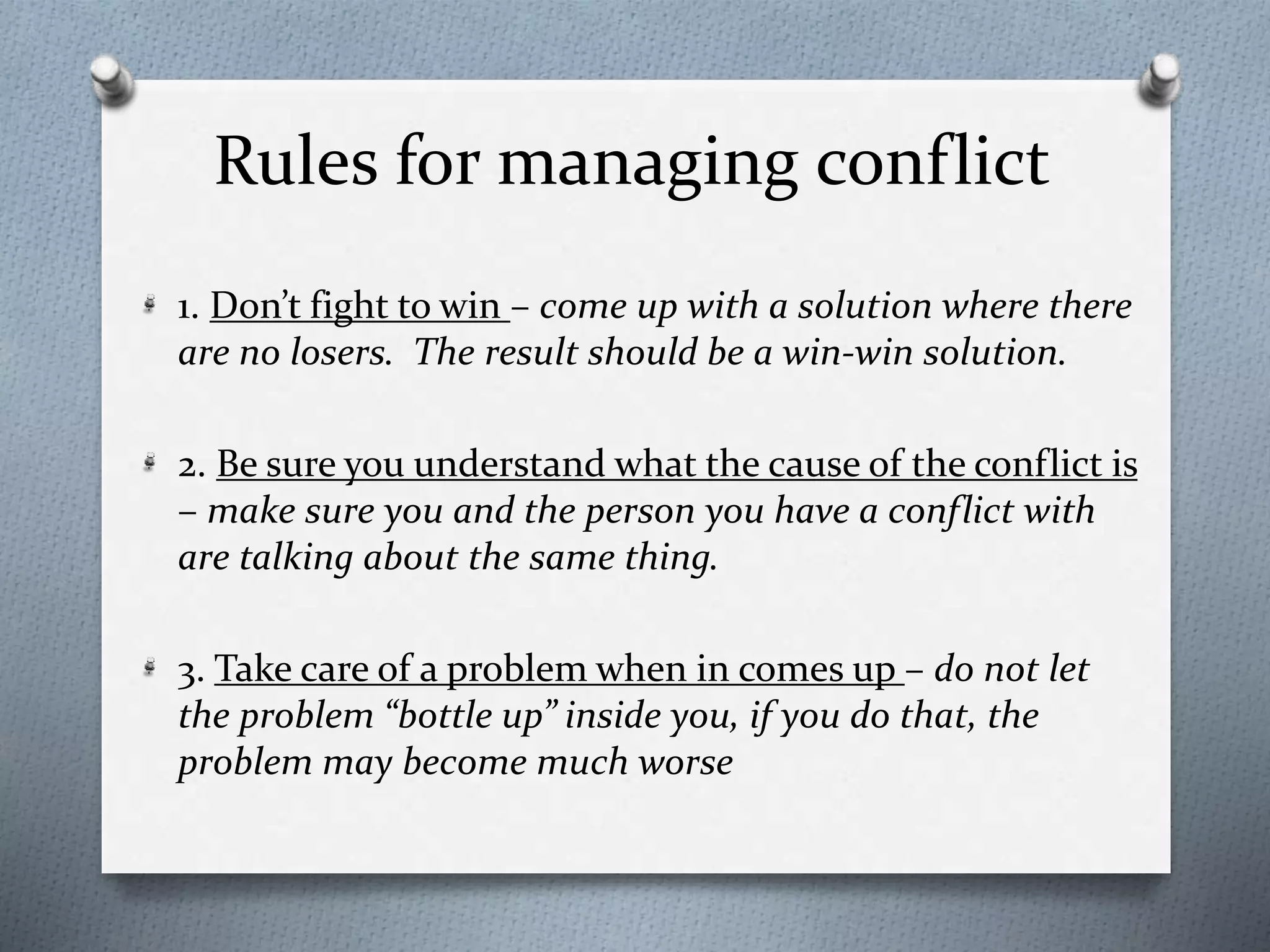
1. Don’t fight to win – come up with a solution where there 
are no losers. The result should be a win-win solution. 
2. Be sure you understand what the cause of the conflict is 
– make sure you and the person you have a conflict with 
are talking about the same thing. 
3. Take care of a problem when in comes up – do not let 
the problem “bottle up” inside you, if you do that, the 
problem may become much worse
Rules for managing conflict 
4. Handle only one conflict at a time – do not bring up 
other problems you have with the person. 
5. Don’t blame others for problems you are having with 
someone else – only involve the people who are part of the 
original problem. 
6. Think before you speak – is your filter on? May you 
regret what you say later? 
7. Never hit another person to get your way – physical 
violence is never the answer and will only make the problem 
worse
Rules for managing conflict 
8. Listen to what the other person has to say – use active 
listening skills and truly listen to the other person instead 
of thinking what you are going to say next. 
9. Once the conflict has been resolved, forgive and 
forget – this can be hard to do, but once it is resolved, no 
need to bring it up again, especially if another conflict 
arises.

Unit 3 conflict

  • 1.
    Unit 3: Communicationand Conflict Part 4: Conflict © Jenison International Academy Melissa Rodgers
  • 2.
    What are somethings that you argue about in your relationships? Can you relate to any of these? Home Parents Brother / Sister Boy / girl friend Best friend Neighbor School
  • 3.
    Effects of Conflict Conflict, which is unavoidable in human life, is disruptive at best and horribly destructive at worst – yet, some forms of conflict have important benefits when handled skillfully. A value of conflict is the prevention of stagnation. It “stirs things up” and in some cases causes changes in a system to occur and can make the situation better for those involved.
  • 4.
    Effects of Conflict Conflict can destroy a relationship if handled improperly The challenge is to learn to manage conflict in such a way as to minimize the risks and maximize the benefits
  • 5.
    Facts about Conflict 1. Conflict is manageable and predictable. 2. We do have a choice. 3. Some conflict may never be resolved (agree to disagree)
  • 6.
    Causes of Conflict 1. Communication problems 2. Differences in objectives (what something is) 3. Differences in methodology (how something is done) 4. Personality differences
  • 7.
    Results of conflict Constructive / Positive 1. Brings issues into open 2. Promotes self confidence 3. Strengthens relationships 4. Improves communication skills 5. Helps resolve problems logically
  • 8.
    Results of conflict Destructive / negative 1. Weakens relationships 2. Creates unpleasant living/working environment 3. May be physically harmful 4. May damage self-esteem 5. May not resolve problem
  • 9.
    Types of Conflict 1. Emotional conflict - the emotional components of conflict include: anger, distrust, defensiveness, fear, rejection, envy When involved in an emotional situation that results in conflict, the first goal for conflict resolution is to deal constructively with emotions. The conflict will be solved once the person involved can get control of his or her emotions to rational solutions. Example: A friend tell your secret
  • 10.
    Types of Conflict 2. Values conflict – values are ideas in which we hold strong feelings. It is difficult to resolve a conflict of values because there is nothing concrete involved. The person involved in a conflict of values must reason it out for themselves. A useful strategy in resolving values conflict is to attempt to see the situation from the other person’s point of view. This could lead to a better understanding of each other. A clash of values can lead to an emotional conflict. Example: fight about religion or morals
  • 11.
    Types of Conflict 3. Needs conflict – needs conflict arises when what you want interferes with those around you. Examples of needs conflict arise everyday. Normally they are viewed as minor irritants and are quickly resolved though some sort of compromise. Example: your mom wants you to clean the house, but you want to hang out with a friend
  • 12.
    Rules for managingconflict 1. Don’t fight to win – come up with a solution where there are no losers. The result should be a win-win solution. 2. Be sure you understand what the cause of the conflict is – make sure you and the person you have a conflict with are talking about the same thing. 3. Take care of a problem when in comes up – do not let the problem “bottle up” inside you, if you do that, the problem may become much worse
  • 13.
    Rules for managingconflict 4. Handle only one conflict at a time – do not bring up other problems you have with the person. 5. Don’t blame others for problems you are having with someone else – only involve the people who are part of the original problem. 6. Think before you speak – is your filter on? May you regret what you say later? 7. Never hit another person to get your way – physical violence is never the answer and will only make the problem worse
  • 14.
    Rules for managingconflict 8. Listen to what the other person has to say – use active listening skills and truly listen to the other person instead of thinking what you are going to say next. 9. Once the conflict has been resolved, forgive and forget – this can be hard to do, but once it is resolved, no need to bring it up again, especially if another conflict arises.