Facilitating Small GroupsMentor Train-the-Trainer
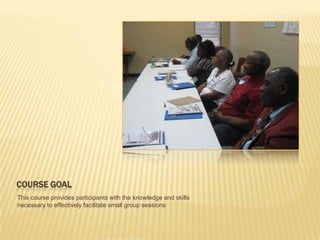
Course GoalThis course provides participants with the knowledge and skills necessary to effectively facilitate small group sessions
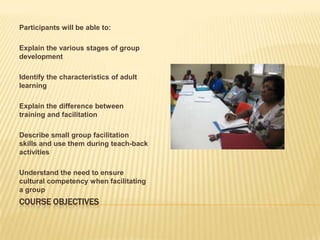
Course objectivesParticipants will be able to:Explain the various stages of group developmentIdentify the characteristics of adult learningExplain the difference between training and facilitationDescribe small group facilitation skills and use them during teach-back activitiesUnderstand the need to ensure cultural competency when facilitating a group
GROUPS
Group ProcessCooperationCoordinationCommon ProceduresMutual Support
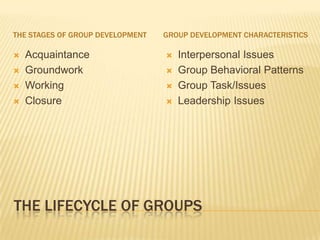
The lifecycle of groupsThe Stages of Group DevelopmentGroup Development CharacteristicsAcquaintanceGroundworkWorkingClosureInterpersonal IssuesGroup Behavioral PatternsGroup Task/IssuesLeadership Issues
The lifecycle of groupsAcquaintanceOrientationGroundworkOrganizationWorkingCohesivenessClosureSeparation and re-entry
Acquaintance stage Interpersonal IssuesInclusionGroup/Behavioral PatternsIdentityGroup Task/IssuesDependenceLeadership IssuesCommitment
Groundwork stageInterpersonal IssuesControlGroup/Behavioral PatternsNorm SettingGroup Task/IssuesDecision Making ProcessLeadership IssuesCounter-Dependence
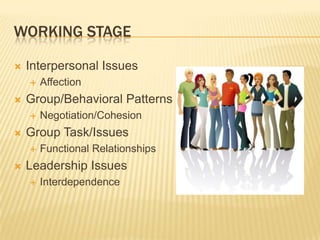
Working stageInterpersonal IssuesAffectionGroup/Behavioral PatternsNegotiation/CohesionGroup Task/IssuesFunctional RelationshipsLeadership IssuesInterdependence
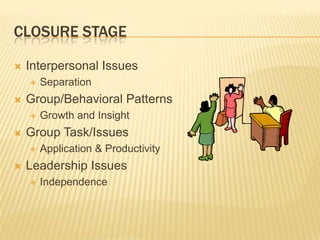
Closure stageInterpersonal IssuesSeparationGroup/Behavioral PatternsGrowth and InsightGroup Task/IssuesApplication & ProductivityLeadership IssuesIndependence
ADULT LEARNING
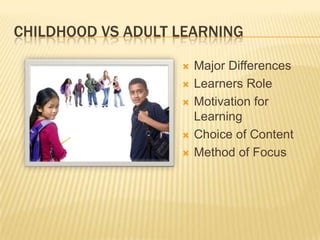
Childhood vs adult learningMajor DifferencesLearners RoleMotivation for LearningChoice of ContentMethod of Focus
Adult learning occurs best when…It is self-directedFills an immediate needIs participatory in natureProvides feedbackShows respect for learnerOccurs in a comfortable environment
The Learning processKnowledge“I know”Skills“I can”Attitudes“I will”Competence“I show”Performance“I do”
FACILITATION
tRAININGTo Coach or accustom a mode of behaviorTo provide knowledge of; instruct inTo carry on instruction on a regular basis
FacilitationThe act of making easierIncreasing the likelihood or effectiveness of a behavior or a response
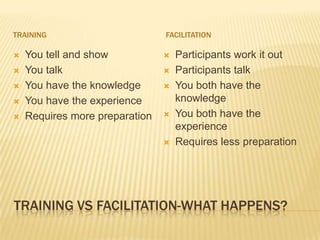
Training vs facilitation-what happens?Training	FacilitationYou tell and showYou talkYou have the knowledgeYou have the experienceRequires more preparationParticipants work it outParticipants talkYou both have the knowledgeYou both have the experienceRequires less preparation
FACILITATION ACTIVITIES
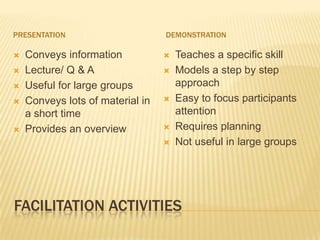
FACILITATION ACTIVITIESpRESENTATIONdemonstrationConveys informationLecture/ Q & AUseful for large groupsConveys lots of material in a short timeProvides an overviewTeaches a specific skill Models a step by step approachEasy to focus participants attentionRequires planningNot useful in large groups
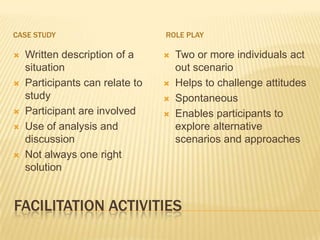
FACILITATION ACTIVITIESCase Study	Role playWritten description of a situationParticipants can relate to studyParticipant are involvedUse of analysis and discussionNot always one right solutionTwo or more individuals act out scenarioHelps to challenge attitudesSpontaneousEnables participants to explore alternative scenarios and approaches
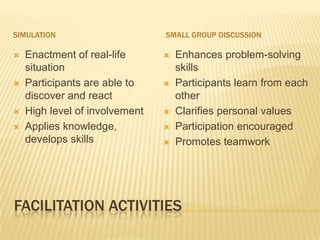
FACILITATION ACTIVITIESSimulation	Small Group DiscussionEnactment of real-life situationParticipants are able to discover and react High level of involvementApplies knowledge, develops skillsEnhances problem-solving skillsParticipants learn from each otherClarifies personal valuesParticipation encouragedPromotes teamwork
The Facilitators Role
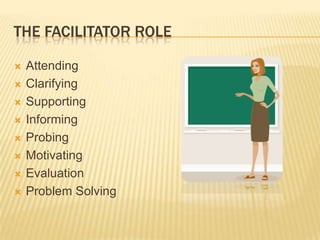
The Facilitator roleAttendingClarifyingSupportingInformingProbingMotivatingEvaluationProblem Solving
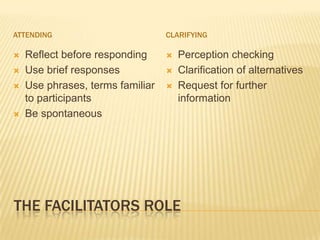
The Facilitators RoleAttendingclarifyingReflect before respondingUse brief responsesUse phrases, terms familiar to participantsBe spontaneous Perception checkingClarification of alternativesRequest for further information
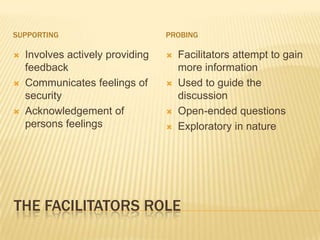
The Facilitators RolesupportingprobingInvolves actively providing feedbackCommunicates feelings of securityAcknowledgement of persons feelingsFacilitators attempt to gain more informationUsed to guide the discussionOpen-ended questionsExploratory in nature
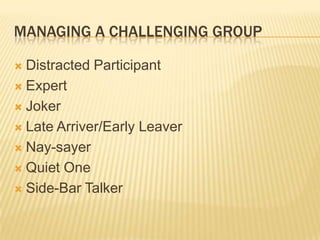
Managing a challenging groupDistracted ParticipantExpertJokerLate Arriver/Early LeaverNay-sayerQuiet OneSide-Bar Talker
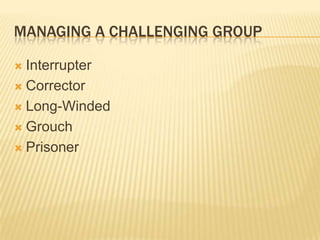
Managing a challenging groupInterrupterCorrectorLong-WindedGrouchPrisoner
The meaning and use of silenceAttendingListeningShows supportOpportunity for participants to talkUse as a method to probeFatigue
Cultural CompetencyGroup differencesCultureEthnicityValue diversitySelf-AssessmentCultural KnowledgeCultural AwarenessCultural Sensitivity
Six basic guidelines to remember!Introduce the purposeTalk about yourself and your qualificationsProvide an overview or agendaEstablish ground rulesExplain anticipated outcomeBuild trust and respect with the group
Happy Facilitating!

Facilitating Small Groups