TOXIC LEADERSHIP
SUBMITTED BY:-
V. VINAY RAVI KUMAR (A13559016060)
S. JYOTHISH KUMAR (A13559016065)
B. LAKSHMI GANAPATHI (A13559016097)
AKHIL GEORGE (A13559016141)
P. SAI SITARAM (A13559016122)
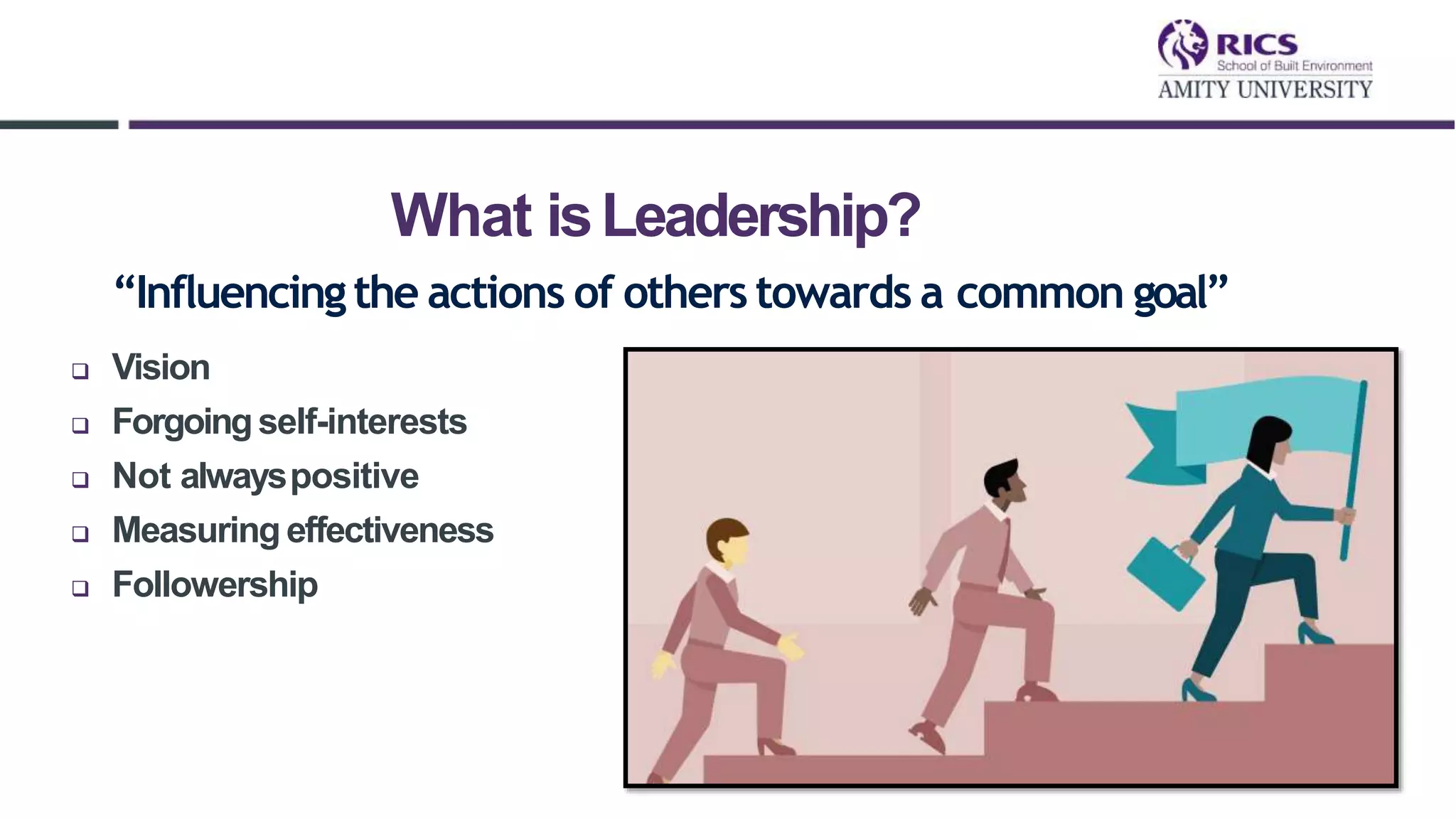
What isLeadership?
“Influencingthe actions of others towards a common goal”
 Vision
 Forgoingself-interests
 Not alwayspositive
 Measuring effectiveness
 Followership
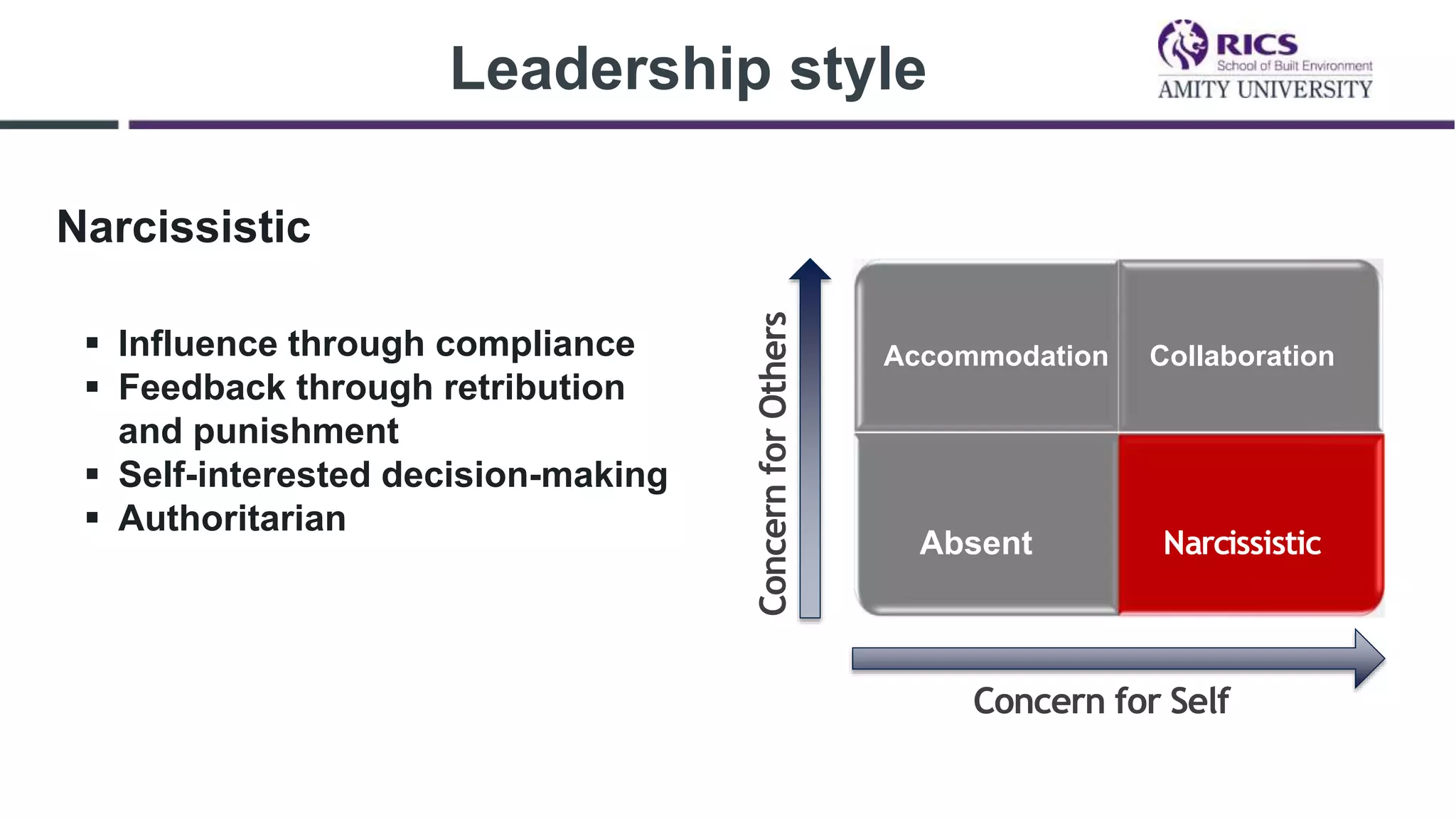
► Accommodation Collaboration
Absent Narcissistic
Leadership style
ConcernforOthers Concern for Self
Concern forOthers
Concern forSelf
Leadership style
Accommodation Collaboration
Absent Narcissistic
ConcernforOthers
Concern for Self
Narcissistic
 Influence through compliance
 Feedback through retribution
and punishment
 Self-interested decision-making
 Authoritarian
Leadership style
TOXIC LEADERSHIP
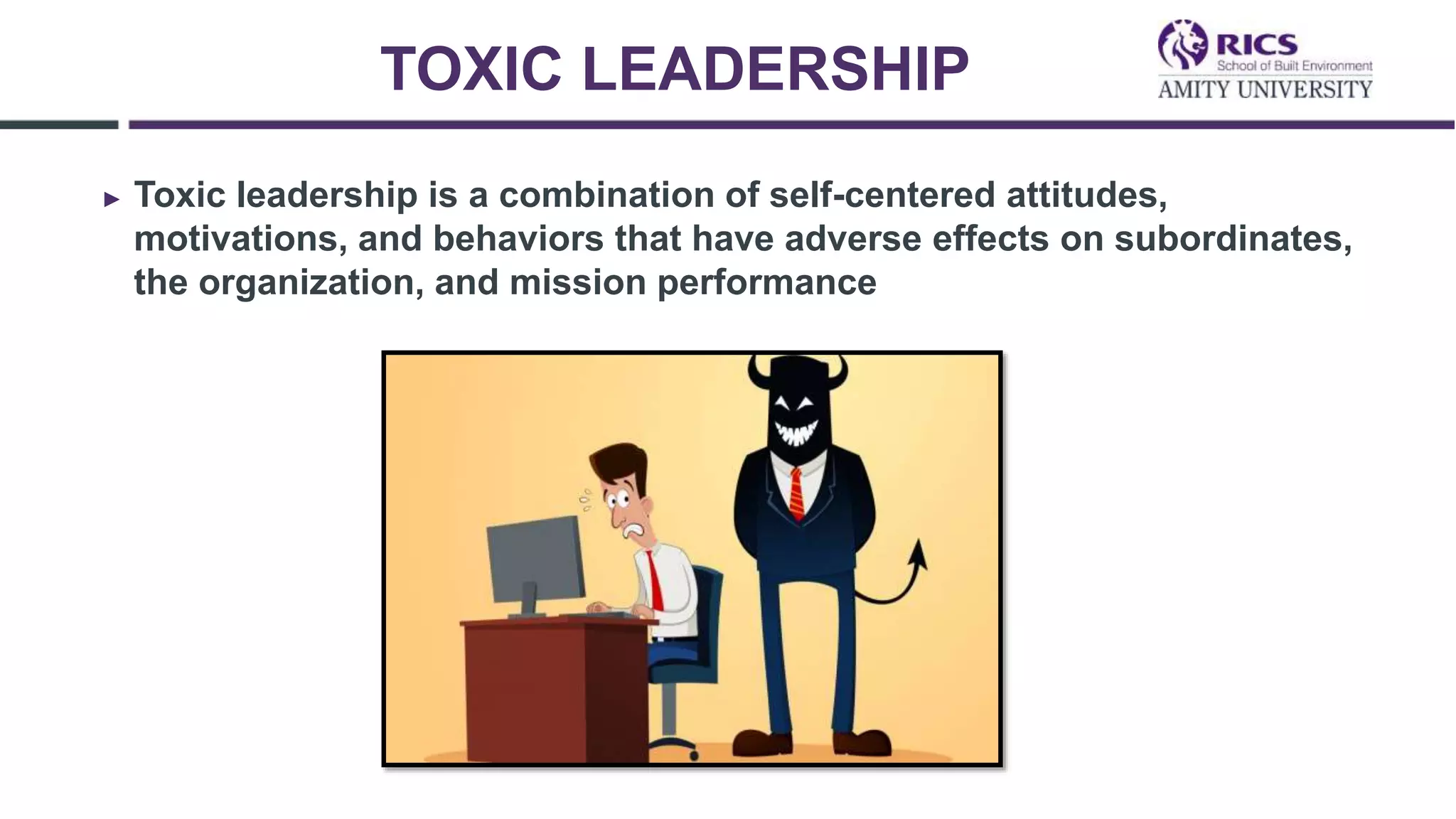
► Toxic leadership is a combination of self-centered attitudes,
motivations, and behaviors that have adverse effects on subordinates,
the organization, and mission performance
The Toxic Triangle
Destructive Leadership
5Characteristics
that frequently
present with
Destructive
Leadership
Charisma
Need of
power
Narcissism
Negative
life themes
Ideology
-Are outgoing
and
charismatic
-Have
engaging
personalities
-Are socially
skilled
-
-Are
ambitious
- Desire
positions of
powerand
influence
- Demonstrate
focus, energy,
and stamina
towards goals
-Have inflated
views of self-
importance
-Possess
tremendous
self esteem
and self
efficacy
- Ignore input
fromothers
- Experienced
significant
challengesor
traumatic
events during
formative
periods
- Rally support
againsta
common
threat
- Create the
perception of
external
threats to
justify power
Charisma
Need of
power
Narcissism
Negative
life themes
Ideology
Susceptible Followers
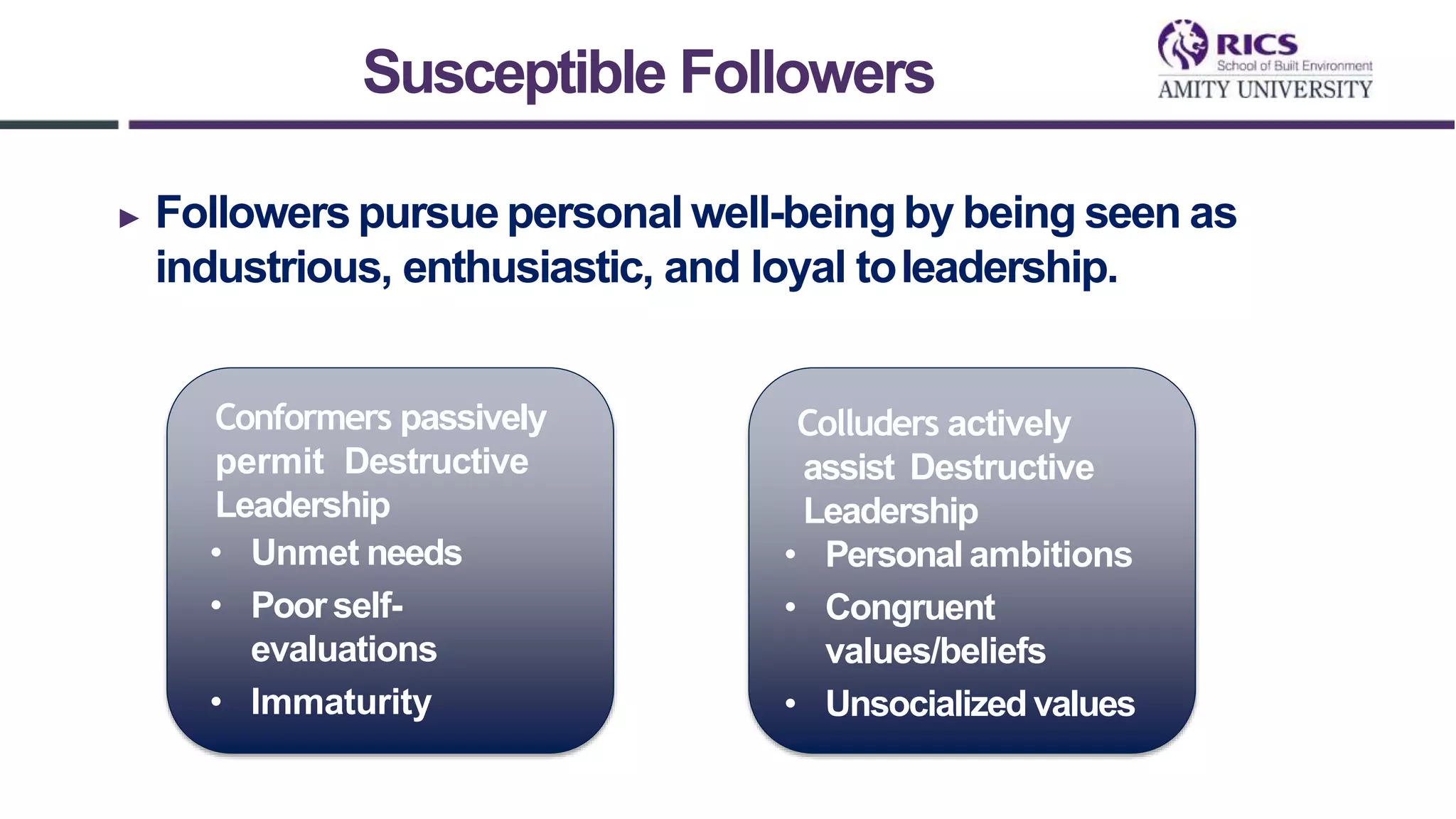
► Followerspursue personal well-being by being seen as
industrious, enthusiastic, and loyal toleadership., enthusiastic,
and loyal toleadership.
Conformers passively
permit Destructive
Leadership
• Unmet needs
• Poorself-
evaluations
• Immaturity
Colluders actively
assist Destructive
Leadership
• Personal ambitions
• Congruent
values/beliefs
• Unsocialized values
Conducive Environment
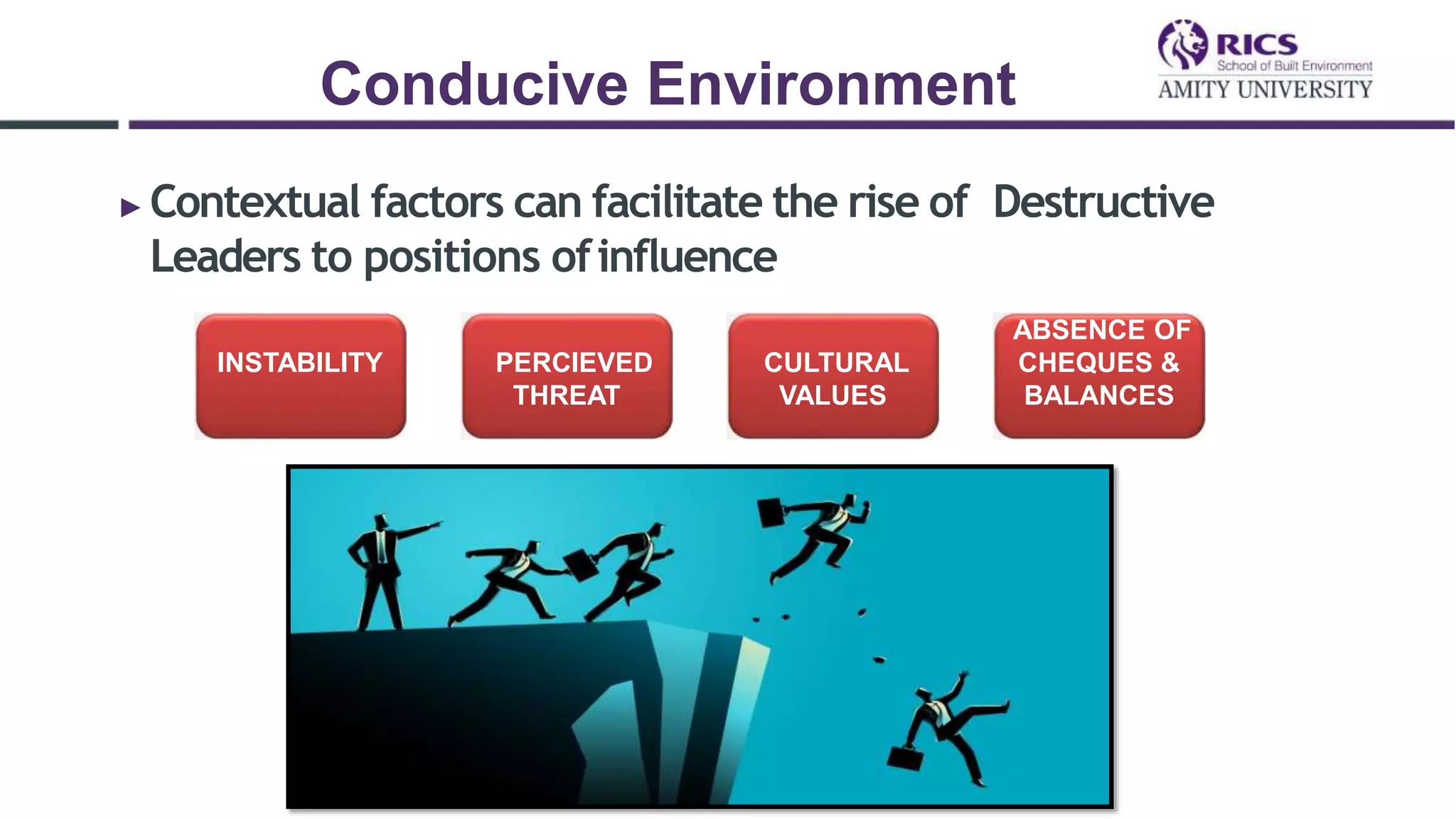
► Contextual factors can facilitate the rise of Destructive
Leaders to positions ofinfluence
INSTABILITY PERCIEVED
THREAT
CULTURAL
VALUES
ABSENCE OF
CHEQUES &
BALANCES
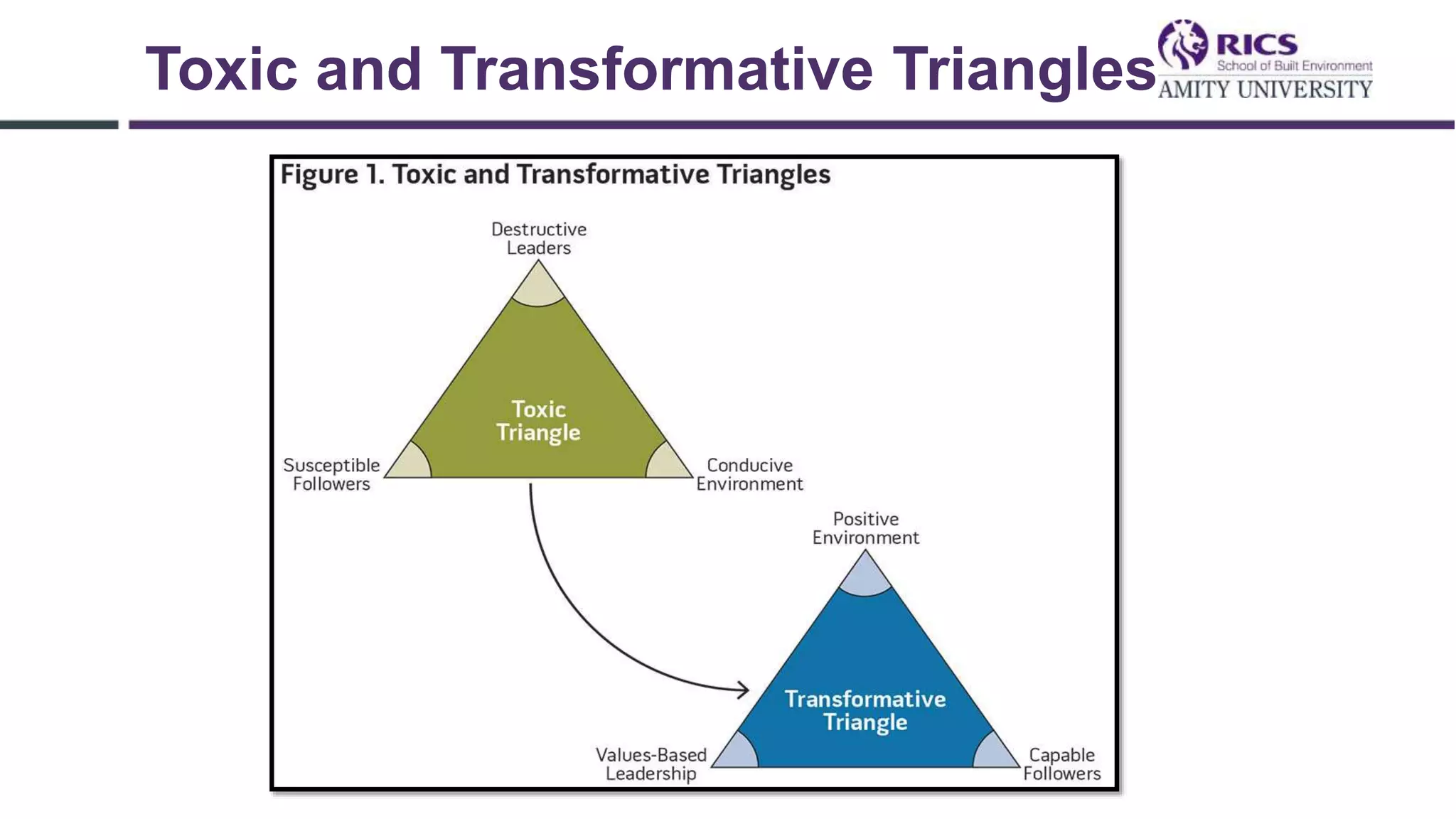
Toxic and Transformative Triangles
SUMMARY
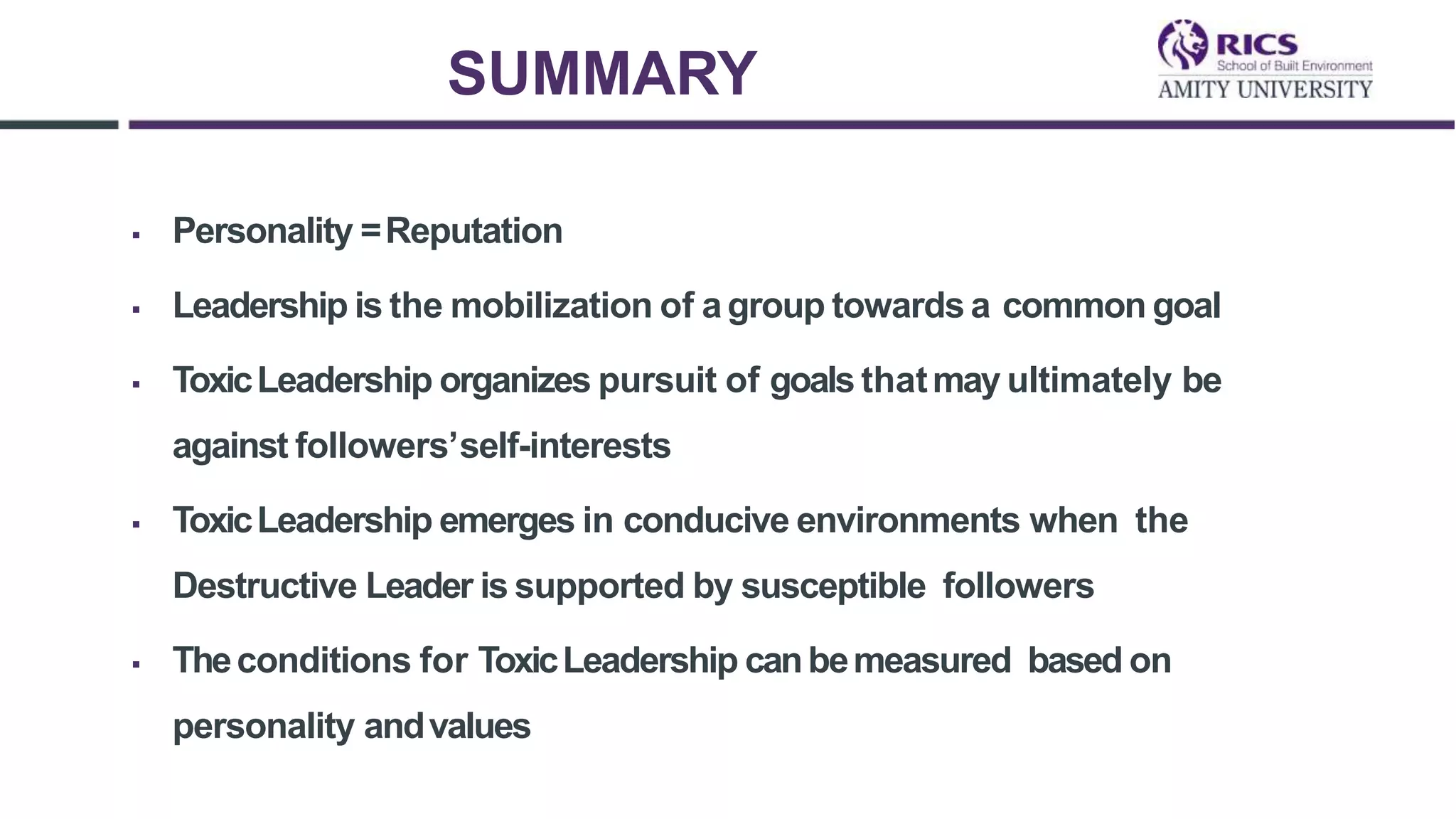
 Personality =Reputation
 Leadership is the mobilization of agroup towards a common goal
 ToxicLeadership organizes pursuit of goals thatmay ultimately be
against followers’self-interests
 ToxicLeadership emerges in conducive environments when the
Destructive Leader is supported by susceptible followers
 Theconditions for ToxicLeadership canbemeasured based on
personality andvalues
References
1. Anon., n.d. Y Scouts. [Online]
Available at: https://yscouts.com/10-toxic-leadership-characteristics/
2. M.D, J. K., 2016. traits of toxic leadership to avoid. [Online]
Available at: https://www.psychologytoday.com/blog/culture-shrink/201607/8-
traits-toxic-leadership-avoid
Thank You

Toxic leadership ppt

  • 1.
    TOXIC LEADERSHIP SUBMITTED BY:- V.VINAY RAVI KUMAR (A13559016060) S. JYOTHISH KUMAR (A13559016065) B. LAKSHMI GANAPATHI (A13559016097) AKHIL GEORGE (A13559016141) P. SAI SITARAM (A13559016122)
  • 2.
    What isLeadership? “Influencingthe actionsof others towards a common goal”  Vision  Forgoingself-interests  Not alwayspositive  Measuring effectiveness  Followership
  • 3.
    ► Accommodation Collaboration AbsentNarcissistic Leadership style ConcernforOthers Concern for Self Concern forOthers Concern forSelf Leadership style
  • 4.
    Accommodation Collaboration Absent Narcissistic ConcernforOthers Concernfor Self Narcissistic  Influence through compliance  Feedback through retribution and punishment  Self-interested decision-making  Authoritarian Leadership style
  • 5.
    TOXIC LEADERSHIP ► Toxicleadership is a combination of self-centered attitudes, motivations, and behaviors that have adverse effects on subordinates, the organization, and mission performance
  • 6.
  • 7.
    Destructive Leadership 5Characteristics that frequently presentwith Destructive Leadership Charisma Need of power Narcissism Negative life themes Ideology
  • 8.
    -Are outgoing and charismatic -Have engaging personalities -Are socially skilled - -Are ambitious -Desire positions of powerand influence - Demonstrate focus, energy, and stamina towards goals -Have inflated views of self- importance -Possess tremendous self esteem and self efficacy - Ignore input fromothers - Experienced significant challengesor traumatic events during formative periods - Rally support againsta common threat - Create the perception of external threats to justify power Charisma Need of power Narcissism Negative life themes Ideology
  • 9.
    Susceptible Followers ► Followerspursuepersonal well-being by being seen as industrious, enthusiastic, and loyal toleadership., enthusiastic, and loyal toleadership. Conformers passively permit Destructive Leadership • Unmet needs • Poorself- evaluations • Immaturity Colluders actively assist Destructive Leadership • Personal ambitions • Congruent values/beliefs • Unsocialized values
  • 10.
    Conducive Environment ► Contextualfactors can facilitate the rise of Destructive Leaders to positions ofinfluence INSTABILITY PERCIEVED THREAT CULTURAL VALUES ABSENCE OF CHEQUES & BALANCES
  • 11.
  • 12.
    SUMMARY  Personality =Reputation Leadership is the mobilization of agroup towards a common goal  ToxicLeadership organizes pursuit of goals thatmay ultimately be against followers’self-interests  ToxicLeadership emerges in conducive environments when the Destructive Leader is supported by susceptible followers  Theconditions for ToxicLeadership canbemeasured based on personality andvalues
  • 13.
    References 1. Anon., n.d.Y Scouts. [Online] Available at: https://yscouts.com/10-toxic-leadership-characteristics/ 2. M.D, J. K., 2016. traits of toxic leadership to avoid. [Online] Available at: https://www.psychologytoday.com/blog/culture-shrink/201607/8- traits-toxic-leadership-avoid
  • 14.