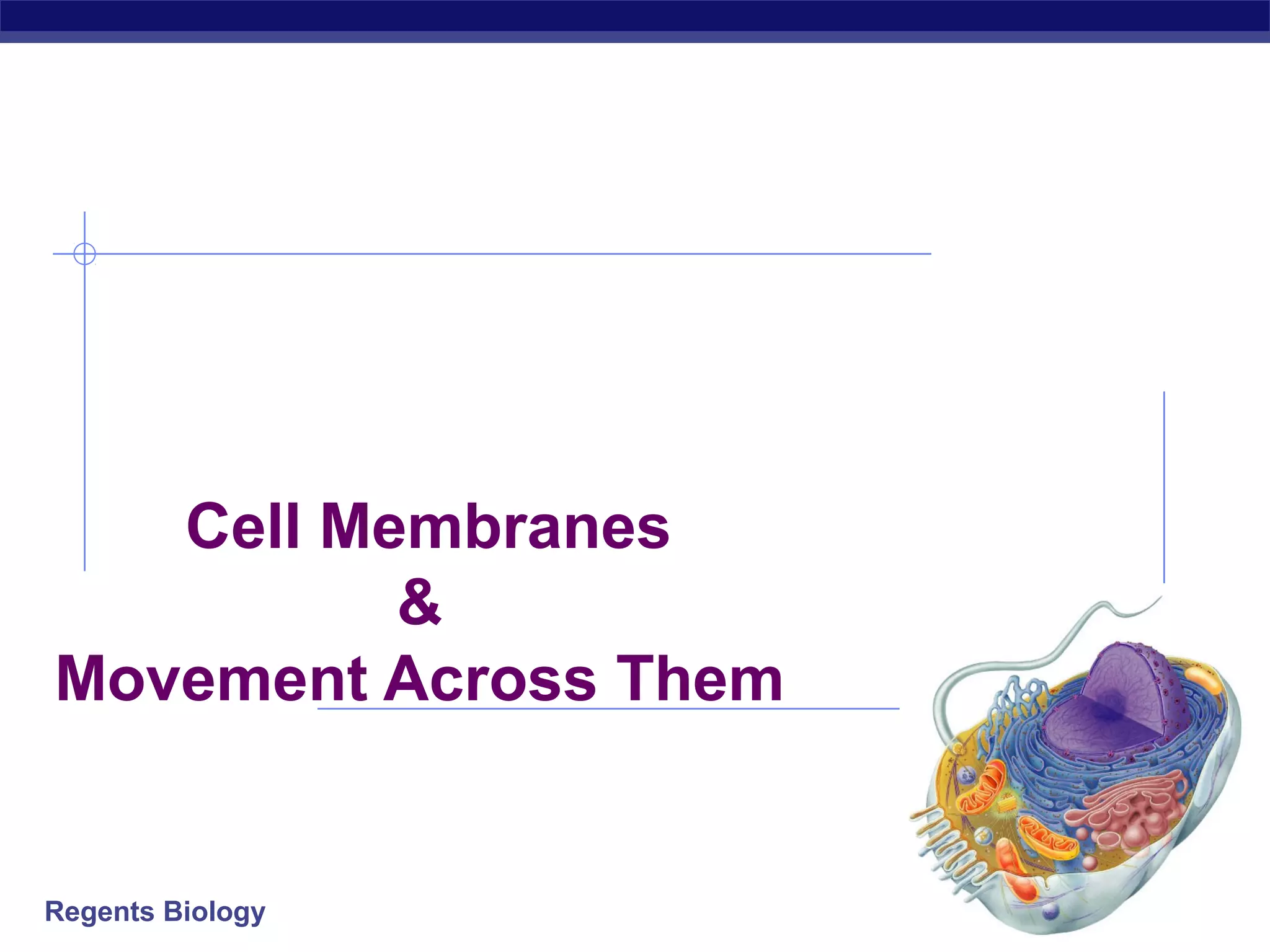
Cell Membranes 
Regents Biology 
& 
Movement Across Them
Cell (plasma) membrane 
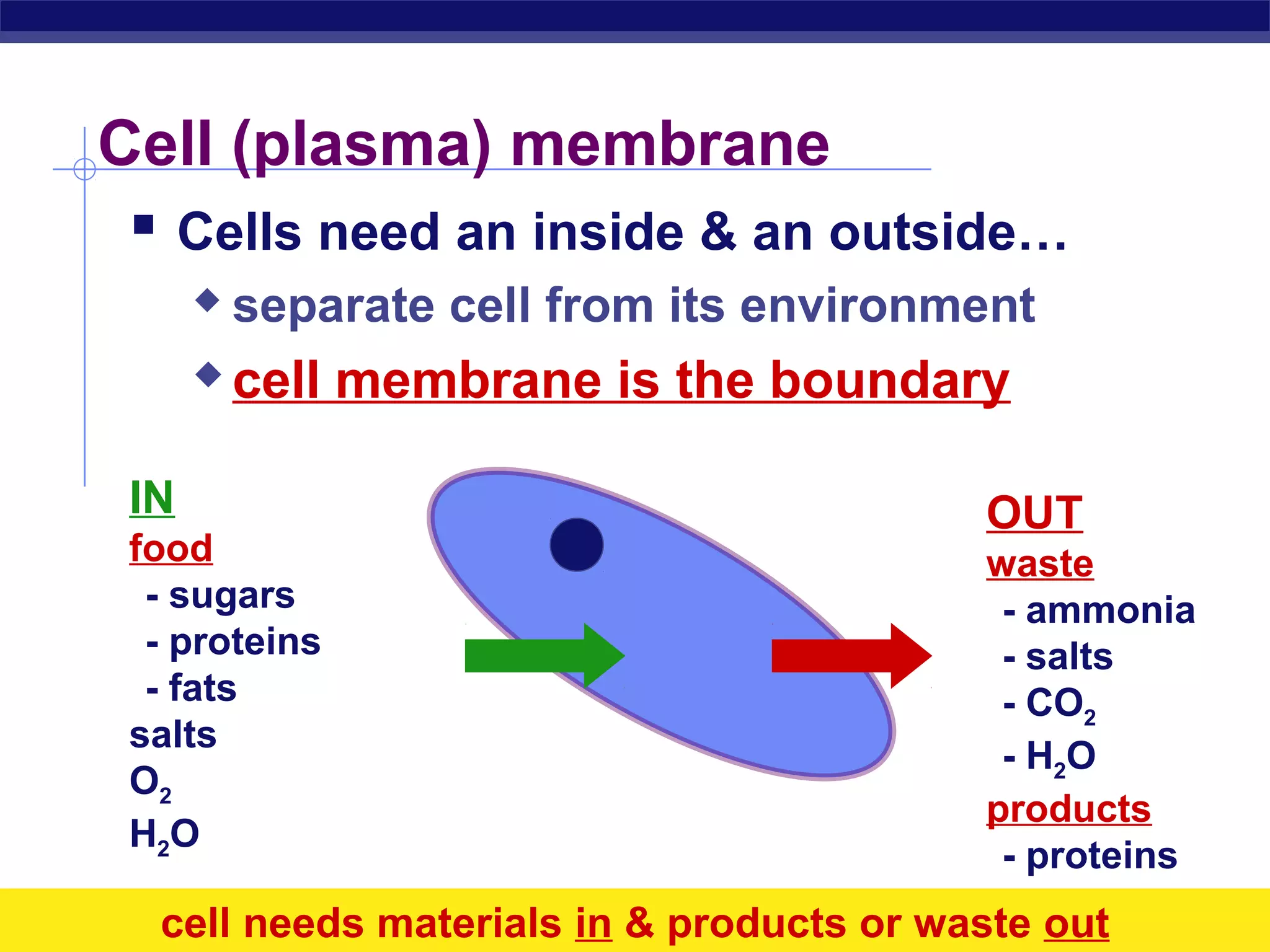
 Cells need an inside & an outside… 
 separate cell from its environment 
 cell membrane is the boundary 
IN 
food 
- sugars 
- proteins 
- fats 
salts 
O2 
H2O 
Regents Biology 
OUT 
waste 
- ammonia 
- salts 
- CO2 
- H2O 
products 
- proteins 
cell needs materials in & products or waste out
Building a membrane 
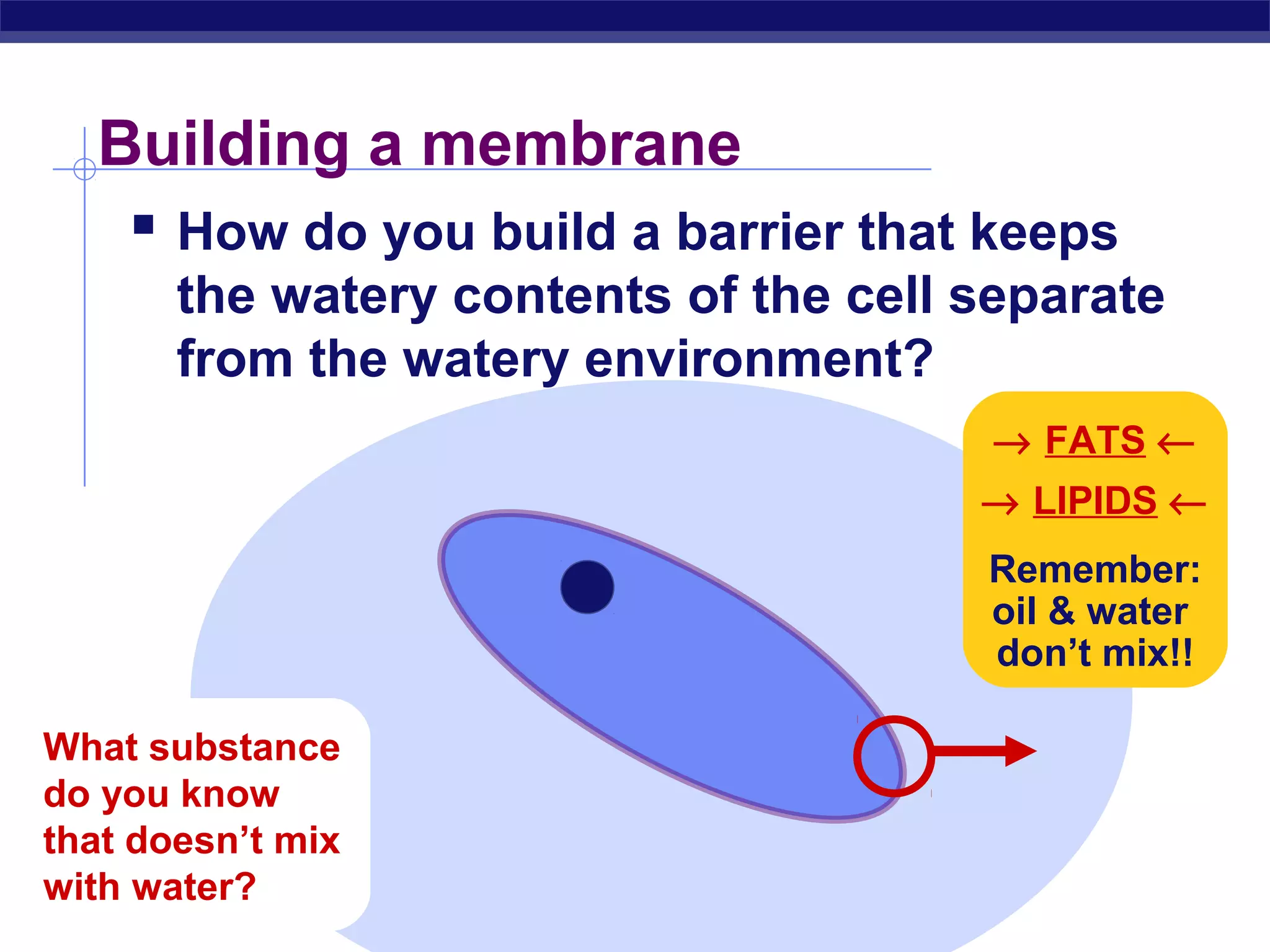
 How do you build a barrier that keeps 
the watery contents of the cell separate 
from the watery environment? 
What substance 
do you know 
that doesn’t mix 
with water? 
Regents Biology 
® FATS ¬ 
® LIPIDS ¬ 
Remember: 
oil & water 
don’t mix!!
Lipids of cell membrane 
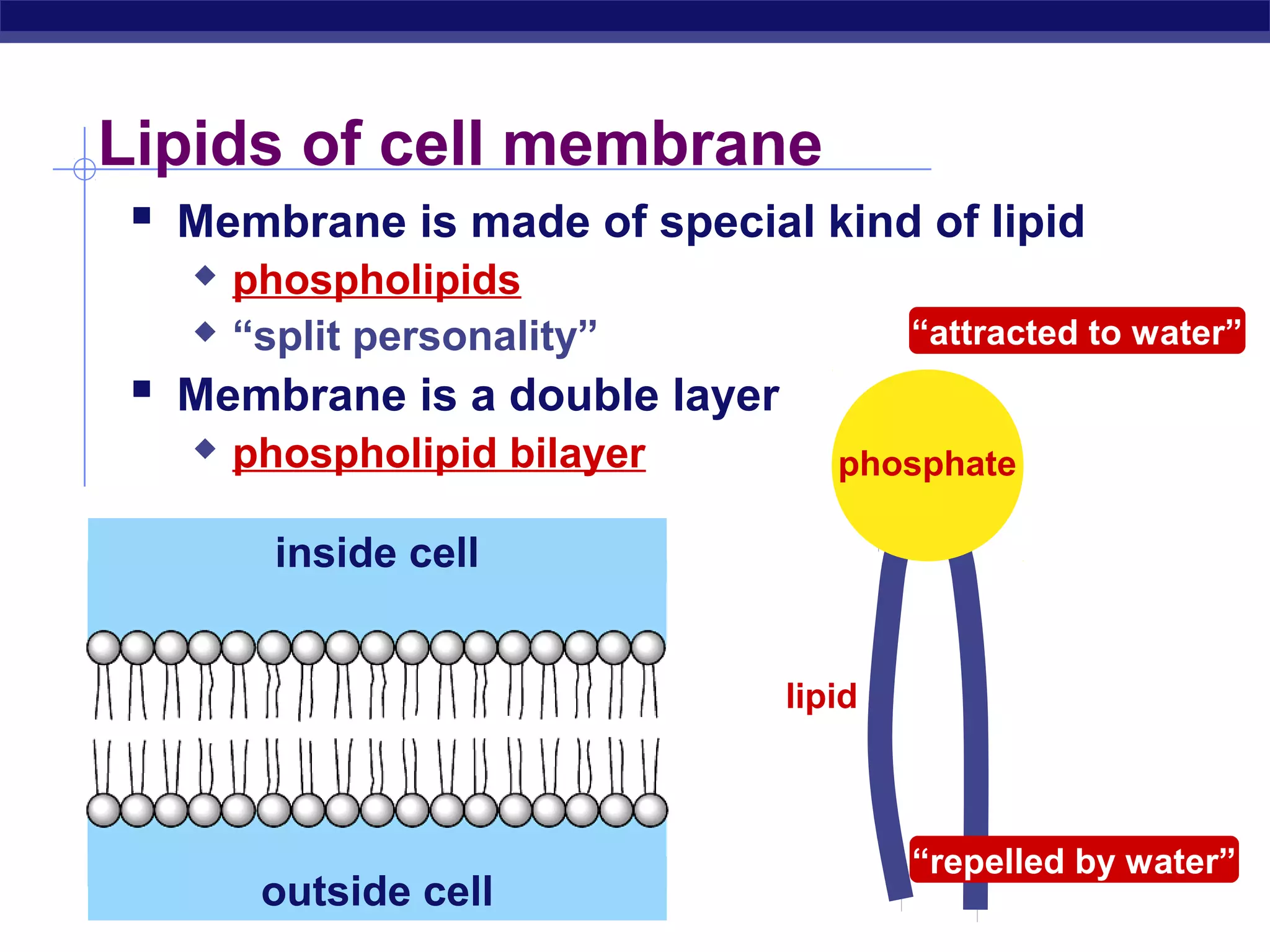
 Membrane is made of special kind of lipid 
 phospholipids 
 “split personality” 
 Membrane is a double layer 
 phospholipid bilayer 
Regents Biology 
inside cell 
outside cell 
phosphate 
lipid 
“attracted to water” 
“repelled by water”
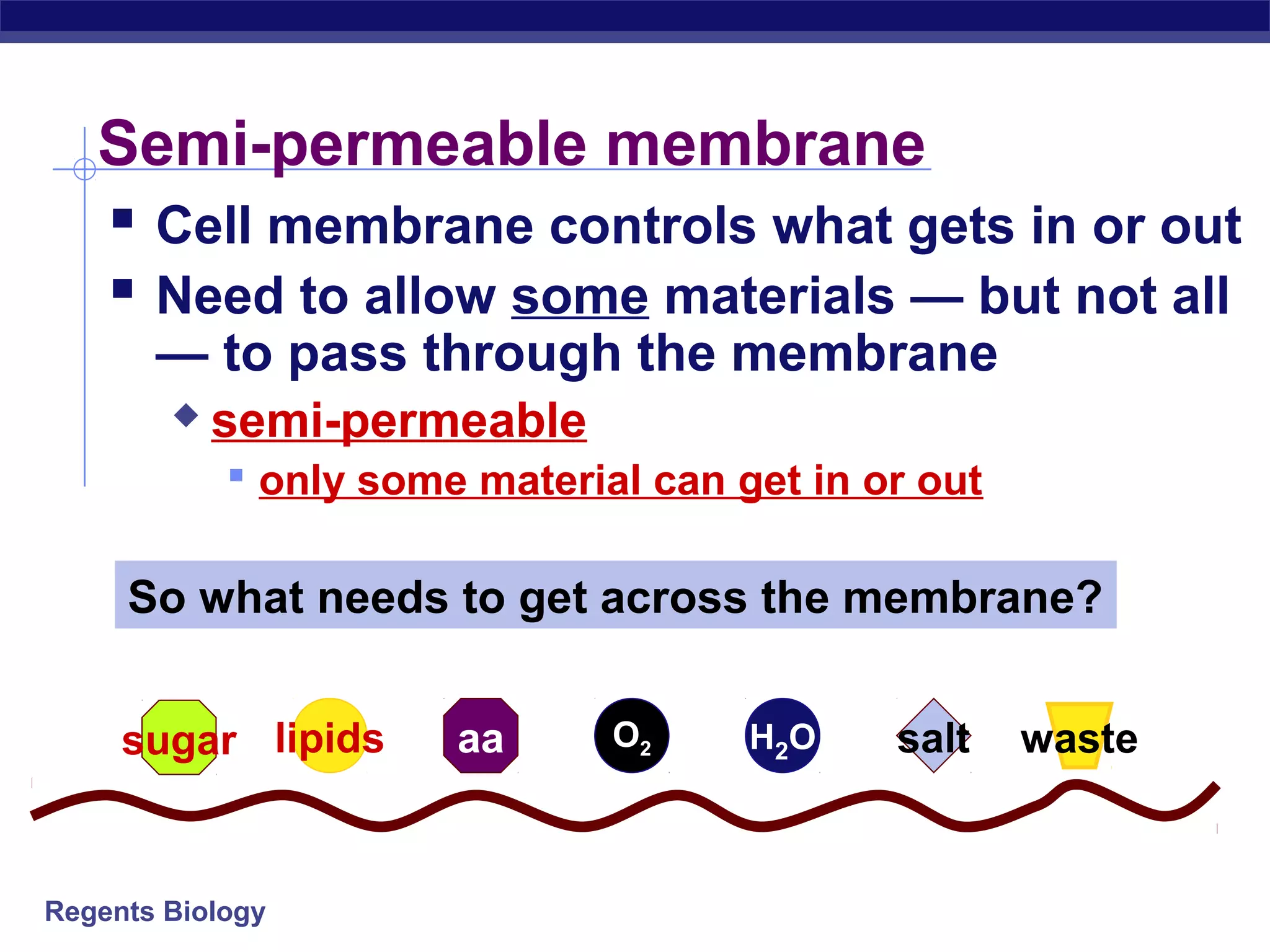
Semi-permeable membrane 
 Cell membrane controls what gets in or out 
 Need to allow some materials — but not all 
— to pass through the membrane 
 semi-permeable 
 only some material can get in or out 
So what needs to get across the membrane? 
sugar lipids aa H2O salt waste 
Regents Biology 
O2
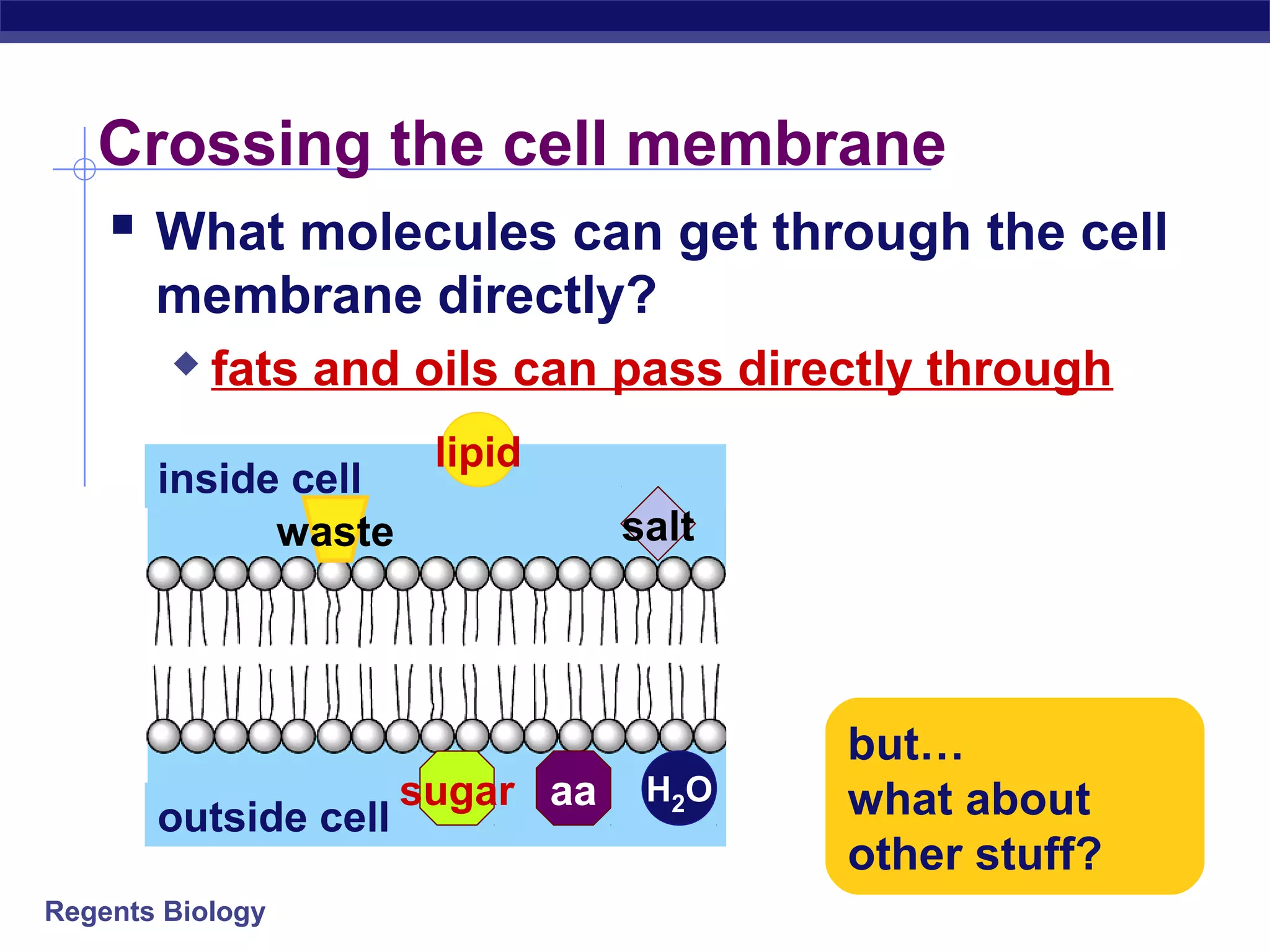
Crossing the cell membrane 
 What molecules can get through the cell 
membrane directly? 
 fats and oils can pass directly through 
inside cell 
outside cell 
Regents Biology 
lipid 
salt 
sugar aa H2O 
waste 
but… 
what about 
other stuff?
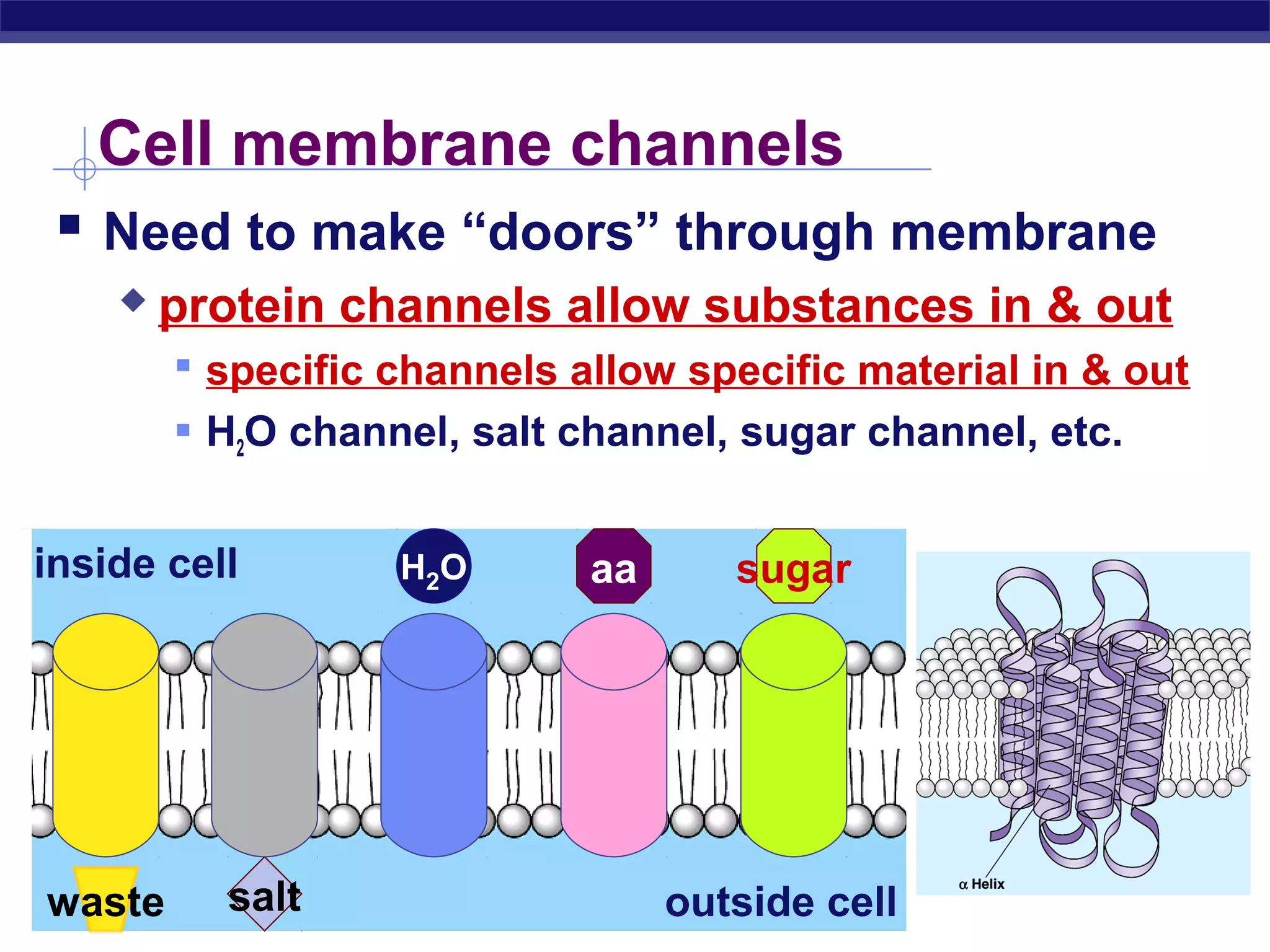
Cell membrane channels 
 Need to make “doors” through membrane 
 protein channels allow substances in & out 
 specific channels allow specific material in & out 
 H2O channel, salt channel, sugar channel, etc. 
inside cell 
Regents Biology 
H2O aa sugar 
outside cell 
waste salt
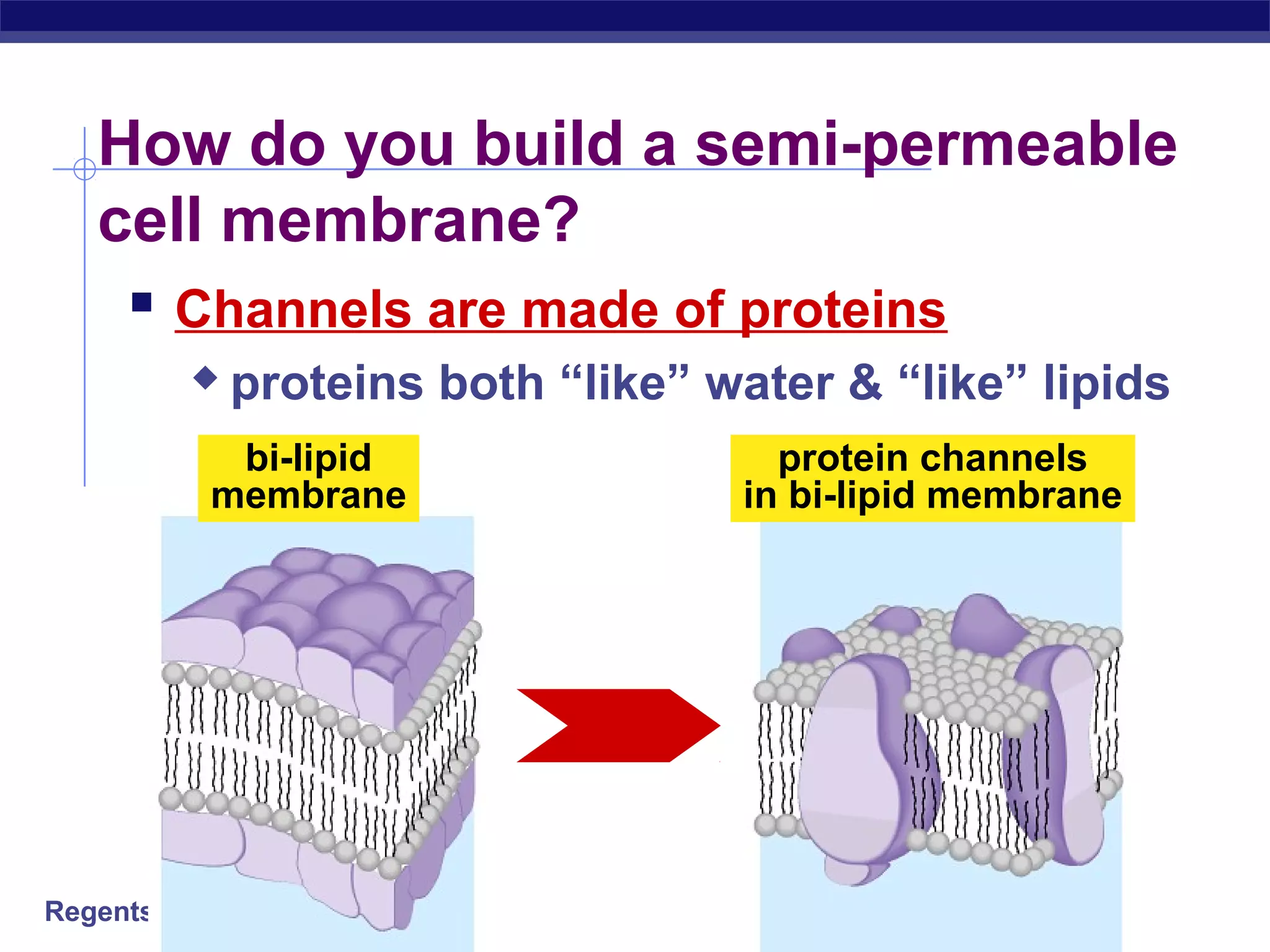
How do you build a semi-permeable 
cell membrane? 
 Channels are made of proteins 
 proteins both “like” water & “like” lipids 
bi-lipid 
membrane 
Regents Biology 
protein channels 
in bi-lipid membrane
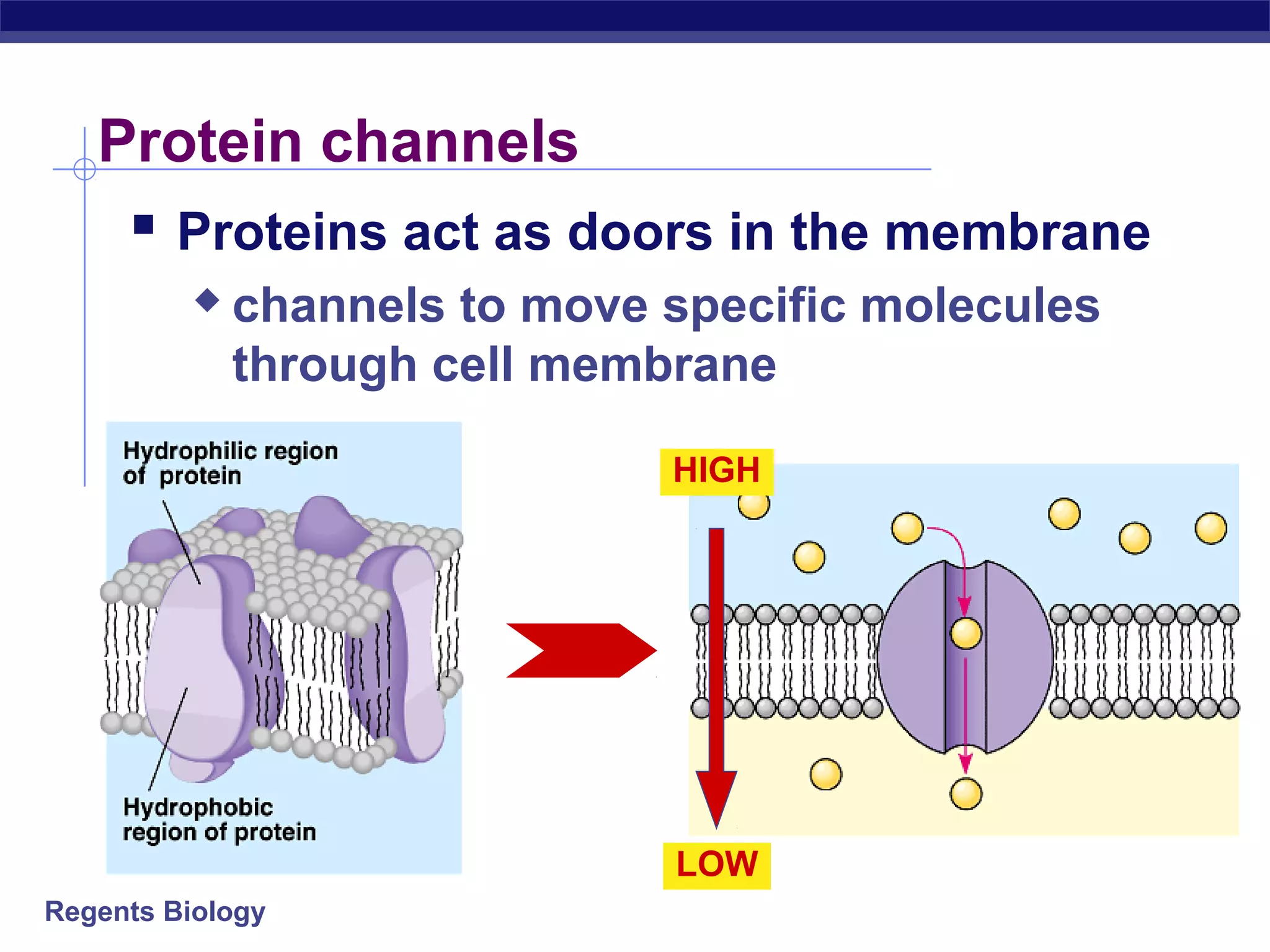
Protein channels 
 Proteins act as doors in the membrane 
 channels to move specific molecules 
through cell membrane 
Regents Biology 
HIGH 
LOW
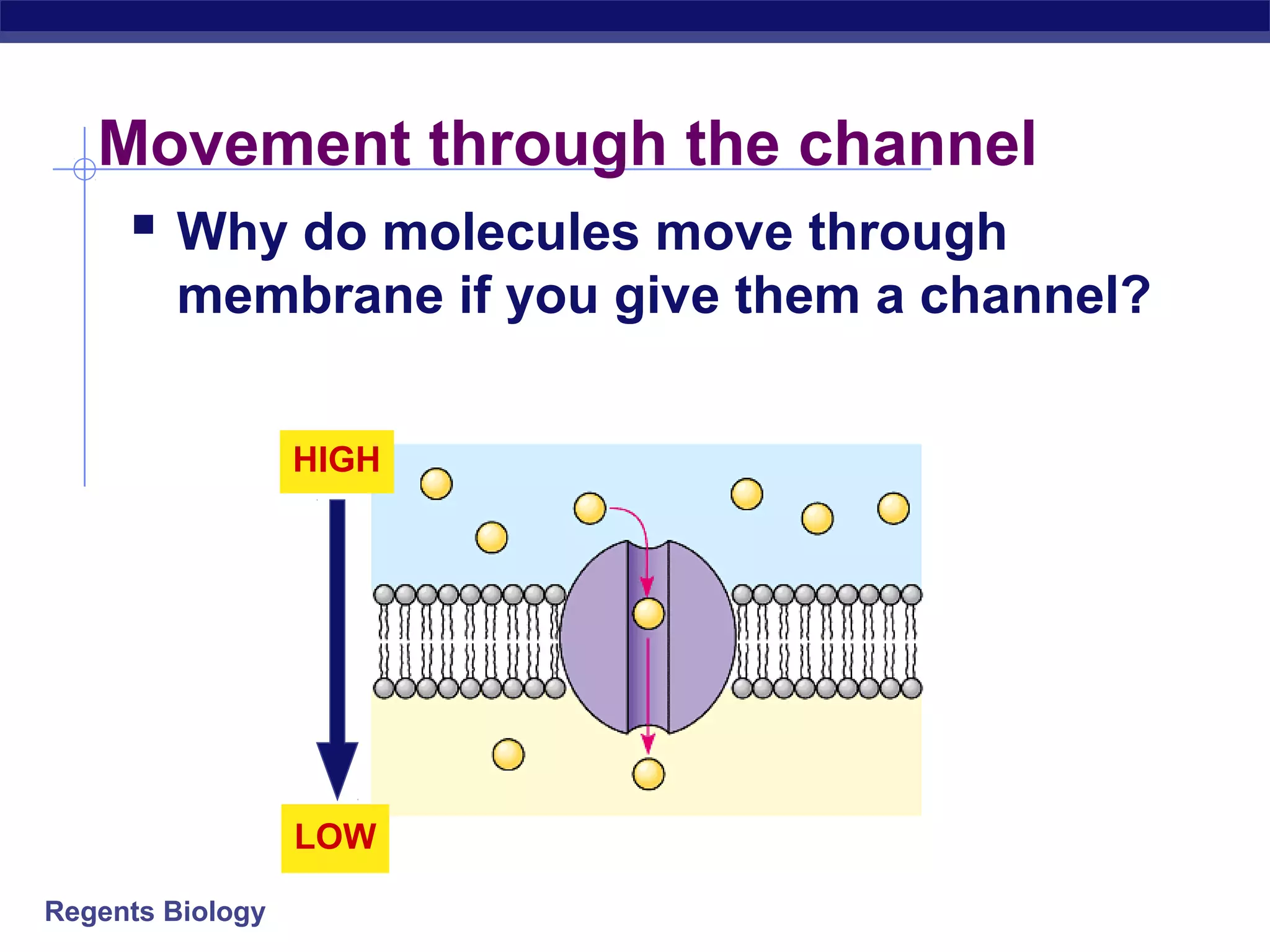
Movement through the channel 
 Why do molecules move through 
membrane if you give them a channel? 
Regents Biology 
? 
HIGH 
? 
LOW
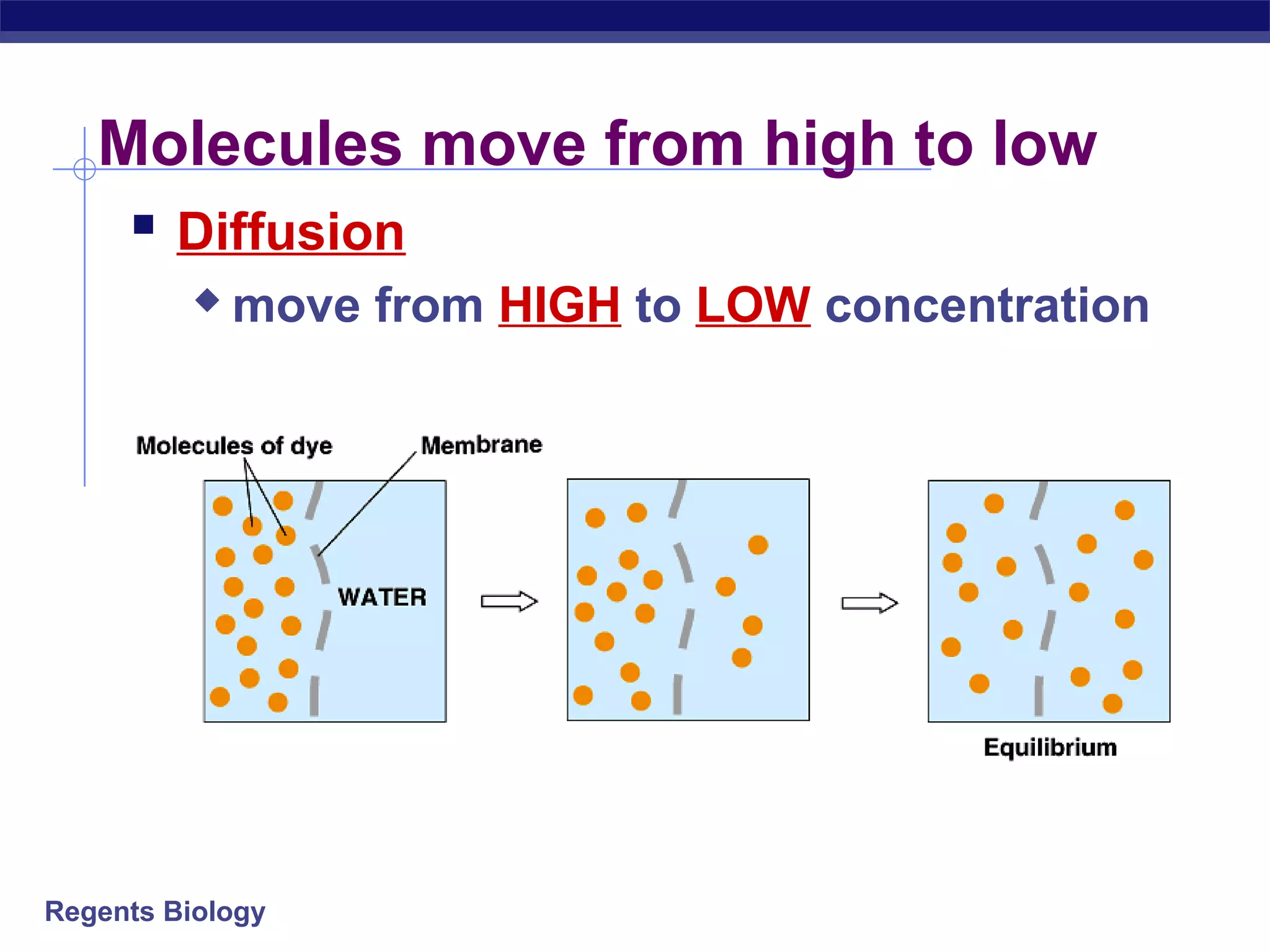
Molecules move from high to low 
 Diffusion 
 move from HIGH to LOW concentration 
Regents Biology
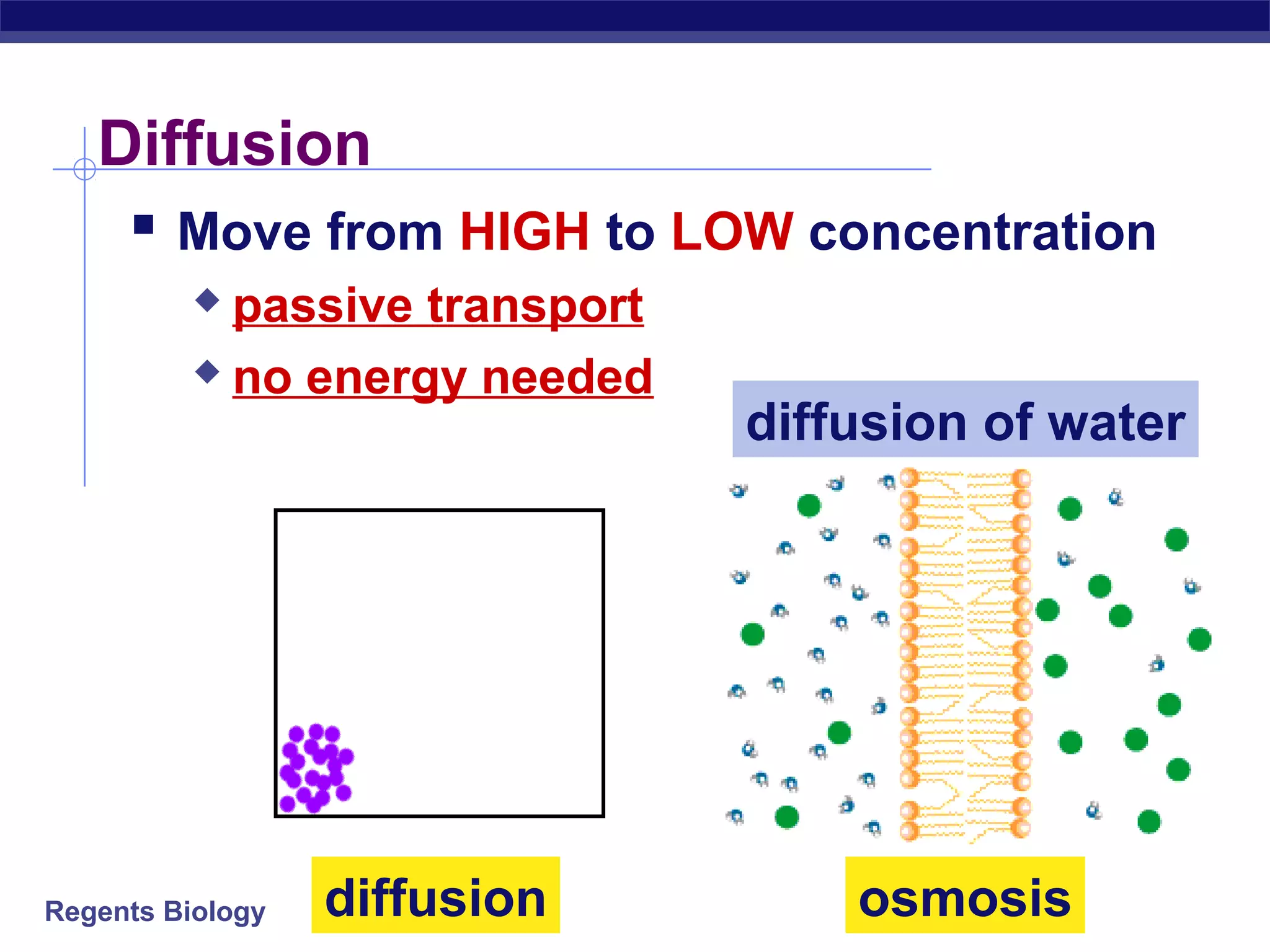
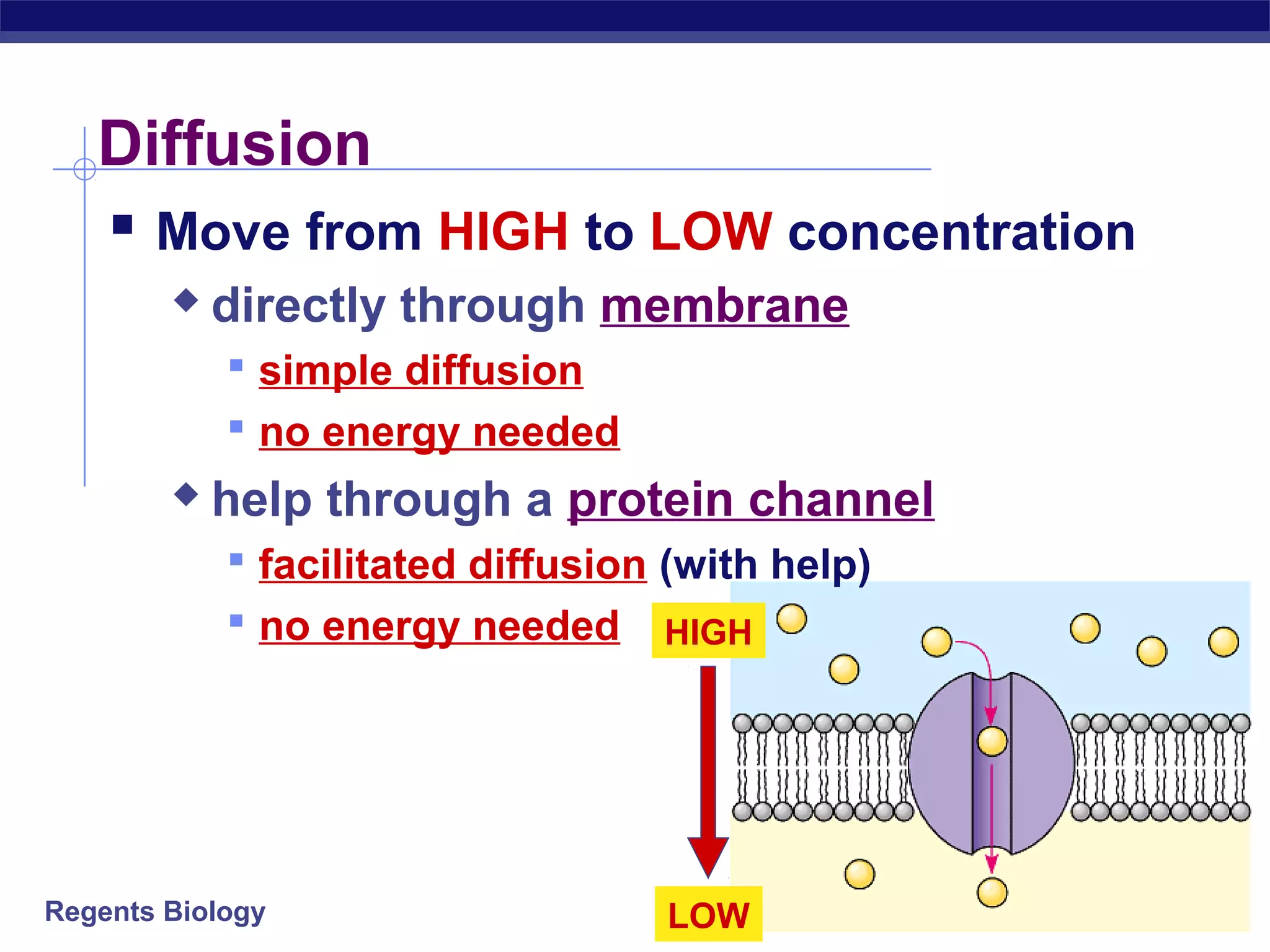
Diffusion 
 Move from HIGH to LOW concentration 
 passive transport 
 no energy needed 
Regents Biology 
diffusion of water 
diffusion osmosis
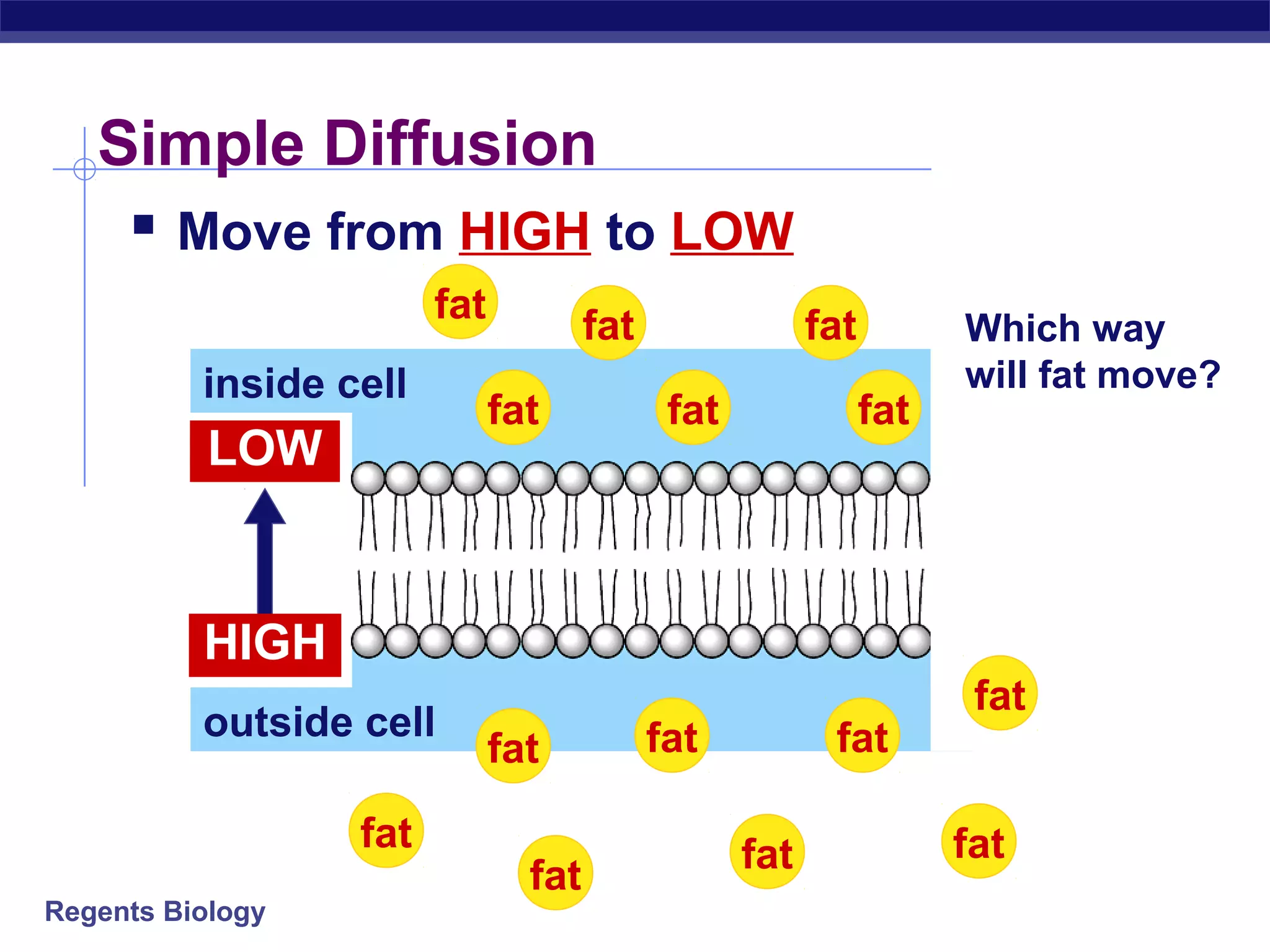
Simple Diffusion 
 Move from HIGH to LOW 
inside cell 
outside cell 
Regents Biology 
Which way 
will fat move? 
fat 
fat 
fat 
fat 
fat 
fat fat 
fat fat 
fat 
fat 
fat 
fat 
fat 
LOW 
HIGH
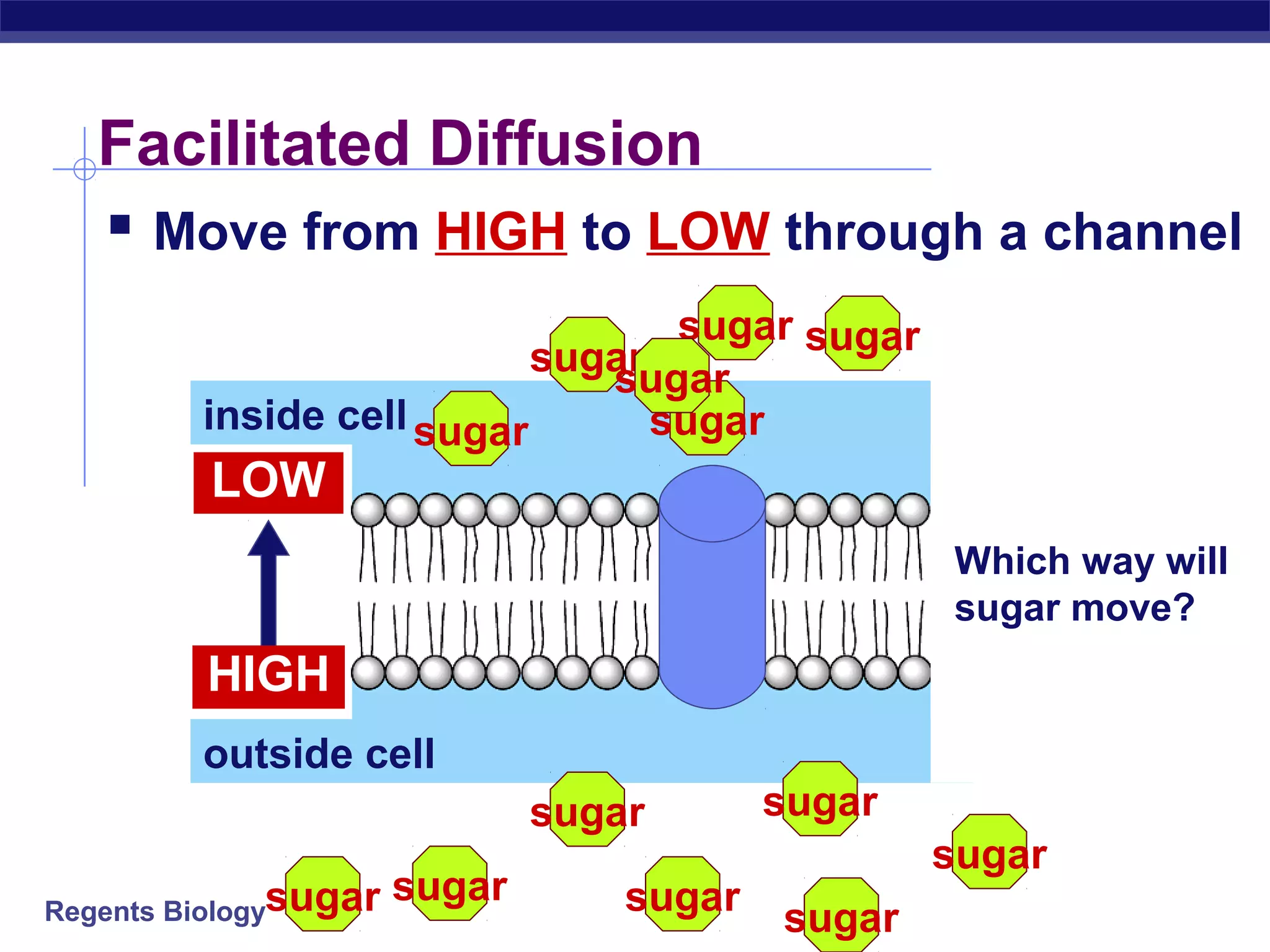
Facilitated Diffusion 
 Move from HIGH to LOW through a channel 
inside cell 
outside cell 
Regents Biology 
sugar sugar 
sugar 
sugar 
sugar 
sugar 
sugar 
sugar 
sugar 
sugar sugar 
Which way will 
sugar move? 
sugar 
sugar 
LOW 
HIGH
Diffusion 
 Move from HIGH to LOW concentration 
 directly through membrane 
 simple diffusion 
 no energy needed 
 help through a protein channel 
 facilitated diffusion (with help) 
 no energy needed HIGH 
Regents Biology 
LOW
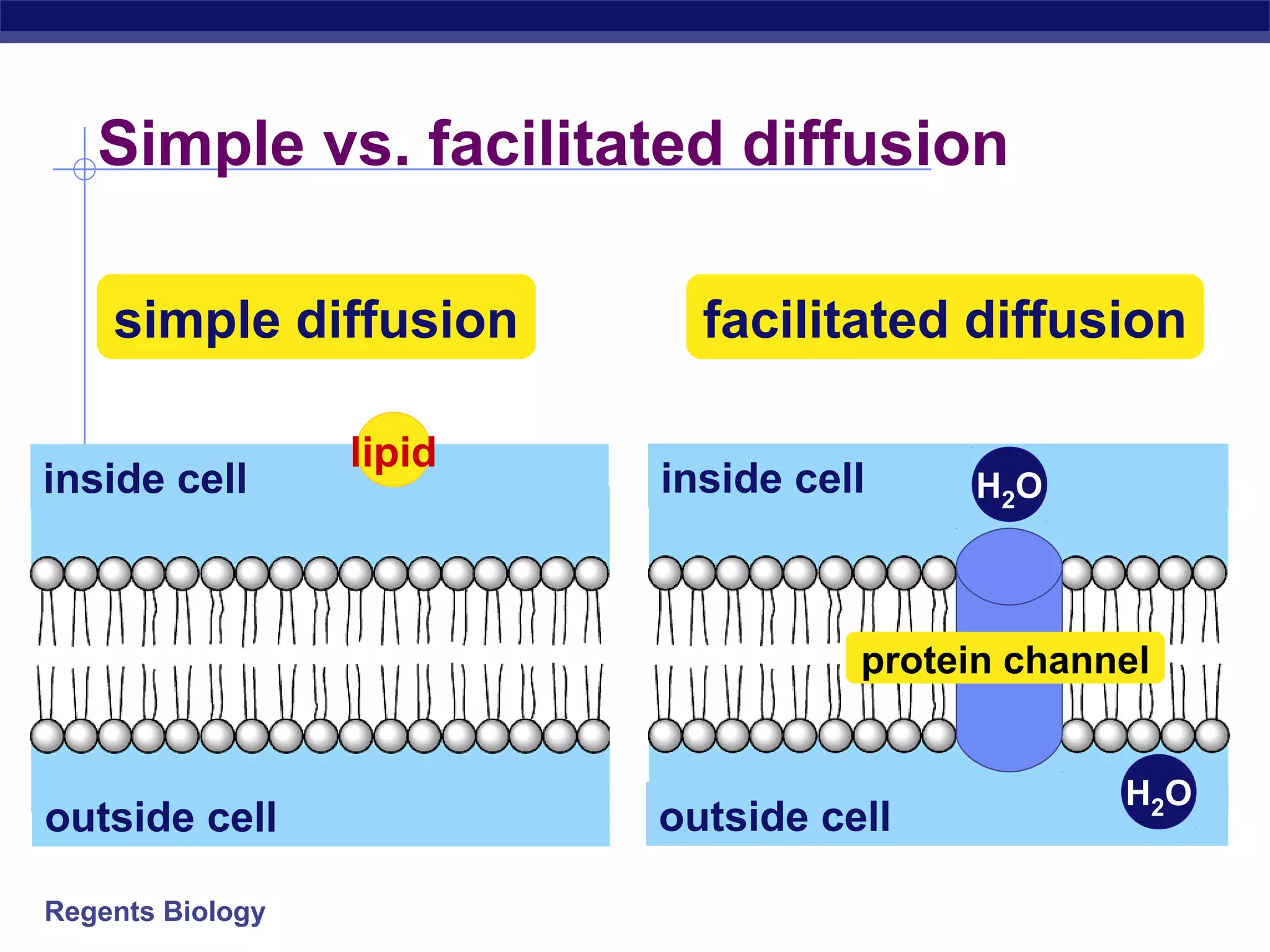
Simple vs. facilitated diffusion 
simple diffusion facilitated diffusion 
inside cell 
outside cell 
Regents Biology 
lipid inside cell 
protein channel 
outside cell 
H2O 
H2O
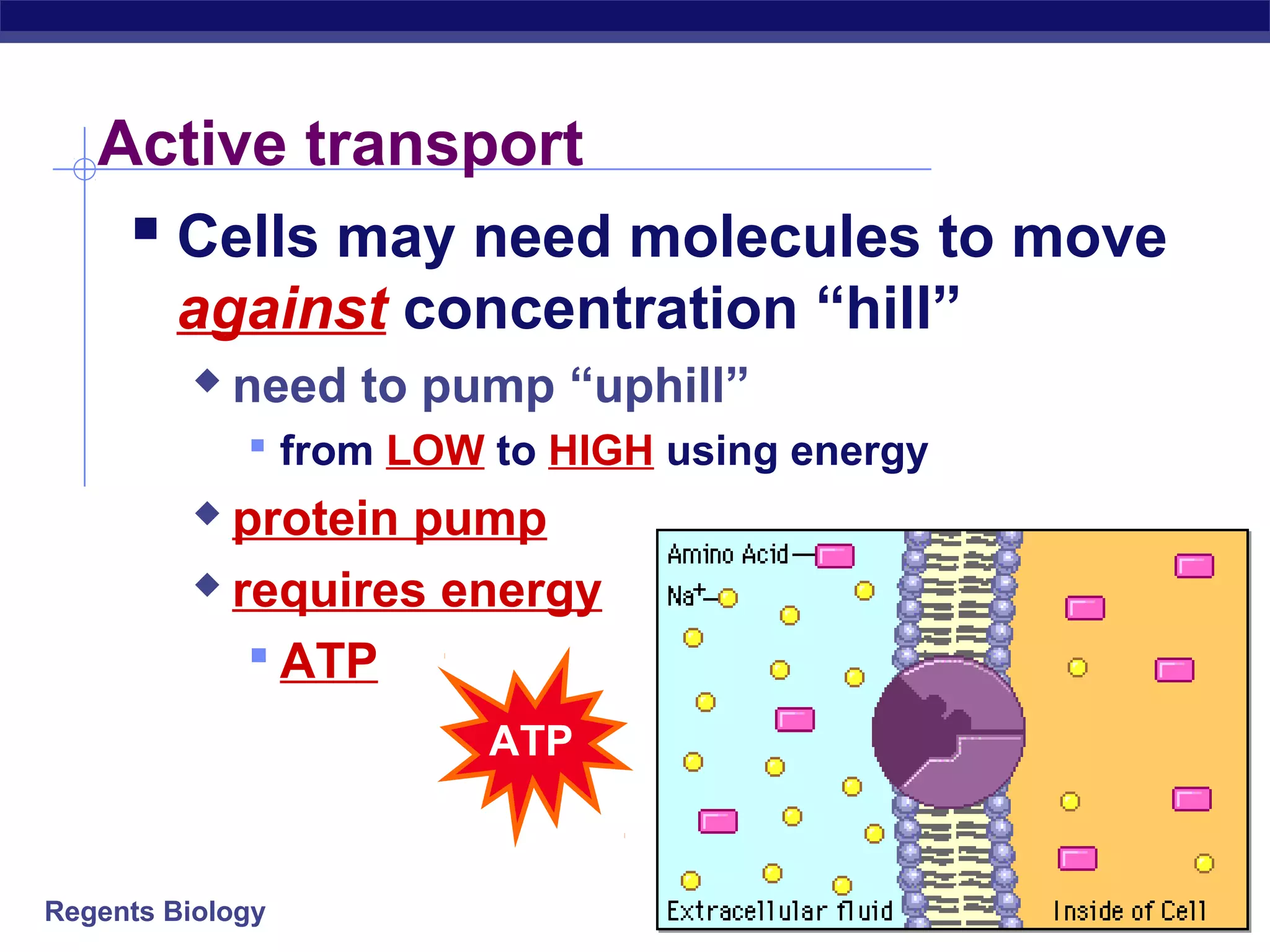
Active transport 
 Cells may need molecules to move 
against concentration “hill” 
 need to pump “uphill” 
 from LOW to HIGH using energy 
 protein pump 
 requires energy 
 ATP 
Regents Biology 
ATP
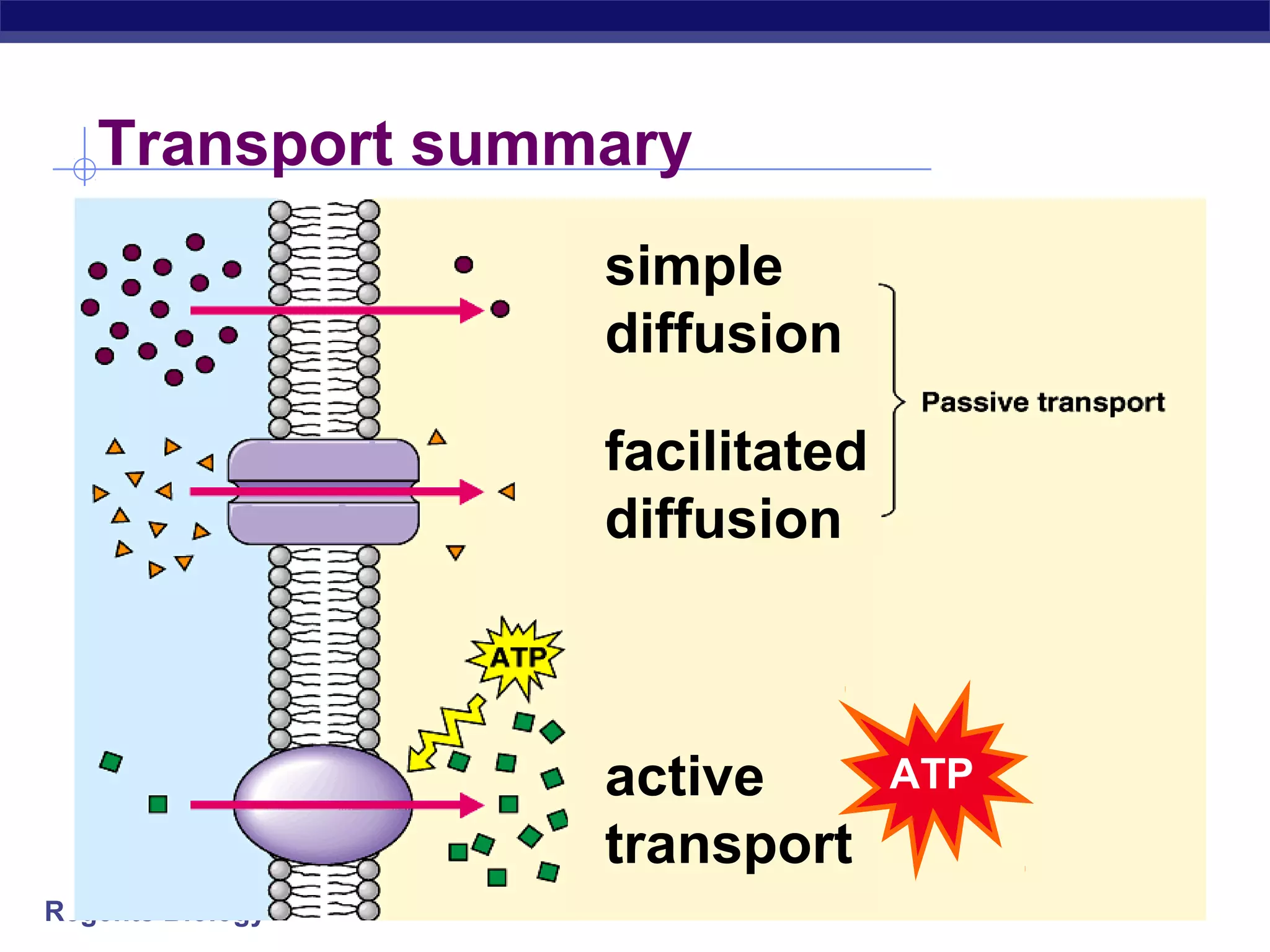
Transport summary 
Regents Biology 
simple 
diffusion 
facilitated 
diffusion 
active 
transport 
ATP
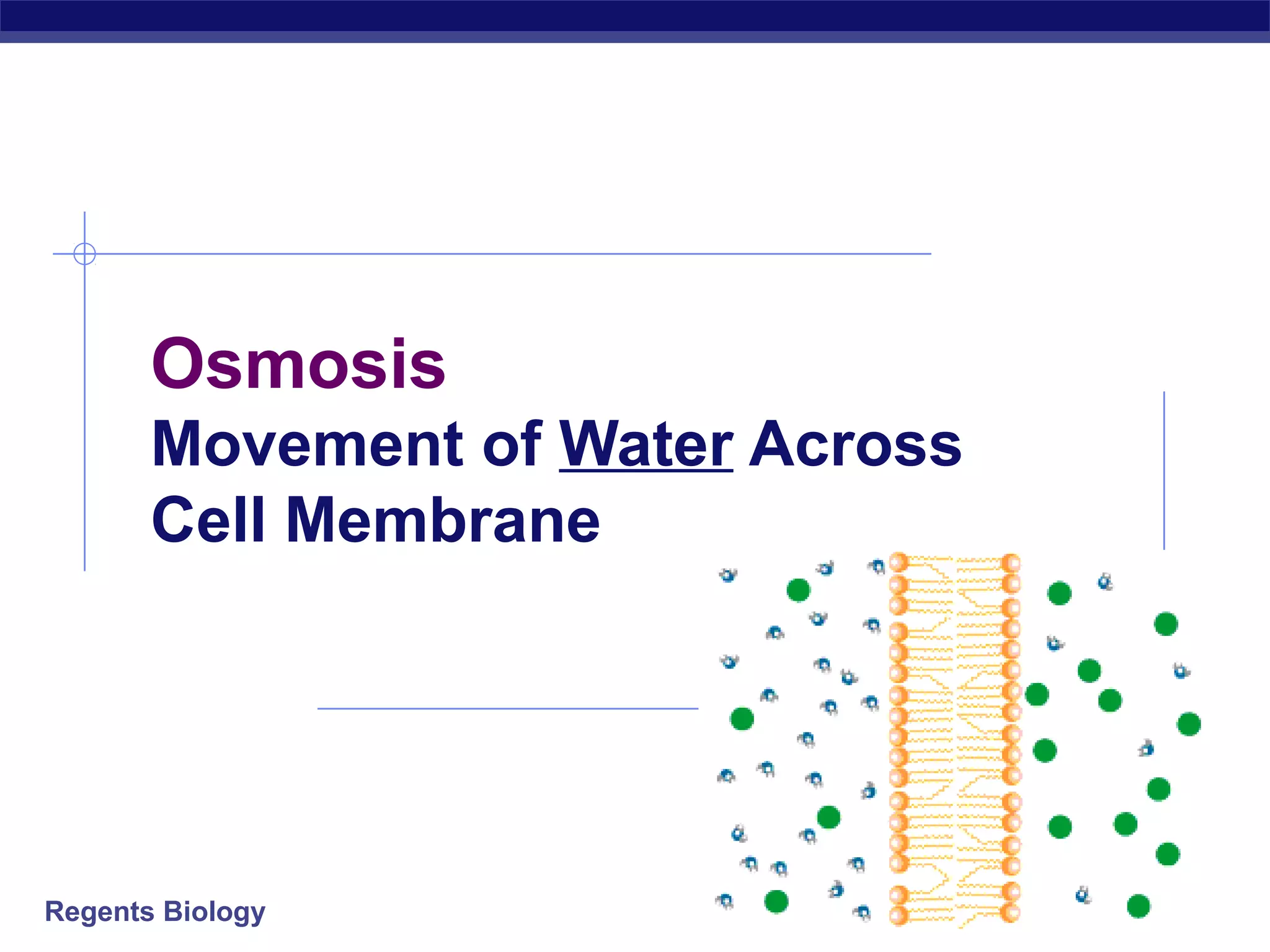
Osmosis 
Movement of Water Across 
Cell Membrane 
Regents Biology
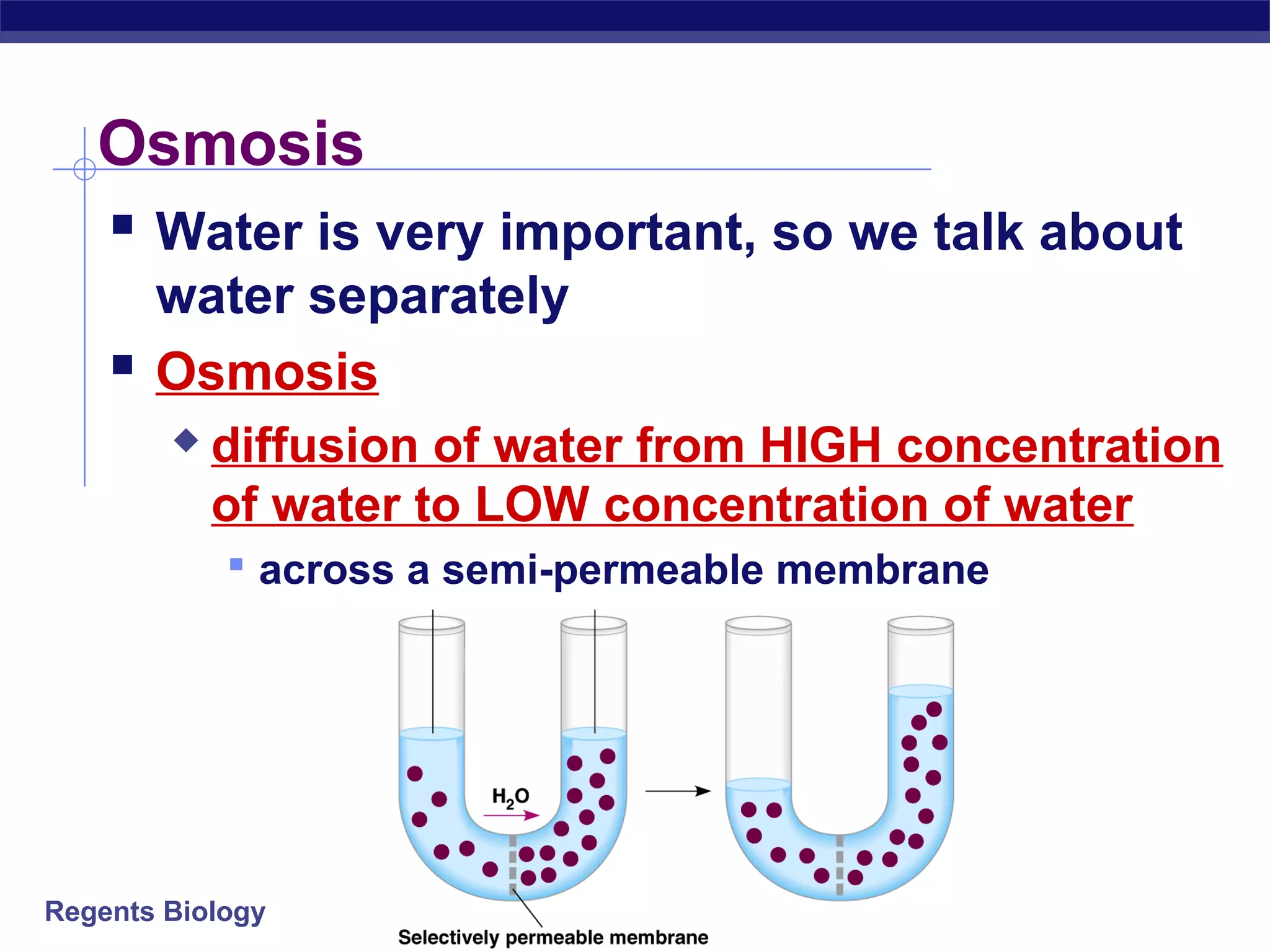
Osmosis 
 Water is very important, so we talk about 
water separately 
 Osmosis 
 diffusion of water from HIGH concentration 
of water to LOW concentration of water 
 across a semi-permeable membrane 
Regents Biology
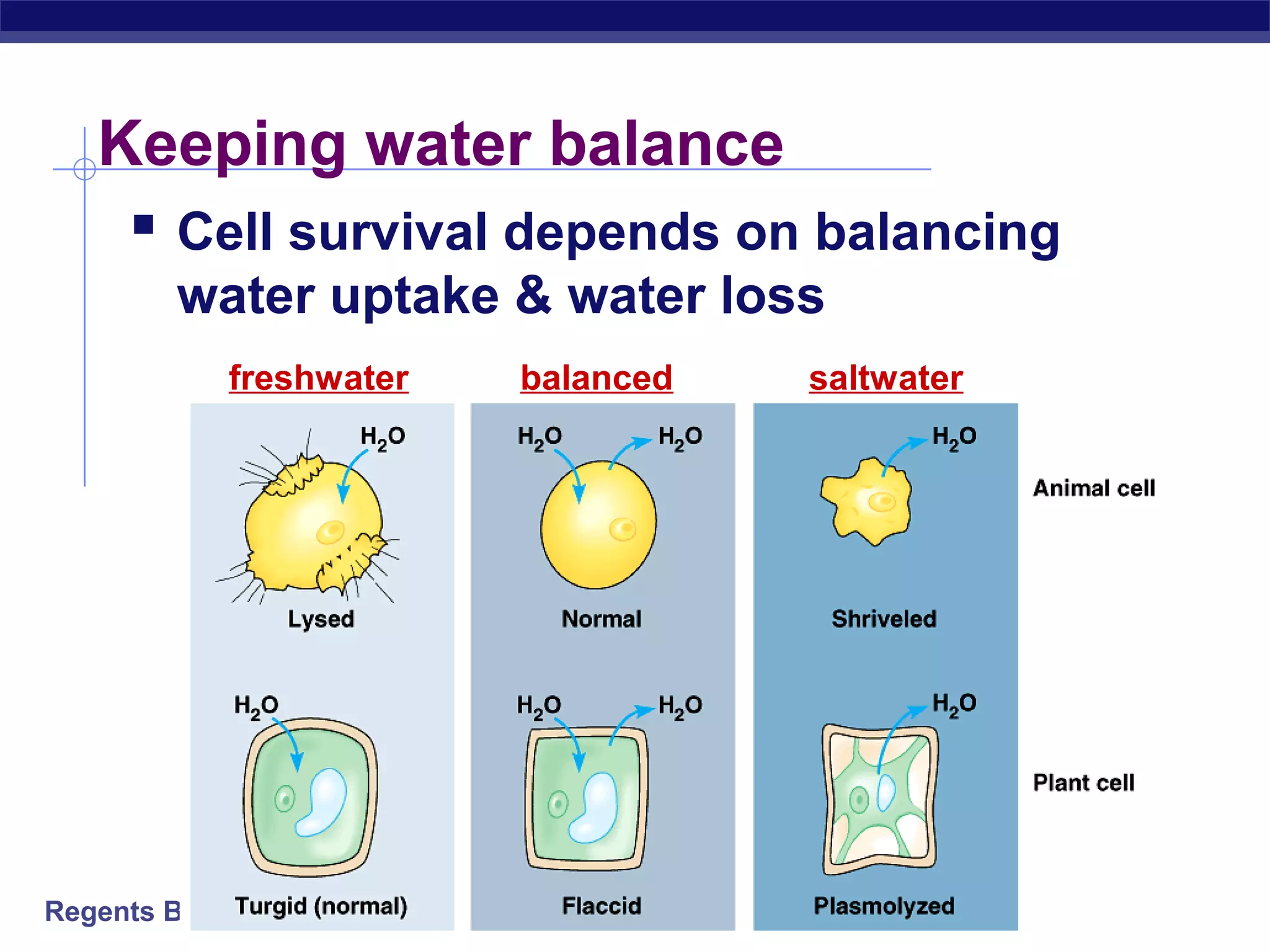
Keeping water balance 
 Cell survival depends on balancing 
water uptake & water loss 
freshwater balanced saltwater 
Regents Biology
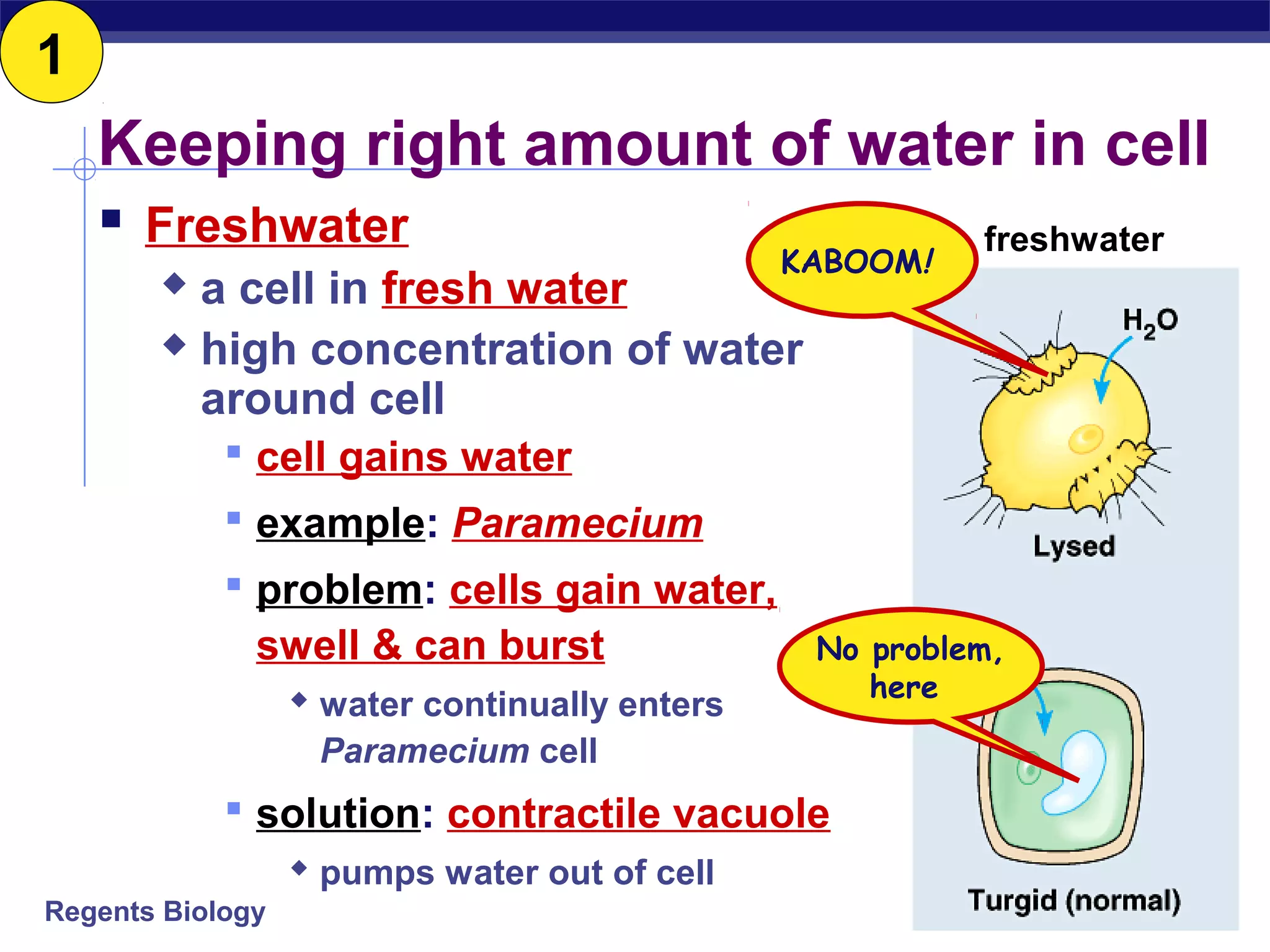
Keeping right amount of water in cell 
 Freshwater 
KABOOM! 
 a cell in fresh water 
 high concentration of water 
around cell 
 cell gains water 
 example: Paramecium 
 problem: cells gain water, 
swell & can burst 
Regents Biology 
 water continually enters 
Paramecium cell 
 solution: contractile vacuole 
 pumps water out of cell 
freshwater 
No problem, 
here 
1
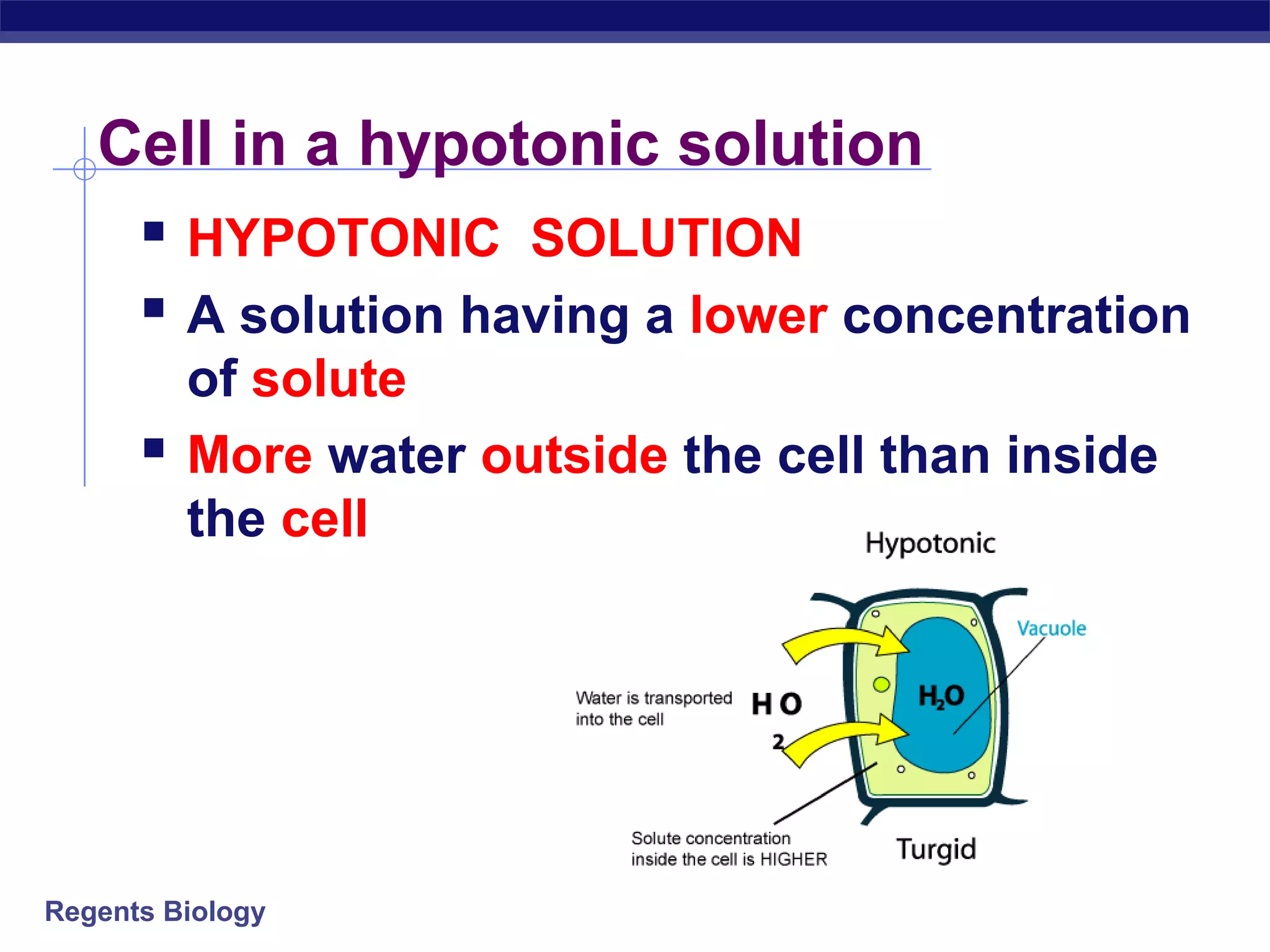
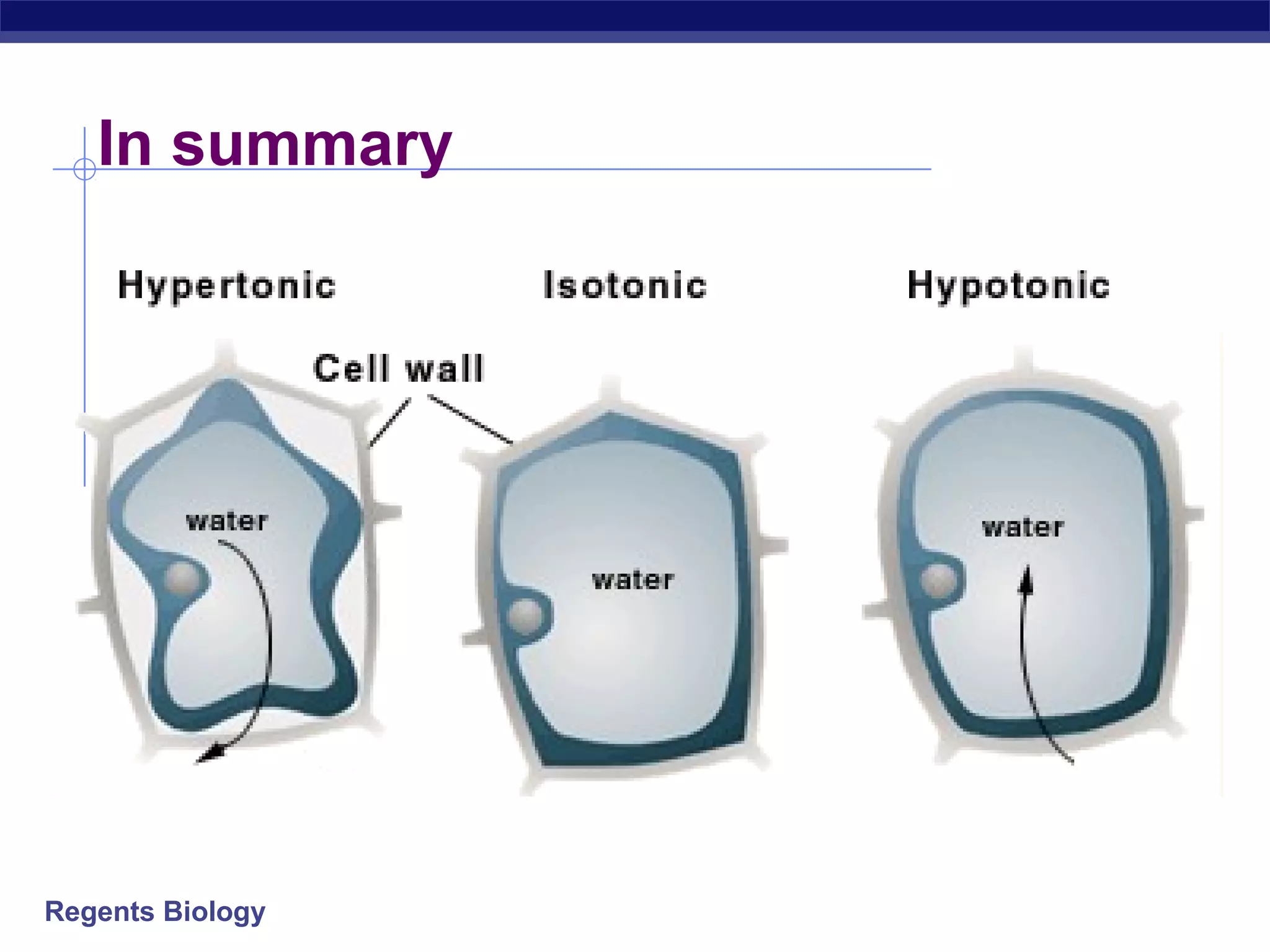
Cell in a hypotonic solution 
 HYPOTONIC SOLUTION 
 A solution having a lower concentration 
of solute 
 More water outside the cell than inside 
the cell 
Regents Biology
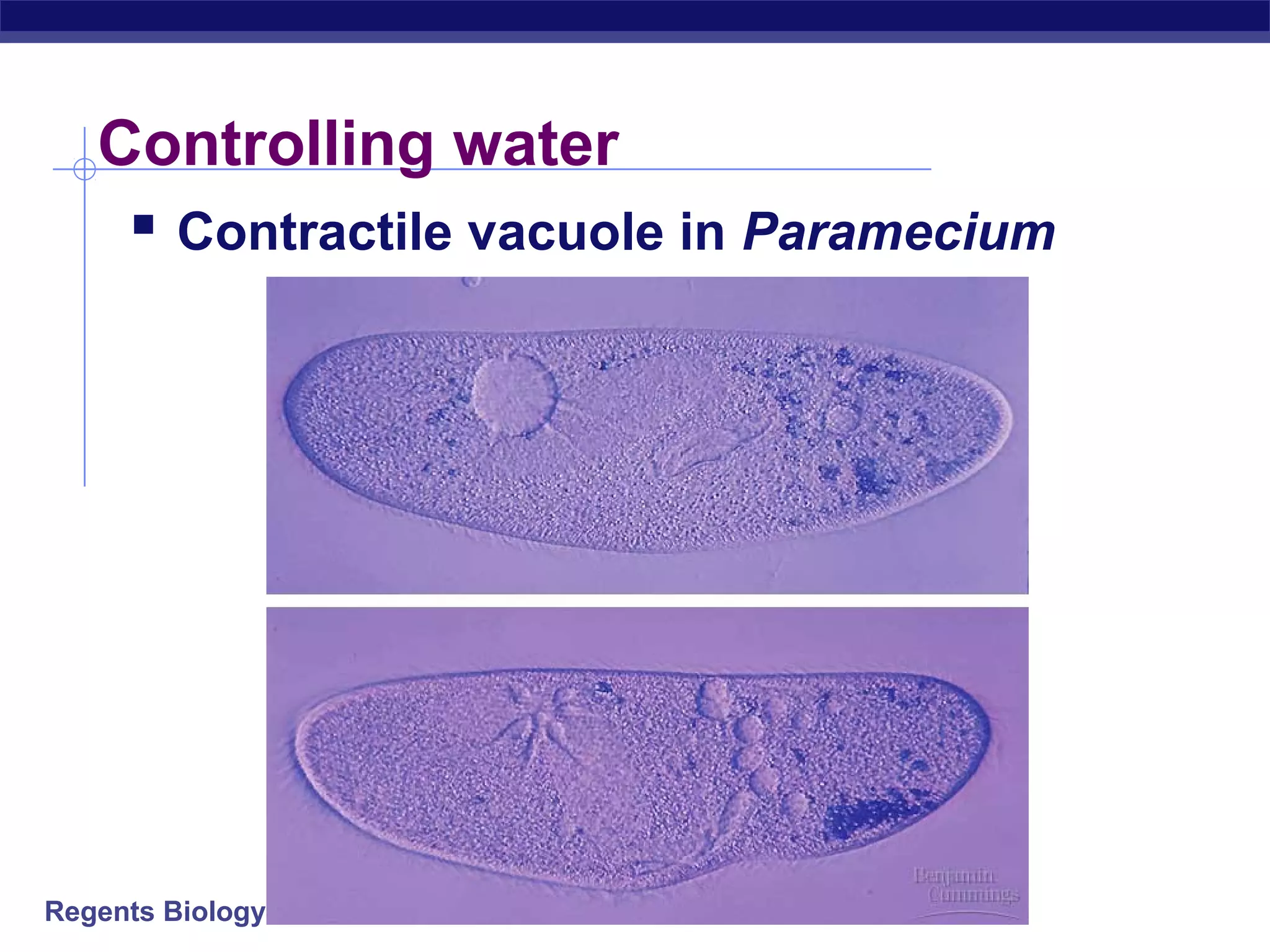
Controlling water 
 Contractile vacuole in Paramecium 
Regents Biology
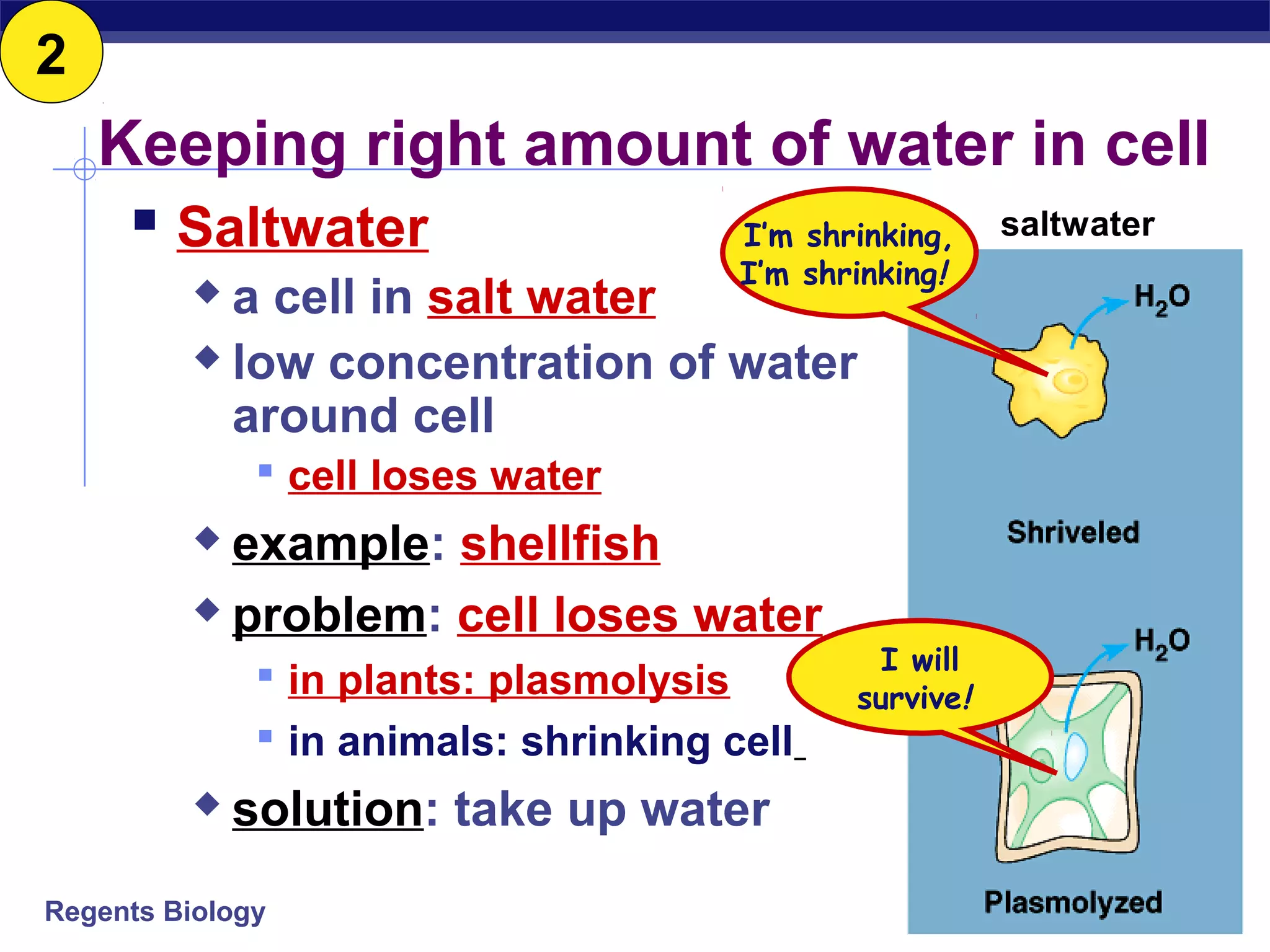
Keeping right amount of water in cell 
 Saltwater 
I’m shrinking, 
I’m shrinking! 
 a cell in salt water 
 low concentration of water 
around cell 
 cell loses water 
 example: shellfish 
 problem: cell loses water 
 in plants: plasmolysis 
 in animals: shrinking cell 
 solution: take up water 
Regents Biology 
saltwater 
I will 
survive! 
2
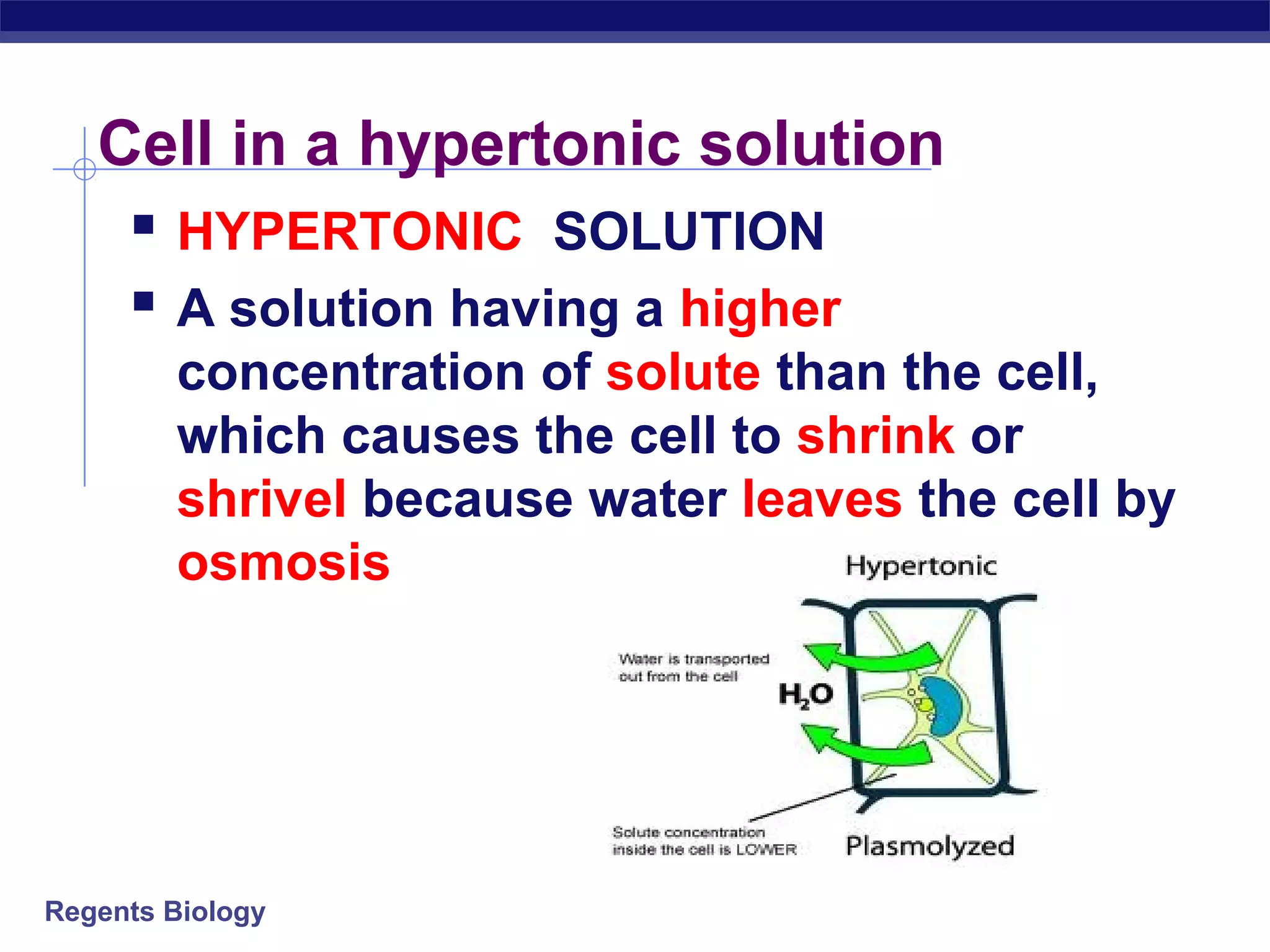
Cell in a hypertonic solution 
 HYPERTONIC SOLUTION 
 A solution having a higher 
concentration of solute than the cell, 
which causes the cell to shrink or 
shrivel because water leaves the cell by 
osmosis 
Regents Biology
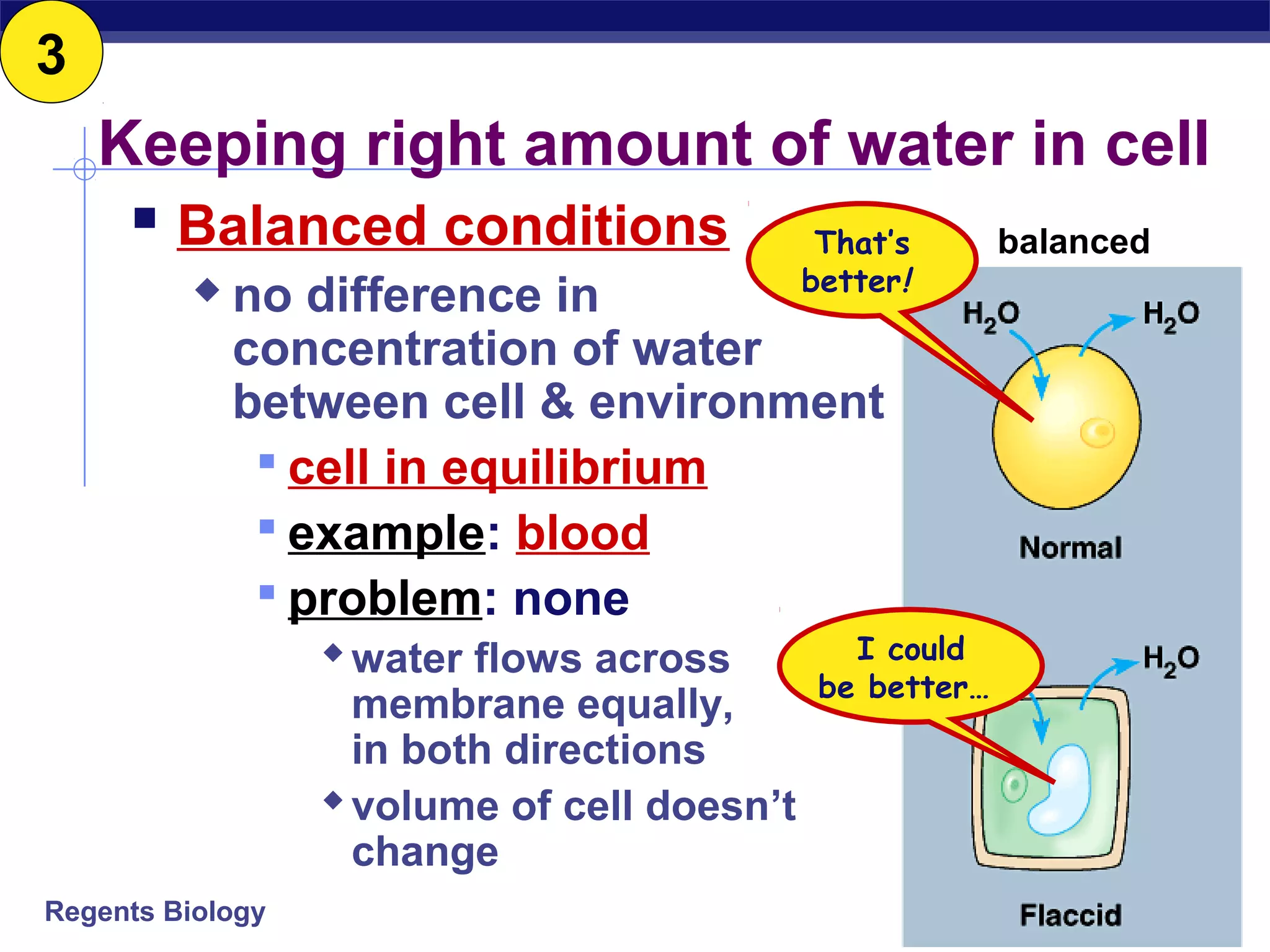
Keeping right amount of water in cell 
 Balanced conditions 
That’s 
better! 
 no difference in 
concentration of water 
between cell & environment 
 cell in equilibrium 
 example: blood 
 problem: none 
Regents Biology 
water flows across 
membrane equally, 
in both directions 
volume of cell doesn’t 
change 
balanced 
I could 
be better… 
3
Cell in isotonic solution 
 ISOTONIC SOLUTION 
 Solution with the same concentration of 
water and solutes as inside the cell, 
resulting in the cell retaining its normal 
shape because there is no movement of 
water. 
Regents Biology
In summary 
Regents Biology

Unit 3 Ch 7.2 Cell Membranes

  • 1.
    Cell Membranes RegentsBiology & Movement Across Them
  • 2.
    Cell (plasma) membrane  Cells need an inside & an outside…  separate cell from its environment  cell membrane is the boundary IN food - sugars - proteins - fats salts O2 H2O Regents Biology OUT waste - ammonia - salts - CO2 - H2O products - proteins cell needs materials in & products or waste out
  • 3.
    Building a membrane  How do you build a barrier that keeps the watery contents of the cell separate from the watery environment? What substance do you know that doesn’t mix with water? Regents Biology ® FATS ¬ ® LIPIDS ¬ Remember: oil & water don’t mix!!
  • 4.
    Lipids of cellmembrane  Membrane is made of special kind of lipid  phospholipids  “split personality”  Membrane is a double layer  phospholipid bilayer Regents Biology inside cell outside cell phosphate lipid “attracted to water” “repelled by water”
  • 5.
    Semi-permeable membrane Cell membrane controls what gets in or out  Need to allow some materials — but not all — to pass through the membrane  semi-permeable  only some material can get in or out So what needs to get across the membrane? sugar lipids aa H2O salt waste Regents Biology O2
  • 6.
    Crossing the cellmembrane  What molecules can get through the cell membrane directly?  fats and oils can pass directly through inside cell outside cell Regents Biology lipid salt sugar aa H2O waste but… what about other stuff?
  • 7.
    Cell membrane channels  Need to make “doors” through membrane  protein channels allow substances in & out  specific channels allow specific material in & out  H2O channel, salt channel, sugar channel, etc. inside cell Regents Biology H2O aa sugar outside cell waste salt
  • 8.
    How do youbuild a semi-permeable cell membrane?  Channels are made of proteins  proteins both “like” water & “like” lipids bi-lipid membrane Regents Biology protein channels in bi-lipid membrane
  • 9.
    Protein channels Proteins act as doors in the membrane  channels to move specific molecules through cell membrane Regents Biology HIGH LOW
  • 10.
    Movement through thechannel  Why do molecules move through membrane if you give them a channel? Regents Biology ? HIGH ? LOW
  • 11.
    Molecules move fromhigh to low  Diffusion  move from HIGH to LOW concentration Regents Biology
  • 12.
    Diffusion  Movefrom HIGH to LOW concentration  passive transport  no energy needed Regents Biology diffusion of water diffusion osmosis
  • 13.
    Simple Diffusion Move from HIGH to LOW inside cell outside cell Regents Biology Which way will fat move? fat fat fat fat fat fat fat fat fat fat fat fat fat fat LOW HIGH
  • 14.
    Facilitated Diffusion Move from HIGH to LOW through a channel inside cell outside cell Regents Biology sugar sugar sugar sugar sugar sugar sugar sugar sugar sugar sugar Which way will sugar move? sugar sugar LOW HIGH
  • 15.
    Diffusion  Movefrom HIGH to LOW concentration  directly through membrane  simple diffusion  no energy needed  help through a protein channel  facilitated diffusion (with help)  no energy needed HIGH Regents Biology LOW
  • 16.
    Simple vs. facilitateddiffusion simple diffusion facilitated diffusion inside cell outside cell Regents Biology lipid inside cell protein channel outside cell H2O H2O
  • 17.
    Active transport Cells may need molecules to move against concentration “hill”  need to pump “uphill”  from LOW to HIGH using energy  protein pump  requires energy  ATP Regents Biology ATP
  • 18.
    Transport summary RegentsBiology simple diffusion facilitated diffusion active transport ATP
  • 19.
    Osmosis Movement ofWater Across Cell Membrane Regents Biology
  • 20.
    Osmosis  Wateris very important, so we talk about water separately  Osmosis  diffusion of water from HIGH concentration of water to LOW concentration of water  across a semi-permeable membrane Regents Biology
  • 21.
    Keeping water balance  Cell survival depends on balancing water uptake & water loss freshwater balanced saltwater Regents Biology
  • 22.
    Keeping right amountof water in cell  Freshwater KABOOM!  a cell in fresh water  high concentration of water around cell  cell gains water  example: Paramecium  problem: cells gain water, swell & can burst Regents Biology  water continually enters Paramecium cell  solution: contractile vacuole  pumps water out of cell freshwater No problem, here 1
  • 23.
    Cell in ahypotonic solution  HYPOTONIC SOLUTION  A solution having a lower concentration of solute  More water outside the cell than inside the cell Regents Biology
  • 24.
    Controlling water Contractile vacuole in Paramecium Regents Biology
  • 25.
    Keeping right amountof water in cell  Saltwater I’m shrinking, I’m shrinking!  a cell in salt water  low concentration of water around cell  cell loses water  example: shellfish  problem: cell loses water  in plants: plasmolysis  in animals: shrinking cell  solution: take up water Regents Biology saltwater I will survive! 2
  • 26.
    Cell in ahypertonic solution  HYPERTONIC SOLUTION  A solution having a higher concentration of solute than the cell, which causes the cell to shrink or shrivel because water leaves the cell by osmosis Regents Biology
  • 27.
    Keeping right amountof water in cell  Balanced conditions That’s better!  no difference in concentration of water between cell & environment  cell in equilibrium  example: blood  problem: none Regents Biology water flows across membrane equally, in both directions volume of cell doesn’t change balanced I could be better… 3
  • 28.
    Cell in isotonicsolution  ISOTONIC SOLUTION  Solution with the same concentration of water and solutes as inside the cell, resulting in the cell retaining its normal shape because there is no movement of water. Regents Biology
  • 29.

Editor's Notes

  • #10 Donuts! Each transport protein is specific as to the substances that it will translocate (move). For example, the glucose transport protein in the liver will carry glucose from the blood to the cytoplasm, but not fructose, its structural isomer. Some transport proteins have a hydrophilic channel that certain molecules or ions can use as a tunnel through the membrane -- simply provide corridors allowing a specific molecule or ion to cross the membrane. These channel proteins allow fast transport. For example, water channel proteins, aquaprorins, facilitate massive amounts of diffusion.
  • #12 Movement from high concentration of that substance to low concentration of that substance.
  • #18 Plants have nitrate & phosphate pumps in their roots. Why? Nitrate for amino acids Phosphate for DNA & membranes Not coincidentally these are the main constituents of fertilizer.