movement of substances  across  the plasma membrane
what are the substances needed by the cells? how the needed substances  move into the cells?
Substances needed by the cells Water Oxygen Nutrient  Glucose Amino acid Mineral  Fatty acid Vitamin The substances have to move across the membrane
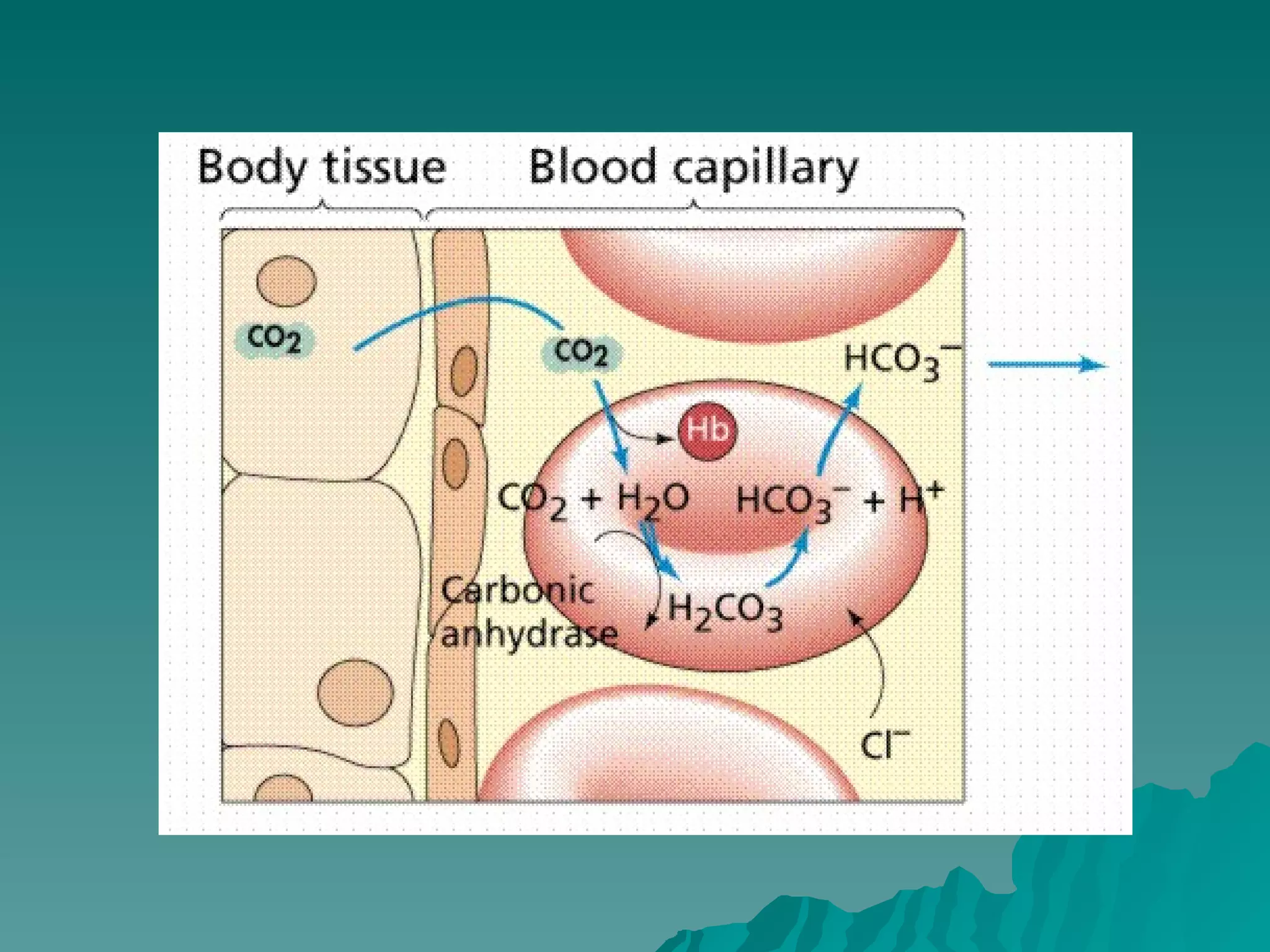
Substances to be eliminate from the cells Carbon dioxide Urea  Toxin
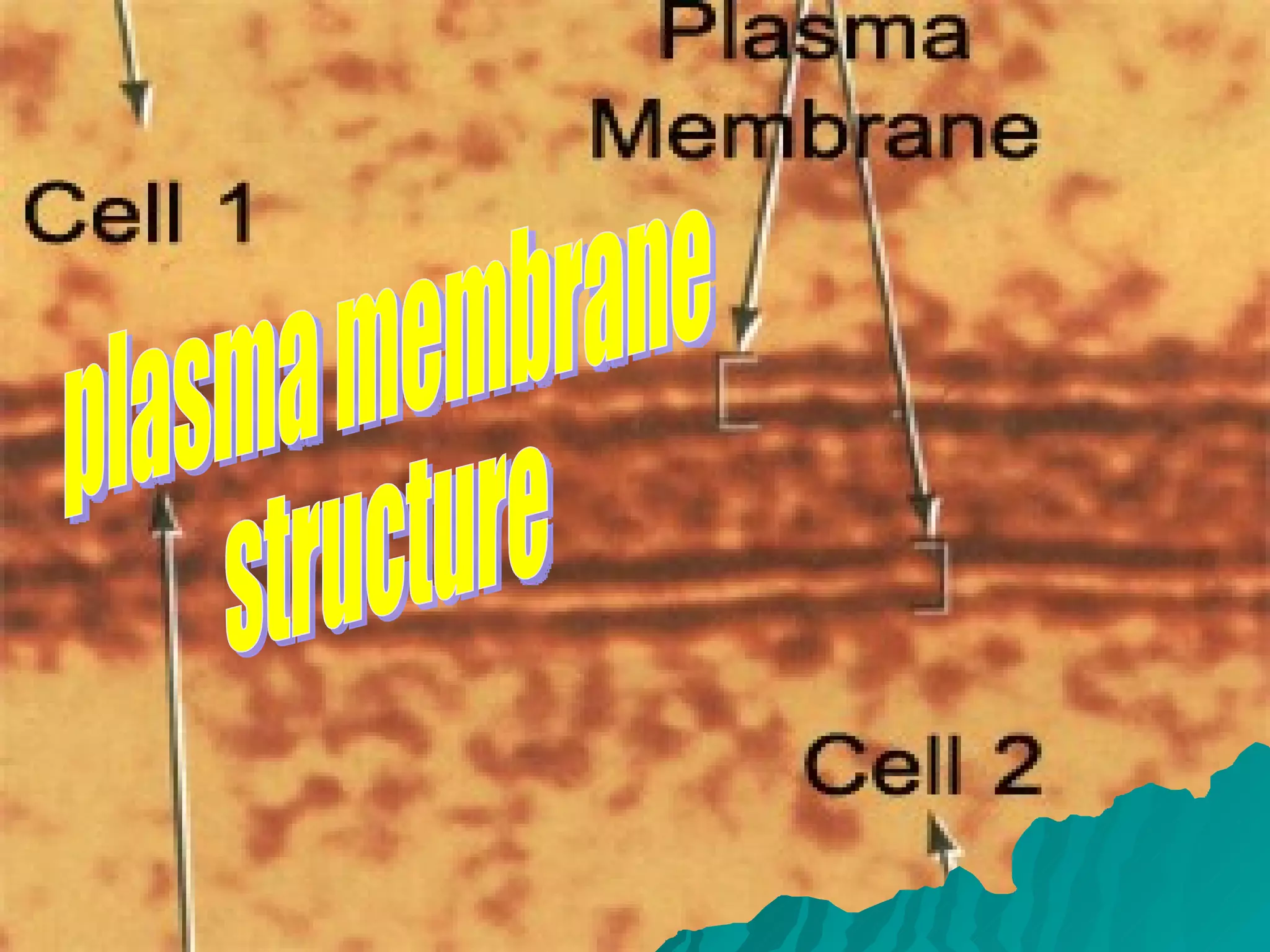
plasma membrane structure
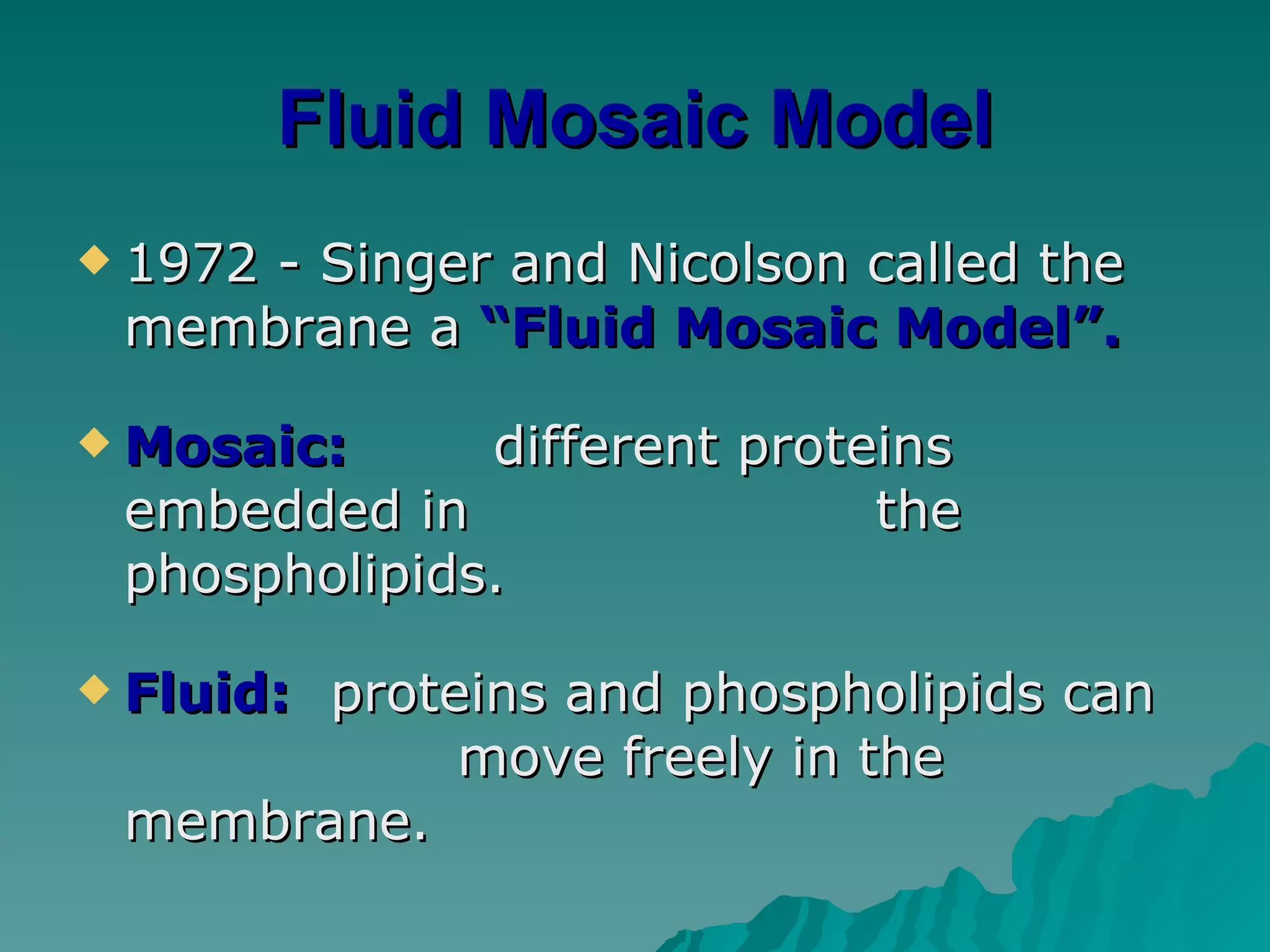
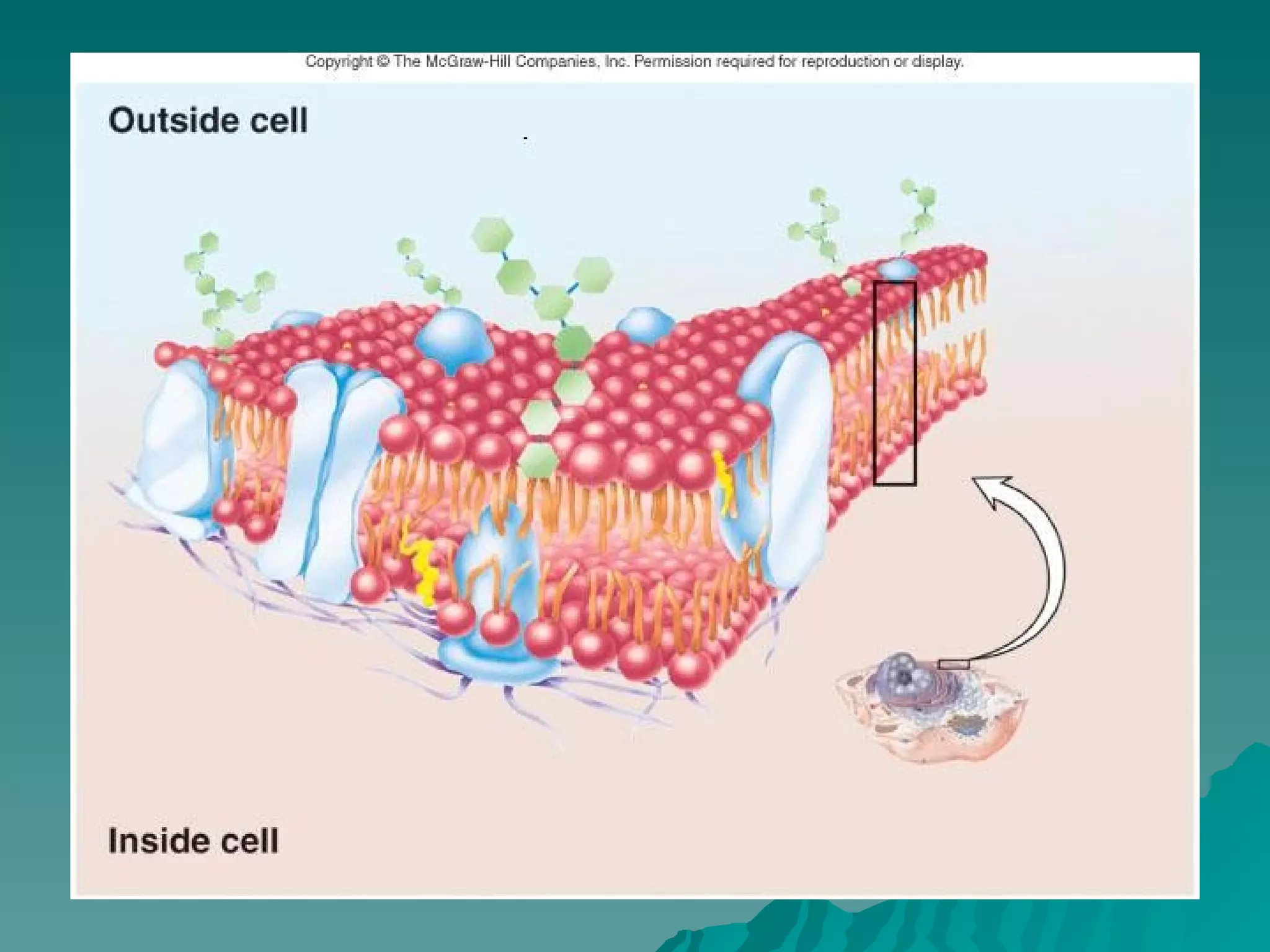
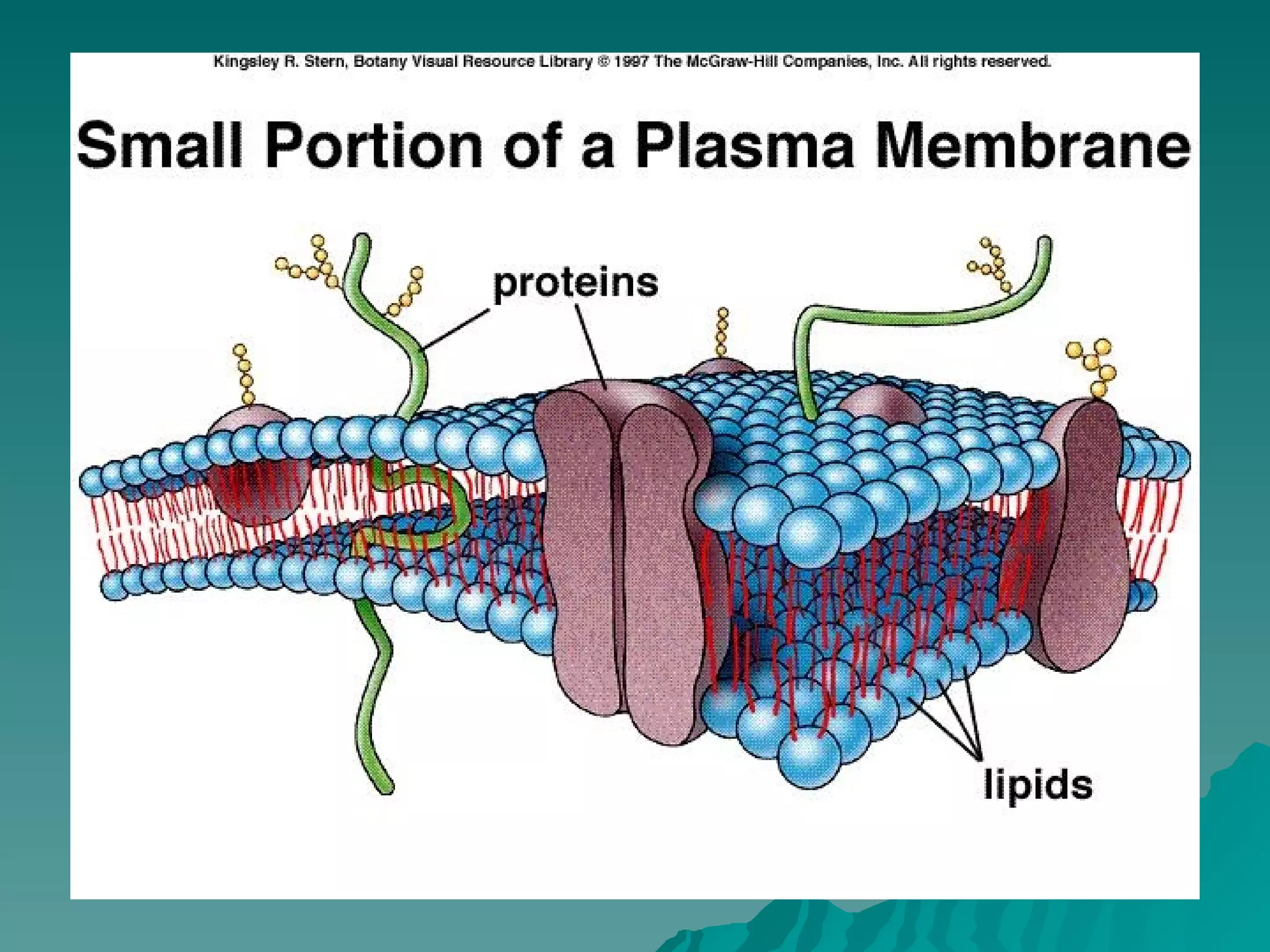
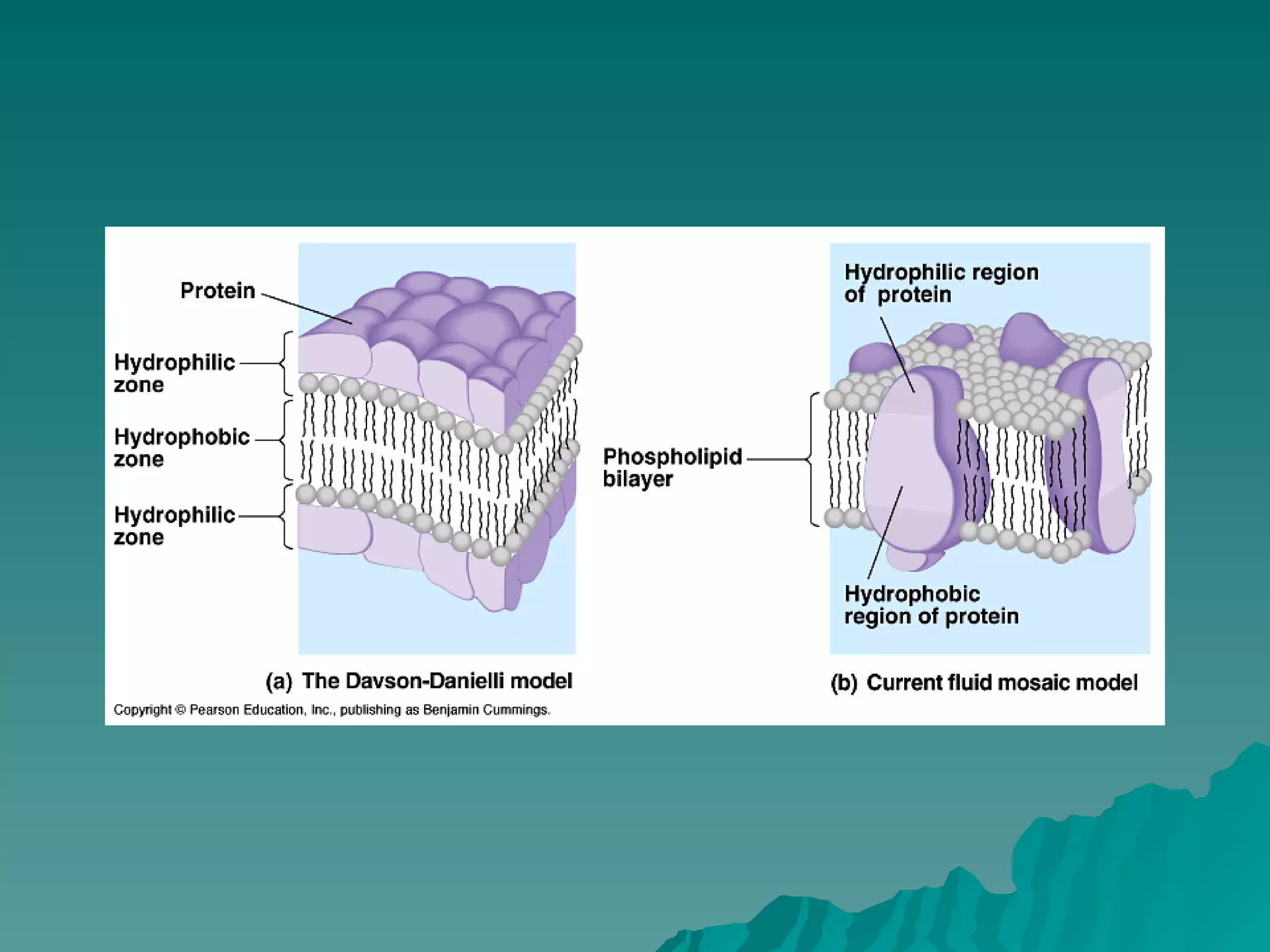
Fluid Mosaic Model 1972 - Singer and Nicolson called the membrane a  “Fluid Mosaic Model”. Mosaic:   different proteins embedded in    the phospholipids. Fluid: proteins and phospholipids can  move freely in the membrane.


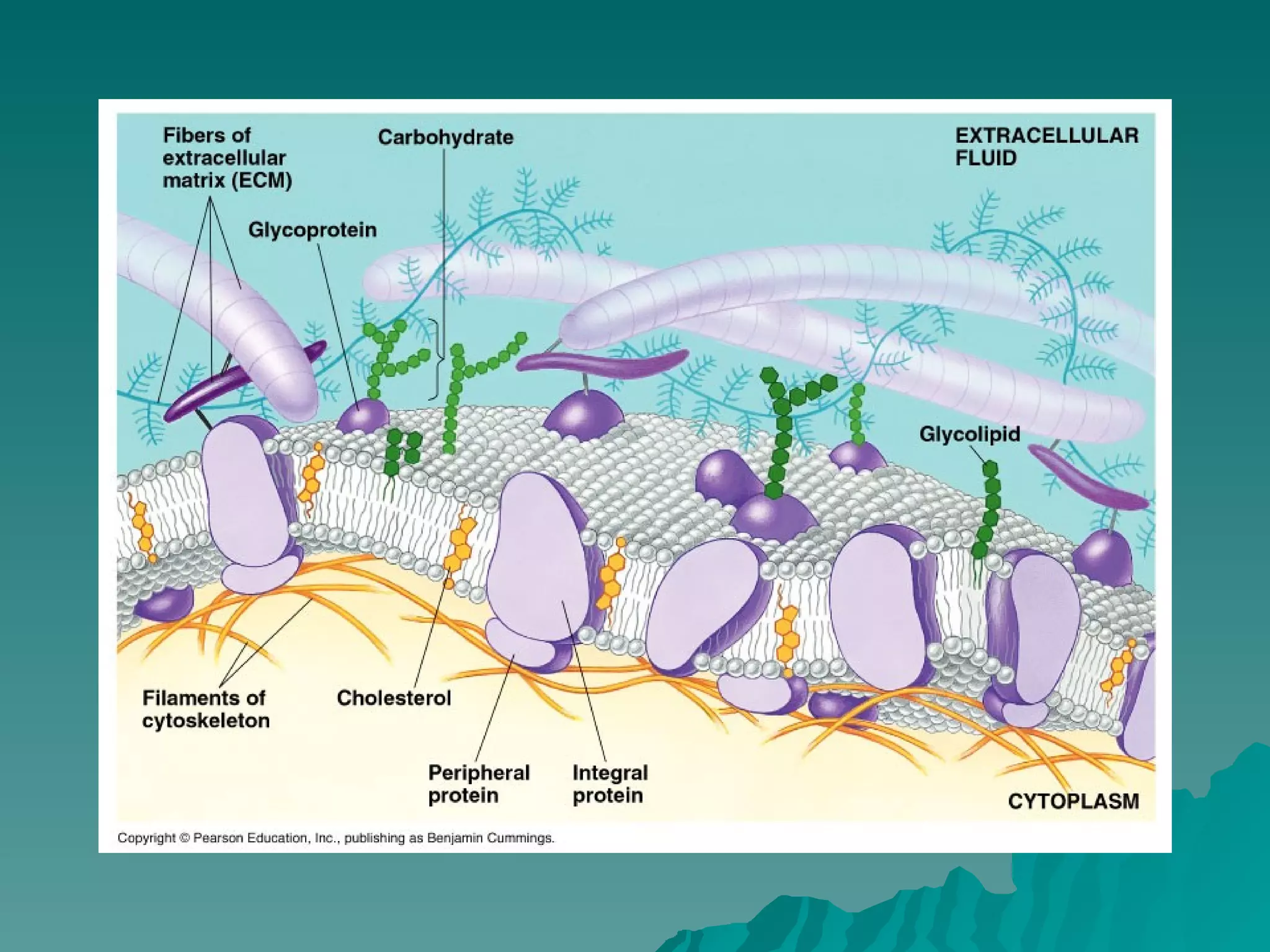
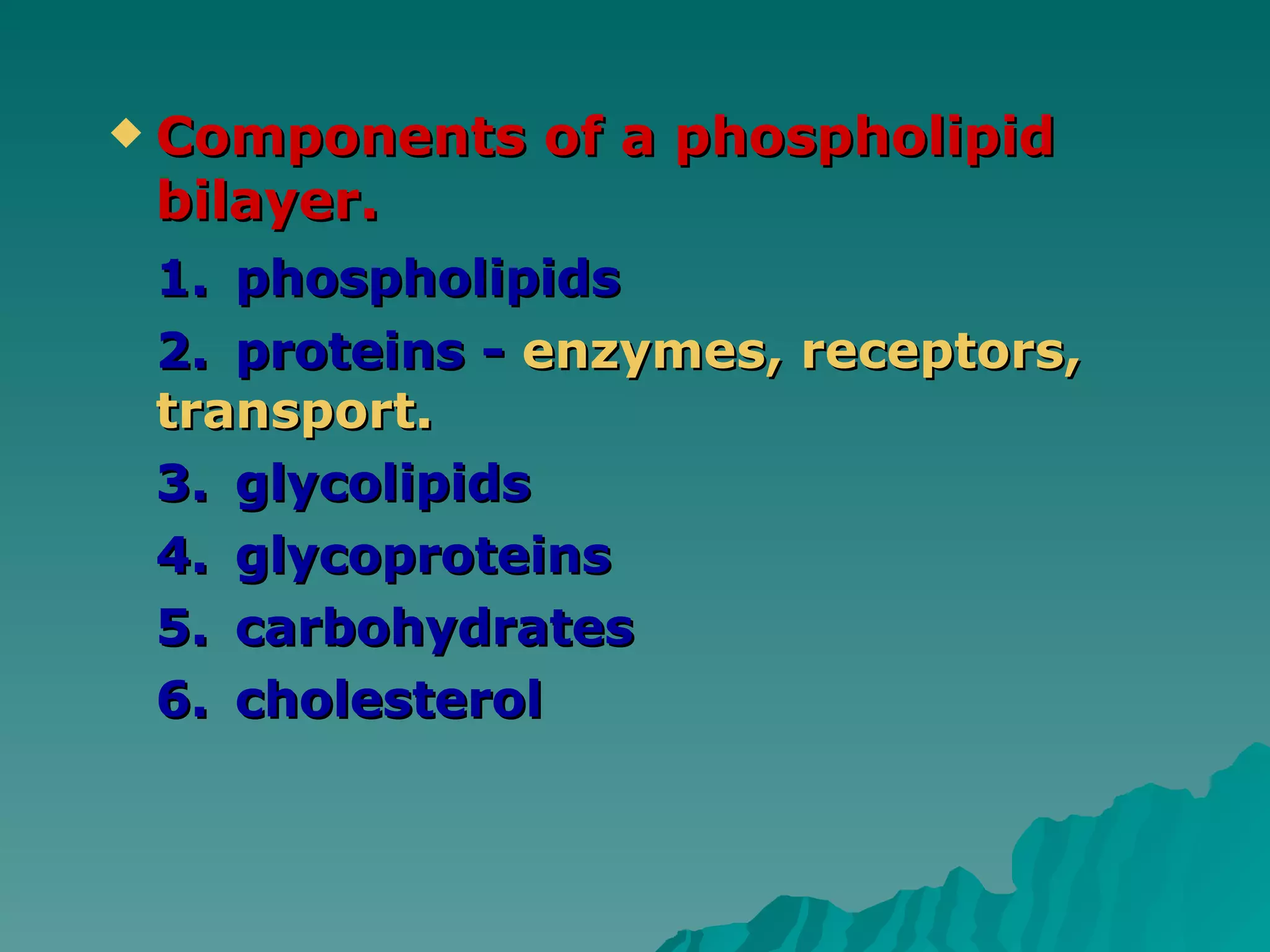
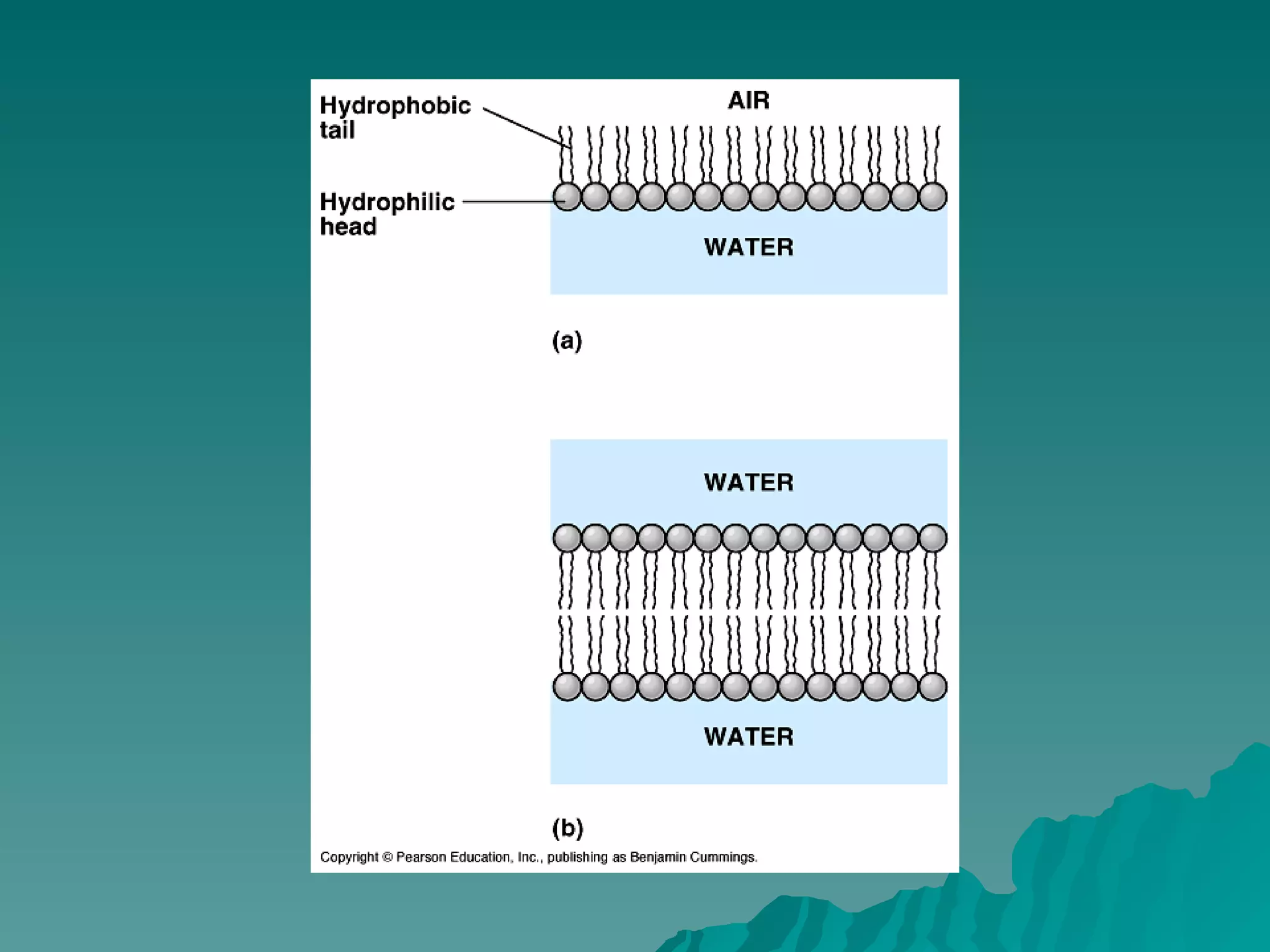
Components of a phospholipid bilayer. 1. phospholipids 2. proteins -  enzymes, receptors, transport. 3. glycolipids 4. glycoproteins 5. carbohydrates 6. cholesterol
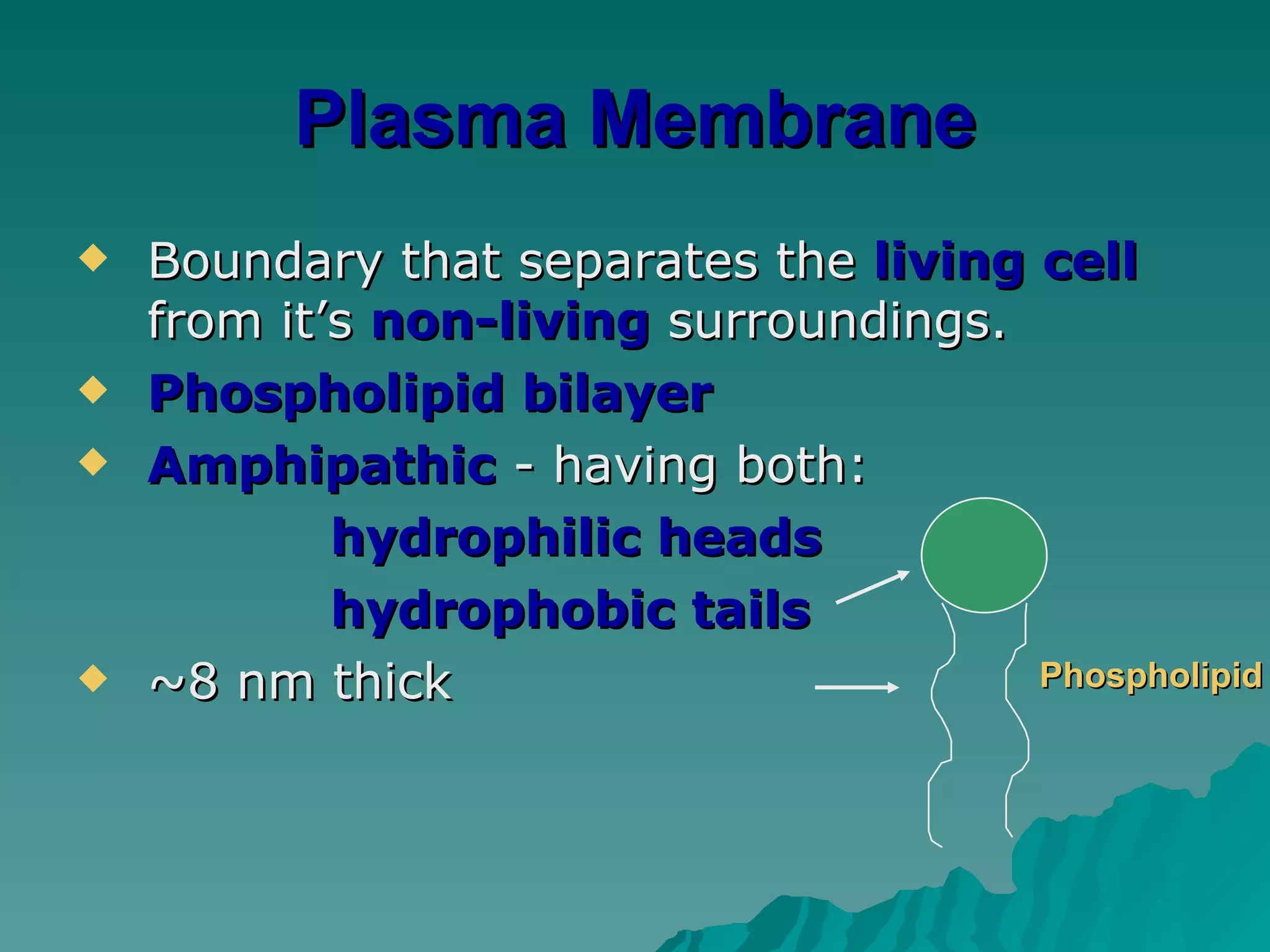
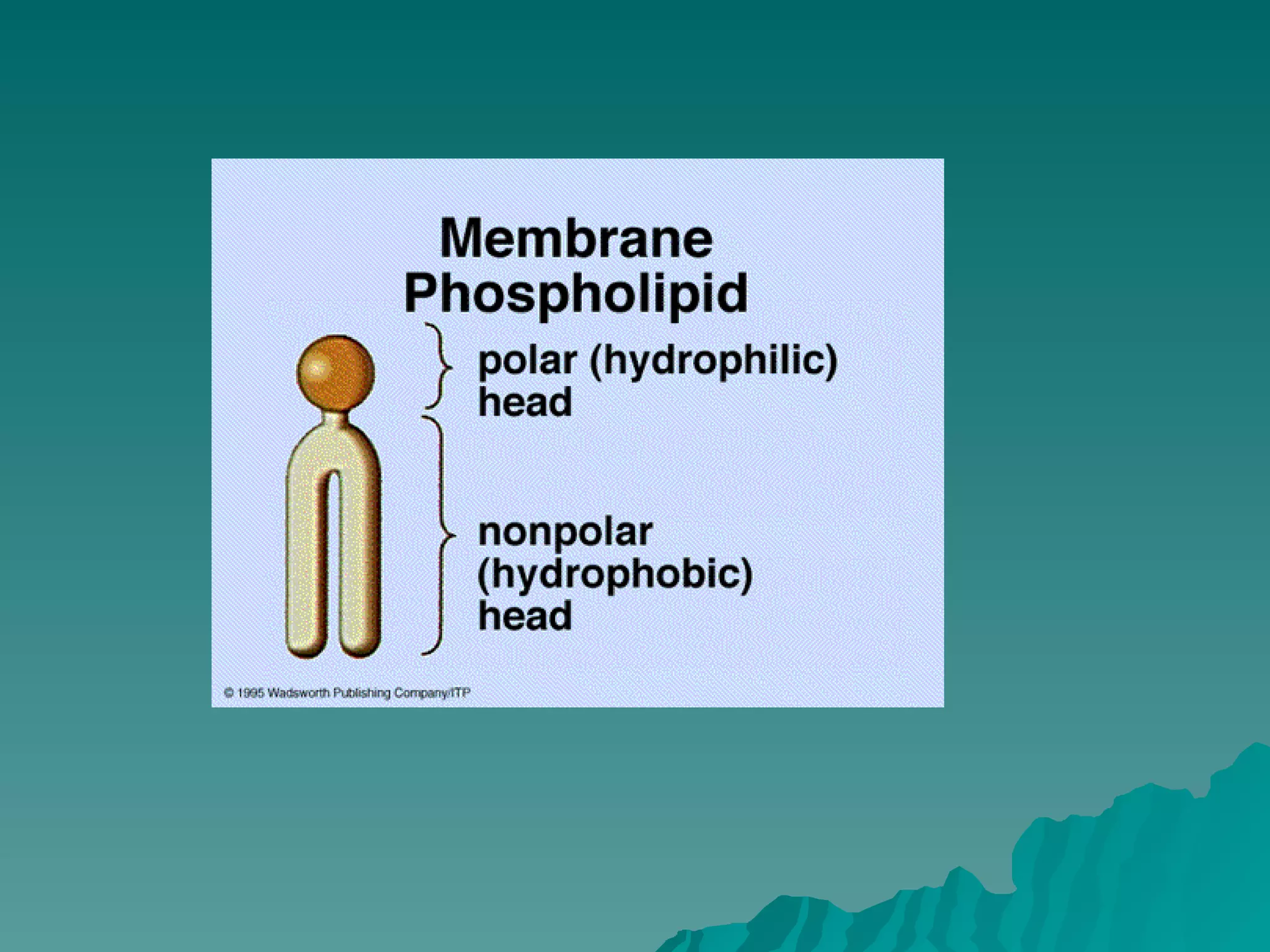
Plasma Membrane Boundary that separates the  living cell  from it’s  non-living  surroundings. Phospholipid bilayer Amphipathic  - having both: hydrophilic heads hydrophobic tails ~8 nm thick Phospholipid


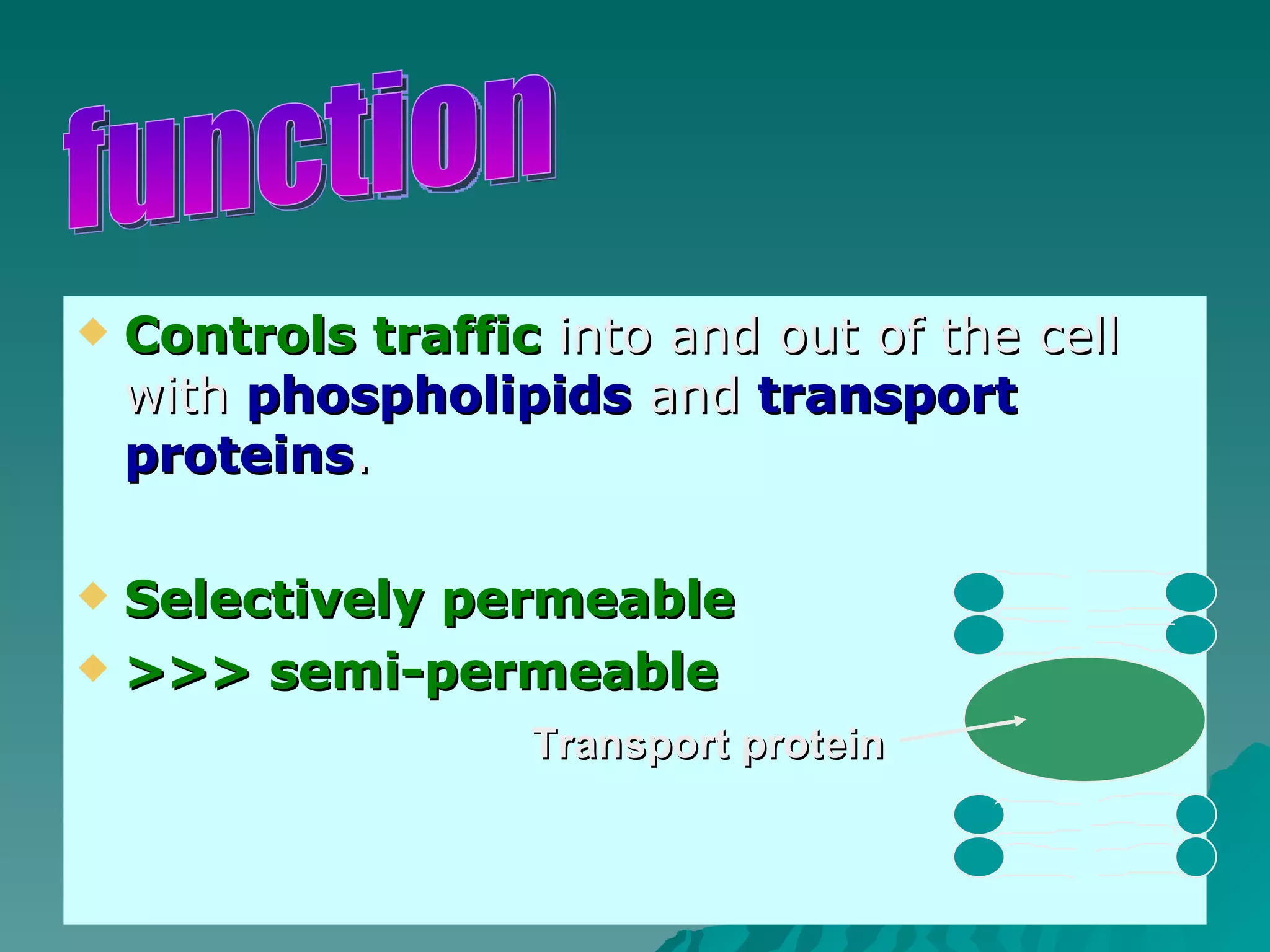
Controls traffic  into and out of the cell with  phospholipids  and  transport proteins . Selectively permeable >>> semi-permeable function  Transport protein
What is Selective Permeability? The  property  of  biological membranes  which allows some substances to cross more easily than others.
Transport Proteins Transports  molecules  or  ions  across biological membranes Two types: Carrier proteins Pore proteins
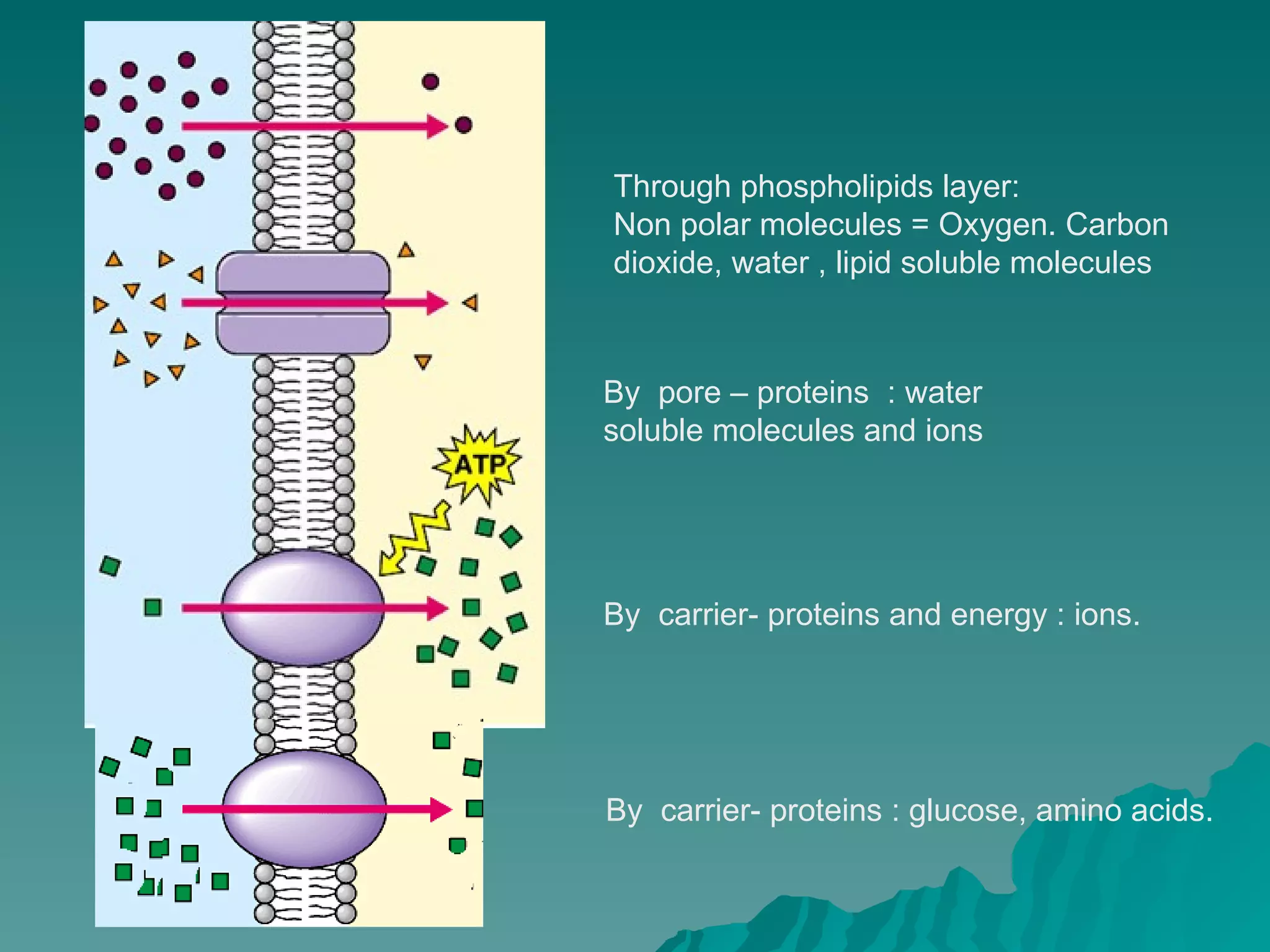
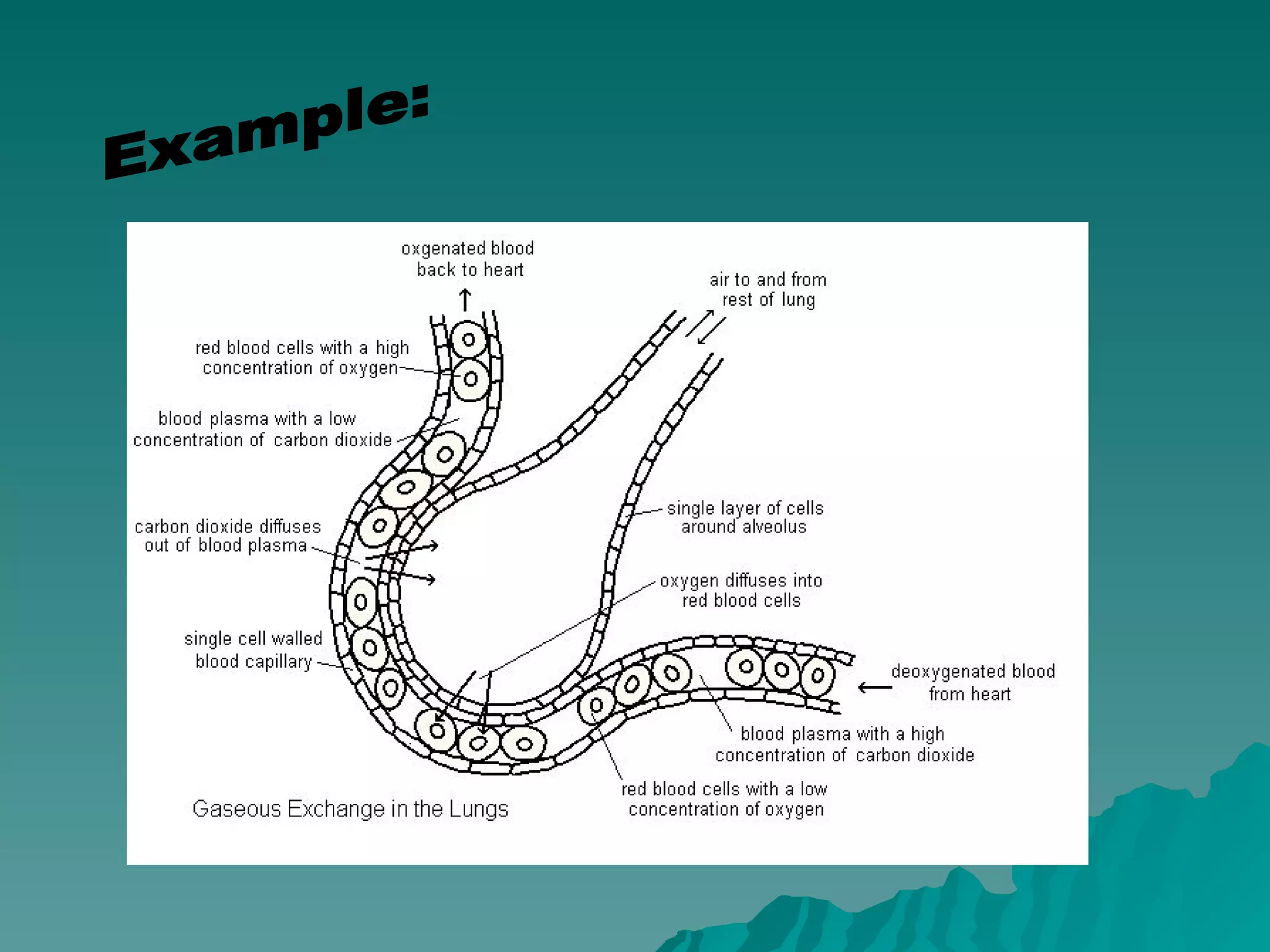
Through phospholipids layer: Non polar molecules = Oxygen. Carbon dioxide, water , lipid soluble molecules  By  pore – proteins  : water  soluble molecules and ions By  carrier- proteins and energy : ions. By  carrier- proteins : glucose, amino acids.
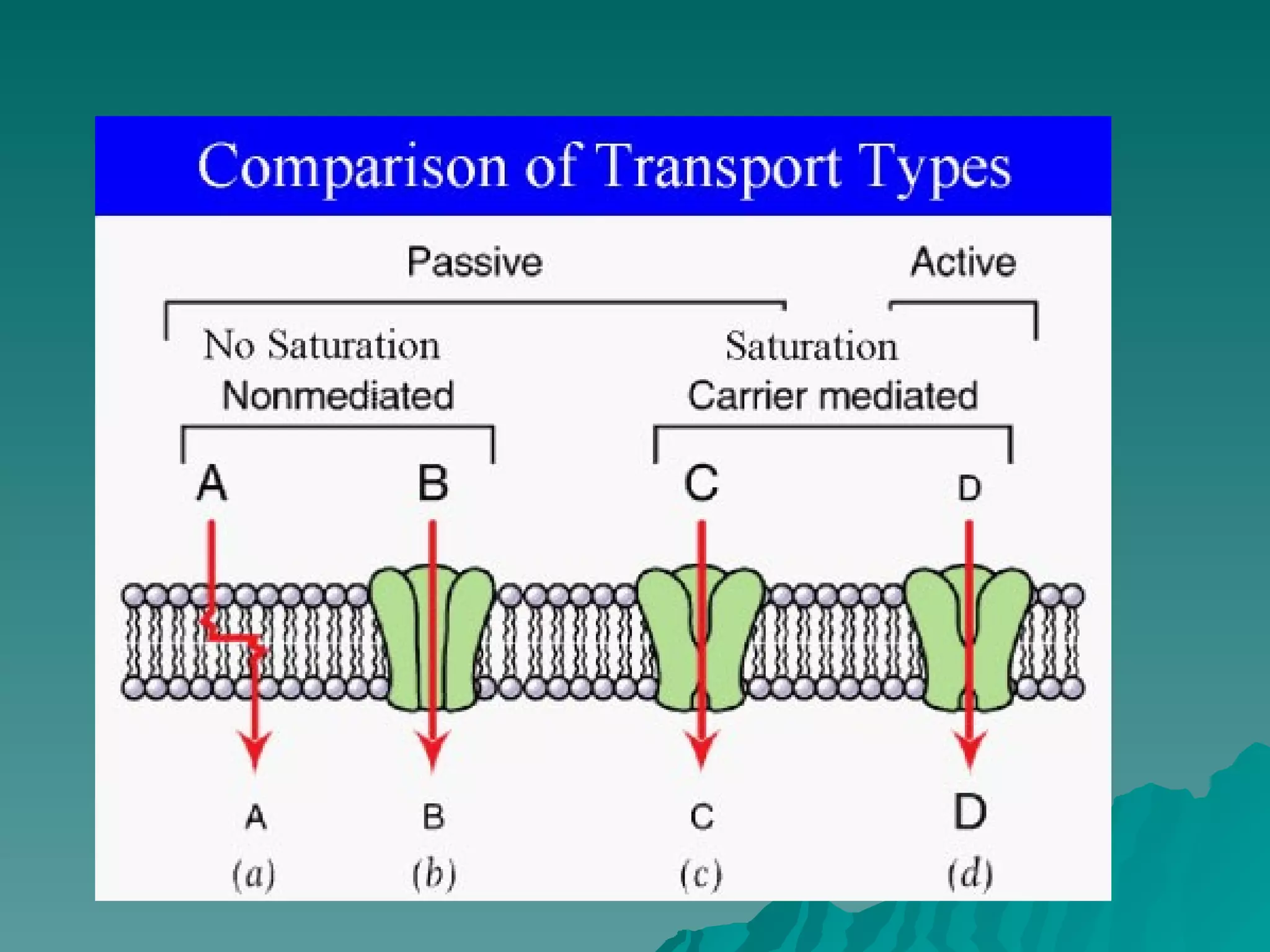
Passive transport: NO   energy   is expended. Simple diffusion  – gases,  Osmosis – water  facilitated diffusion :  type of  passive transport  which uses  transport proteins.  –  glucose and amino acid Active transport  : Using carrier protein and energy – ions Movement of substances
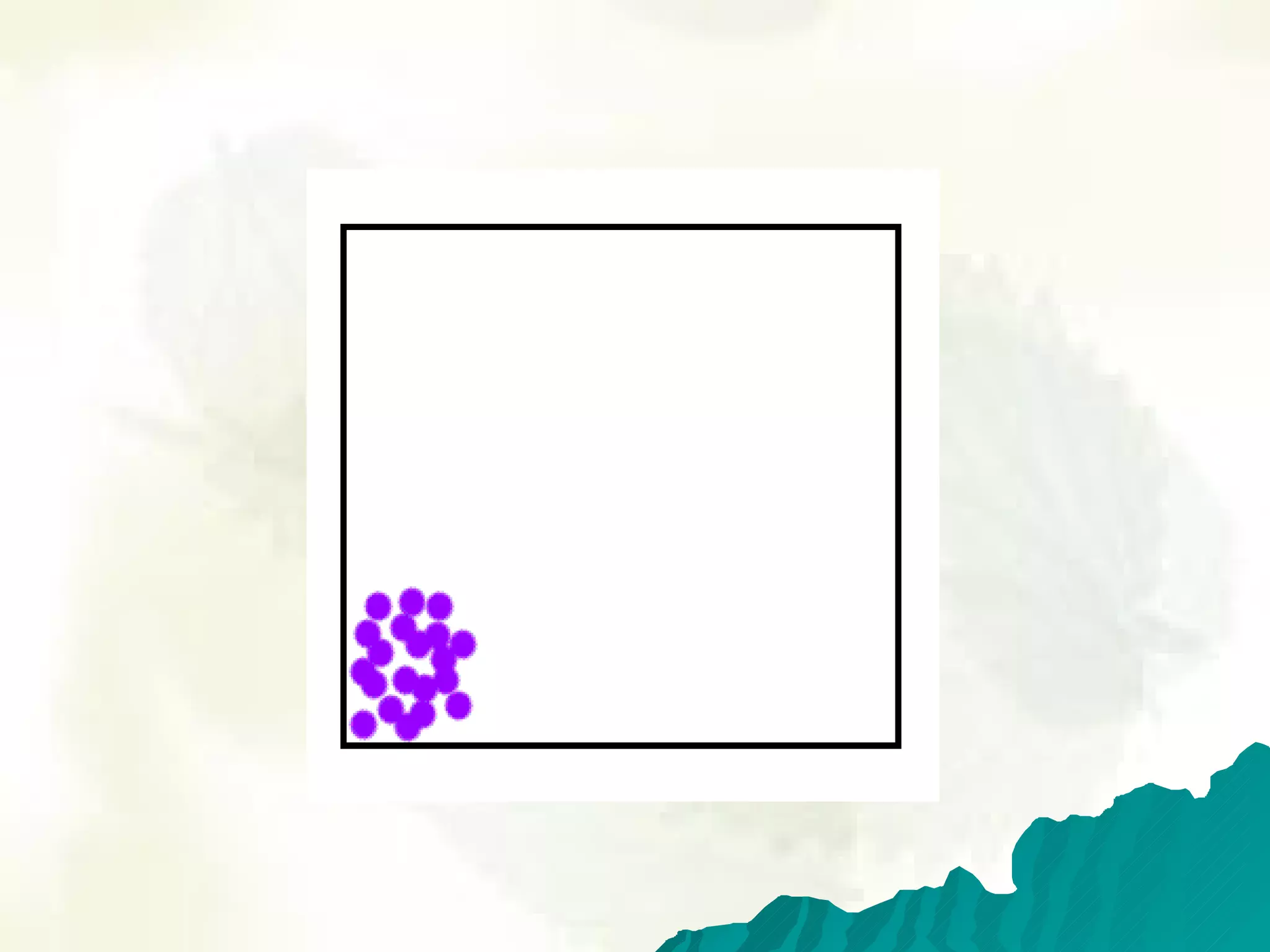
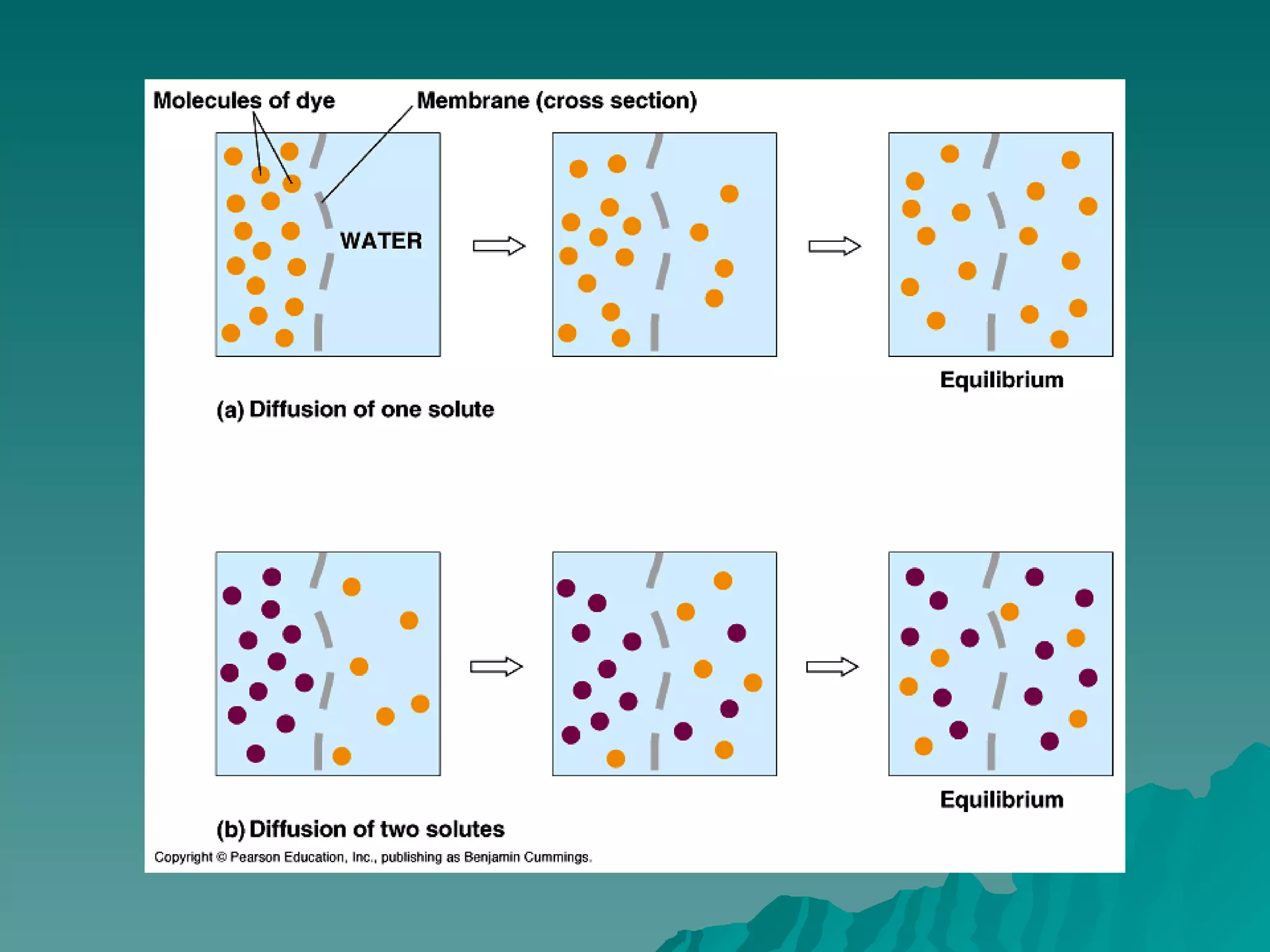
Diffusion The net movement of  a  substance  (molecules)  down a  concentration   gradient   from an area of  high  con centration   to an area of  low   concentration .
 
 
Example:
 
 
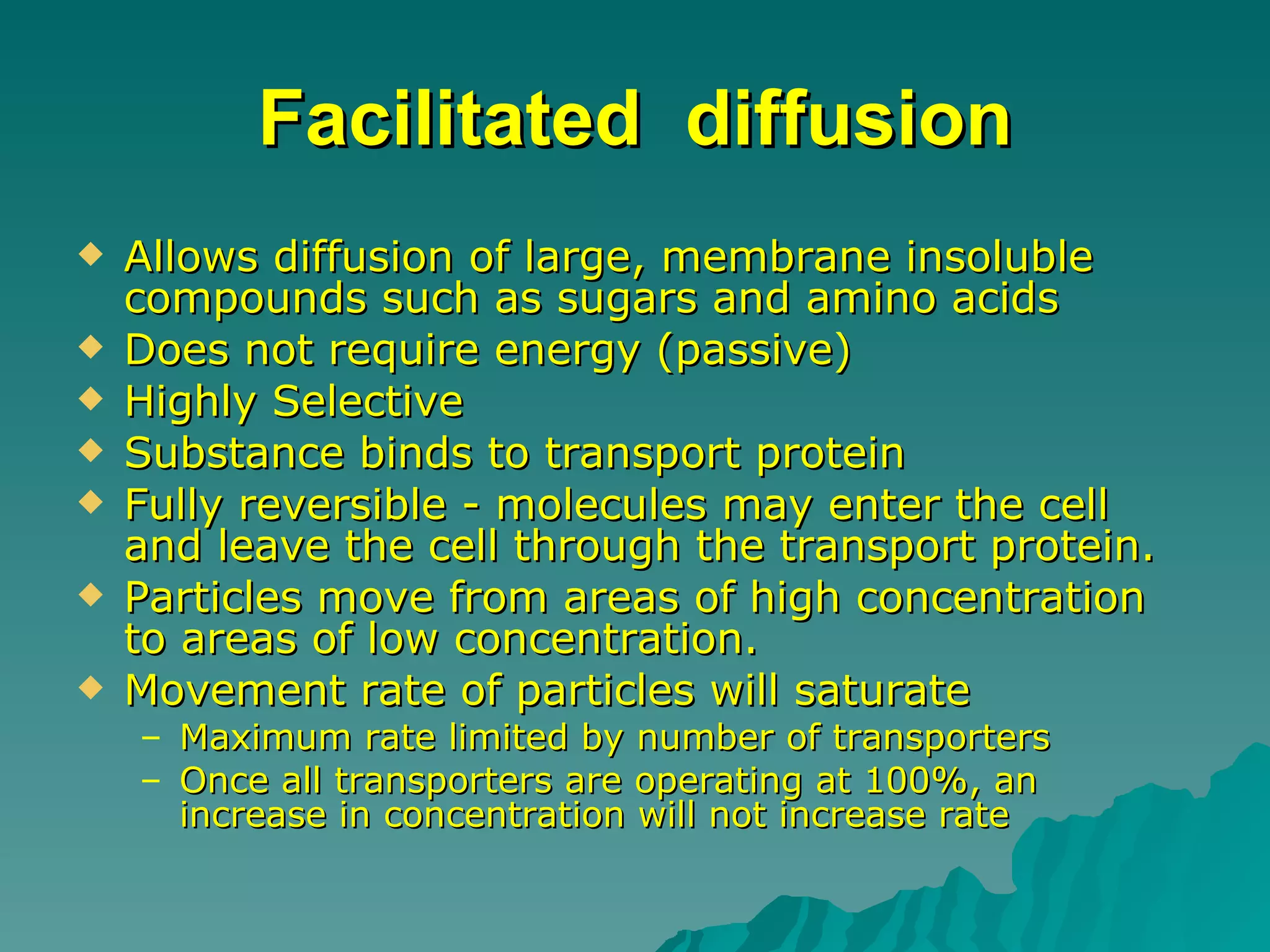
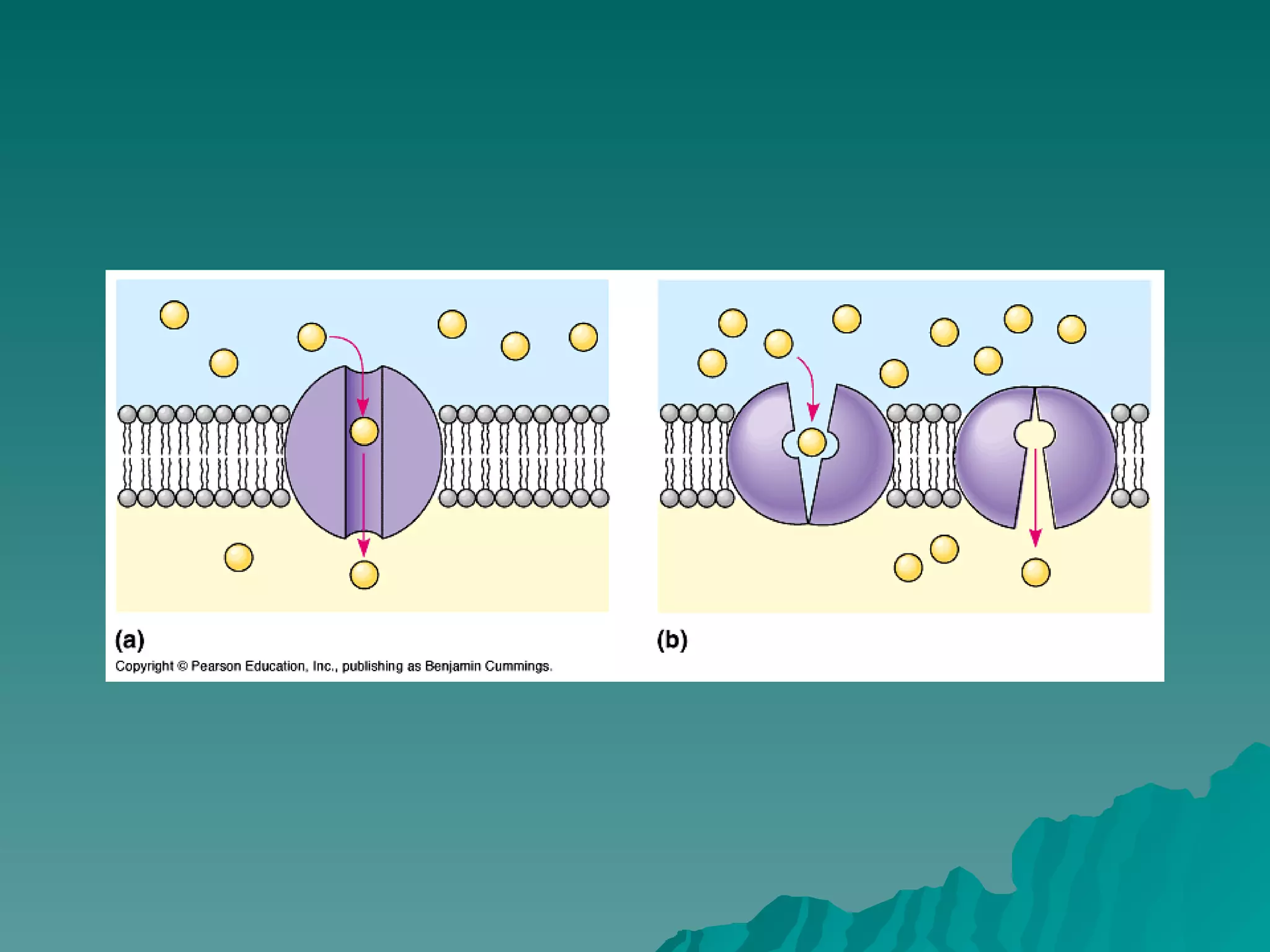
Facilitated  diffusion Allows diffusion of large, membrane insoluble compounds such as sugars and amino acids  Does not require energy (passive)  Highly Selective  Substance binds to transport protein  Fully reversible - molecules may enter the cell and leave the cell through the transport protein.  Particles move from areas of high concentration to areas of low concentration.  Movement rate of particles will saturate  Maximum rate limited by number of transporters  Once all transporters are operating at 100%, an increase in concentration will not increase rate
 
 
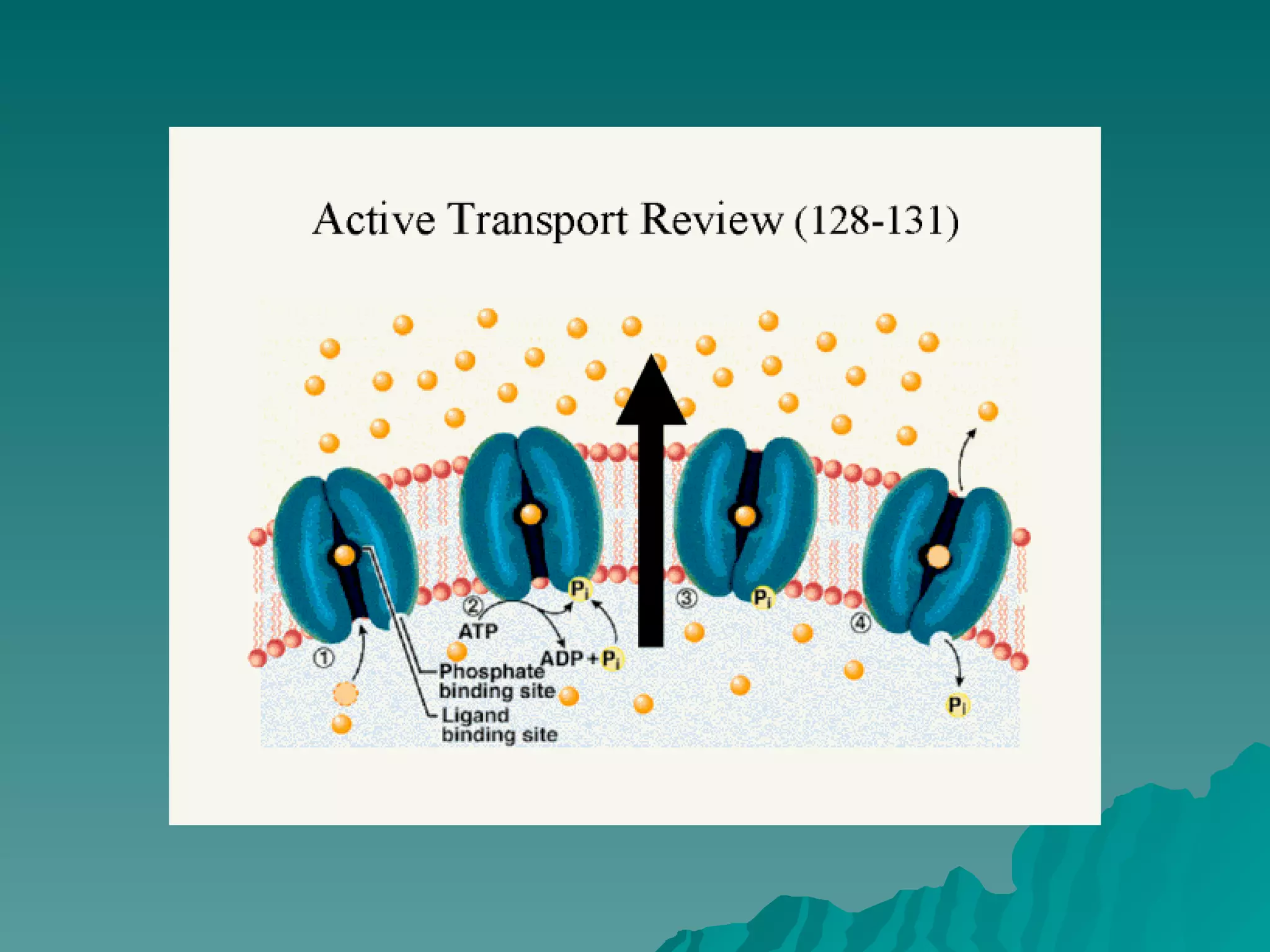
Active Transport   Movement across membrane with an energy cost (usually against concentration  Used to pump specific compounds in or out of the cell  Requires energy to overcome the concentration gradient or to allow a large or charged particle to cross membrane  Requires specific carrier proteins  The energy requirement distinguishes active transport from facilitated diffusion
 
 
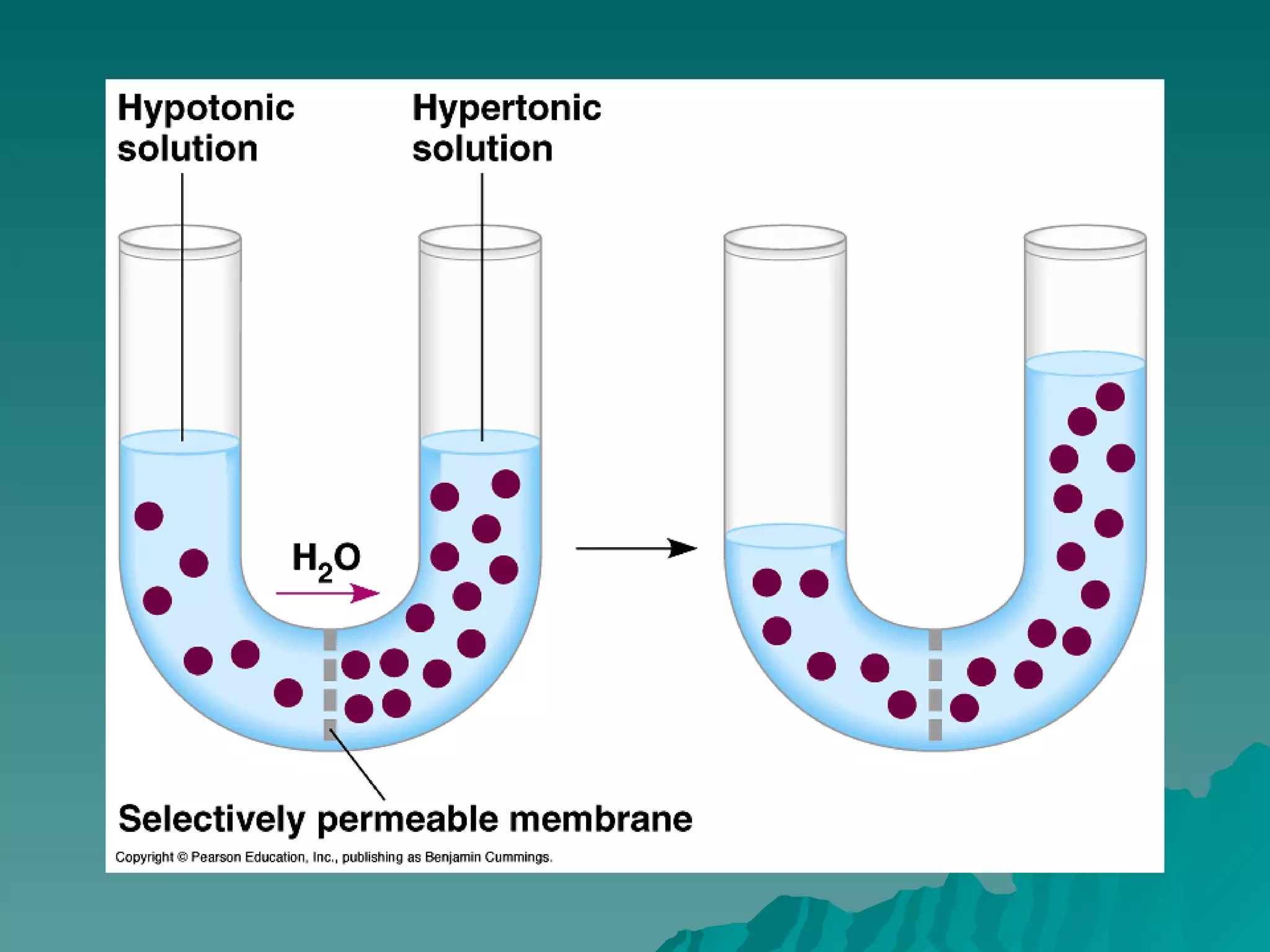
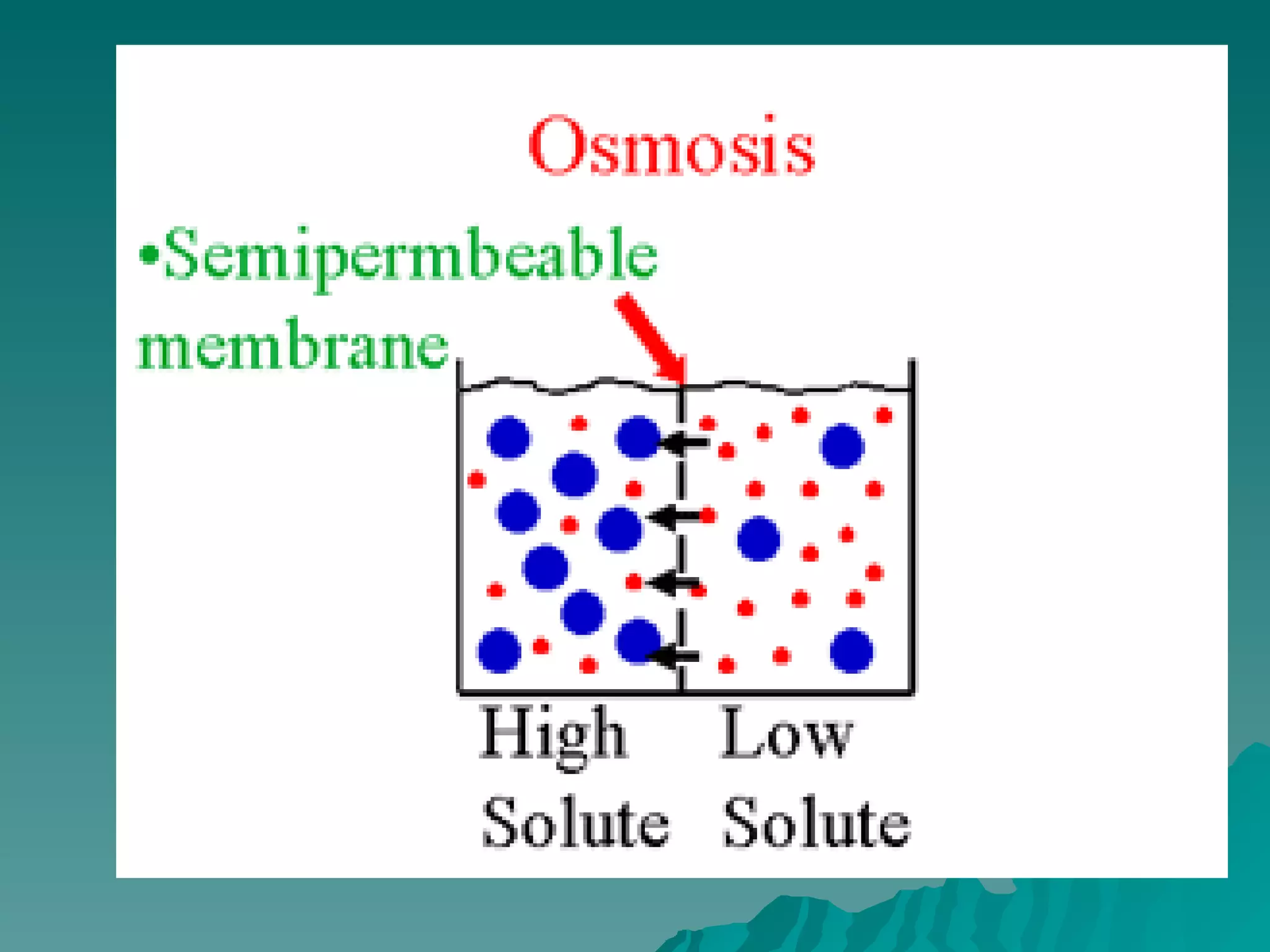
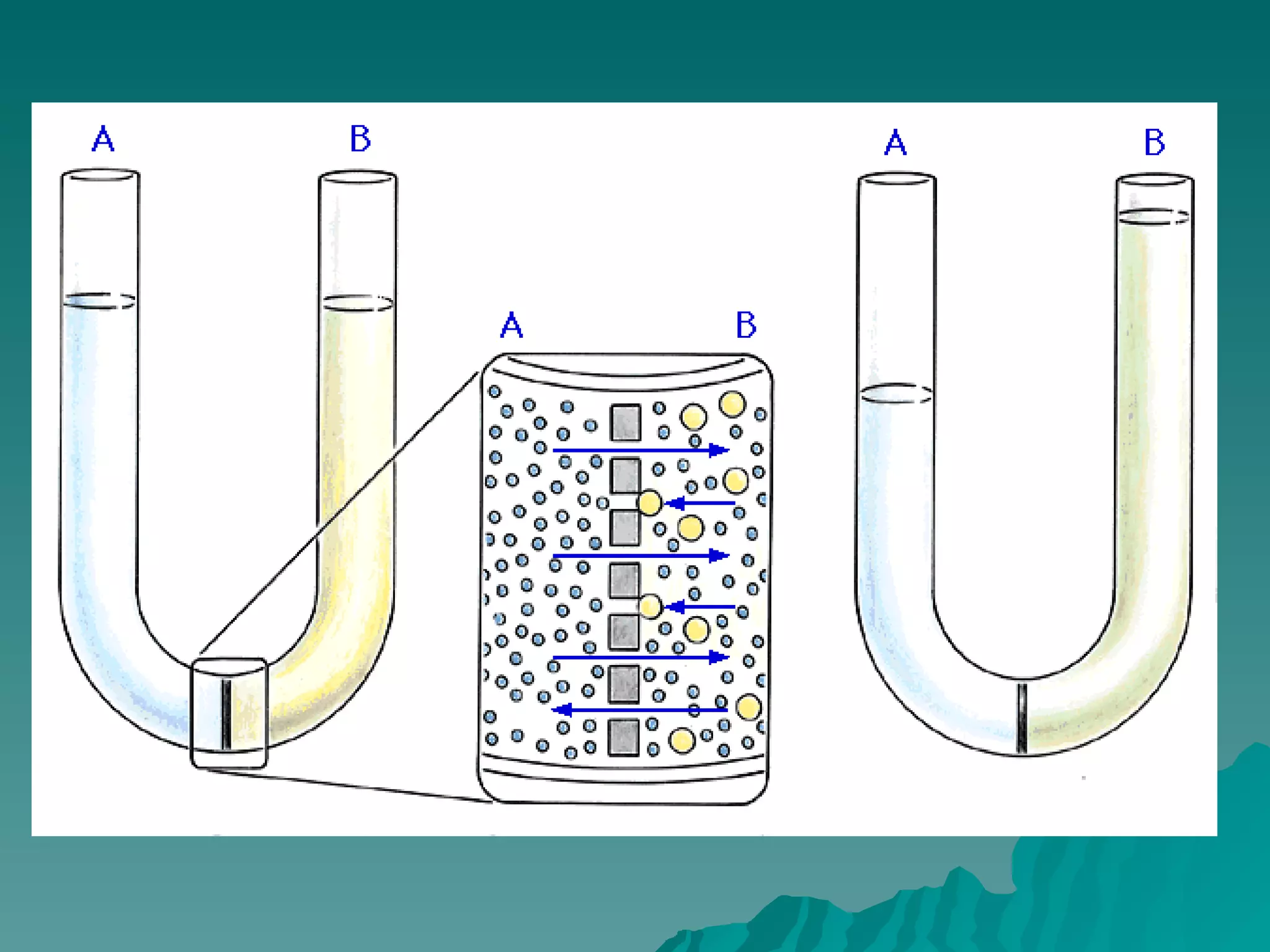
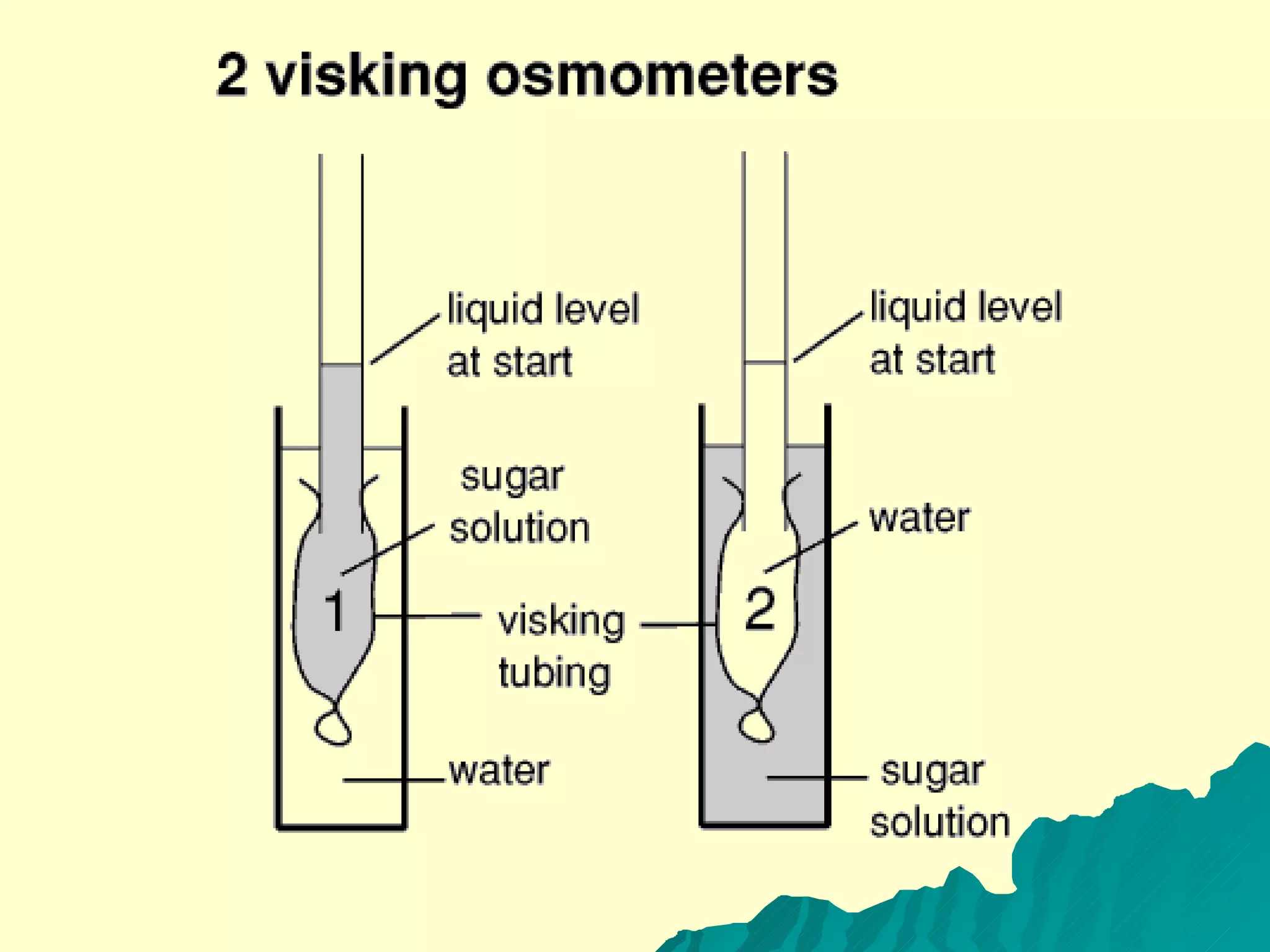
Osmosis The movement of  water  across  selectively permeable membranes . The  water  moves from a  low concentration area  to  high concentration area


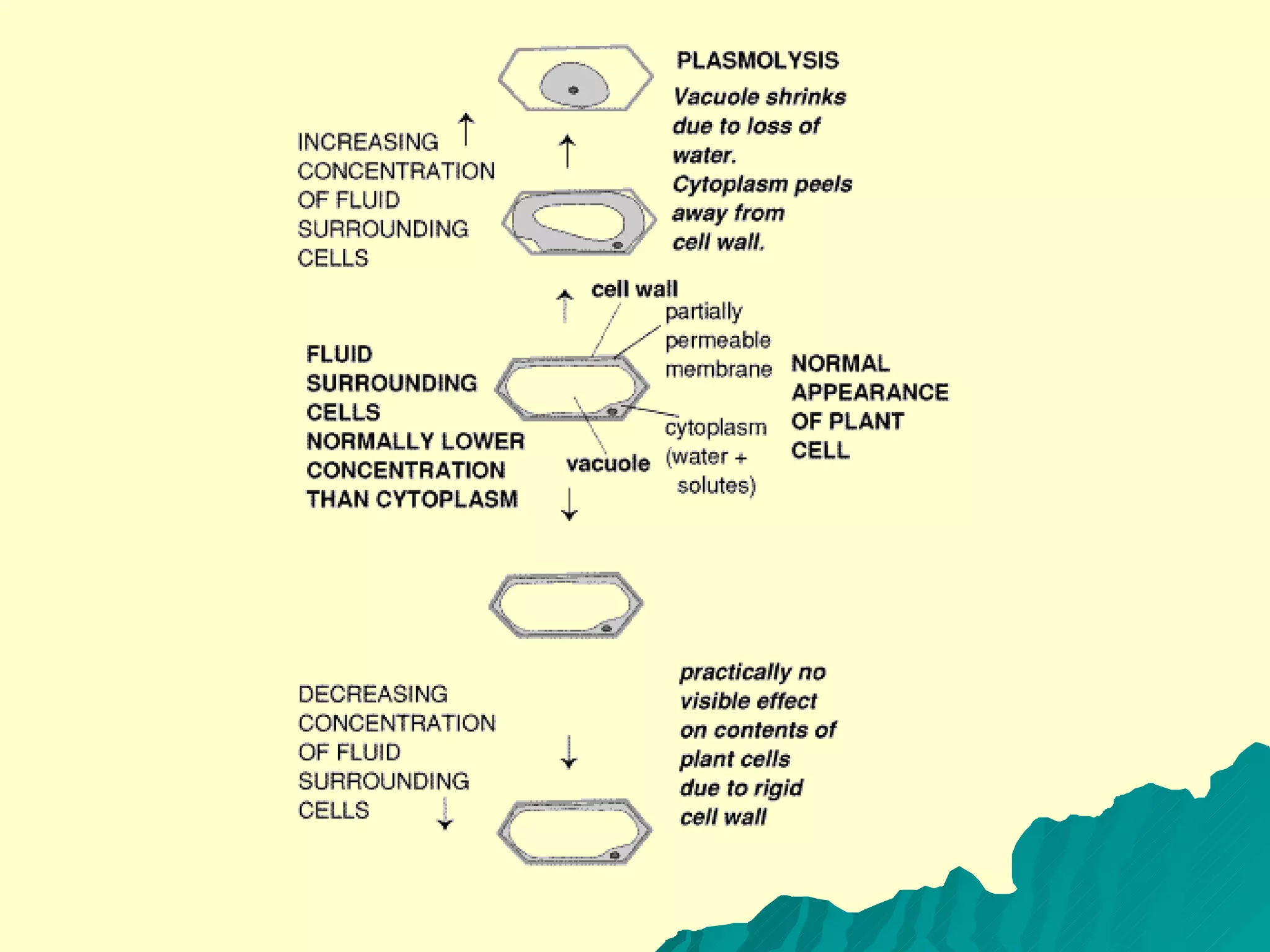
Cell membranes are completely permeable to water, therefore,  the environment  the cell is  exposed to can have a  dramatic effect  on the cell.
 
 
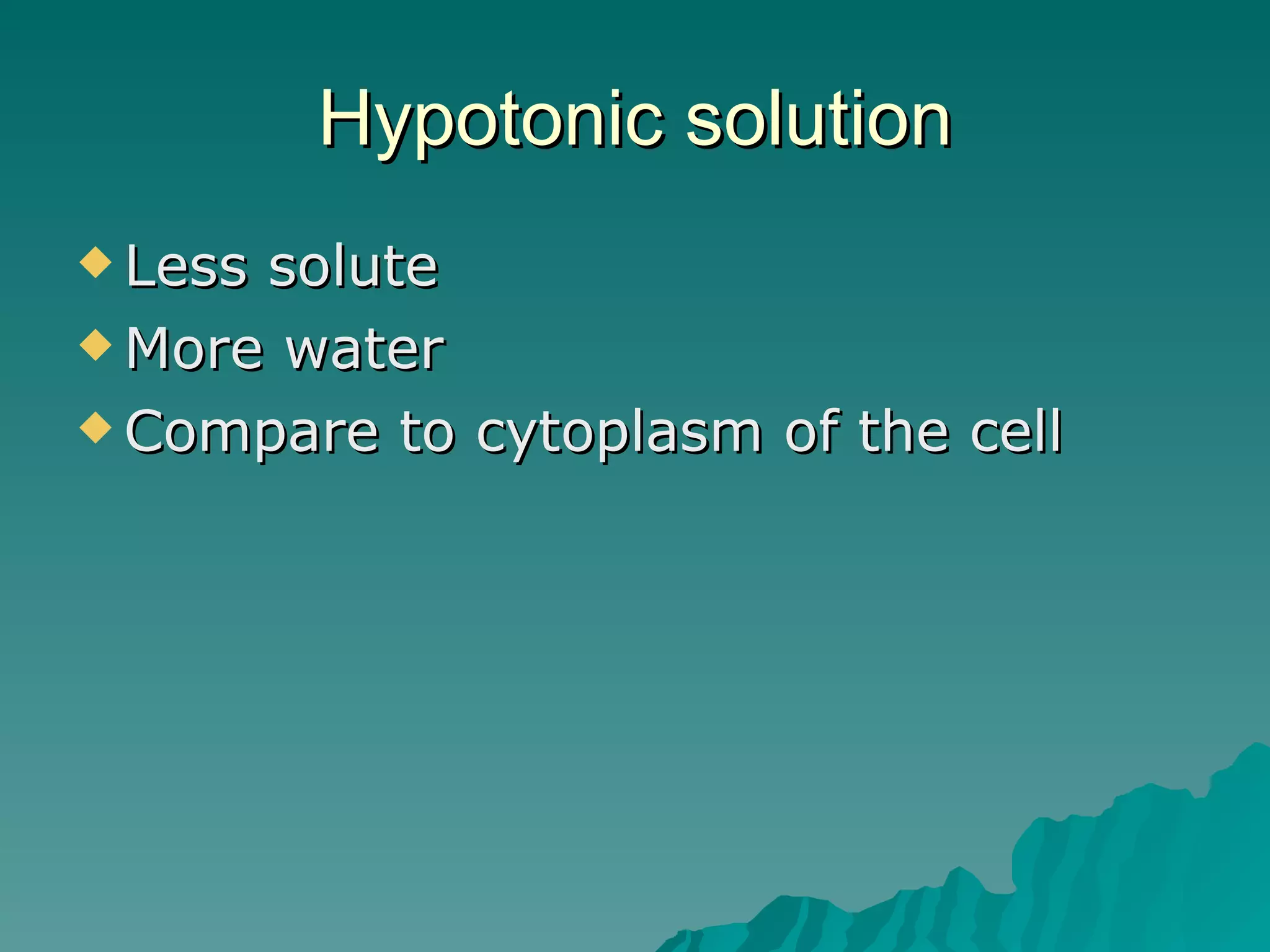
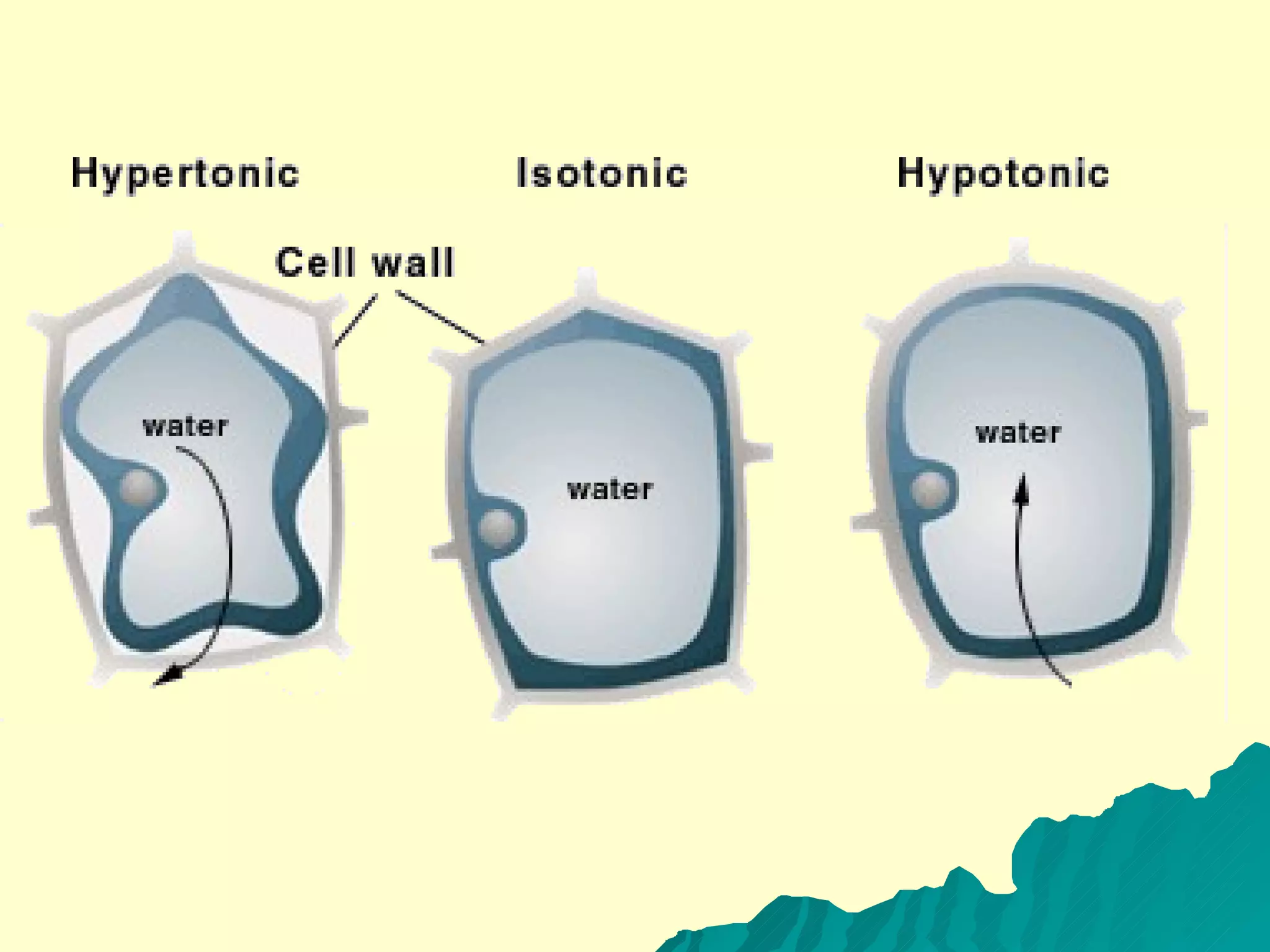
Hypotonic solution Less solute More water Compare to cytoplasm of the cell
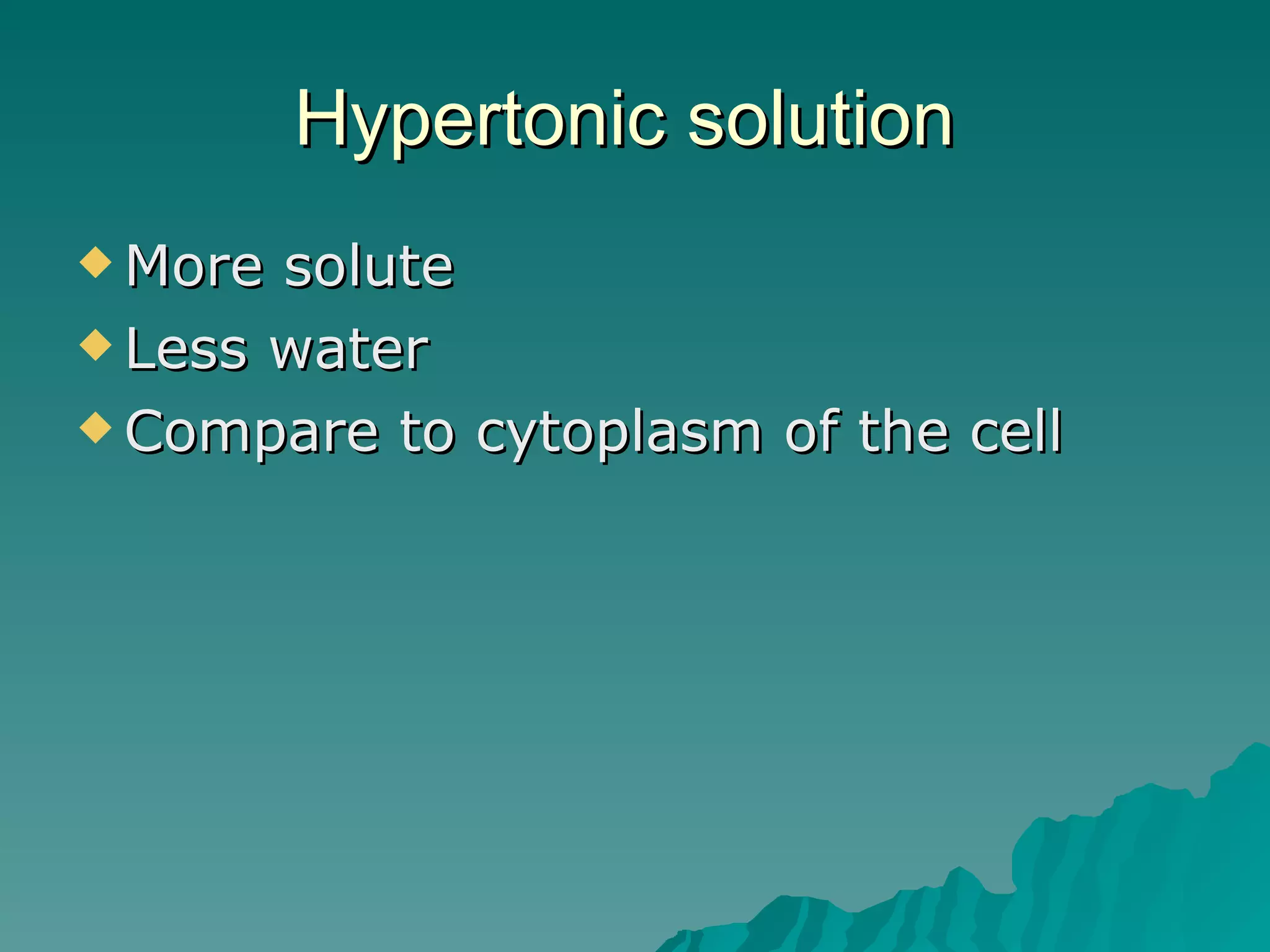
Hypertonic solution  More solute Less water Compare to cytoplasm of the cell
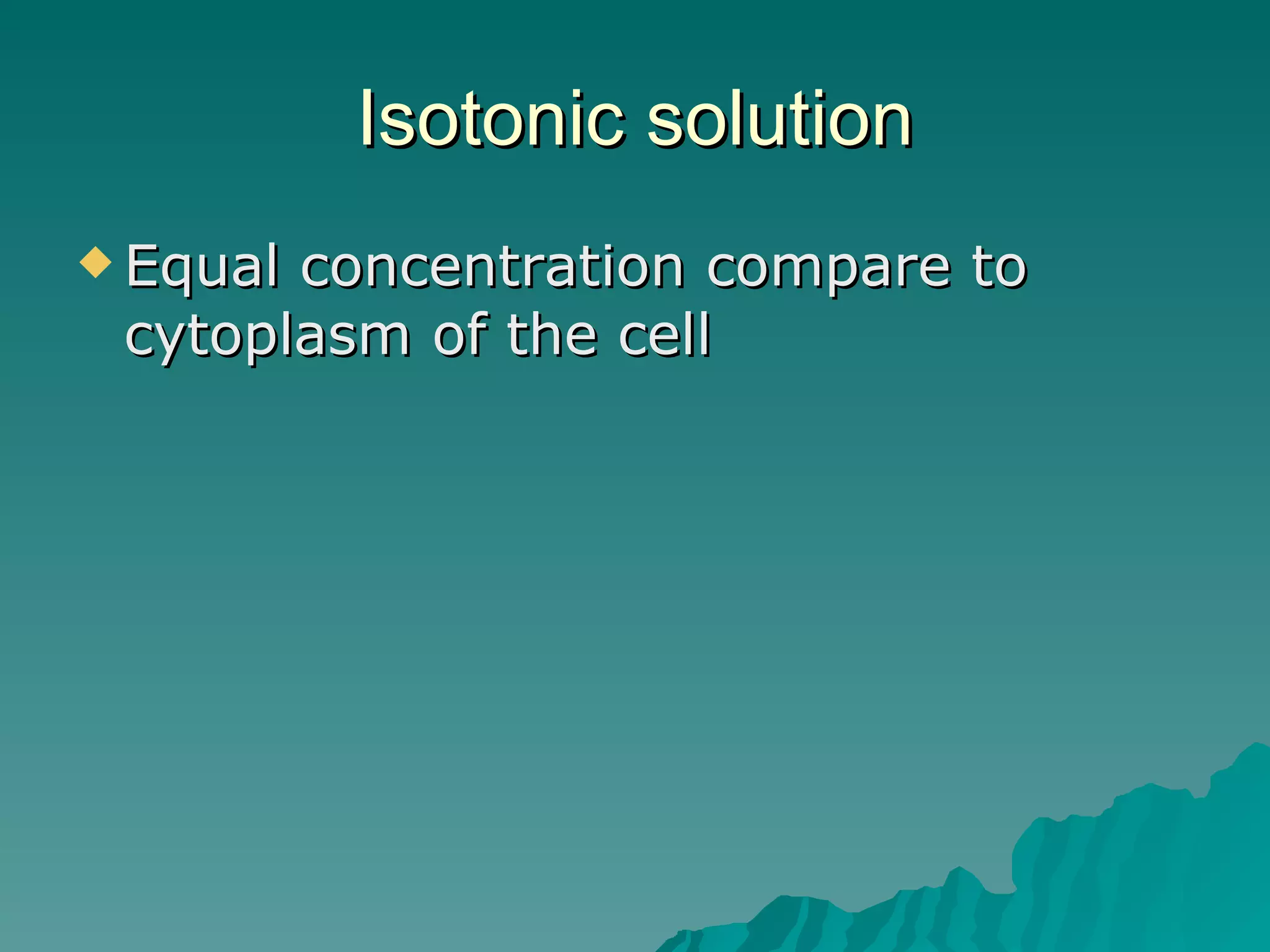
Isotonic solution Equal concentration compare to cytoplasm of the cell
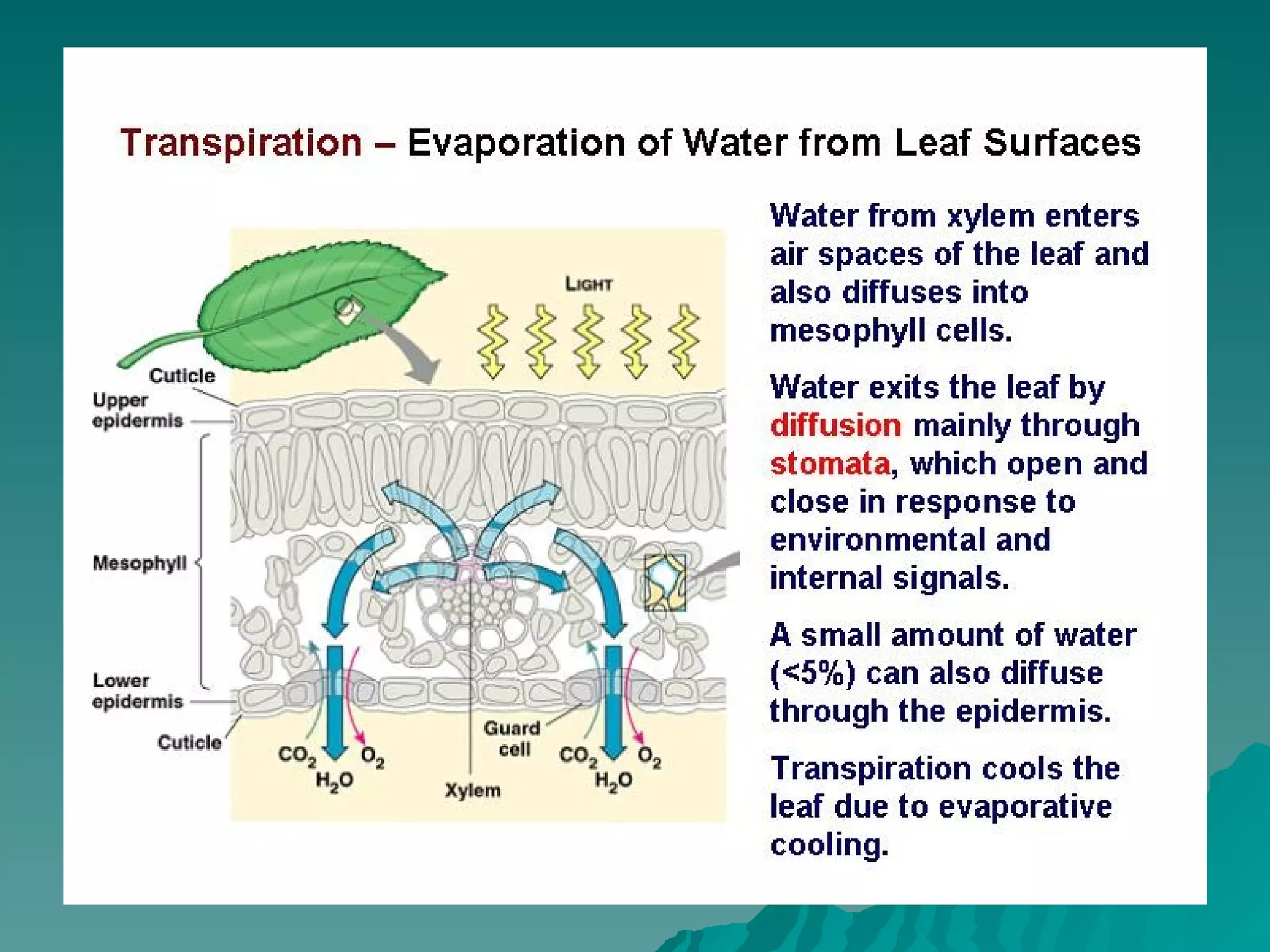
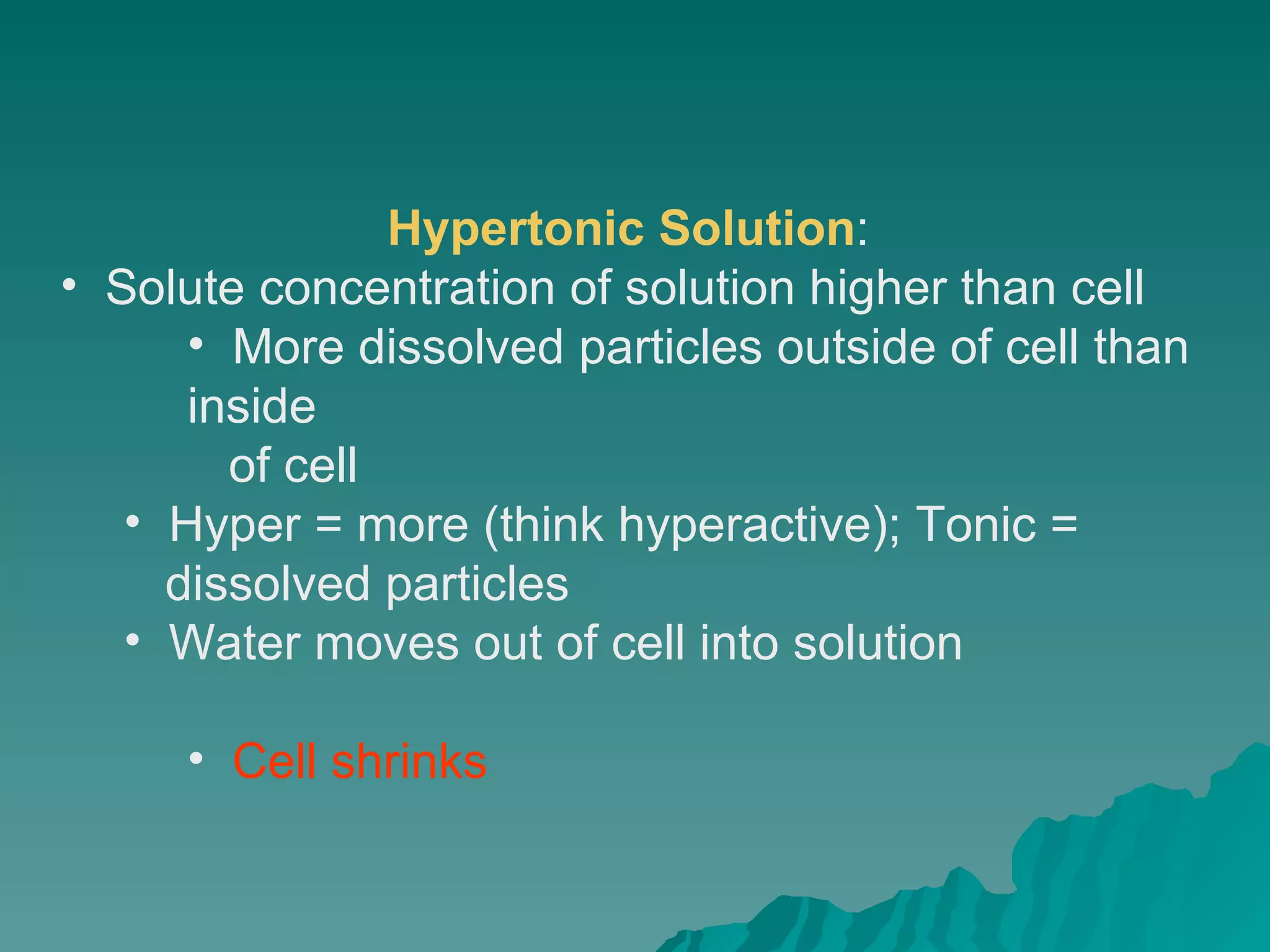
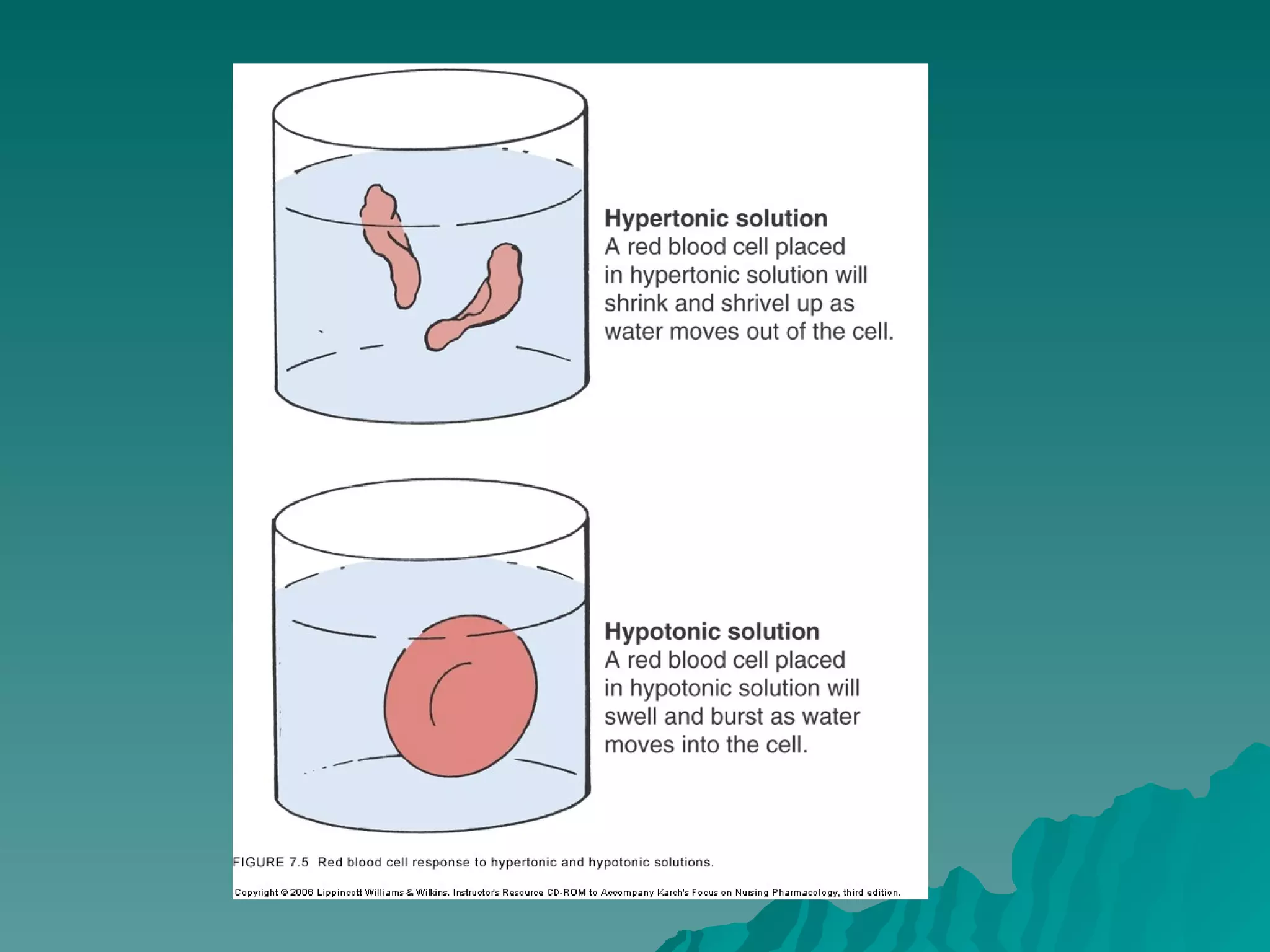
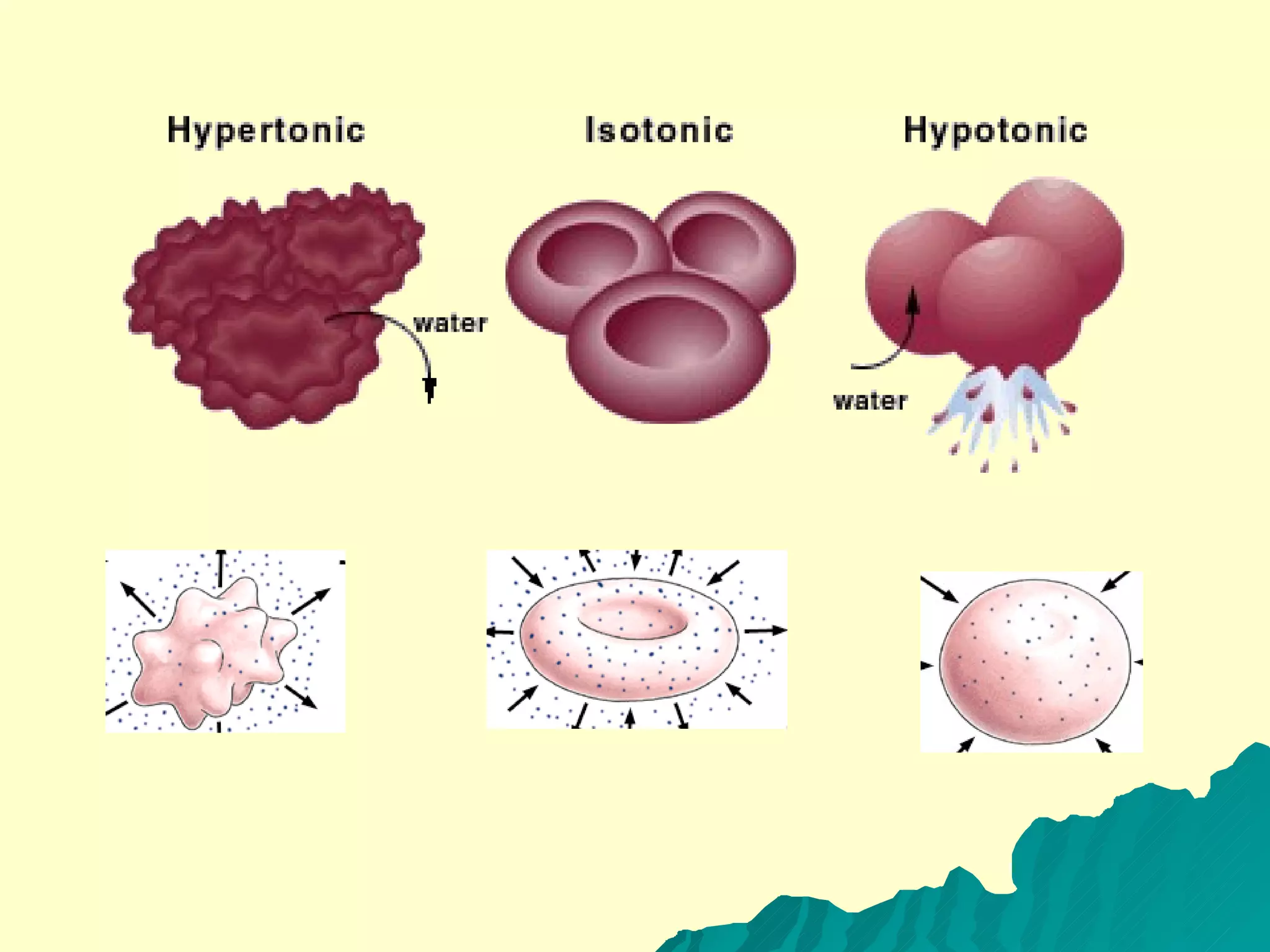
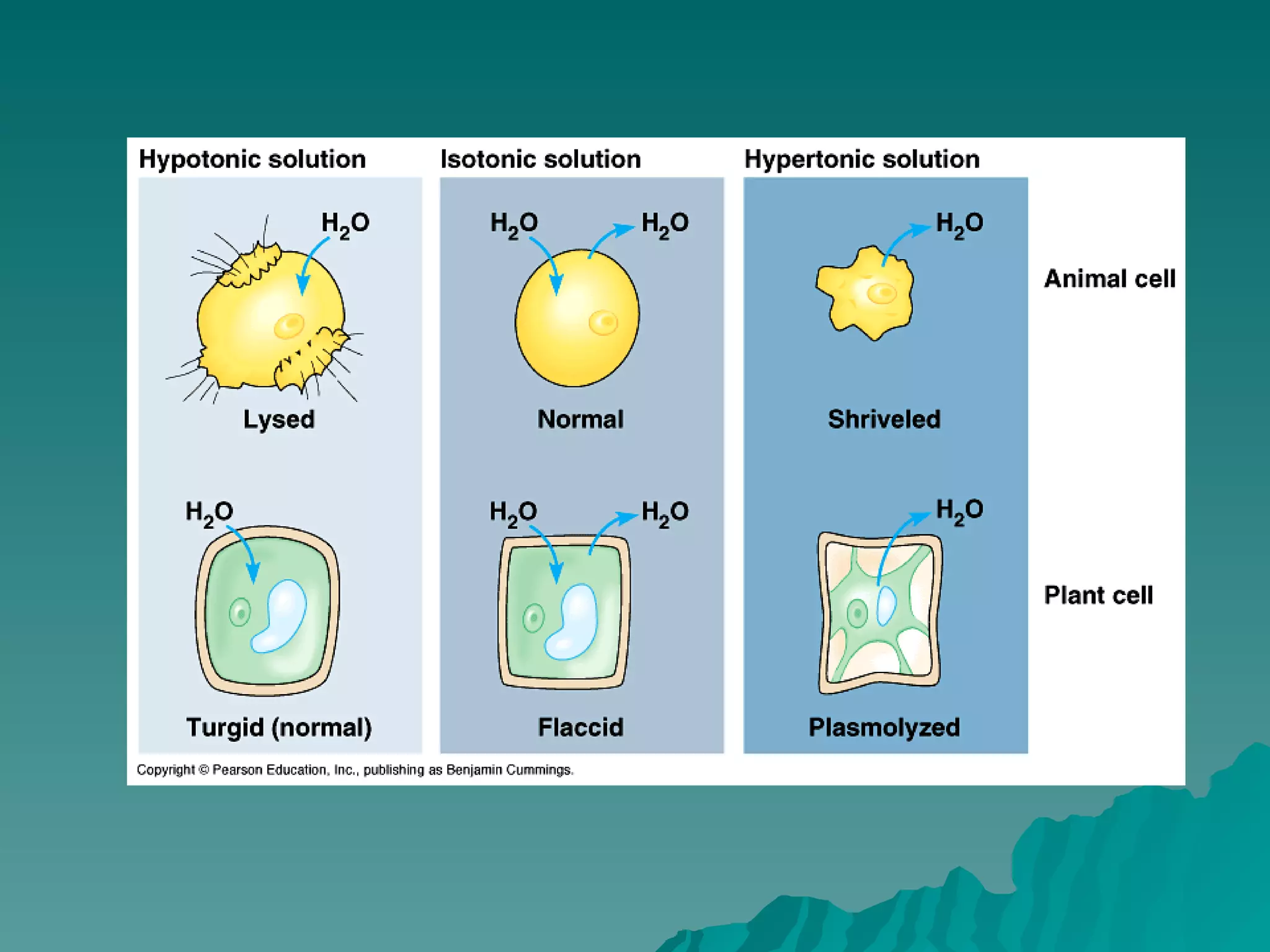
Hypertonic Solution :  Solute concentration of solution higher than cell  More dissolved particles outside of cell than inside  of cell  Hyper = more (think hyperactive); Tonic =  dissolved particles  Water moves out of cell into solution  Cell shrinks
Hypotonic Solution :  Solute concentration of solution lower than cell  Less dissolved particles outside of cell than inside of cell  Hypo = less, under (think hypodermic, hypothermia);  Tonic = dissolved particles  Water moves into cell from solution  Cell expands (and may burst)
Isotonic Solution :  Solute concentration of solution equal to that of cell  No net water movement


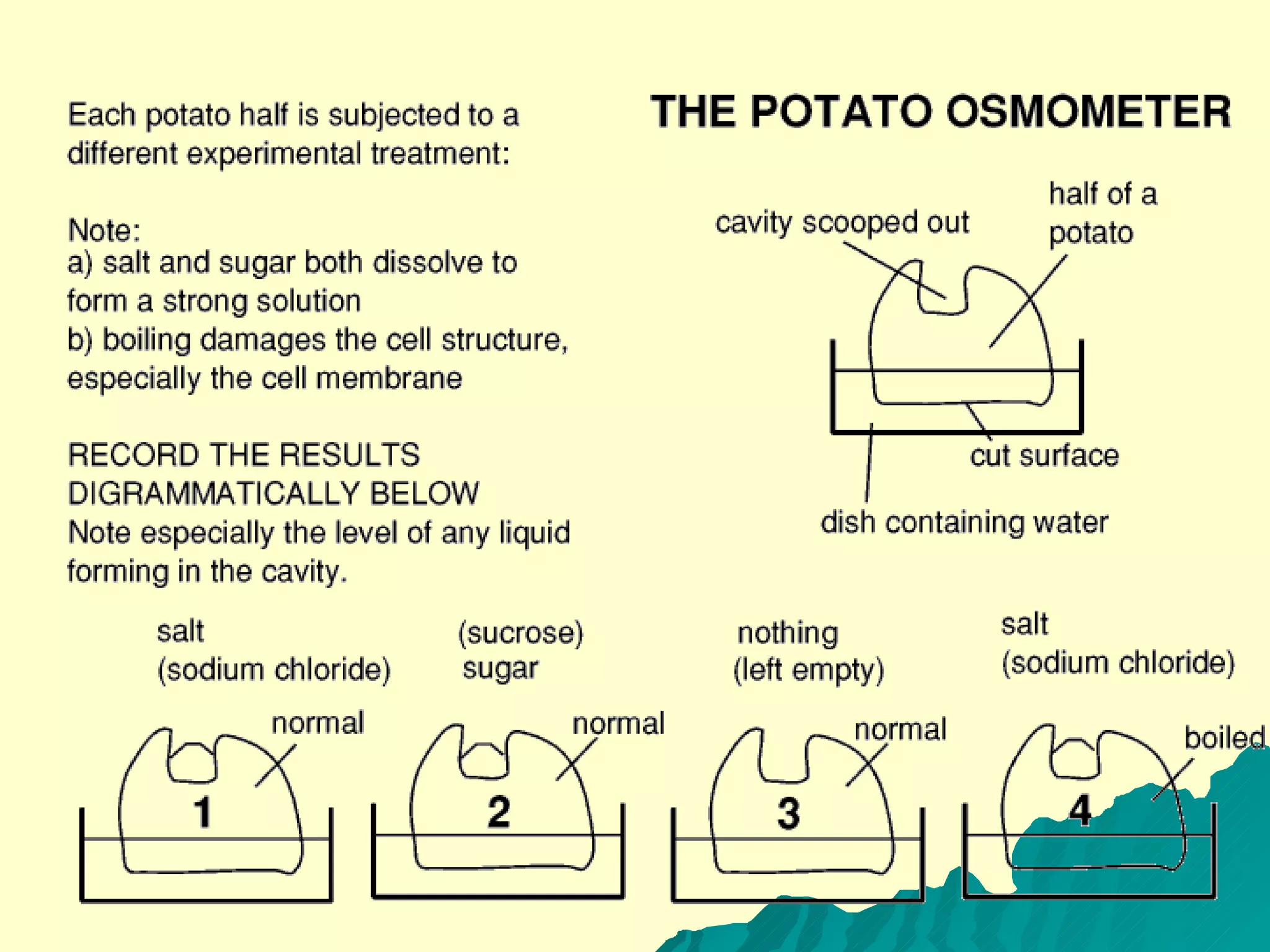
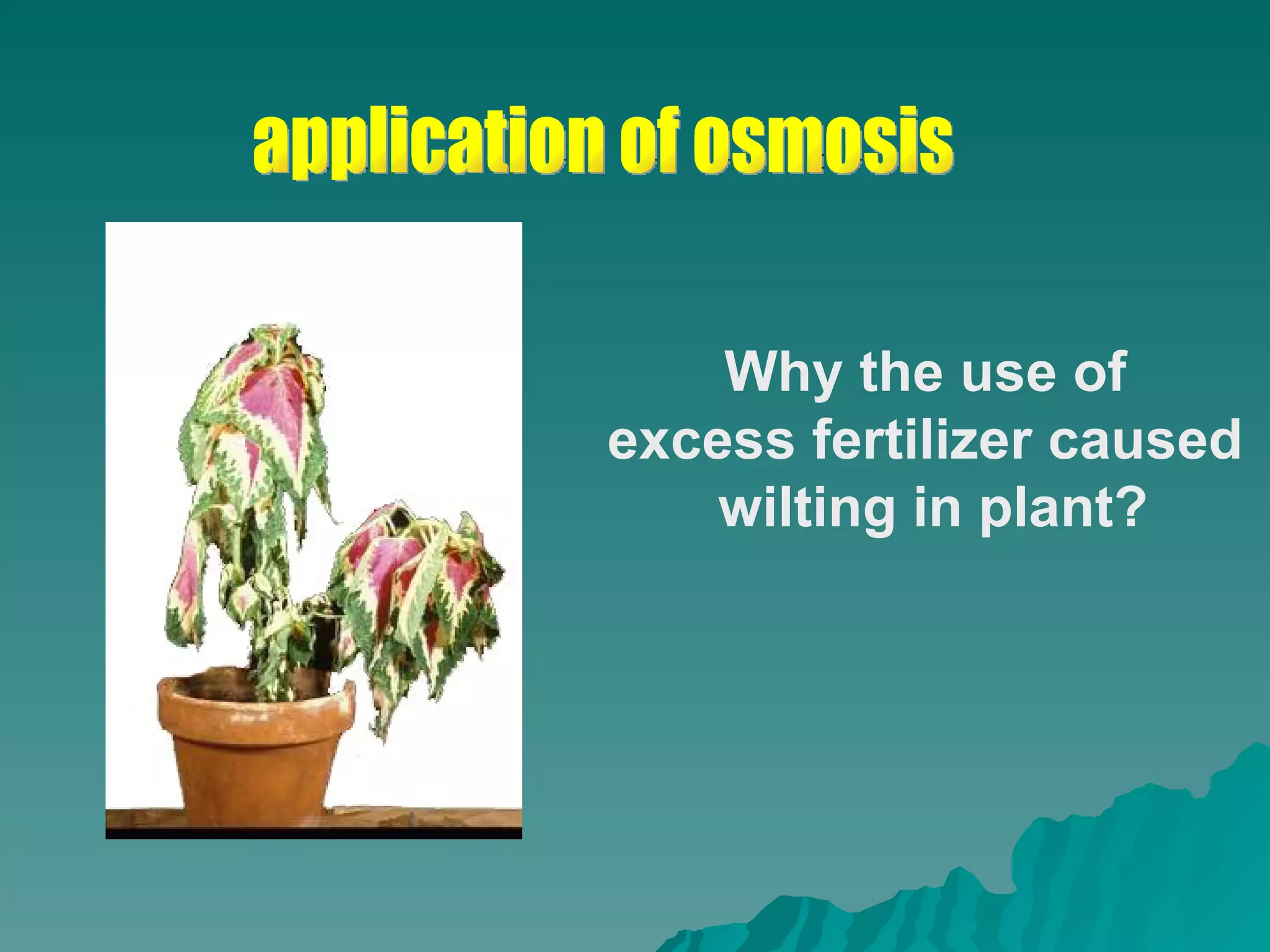
application of osmosis Why the use of  excess fertilizer caused  wilting in plant?
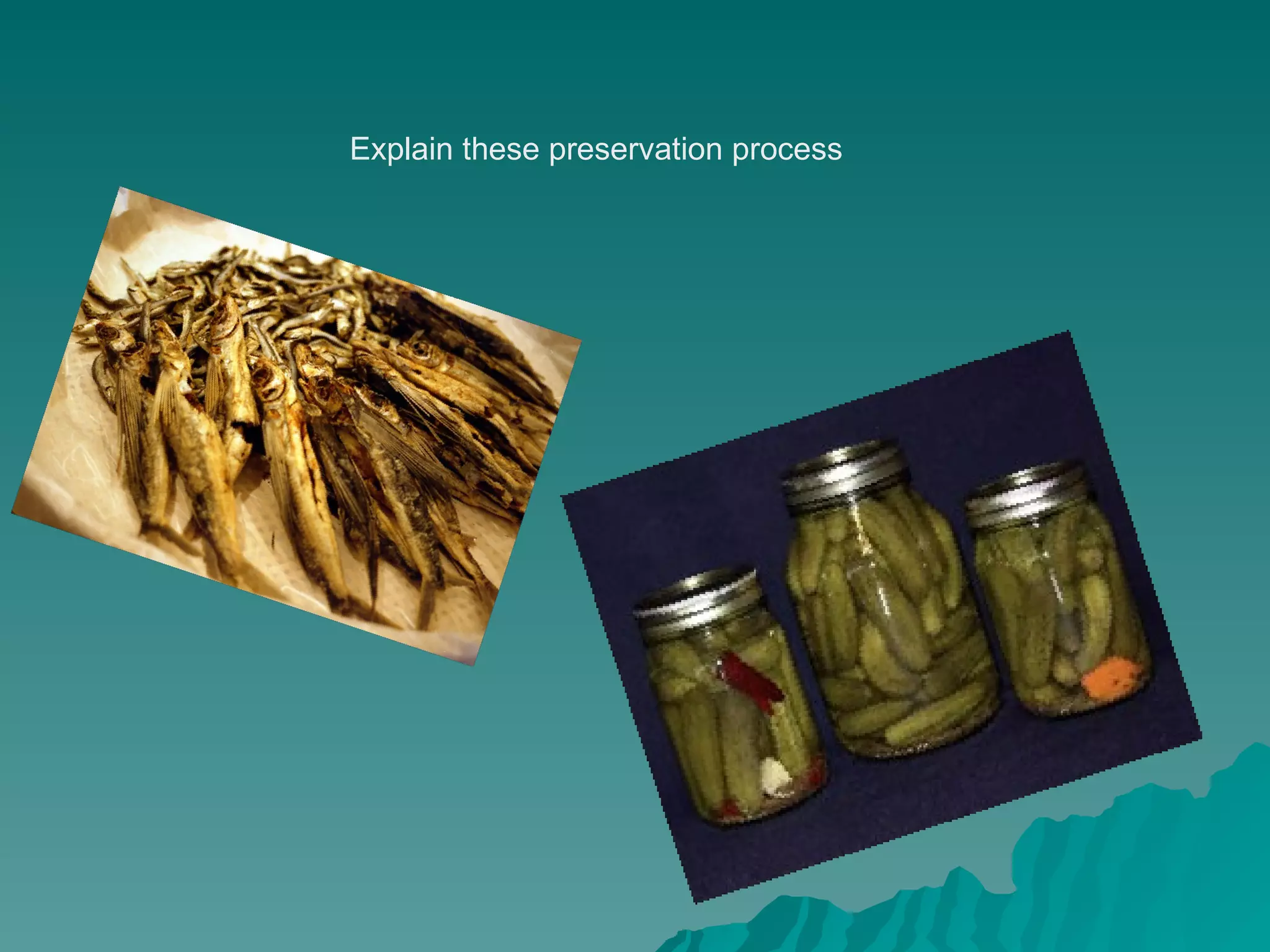
Explain these preservation process

movement accross cell membrane

  • 1.
    movement of substances across the plasma membrane
  • 2.
    what are thesubstances needed by the cells? how the needed substances move into the cells?
  • 3.
    Substances needed bythe cells Water Oxygen Nutrient Glucose Amino acid Mineral Fatty acid Vitamin The substances have to move across the membrane
  • 4.
    Substances to beeliminate from the cells Carbon dioxide Urea Toxin
  • 5.
  • 6.
    Fluid Mosaic Model1972 - Singer and Nicolson called the membrane a “Fluid Mosaic Model”. Mosaic: different proteins embedded in the phospholipids. Fluid: proteins and phospholipids can move freely in the membrane.
  • 7.
  • 8.
  • 9.
  • 10.
    Components of aphospholipid bilayer. 1. phospholipids 2. proteins - enzymes, receptors, transport. 3. glycolipids 4. glycoproteins 5. carbohydrates 6. cholesterol
  • 11.
    Plasma Membrane Boundarythat separates the living cell from it’s non-living surroundings. Phospholipid bilayer Amphipathic - having both: hydrophilic heads hydrophobic tails ~8 nm thick Phospholipid
  • 12.
  • 13.
  • 14.
  • 15.
    Controls traffic into and out of the cell with phospholipids and transport proteins . Selectively permeable >>> semi-permeable function Transport protein
  • 16.
    What is SelectivePermeability? The property of biological membranes which allows some substances to cross more easily than others.
  • 17.
    Transport Proteins Transports molecules or ions across biological membranes Two types: Carrier proteins Pore proteins
  • 18.
    Through phospholipids layer:Non polar molecules = Oxygen. Carbon dioxide, water , lipid soluble molecules By pore – proteins : water soluble molecules and ions By carrier- proteins and energy : ions. By carrier- proteins : glucose, amino acids.
  • 19.
    Passive transport: NO energy is expended. Simple diffusion – gases, Osmosis – water facilitated diffusion : type of passive transport which uses transport proteins. – glucose and amino acid Active transport : Using carrier protein and energy – ions Movement of substances
  • 20.
    Diffusion The netmovement of a substance (molecules) down a concentration gradient from an area of high con centration to an area of low concentration .
  • 21.
  • 22.
  • 23.
  • 24.
  • 25.
  • 26.
    Facilitated diffusionAllows diffusion of large, membrane insoluble compounds such as sugars and amino acids Does not require energy (passive) Highly Selective Substance binds to transport protein Fully reversible - molecules may enter the cell and leave the cell through the transport protein. Particles move from areas of high concentration to areas of low concentration. Movement rate of particles will saturate Maximum rate limited by number of transporters Once all transporters are operating at 100%, an increase in concentration will not increase rate
  • 27.
  • 28.
  • 29.
    Active Transport Movement across membrane with an energy cost (usually against concentration Used to pump specific compounds in or out of the cell Requires energy to overcome the concentration gradient or to allow a large or charged particle to cross membrane Requires specific carrier proteins The energy requirement distinguishes active transport from facilitated diffusion
  • 30.
  • 31.
  • 32.
    Osmosis The movementof water across selectively permeable membranes . The water moves from a low concentration area to high concentration area
  • 33.
  • 34.
  • 35.
  • 36.
  • 37.
    Cell membranes arecompletely permeable to water, therefore, the environment the cell is exposed to can have a dramatic effect on the cell.
  • 38.
  • 39.
  • 40.
    Hypotonic solution Lesssolute More water Compare to cytoplasm of the cell
  • 41.
    Hypertonic solution More solute Less water Compare to cytoplasm of the cell
  • 42.
    Isotonic solution Equalconcentration compare to cytoplasm of the cell
  • 43.
    Hypertonic Solution : Solute concentration of solution higher than cell More dissolved particles outside of cell than inside of cell Hyper = more (think hyperactive); Tonic = dissolved particles Water moves out of cell into solution Cell shrinks
  • 44.
    Hypotonic Solution : Solute concentration of solution lower than cell Less dissolved particles outside of cell than inside of cell Hypo = less, under (think hypodermic, hypothermia); Tonic = dissolved particles Water moves into cell from solution Cell expands (and may burst)
  • 45.
    Isotonic Solution : Solute concentration of solution equal to that of cell No net water movement
  • 46.
  • 47.
  • 48.
  • 49.
  • 50.
  • 51.
  • 52.
    application of osmosisWhy the use of excess fertilizer caused wilting in plant?
  • 53.