
BIOLOGY FORM 4 
CHAPTER 2 
CELL ORGANIZATION (2.2)
2.2 
CELL ORGANIZATION 
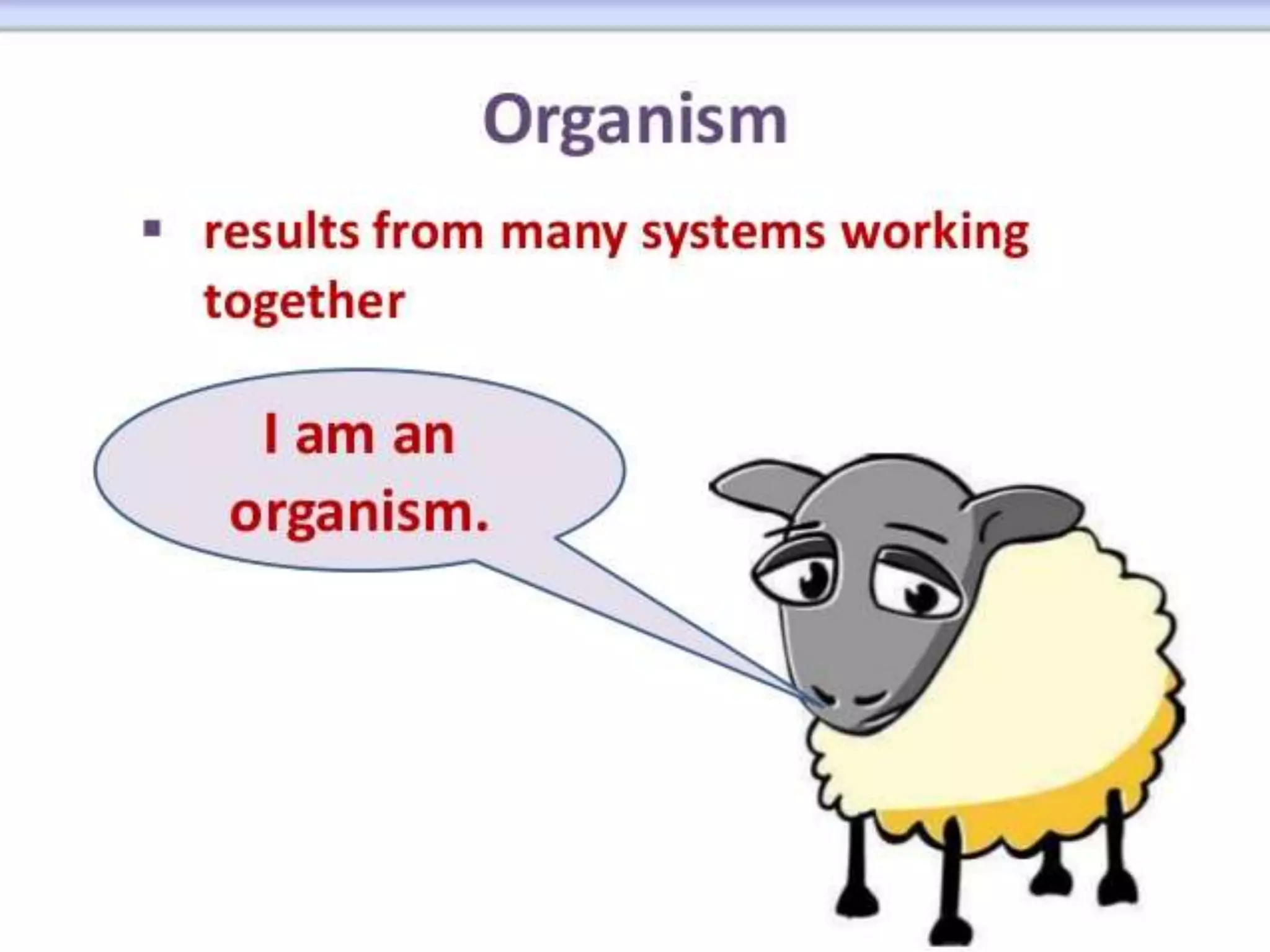
Multicellular organisms can 
feed, respire, excrete, move, 
respond 
to stimuli, reproduce and grow. 
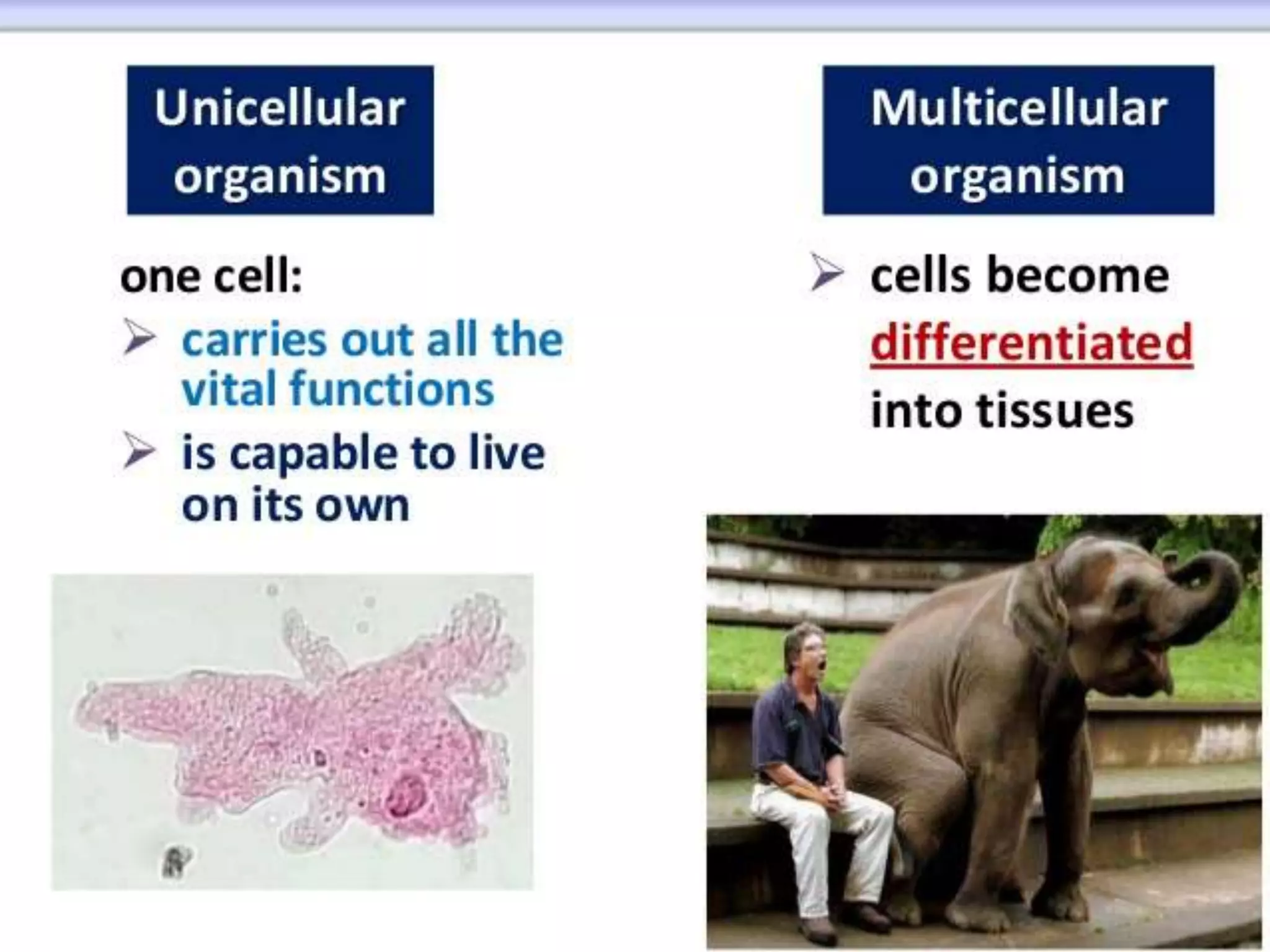
Unicellular organisms are 
organisms with just a single cell. 
So how is this organism able to 
perform all the living
Lesson Outcomes 
 Understand living process in 
unicellular organism 
the movement in unicellular 
organism 
the reproduction in unicellular organism 
the feeding in unicellular organism 
the exchange of materials in unicellular 
organism
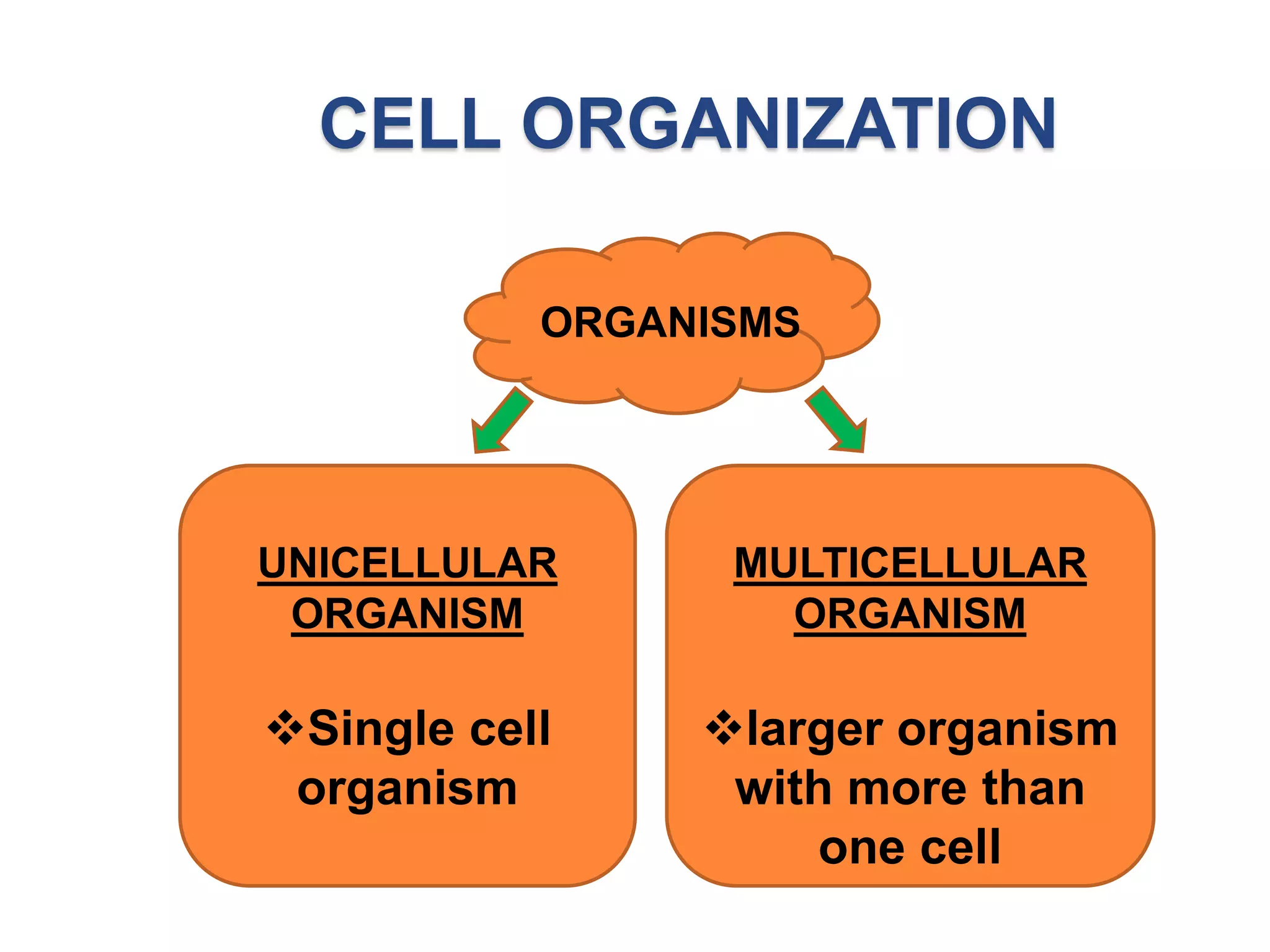
CELL ORGANIZATION 
ORGANISMS 
UNICELLULAR 
ORGANISM 
Single cell 
organism 
MULTICELLULAR 
ORGANISM 
larger organism 
with more than 
one cell
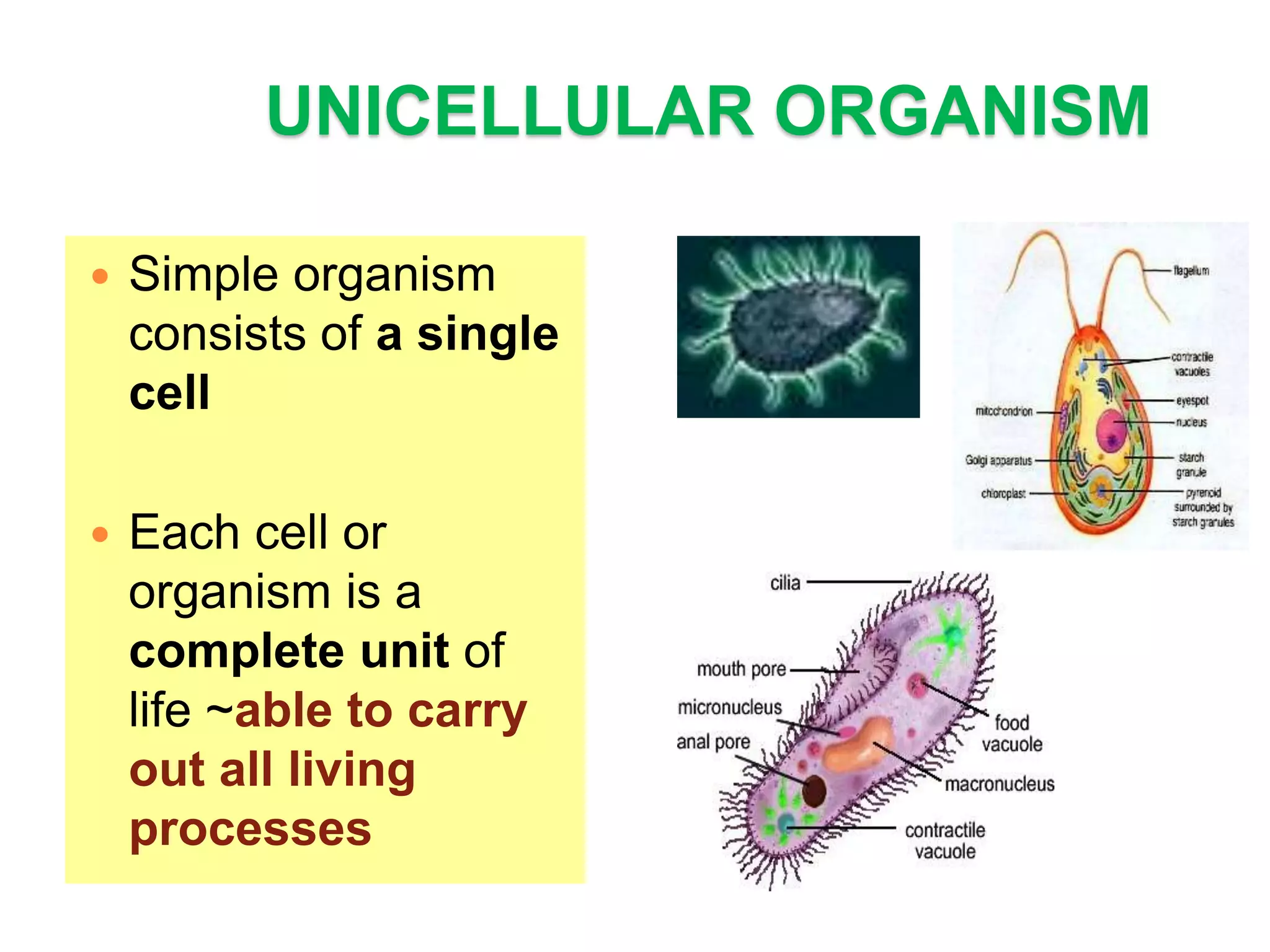
UNICELLULAR ORGANISM 
 Simple organism 
consists of a single 
cell 
 Each cell or 
organism is a 
complete unit of 
life ~able to carry 
out all living 
processes
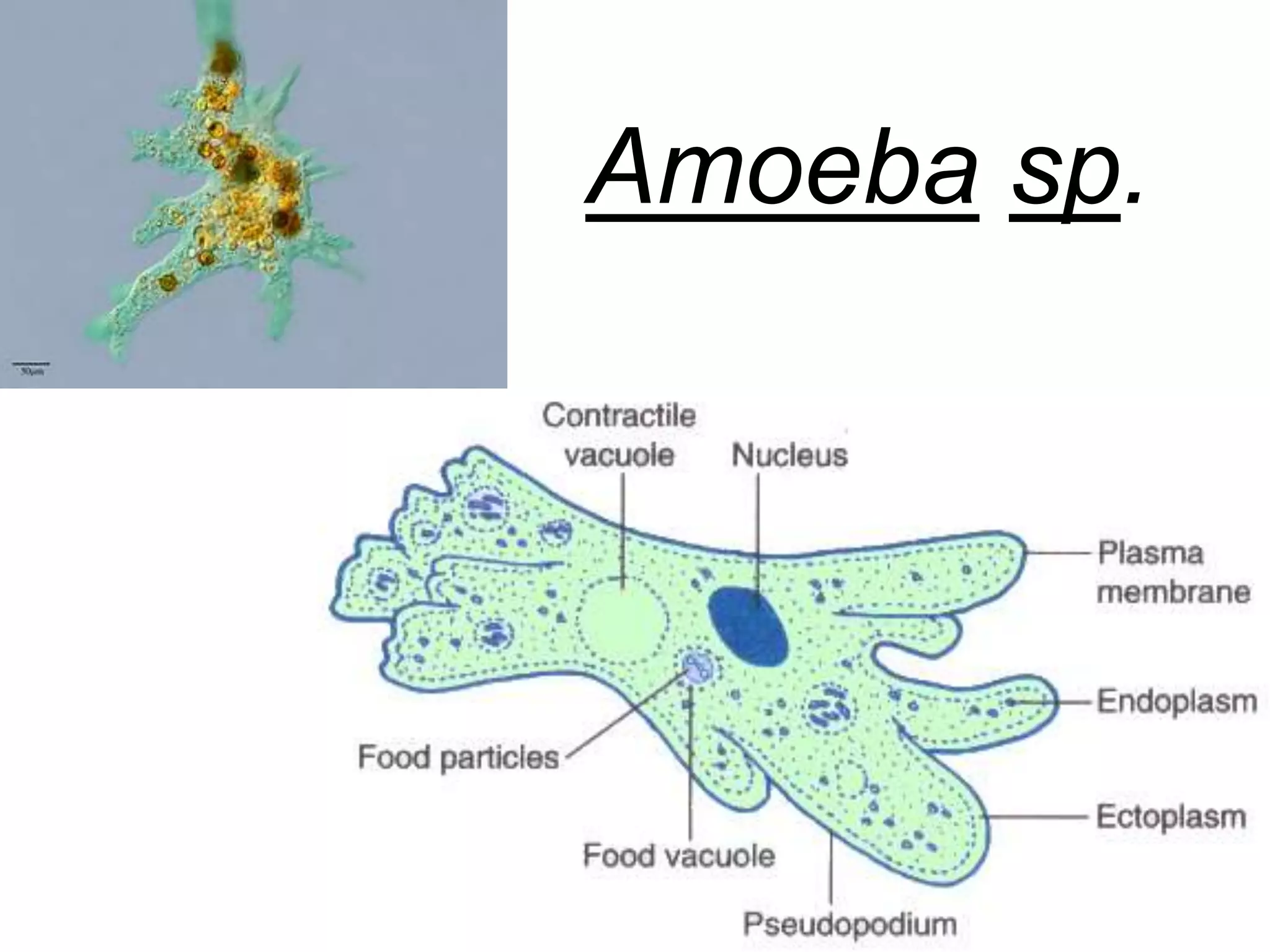
Amoeba sp.
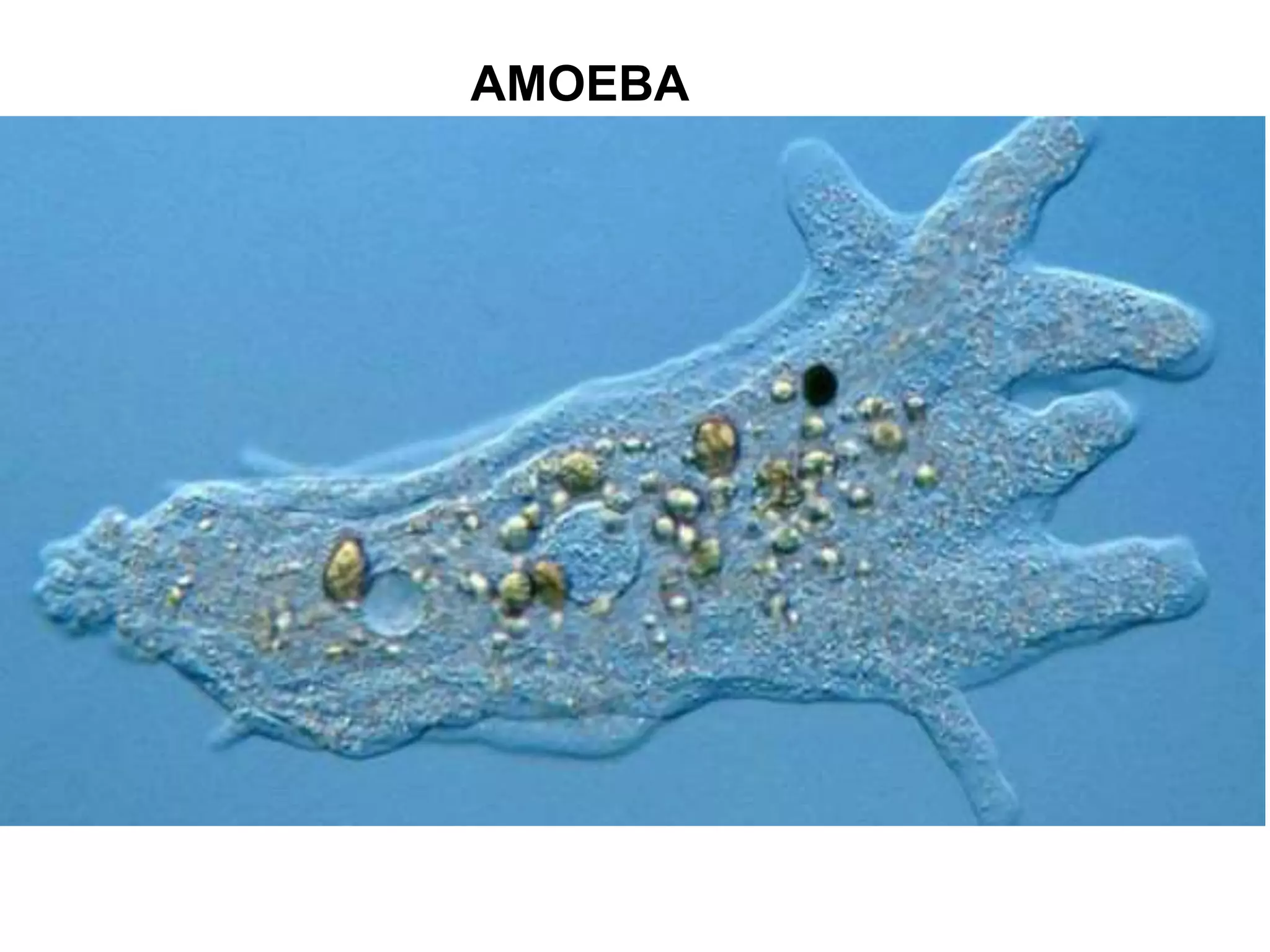
AMOEBA
Living processes of 
unicellular organism 
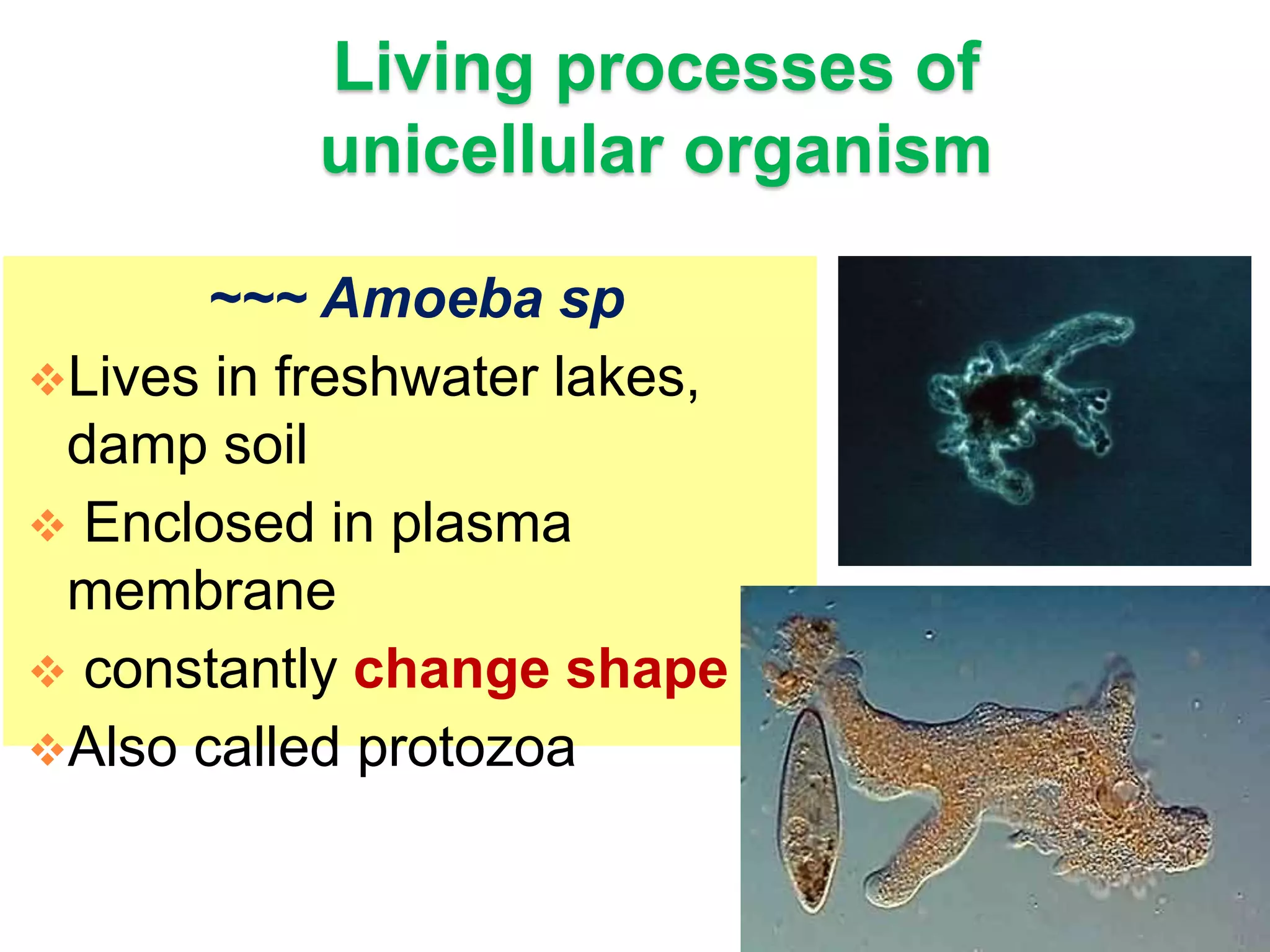
~~~ Amoeba sp 
Lives in freshwater lakes, 
damp soil 
 Enclosed in plasma 
membrane 
 constantly change shape 
Also called protozoa
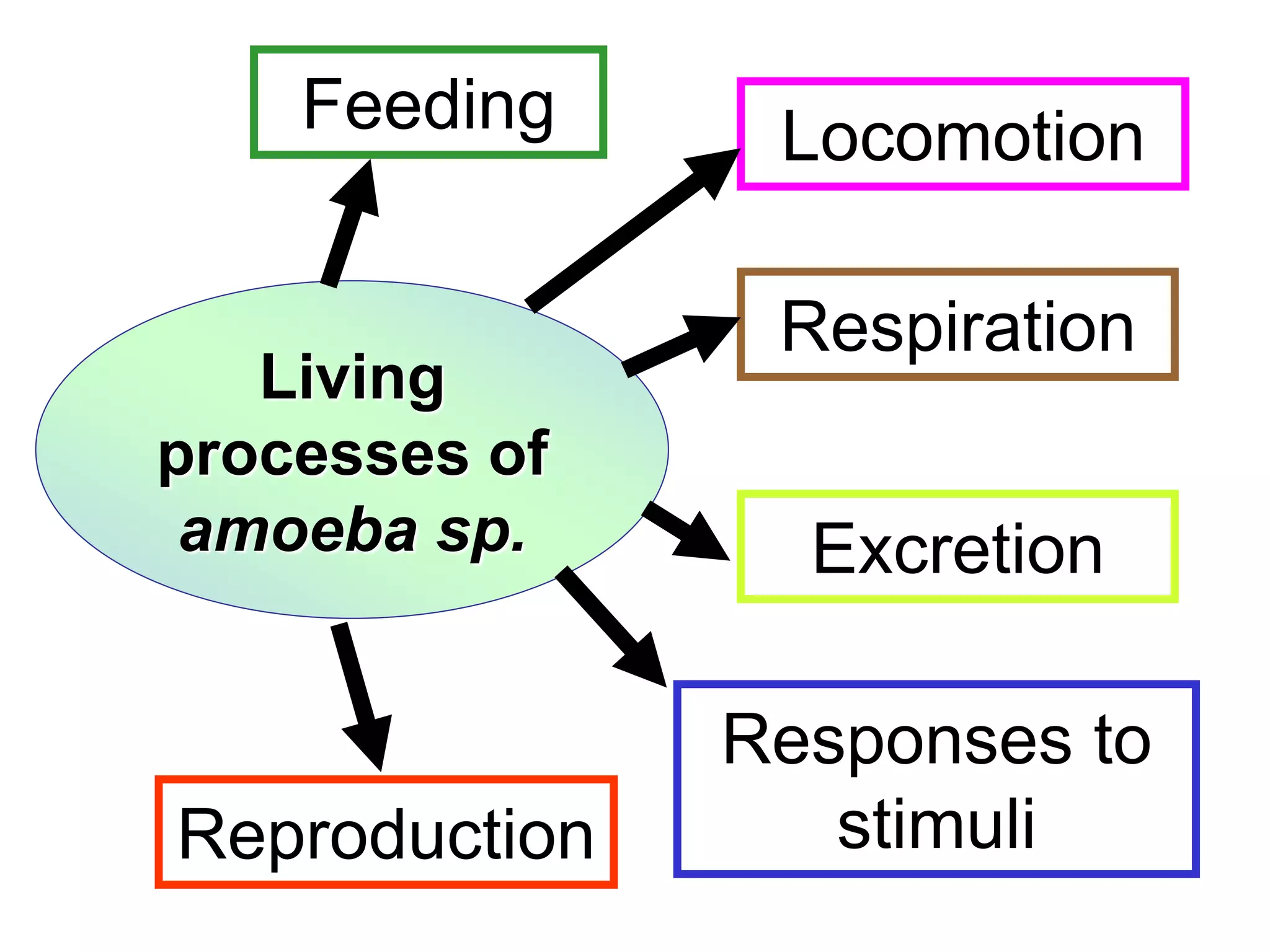
Feeding Locomotion 
Living 
processes of 
amoeba sp. 
Reproduction 
Respiration 
Excretion 
Responses to 
stimuli
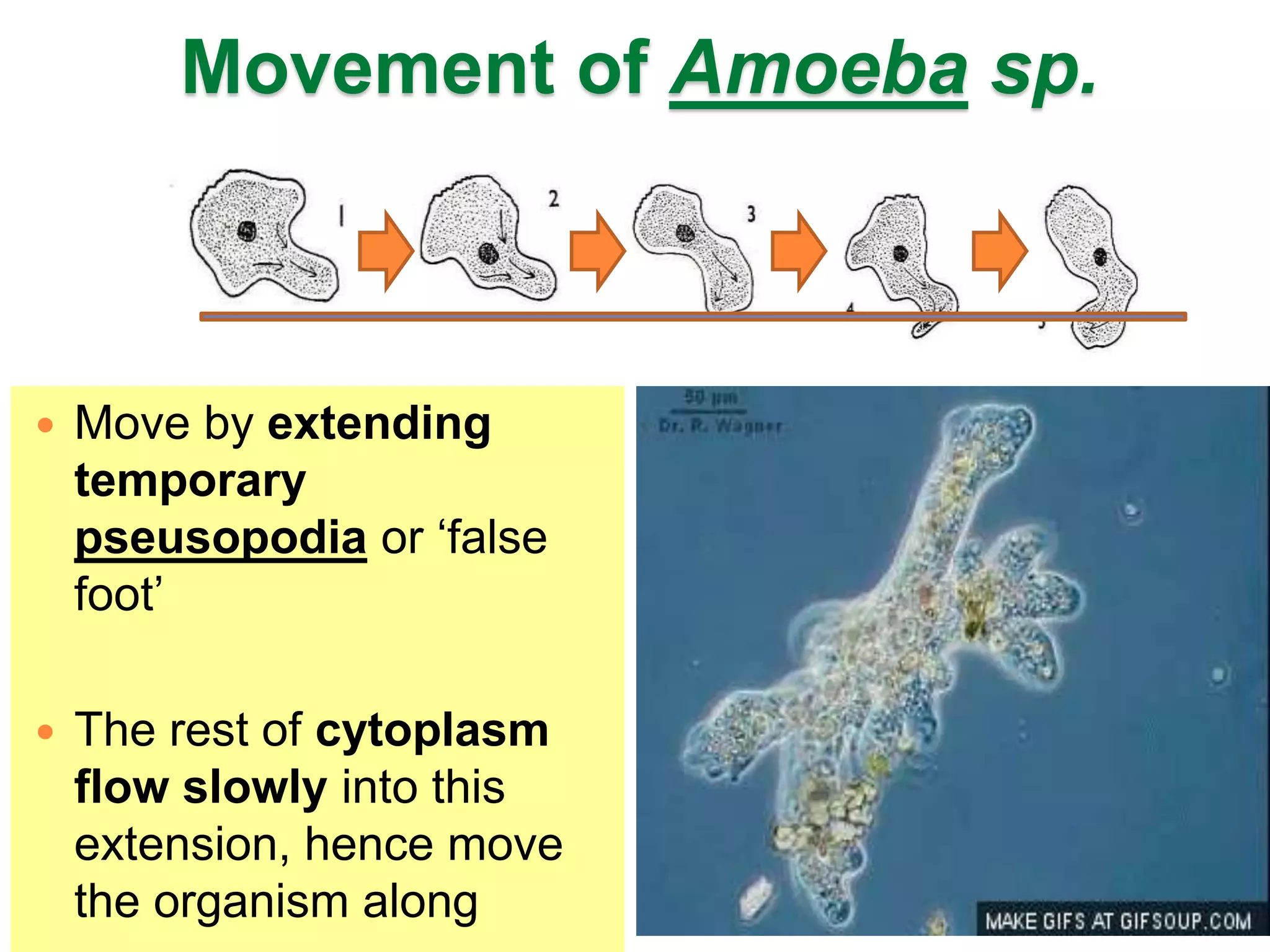
Movement of Amoeba sp. 
 Move by extending 
temporary 
pseusopodia or ‘false 
foot’ 
 The rest of cytoplasm 
flow slowly into this 
extension, hence move 
the organism along
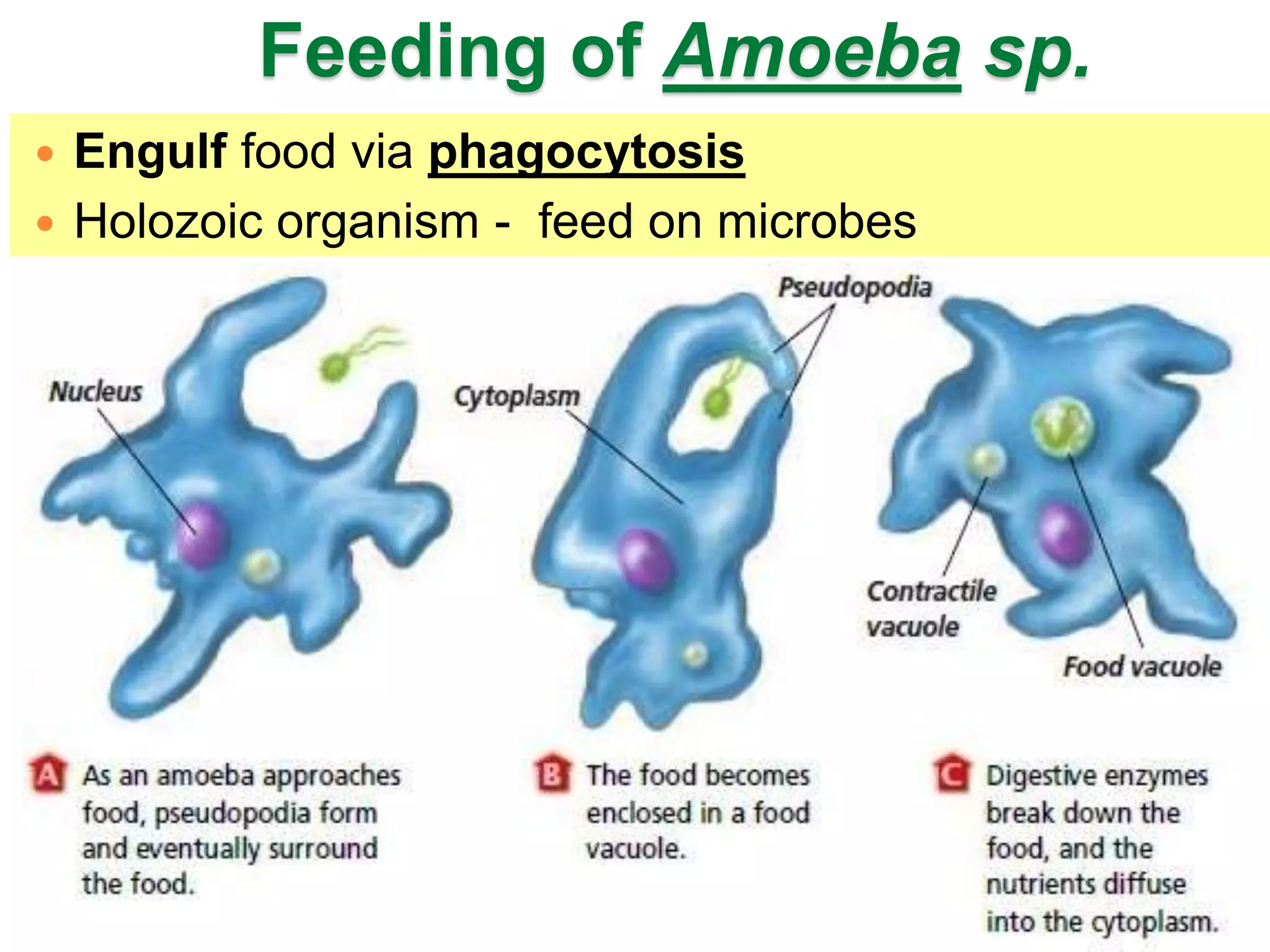
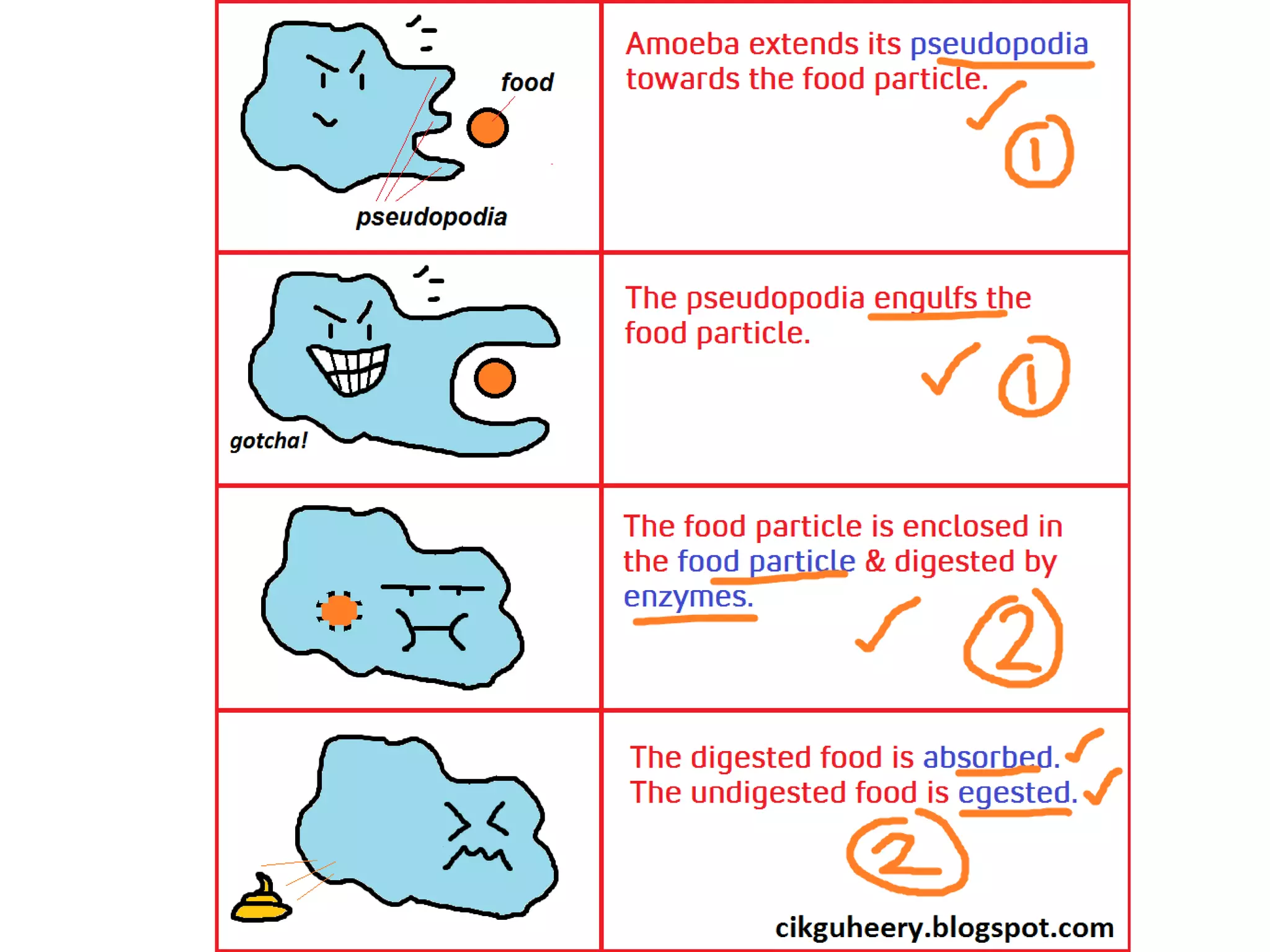
Feeding of Amoeba sp. 
 Engulf food via phagocytosis 
 Holozoic organism - feed on microbes
PHAGOCYTOSIS
PHAGOCYTOSIS
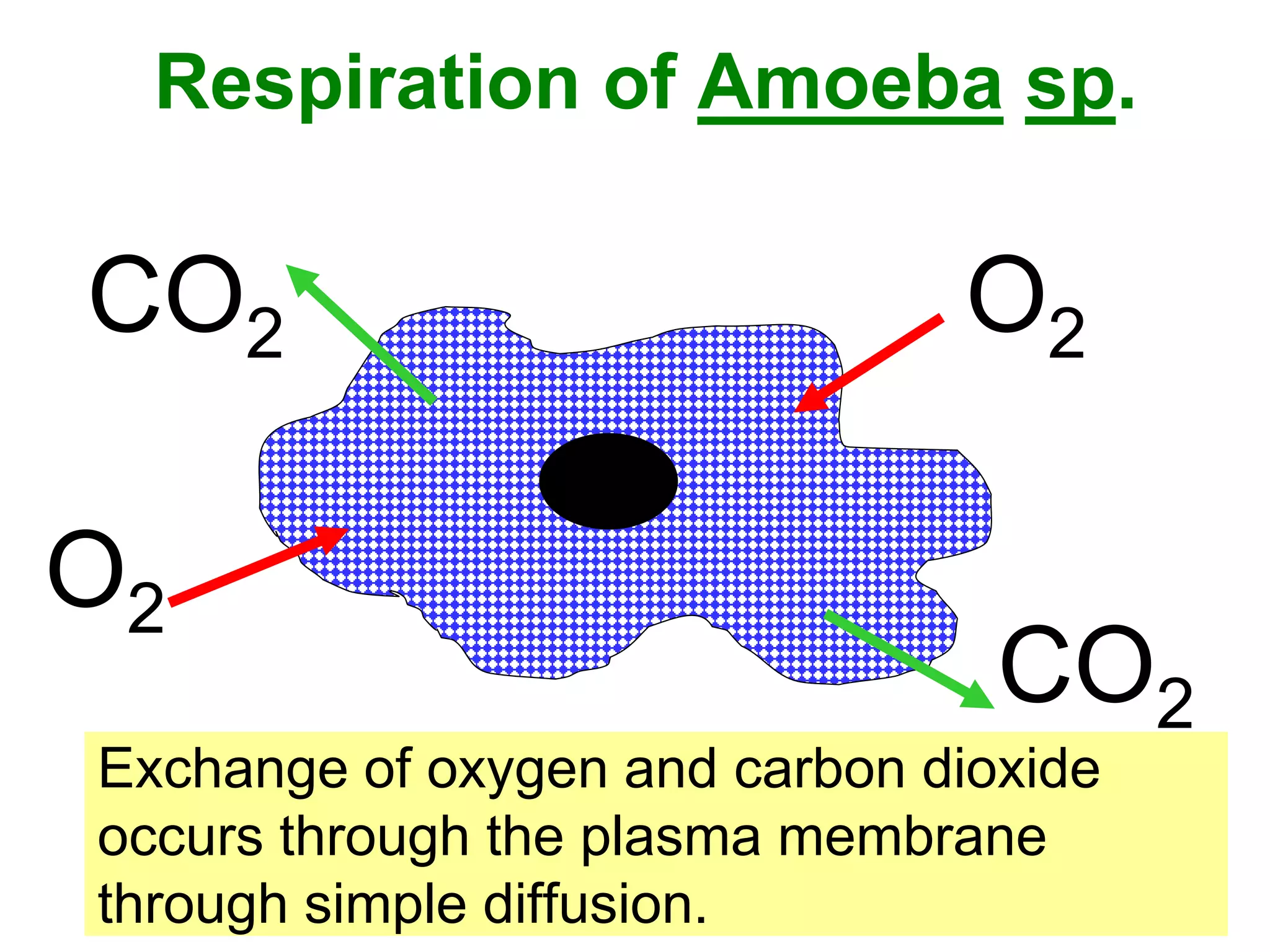
Respiration of Amoeba sp. 
O2 
CO2 
O2 
CO2 
Exchange of oxygen and carbon dioxide 
occurs through the plasma membrane 
through simple diffusion.
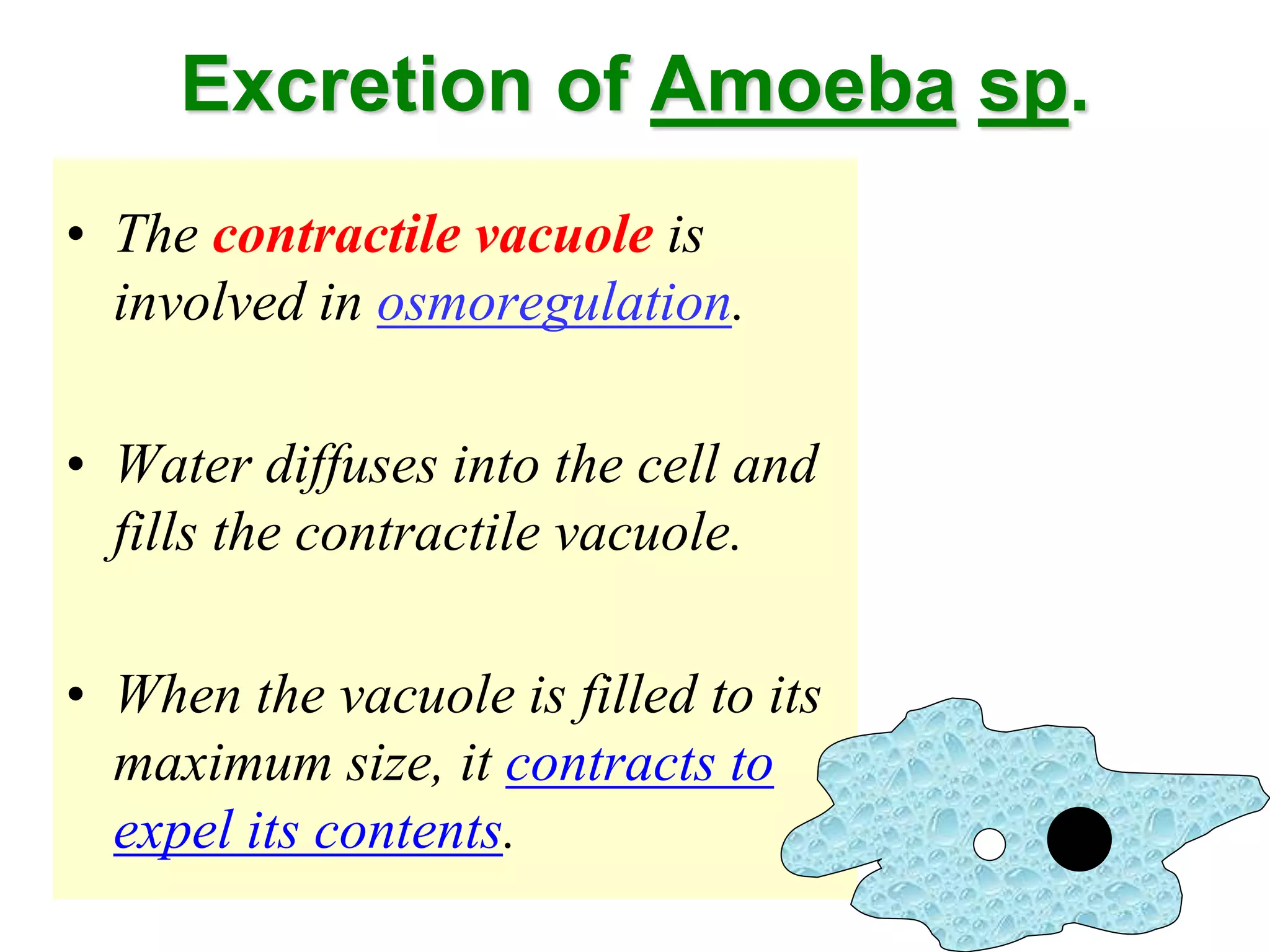
Excretion of Amoeba sp. 
• The contractile vacuole is 
involved in osmoregulation. 
• Water diffuses into the cell and 
fills the contractile vacuole. 
• When the vacuole is filled to its 
maximum size, it contracts to 
expel its contents.
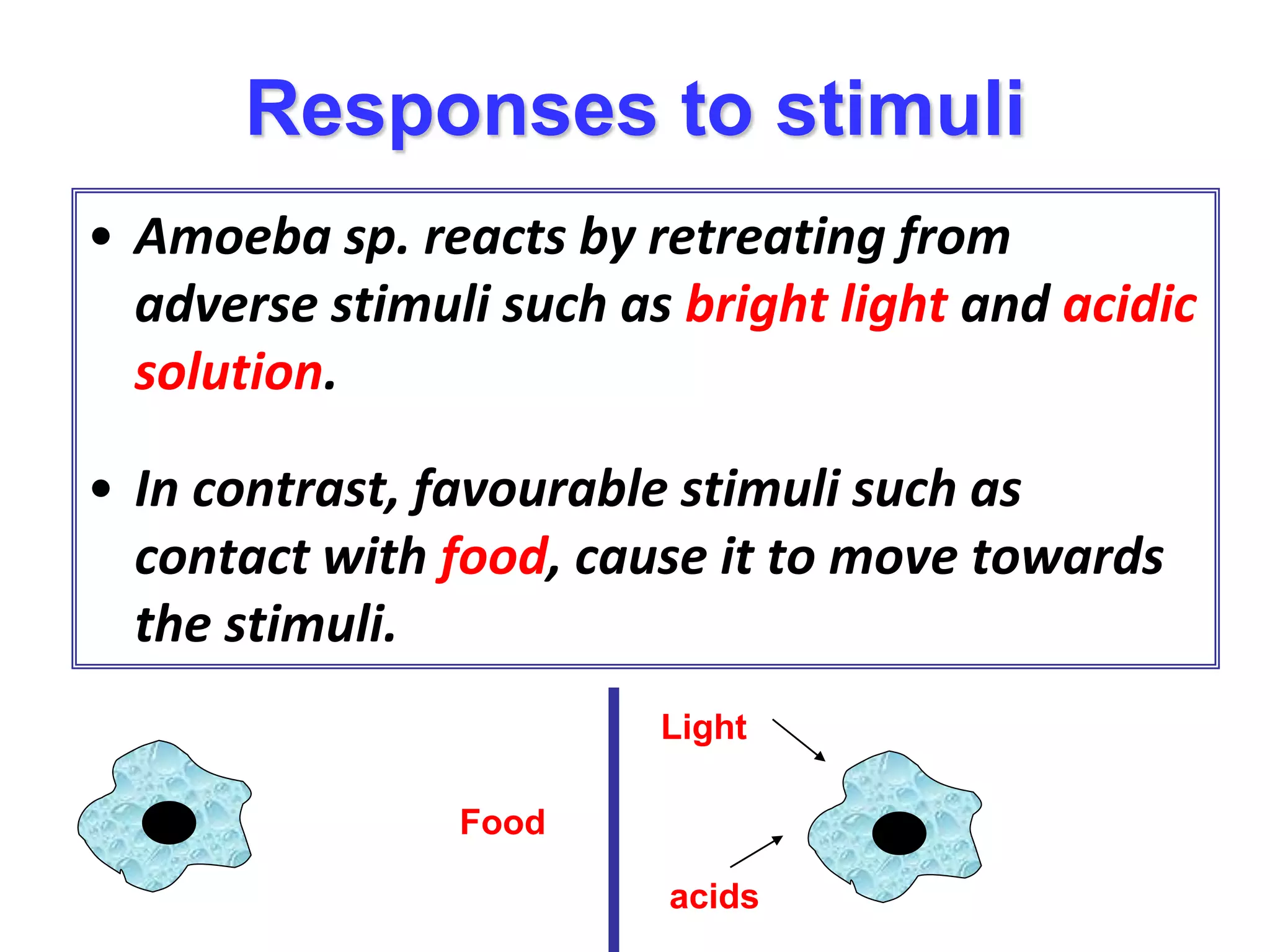
Responses to stimuli 
• Amoeba sp. reacts by retreating from 
adverse stimuli such as bright light and acidic 
solution. 
• In contrast, favourable stimuli such as 
contact with food, cause it to move towards 
the stimuli. 
Food 
Light 
acids
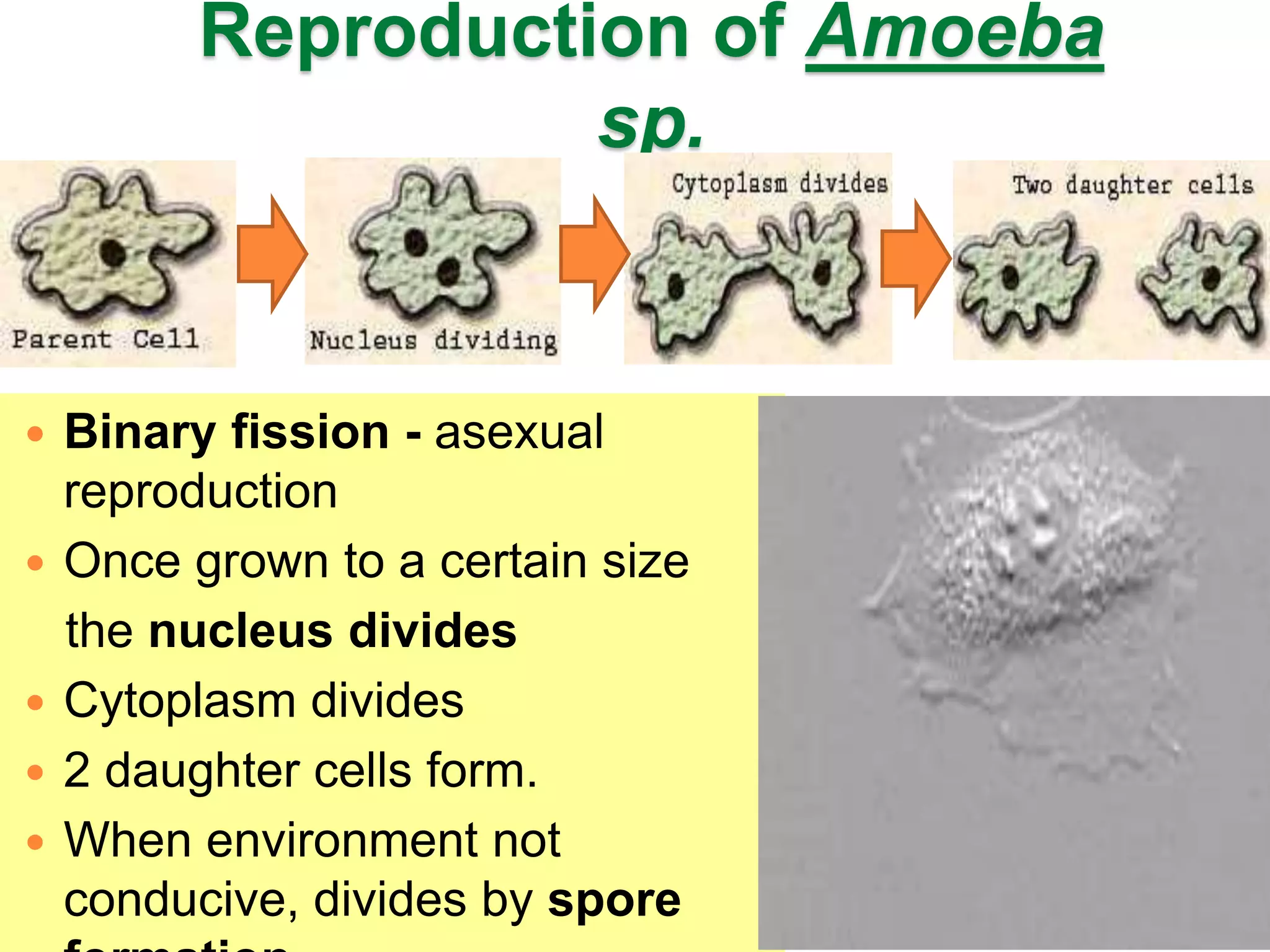
Reproduction of Amoeba 
sp. 
 Binary fission - asexual 
reproduction 
 Once grown to a certain size 
the nucleus divides 
 Cytoplasm divides 
 2 daughter cells form. 
 When environment not 
conducive, divides by spore 
formation
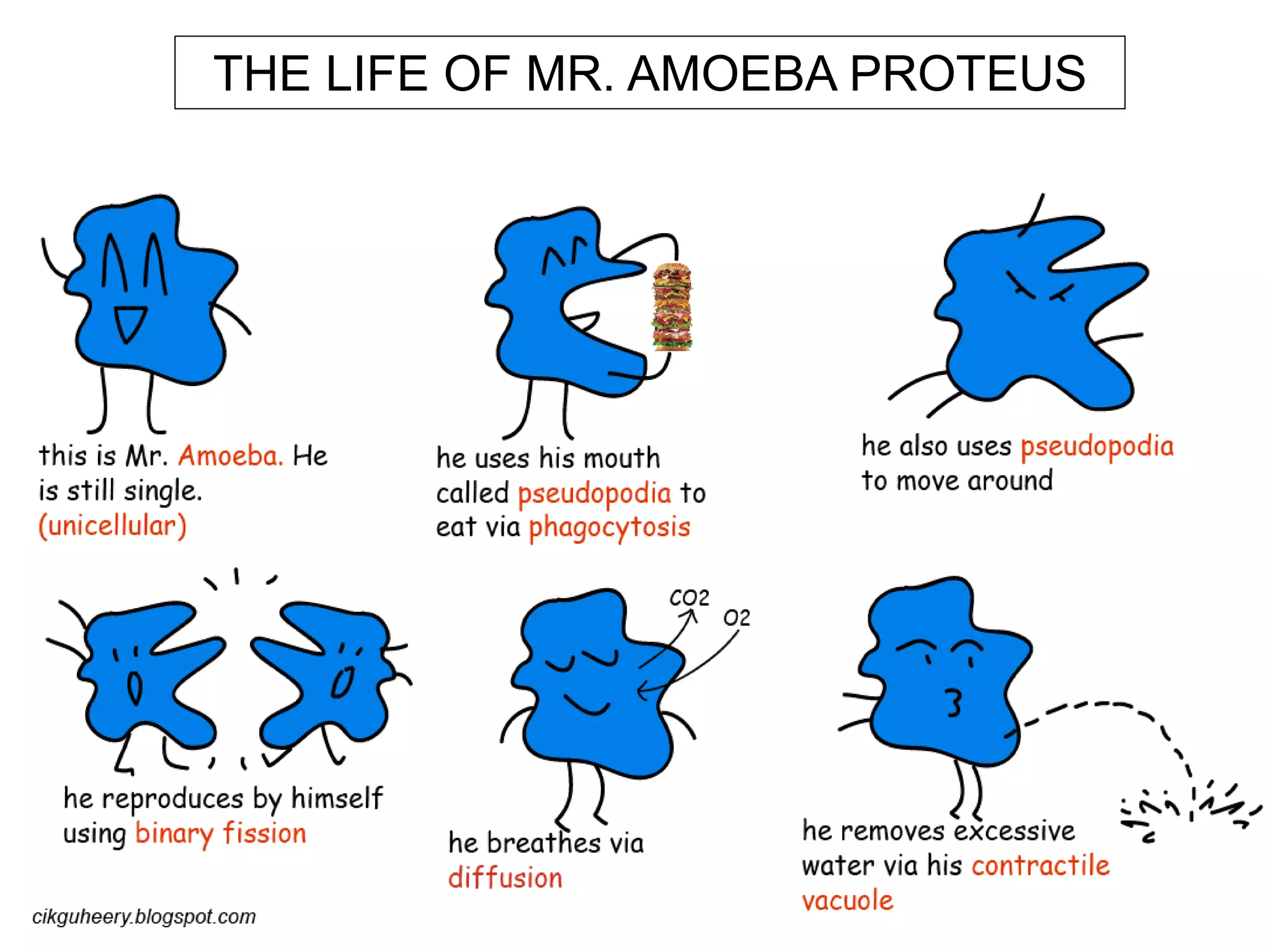
THE LIFE OF MR. AMOEBA PROTEUS
2.2 CELL ORGANISATION 
MULTICELLULAR ORGANISM 
 Organism - more than one cell 
 Larger organisms ~Need many 
different types of cells to carry out 
life processes 
 Achieved via cell specialisation and 
cell organisation
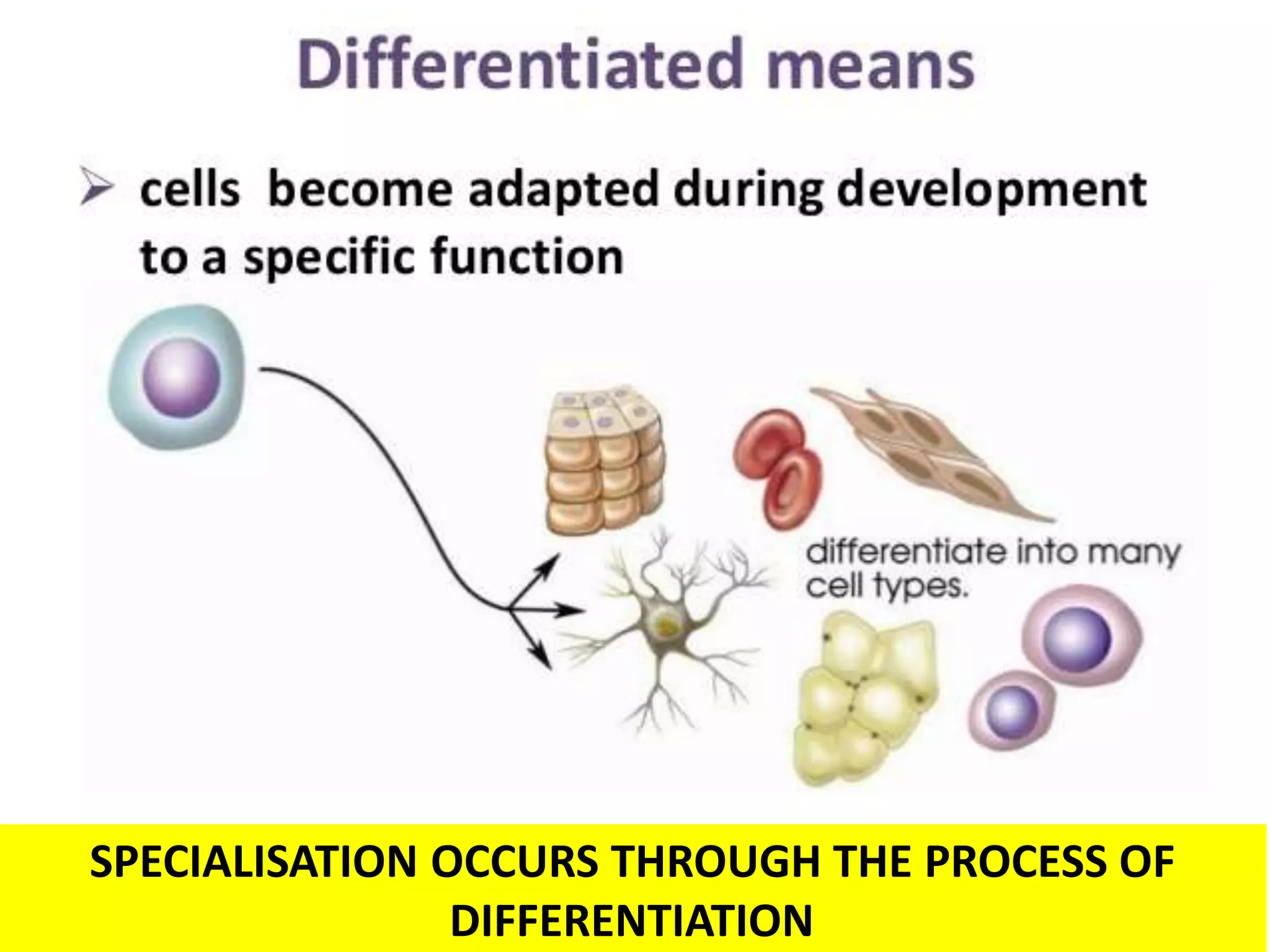
SPECIALISATION OCCURS THROUGH THE PROCESS OF 
DIFFERENTIATION
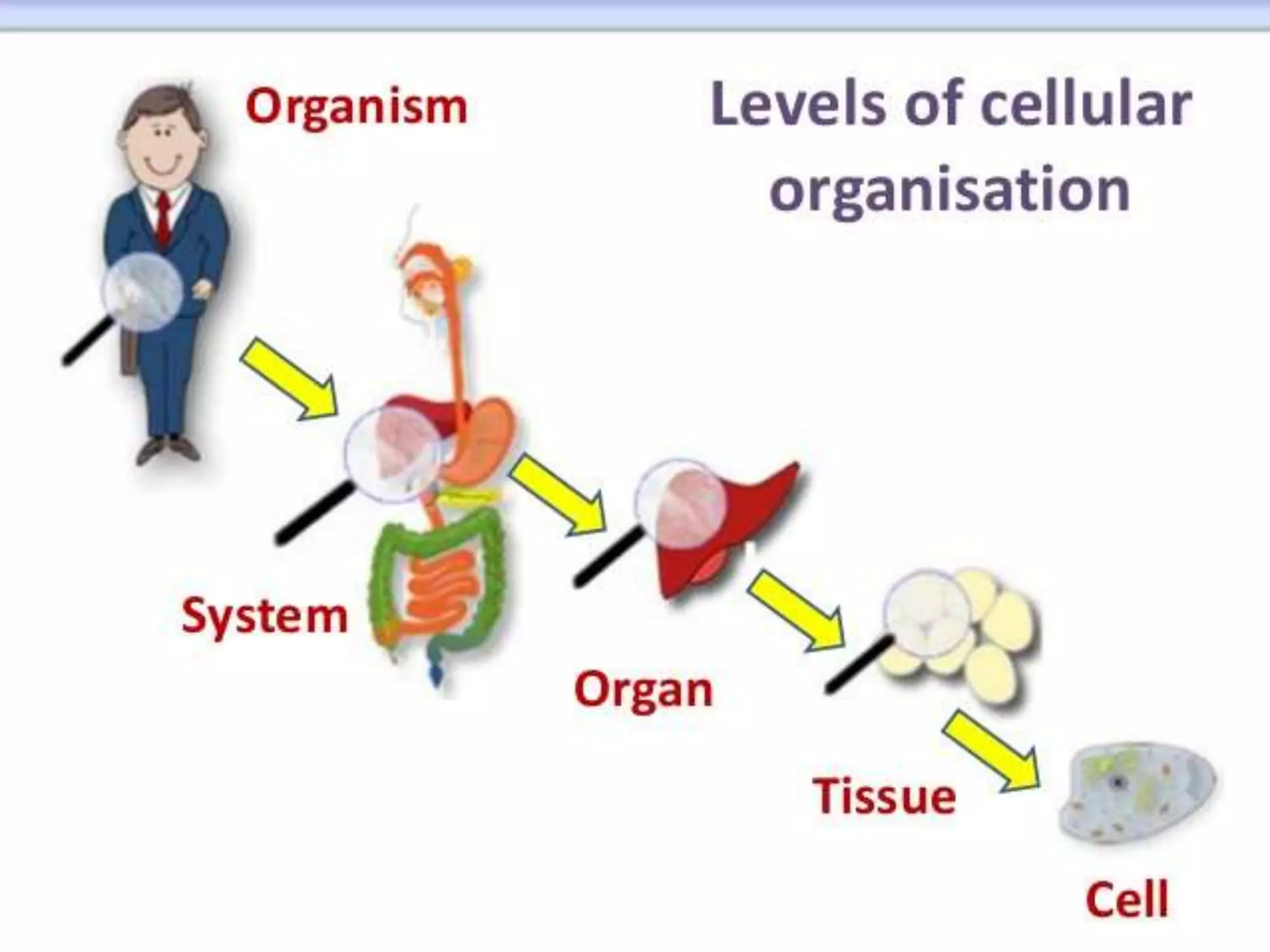
CELLULAR 
ORGANISATION
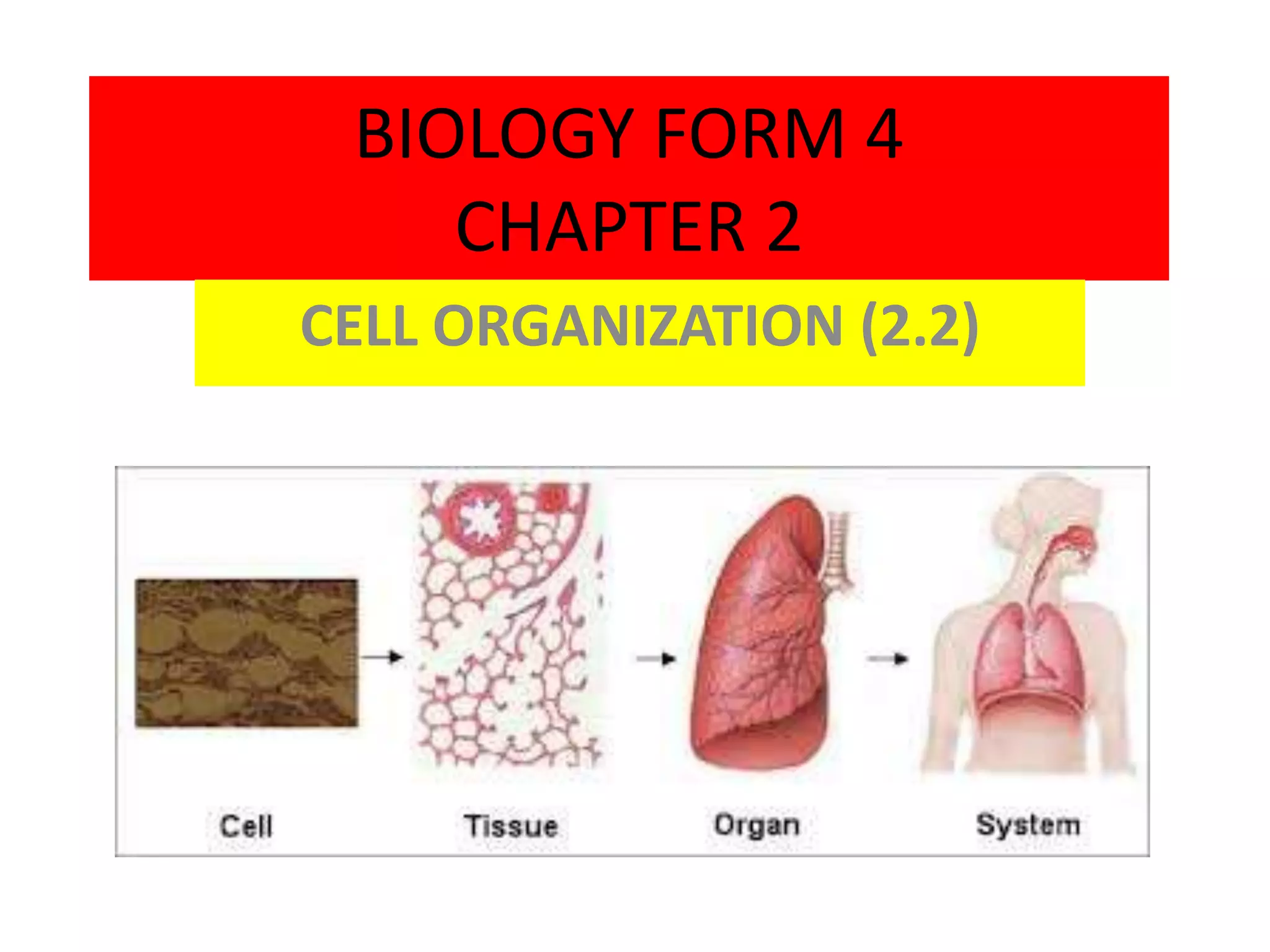
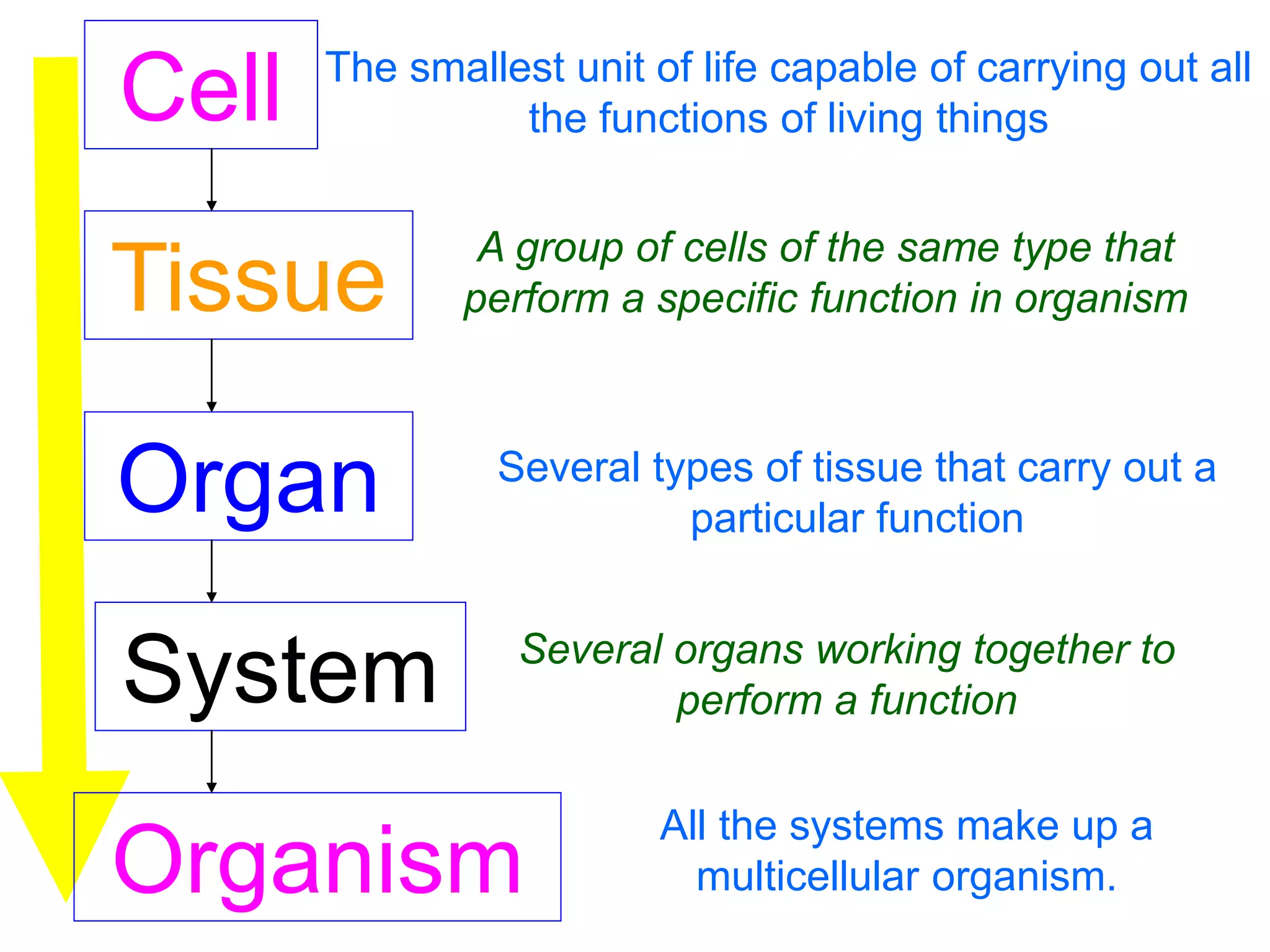
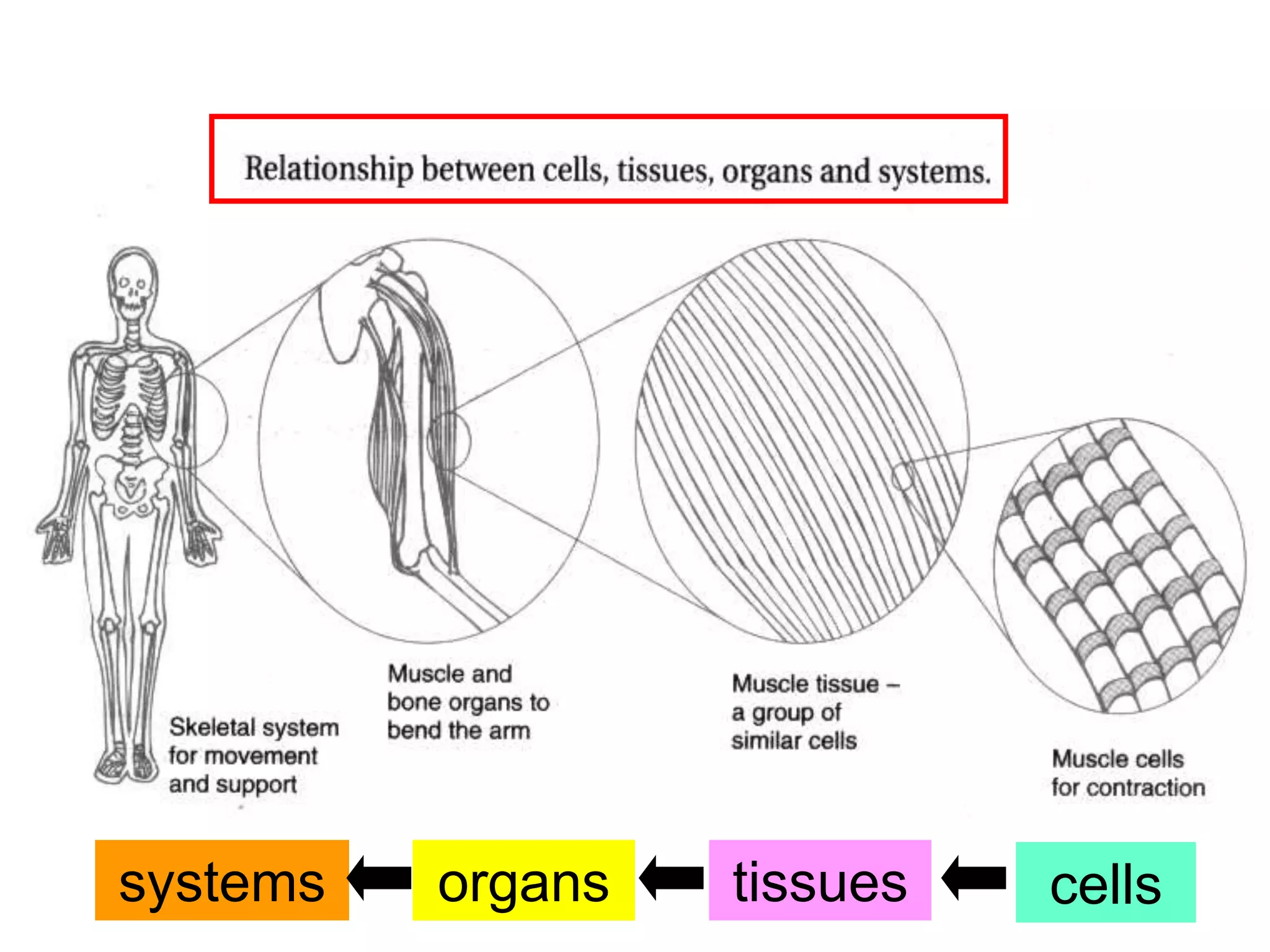
Cell 
The smallest unit of life capable of carrying out all 
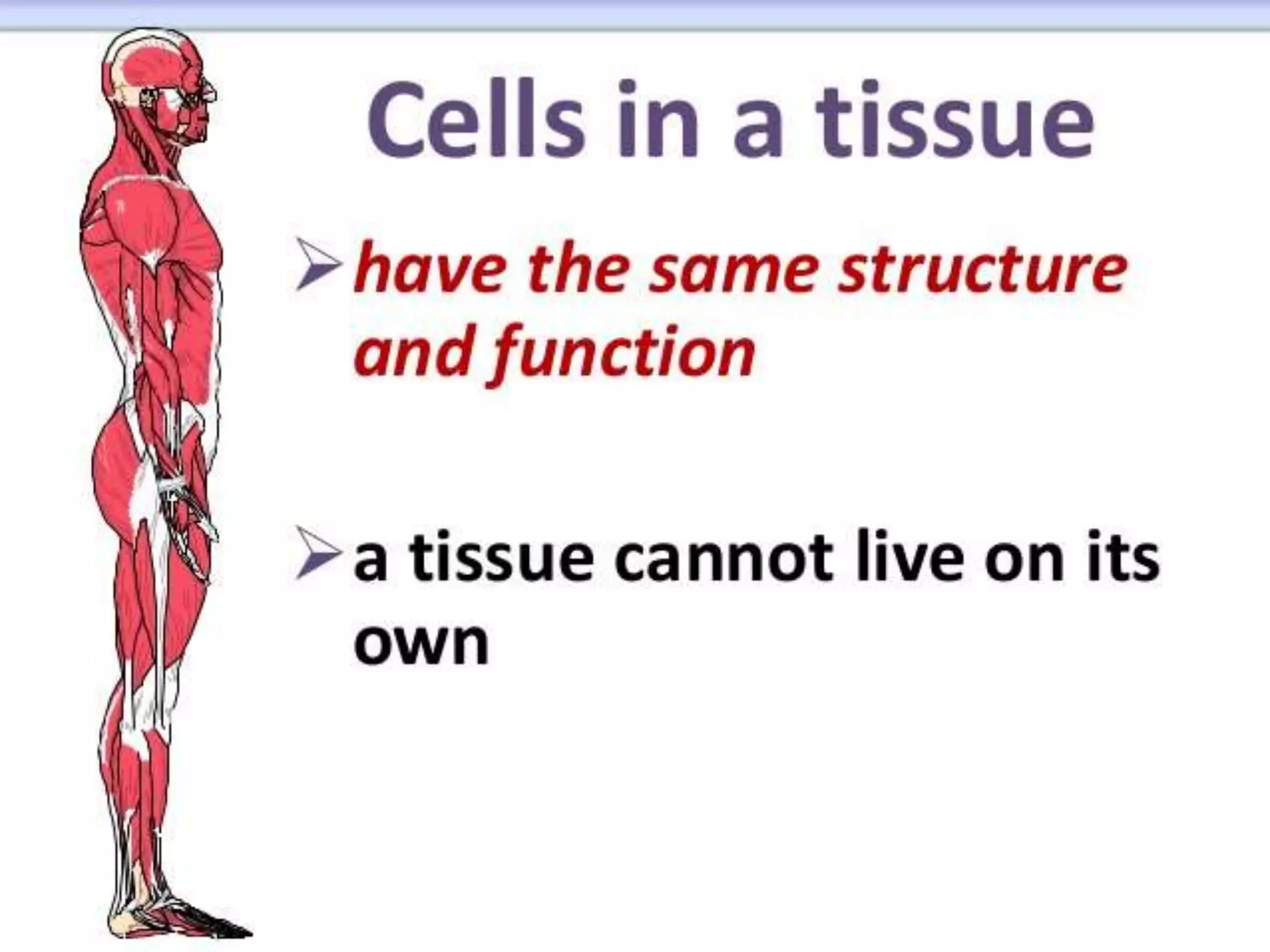
Tissue 
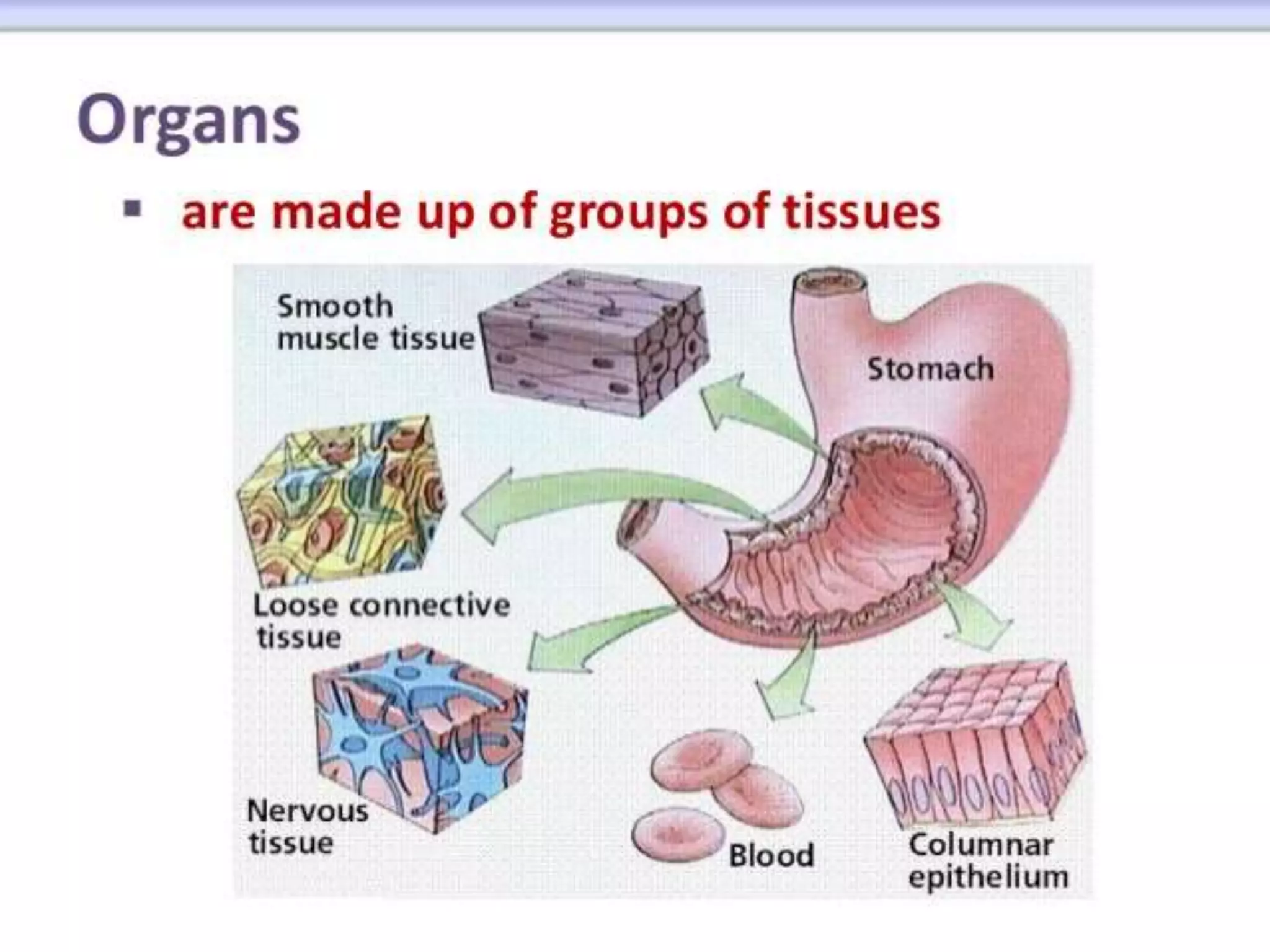
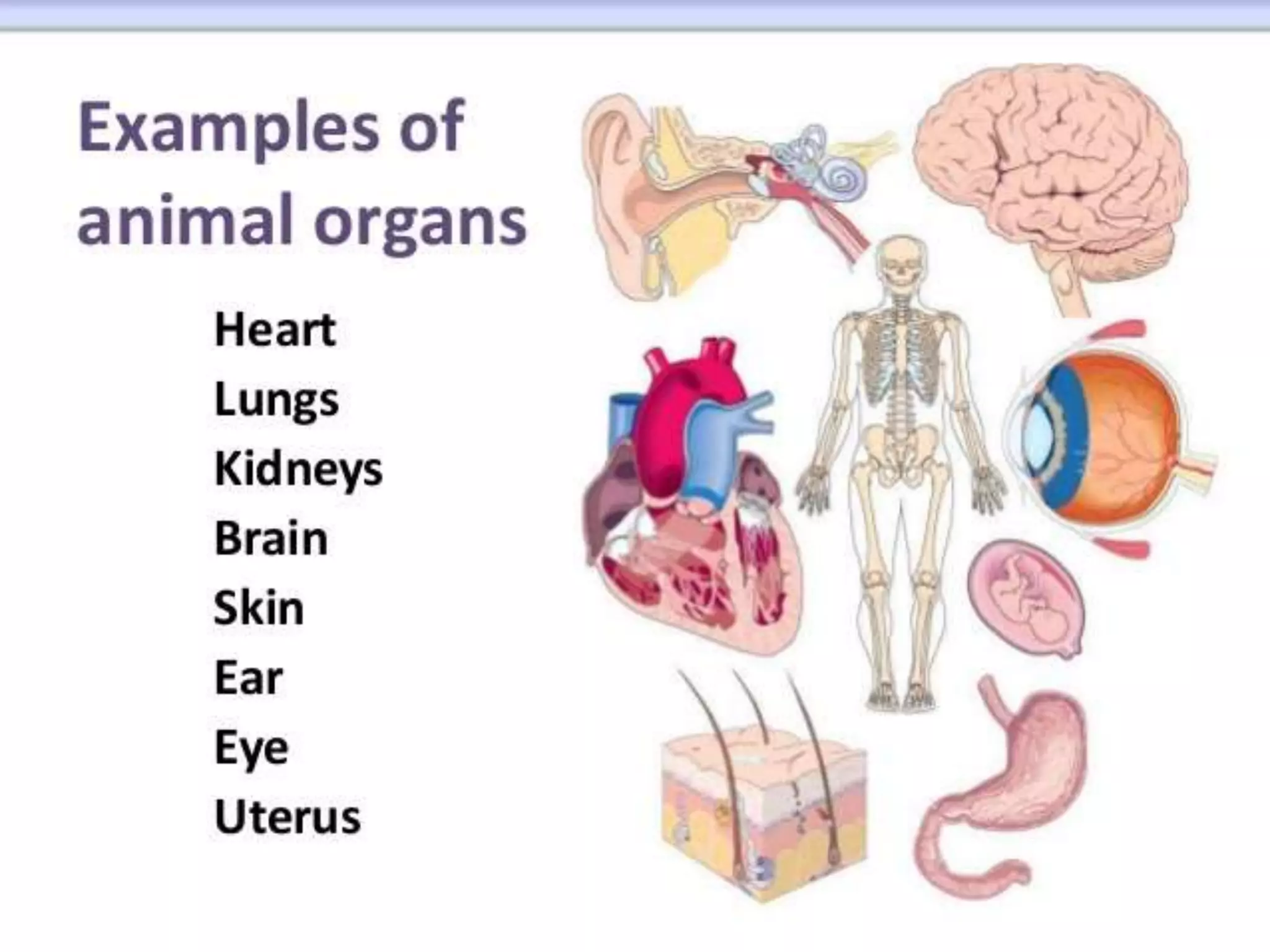
Organ 
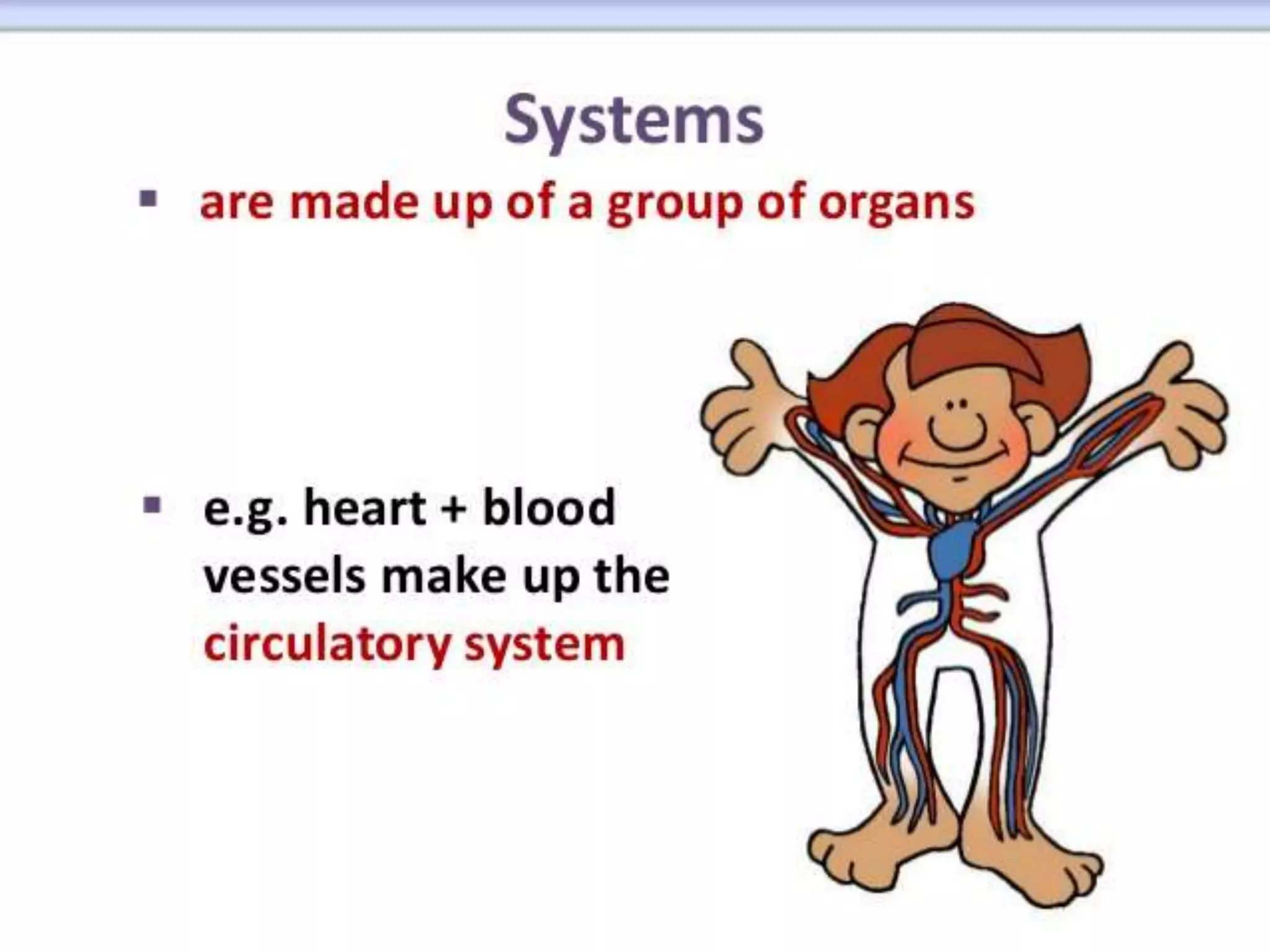
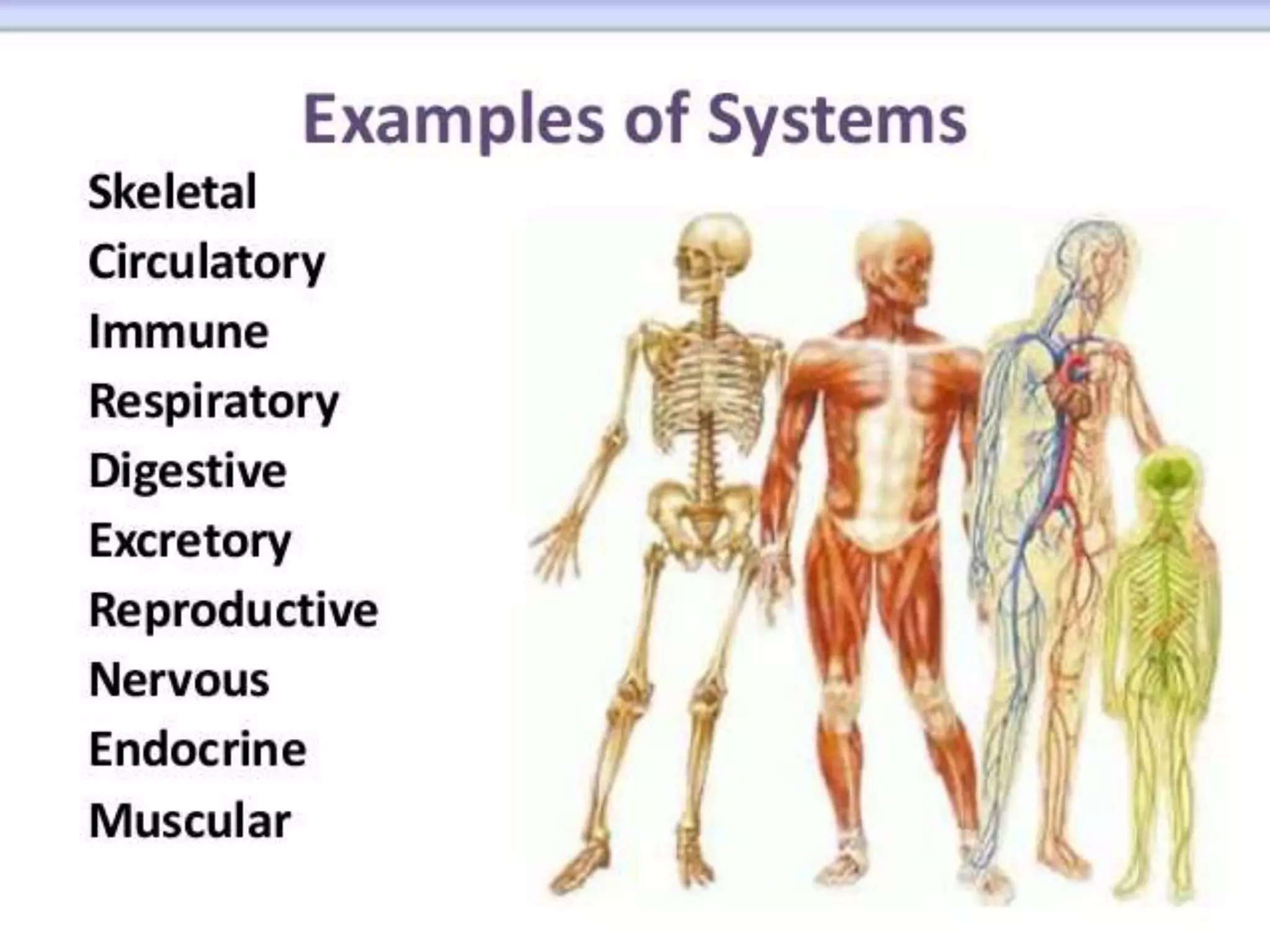
System 
Organism 
the functions of living things 
A group of cells of the same type that 
perform a specific function in organism 
Several types of tissue that carry out a 
particular function 
Several organs working together to 
perform a function 
All the systems make up a 
multicellular organism.
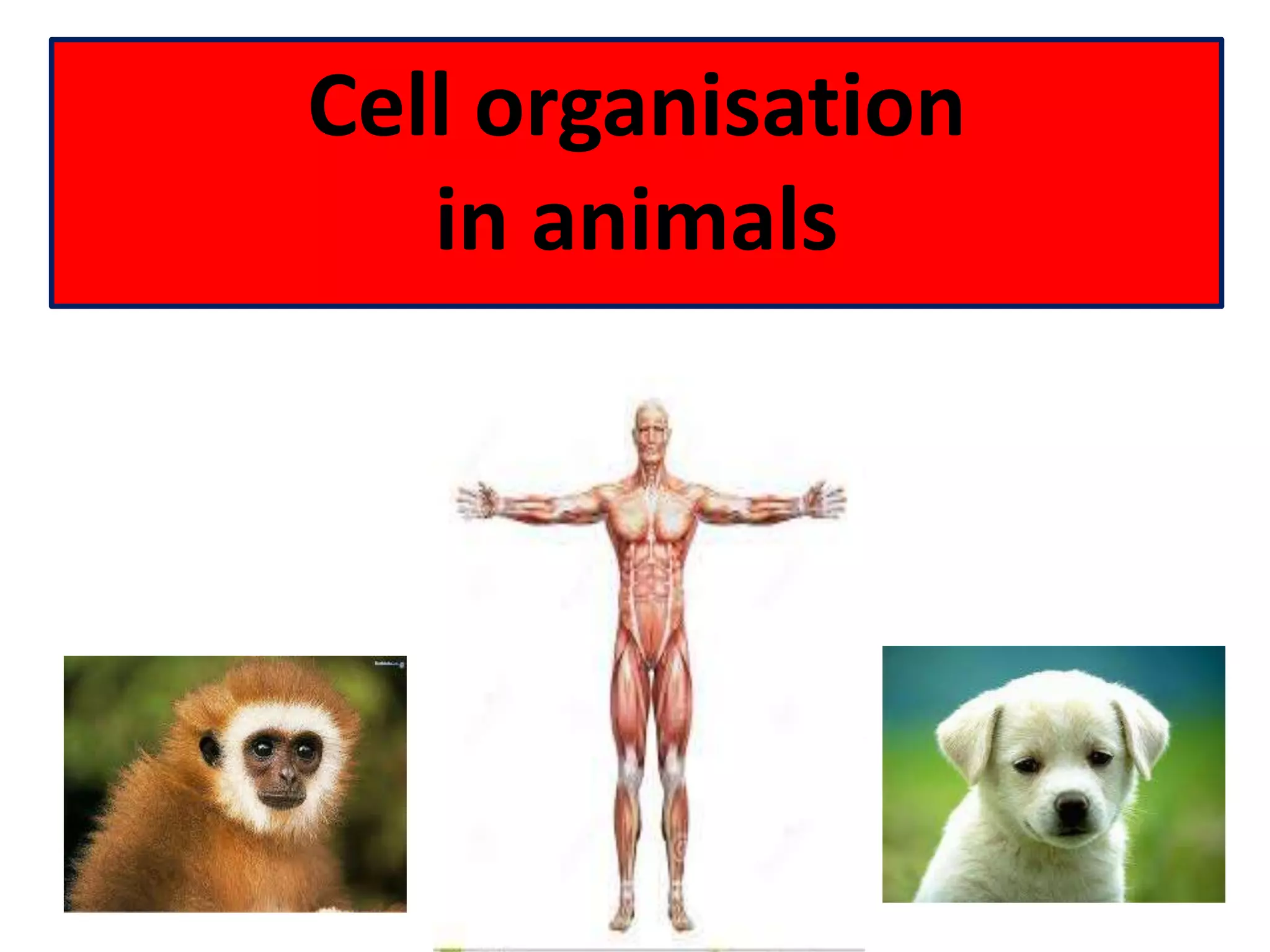
Cell organisation 
in animals
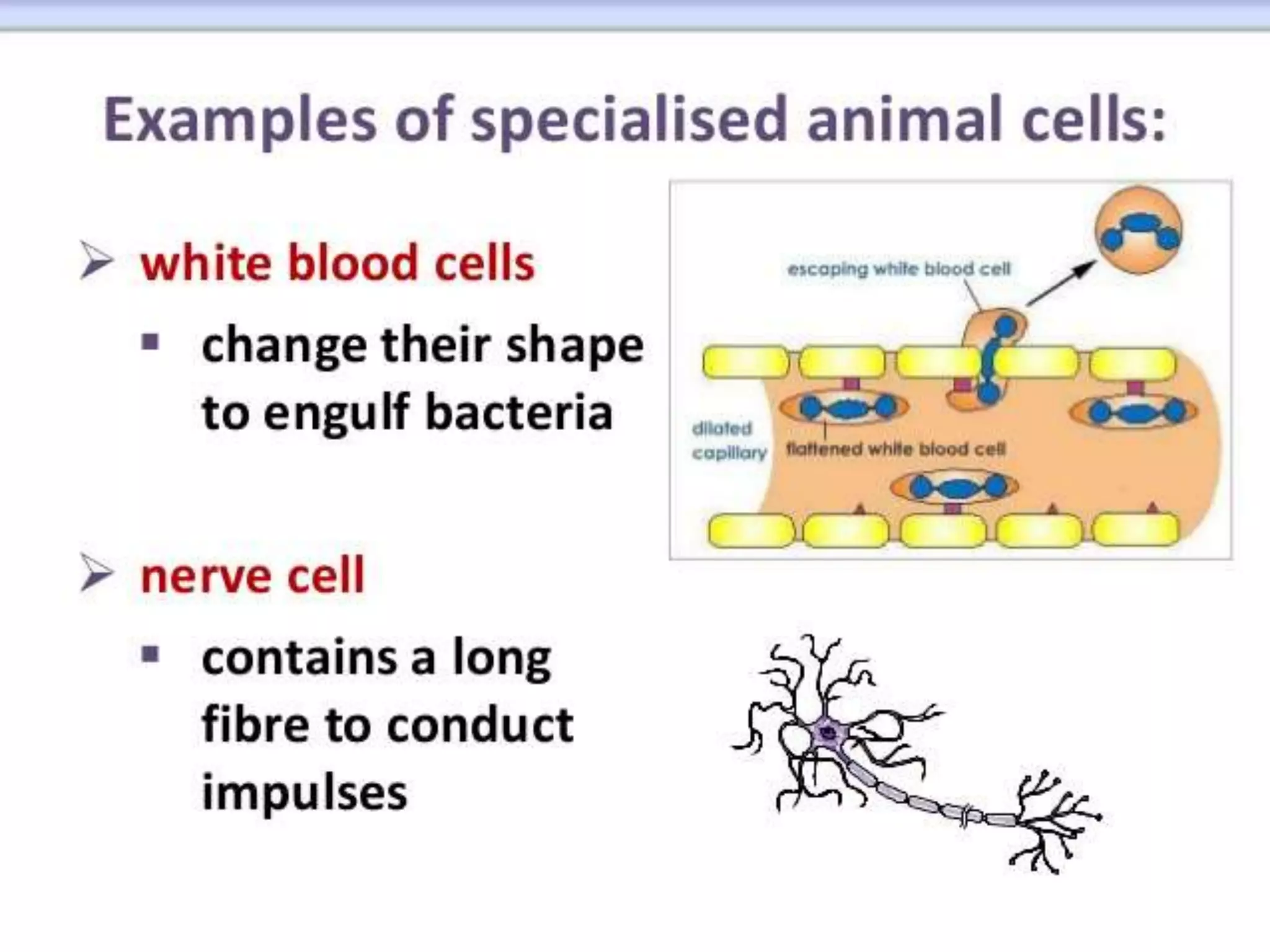
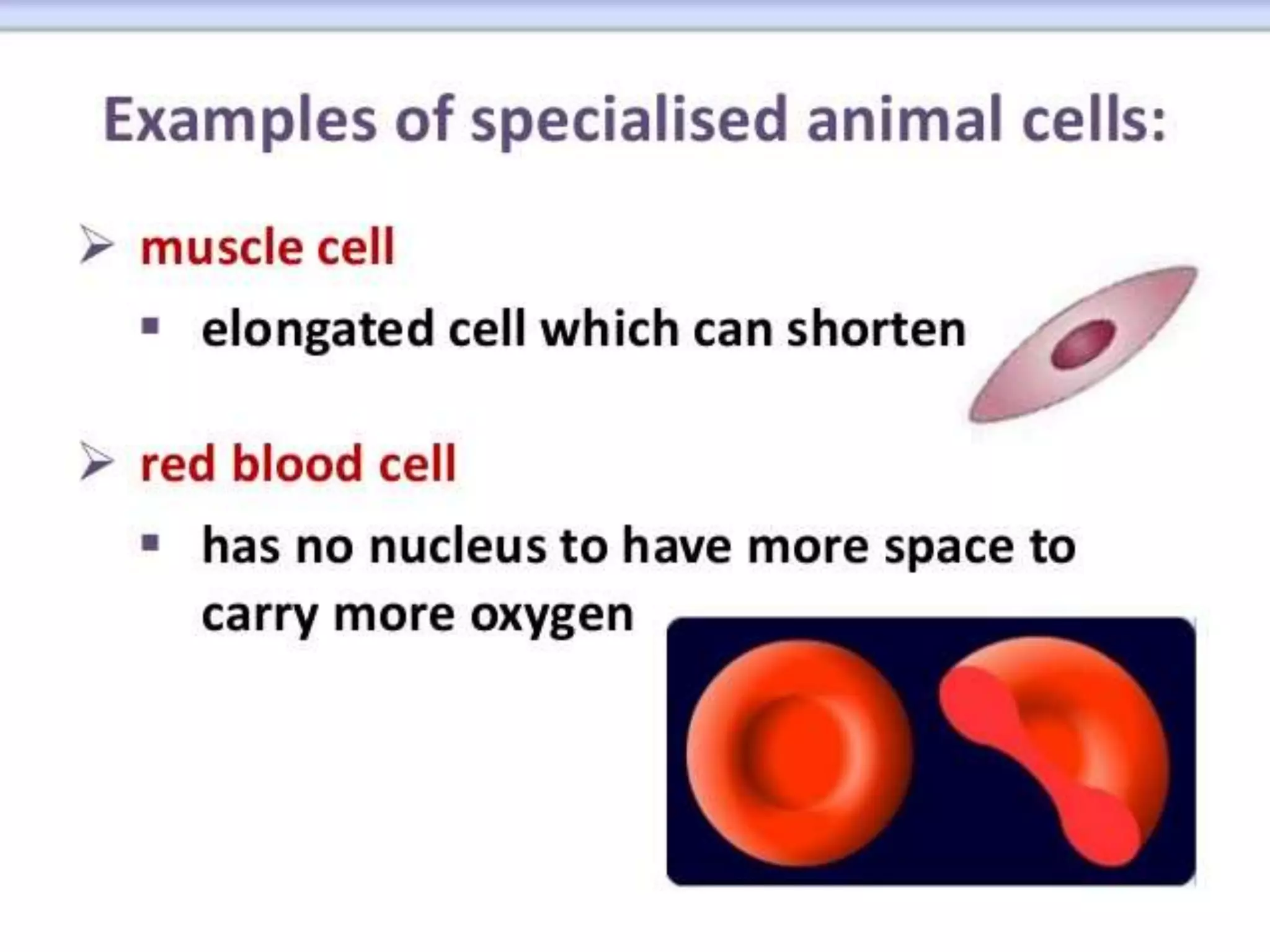
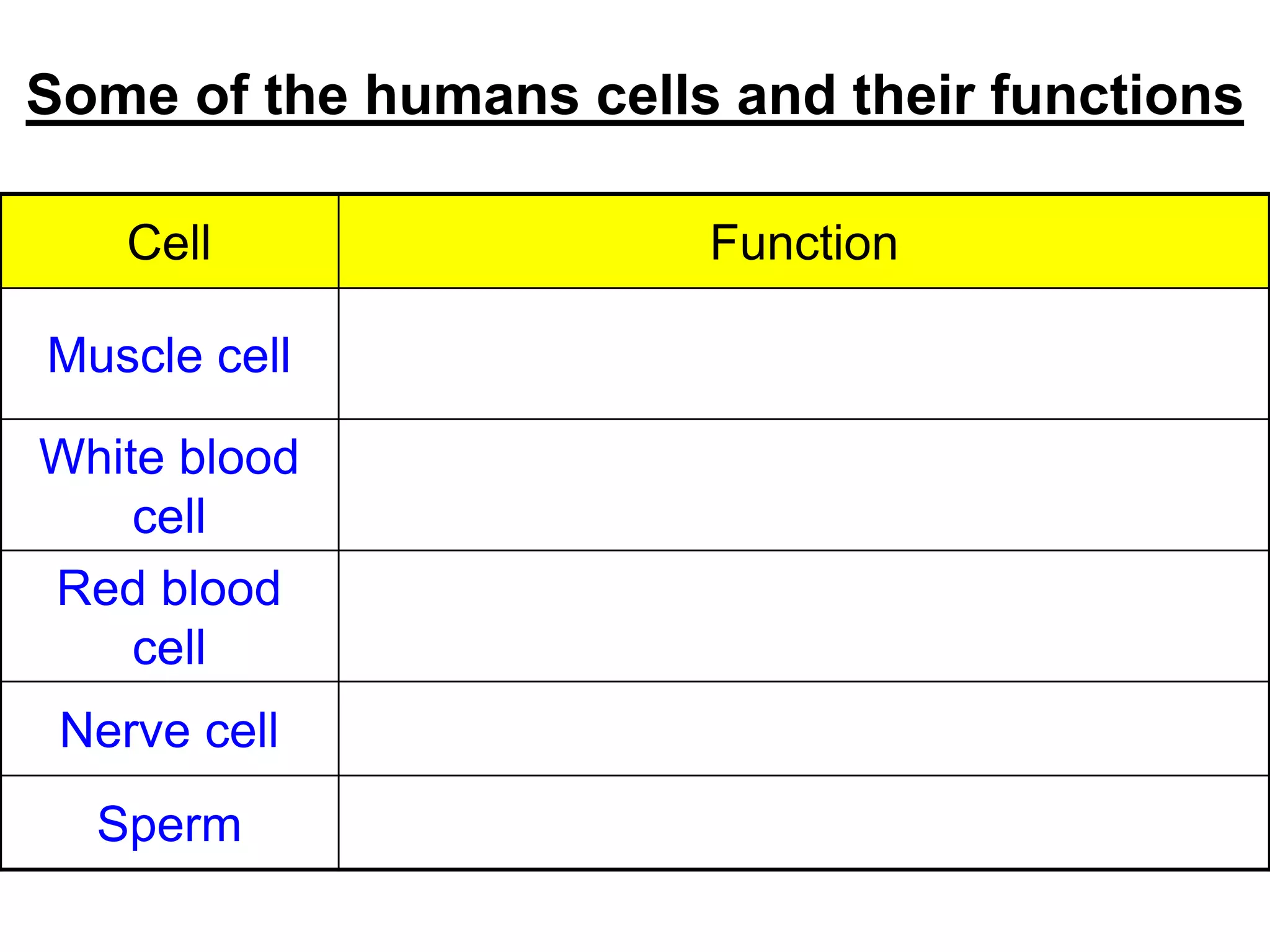
Some of the humans cells and their functions 
Cell Function 
Muscle cell 
Able to contract and relax and are 
involved in movement 
White blood 
cell 
Involved in defence of the body against 
diseases 
Red blood 
cell 
Transports oxygen 
Nerve cell Receives and sends out nerve impulses 
Sperm Fertilises the ovum
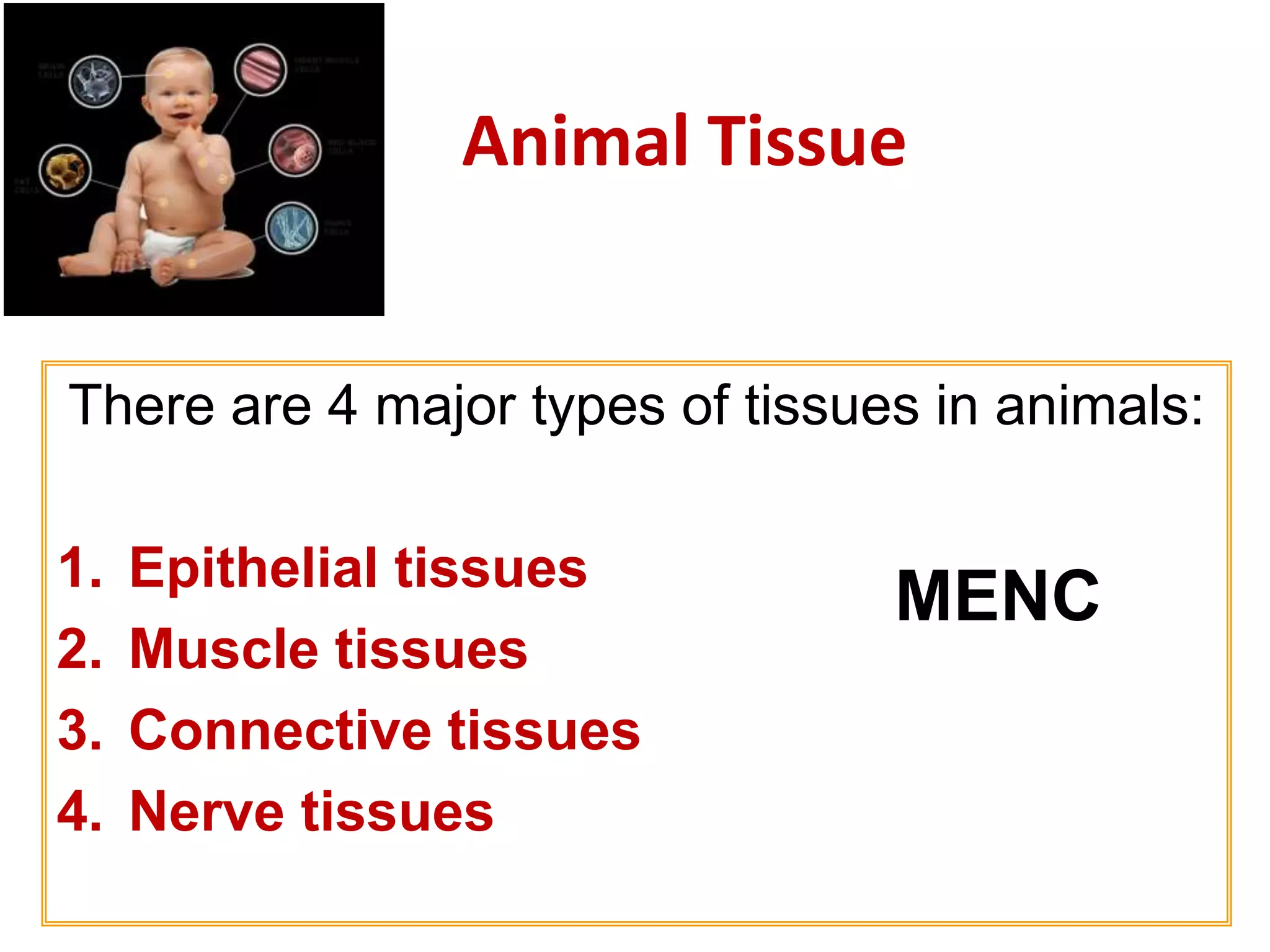
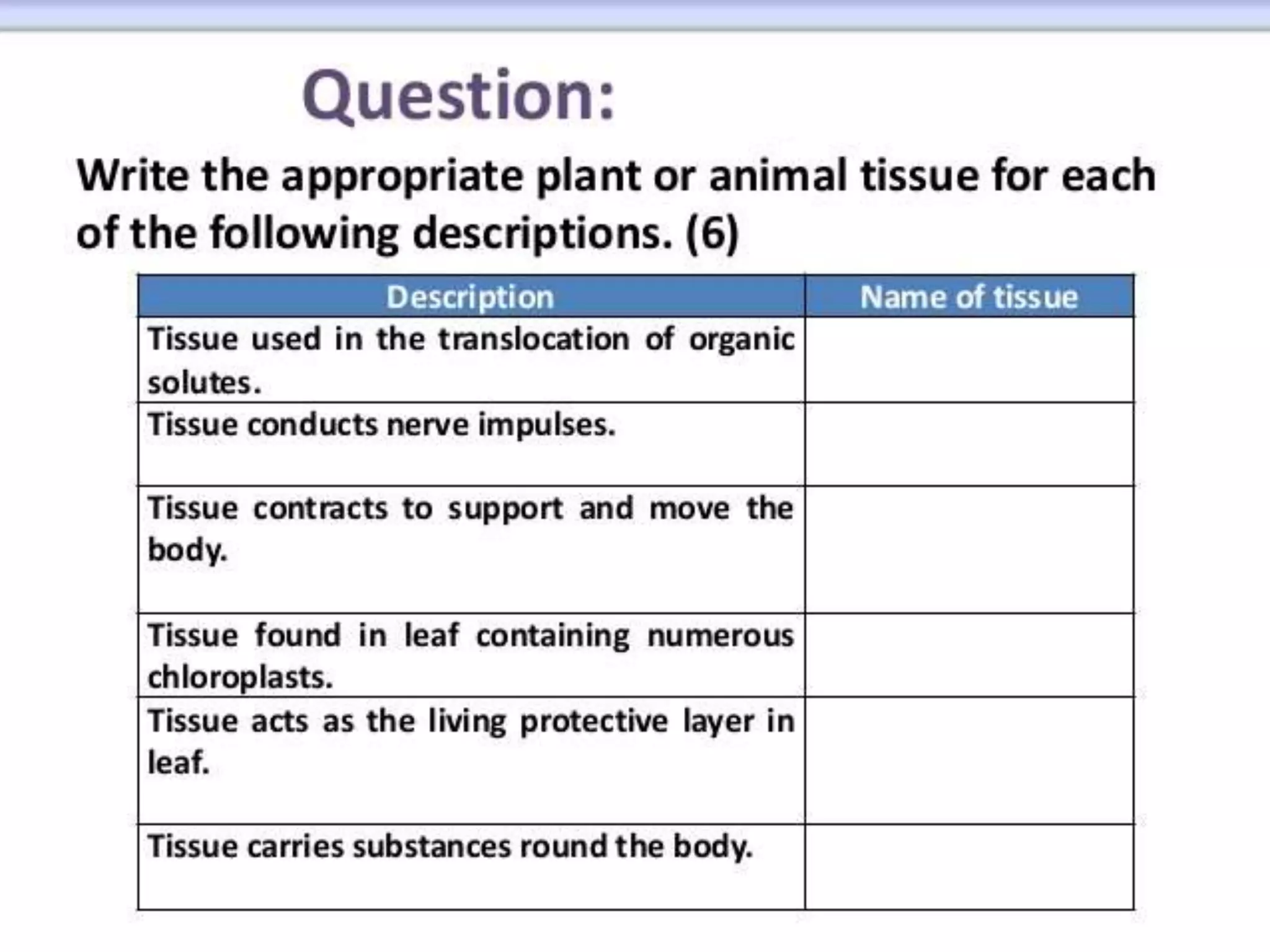
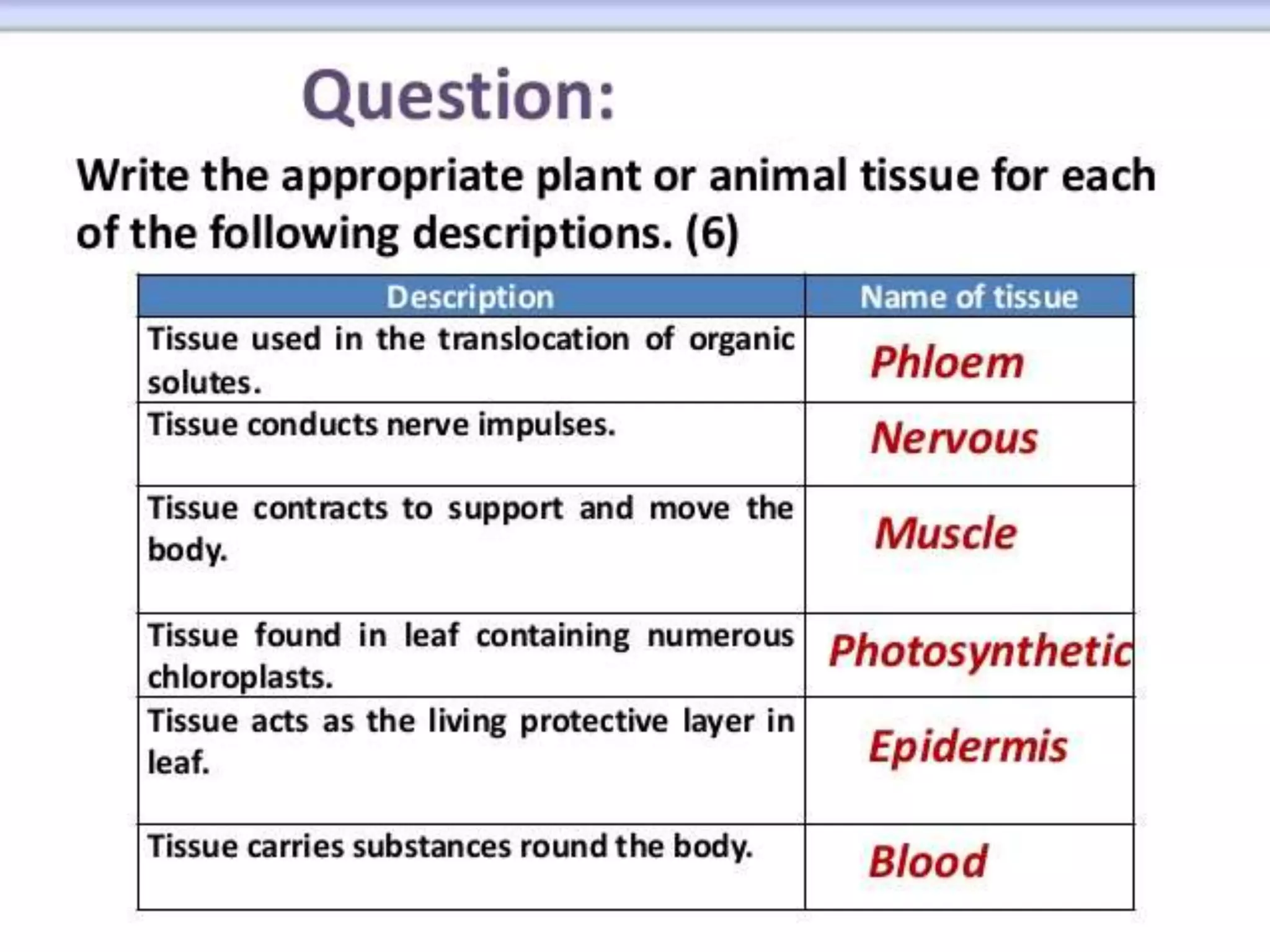
Animal Tissue 
There are 4 major types of tissues in animals: 
1. Epithelial tissues 
2. Muscle tissues 
3. Connective tissues 
4. Nerve tissues 
MENC
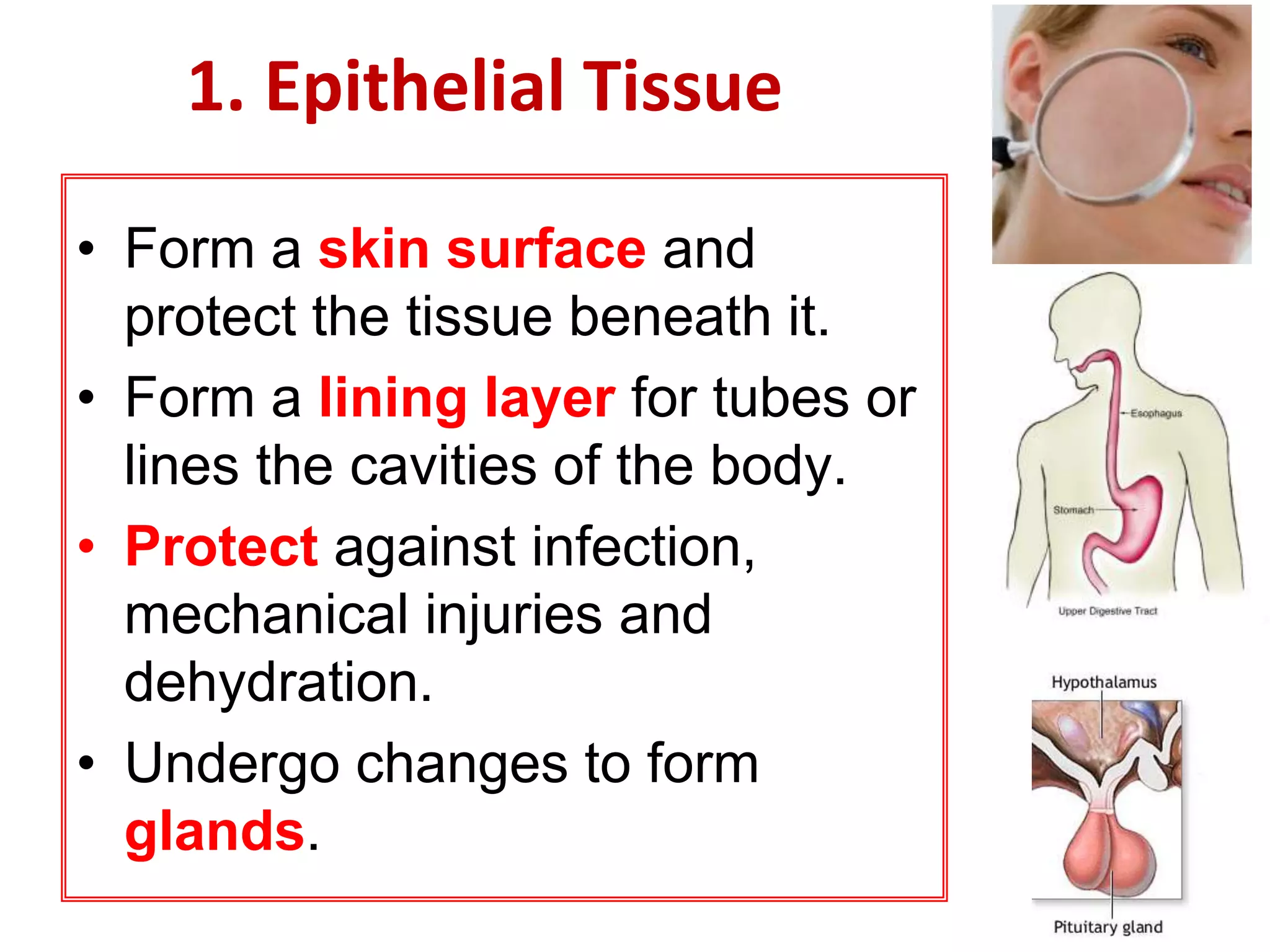
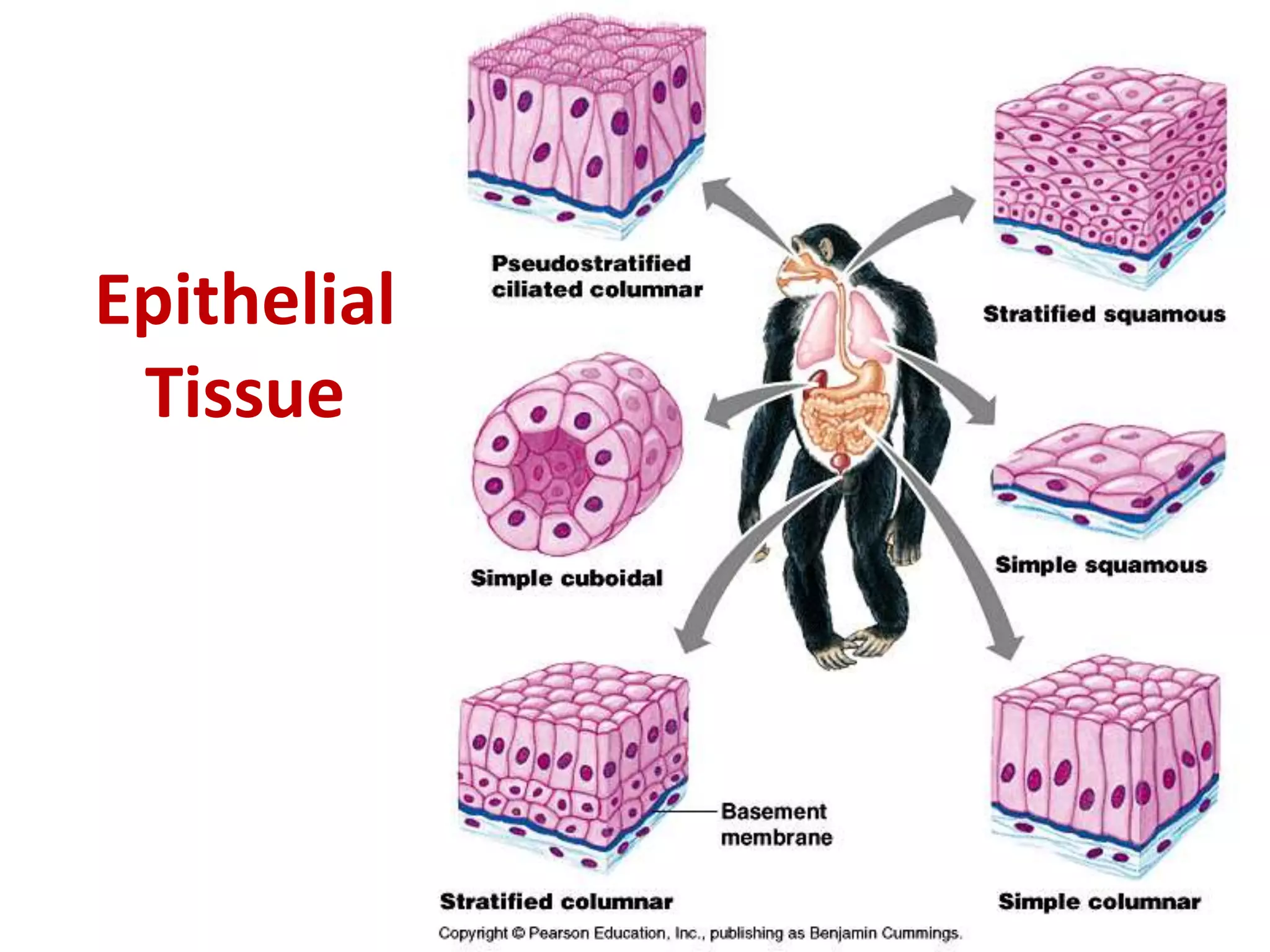
1. Epithelial Tissue 
• Form a skin surface and 
protect the tissue beneath it. 
• Form a lining layer for tubes or 
lines the cavities of the body. 
• Protect against infection, 
mechanical injuries and 
dehydration. 
• Undergo changes to form 
glands.
Epithelial 
Tissue
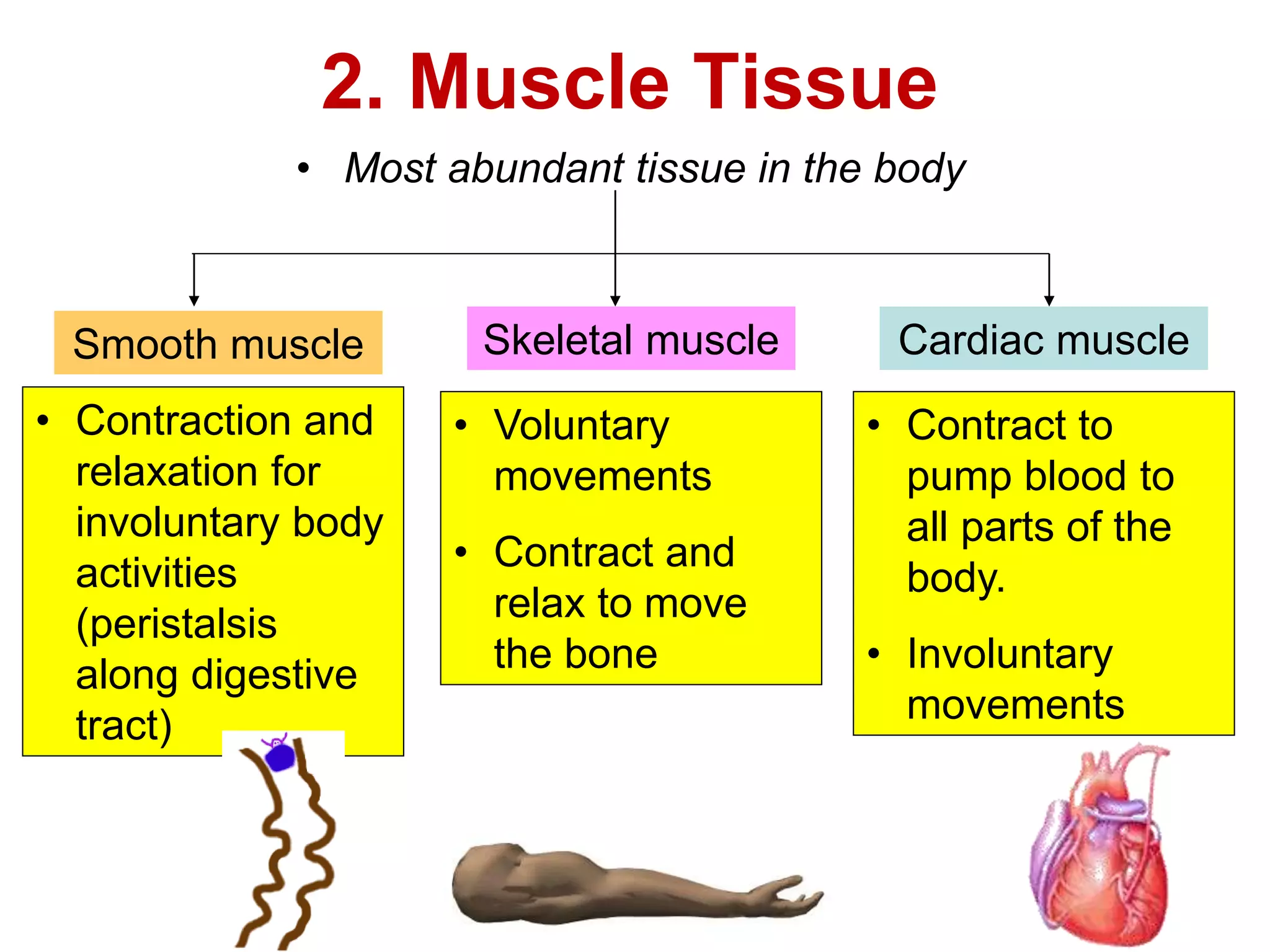
2. Muscle Tissue 
• Most abundant tissue in the body 
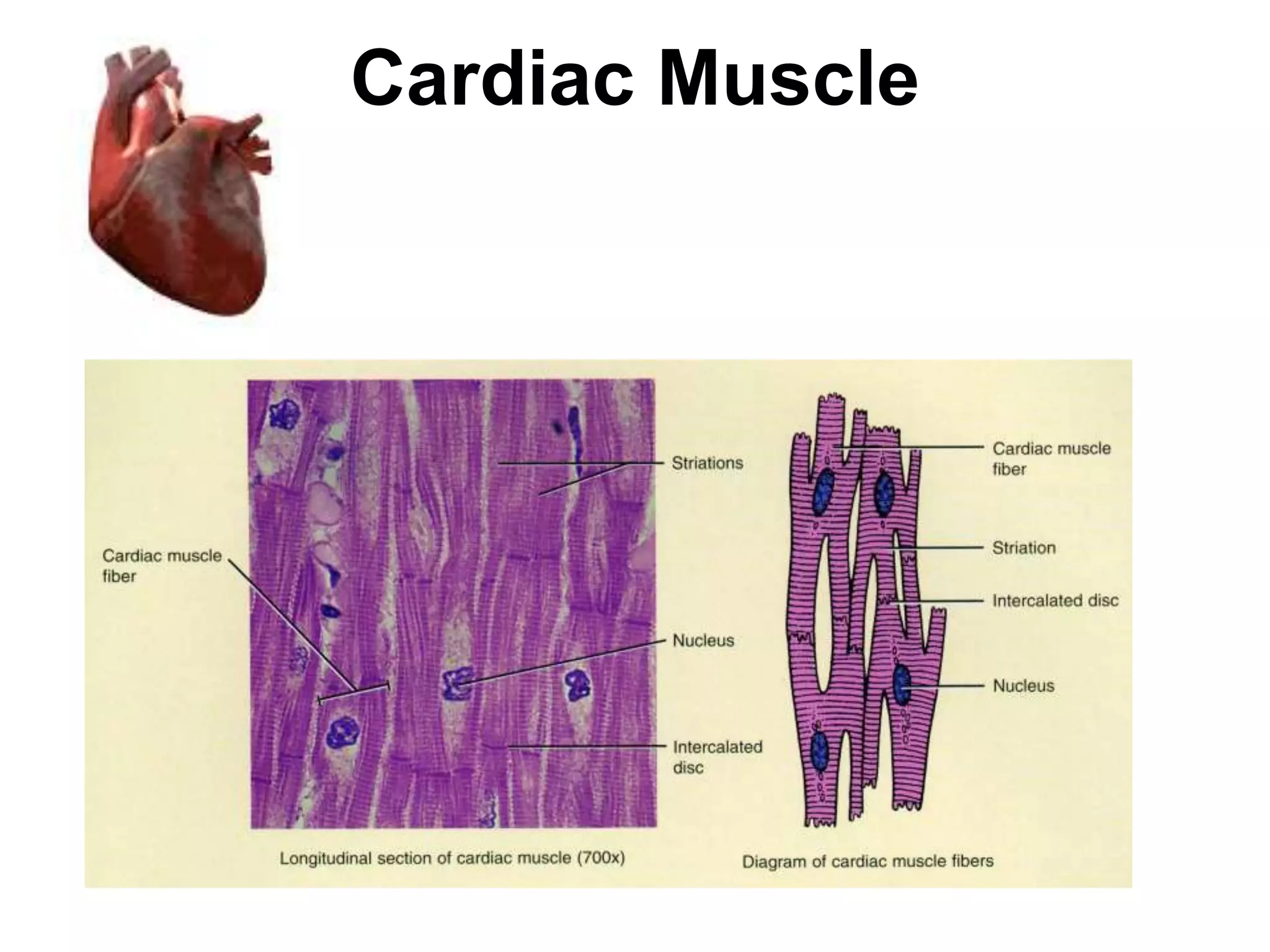
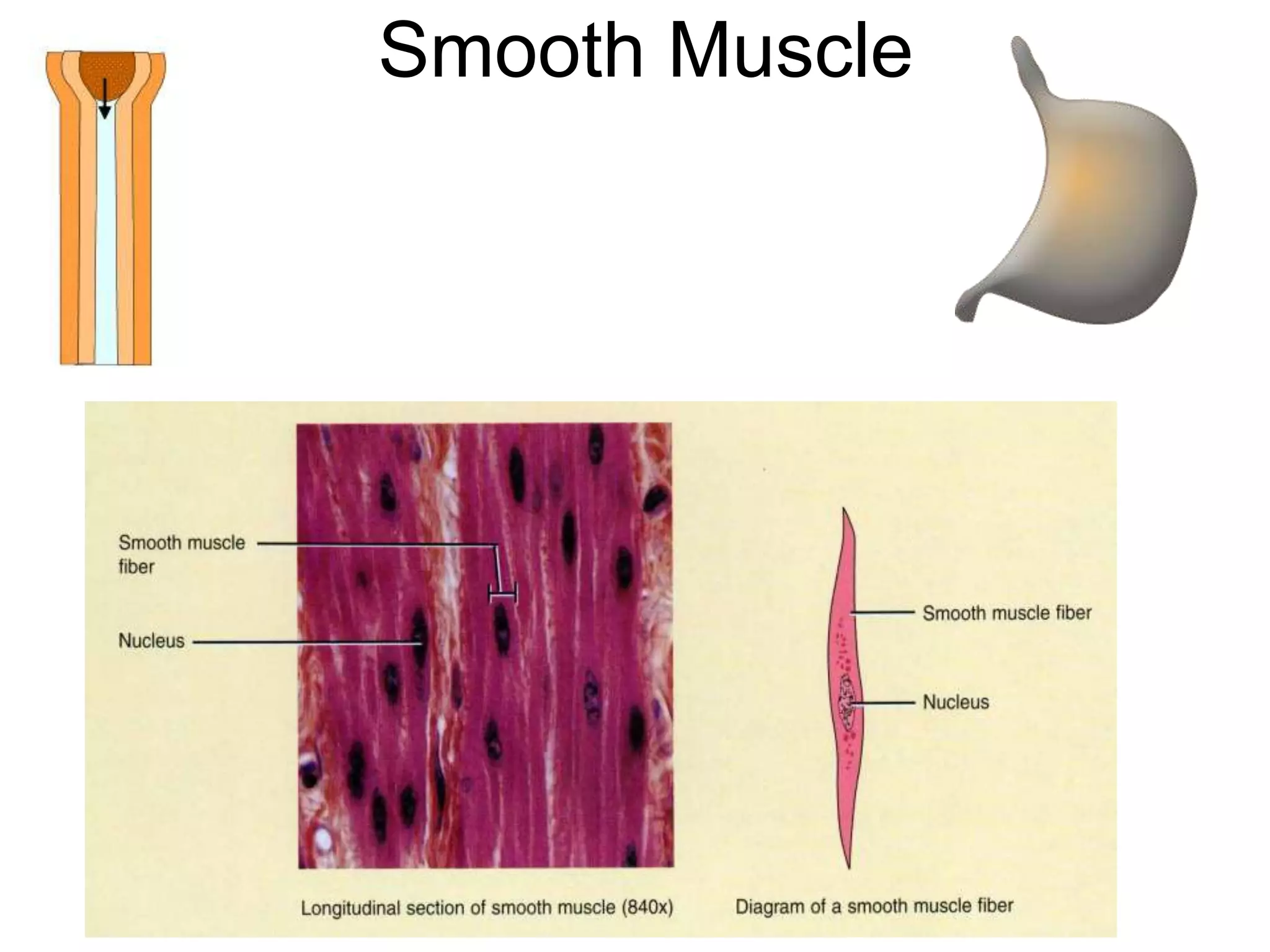
Smooth muscle Skeletal muscle Cardiac muscle 
• Contraction and 
relaxation for 
involuntary body 
activities 
(peristalsis 
along digestive 
tract) 
• Voluntary 
movements 
• Contract and 
relax to move 
the bone 
• Contract to 
pump blood to 
all parts of the 
body. 
• Involuntary 
movements
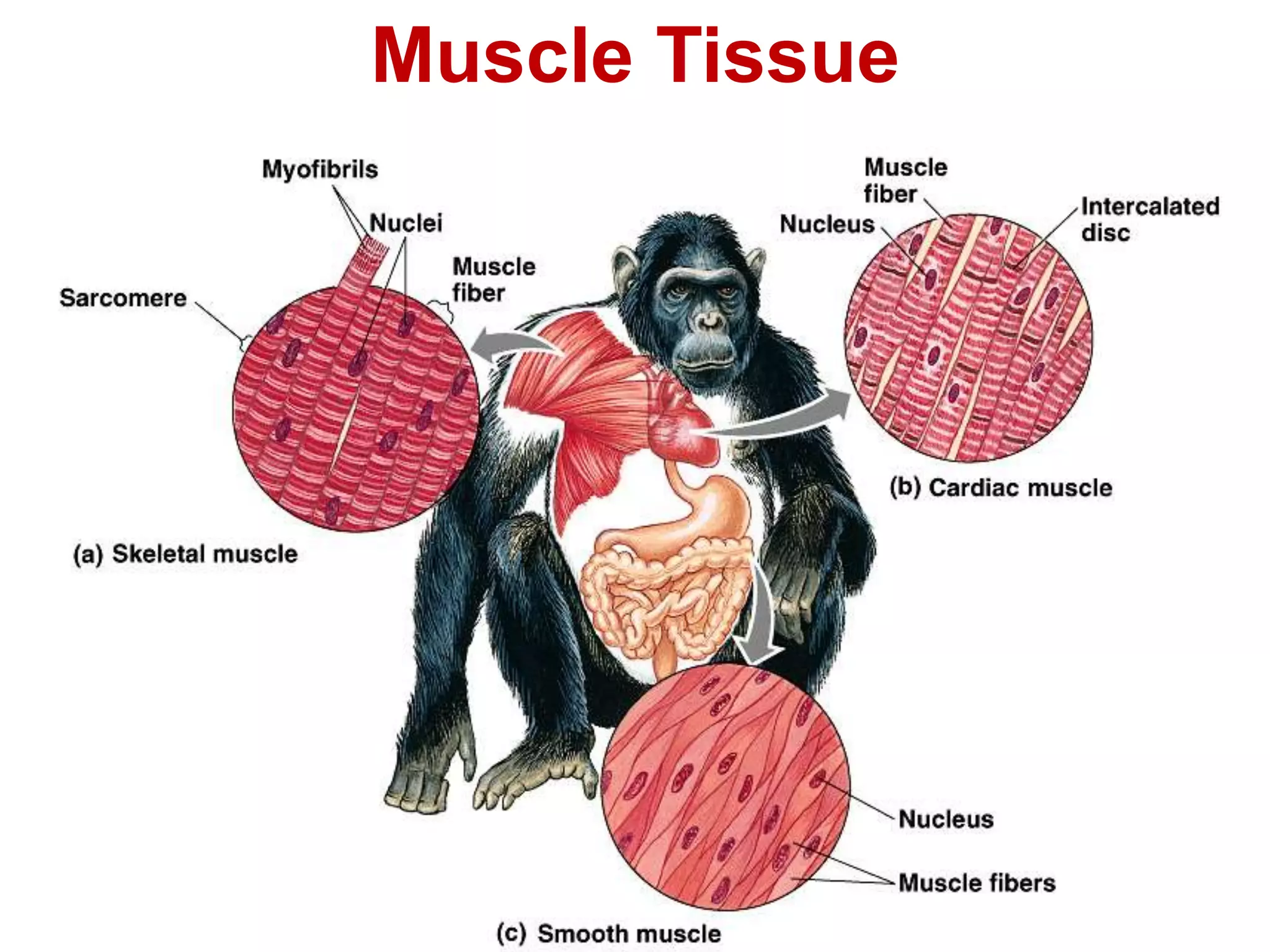
Muscle Tissue
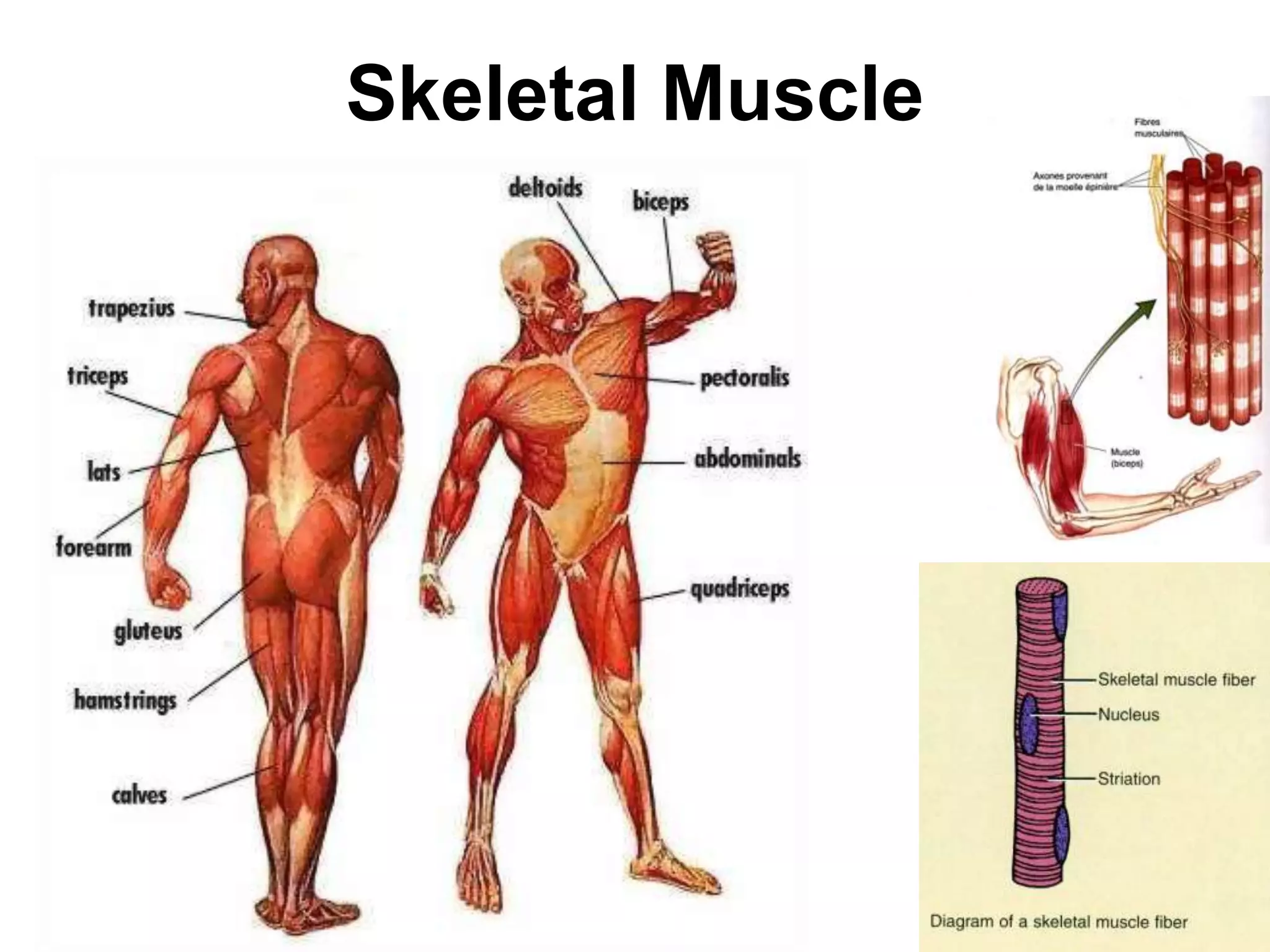
Skeletal Muscle
Cardiac Muscle
Smooth Muscle
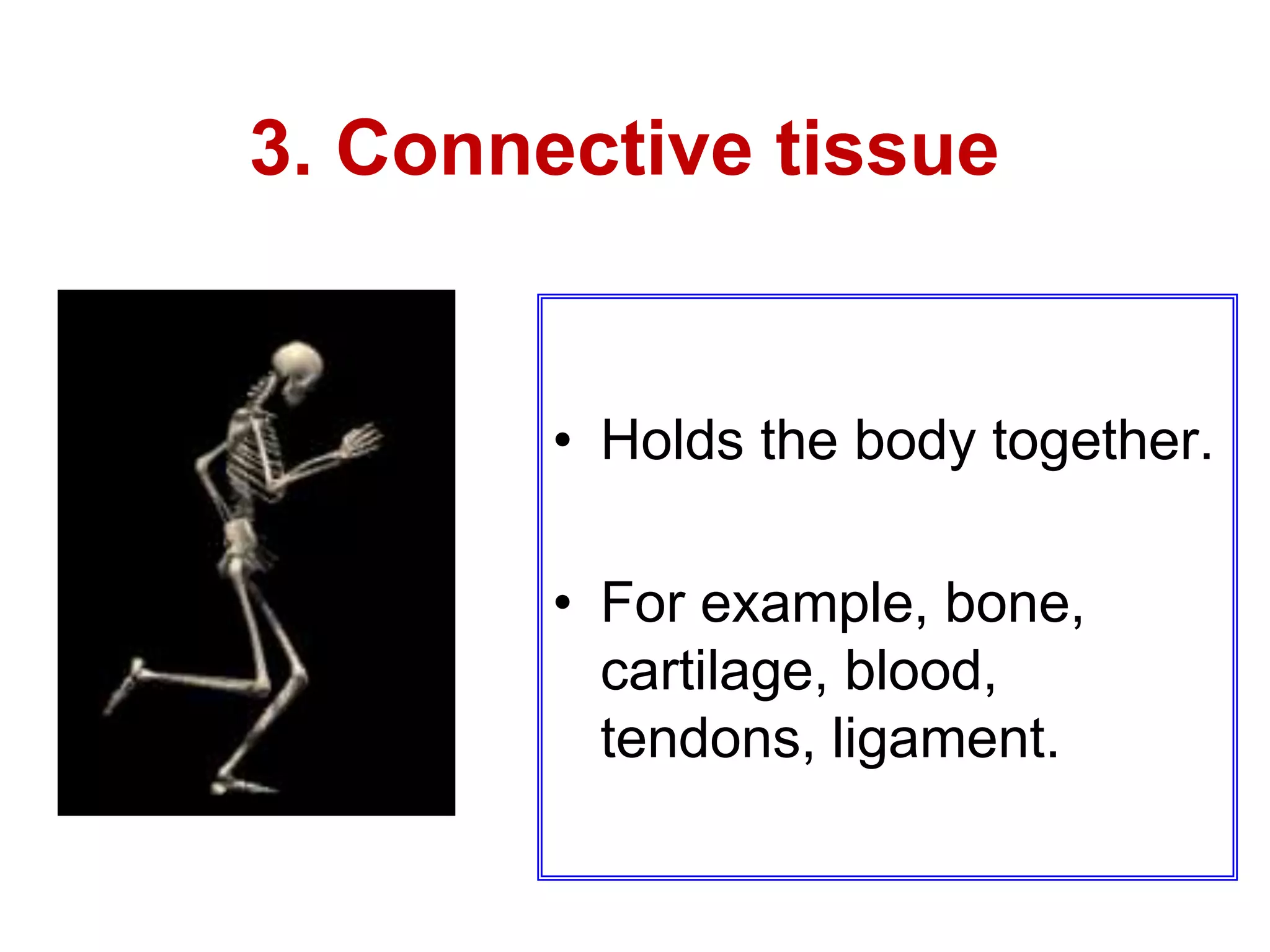
3. Connective tissue 
• Holds the body together. 
• For example, bone, 
cartilage, blood, 
tendons, ligament.
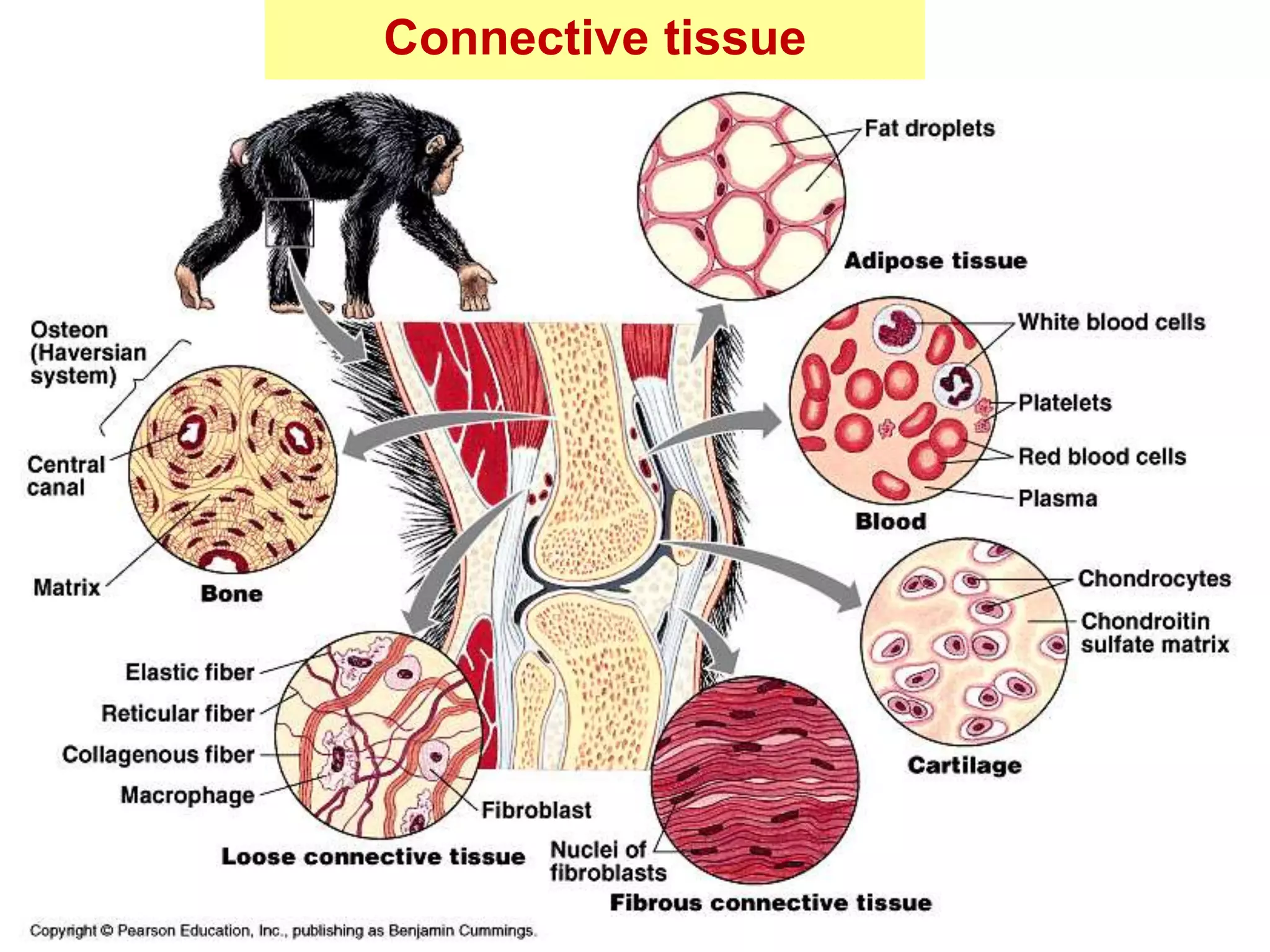
Connective tissue
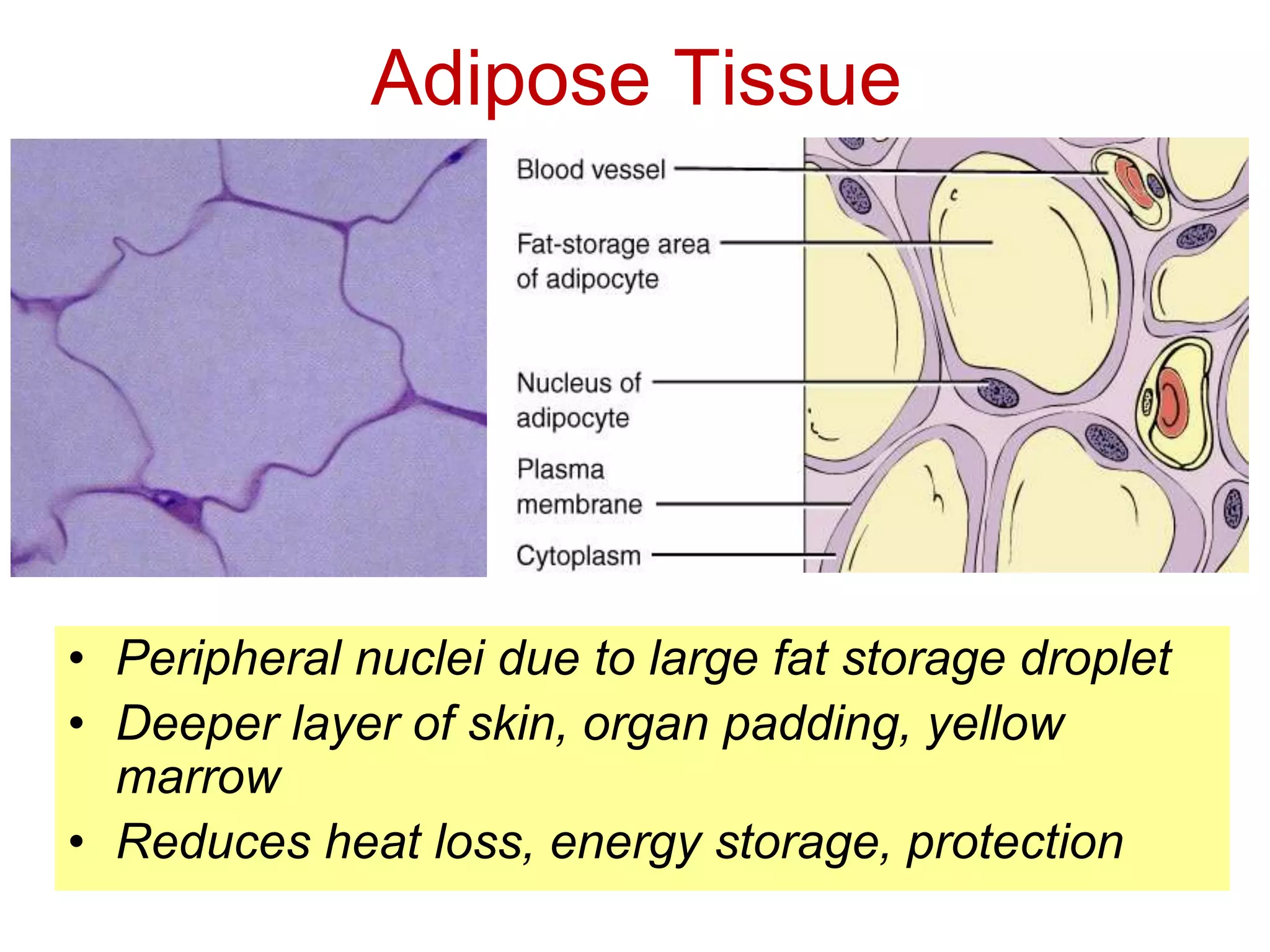
Adipose Tissue 
• Peripheral nuclei due to large fat storage droplet 
• Deeper layer of skin, organ padding, yellow 
marrow 
• Reduces heat loss, energy storage, protection
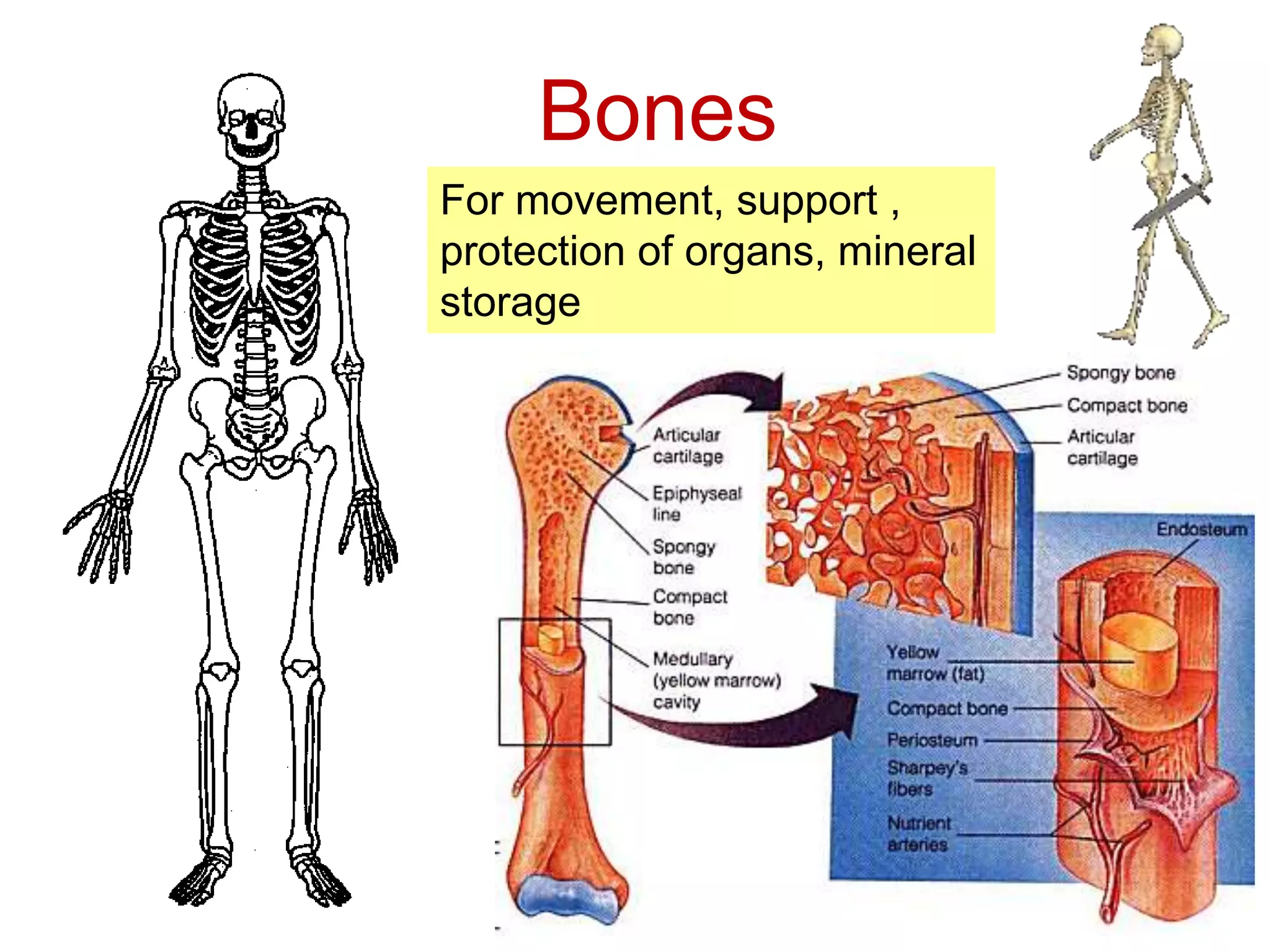
Bones 
For movement, support , 
protection of organs, mineral 
storage
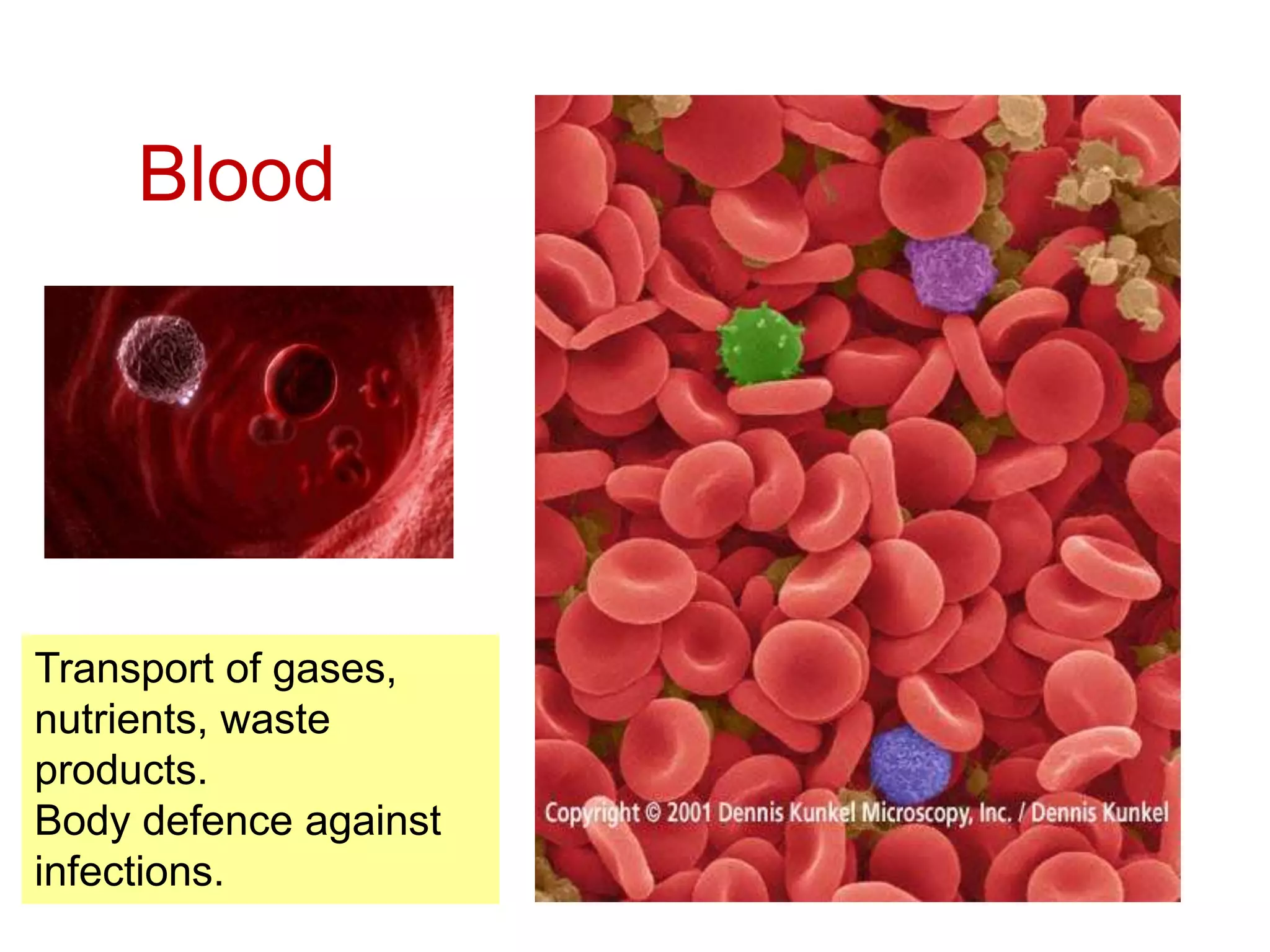
Blood 
Transport of gases, 
nutrients, waste 
products. 
Body defence against 
infections.
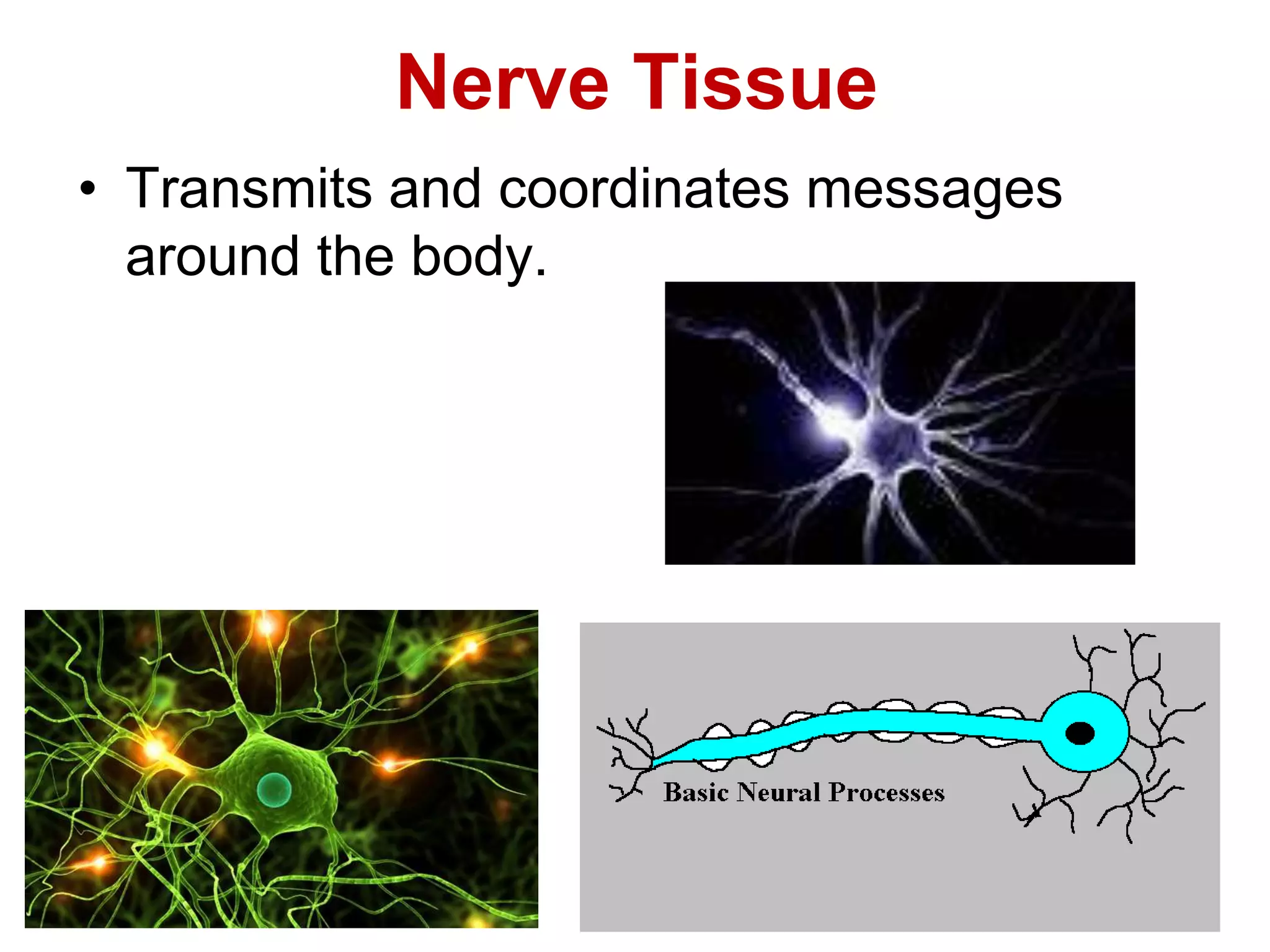
Nerve Tissue 
• Transmits and coordinates messages 
around the body.
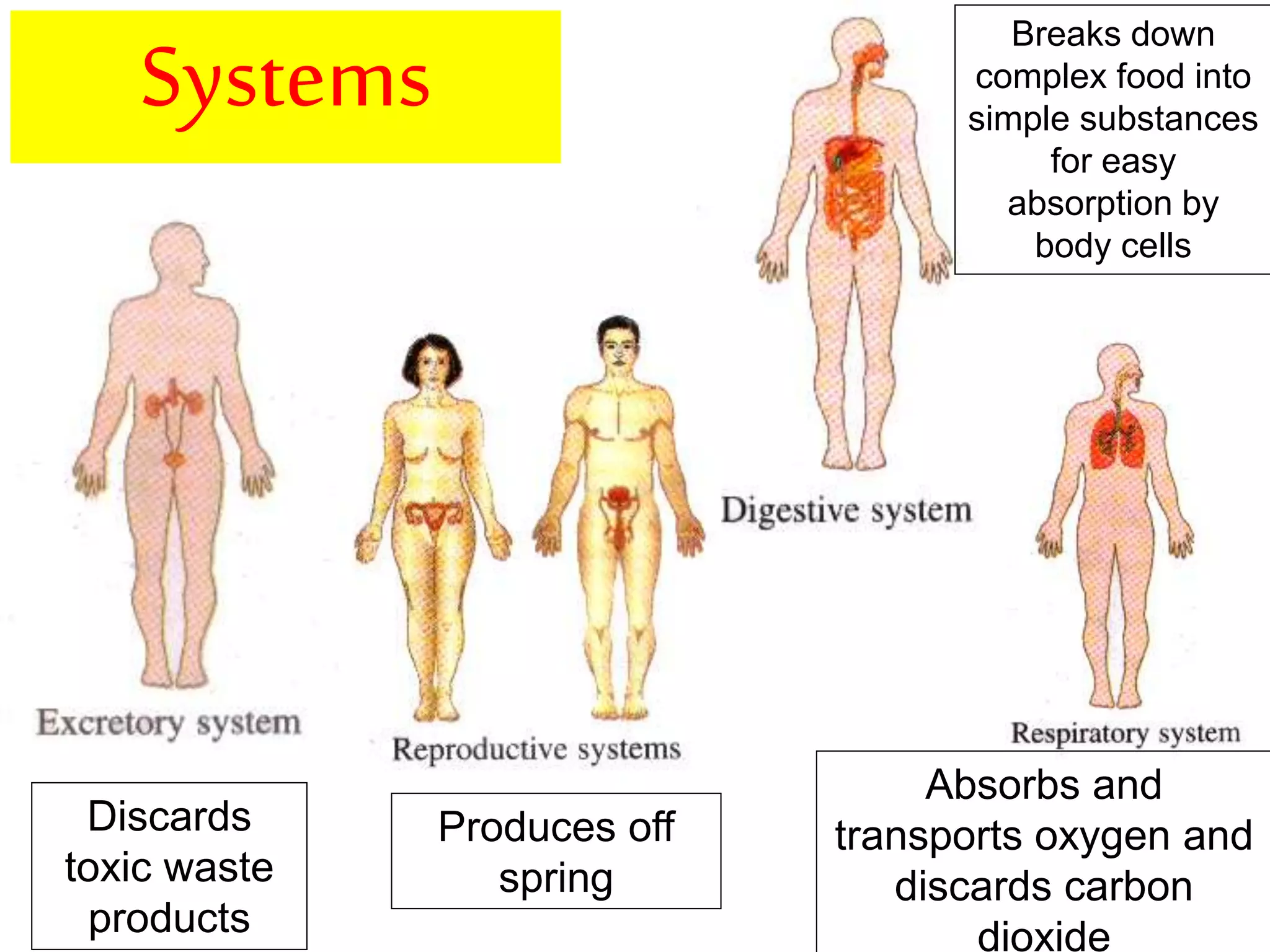
Discards 
toxic waste 
products 
Produces off 
spring 
Breaks down 
complex food into 
simple substances 
for easy 
absorption by 
body cells 
Absorbs and 
transports oxygen and 
discards carbon 
dioxide 
Systems
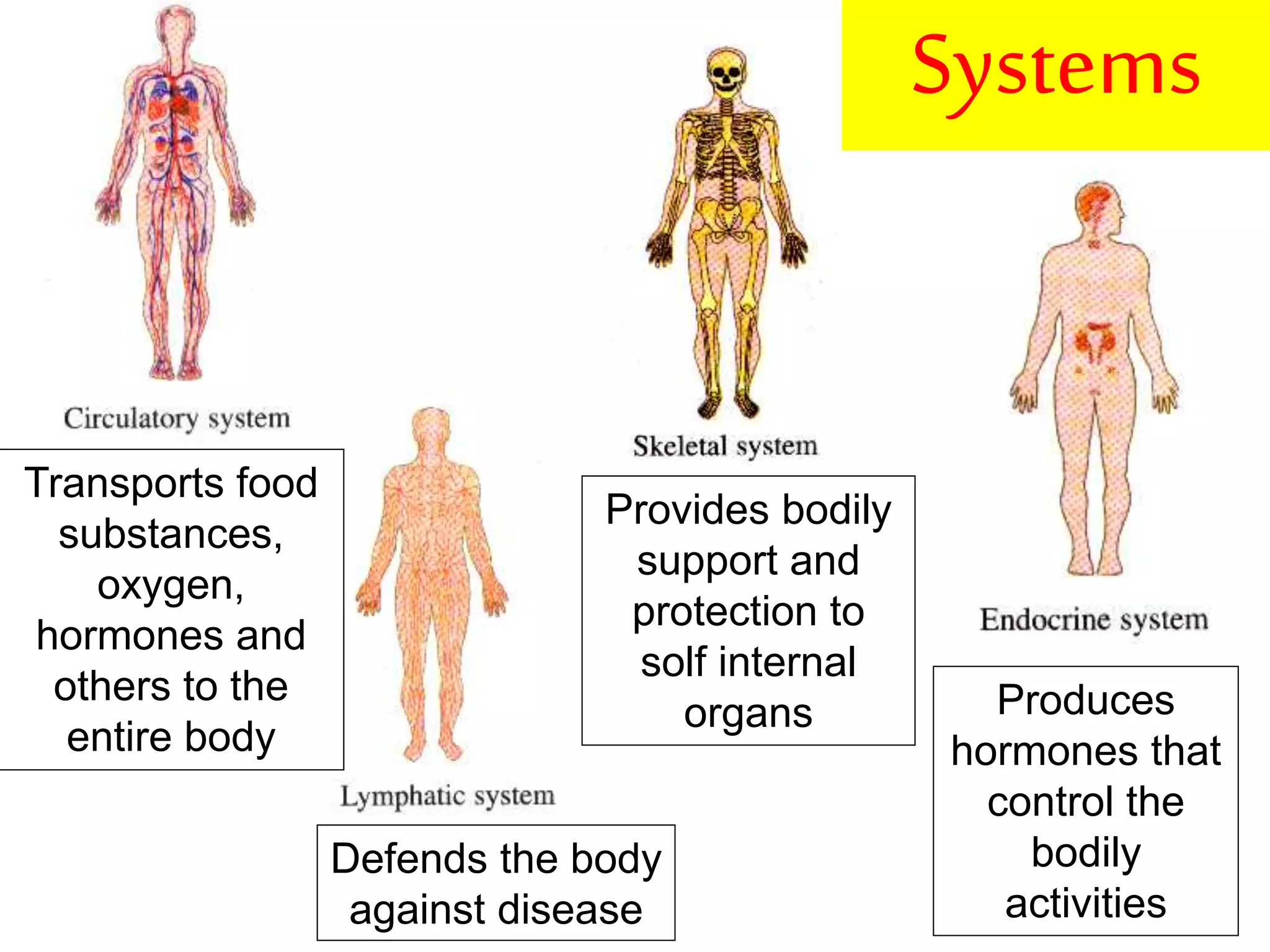
Transports food 
substances, 
oxygen, 
hormones and 
others to the 
entire body 
Provides bodily 
support and 
protection to 
solf internal 
Defends the body 
against disease 
Systems 
organs Produces 
hormones that 
control the 
bodily 
activities
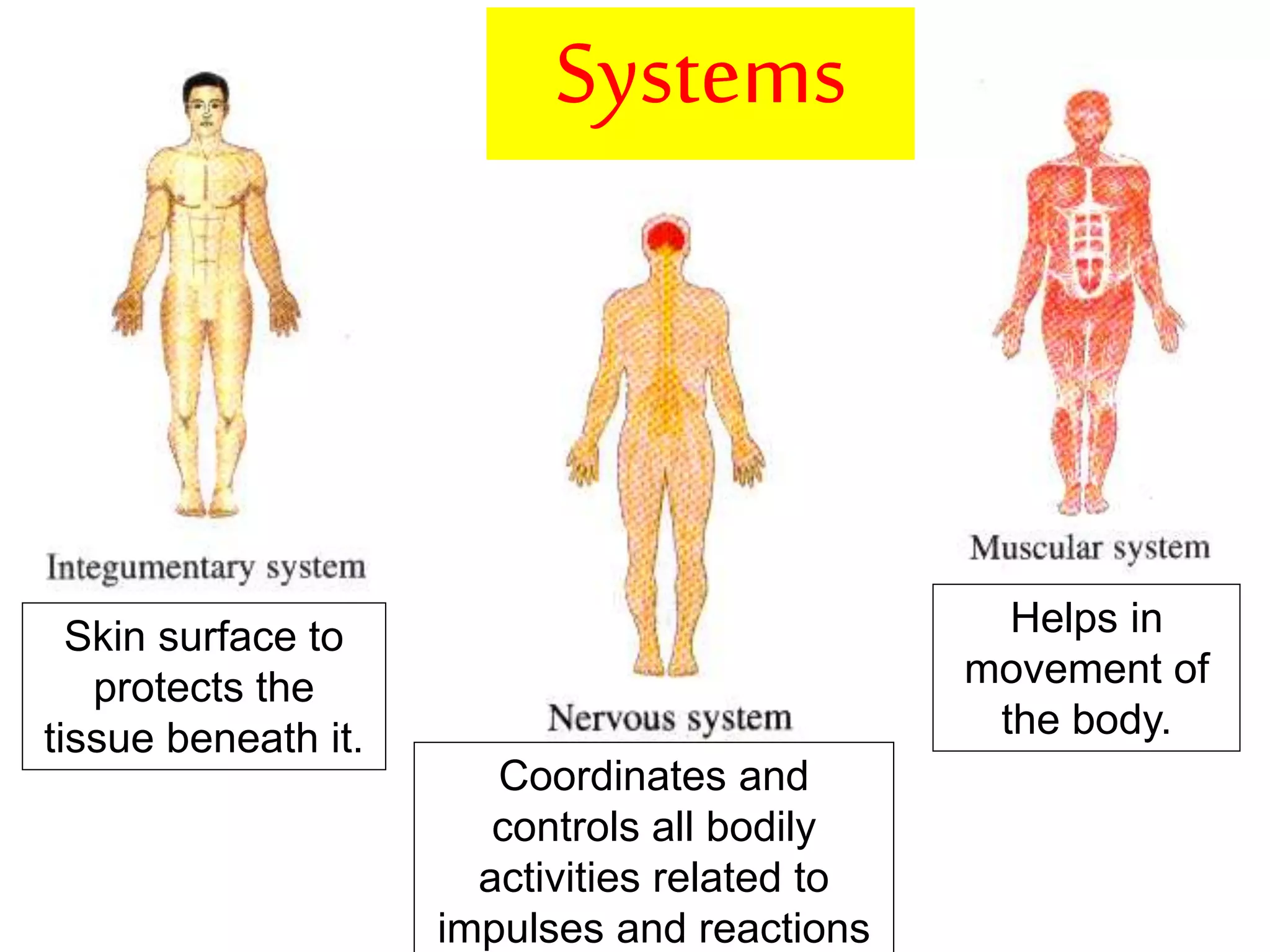
Skin surface to 
protects the 
tissue beneath it. 
Coordinates and 
controls all bodily 
activities related to 
impulses and reactions 
Helps in 
movement of 
the body. 
Systems
systems organs tissues cells
Cell organisation in plants
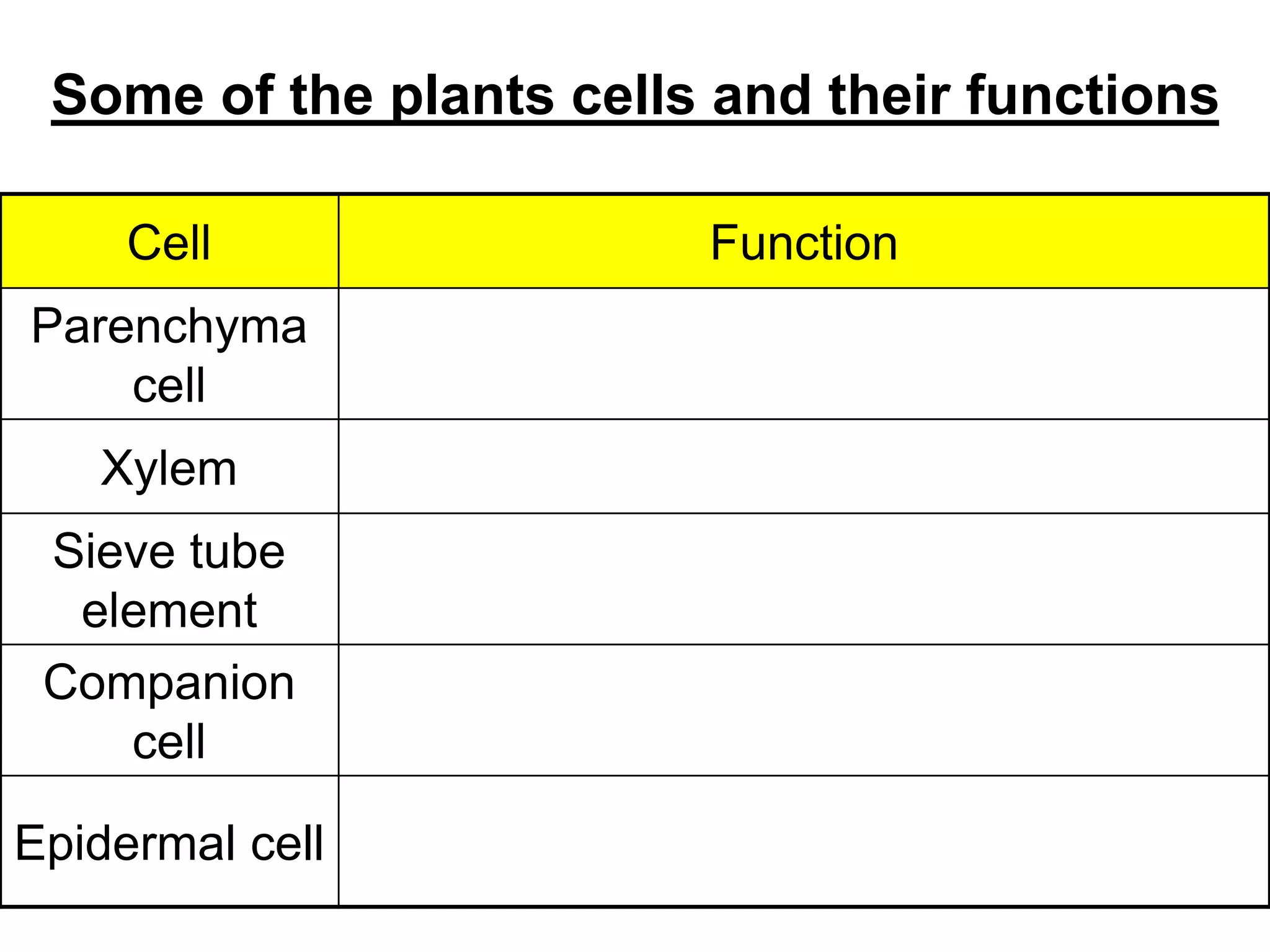
Some of the plants cells and their functions 
Cell Function 
Parenchyma 
cell 
For support and storage 
Xylem Transports water and mineral salts 
Sieve tube 
element 
Transports organic product of 
photosynthesis 
Companion 
cell 
Regulates the metabolic activity of sieve 
tube element 
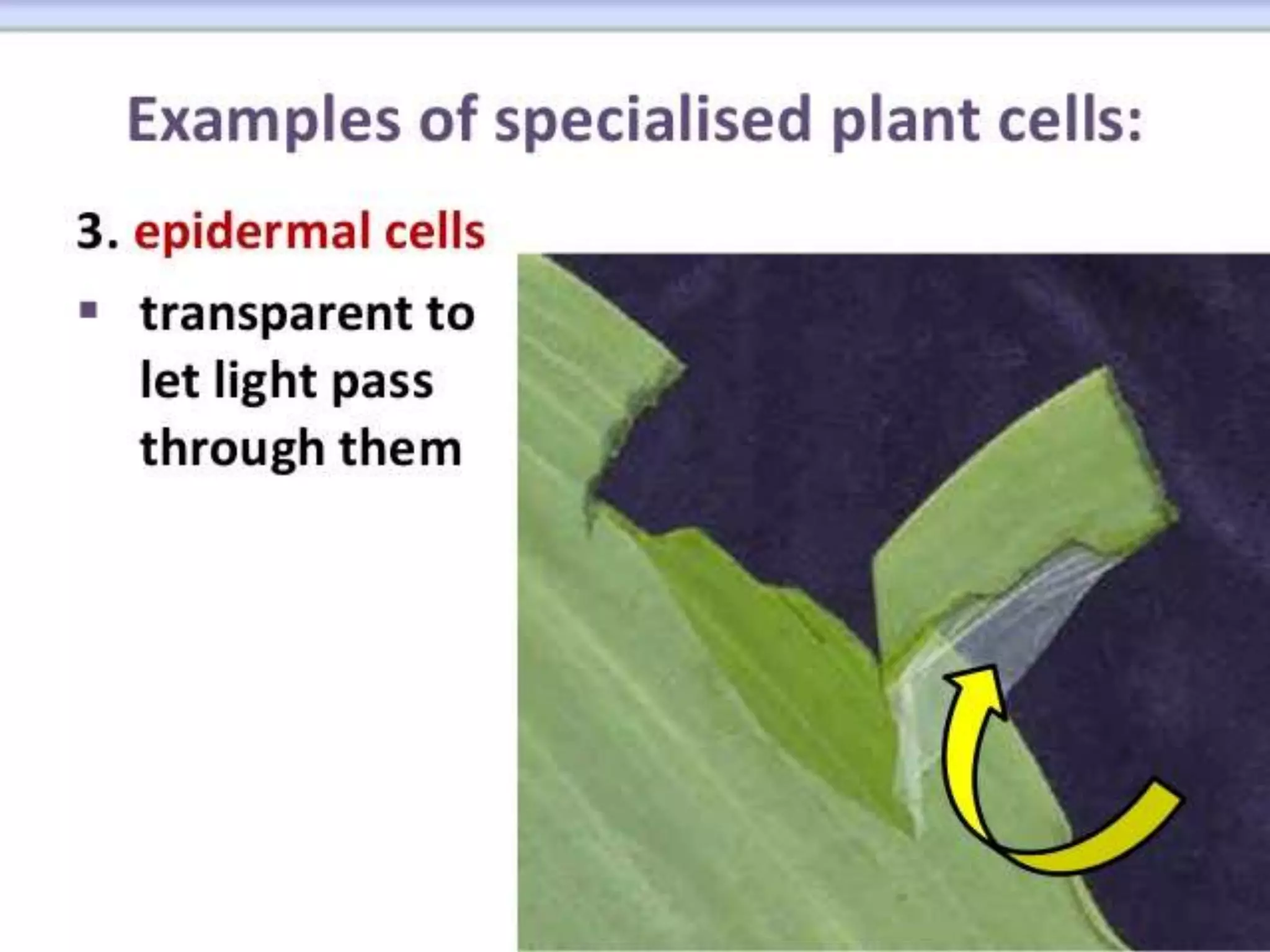
Epidermal cell 
For protection and covering of other cells 
beneath
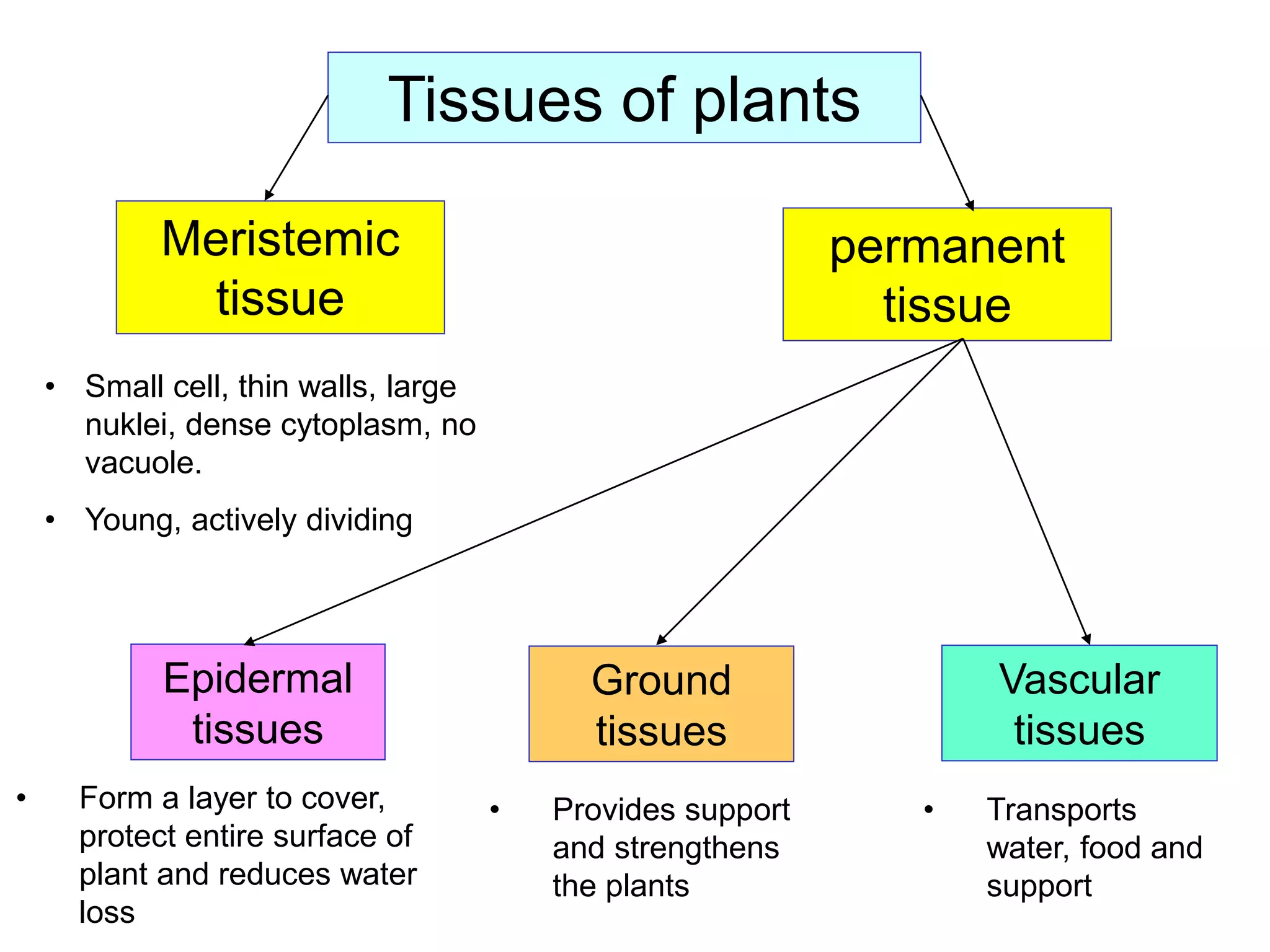
Tissues of plants 
Meristemic 
tissue 
permanent 
tissue 
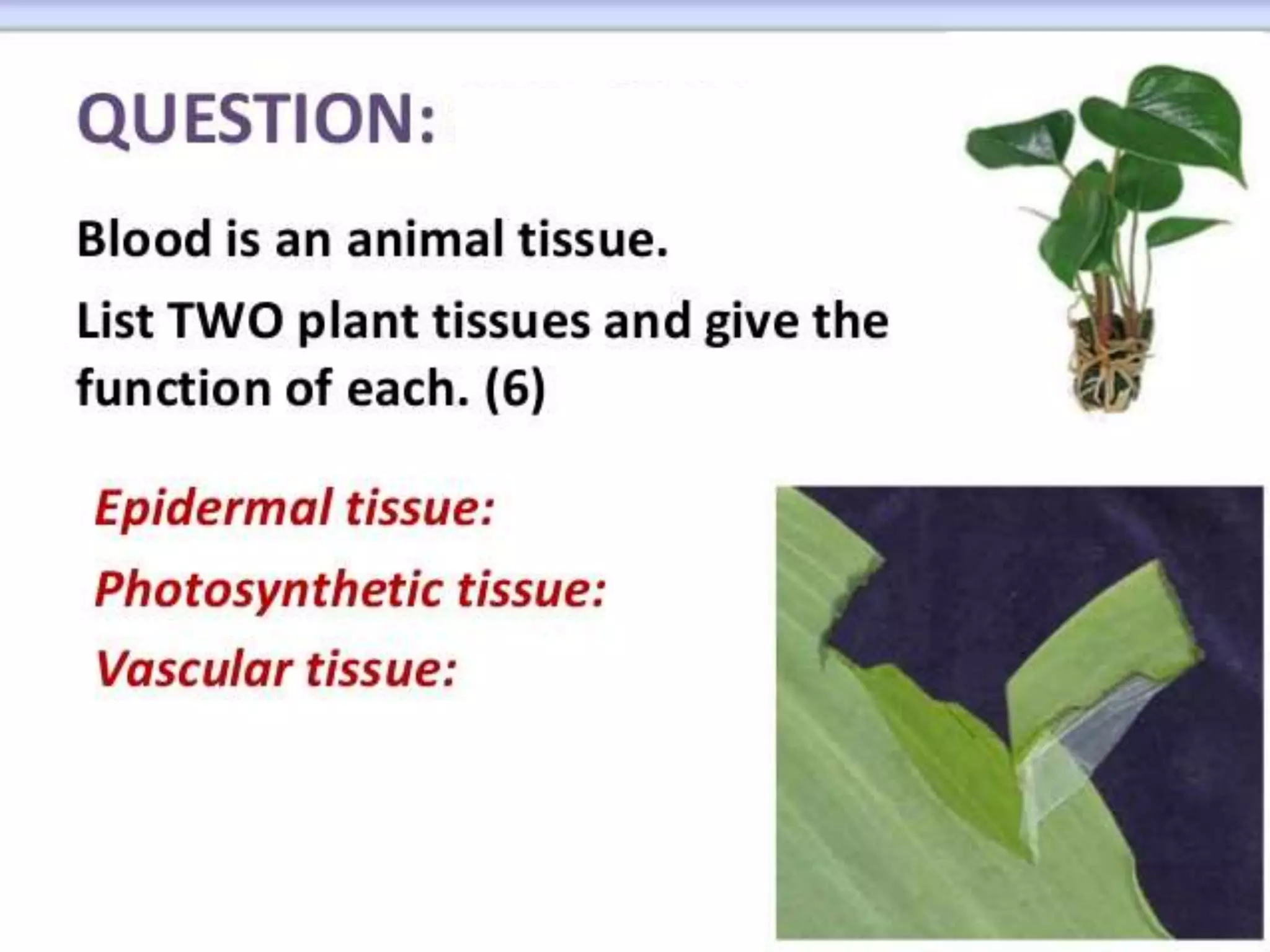
Epidermal 
tissues 
Ground 
tissues 
Vascular 
tissues 
• Small cell, thin walls, large 
nuklei, dense cytoplasm, no 
vacuole. 
• Young, actively dividing 
• Form a layer to cover, 
protect entire surface of 
plant and reduces water 
loss 
• Provides support 
and strengthens 
the plants 
• Transports 
water, food and 
support
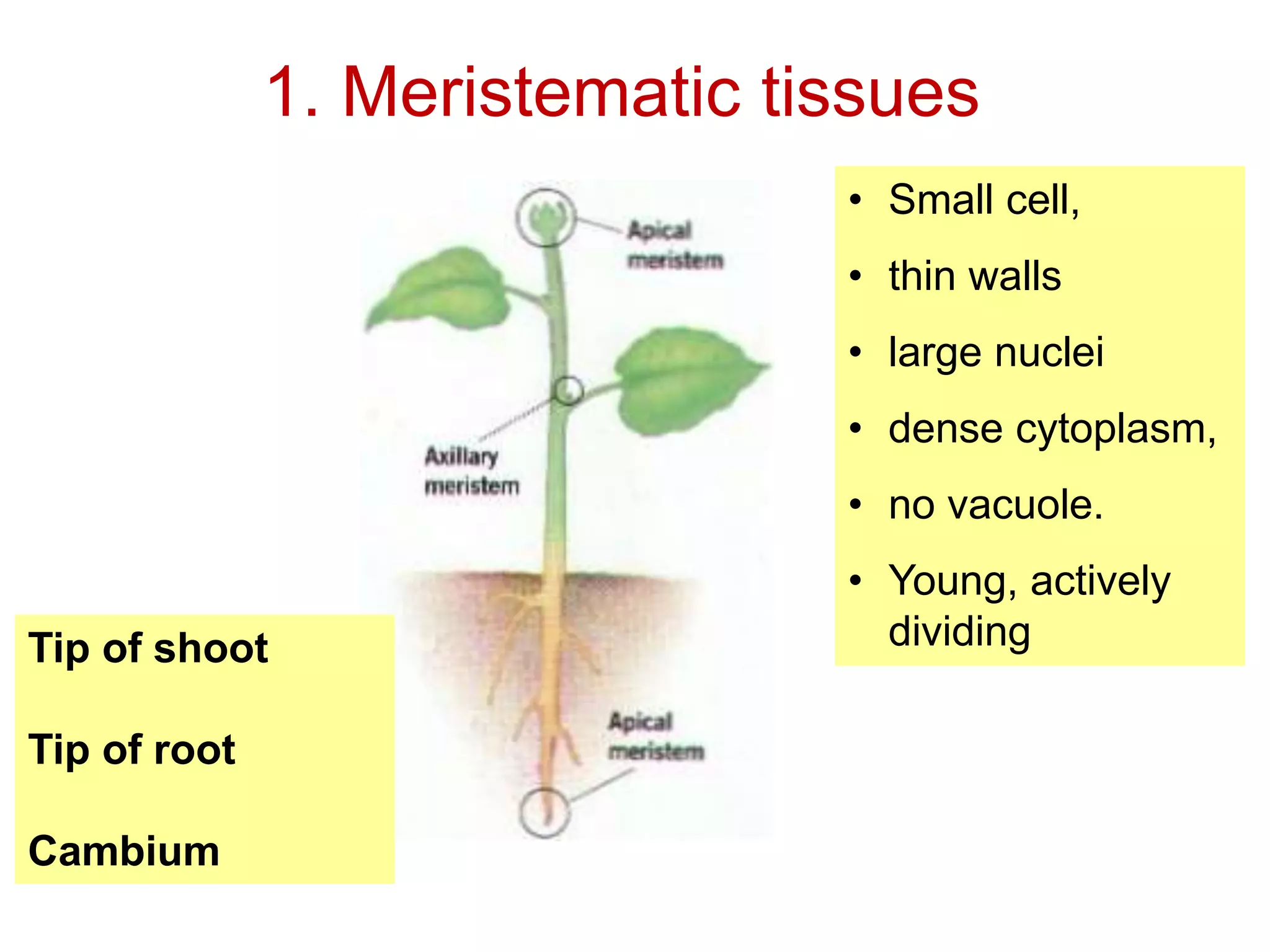
1. Meristematic tissues 
Tip of shoot 
Tip of root 
Cambium 
• Small cell, 
• thin walls 
• large nuclei 
• dense cytoplasm, 
• no vacuole. 
• Young, actively 
dividing
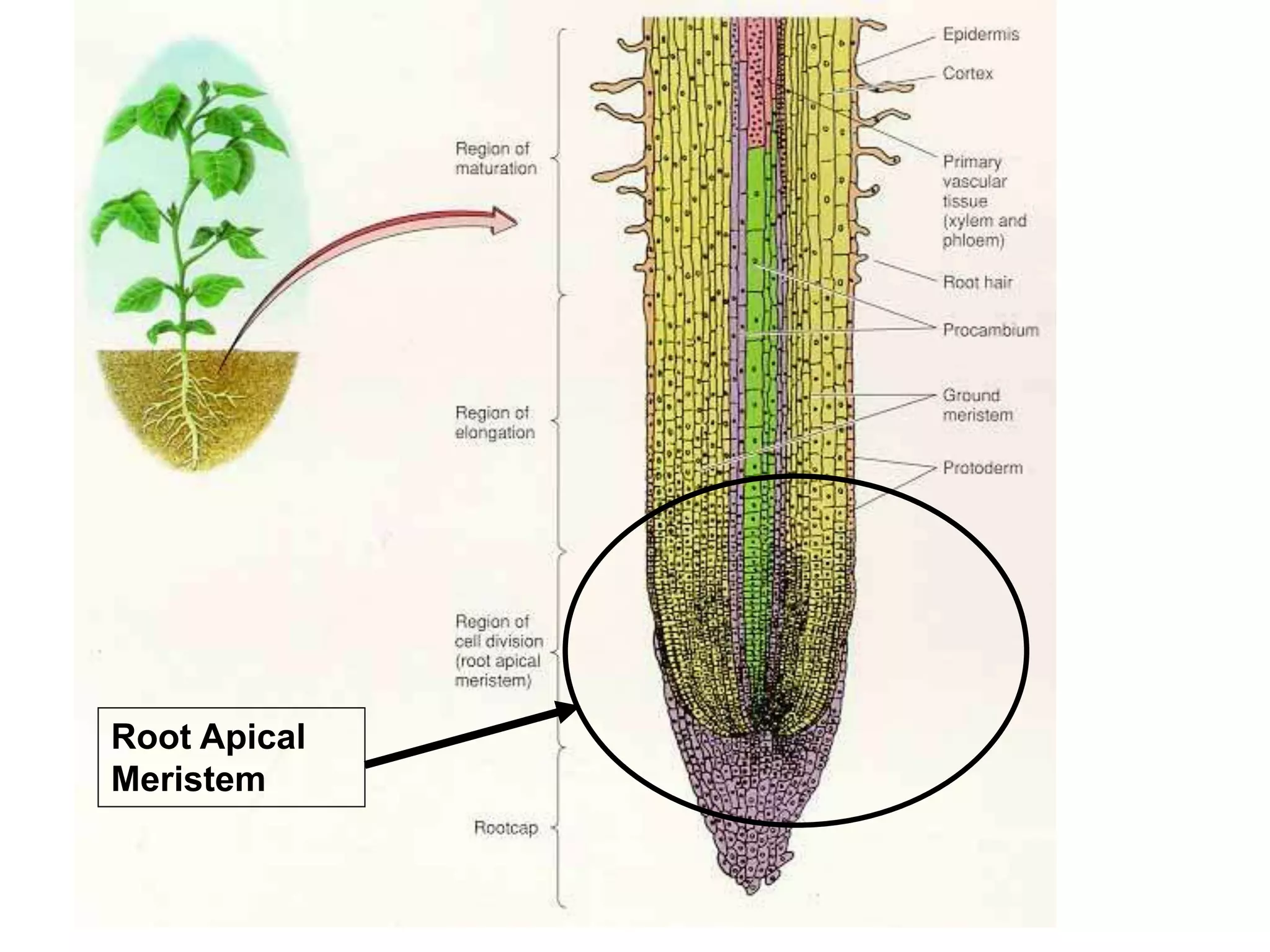
Root Apical 
Meristem
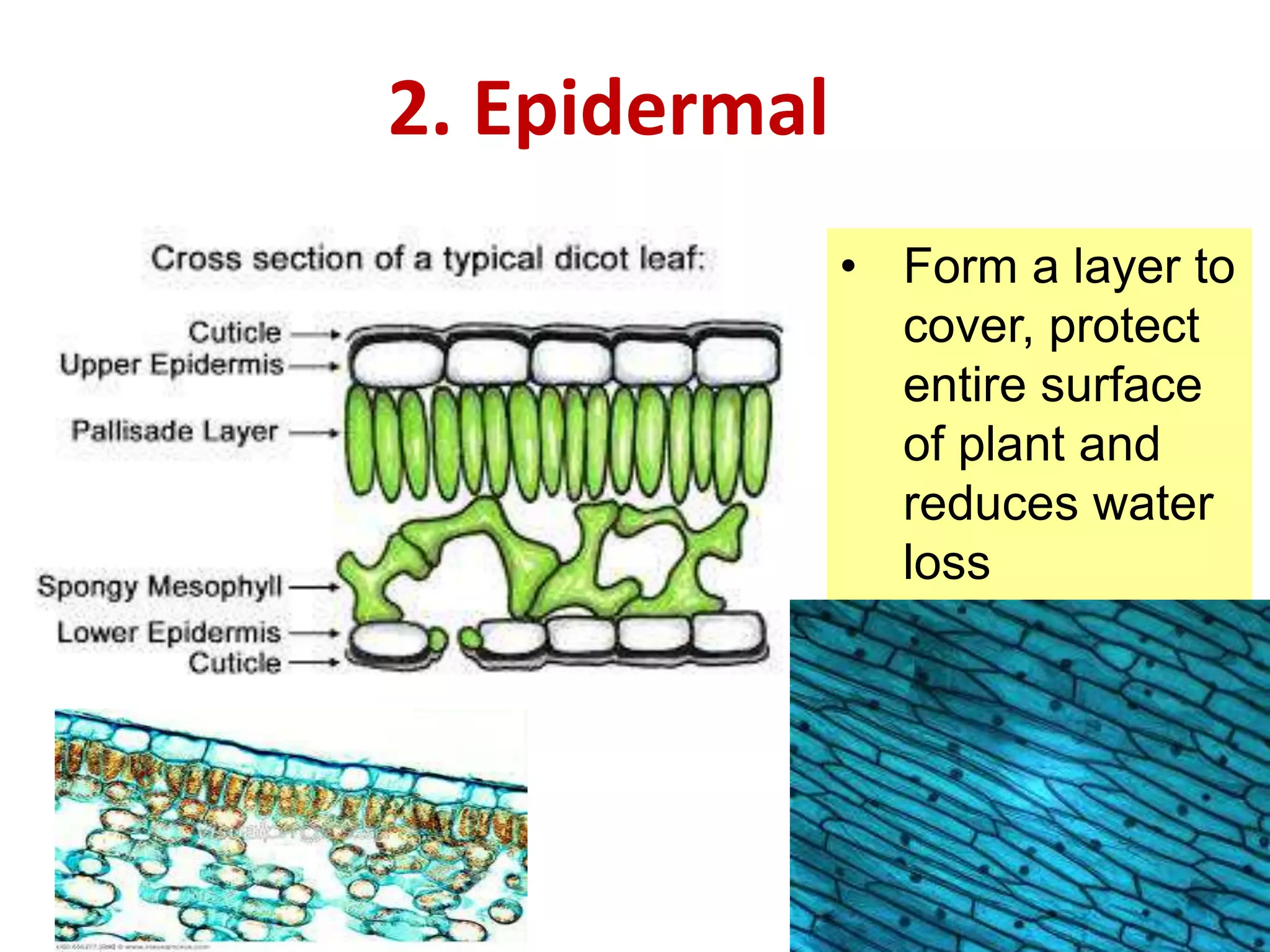
2. Epidermal 
• Form a layer to 
cover, protect 
entire surface 
of plant and 
reduces water 
loss
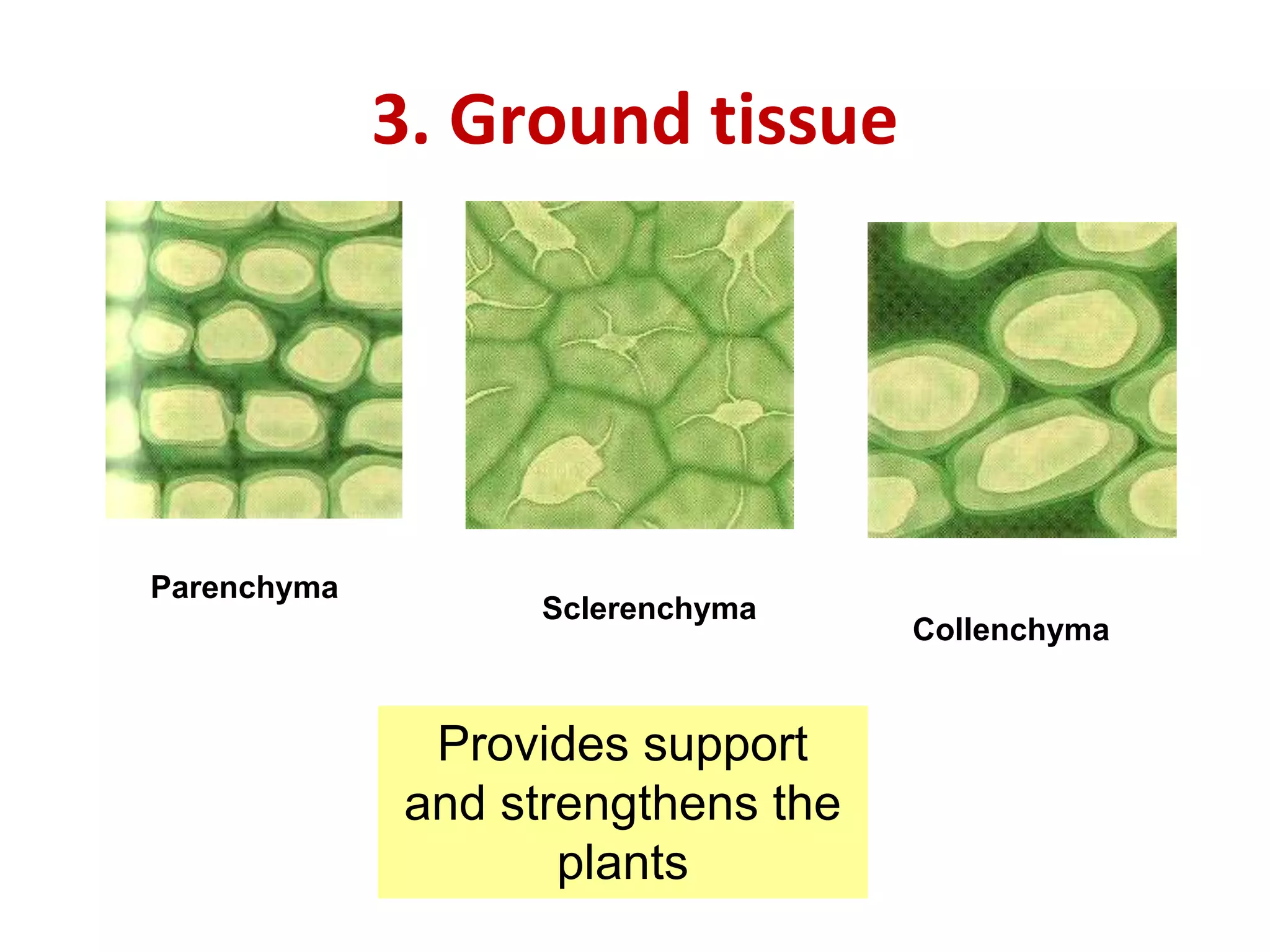
3. Ground tissue 
Parenchyma 
Collenchyma 
Sclerenchyma 
Provides support 
and strengthens the 
plants
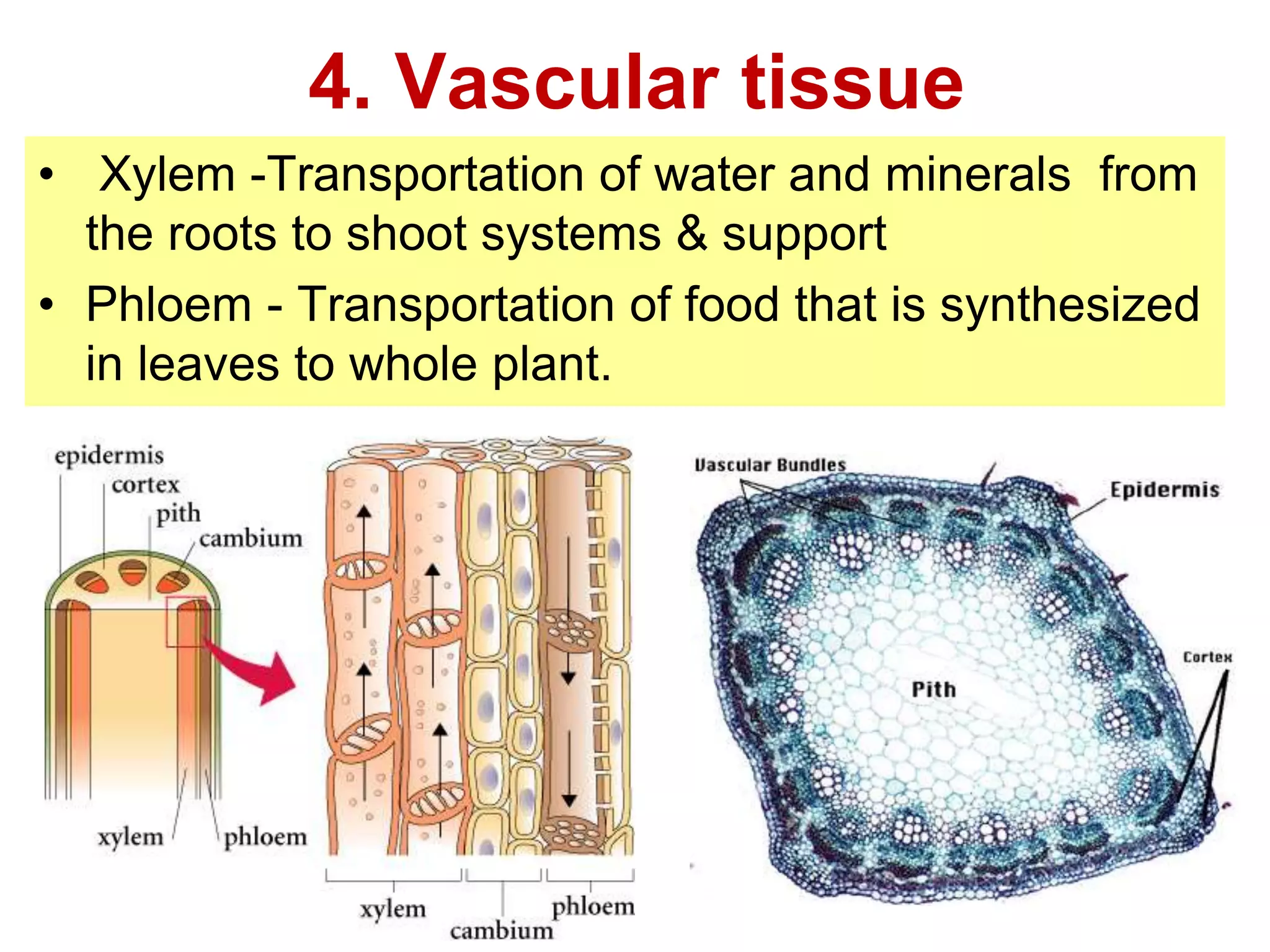
4. Vascular tissue 
• Xylem -Transportation of water and minerals from 
the roots to shoot systems & support 
• Phloem - Transportation of food that is synthesized 
in leaves to whole plant.
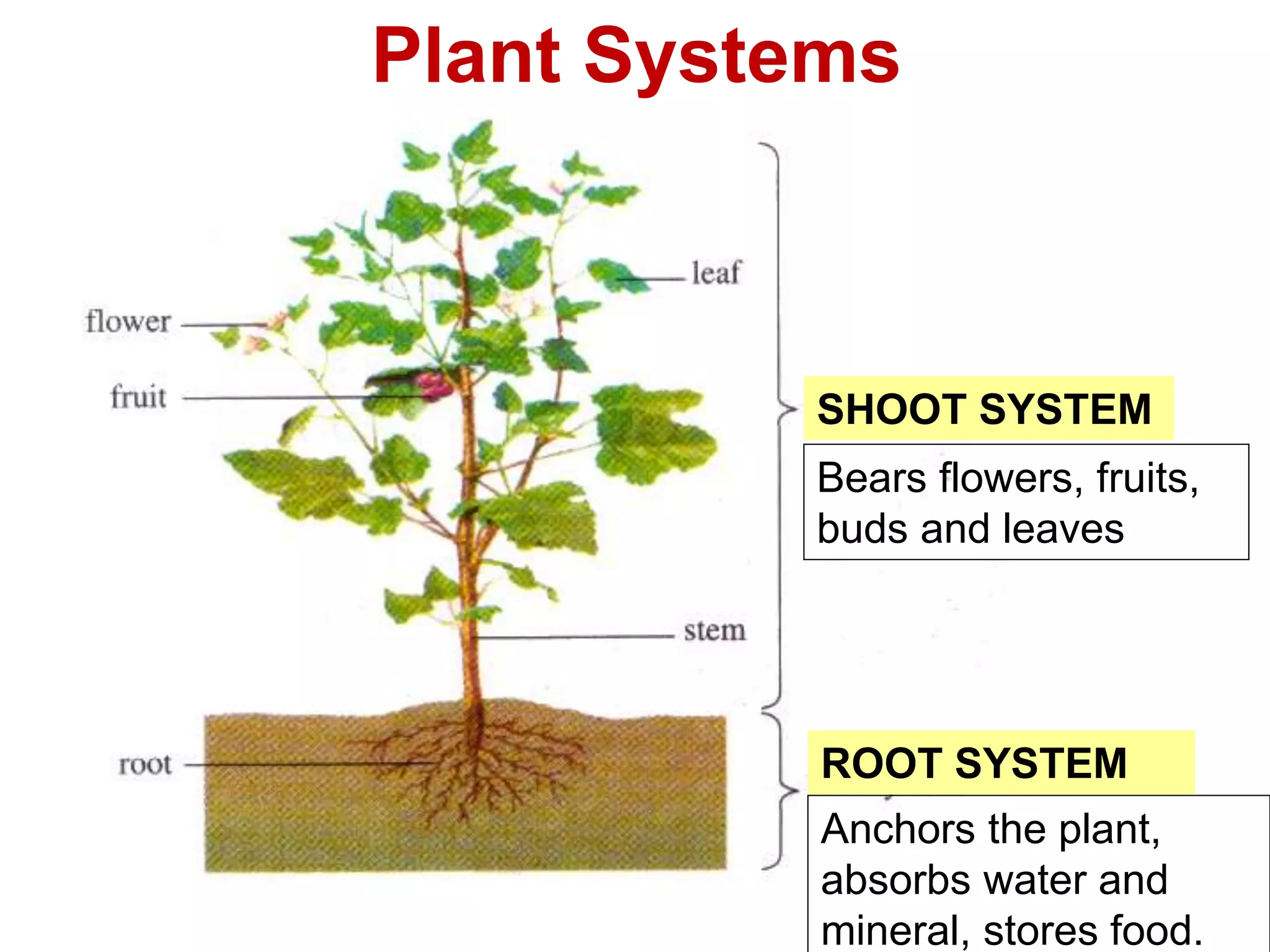
Plant Systems 
SHOOT SYSTEM 
Bears flowers, fruits, 
buds and leaves 
ROOT SYSTEM 
Anchors the plant, 
absorbs water and 
mineral, stores food.
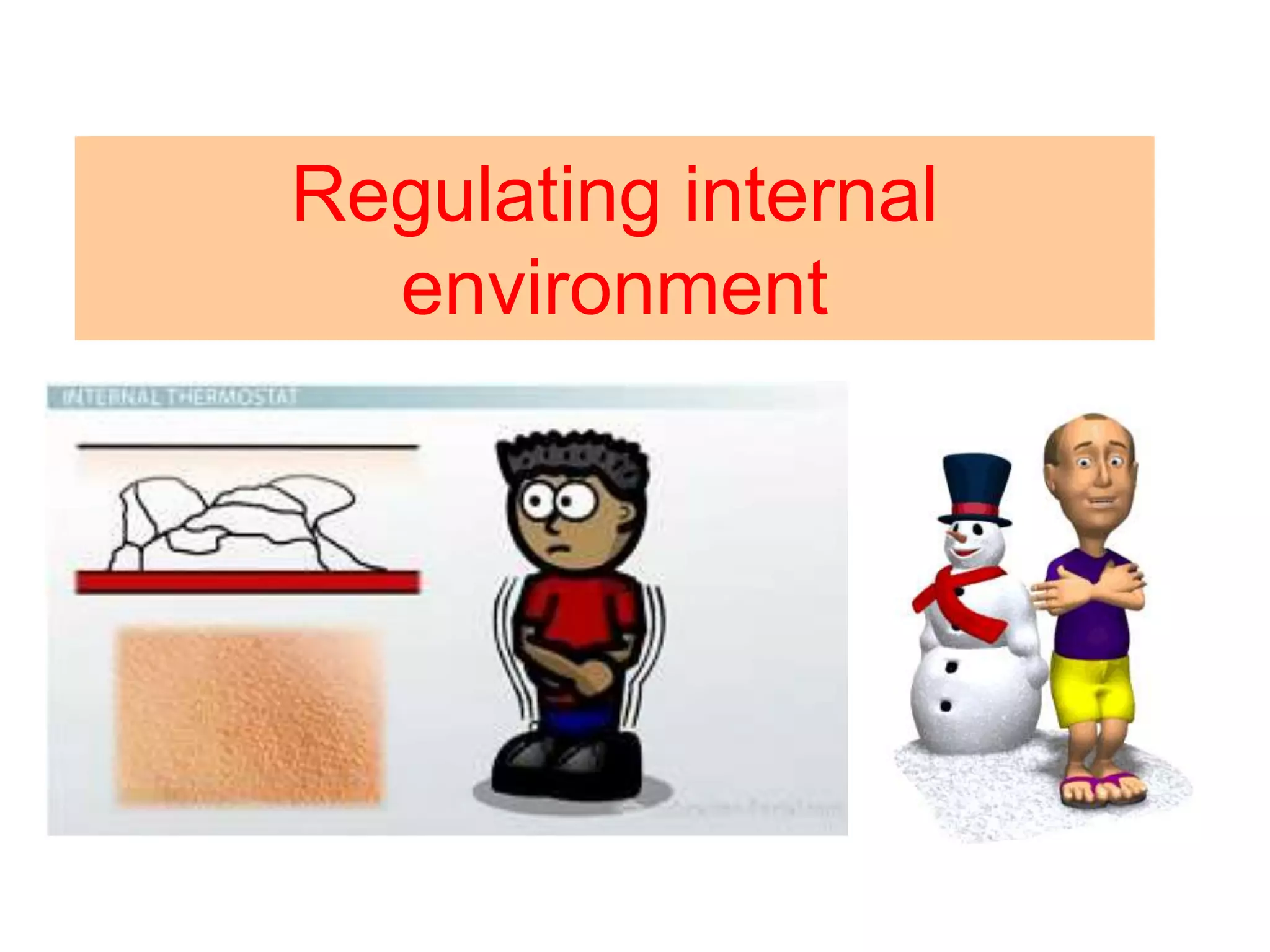
Regulating internal 
environment
The process to regulate and 
maintain internal environment 
- HOMEOSTASIS 
Necessity: 
to maintain optimal internal environment so that 
cells can function optimally
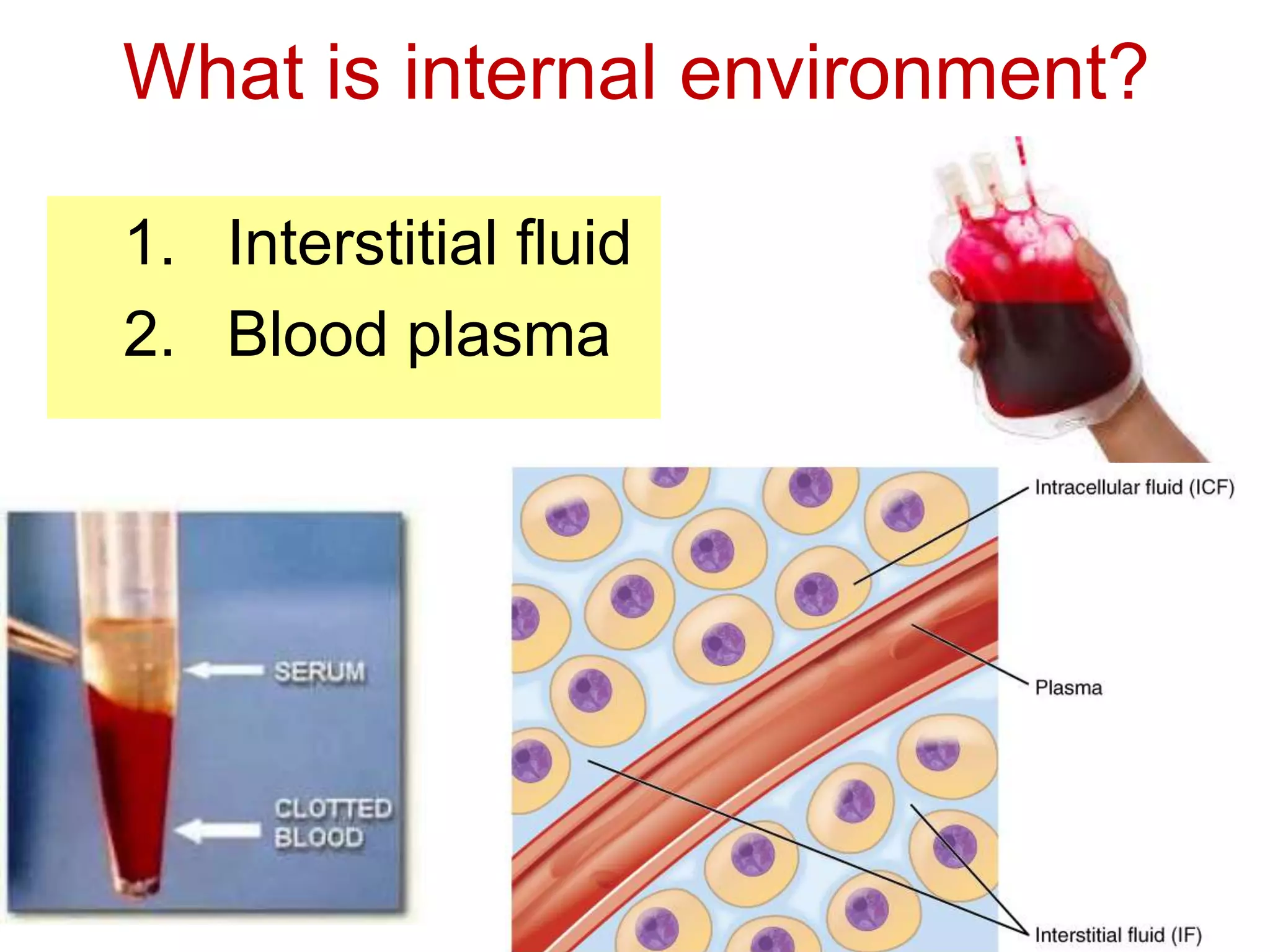
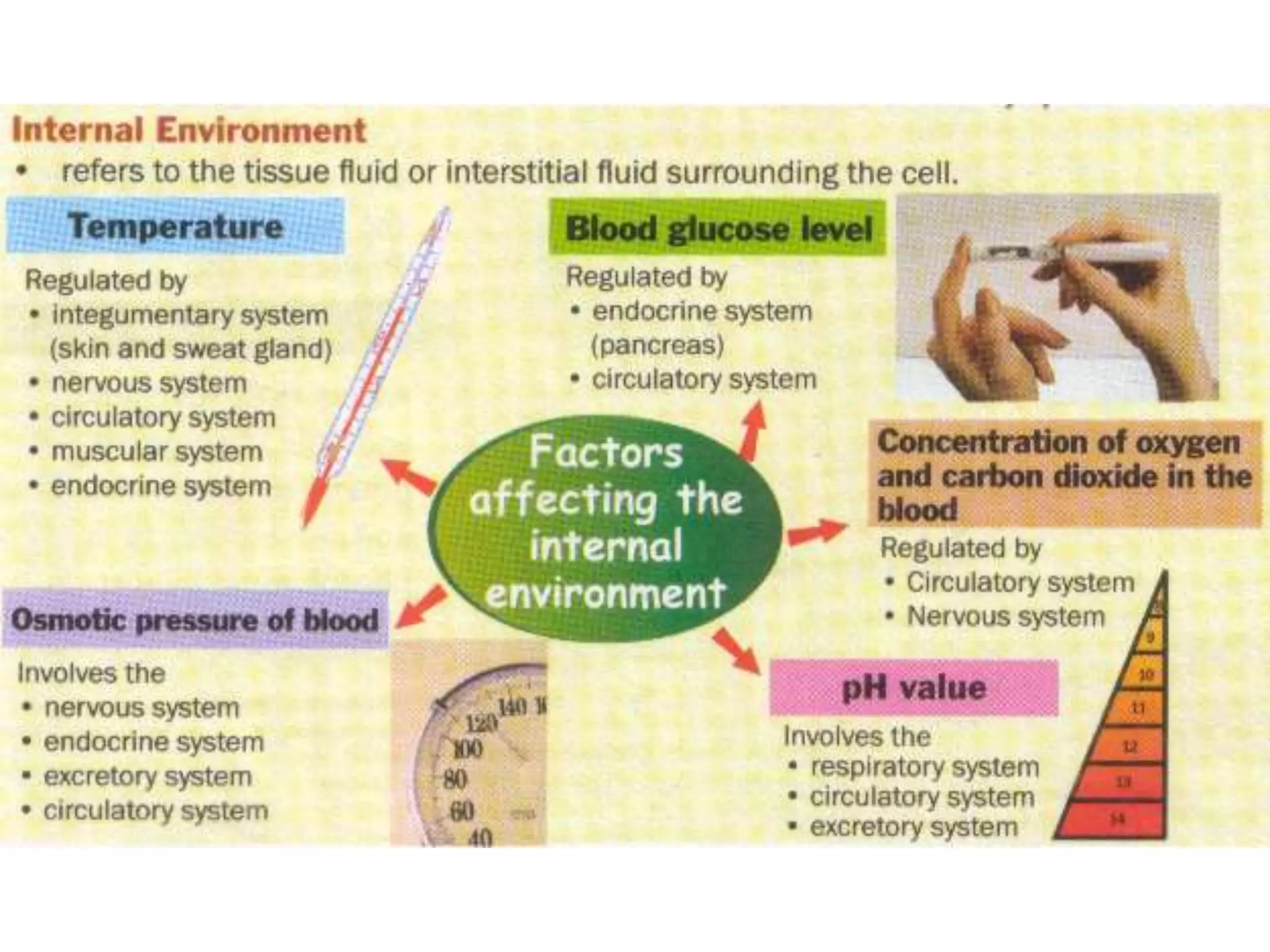
What is internal environment? 
1. Interstitial fluid 
2. Blood plasma
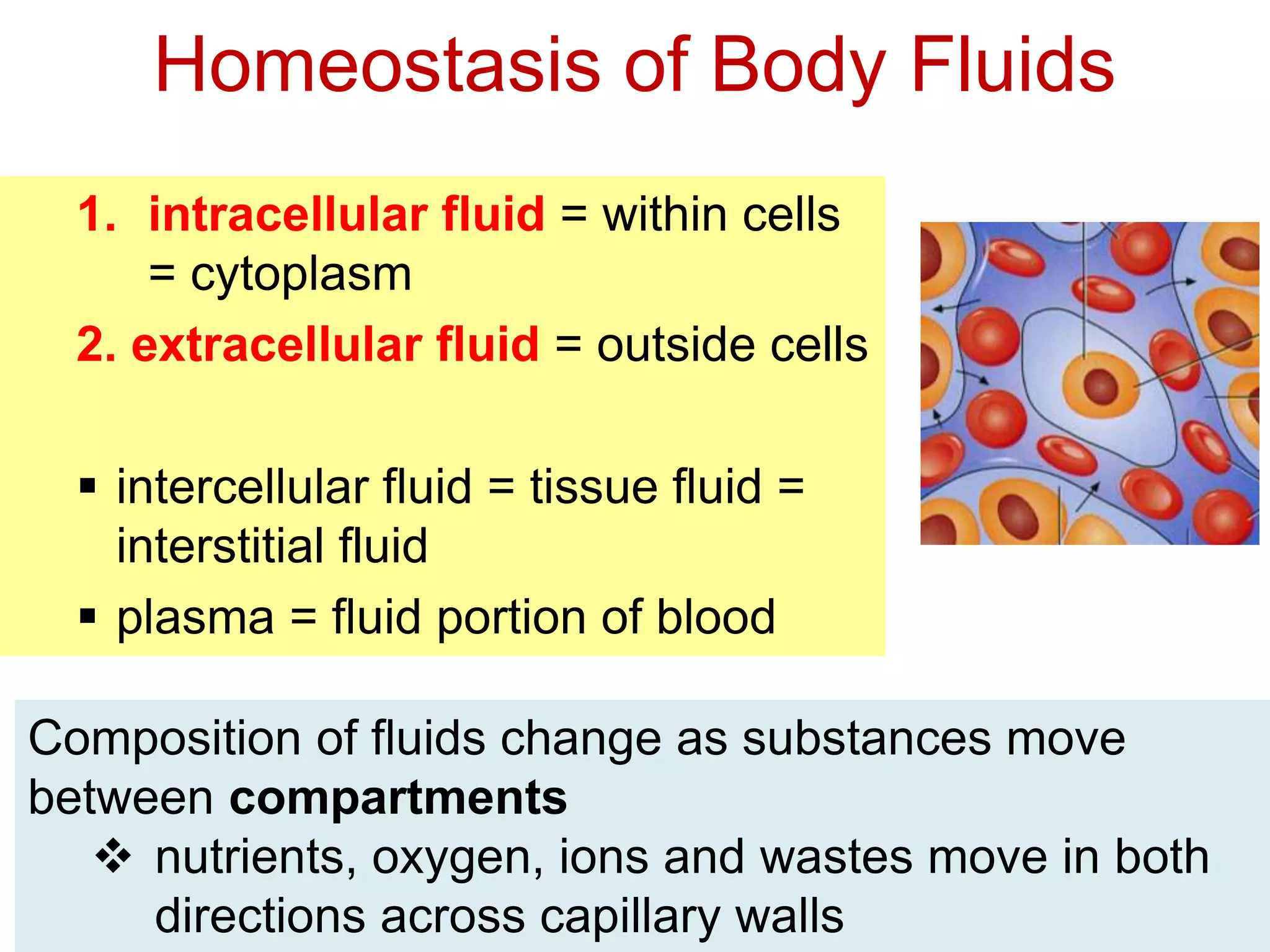
Homeostasis of Body Fluids 
1. intracellular fluid = within cells 
= cytoplasm 
2. extracellular fluid = outside cells 
 intercellular fluid = tissue fluid = 
interstitial fluid 
 plasma = fluid portion of blood 
Composition of fluids change as substances move 
between compartments 
 nutrients, oxygen, ions and wastes move in both 
directions across capillary walls
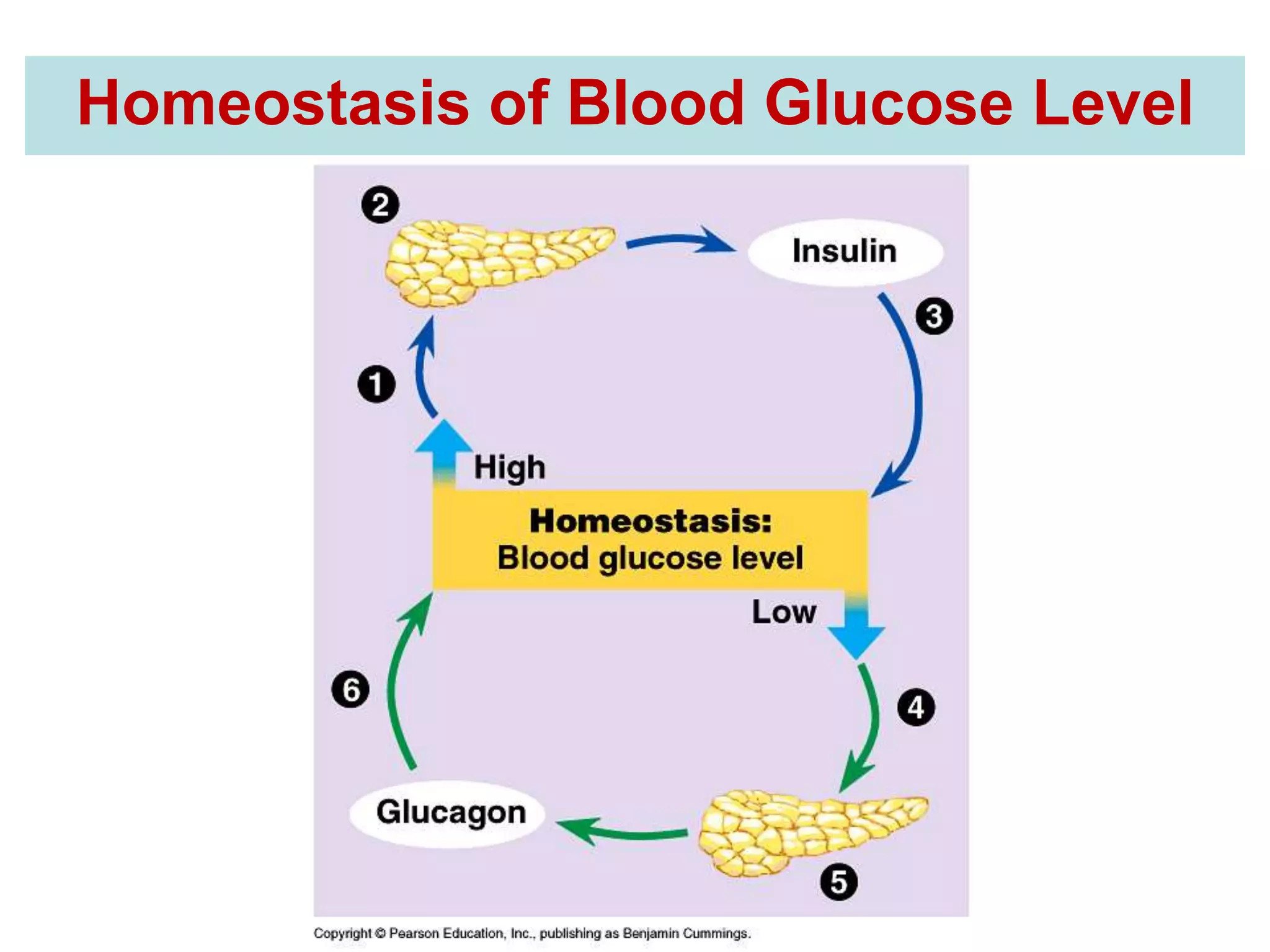
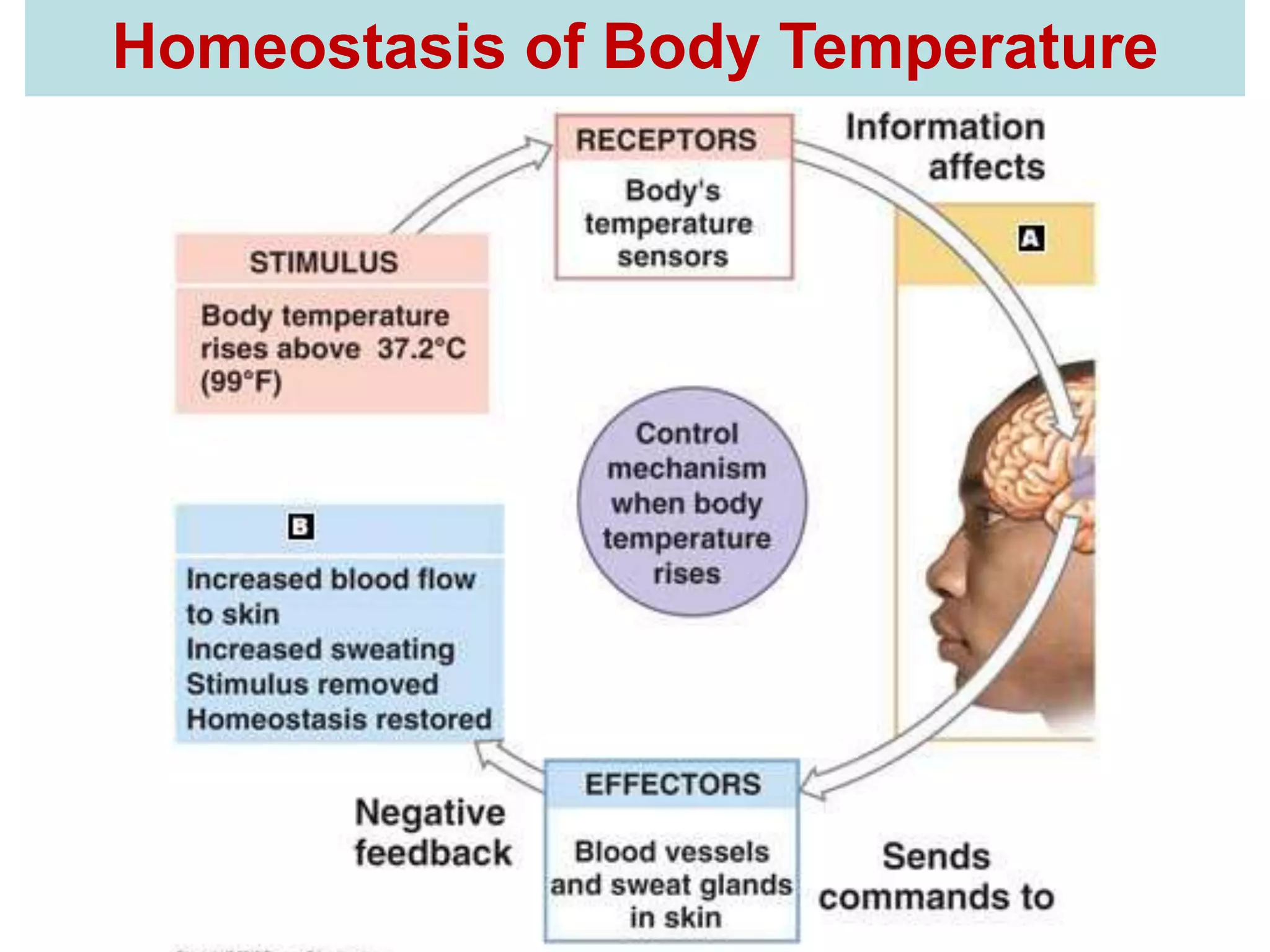
HOMEOSTASIS 
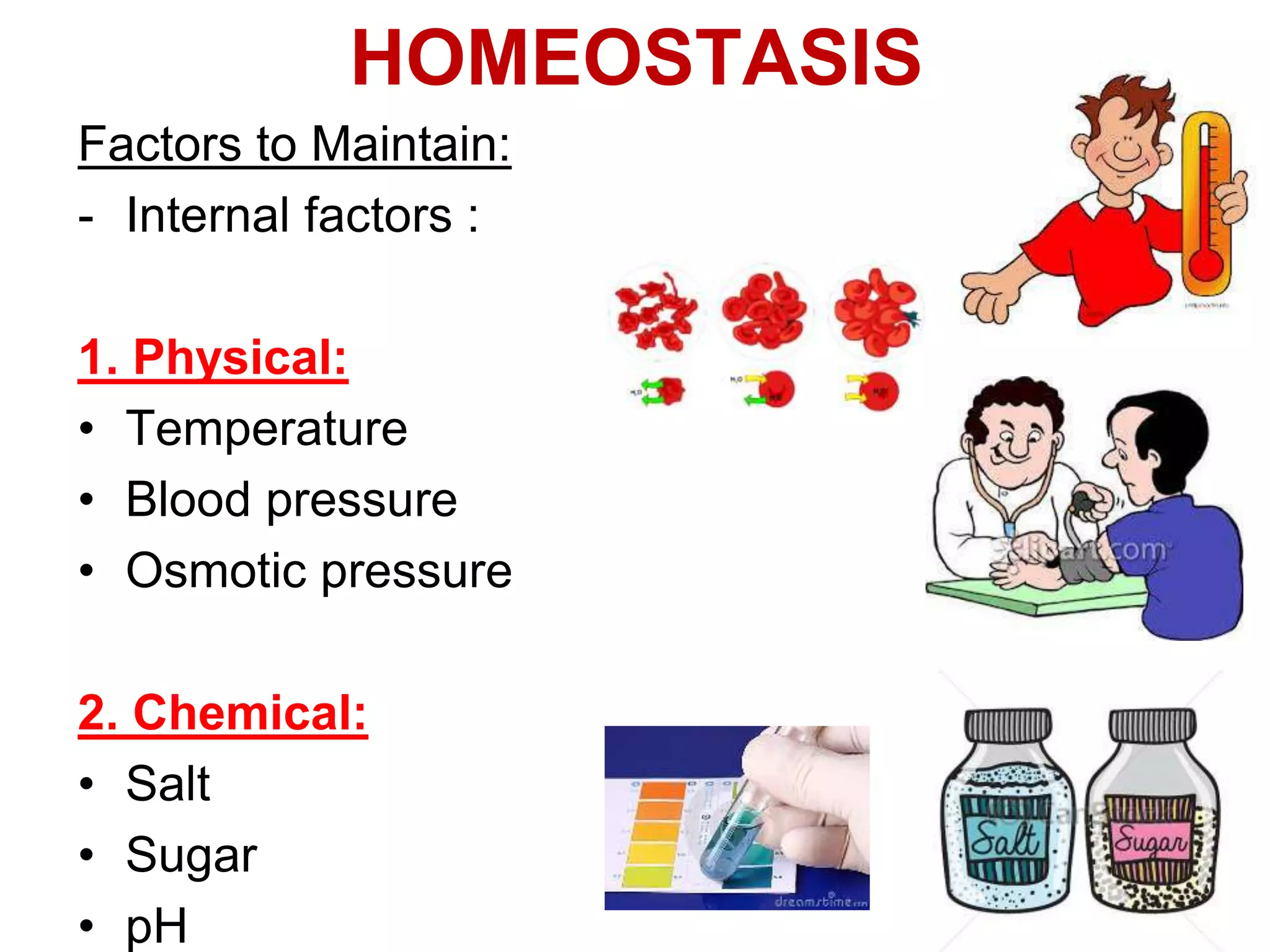
Factors to Maintain: 
- Internal factors : 
1. Physical: 
• Temperature 
• Blood pressure 
• Osmotic pressure 
2. Chemical: 
• Salt 
• Sugar 
• pH
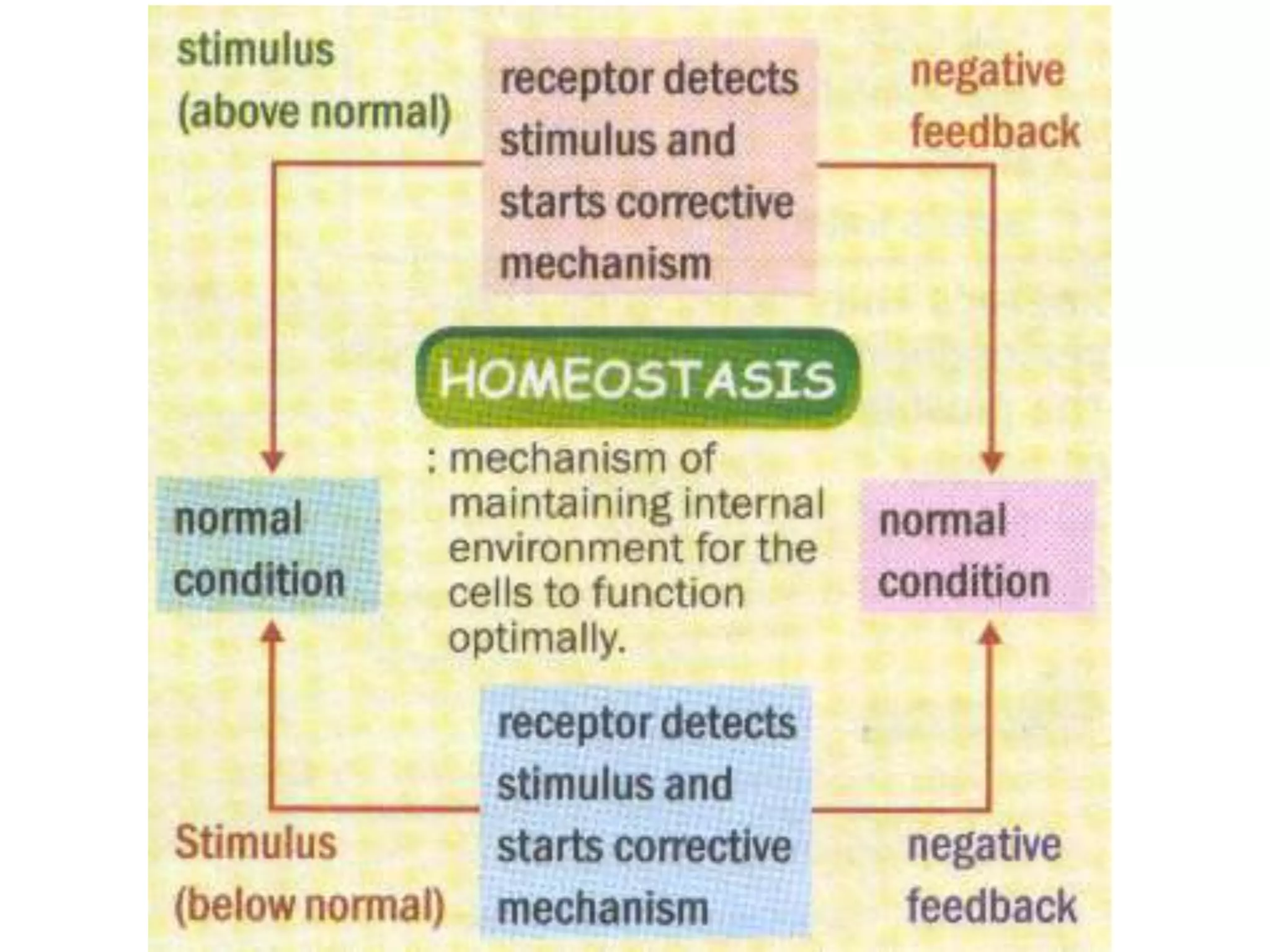
How is this (homeostasis) 
controlled? 
Negative Feedback 
Mechanism
Homeostasis of Blood Glucose Level
Homeostasis of Body Temperature
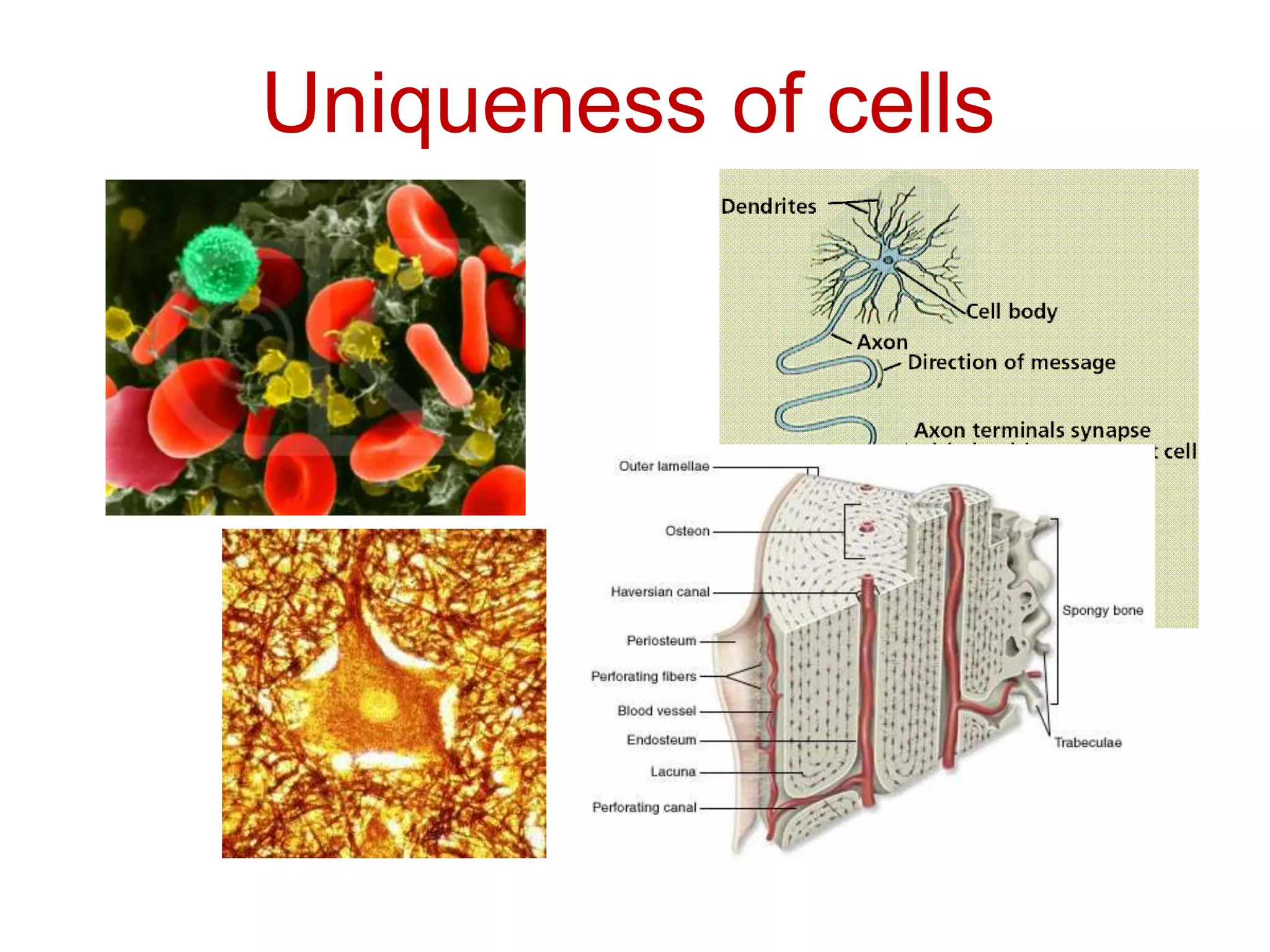
Uniqueness of cells
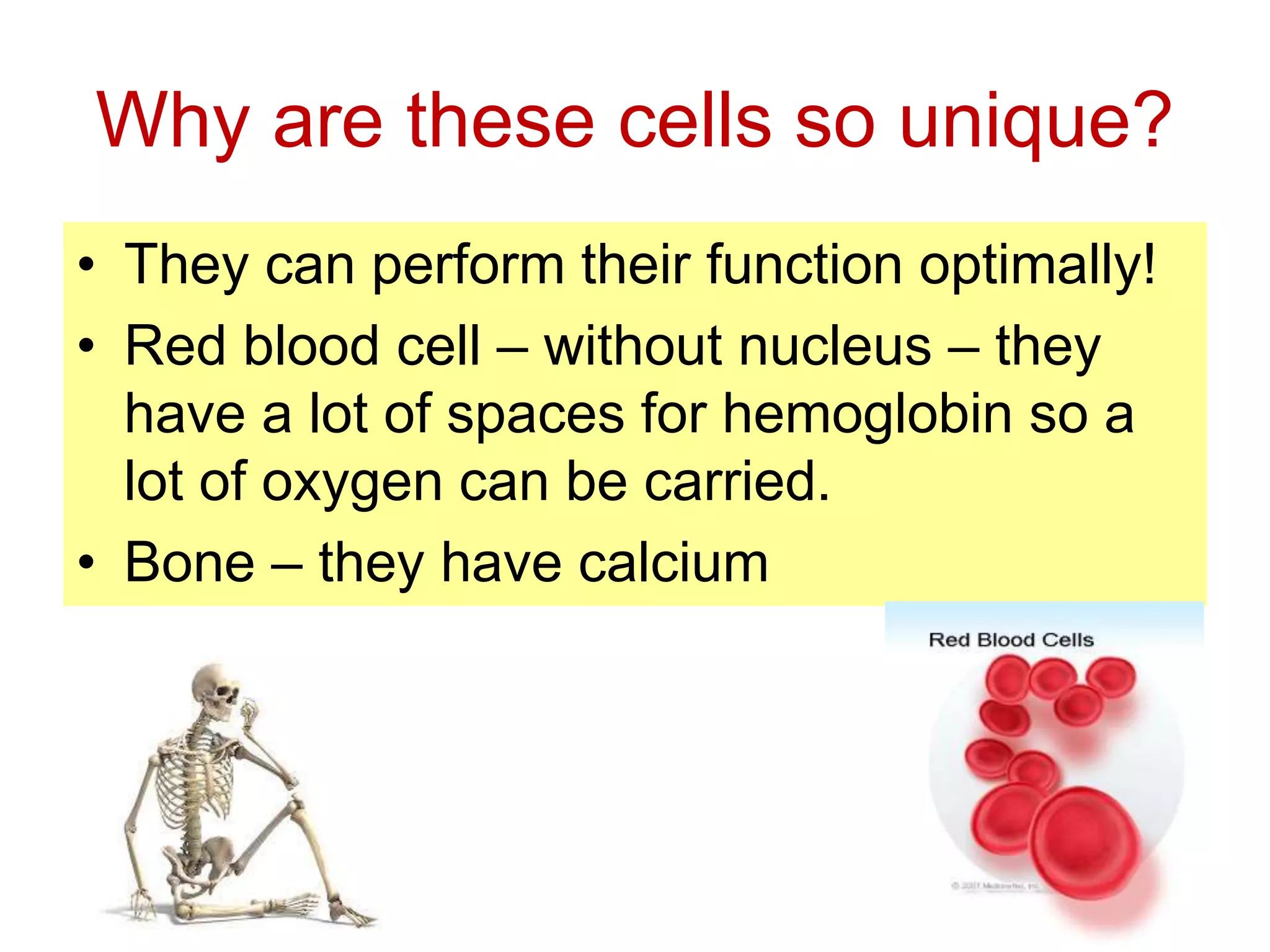
Why are these cells so unique? 
• They can perform their function optimally! 
• Red blood cell – without nucleus – they 
have a lot of spaces for hemoglobin so a 
lot of oxygen can be carried. 
• Bone – they have calcium
THE END
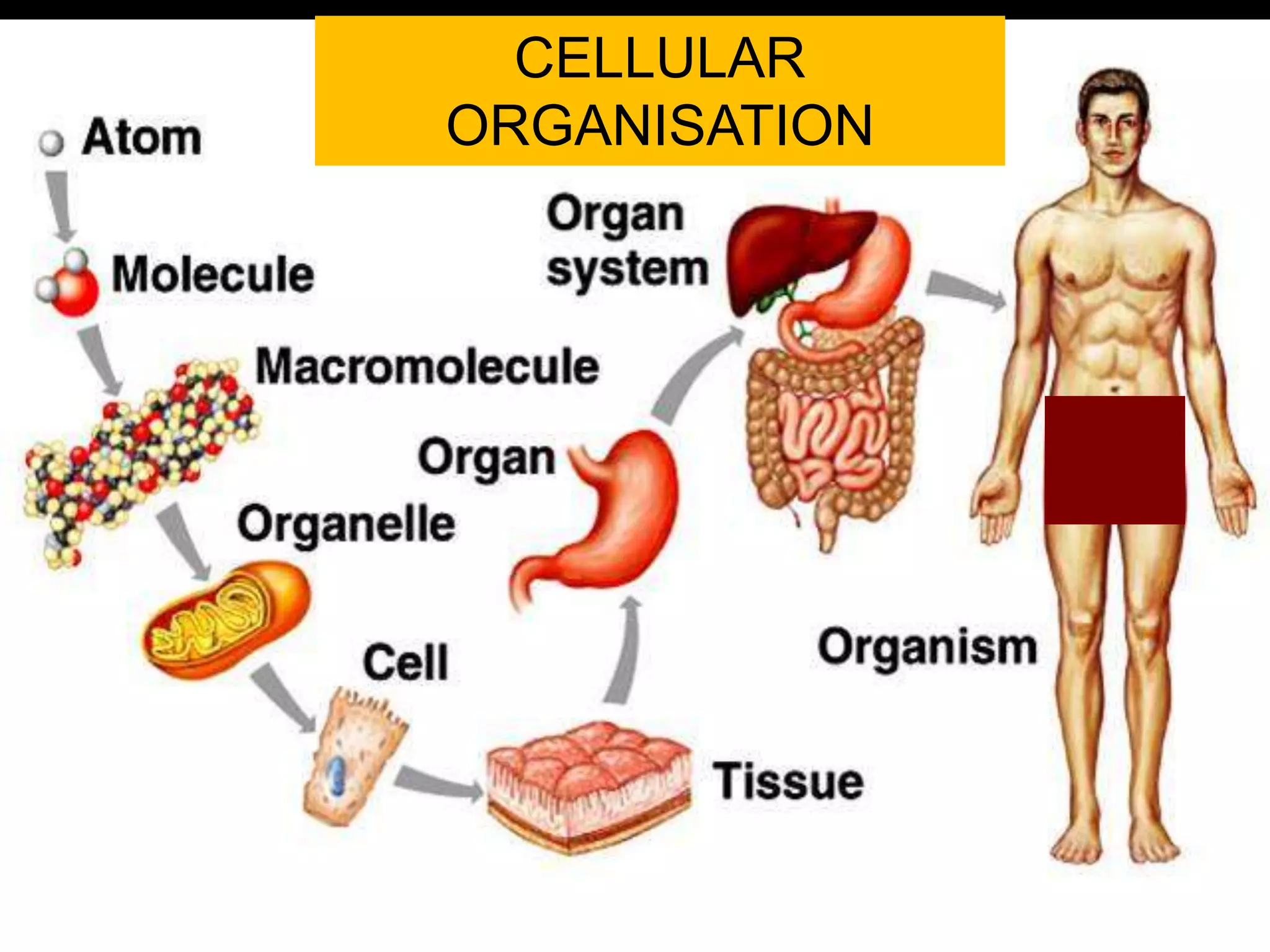
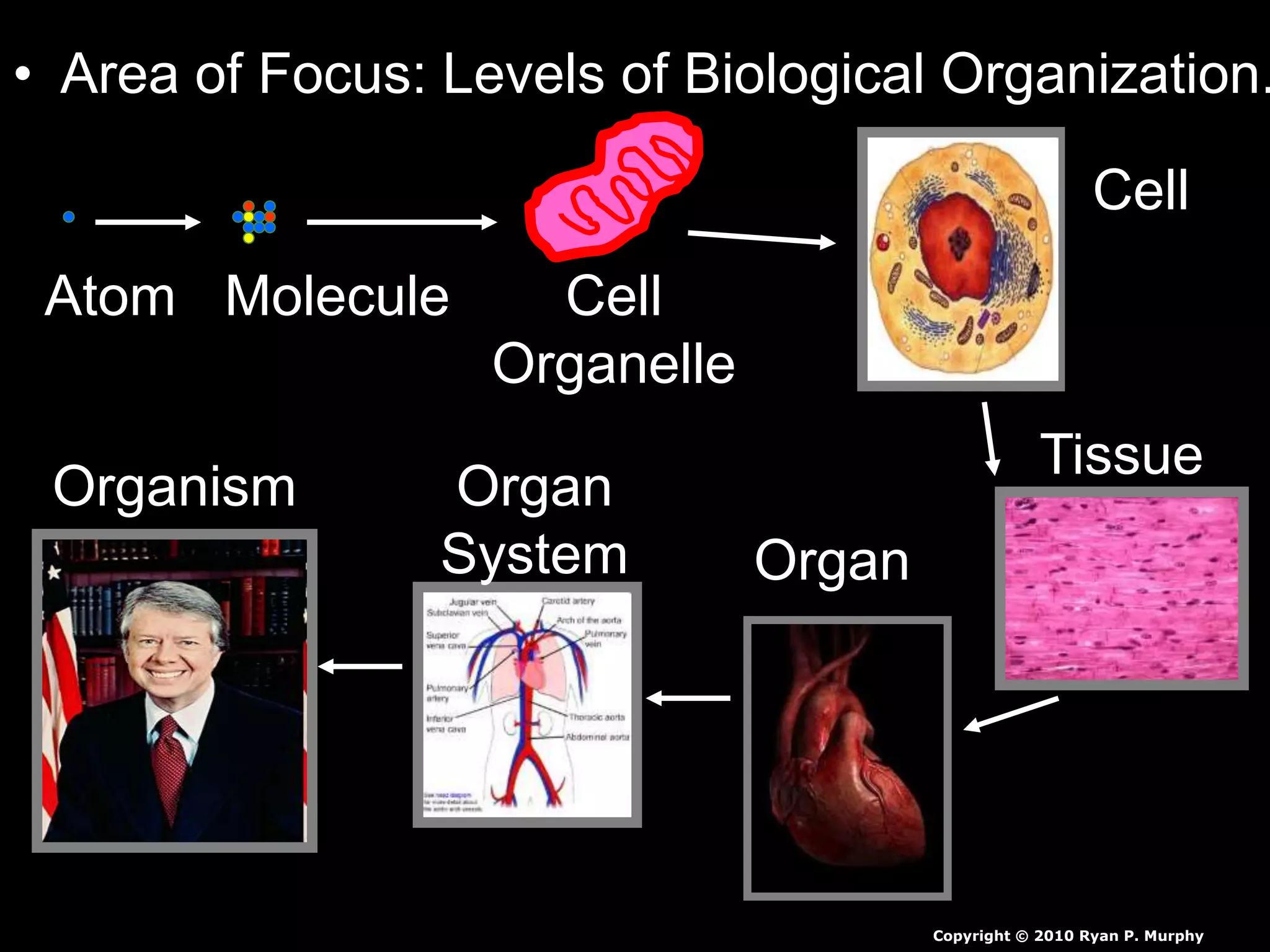
• Area of Focus: Levels of Biological Organization. 
Atom Molecule Cell 
Organelle 
Tissue 
Cell 
Organ 
Organ 
System 
Cell 
Organism 
Copyright © 2010 Ryan P. Murphy
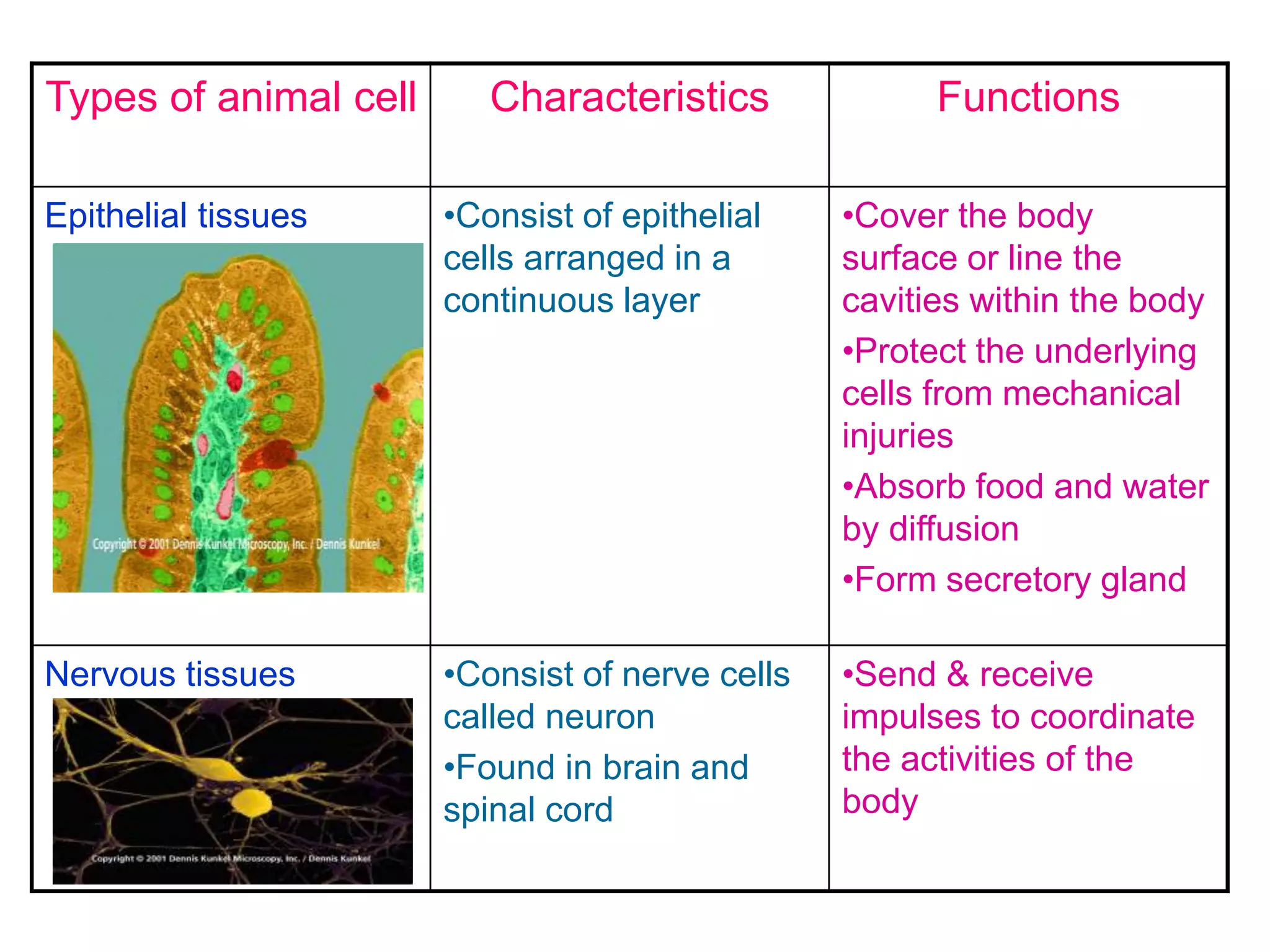
Types of animal cell Characteristics Functions 
Epithelial tissues •Consist of epithelial 
cells arranged in a 
continuous layer 
•Cover the body 
surface or line the 
cavities within the body 
•Protect the underlying 
cells from mechanical 
injuries 
•Absorb food and water 
by diffusion 
•Form secretory gland 
Nervous tissues •Consist of nerve cells 
called neuron 
•Found in brain and 
spinal cord 
•Send & receive 
impulses to coordinate 
the activities of the 
body
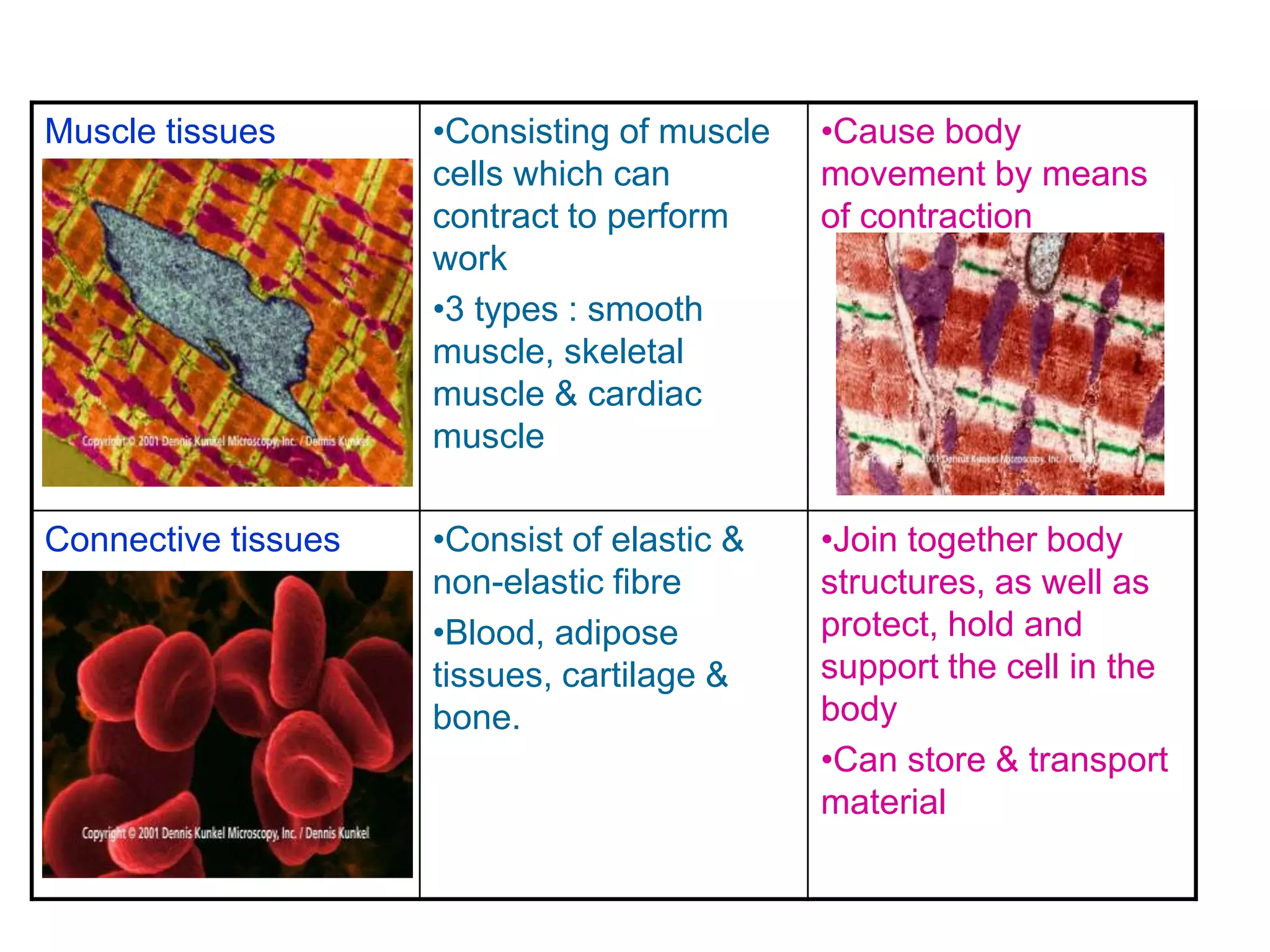
Muscle tissues •Consisting of muscle 
cells which can 
contract to perform 
work 
•3 types : smooth 
muscle, skeletal 
muscle & cardiac 
muscle 
•Cause body 
movement by means 
of contraction 
Connective tissues •Consist of elastic & 
non-elastic fibre 
•Blood, adipose 
tissues, cartilage & 
bone. 
•Join together body 
structures, as well as 
protect, hold and 
support the cell in the 
body 
•Can store & transport 
material
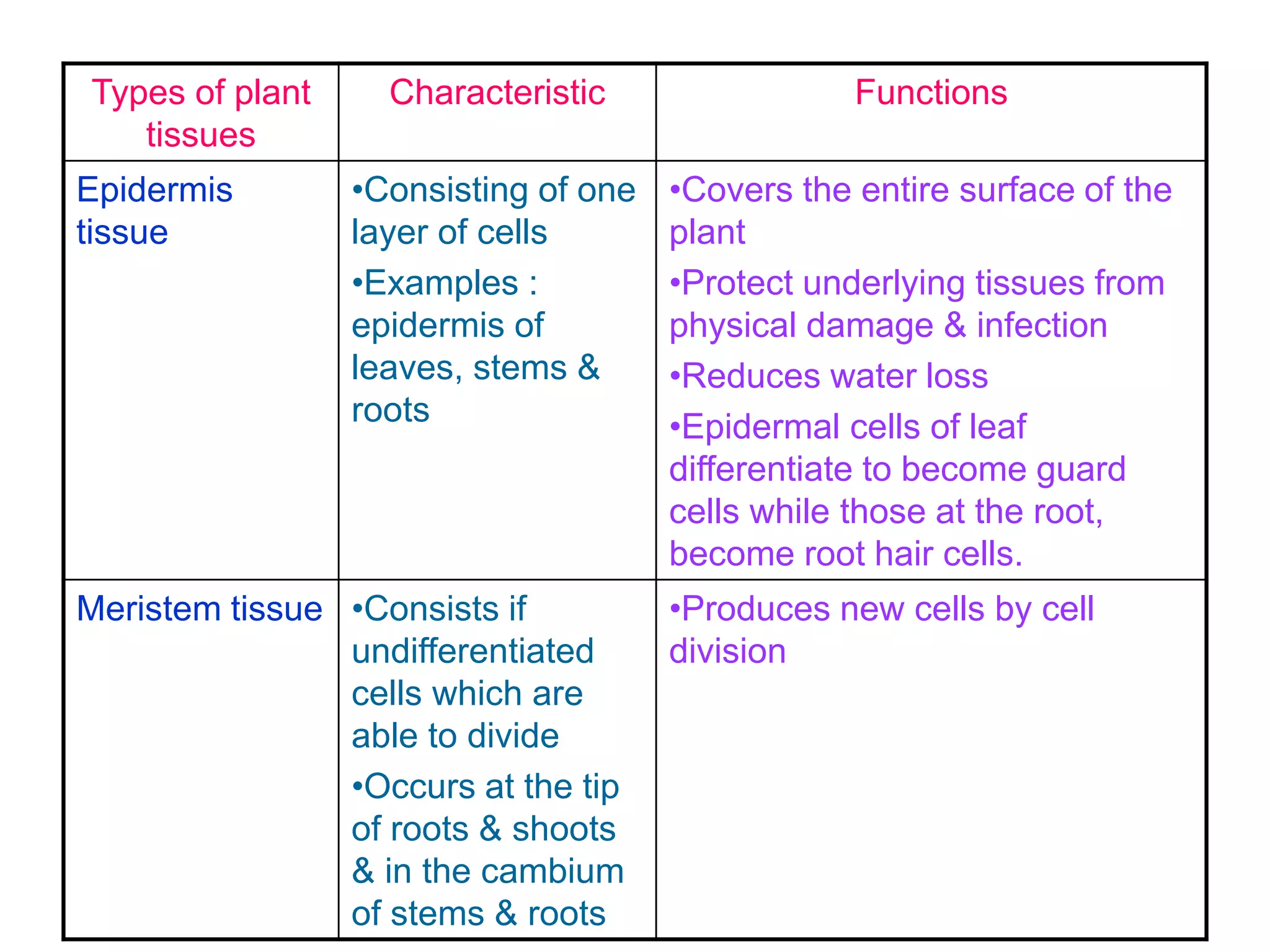
Types of plant 
tissues 
Characteristic Functions 
Epidermis 
tissue 
•Consisting of one 
layer of cells 
•Examples : 
epidermis of 
leaves, stems & 
roots 
•Covers the entire surface of the 
plant 
•Protect underlying tissues from 
physical damage & infection 
•Reduces water loss 
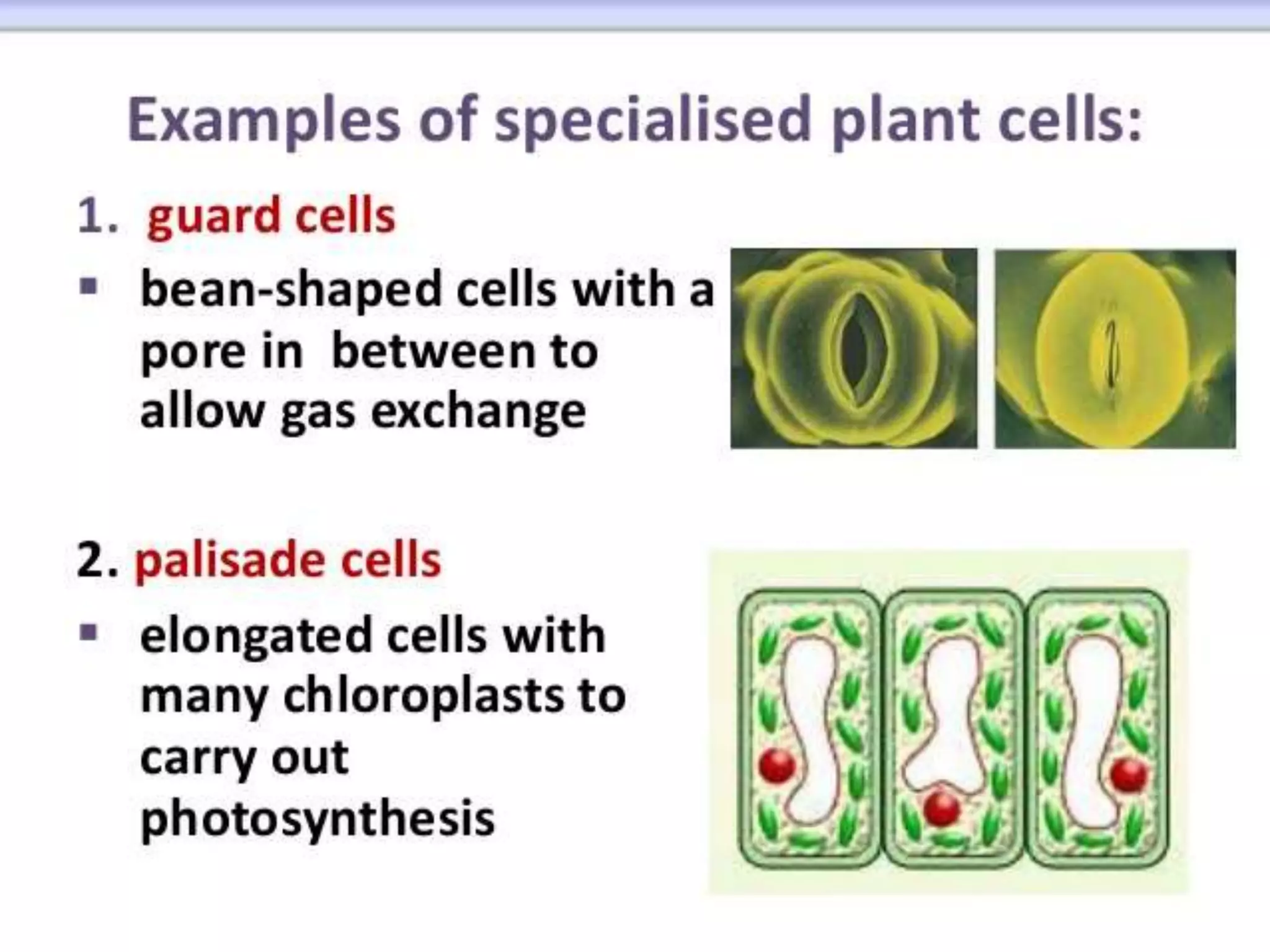
•Epidermal cells of leaf 
differentiate to become guard 
cells while those at the root, 
become root hair cells. 
Meristem tissue •Consists if 
undifferentiated 
cells which are 
able to divide 
•Occurs at the tip 
of roots & shoots 
& in the cambium 
of stems & roots 
•Produces new cells by cell 
division
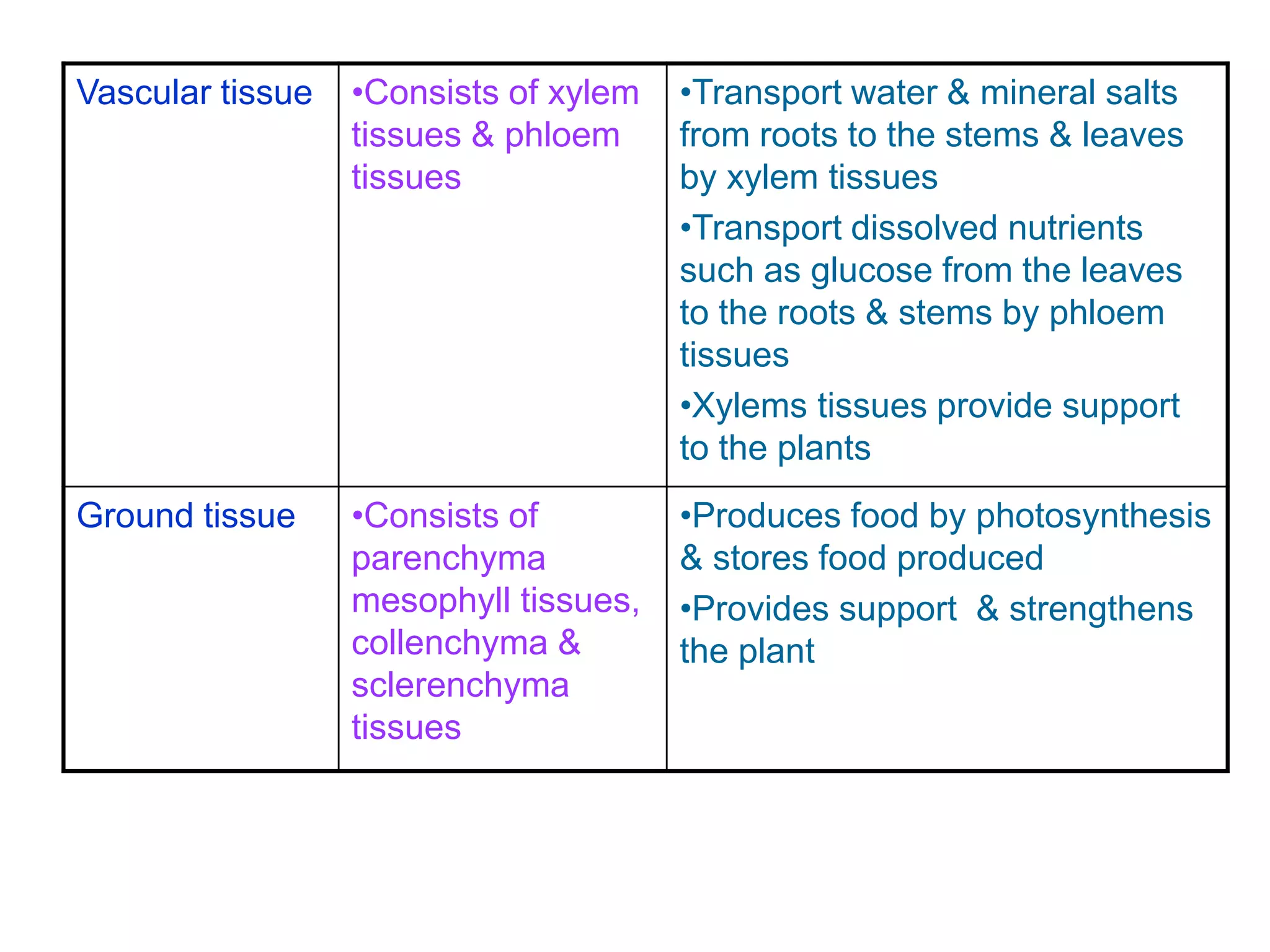
Vascular tissue •Consists of xylem 
tissues & phloem 
tissues 
•Transport water & mineral salts 
from roots to the stems & leaves 
by xylem tissues 
•Transport dissolved nutrients 
such as glucose from the leaves 
to the roots & stems by phloem 
tissues 
•Xylems tissues provide support 
to the plants 
Ground tissue •Consists of 
parenchyma 
mesophyll tissues, 
collenchyma & 
sclerenchyma 
tissues 
•Produces food by photosynthesis 
& stores food produced 
•Provides support & strengthens 
the plant

BIOLOGY FORM 4 CHAPTER 2 PART 2 - CELL ORGANIZATION

  • 1.
    BIOLOGY FORM 4 CHAPTER 2 CELL ORGANIZATION (2.2)
  • 2.
    2.2 CELL ORGANIZATION Multicellular organisms can feed, respire, excrete, move, respond to stimuli, reproduce and grow. Unicellular organisms are organisms with just a single cell. So how is this organism able to perform all the living
  • 3.
    Lesson Outcomes Understand living process in unicellular organism the movement in unicellular organism the reproduction in unicellular organism the feeding in unicellular organism the exchange of materials in unicellular organism
  • 4.
    CELL ORGANIZATION ORGANISMS UNICELLULAR ORGANISM Single cell organism MULTICELLULAR ORGANISM larger organism with more than one cell
  • 5.
    UNICELLULAR ORGANISM Simple organism consists of a single cell  Each cell or organism is a complete unit of life ~able to carry out all living processes
  • 6.
  • 7.
  • 8.
    Living processes of unicellular organism ~~~ Amoeba sp Lives in freshwater lakes, damp soil  Enclosed in plasma membrane  constantly change shape Also called protozoa
  • 9.
    Feeding Locomotion Living processes of amoeba sp. Reproduction Respiration Excretion Responses to stimuli
  • 10.
    Movement of Amoebasp.  Move by extending temporary pseusopodia or ‘false foot’  The rest of cytoplasm flow slowly into this extension, hence move the organism along
  • 11.
    Feeding of Amoebasp.  Engulf food via phagocytosis  Holozoic organism - feed on microbes
  • 13.
  • 14.
  • 15.
    Respiration of Amoebasp. O2 CO2 O2 CO2 Exchange of oxygen and carbon dioxide occurs through the plasma membrane through simple diffusion.
  • 16.
    Excretion of Amoebasp. • The contractile vacuole is involved in osmoregulation. • Water diffuses into the cell and fills the contractile vacuole. • When the vacuole is filled to its maximum size, it contracts to expel its contents.
  • 17.
    Responses to stimuli • Amoeba sp. reacts by retreating from adverse stimuli such as bright light and acidic solution. • In contrast, favourable stimuli such as contact with food, cause it to move towards the stimuli. Food Light acids
  • 18.
    Reproduction of Amoeba sp.  Binary fission - asexual reproduction  Once grown to a certain size the nucleus divides  Cytoplasm divides  2 daughter cells form.  When environment not conducive, divides by spore formation
  • 19.
    THE LIFE OFMR. AMOEBA PROTEUS
  • 22.
    2.2 CELL ORGANISATION MULTICELLULAR ORGANISM  Organism - more than one cell  Larger organisms ~Need many different types of cells to carry out life processes  Achieved via cell specialisation and cell organisation
  • 24.
    SPECIALISATION OCCURS THROUGHTHE PROCESS OF DIFFERENTIATION
  • 30.
  • 31.
    Cell The smallestunit of life capable of carrying out all Tissue Organ System Organism the functions of living things A group of cells of the same type that perform a specific function in organism Several types of tissue that carry out a particular function Several organs working together to perform a function All the systems make up a multicellular organism.
  • 32.
  • 33.
    Some of thehumans cells and their functions Cell Function Muscle cell Able to contract and relax and are involved in movement White blood cell Involved in defence of the body against diseases Red blood cell Transports oxygen Nerve cell Receives and sends out nerve impulses Sperm Fertilises the ovum
  • 35.
    Animal Tissue Thereare 4 major types of tissues in animals: 1. Epithelial tissues 2. Muscle tissues 3. Connective tissues 4. Nerve tissues MENC
  • 36.
    1. Epithelial Tissue • Form a skin surface and protect the tissue beneath it. • Form a lining layer for tubes or lines the cavities of the body. • Protect against infection, mechanical injuries and dehydration. • Undergo changes to form glands.
  • 37.
  • 38.
    2. Muscle Tissue • Most abundant tissue in the body Smooth muscle Skeletal muscle Cardiac muscle • Contraction and relaxation for involuntary body activities (peristalsis along digestive tract) • Voluntary movements • Contract and relax to move the bone • Contract to pump blood to all parts of the body. • Involuntary movements
  • 39.
  • 40.
  • 41.
  • 42.
  • 43.
    3. Connective tissue • Holds the body together. • For example, bone, cartilage, blood, tendons, ligament.
  • 44.
  • 45.
    Adipose Tissue •Peripheral nuclei due to large fat storage droplet • Deeper layer of skin, organ padding, yellow marrow • Reduces heat loss, energy storage, protection
  • 46.
    Bones For movement,support , protection of organs, mineral storage
  • 47.
    Blood Transport ofgases, nutrients, waste products. Body defence against infections.
  • 48.
    Nerve Tissue •Transmits and coordinates messages around the body.
  • 53.
    Discards toxic waste products Produces off spring Breaks down complex food into simple substances for easy absorption by body cells Absorbs and transports oxygen and discards carbon dioxide Systems
  • 54.
    Transports food substances, oxygen, hormones and others to the entire body Provides bodily support and protection to solf internal Defends the body against disease Systems organs Produces hormones that control the bodily activities
  • 55.
    Skin surface to protects the tissue beneath it. Coordinates and controls all bodily activities related to impulses and reactions Helps in movement of the body. Systems
  • 58.
  • 59.
  • 60.
    Some of theplants cells and their functions Cell Function Parenchyma cell For support and storage Xylem Transports water and mineral salts Sieve tube element Transports organic product of photosynthesis Companion cell Regulates the metabolic activity of sieve tube element Epidermal cell For protection and covering of other cells beneath
  • 61.
    Tissues of plants Meristemic tissue permanent tissue Epidermal tissues Ground tissues Vascular tissues • Small cell, thin walls, large nuklei, dense cytoplasm, no vacuole. • Young, actively dividing • Form a layer to cover, protect entire surface of plant and reduces water loss • Provides support and strengthens the plants • Transports water, food and support
  • 62.
    1. Meristematic tissues Tip of shoot Tip of root Cambium • Small cell, • thin walls • large nuclei • dense cytoplasm, • no vacuole. • Young, actively dividing
  • 63.
  • 64.
    2. Epidermal •Form a layer to cover, protect entire surface of plant and reduces water loss
  • 65.
    3. Ground tissue Parenchyma Collenchyma Sclerenchyma Provides support and strengthens the plants
  • 66.
    4. Vascular tissue • Xylem -Transportation of water and minerals from the roots to shoot systems & support • Phloem - Transportation of food that is synthesized in leaves to whole plant.
  • 68.
    Plant Systems SHOOTSYSTEM Bears flowers, fruits, buds and leaves ROOT SYSTEM Anchors the plant, absorbs water and mineral, stores food.
  • 72.
  • 73.
    The process toregulate and maintain internal environment - HOMEOSTASIS Necessity: to maintain optimal internal environment so that cells can function optimally
  • 74.
    What is internalenvironment? 1. Interstitial fluid 2. Blood plasma
  • 75.
    Homeostasis of BodyFluids 1. intracellular fluid = within cells = cytoplasm 2. extracellular fluid = outside cells  intercellular fluid = tissue fluid = interstitial fluid  plasma = fluid portion of blood Composition of fluids change as substances move between compartments  nutrients, oxygen, ions and wastes move in both directions across capillary walls
  • 77.
    HOMEOSTASIS Factors toMaintain: - Internal factors : 1. Physical: • Temperature • Blood pressure • Osmotic pressure 2. Chemical: • Salt • Sugar • pH
  • 79.
    How is this(homeostasis) controlled? Negative Feedback Mechanism
  • 81.
    Homeostasis of BloodGlucose Level
  • 82.
  • 83.
  • 84.
    Why are thesecells so unique? • They can perform their function optimally! • Red blood cell – without nucleus – they have a lot of spaces for hemoglobin so a lot of oxygen can be carried. • Bone – they have calcium
  • 85.
  • 86.
    • Area ofFocus: Levels of Biological Organization. Atom Molecule Cell Organelle Tissue Cell Organ Organ System Cell Organism Copyright © 2010 Ryan P. Murphy
  • 87.
    Types of animalcell Characteristics Functions Epithelial tissues •Consist of epithelial cells arranged in a continuous layer •Cover the body surface or line the cavities within the body •Protect the underlying cells from mechanical injuries •Absorb food and water by diffusion •Form secretory gland Nervous tissues •Consist of nerve cells called neuron •Found in brain and spinal cord •Send & receive impulses to coordinate the activities of the body
  • 88.
    Muscle tissues •Consistingof muscle cells which can contract to perform work •3 types : smooth muscle, skeletal muscle & cardiac muscle •Cause body movement by means of contraction Connective tissues •Consist of elastic & non-elastic fibre •Blood, adipose tissues, cartilage & bone. •Join together body structures, as well as protect, hold and support the cell in the body •Can store & transport material
  • 89.
    Types of plant tissues Characteristic Functions Epidermis tissue •Consisting of one layer of cells •Examples : epidermis of leaves, stems & roots •Covers the entire surface of the plant •Protect underlying tissues from physical damage & infection •Reduces water loss •Epidermal cells of leaf differentiate to become guard cells while those at the root, become root hair cells. Meristem tissue •Consists if undifferentiated cells which are able to divide •Occurs at the tip of roots & shoots & in the cambium of stems & roots •Produces new cells by cell division
  • 90.
    Vascular tissue •Consistsof xylem tissues & phloem tissues •Transport water & mineral salts from roots to the stems & leaves by xylem tissues •Transport dissolved nutrients such as glucose from the leaves to the roots & stems by phloem tissues •Xylems tissues provide support to the plants Ground tissue •Consists of parenchyma mesophyll tissues, collenchyma & sclerenchyma tissues •Produces food by photosynthesis & stores food produced •Provides support & strengthens the plant