UNIT 2
INTERACTION
AND
THE BODY
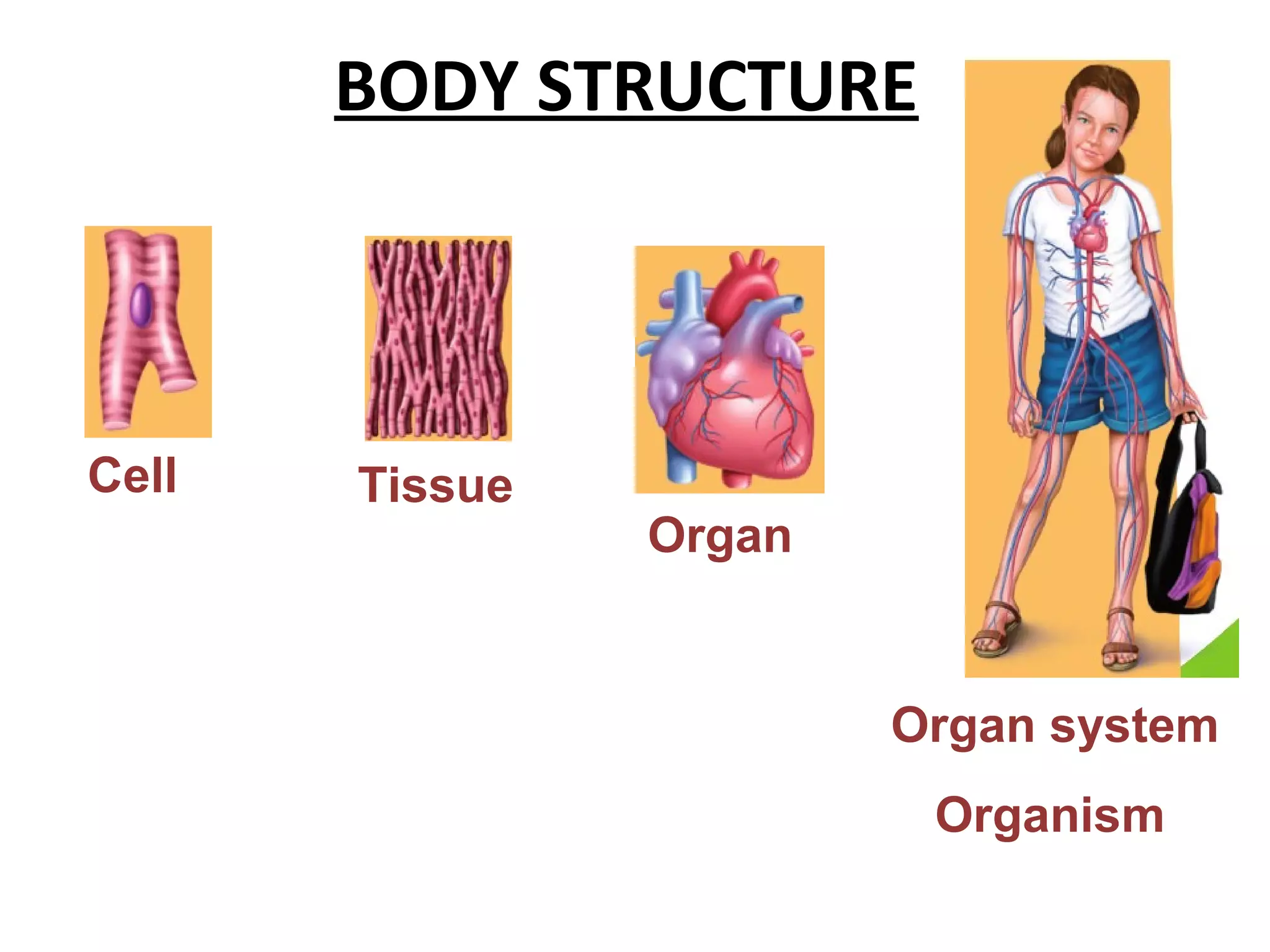
BODY STRUCTURE
Cell Tissue
Organ system
Organ
Organism
RECEIVING
INFORMATION
Our sense organs detect
information from the environment
and our sensory neurons transmit
this information to our brain.
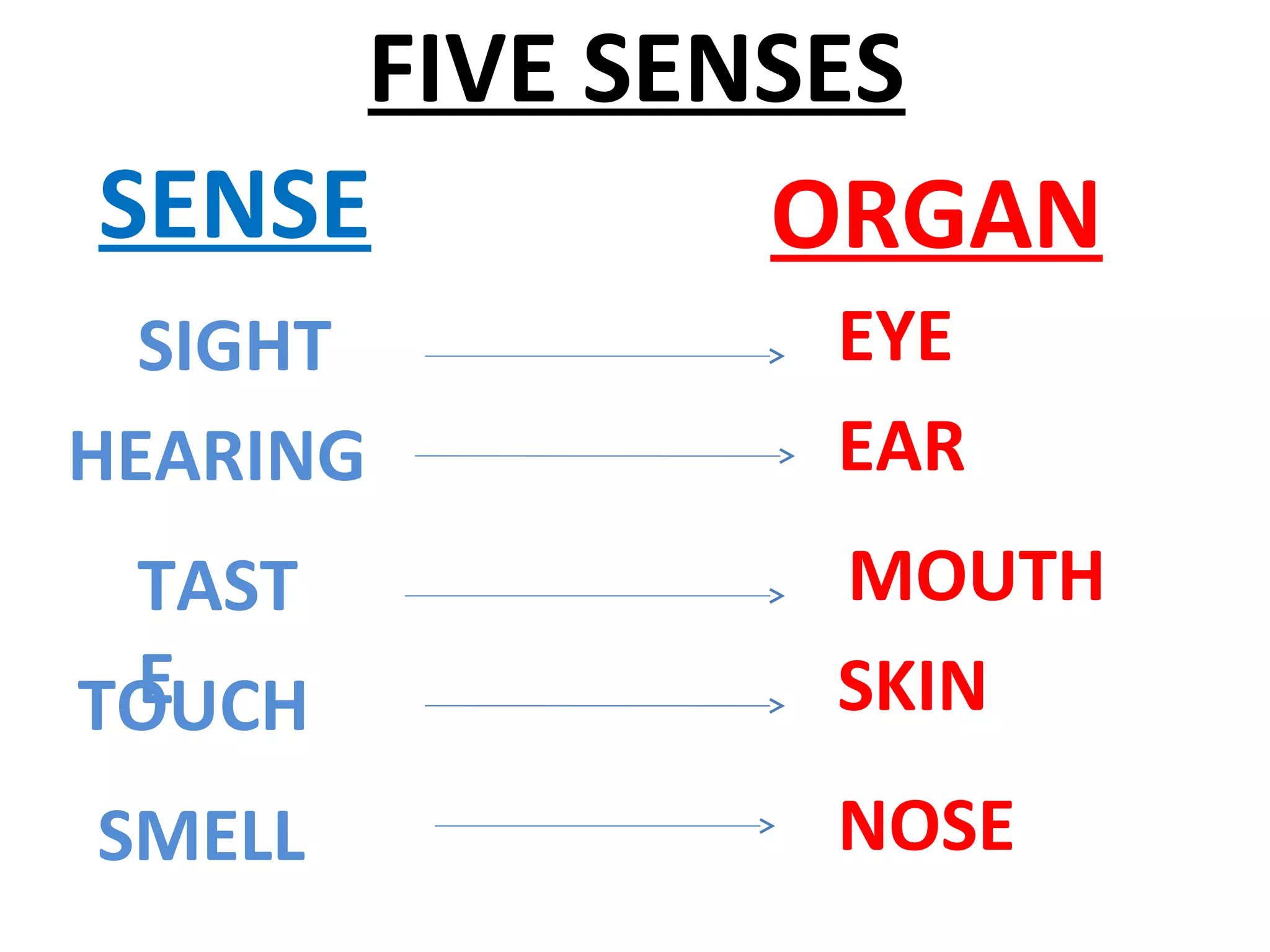
FIVE SENSES
SIGHT
HEARING
TAST
ETOUCH
SMELL
SKIN
MOUTH
NOSE
EAR
EYE
SENSE ORGAN
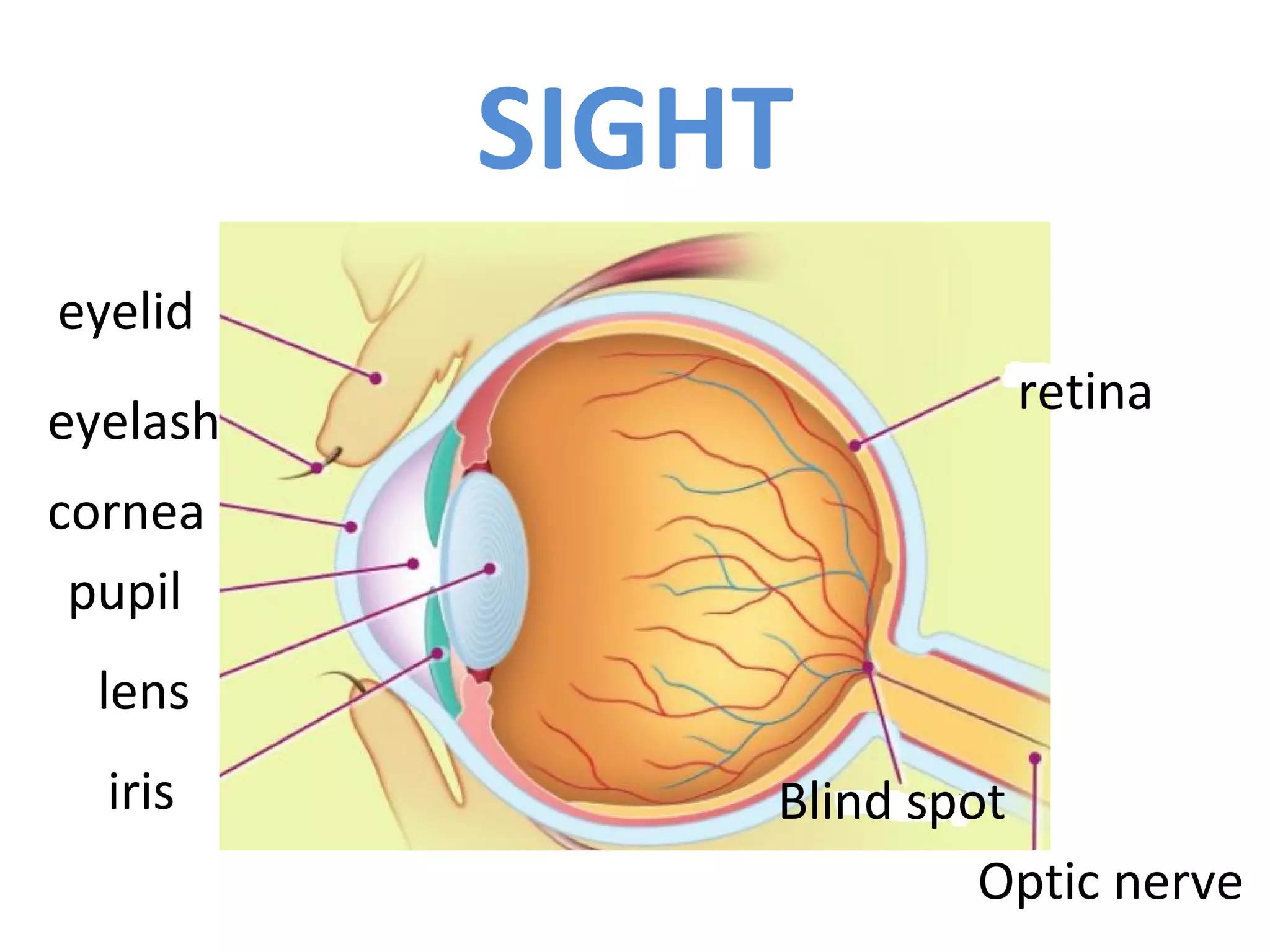
SIGHT
eyelid
pupil
lens
iris
Optic nerve
Blind spot
retina
cornea
eyelash
HEARING
Semicircular canals
Auditory canal
eardrum
Three
small
bones
cochlea
Auditory nerve
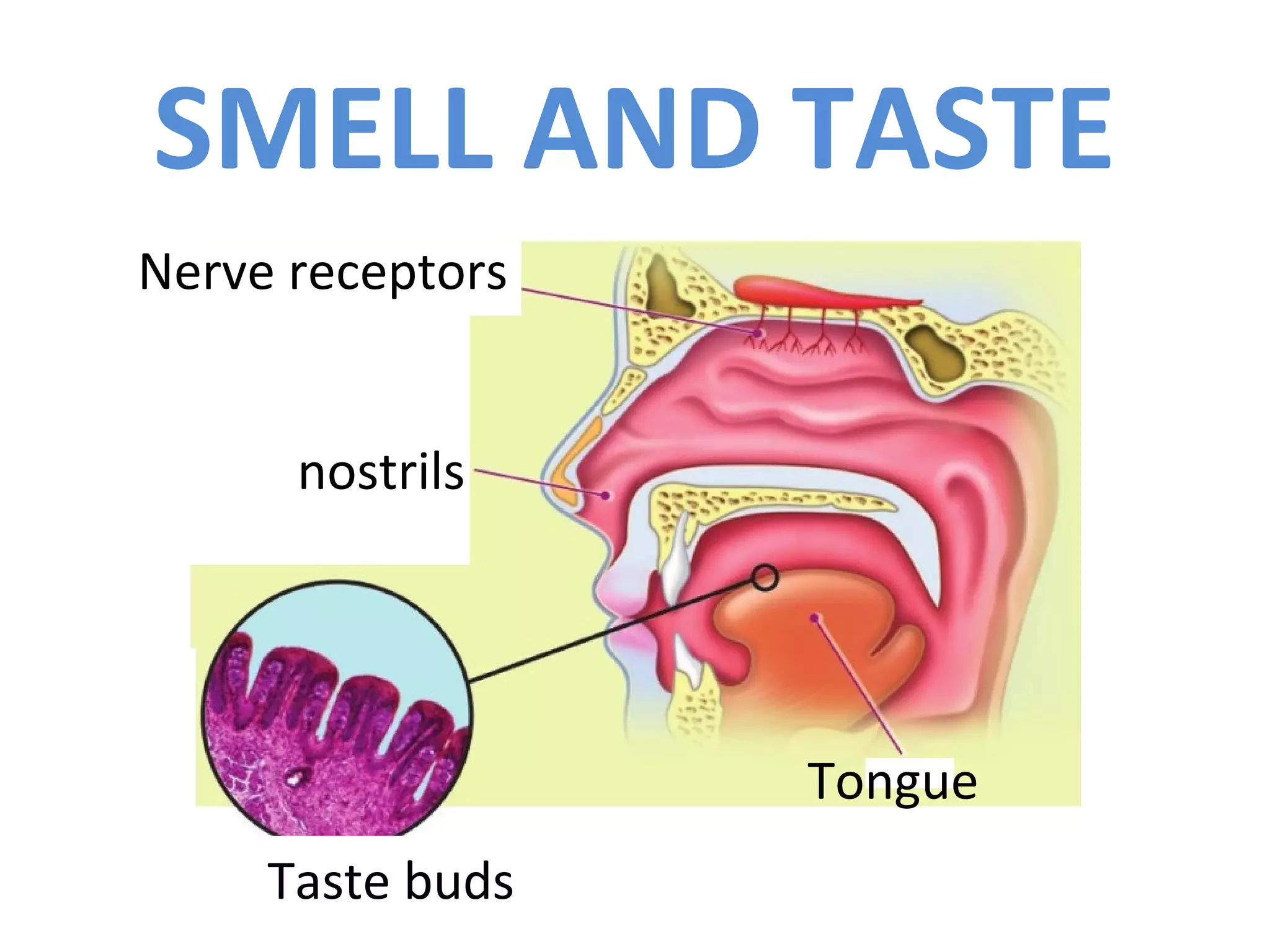
SMELL AND TASTE
Nerve receptors
nostrils
Tongue
Taste buds
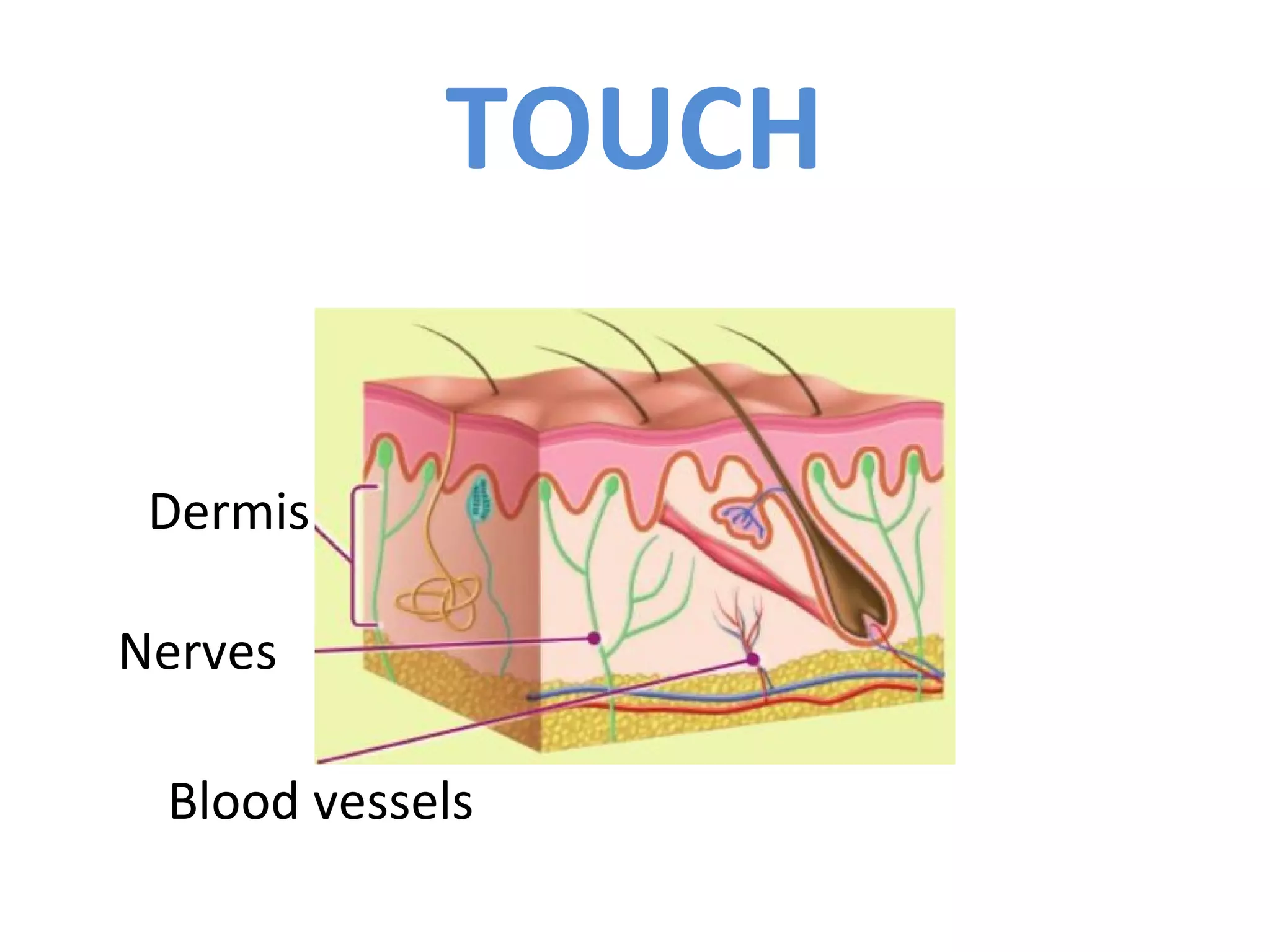
TOUCH
Dermis
Nerves
Blood vessels
PROCESSING
INFORMATION
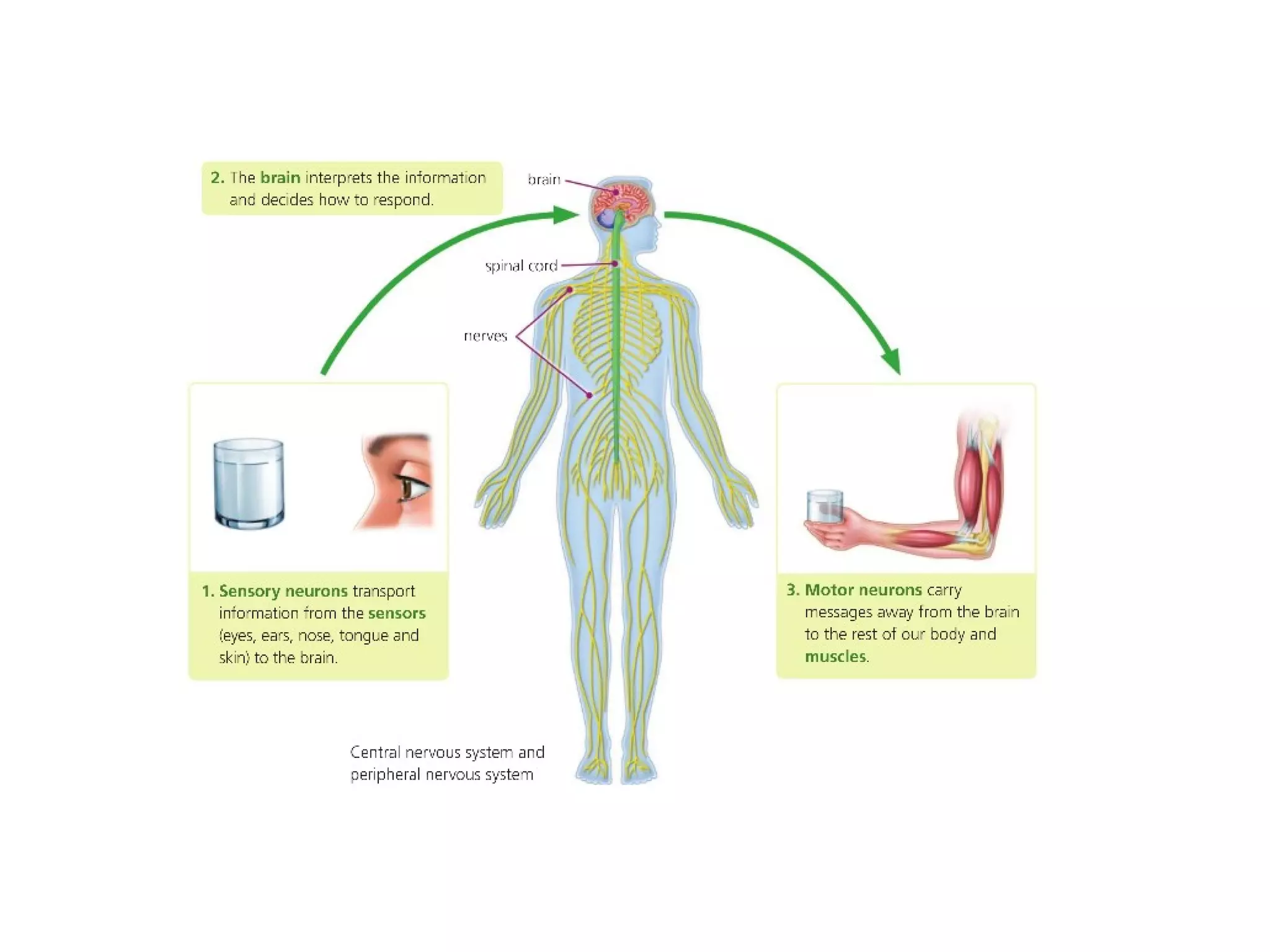
The nervous system receives
information from the five sense
organs, then analyses and
interprets this information. It
responds by sending messages
which cause the body to react.
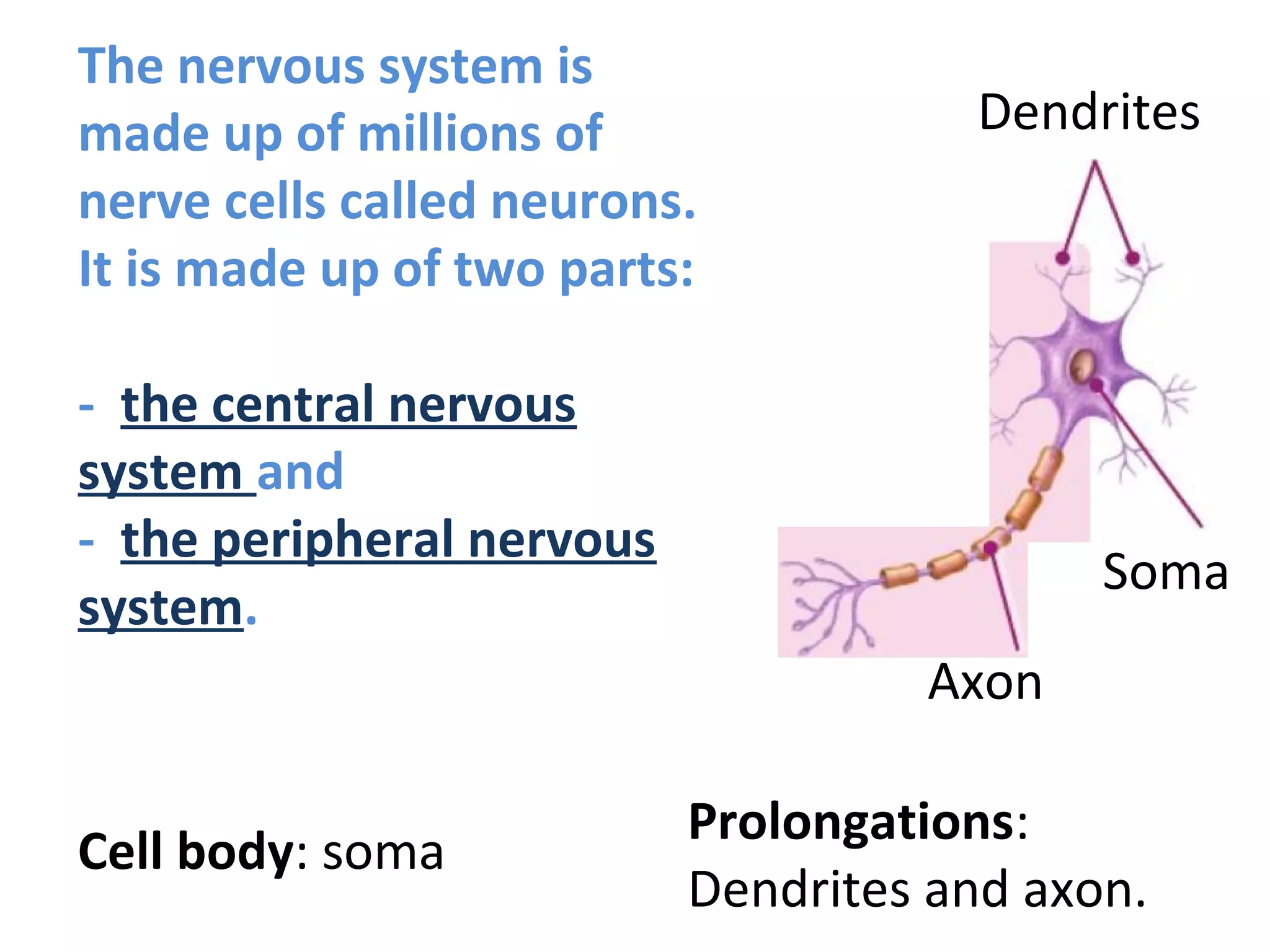
The nervous system is
made up of millions of
nerve cells called neurons.
It is made up of two parts:
- the central nervous
system and
- the peripheral nervous
system.
Soma
Dendrites
Axon
Cell body: soma
Prolongations:
Dendrites and axon.
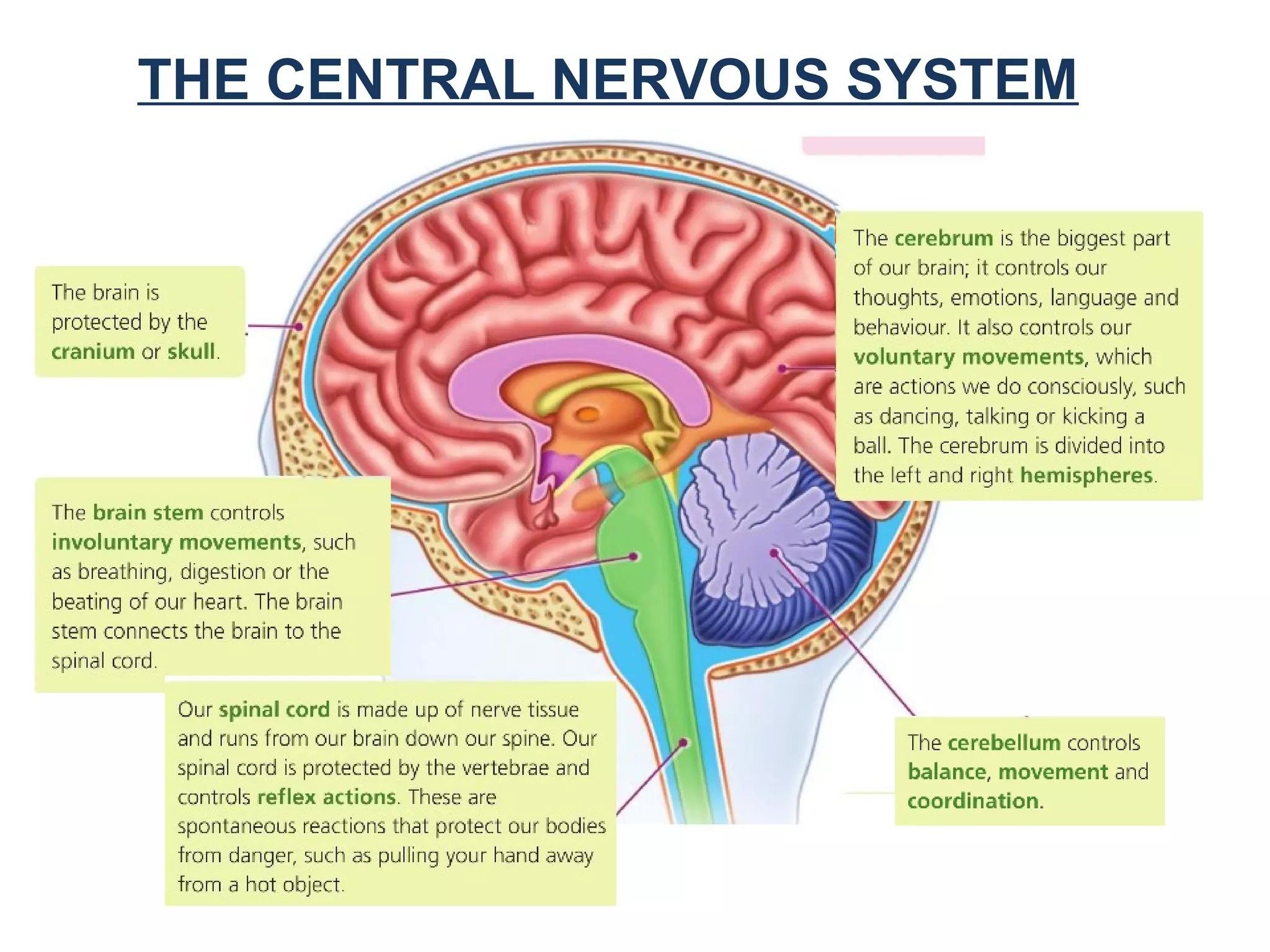
THE CENTRAL NERVOUS SYSTEM
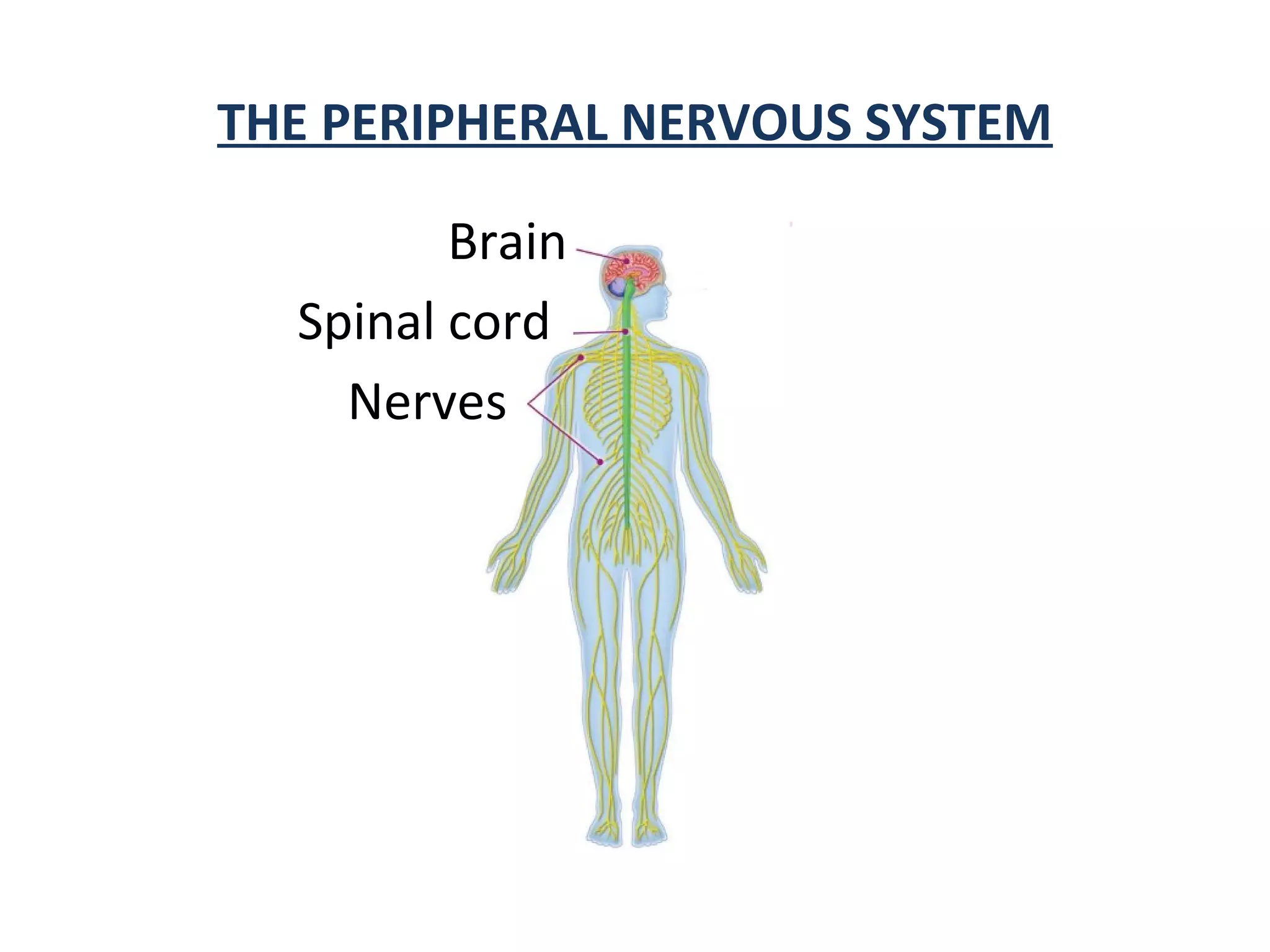
THE PERIPHERAL NERVOUS SYSTEM
Brain
Spinal cord
Nerves
Our brain sends signals to the
muscles of the locomotor system
to contract orelax.
GIVING A RESPONSE
IT IS MADE UP:
SKELESTON: BONES
JOINTS
MUSCLES
LOCOMOTOR SYSTEM
MUSCULOSKELETAL SYSTEM
THE SKELETON
Sternum
Vertebrae
(spine)
Ulna
Radio
Humerus
Femur
Tibia
Fibula
Skull
Clavicle
Scapula
Rib
Pelvis
Patella
Bones – Cartilage – Joint - Ligament
The skeleton is made up of bones and cartilage.
Bones are made of hard bone tissue (short and wide, flat and thin, long
and strong)
Cartilage is made of a more flexible tissue.
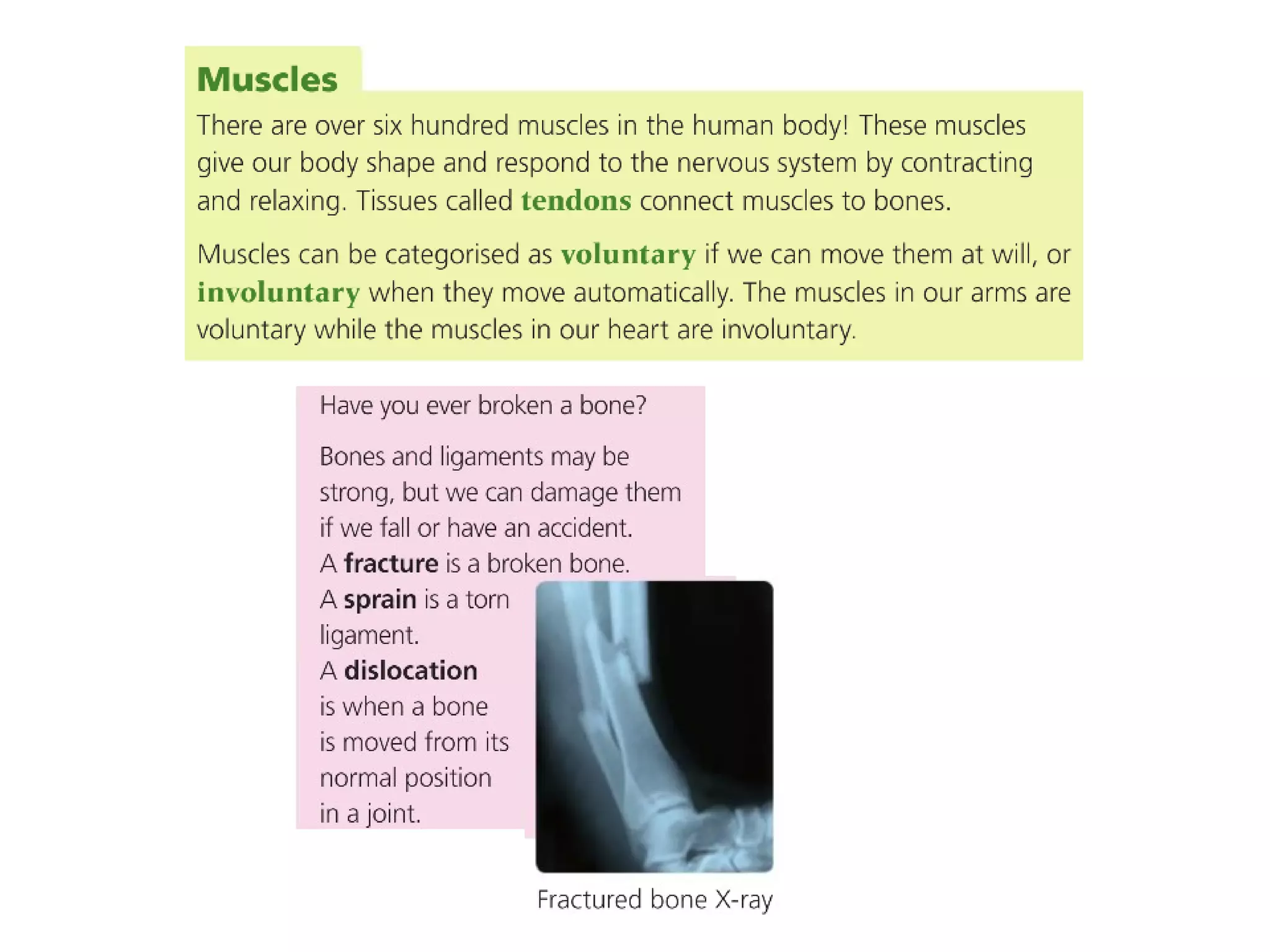
MUSCLES
MORE ORGAN SYSTEMS
Apart from those organ systems, humans
need more organ system to live:
CIRCULATORY SYSTEM
DIGESTIVE SYSTEM
RESPIRATORY SYSTEM
EXCRETOR SYSTEM
RERODUCTIVE SYSTEM (MALE/FEMALE)
CIRCULATORY SYSTEM
The circulatory system moves blood
through the hart and round the body in the
arteries and veins. Blood gives our body
nutrients and oxygen.
The organs that form the circulatory
system are: heart, arteries and veins.
DIGESTIVE SYSTEM
The digestive system is a
group of organs that work
together to help us digest
food.
The organs of the digestive
system are: mouth, stomach
and intestine.
RESPIRATORY SYSTEM
The respiratory system is a
group of organs that work
together to help us breathe.
We breathe in oxygen and
breathe out carbon dioxide.
The organs of the respiratory
system are: nose, mouth and
lungs.
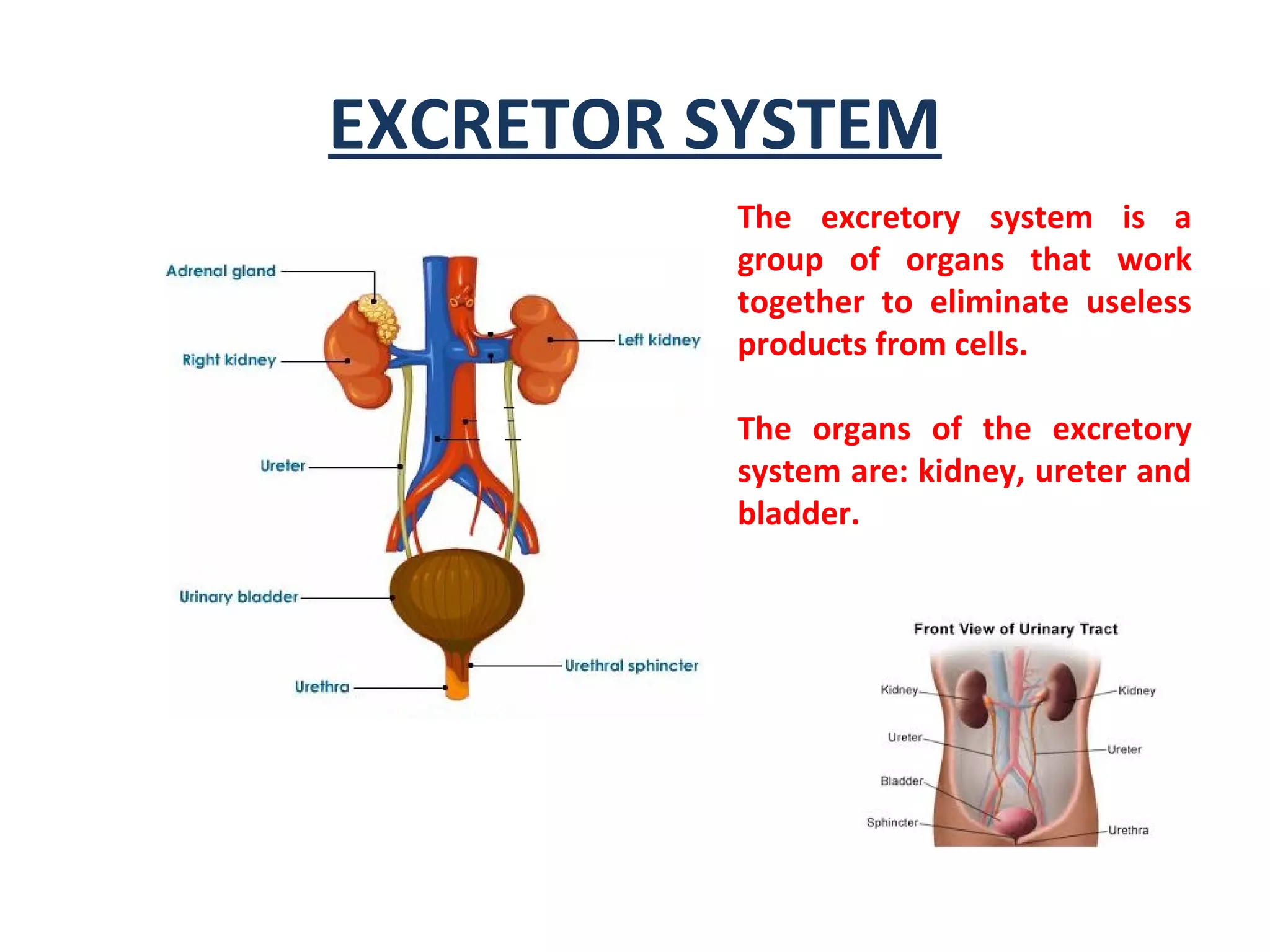
EXCRETOR SYSTEM
The excretory system is a
group of organs that work
together to eliminate useless
products from cells.
The organs of the excretory
system are: kidney, ureter and
bladder.
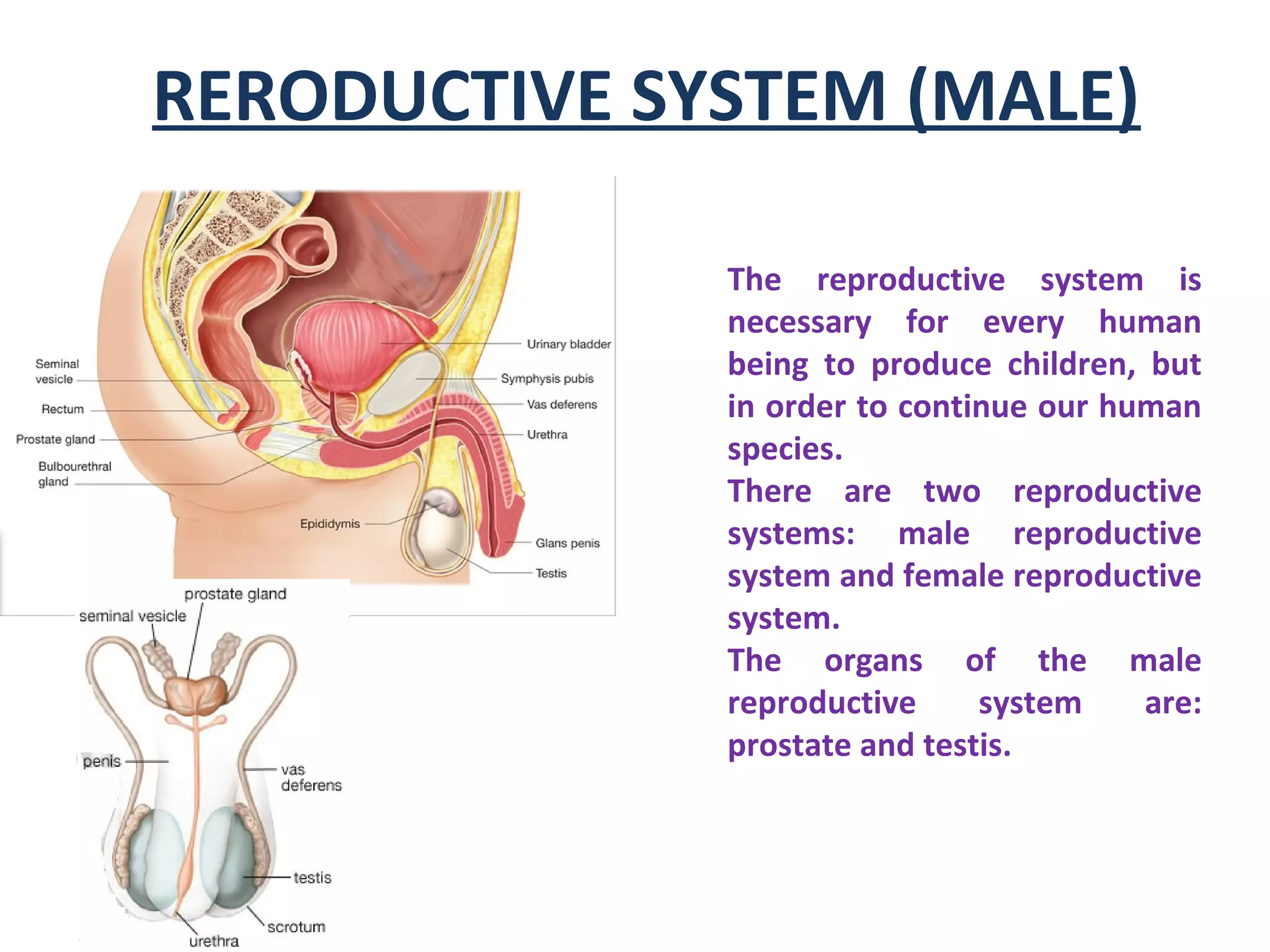
RERODUCTIVE SYSTEM (MALE)
The reproductive system is
necessary for every human
being to produce children, but
in order to continue our human
species.
There are two reproductive
systems: male reproductive
system and female reproductive
system.
The organs of the male
reproductive system are:
prostate and testis.
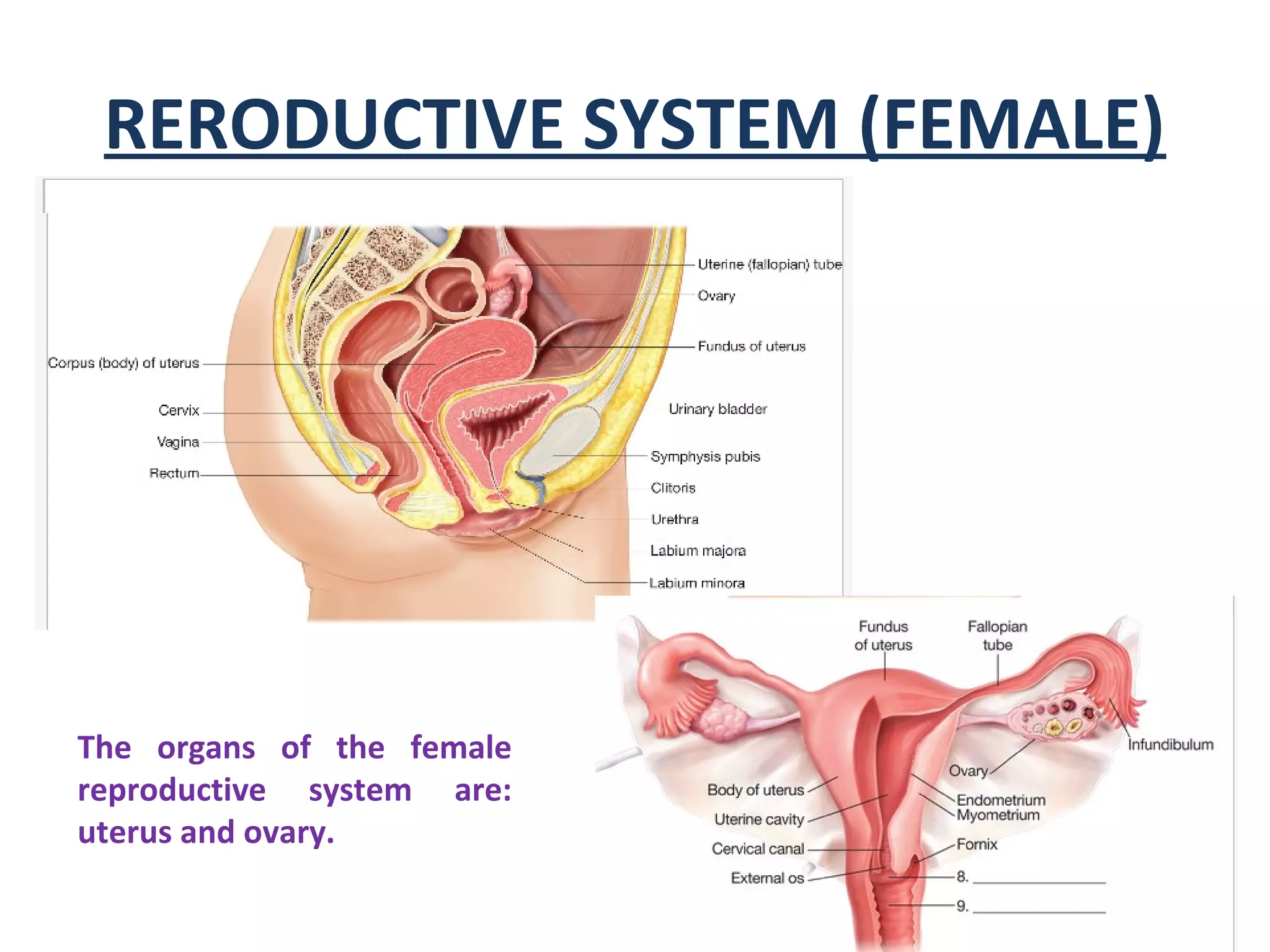
RERODUCTIVE SYSTEM (FEMALE)
The organs of the female
reproductive system are:
uterus and ovary.

Unit 2