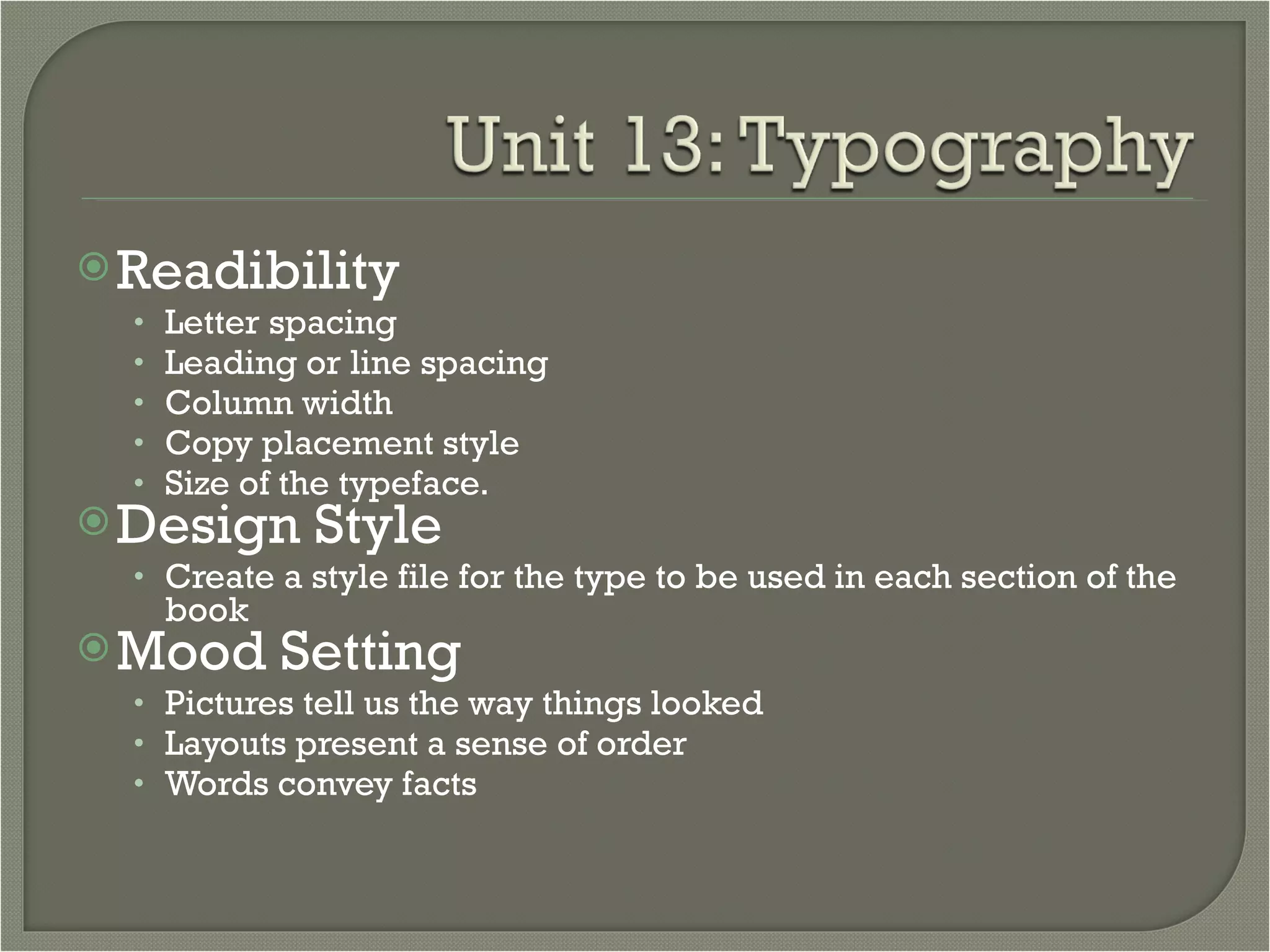
Readibility Letter spacing Leading or line spacing Column width Copy placement style Size of the typeface. Design Style Create a style file for the type to be used in each section of the book Mood Setting Pictures tell us the way things looked Layouts present a sense of order Words convey facts
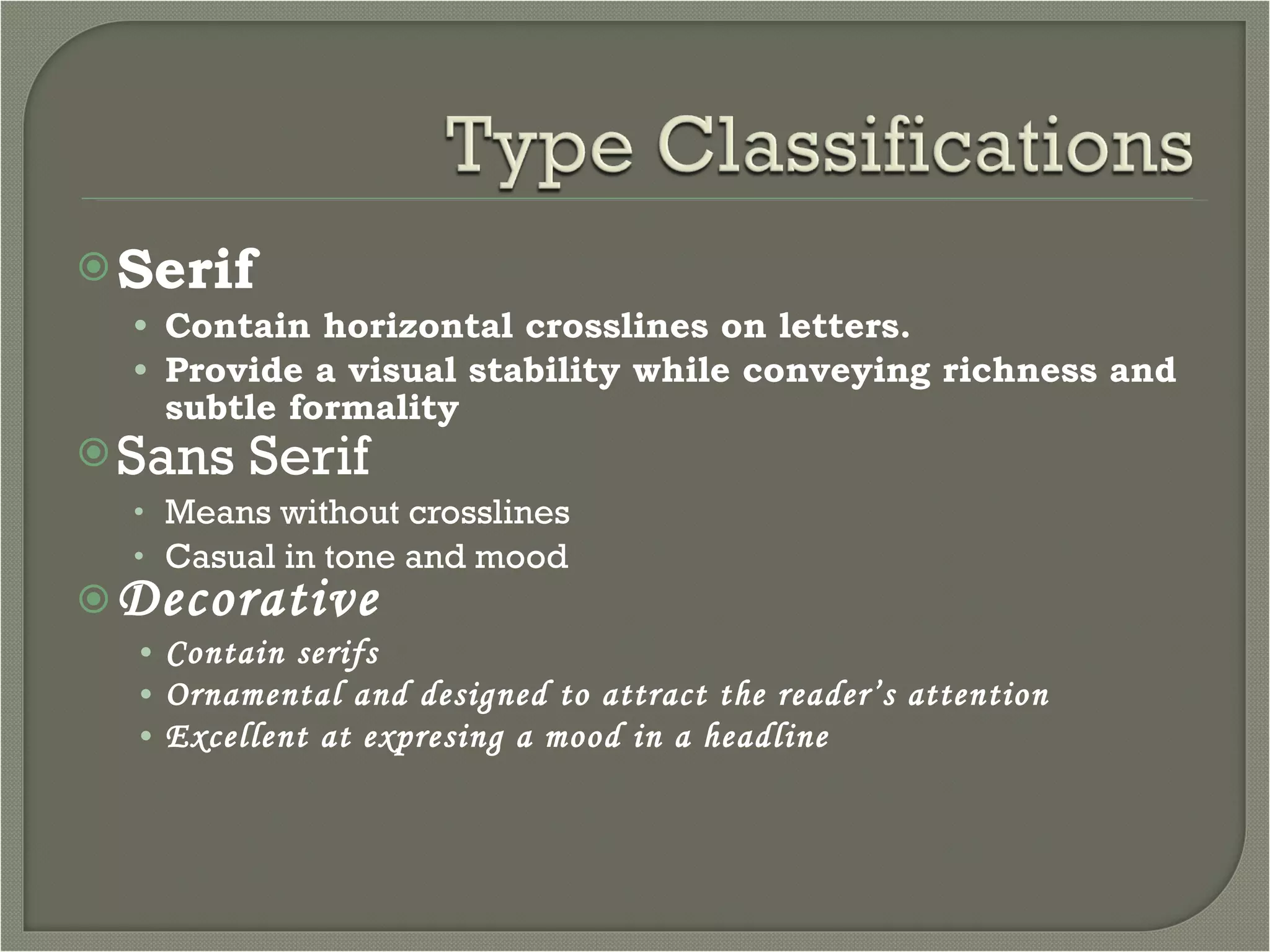
Serif  Contain horizontal crosslines on letters. Provide a visual stability while conveying richness and subtle formality Sans Serif Means without crosslines Casual in tone and mood Decorative Contain serifs Ornamental and designed to attract the reader’s attention Excellent at expresing a mood in a headline
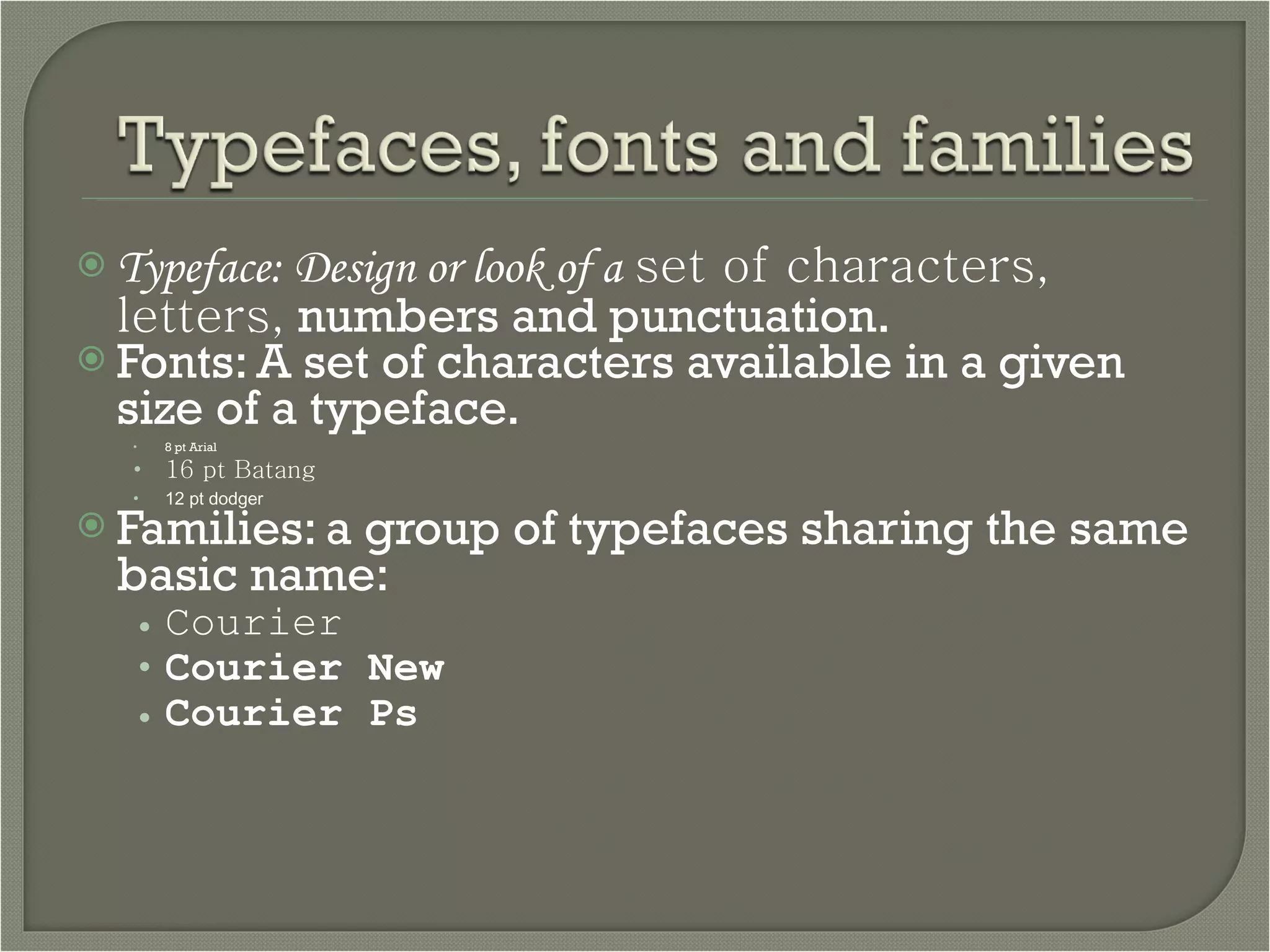
Typeface: Design or look of a   set of characters, letters,  numbers and punctuation. Fonts: A set of characters available in a given size of a typeface. 8 pt Arial 16 pt Batang 12 pt dodger Families: a group of typefaces sharing the same basic name: Courier Courier New Courier Ps
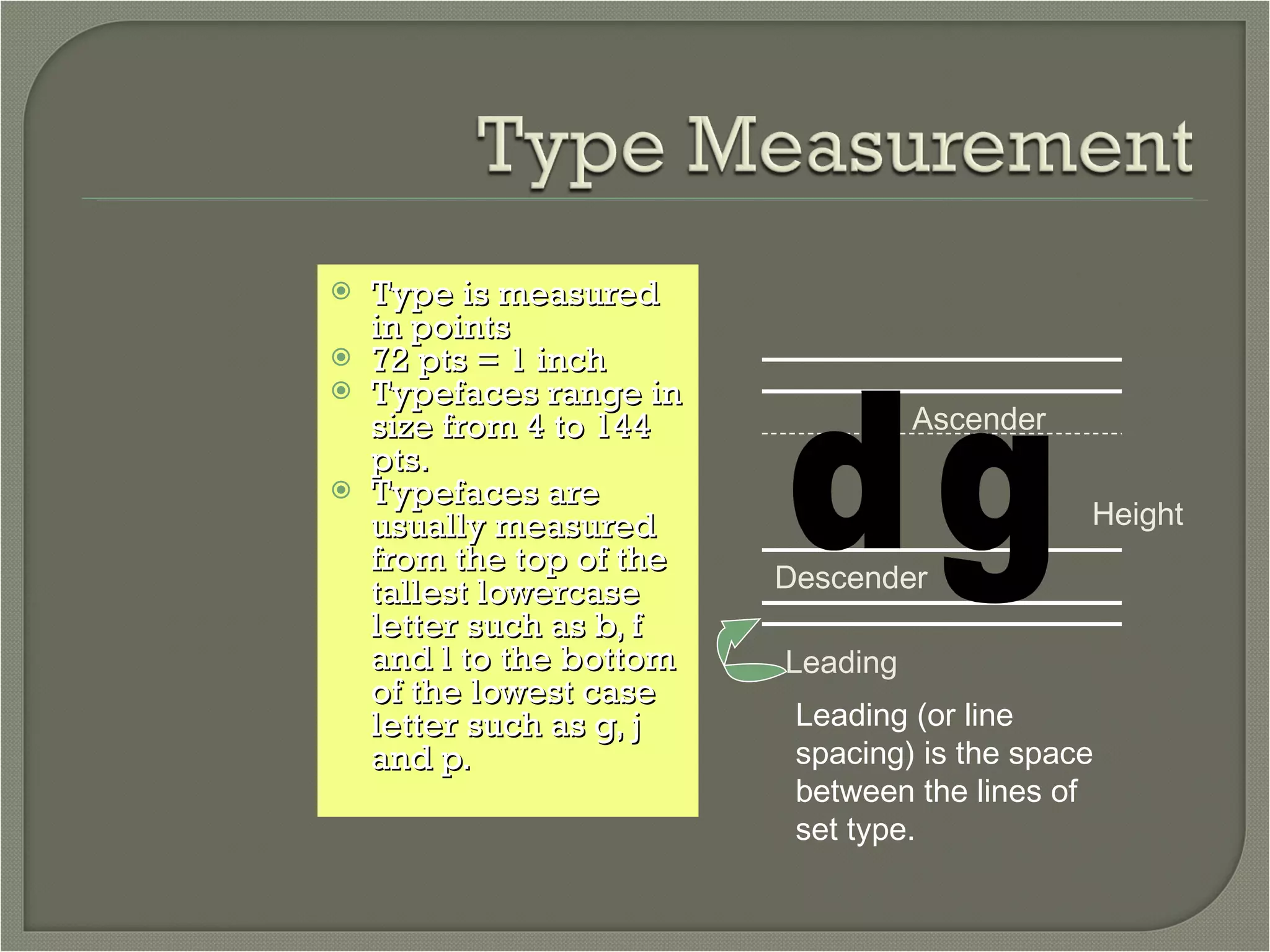
Type is measured in points 72 pts = 1 inch Typefaces range in size from 4 to 144 pts. Typefaces are usually measured from the top of the tallest lowercase letter such as b, f and l to the bottom of the lowest case letter such as g, j and p. d g Ascender Height Descender Leading Leading (or line spacing) is the space between the lines of set type.
Make a TYPE SPECIFICATION FORM Copy Block Size Leading Capitalization style Column Width Emphasis faces Copy Placement styles
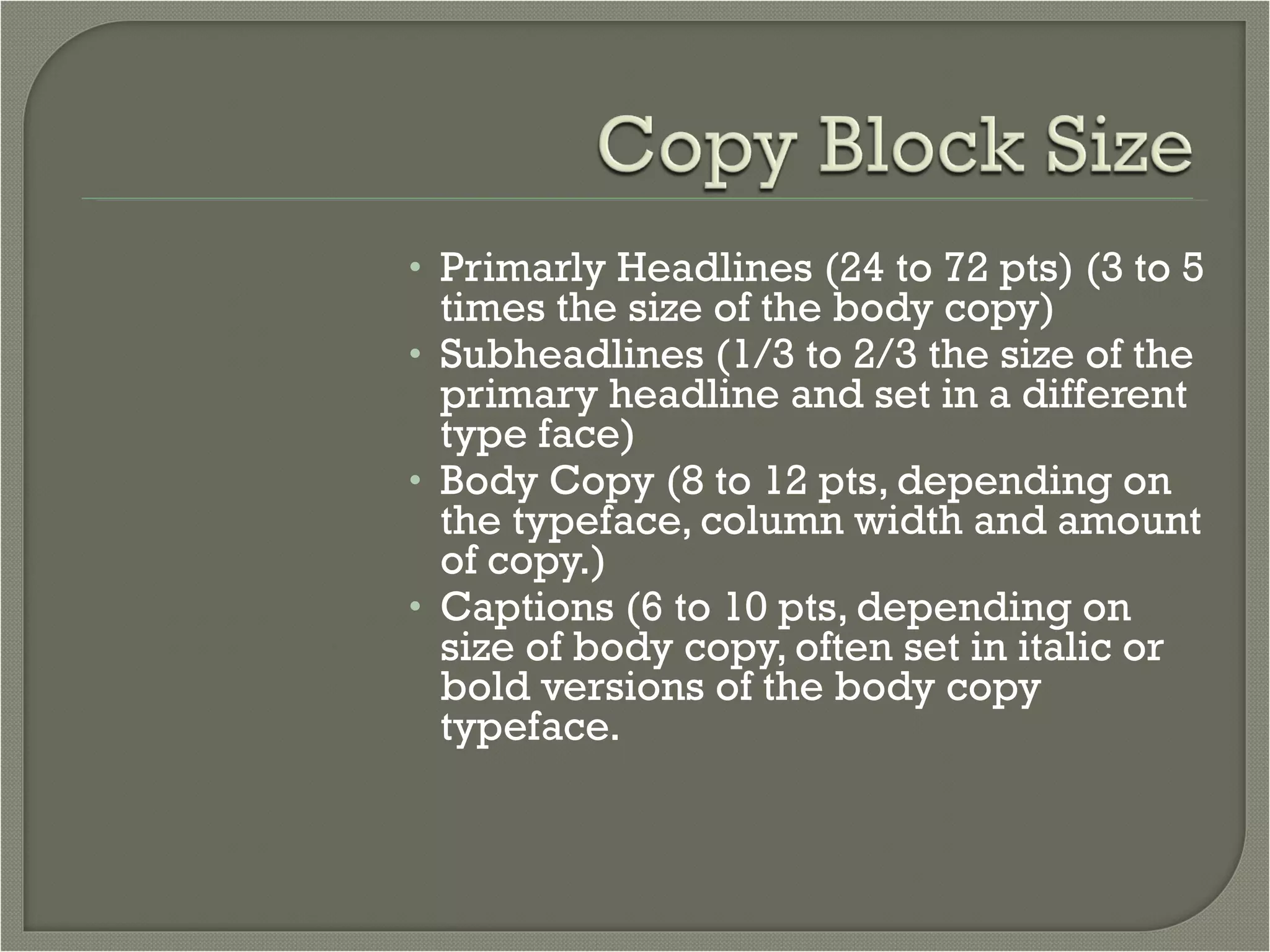
Primarly Headlines (24 to 72 pts) (3 to 5 times the size of the body copy) Subheadlines (1/3 to 2/3 the size of the primary headline and set in a different type face) Body Copy (8 to 12 pts, depending on the typeface, column width and amount of copy.) Captions (6 to 10 pts, depending on size of body copy, often set in italic or bold versions of the body copy typeface.
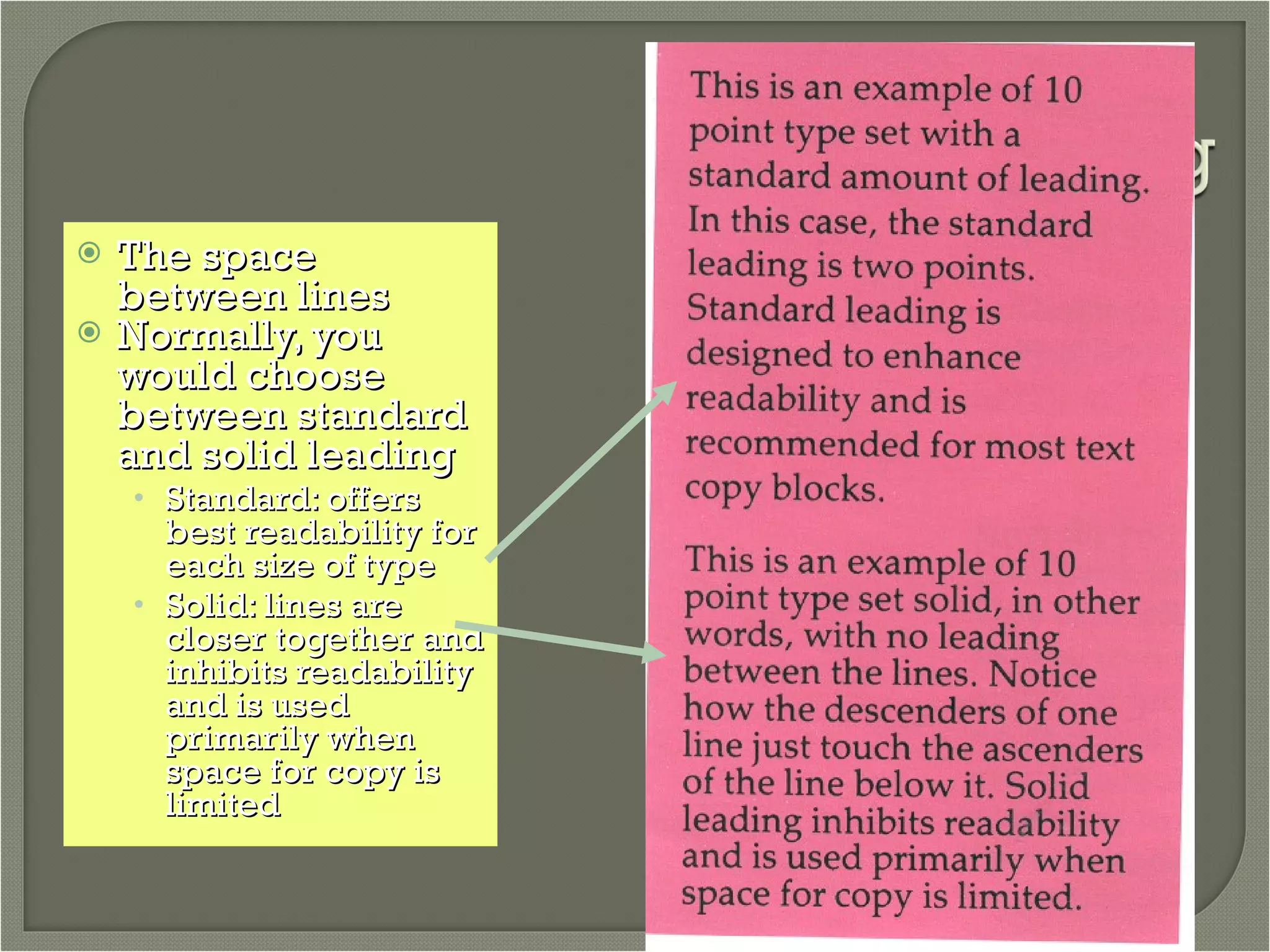
The space between lines Normally, you would choose between standard and solid leading Standard: offers best readability for each size of type Solid: lines are closer together and inhibits readability and is used primarily when space for copy is limited

Unit 13 Typography

  • 1.
    Readibility Letter spacingLeading or line spacing Column width Copy placement style Size of the typeface. Design Style Create a style file for the type to be used in each section of the book Mood Setting Pictures tell us the way things looked Layouts present a sense of order Words convey facts
  • 2.
    Serif Containhorizontal crosslines on letters. Provide a visual stability while conveying richness and subtle formality Sans Serif Means without crosslines Casual in tone and mood Decorative Contain serifs Ornamental and designed to attract the reader’s attention Excellent at expresing a mood in a headline
  • 3.
    Typeface: Design orlook of a set of characters, letters, numbers and punctuation. Fonts: A set of characters available in a given size of a typeface. 8 pt Arial 16 pt Batang 12 pt dodger Families: a group of typefaces sharing the same basic name: Courier Courier New Courier Ps
  • 4.
    Type is measuredin points 72 pts = 1 inch Typefaces range in size from 4 to 144 pts. Typefaces are usually measured from the top of the tallest lowercase letter such as b, f and l to the bottom of the lowest case letter such as g, j and p. d g Ascender Height Descender Leading Leading (or line spacing) is the space between the lines of set type.
  • 5.
    Make a TYPESPECIFICATION FORM Copy Block Size Leading Capitalization style Column Width Emphasis faces Copy Placement styles
  • 6.
    Primarly Headlines (24to 72 pts) (3 to 5 times the size of the body copy) Subheadlines (1/3 to 2/3 the size of the primary headline and set in a different type face) Body Copy (8 to 12 pts, depending on the typeface, column width and amount of copy.) Captions (6 to 10 pts, depending on size of body copy, often set in italic or bold versions of the body copy typeface.
  • 7.
    The space betweenlines Normally, you would choose between standard and solid leading Standard: offers best readability for each size of type Solid: lines are closer together and inhibits readability and is used primarily when space for copy is limited