+
Chapter 4
Active Aerobics: Level 2 of the
Physical Activity Pyramid
+
Vocabulary
 Active Aerobics
 Anaerobic
 Body Image
 Resting Heart Rate
 Self-Esteem
 Target Zone
+
What is Active Aerobics?
 Level 2 of Physical Activity Pyramid
 Vigorous enough to elevate your heart rate
into the target zone for cardiovascular
fitness.
 F=Should be done 3-6 days a week
 I=Moderate to vigorous
 T=20 or more minutes
+
What is Resting Heart Rate?
 When you are inactive, your heart beats about 60 to 80 times
per minute.
 Varies from person to person
 Not a good indicator of physical fitness
 Very fit athletes have resting heart rates as low as 35 to 50
beats per minute.
 Heredity affects heart rate as does age, body size, and health
status.
+
Target Zone
 Range of heart rates that creates
the best training.
+
Anaerobic
 When your heart rate goes
above the zone in active
aerobics.
 Shorter spurts of activity
requiring no oxygen.
+
Target Zone
 To calculate your target zone you need to know your maximum
heart rate and your resting heart rate.
 For middle school student, the maximum heart rate is 200 beats
per minute.
Type of Aerobic Exercise Typical Heart Rates for Teens
Light – working at a computer or
playing a violin.
Slightly above resting up to about
120 beats per minute (bpm) for
most teens.
Moderate - roughly equal to brisk
walking or yard work.
120 to 140 bpm for most teens
Vigorous (active aerobics) – faster
than brisk walking; equal to jogging
or aerobic dance.
140 to 180 bpm for most teens
Anaerobic – sprinting or swimming
very fast (too vigorous to be
aerobic)
180 bpm and above for teens
+ Target Heart Rate Zones for Teens by Age
Resting
Heart Rate
12 or
Younger
13
AGE
14 15 16 or older
60 or less 130-179 130-178 129-177 129-176 129-175
61-65 132-180 132-179 131-178 131-177 131-176
66-70 134-180 134-179 134-178 133-177 133-176
71-75 136-181 136-180 136-179 135-178 135-177
76-80 139-182 138-180 138-179 137-178 137-177
81-85 142-183 140-181 140-180 139-179 139-178
86+ 145-183 142-182 142-181 141-180 141-179
+
Fit or Fact
 The heart is a muscle. Physical activity makes the heart pump
faster and harder and helps it to become fit.
+
FITT formula for
Active Aerobics
 Frequency =Three to six days a week. One day off each week is good
 Intensity = Heart rate in the target zone. Depending on resting and maximal heart
rate, it’s approximately 140 to 18- bpm for teens.
 Time = 20 to 60 minutes. Fit people can exercise longer.
 Type = One that you enjoy the most and that you’ll do on a regular basis.
+
Active Aerobics
 May include many different kinds of activities. The KEY is
getting your HR into the THR Zone.
+
Anaerobics
 So vigorous that your body
cannot supply enough
oxygen to keep you going
for long periods of time.
 Such as when you swim fast
for 30 to 40 seconds.
 Anaerobic fitness is needed
to perform well in many
sports that require bursts of
anaerobic activity, but it’s
not necessary for good
health.
+
Fit or Fact
 Aerobic means “with oxygen.”
In aerobic activity, the body is
supplied with enough oxygen to
keep going for a long time.
 Anaerobic means “without
oxygen.” Anaerobic activity
refers to activities for which the
body cannot supply enough
oxygen to keep going for a long
time, such as sprinting.
+
Vocabulary
 Center of Gravity means the
center of your body weight.
 PACER is a test used to assess
your cardiovascular fitness. Part
of the Fitnessgram National
Physical Fitness Test and is a
fun way for teens to assess their
cardiovascular fitness.
 Stability is the ability of an
object to maintain its balance.
Important for success in many
physical activities.
+
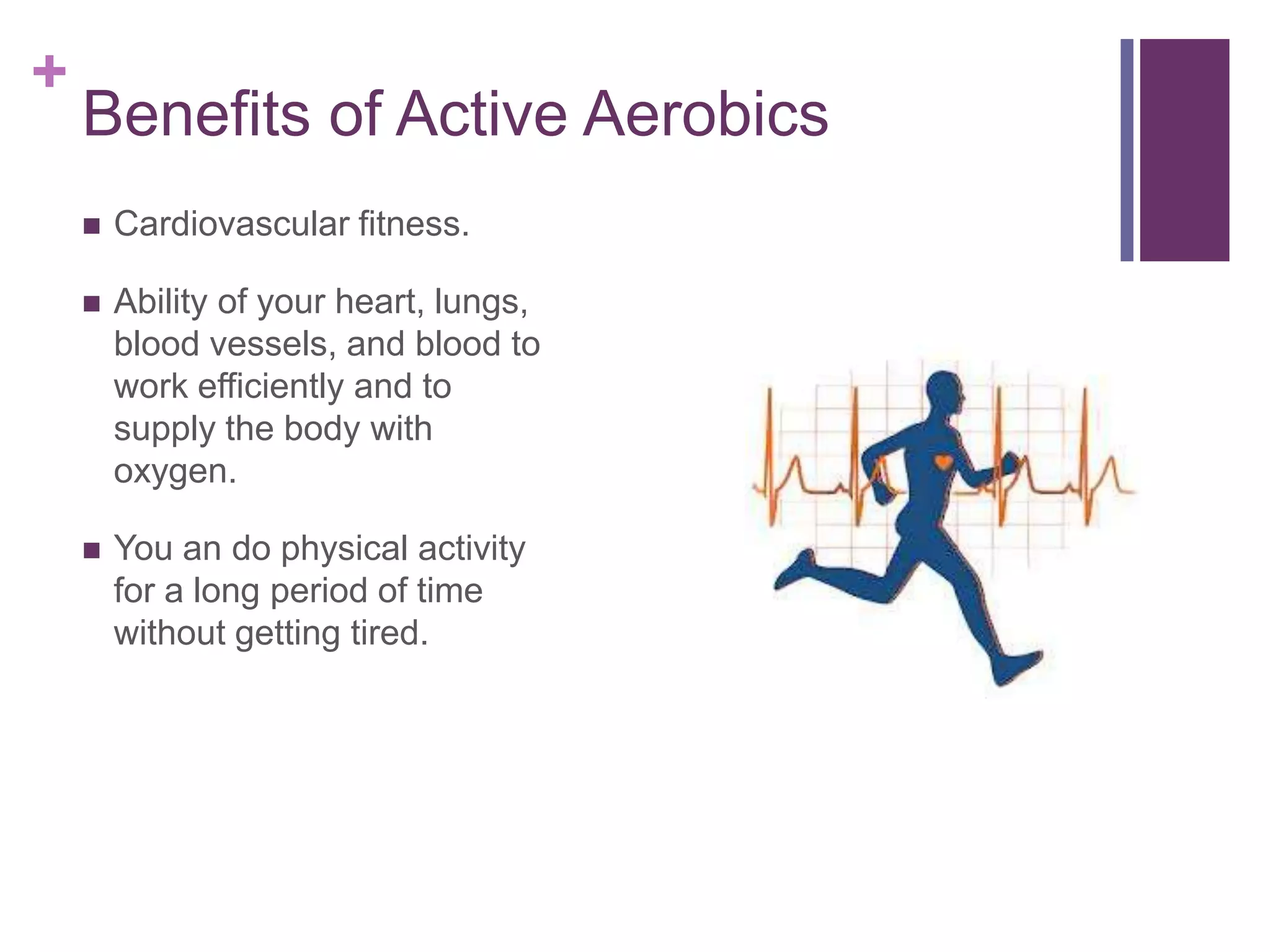
Benefits of Active Aerobics
 Cardiovascular fitness.
 Ability of your heart, lungs,
blood vessels, and blood to
work efficiently and to
supply the body with
oxygen.
 You an do physical activity
for a long period of time
without getting tired.
+
Pacer Test
 Stands for Progressive Aerobic Cardiovascular Endurance Run and
is a test for cardiovascular fitness.
 CD Player and a special tape or CD to perform the test.
 The objective of the test is to run back and forth across a 20 meter
distance as many times as you can.
+
How to do the Pacer Test
1. When you hear the beep- on the tape, run across the 20-
meter area and touch the line before the tape beeps again.
Turn around.
2. At the sound of the next beep, run back to the other side.
(Wait for the beep before running.) The beeps will come
faster and faster. The test is finished when you twice fail to
reach the opposite side before the beep.
3. Your score is the number of times you can run the 20-meter
distance before your test is finished.
+
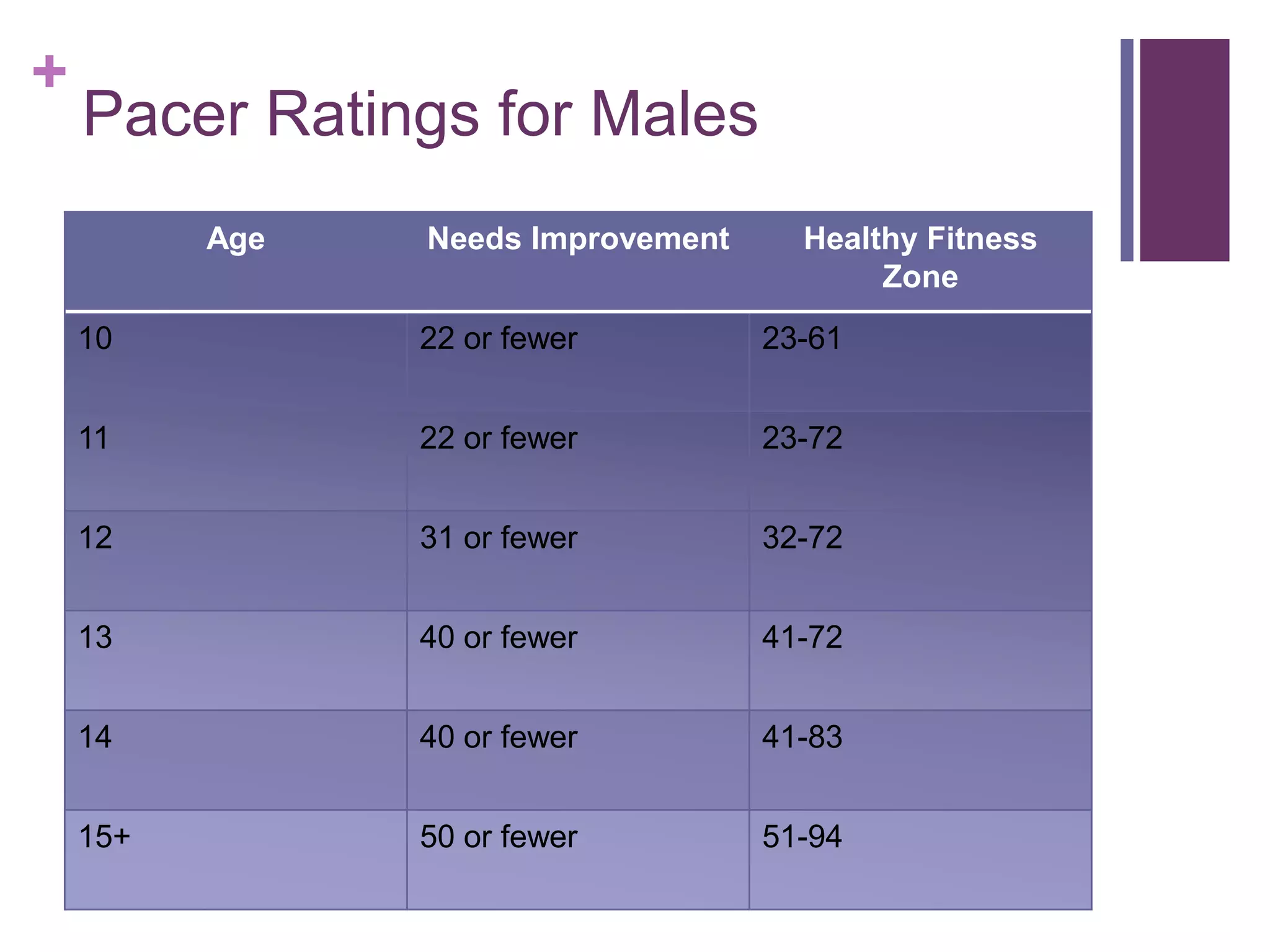
Pacer Ratings for Males
Age Needs Improvement Healthy Fitness
Zone
10 22 or fewer 23-61
11 22 or fewer 23-72
12 31 or fewer 32-72
13 40 or fewer 41-72
14 40 or fewer 41-83
15+ 50 or fewer 51-94
+
Pacer Ratings for Females
Age Needs Improvement Healthy Fitness
Zone
10 14 or fewer 15-41
11 14 or fewer 15-41
12 22 or fewer 23-41
13 22 or fewer 23-51
14 22 or fewer 23-51
15+ 22 or fewer 23-51

Chapter 4 fitness 4 life middle

  • 1.
    + Chapter 4 Active Aerobics:Level 2 of the Physical Activity Pyramid
  • 2.
    + Vocabulary  Active Aerobics Anaerobic  Body Image  Resting Heart Rate  Self-Esteem  Target Zone
  • 3.
    + What is ActiveAerobics?  Level 2 of Physical Activity Pyramid  Vigorous enough to elevate your heart rate into the target zone for cardiovascular fitness.  F=Should be done 3-6 days a week  I=Moderate to vigorous  T=20 or more minutes
  • 4.
    + What is RestingHeart Rate?  When you are inactive, your heart beats about 60 to 80 times per minute.  Varies from person to person  Not a good indicator of physical fitness  Very fit athletes have resting heart rates as low as 35 to 50 beats per minute.  Heredity affects heart rate as does age, body size, and health status.
  • 5.
    + Target Zone  Rangeof heart rates that creates the best training.
  • 6.
    + Anaerobic  When yourheart rate goes above the zone in active aerobics.  Shorter spurts of activity requiring no oxygen.
  • 7.
    + Target Zone  Tocalculate your target zone you need to know your maximum heart rate and your resting heart rate.  For middle school student, the maximum heart rate is 200 beats per minute. Type of Aerobic Exercise Typical Heart Rates for Teens Light – working at a computer or playing a violin. Slightly above resting up to about 120 beats per minute (bpm) for most teens. Moderate - roughly equal to brisk walking or yard work. 120 to 140 bpm for most teens Vigorous (active aerobics) – faster than brisk walking; equal to jogging or aerobic dance. 140 to 180 bpm for most teens Anaerobic – sprinting or swimming very fast (too vigorous to be aerobic) 180 bpm and above for teens
  • 8.
    + Target HeartRate Zones for Teens by Age Resting Heart Rate 12 or Younger 13 AGE 14 15 16 or older 60 or less 130-179 130-178 129-177 129-176 129-175 61-65 132-180 132-179 131-178 131-177 131-176 66-70 134-180 134-179 134-178 133-177 133-176 71-75 136-181 136-180 136-179 135-178 135-177 76-80 139-182 138-180 138-179 137-178 137-177 81-85 142-183 140-181 140-180 139-179 139-178 86+ 145-183 142-182 142-181 141-180 141-179
  • 9.
    + Fit or Fact The heart is a muscle. Physical activity makes the heart pump faster and harder and helps it to become fit.
  • 10.
    + FITT formula for ActiveAerobics  Frequency =Three to six days a week. One day off each week is good  Intensity = Heart rate in the target zone. Depending on resting and maximal heart rate, it’s approximately 140 to 18- bpm for teens.  Time = 20 to 60 minutes. Fit people can exercise longer.  Type = One that you enjoy the most and that you’ll do on a regular basis.
  • 11.
    + Active Aerobics  Mayinclude many different kinds of activities. The KEY is getting your HR into the THR Zone.
  • 12.
    + Anaerobics  So vigorousthat your body cannot supply enough oxygen to keep you going for long periods of time.  Such as when you swim fast for 30 to 40 seconds.  Anaerobic fitness is needed to perform well in many sports that require bursts of anaerobic activity, but it’s not necessary for good health.
  • 13.
    + Fit or Fact Aerobic means “with oxygen.” In aerobic activity, the body is supplied with enough oxygen to keep going for a long time.  Anaerobic means “without oxygen.” Anaerobic activity refers to activities for which the body cannot supply enough oxygen to keep going for a long time, such as sprinting.
  • 14.
    + Vocabulary  Center ofGravity means the center of your body weight.  PACER is a test used to assess your cardiovascular fitness. Part of the Fitnessgram National Physical Fitness Test and is a fun way for teens to assess their cardiovascular fitness.  Stability is the ability of an object to maintain its balance. Important for success in many physical activities.
  • 15.
    + Benefits of ActiveAerobics  Cardiovascular fitness.  Ability of your heart, lungs, blood vessels, and blood to work efficiently and to supply the body with oxygen.  You an do physical activity for a long period of time without getting tired.
  • 16.
    + Pacer Test  Standsfor Progressive Aerobic Cardiovascular Endurance Run and is a test for cardiovascular fitness.  CD Player and a special tape or CD to perform the test.  The objective of the test is to run back and forth across a 20 meter distance as many times as you can.
  • 17.
    + How to dothe Pacer Test 1. When you hear the beep- on the tape, run across the 20- meter area and touch the line before the tape beeps again. Turn around. 2. At the sound of the next beep, run back to the other side. (Wait for the beep before running.) The beeps will come faster and faster. The test is finished when you twice fail to reach the opposite side before the beep. 3. Your score is the number of times you can run the 20-meter distance before your test is finished.
  • 18.
    + Pacer Ratings forMales Age Needs Improvement Healthy Fitness Zone 10 22 or fewer 23-61 11 22 or fewer 23-72 12 31 or fewer 32-72 13 40 or fewer 41-72 14 40 or fewer 41-83 15+ 50 or fewer 51-94
  • 19.
    + Pacer Ratings forFemales Age Needs Improvement Healthy Fitness Zone 10 14 or fewer 15-41 11 14 or fewer 15-41 12 22 or fewer 23-41 13 22 or fewer 23-51 14 22 or fewer 23-51 15+ 22 or fewer 23-51