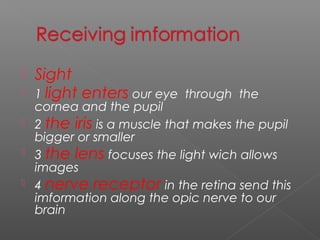
 Sight
 1 light enters our eye through the
cornea and the pupil
 2 the iris is a muscle that makes the pupil
bigger or smaller
 3 the lens focuses the light wich allows
images
 4 nerve receptor in the retina send this
imformation along the opic nerve to our
brain
 Hearing
 1 sound waves enter our enter our ear
through the auditory canal and make the
eardrum vibrate
 2 this vibration causes the three small
bones in our middle ear to vibrate
 when these vibrations 3 the colchea
are transformed into electrical signals
 4 the auditory nerve sends these
signals to our brain
 Smell and taste
 Our sense smell detects chemical
in the air thorought our notrils the
nerve receptors send this
imformation along the olfatory
nerve to our bbrain
 The receptors detect diferent
tastes bitter sour salty and sweet
 Touch
 The dermis contains nerves vesels these
nerves detect sensations such as
temperature and send this imformation
to our brain
 The cental nervous system is made up of two
parts the brain and the spial cord
 The brain is protected by the cranium o skull
 The brain stem controls involuntary movements such
as breathing digestion or the beating of our heart
 Spinal cord our protected by the vertebrae and
controls reflex actions
 The cerebrum is the biggest part of our brain it controls
thoughtsemotions language and beaviour it also controls
our voluntary movements
 The cerebellum controls balance movement
and coordination
Infecttious diseases are caused by hamful
organisms called pathogens
Some bacteria cause tetanus
Infectious diseases spread easily from one
person to another if someone coughs o sneezes
vithout covering his moutch or nose pathogens
can be nhaled by another person
Malaria is a cammon tropical diase transmitedby
mosquitoe
Salmonella is transmited though contaminados
foods suf a egg or chikent
 Allergy is a reaction that some people
have when they come into contact witch
subtances
 Cancer is another non infectious diseases
in wich the body cells begin to develop
 Heart disease lifestyle such has eating
fast food
 Mental diseases such asdepression and
degenerative conditions
 Diabetes is generally a lifelong illnes that
involve hight amounts insuling
 Eat five times a day three meals breakfas
lunch dinner
 Do exercise it is importantto do exercise
regularly this might involve doins sport
 Sleep enought when we sleep the body
can repairitsell and grow and sleep 11
hours
 Keep clean we was our body to remove
dirt bacteria and sweat
prevention is better than cure
regular check ups and vaccinations will
protect you from certain diseases
Game over computer games a video
games but the harmful if you play them
to ofteen
Say no alcohol and tabaco cause serious
problem to the brain
 Advancesin meddicine 1798
vaccines were discovered 1818 lovis
partvr created he first vaccinate
renicillim alexander fleming
 Diagnosis of illneses diagnosis is the act
ofidentifyng and illnes symtoms and test
 Treatment of illneses alexander
fleming made accidental discovery he
niticed that when mould

FIN

Unit 1

  • 5.
     Sight  1light enters our eye through the cornea and the pupil  2 the iris is a muscle that makes the pupil bigger or smaller  3 the lens focuses the light wich allows images  4 nerve receptor in the retina send this imformation along the opic nerve to our brain
  • 6.
     Hearing  1sound waves enter our enter our ear through the auditory canal and make the eardrum vibrate  2 this vibration causes the three small bones in our middle ear to vibrate  when these vibrations 3 the colchea are transformed into electrical signals  4 the auditory nerve sends these signals to our brain
  • 7.
     Smell andtaste  Our sense smell detects chemical in the air thorought our notrils the nerve receptors send this imformation along the olfatory nerve to our bbrain  The receptors detect diferent tastes bitter sour salty and sweet
  • 8.
     Touch  Thedermis contains nerves vesels these nerves detect sensations such as temperature and send this imformation to our brain
  • 9.
     The centalnervous system is made up of two parts the brain and the spial cord  The brain is protected by the cranium o skull  The brain stem controls involuntary movements such as breathing digestion or the beating of our heart  Spinal cord our protected by the vertebrae and controls reflex actions  The cerebrum is the biggest part of our brain it controls thoughtsemotions language and beaviour it also controls our voluntary movements  The cerebellum controls balance movement and coordination
  • 11.
    Infecttious diseases arecaused by hamful organisms called pathogens Some bacteria cause tetanus Infectious diseases spread easily from one person to another if someone coughs o sneezes vithout covering his moutch or nose pathogens can be nhaled by another person Malaria is a cammon tropical diase transmitedby mosquitoe Salmonella is transmited though contaminados foods suf a egg or chikent
  • 12.
     Allergy isa reaction that some people have when they come into contact witch subtances  Cancer is another non infectious diseases in wich the body cells begin to develop  Heart disease lifestyle such has eating fast food  Mental diseases such asdepression and degenerative conditions  Diabetes is generally a lifelong illnes that involve hight amounts insuling
  • 13.
     Eat fivetimes a day three meals breakfas lunch dinner  Do exercise it is importantto do exercise regularly this might involve doins sport  Sleep enought when we sleep the body can repairitsell and grow and sleep 11 hours  Keep clean we was our body to remove dirt bacteria and sweat
  • 14.
    prevention is betterthan cure regular check ups and vaccinations will protect you from certain diseases Game over computer games a video games but the harmful if you play them to ofteen Say no alcohol and tabaco cause serious problem to the brain
  • 15.
     Advancesin meddicine1798 vaccines were discovered 1818 lovis partvr created he first vaccinate renicillim alexander fleming  Diagnosis of illneses diagnosis is the act ofidentifyng and illnes symtoms and test  Treatment of illneses alexander fleming made accidental discovery he niticed that when mould
  • 16.