natural
Teacher: Merche
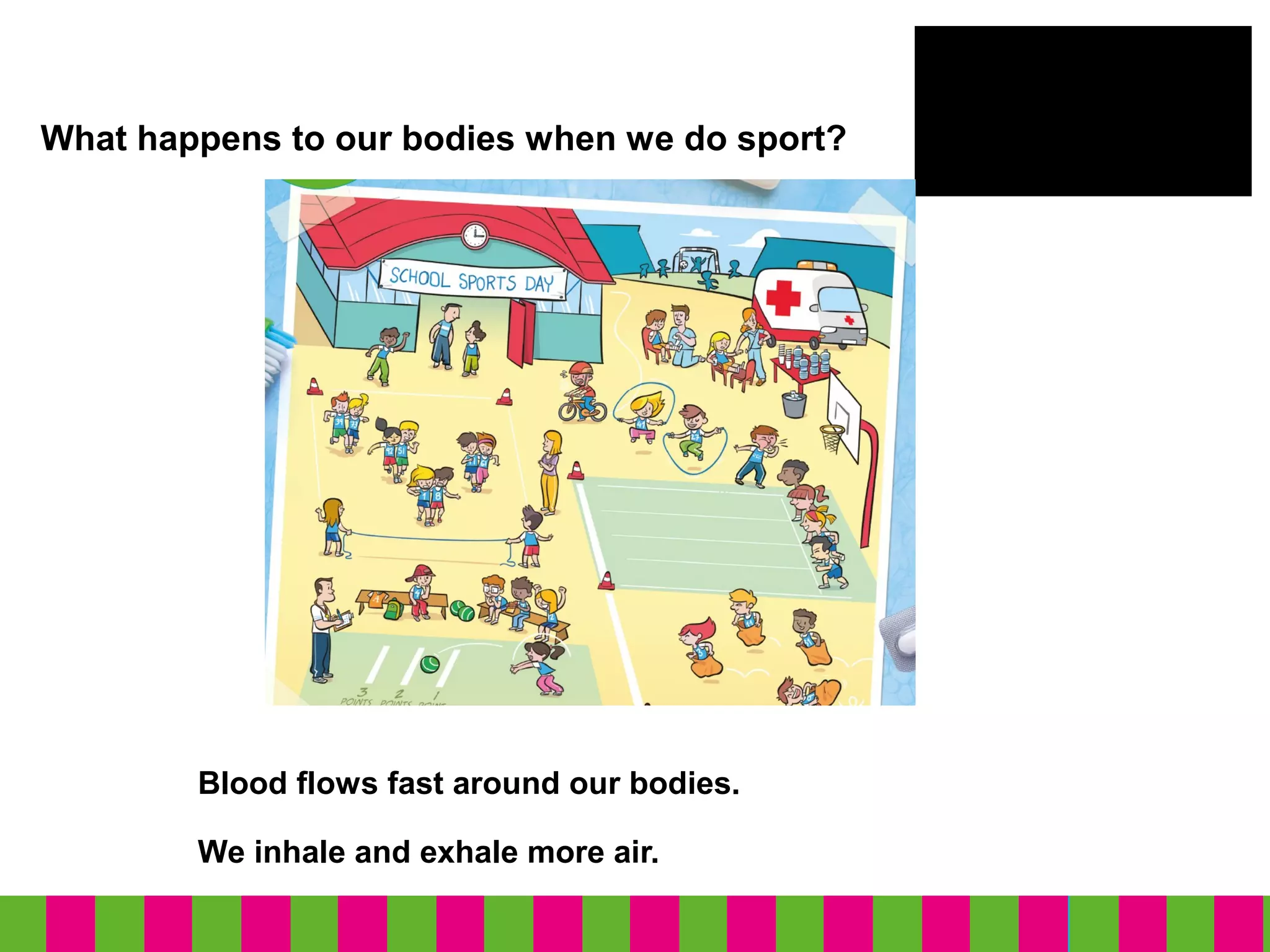
What happens to our bodies when we do sport?
We inhale and exhale more air.
Blood flows fast around our bodies.
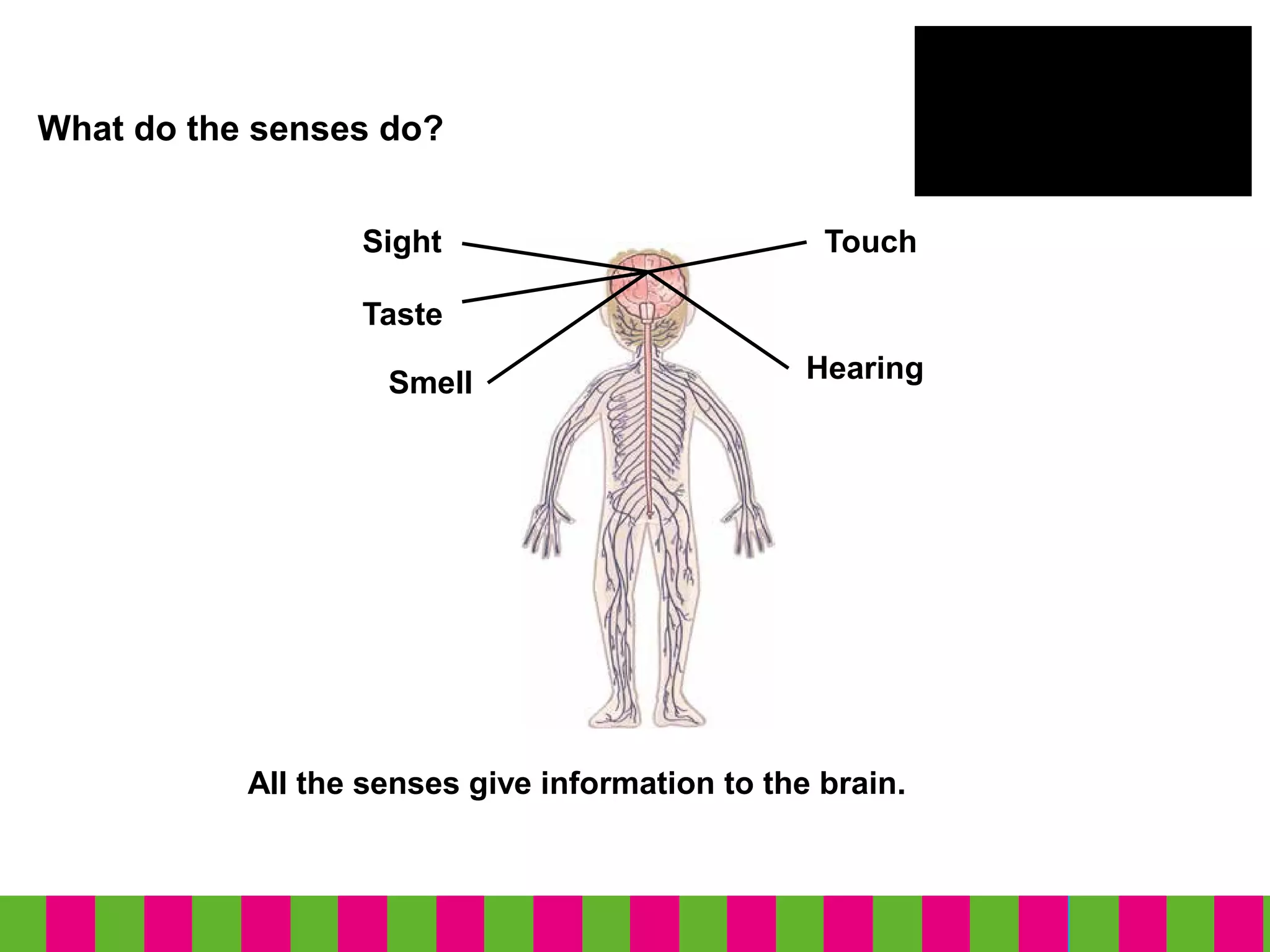
What do the senses do?
All the senses give information to the brain.
Sight
Taste
HearingSmell
Touch
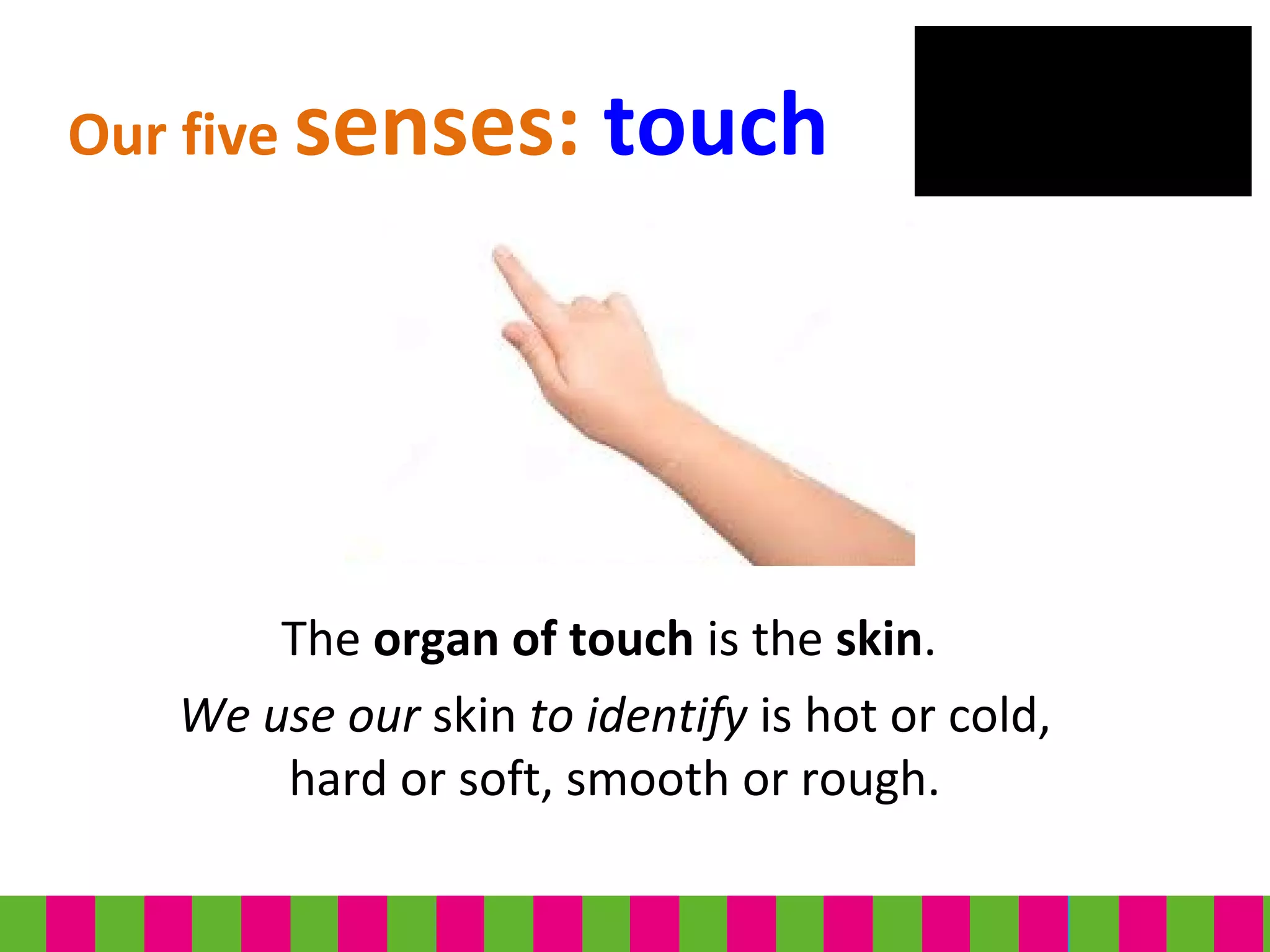
The organ of touch is the skin.
We use our skin to identify is hot or cold,
hard or soft, smooth or rough.
Our five senses: touch
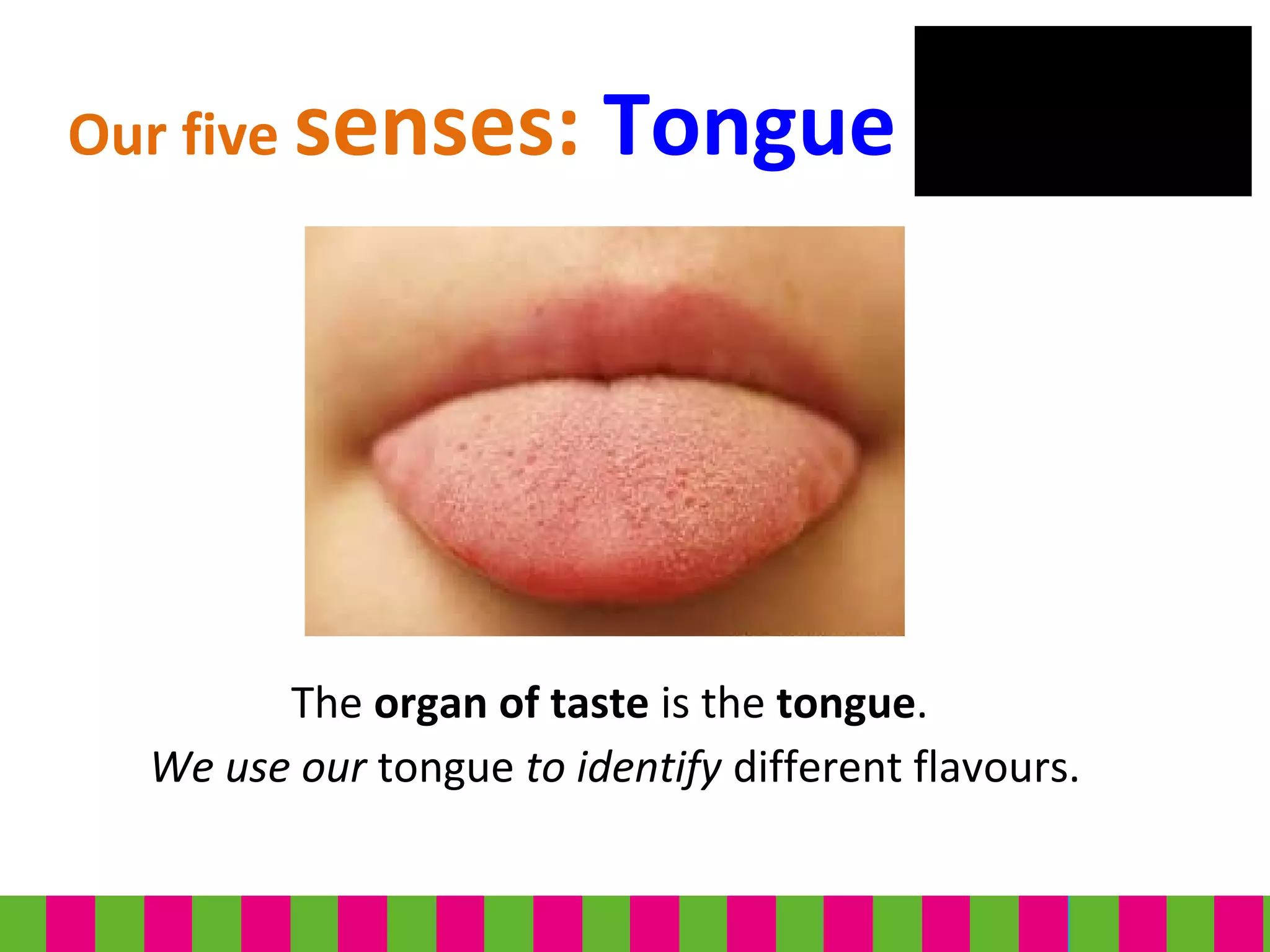
The organ of taste is the tongue.
We use our tongue to identify different flavours.
Our five senses: Tongue
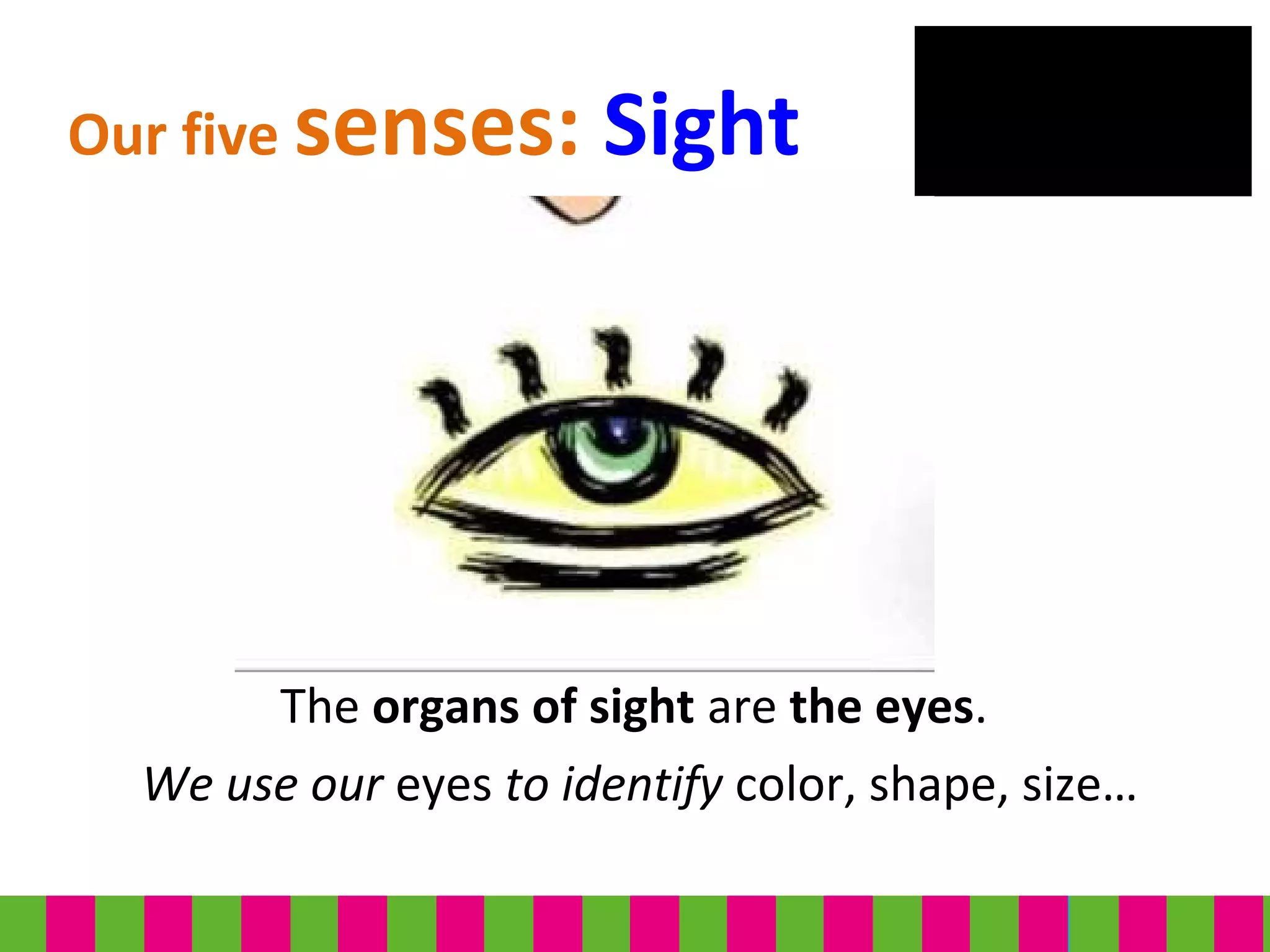
The organs of sight are the eyes.
We use our eyes to identify color, shape, size…
Our five senses: Sight
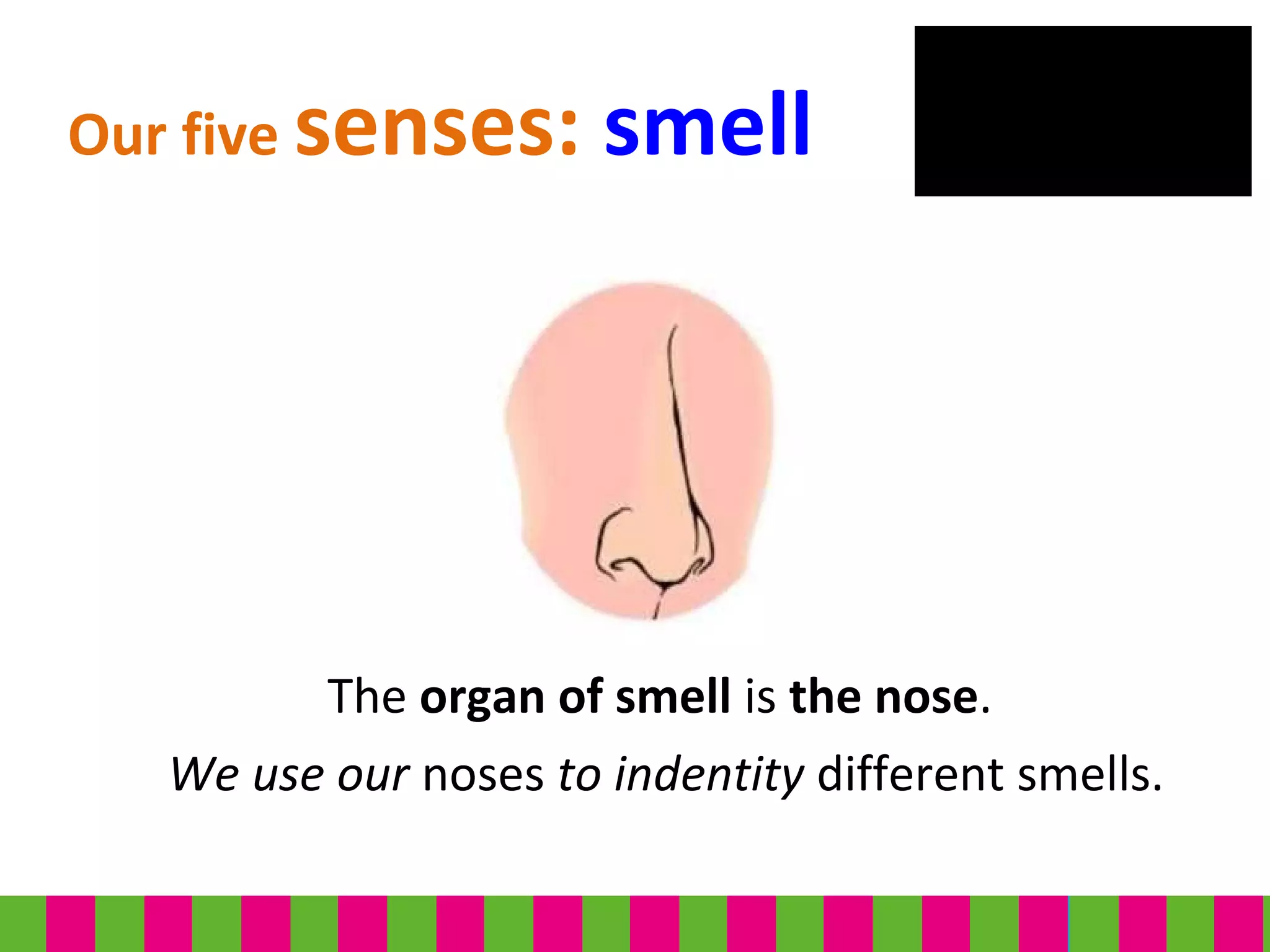
The organ of smell is the nose.
We use our noses to indentity different smells.
Our five senses: smell
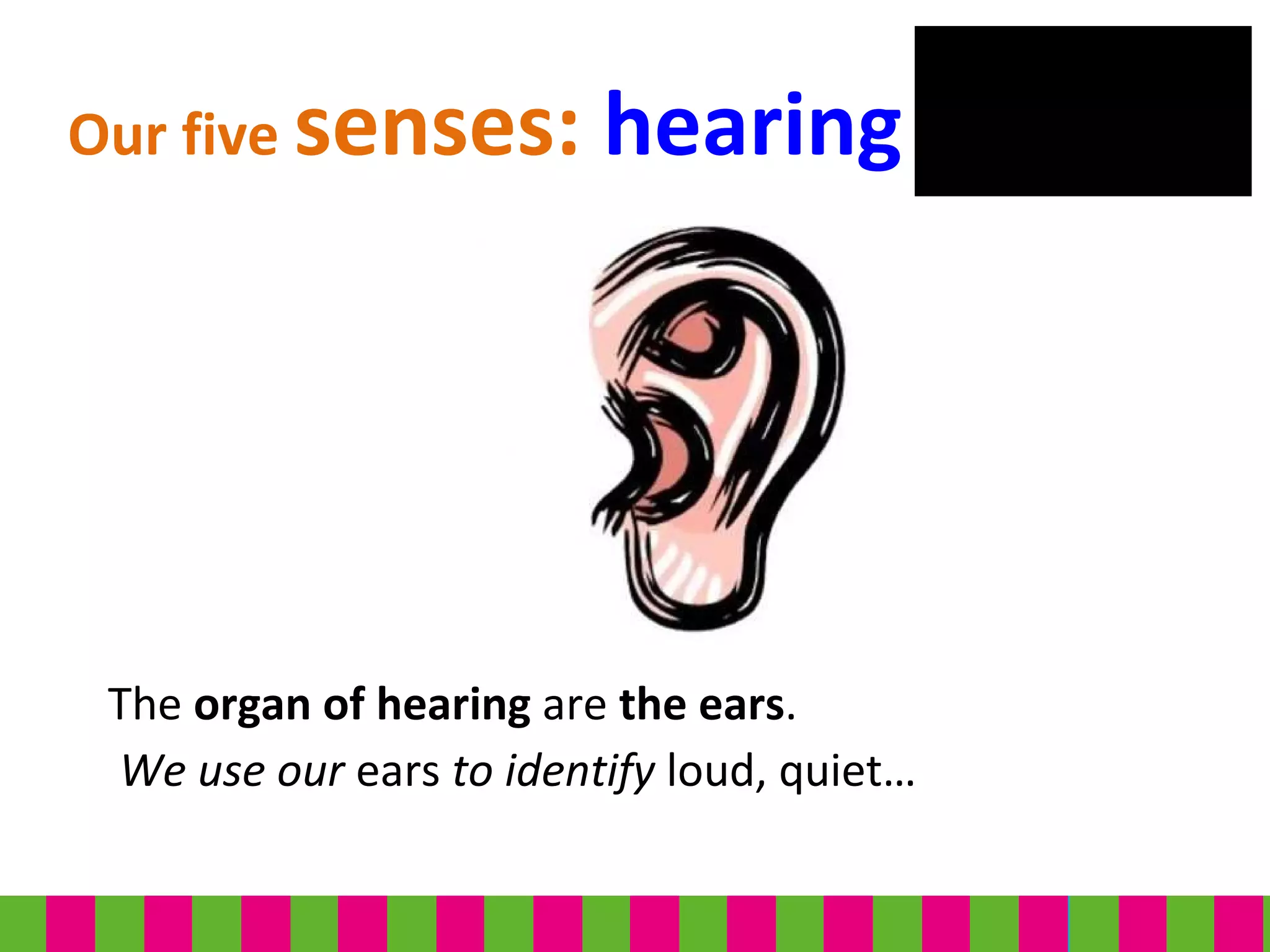
The organ of hearing are the ears.
We use our ears to identify loud, quiet…
Our five senses: hearing
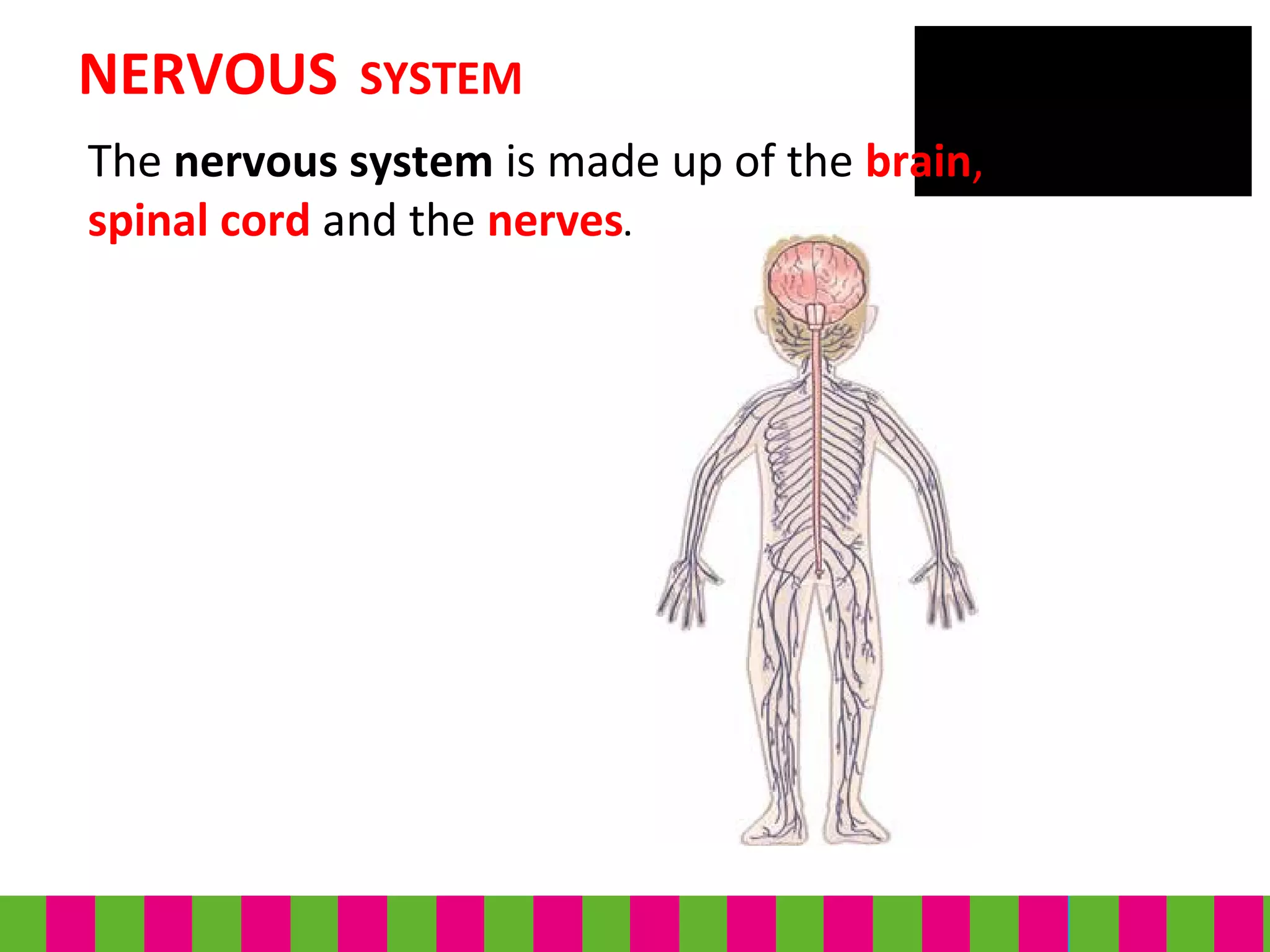
The nervous system is made up of the brain, the
spinal cord and the nerves.
NERVOUS SYSTEM
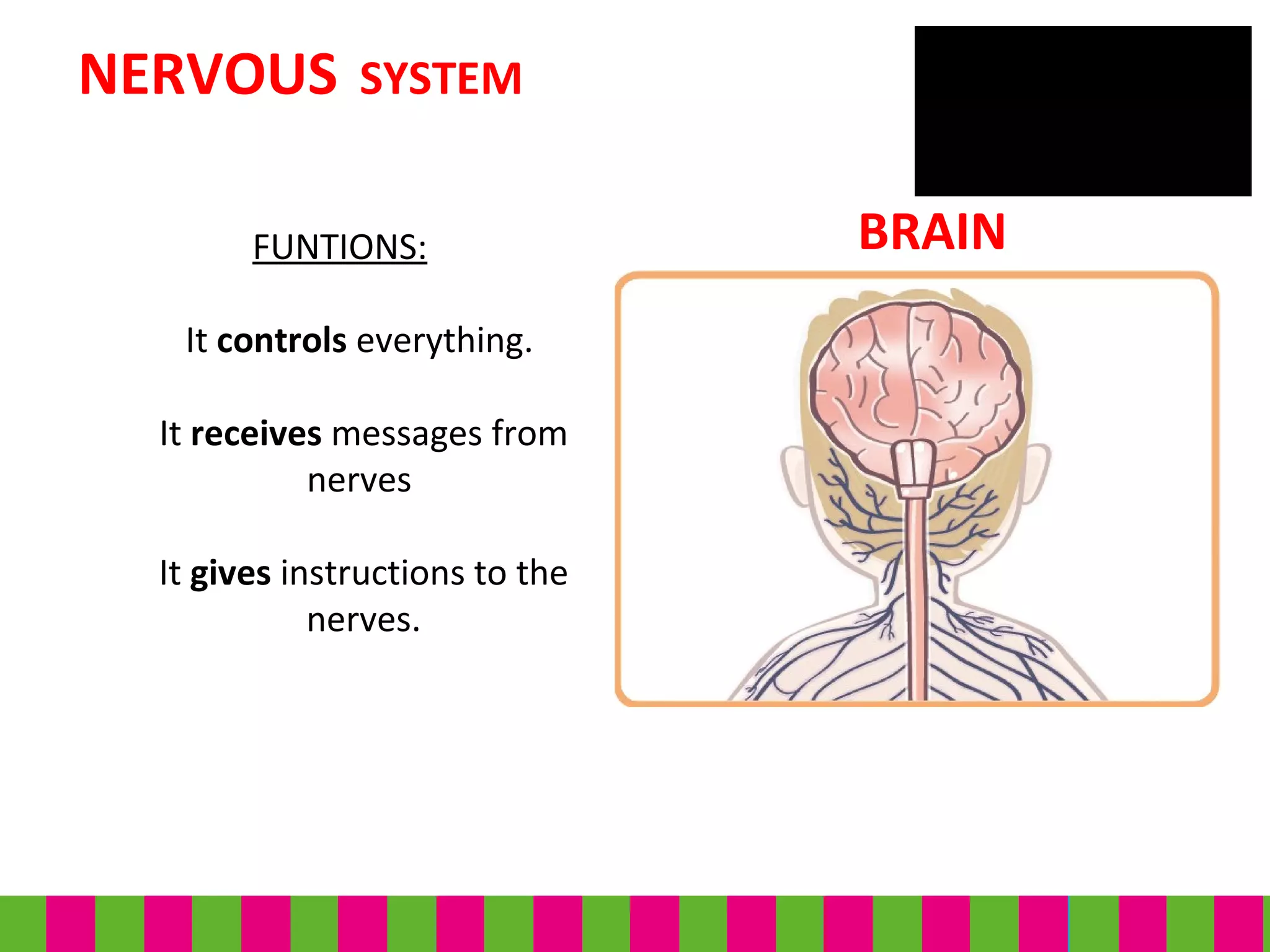
FUNTIONS:
It controls everything.
It receives messages from
nerves
It gives instructions to the
nerves.
NERVOUS SYSTEM
BRAIN
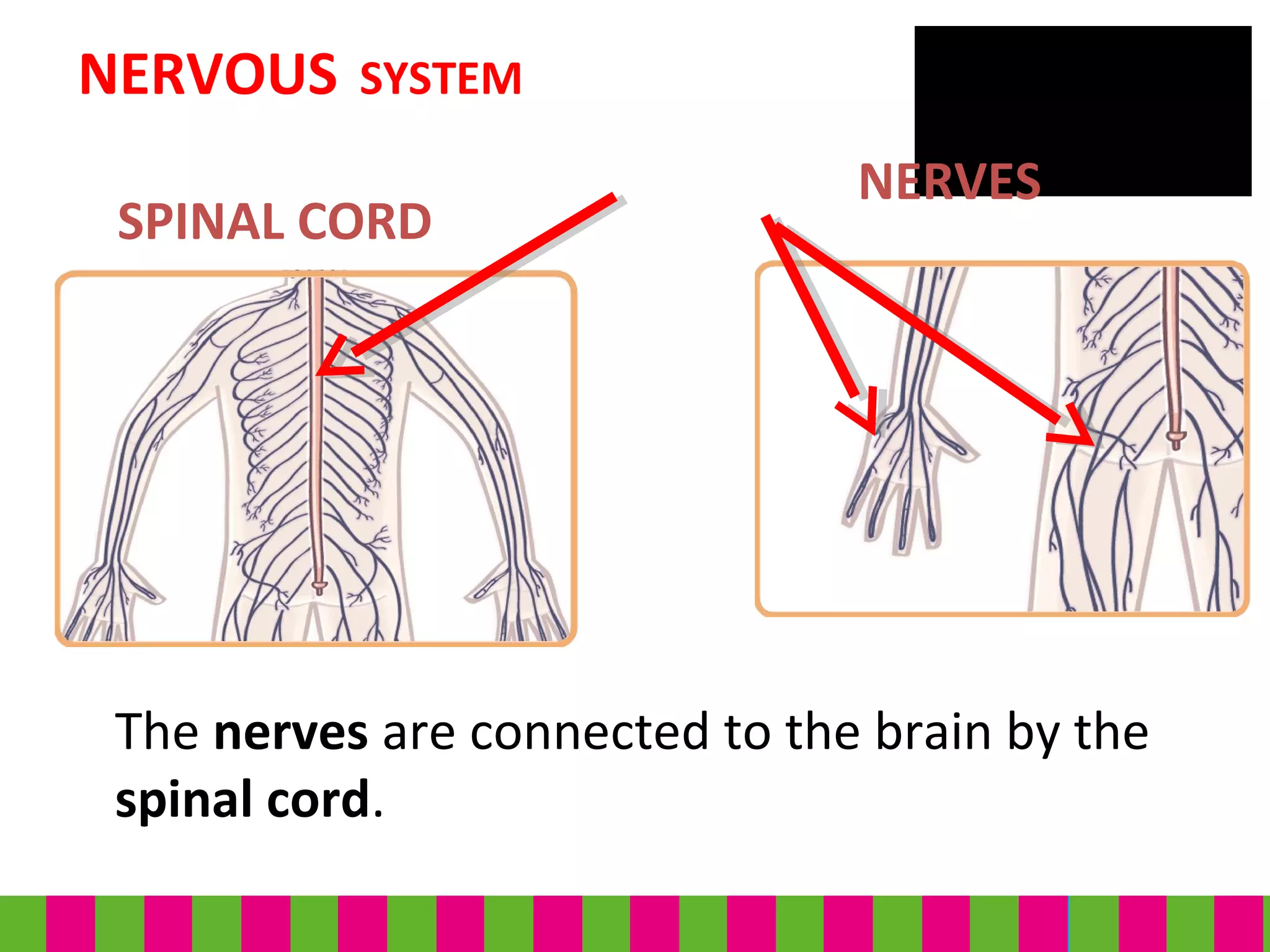
NERVOUS SYSTEM
NERVES
The nerves are connected to the brain by the
spinal cord.
SPINAL CORD
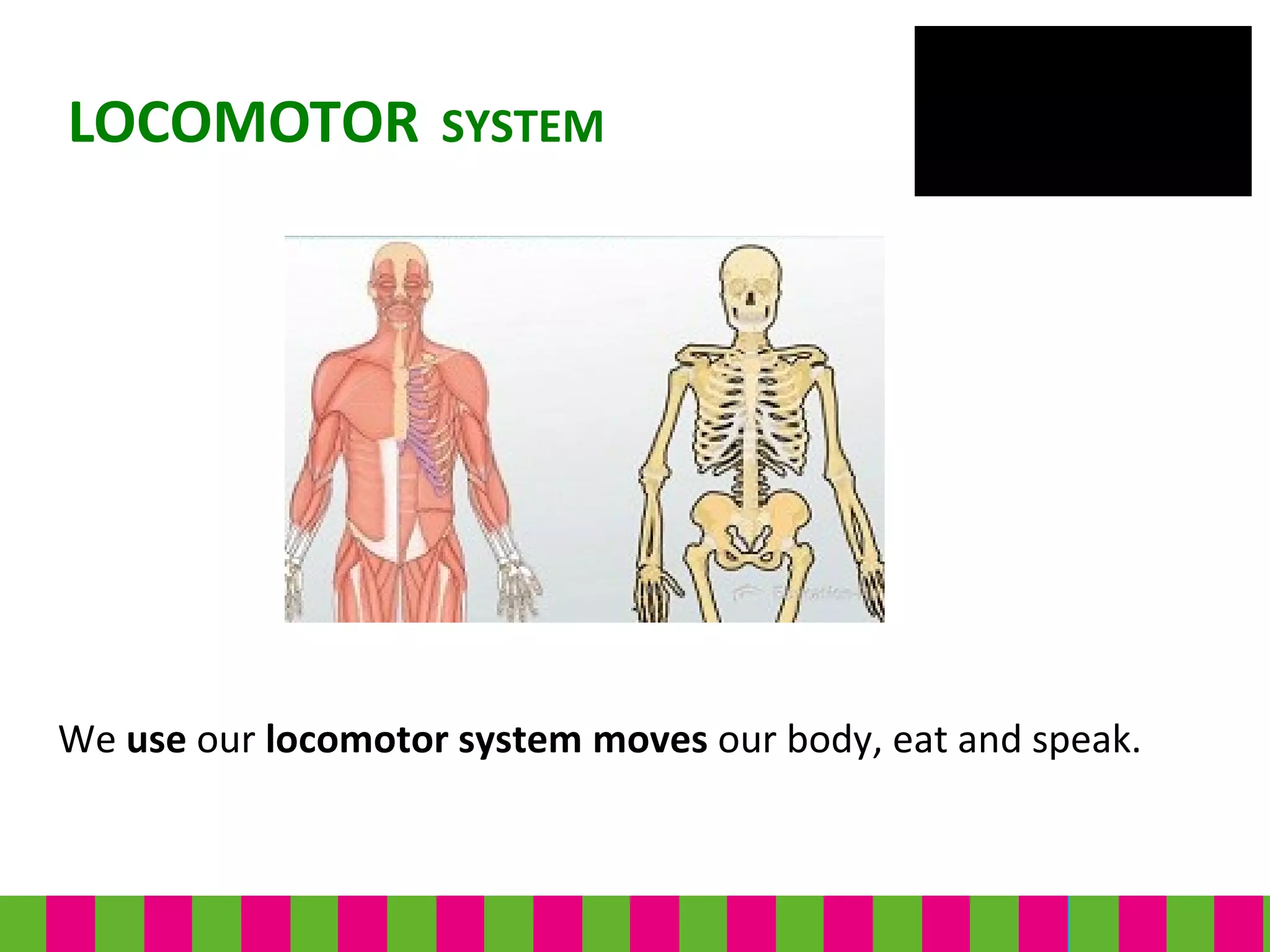
We use our locomotor system moves our body, eat and speak.
LOCOMOTOR SYSTEM
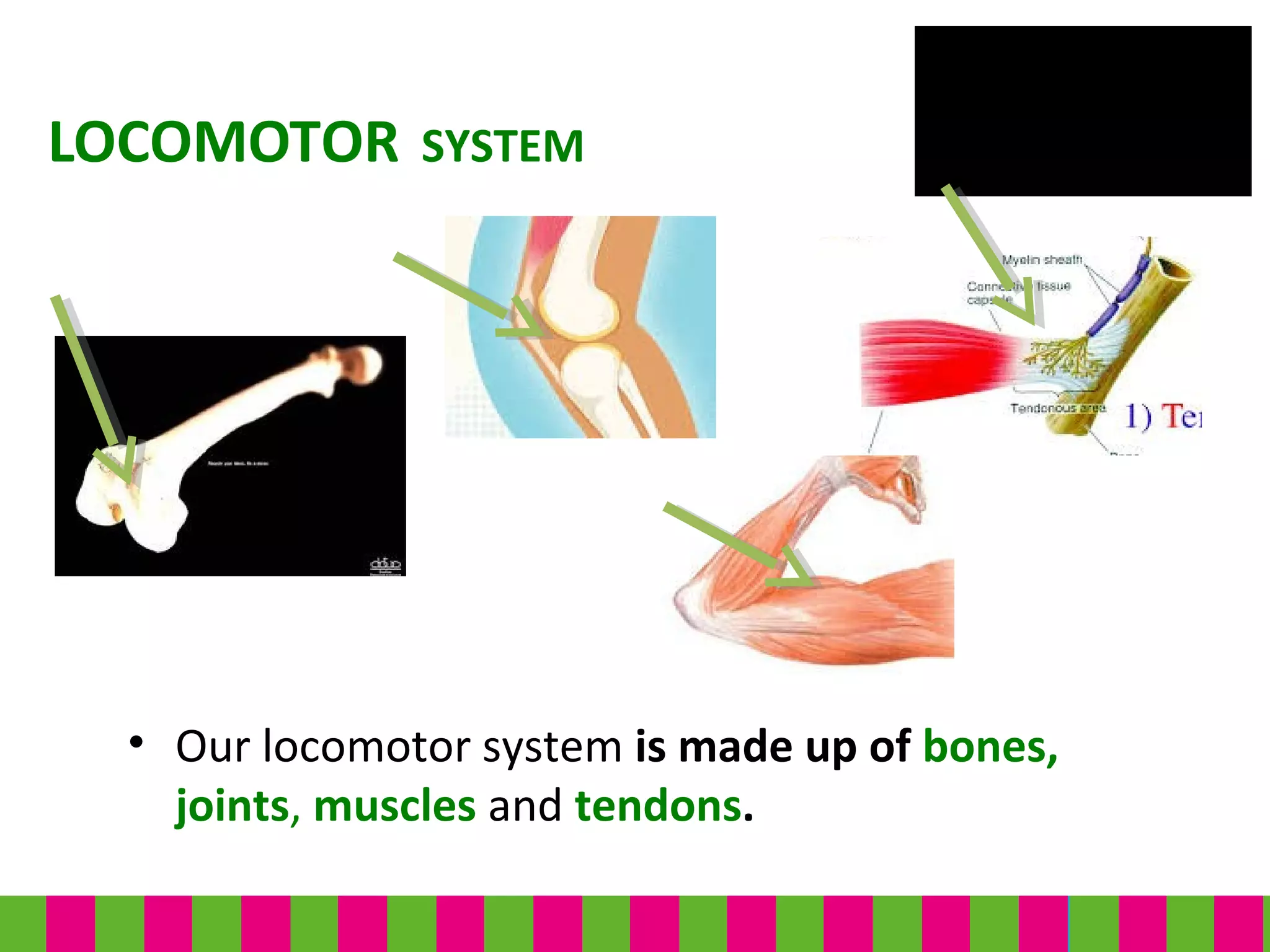
• Our locomotor system is made up of bones,
joints, muscles and tendons.
LOCOMOTOR SYSTEM
Funtions:
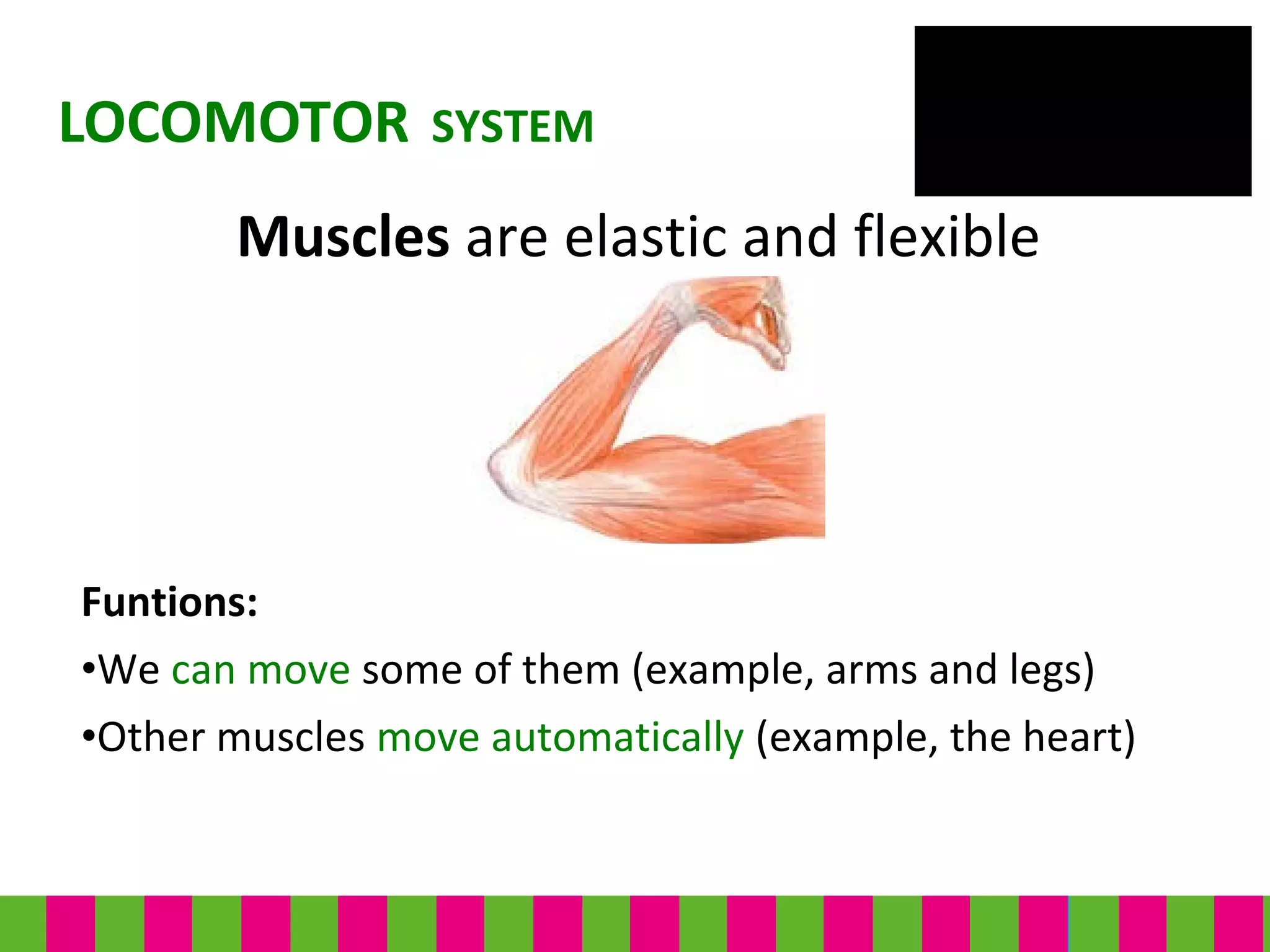
•We can move some of them (example, arms and legs)
•Other muscles move automatically (example, the heart)
LOCOMOTOR SYSTEM
Muscles are elastic and flexible
Funtions:
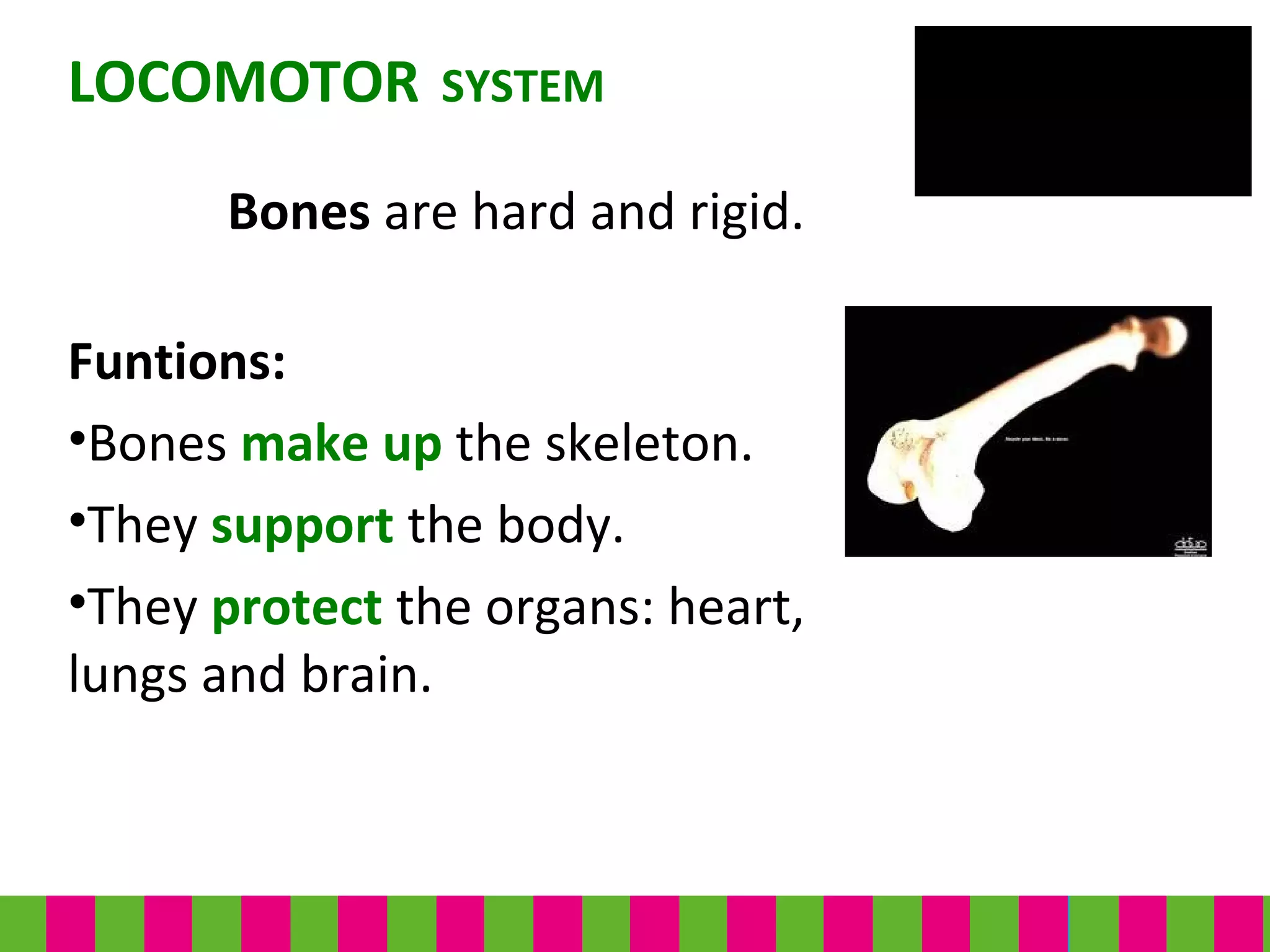
•Bones make up the skeleton.
•They support the body.
•They protect the organs: heart,
lungs and brain.
LOCOMOTOR SYSTEM
Bones are hard and rigid.
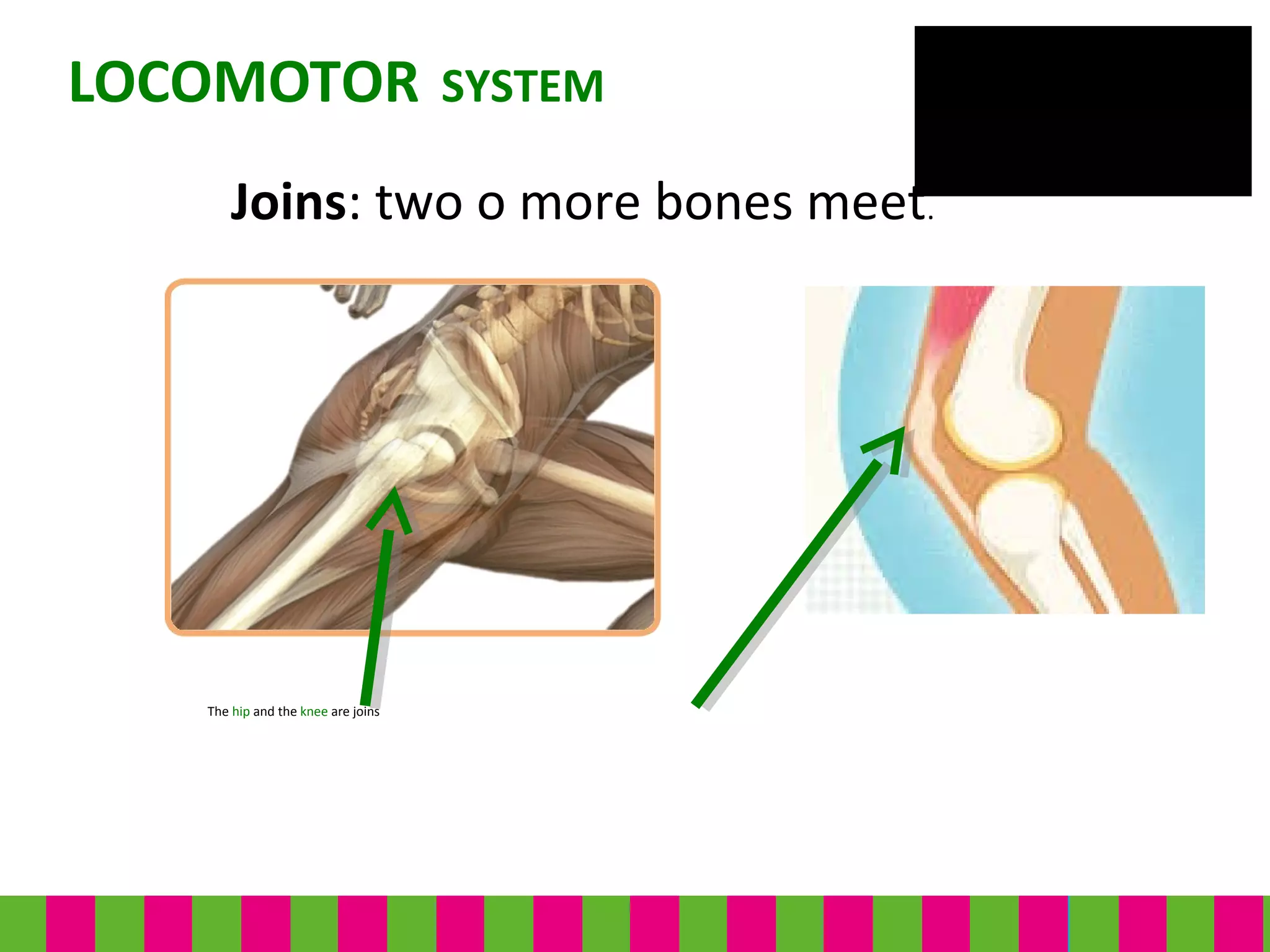
The hip and the knee are joins
LOCOMOTOR SYSTEM
Joins: two o more bones meet.
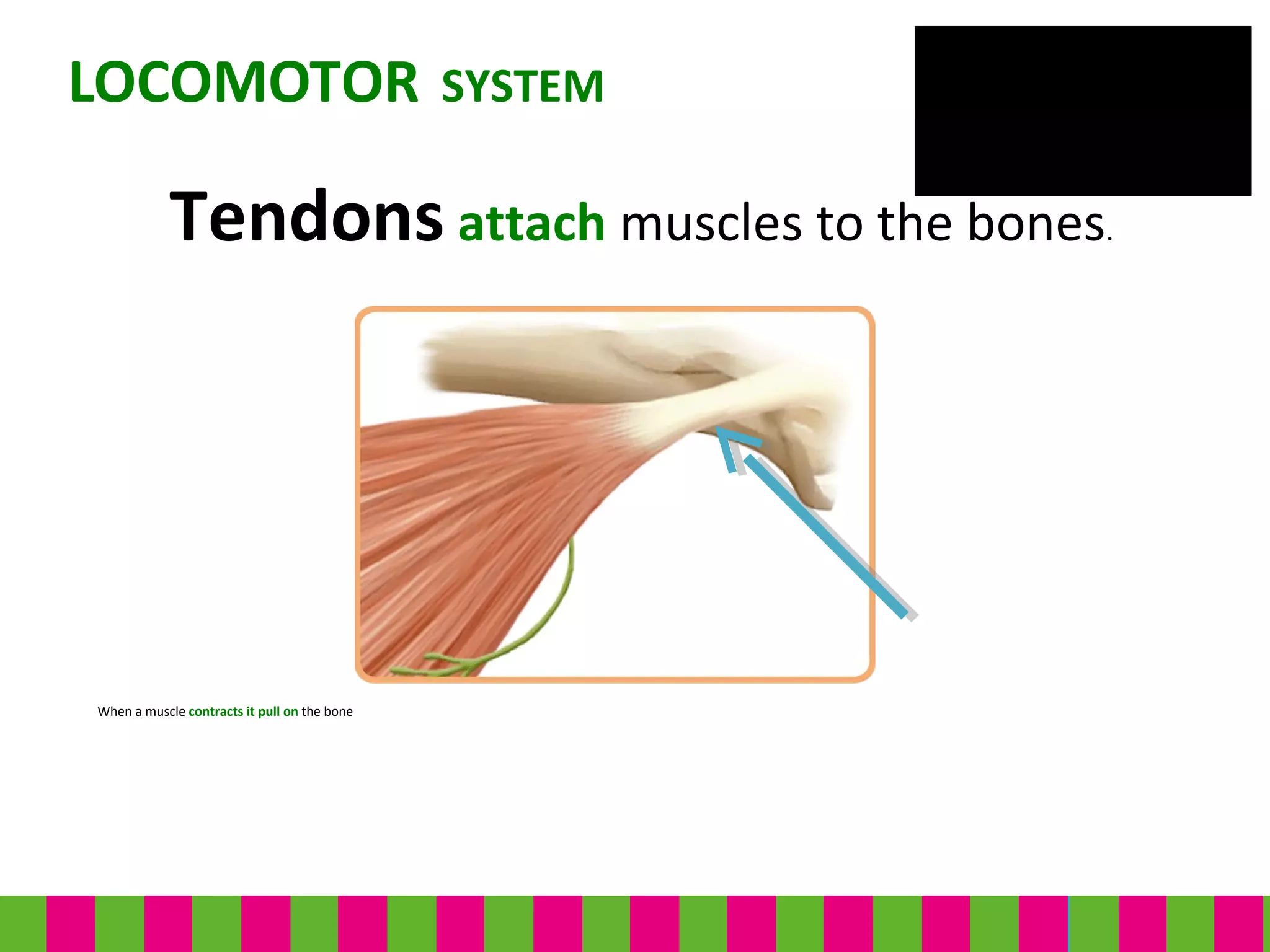
When a muscle contracts it pull on the bone
LOCOMOTOR SYSTEM
Tendons attach muscles to the bones.
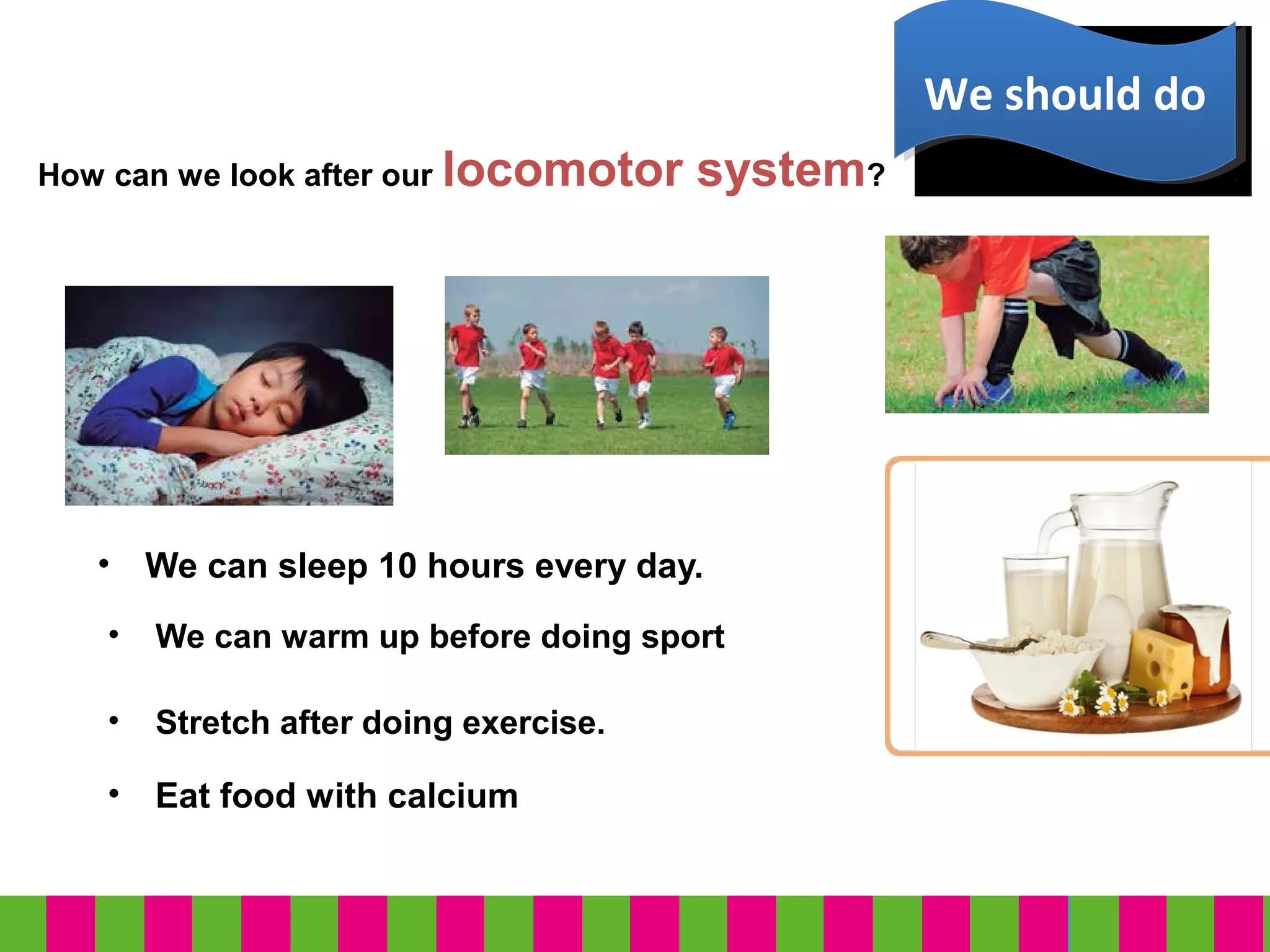
How can we look after our locomotor system?
• We can warm up before doing sport
• Stretch after doing exercise.
• We can sleep 10 hours every day.
We should doWe should do
• Eat food with calcium
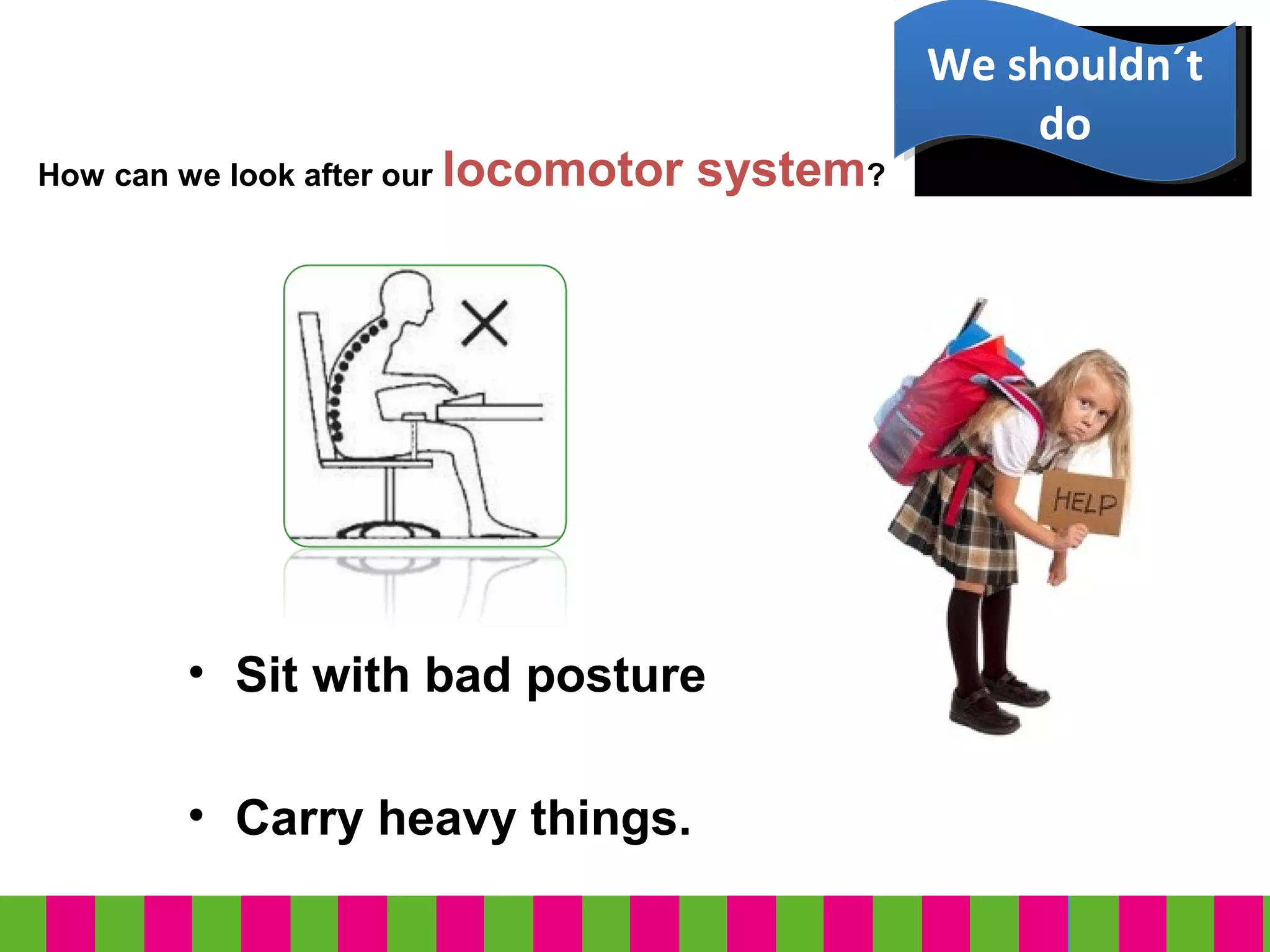
How can we look after our locomotor system?
• Sit with bad posture
• Carry heavy things.
We shouldn´t
do
We shouldn´t
do
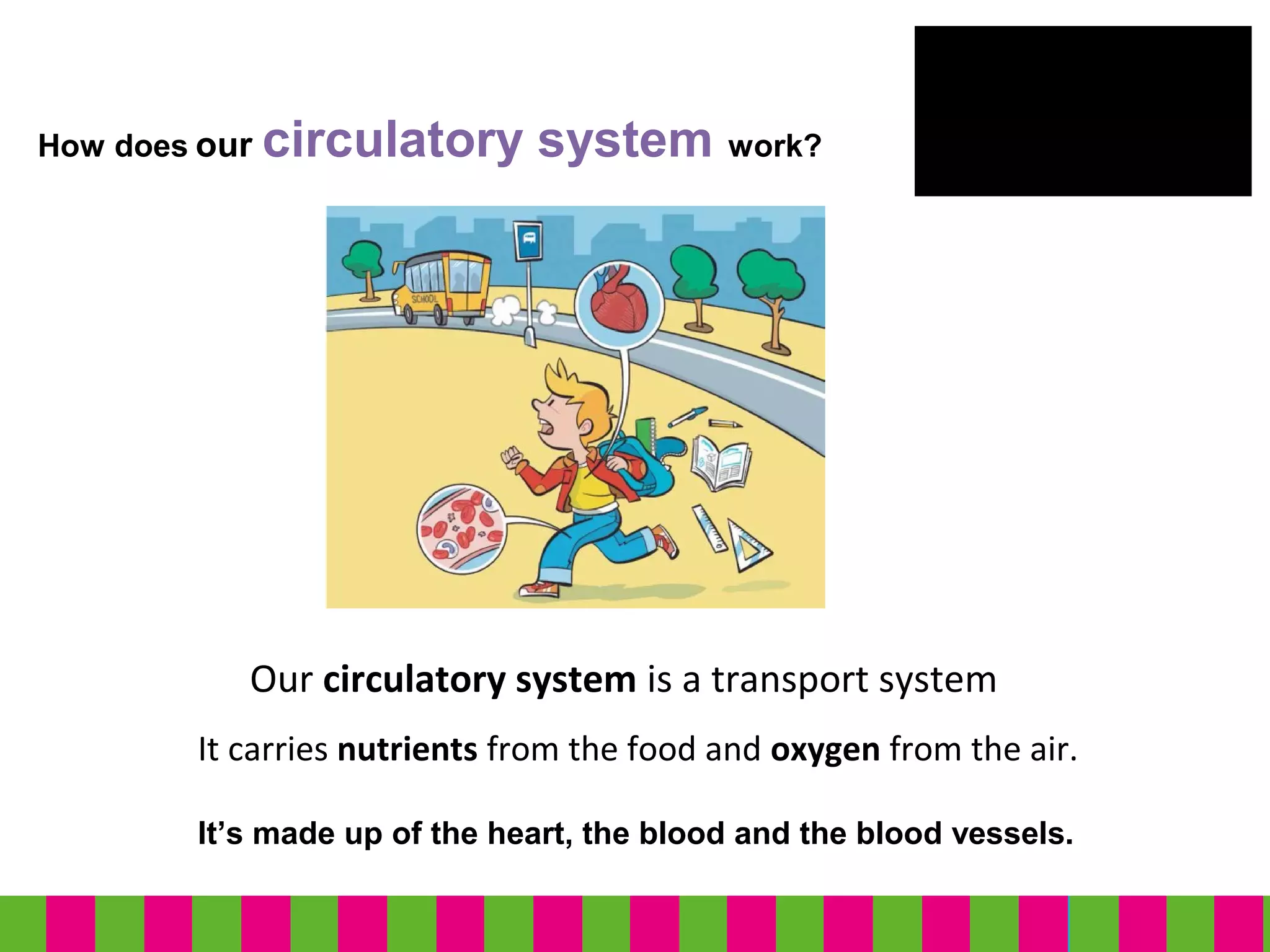
How does our circulatory system work?
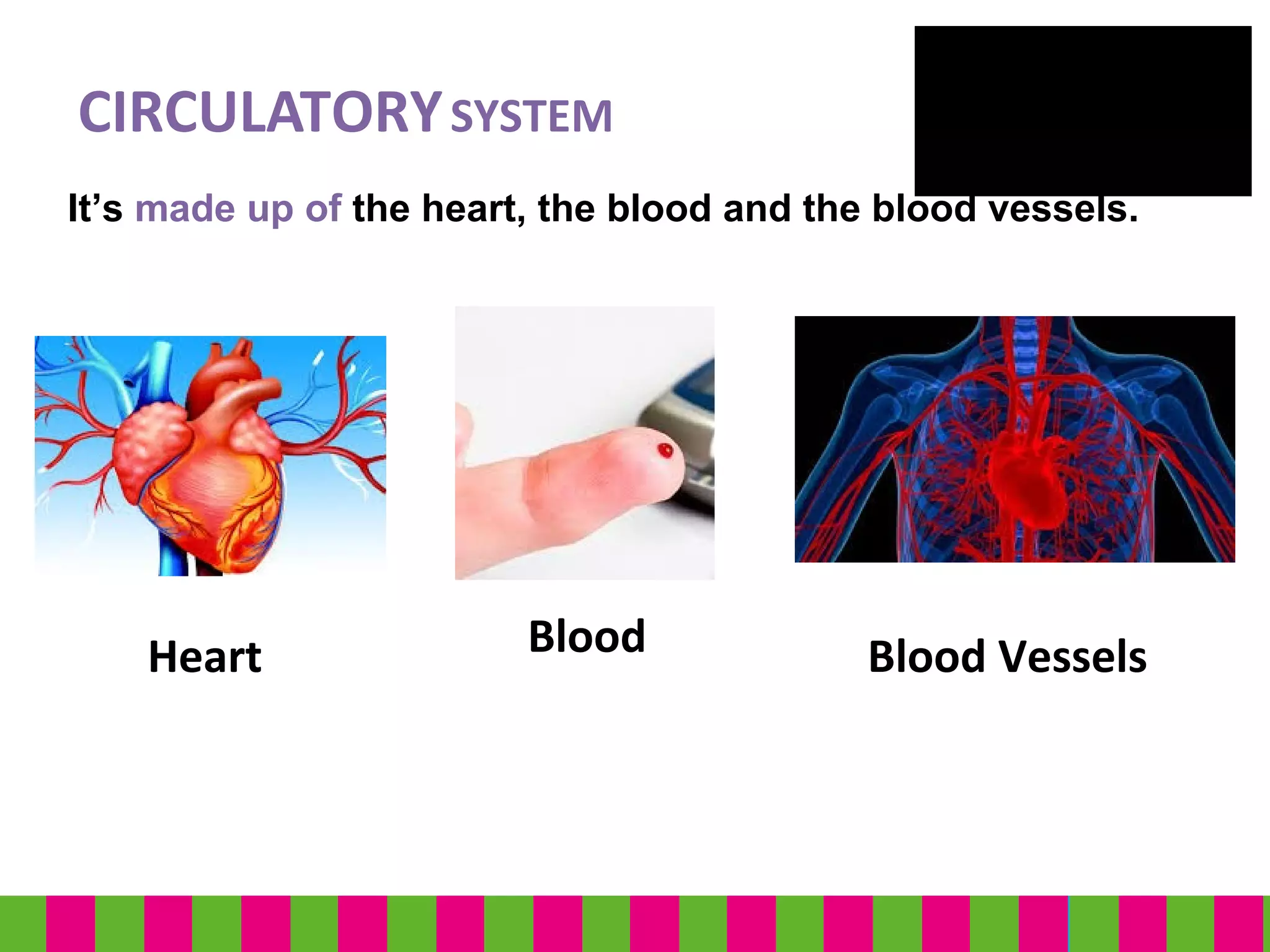
It’s made up of the heart, the blood and the blood vessels.
It carries nutrients from the food and oxygen from the air.
Our circulatory system is a transport system
CIRCULATORYSYSTEM
It’s made up of the heart, the blood and the blood vessels.
Heart Blood Blood Vessels
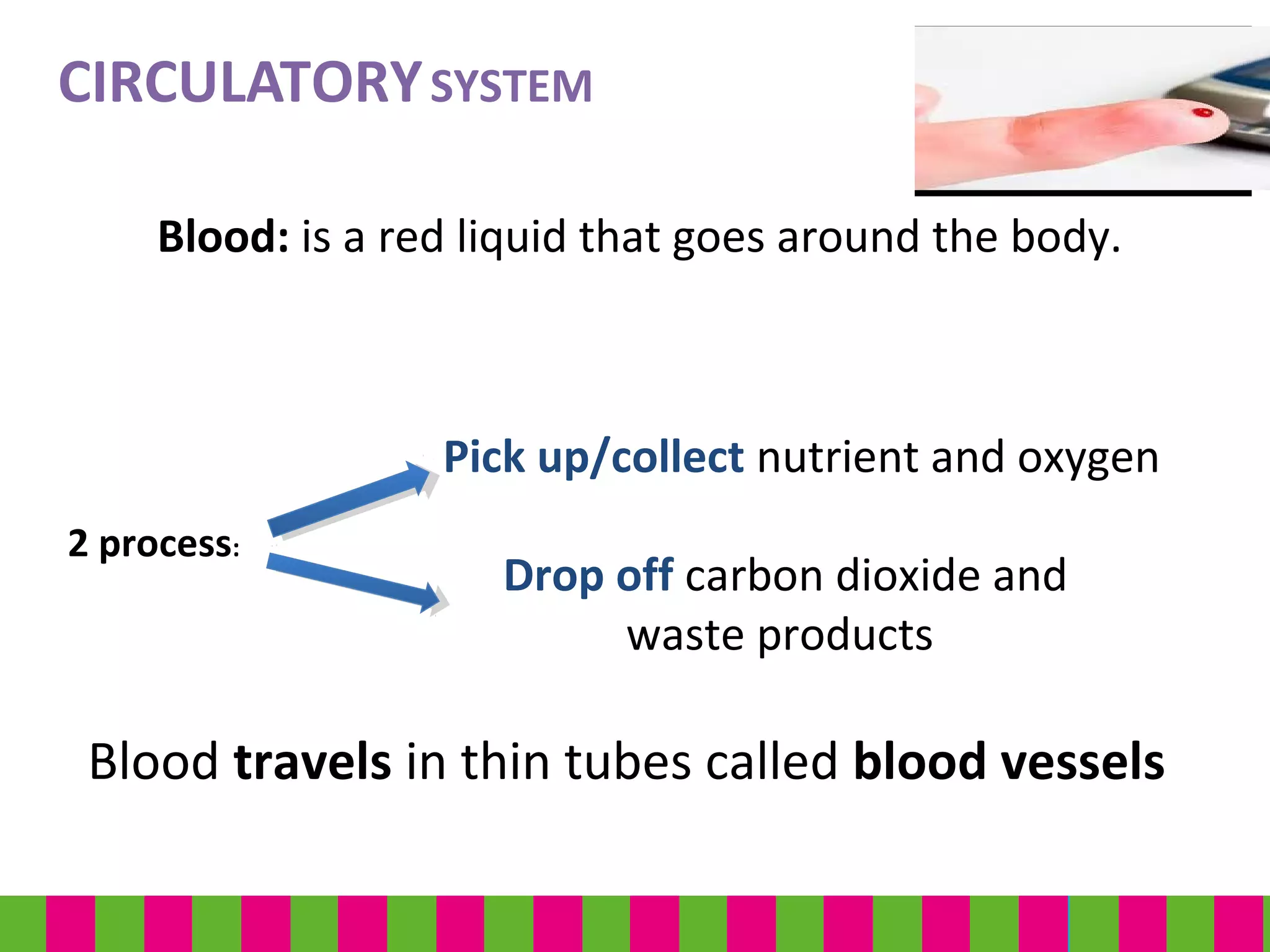
Blood: is a red liquid that goes around the body.

2 process:
CIRCULATORYSYSTEM
Pick up/collect nutrient and oxygen
Drop off carbon dioxide and
waste products
Blood travels in thin tubes called blood vessels
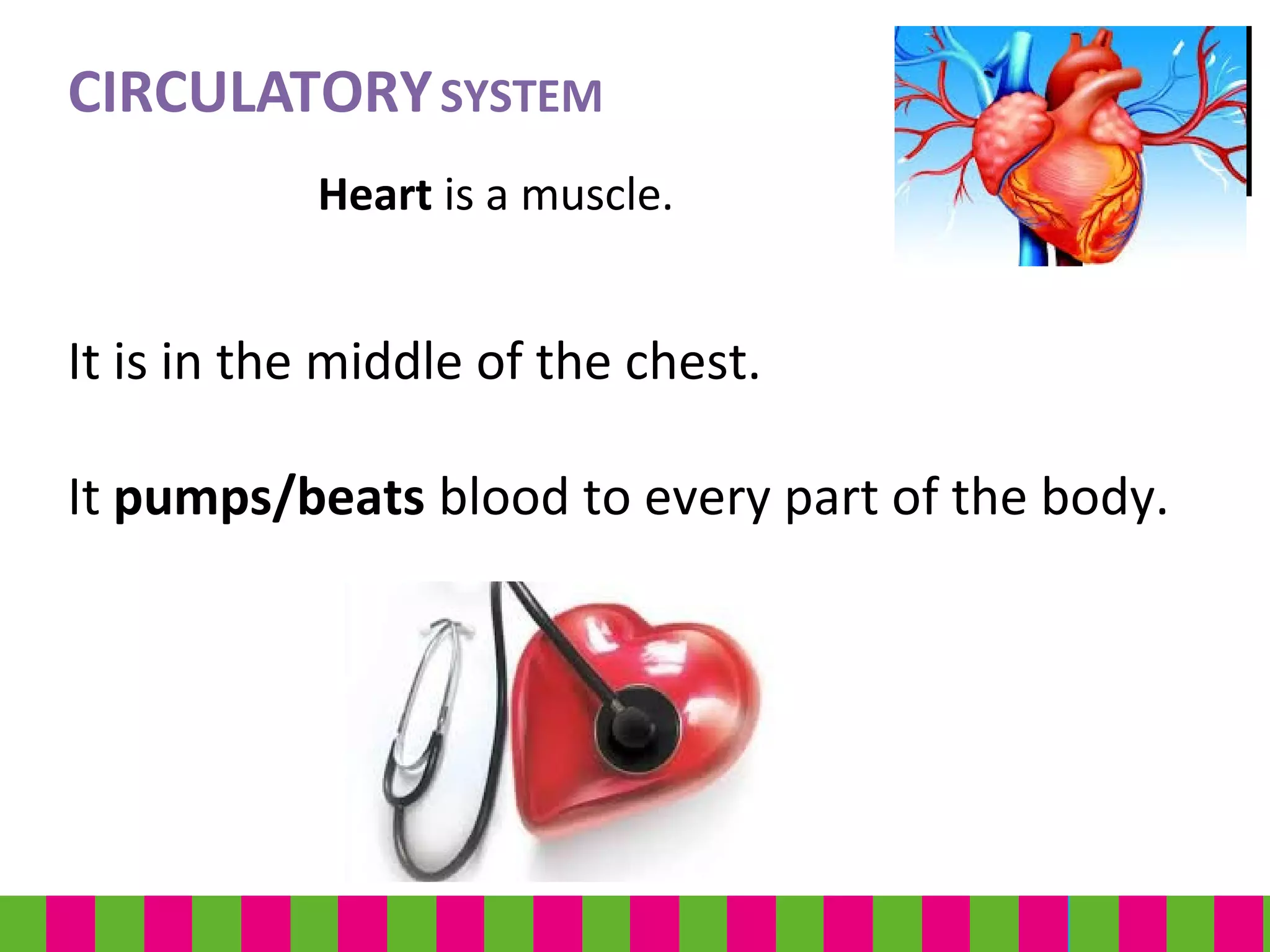
Heart is a muscle.
CIRCULATORYSYSTEM
It is in the middle of the chest.
It pumps/beats blood to every part of the body.
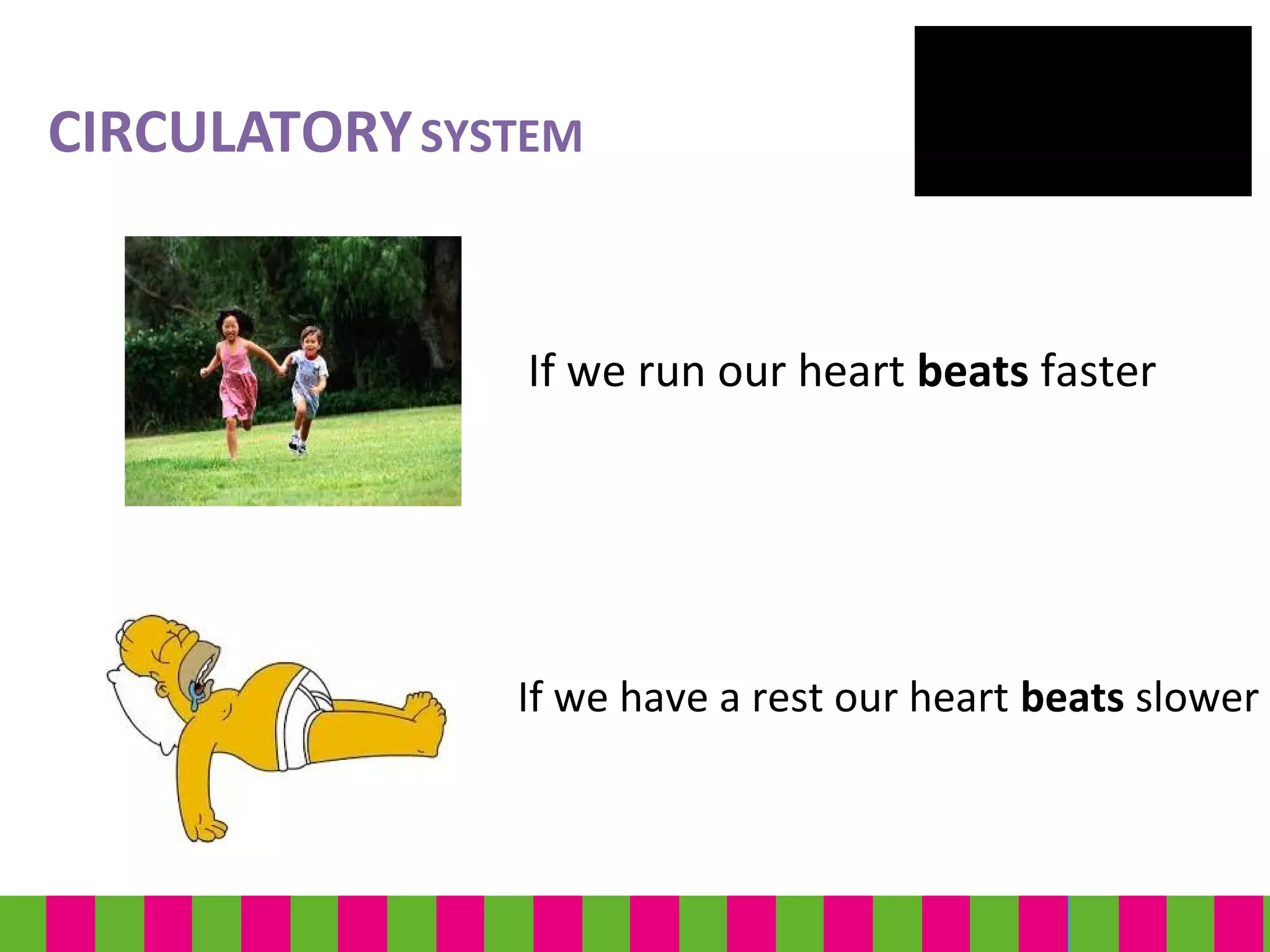
If we run our heart beats faster
If we have a rest our heart beats slower
CIRCULATORYSYSTEM
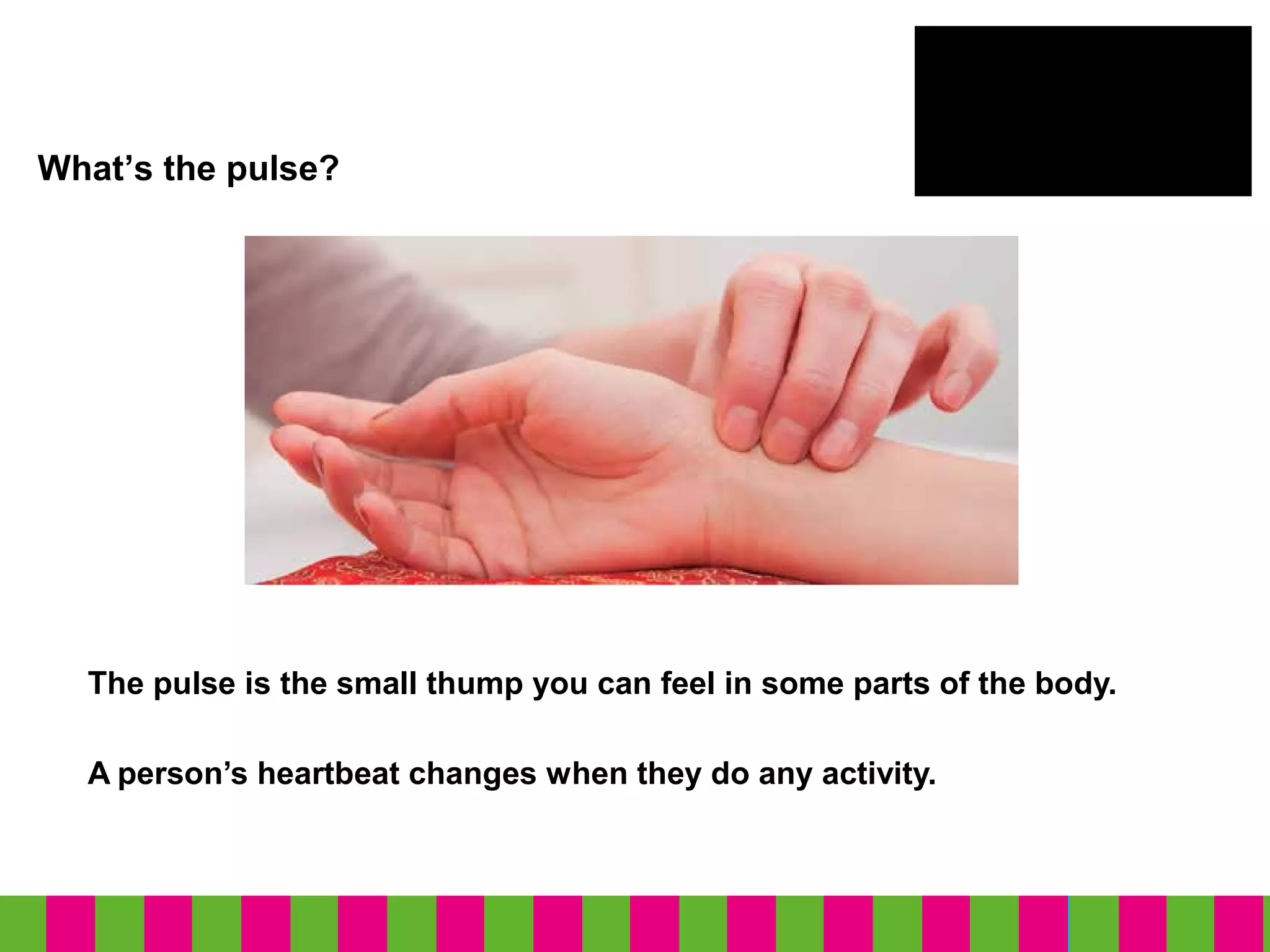
What’s the pulse?
A person’s heartbeat changes when they do any activity.
The pulse is the small thump you can feel in some parts of the body.
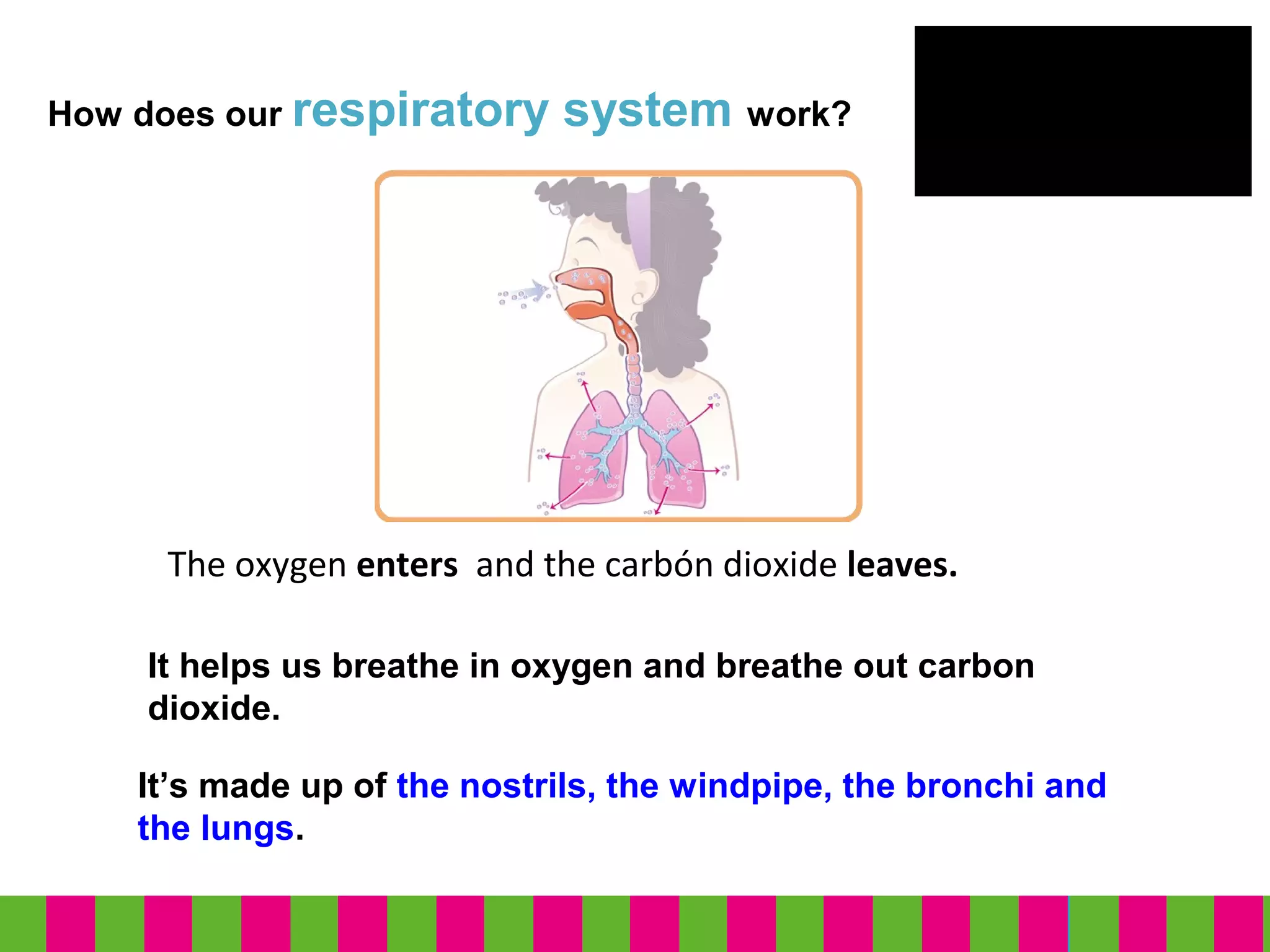
How does our respiratory system work?
It helps us breathe in oxygen and breathe out carbon
dioxide.
It’s made up of the nostrils, the windpipe, the bronchi and
the lungs.
The oxygen enters and the carbón dioxide leaves.
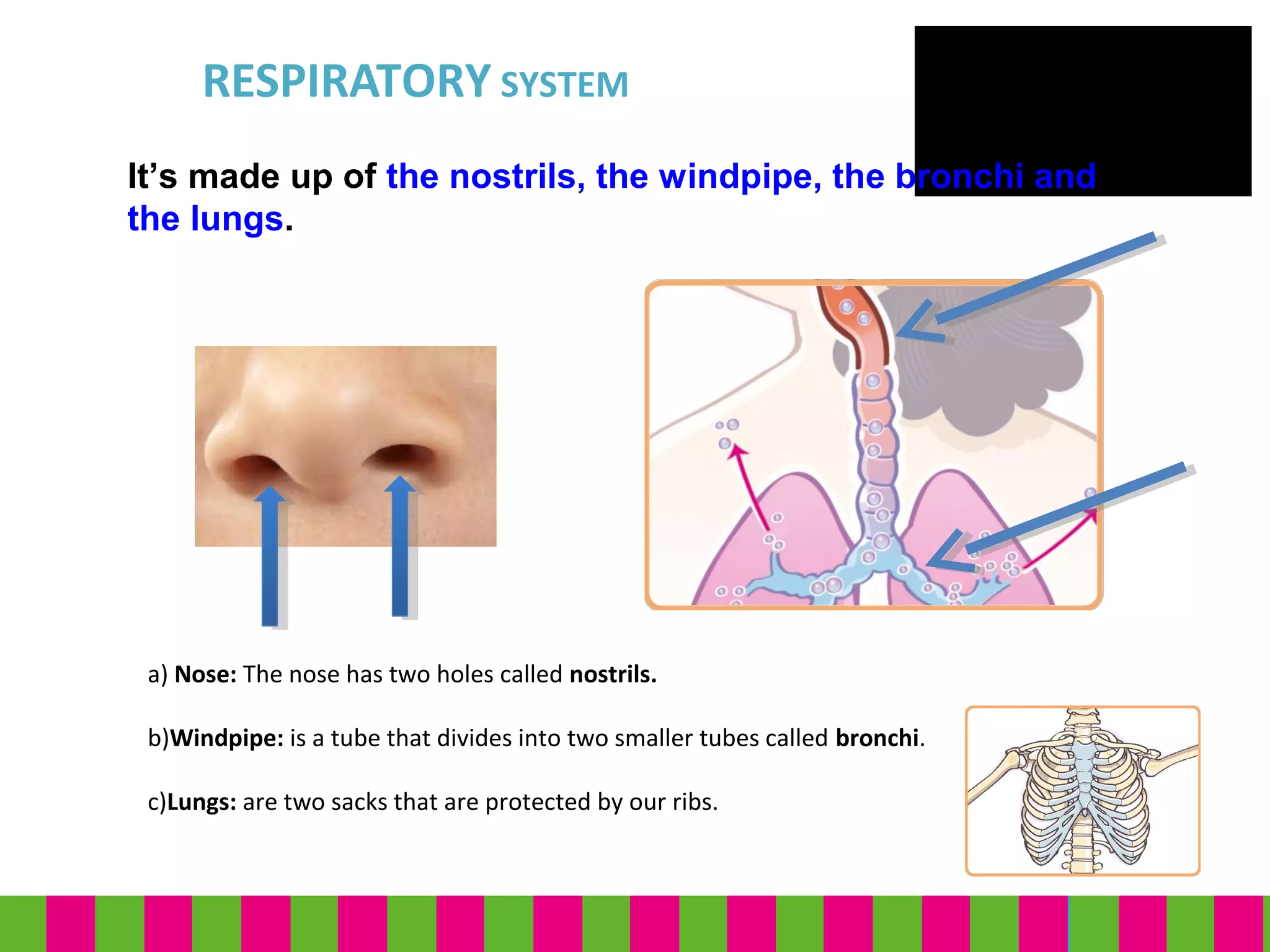
RESPIRATORY SYSTEM
a) Nose: The nose has two holes called nostrils.
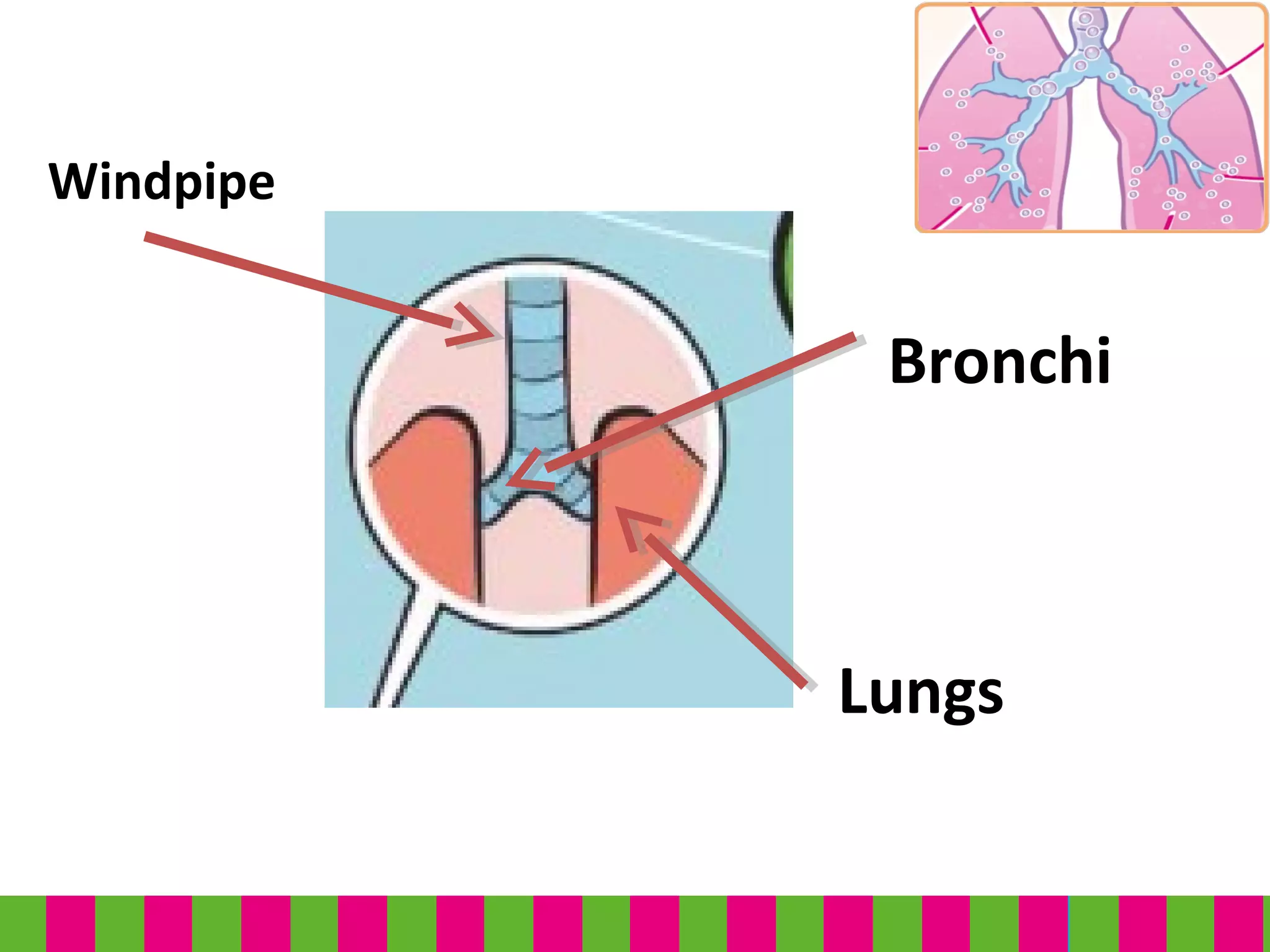
b)Windpipe: is a tube that divides into two smaller tubes called bronchi.
c)Lungs: are two sacks that are protected by our ribs.
It’s made up of the nostrils, the windpipe, the bronchi and
the lungs.
RESPIRATORYSYSTEM
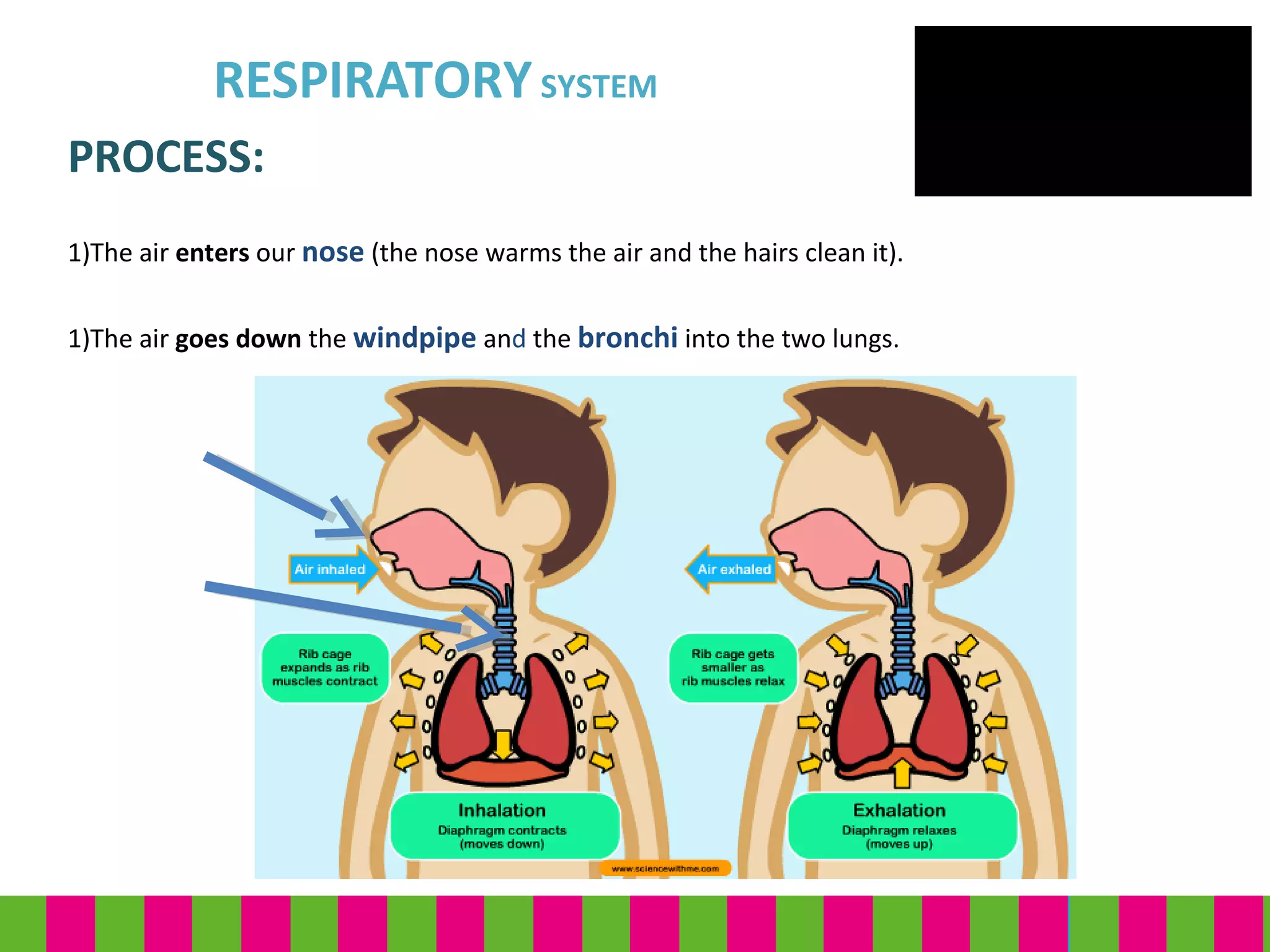
PROCESS:
1)The air enters our nose (the nose warms the air and the hairs clean it).
1)The air goes down the windpipe and the bronchi into the two lungs.
Windpipe
Bronchi
Lungs
RESPIRATORYSYSTEM
PROCESS:
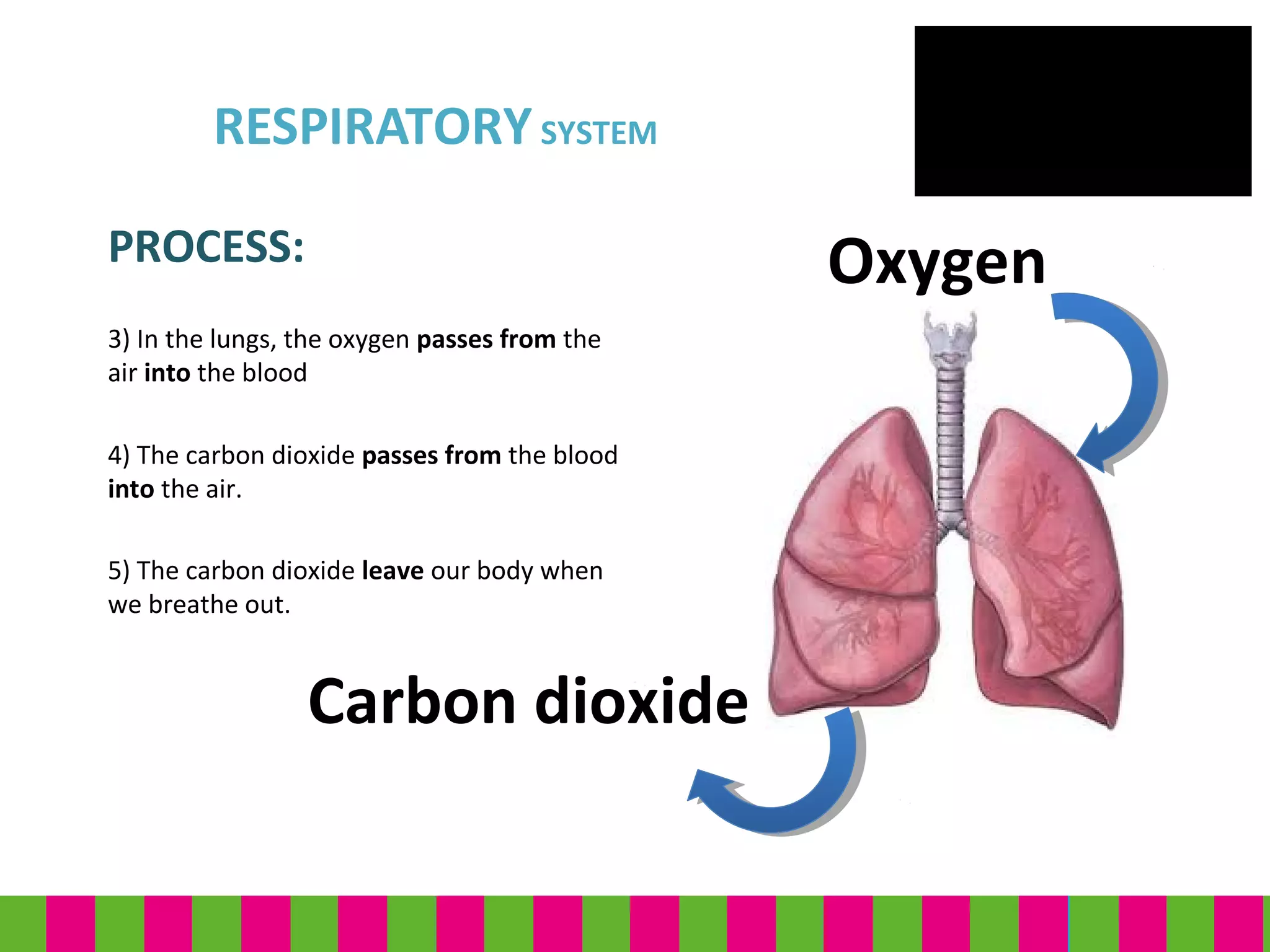
3) In the lungs, the oxygen passes from the
air into the blood
4) The carbon dioxide passes from the blood
into the air.
5) The carbon dioxide leave our body when
we breathe out.
Carbon dioxide
Oxygen
• https://www.youtube.com/watch?v=pO10bTYa5R8
• https://www.youtube.com/watch?v=8QOObtVlyRI
REPRODUCTIVE SYSTEM
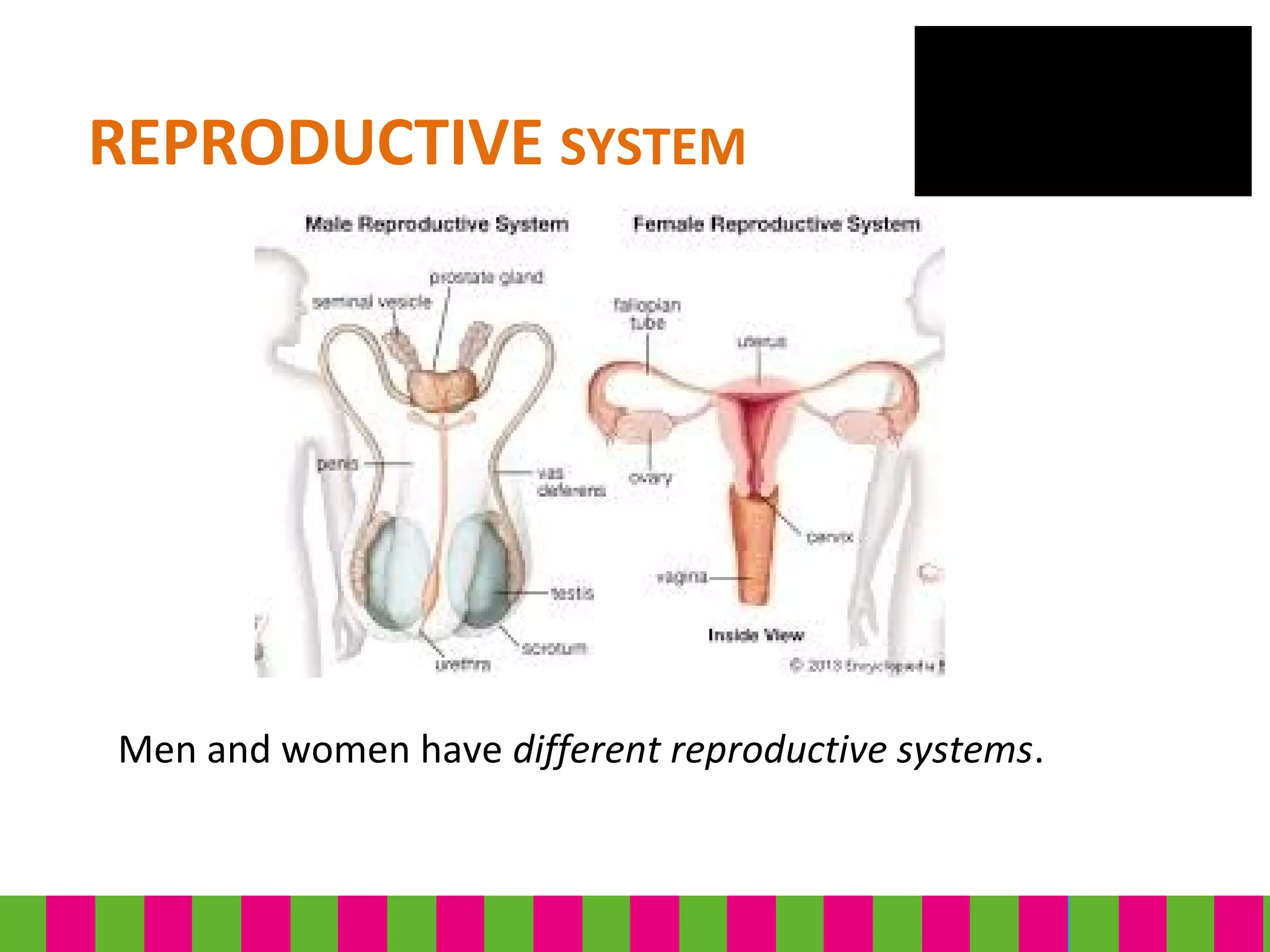
Men and women have different reproductive systems.
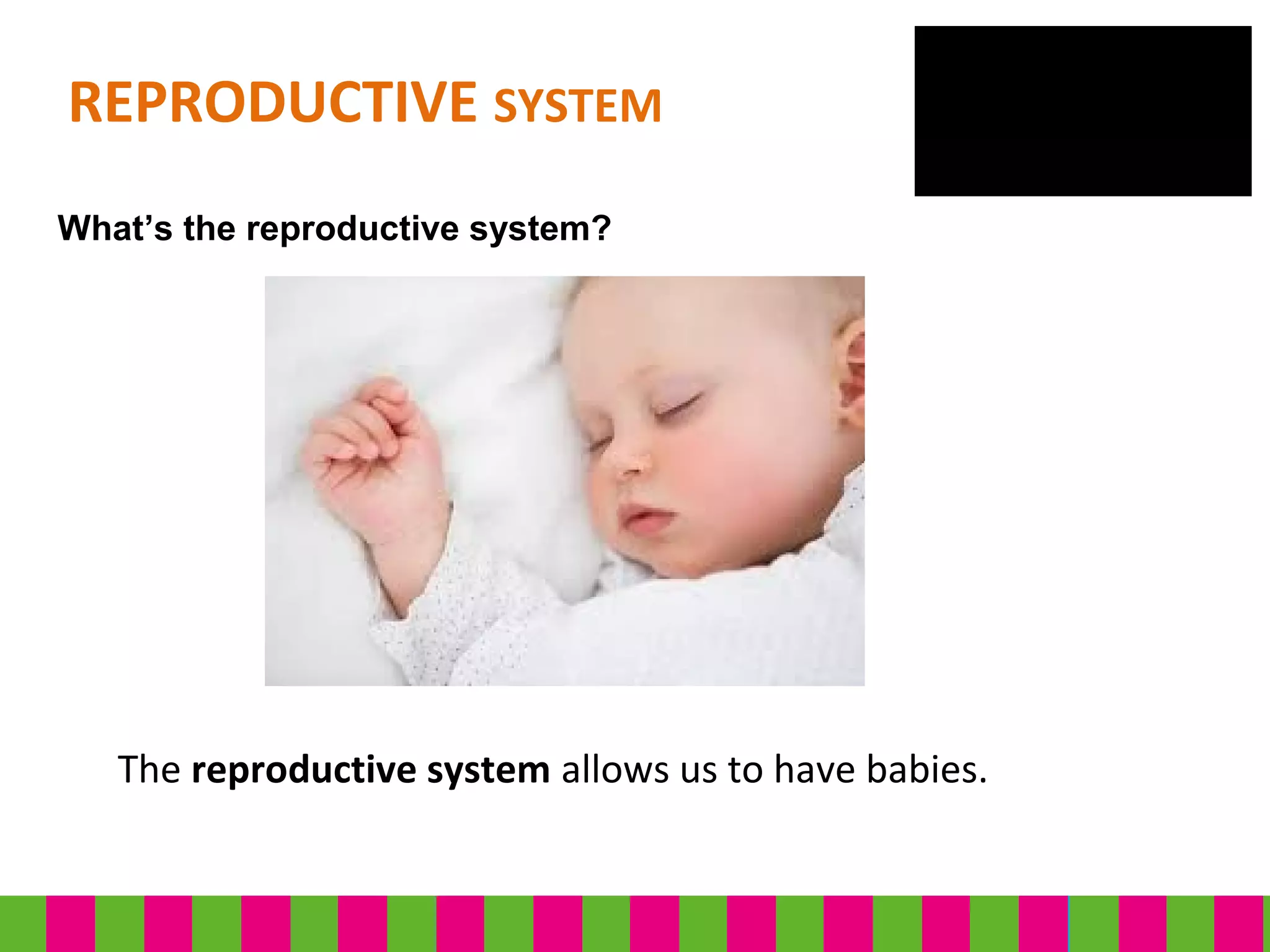
The reproductive system allows us to have babies.
REPRODUCTIVE SYSTEM
What’s the reproductive system?
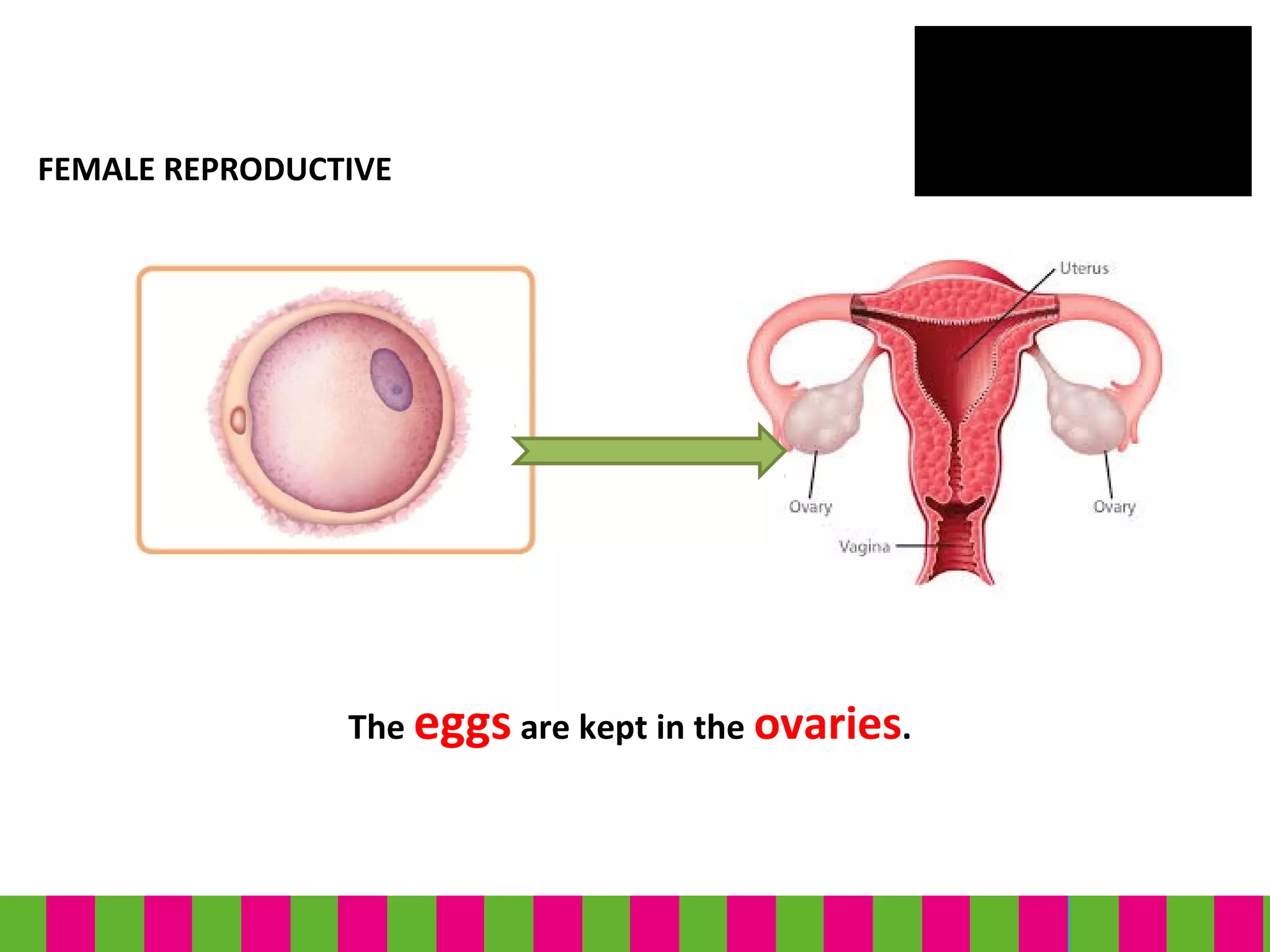
FEMALE REPRODUCTIVE
The eggs are kept in the ovaries.
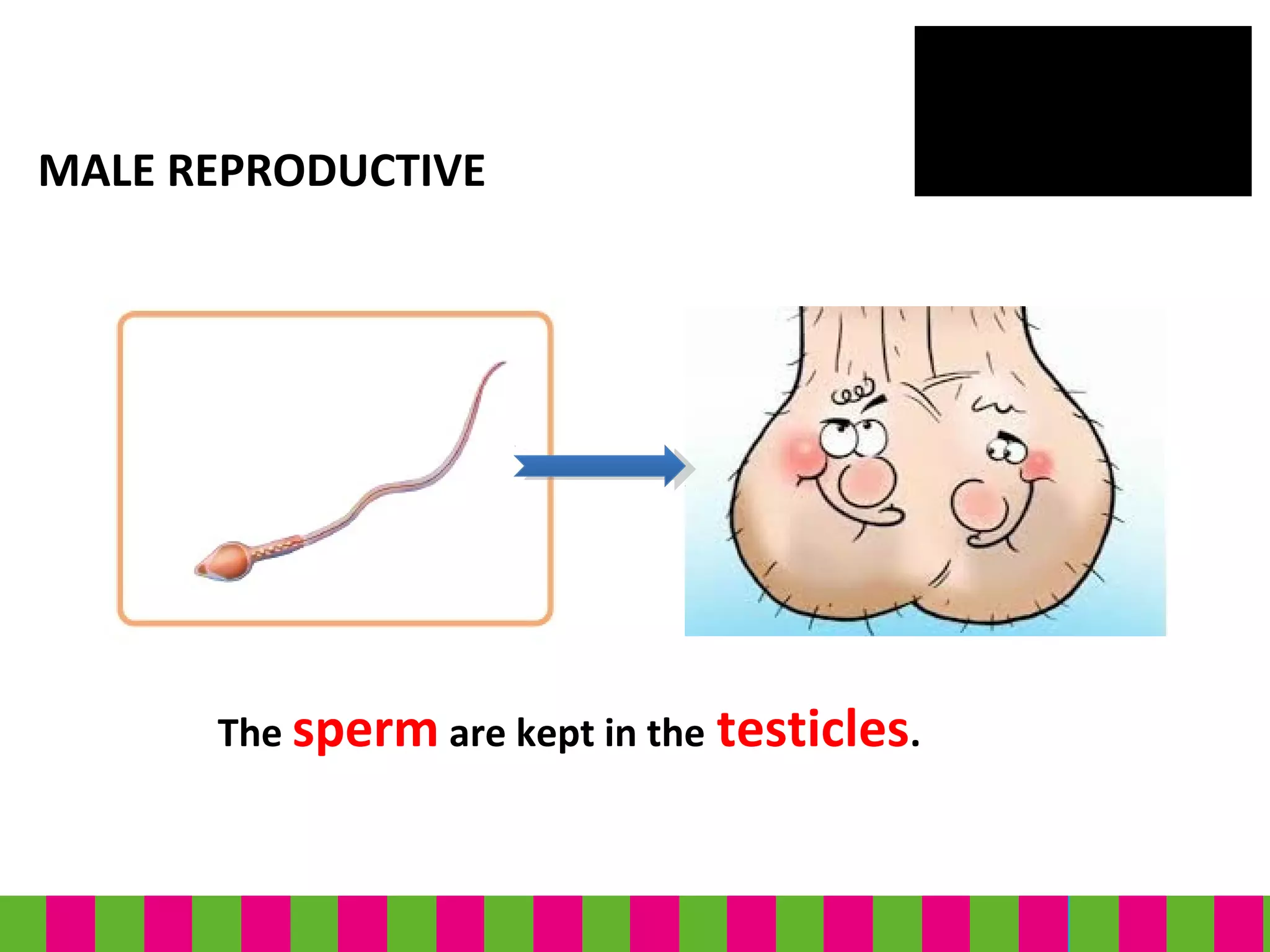
MALE REPRODUCTIVE
The sperm are kept in the testicles.
https://www.youtube.com/watch?v=tFZeyFbBLXE
Men have testicles and sperm.
Women have eggs and ovaries.
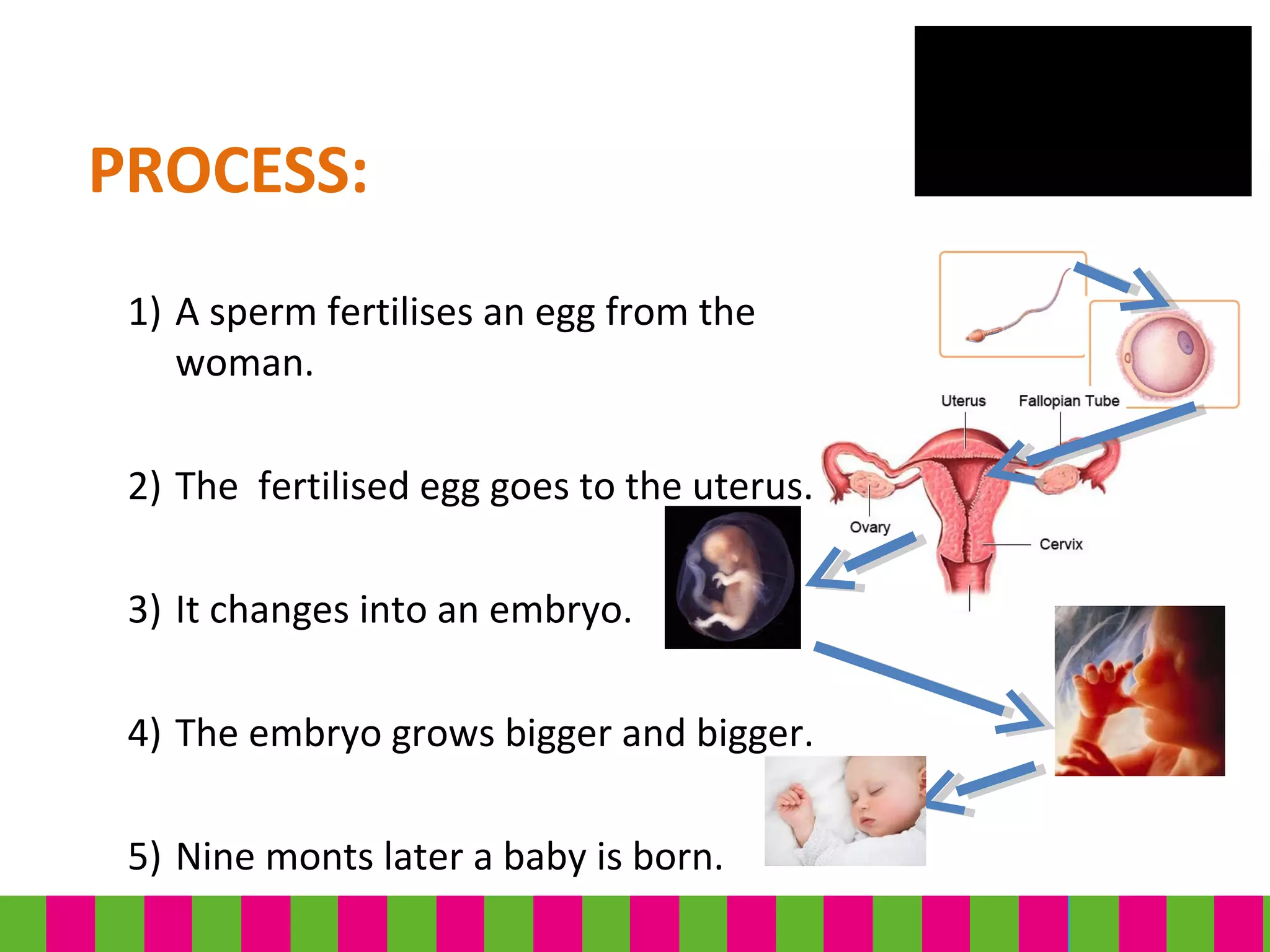
PROCESS:
1) A sperm fertilises an egg from the
woman.
2) The fertilised egg goes to the uterus.
3) It changes into an embryo.
4) The embryo grows bigger and bigger.
5) Nine monts later a baby is born.
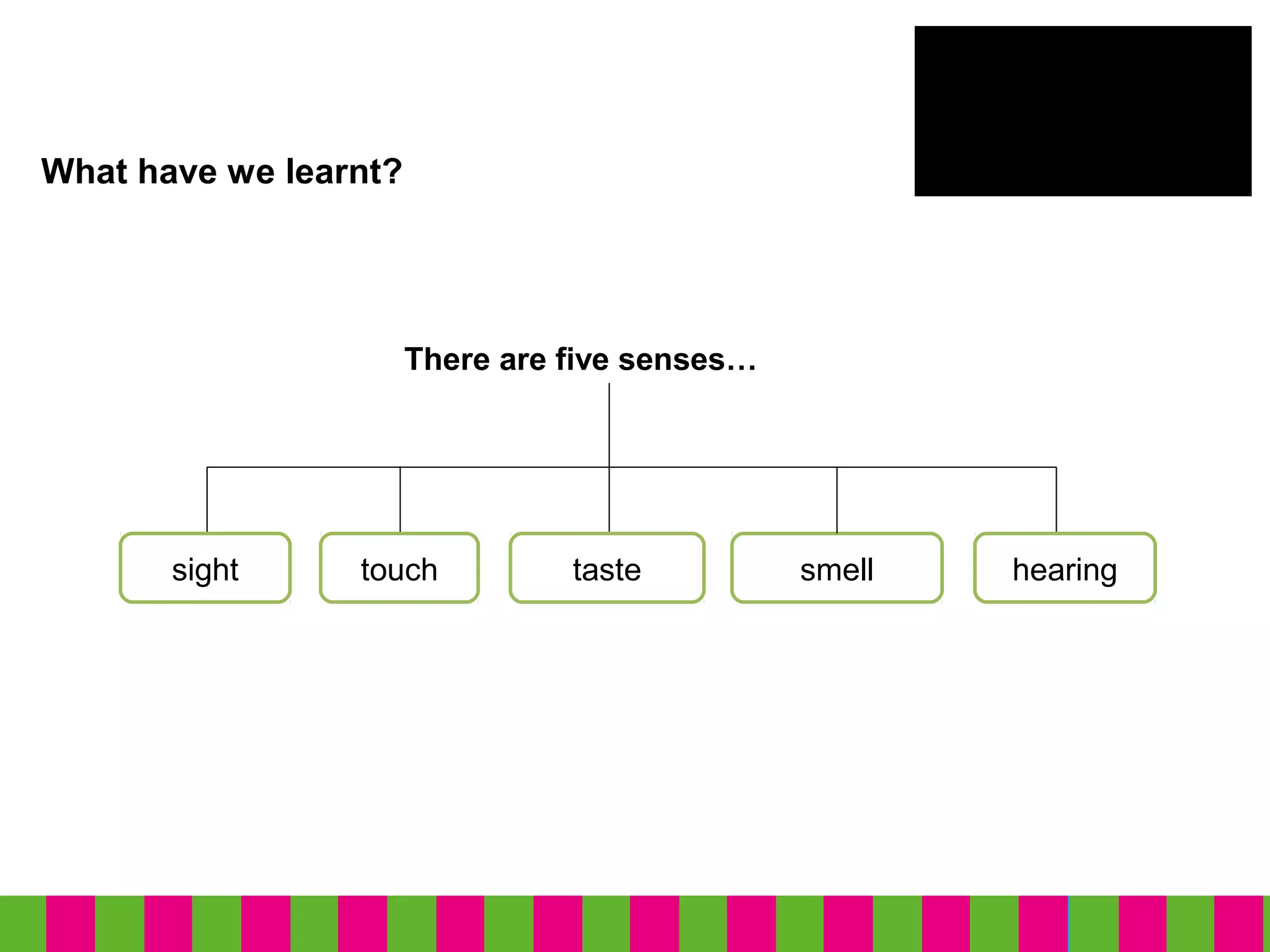
What have we learnt?
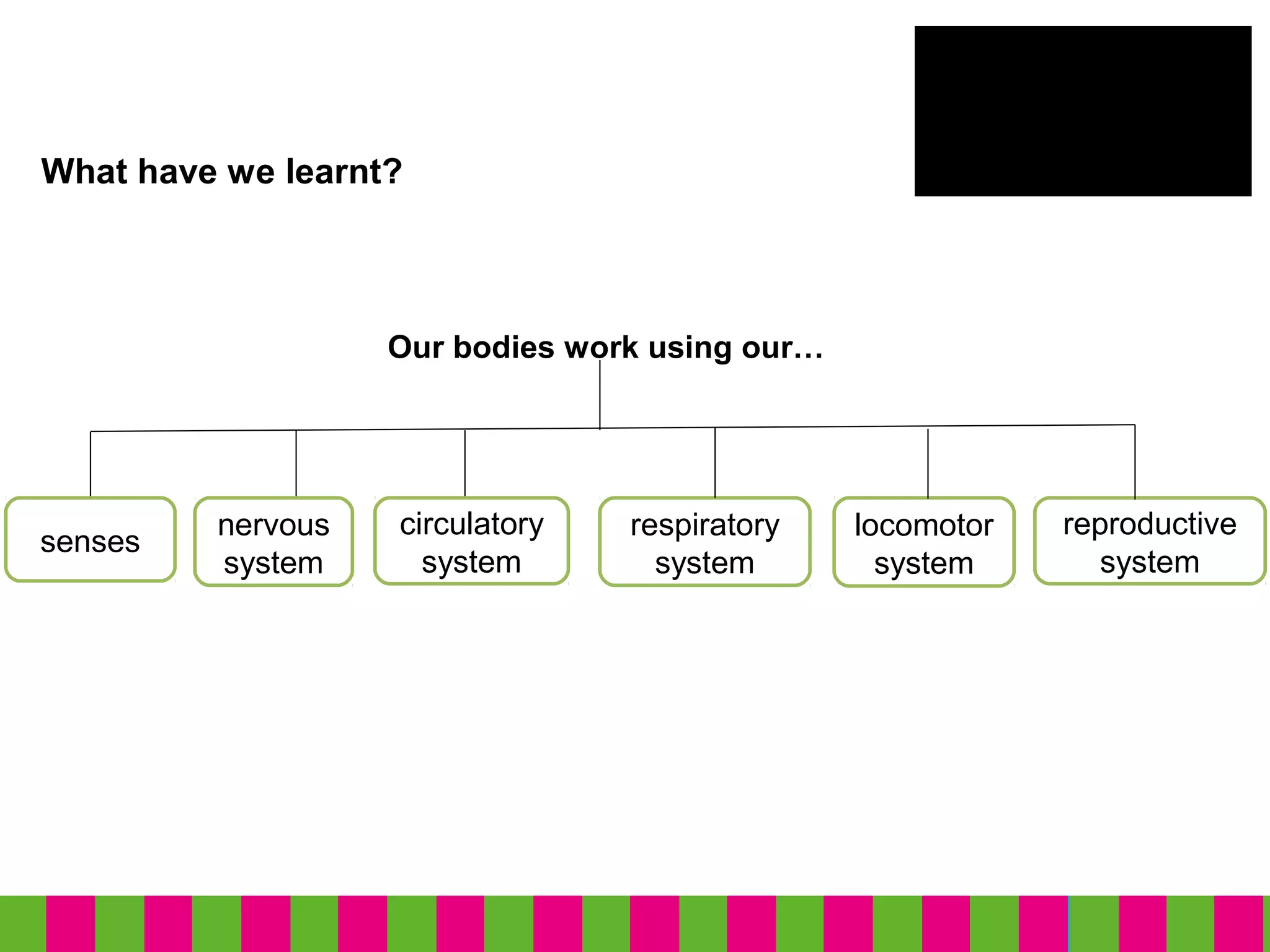
senses
nervous
system
circulatory
system
Our bodies work using our…
respiratory
system
locomotor
system
reproductive
system
What have we learnt?
sight touch taste
There are five senses…
smell hearing

Unit 4

  • 1.
  • 2.
    What happens toour bodies when we do sport? We inhale and exhale more air. Blood flows fast around our bodies.
  • 3.
    What do thesenses do? All the senses give information to the brain. Sight Taste HearingSmell Touch
  • 4.
    The organ oftouch is the skin. We use our skin to identify is hot or cold, hard or soft, smooth or rough. Our five senses: touch
  • 5.
    The organ oftaste is the tongue. We use our tongue to identify different flavours. Our five senses: Tongue
  • 6.
    The organs ofsight are the eyes. We use our eyes to identify color, shape, size… Our five senses: Sight
  • 7.
    The organ ofsmell is the nose. We use our noses to indentity different smells. Our five senses: smell
  • 8.
    The organ ofhearing are the ears. We use our ears to identify loud, quiet… Our five senses: hearing
  • 9.
    The nervous systemis made up of the brain, the spinal cord and the nerves. NERVOUS SYSTEM
  • 10.
    FUNTIONS: It controls everything. Itreceives messages from nerves It gives instructions to the nerves. NERVOUS SYSTEM BRAIN
  • 11.
    NERVOUS SYSTEM NERVES The nervesare connected to the brain by the spinal cord. SPINAL CORD
  • 12.
    We use ourlocomotor system moves our body, eat and speak. LOCOMOTOR SYSTEM
  • 13.
    • Our locomotorsystem is made up of bones, joints, muscles and tendons. LOCOMOTOR SYSTEM
  • 14.
    Funtions: •We can movesome of them (example, arms and legs) •Other muscles move automatically (example, the heart) LOCOMOTOR SYSTEM Muscles are elastic and flexible
  • 15.
    Funtions: •Bones make upthe skeleton. •They support the body. •They protect the organs: heart, lungs and brain. LOCOMOTOR SYSTEM Bones are hard and rigid.
  • 16.
    The hip andthe knee are joins LOCOMOTOR SYSTEM Joins: two o more bones meet.
  • 17.
    When a musclecontracts it pull on the bone LOCOMOTOR SYSTEM Tendons attach muscles to the bones.
  • 18.
    How can welook after our locomotor system? • We can warm up before doing sport • Stretch after doing exercise. • We can sleep 10 hours every day. We should doWe should do • Eat food with calcium
  • 19.
    How can welook after our locomotor system? • Sit with bad posture • Carry heavy things. We shouldn´t do We shouldn´t do
  • 20.
    How does ourcirculatory system work? It’s made up of the heart, the blood and the blood vessels. It carries nutrients from the food and oxygen from the air. Our circulatory system is a transport system
  • 21.
    CIRCULATORYSYSTEM It’s made upof the heart, the blood and the blood vessels. Heart Blood Blood Vessels
  • 22.
    Blood: is ared liquid that goes around the body. 2 process: CIRCULATORYSYSTEM Pick up/collect nutrient and oxygen Drop off carbon dioxide and waste products Blood travels in thin tubes called blood vessels
  • 23.
    Heart is amuscle. CIRCULATORYSYSTEM It is in the middle of the chest. It pumps/beats blood to every part of the body.
  • 24.
    If we runour heart beats faster If we have a rest our heart beats slower CIRCULATORYSYSTEM
  • 25.
    What’s the pulse? Aperson’s heartbeat changes when they do any activity. The pulse is the small thump you can feel in some parts of the body.
  • 26.
    How does ourrespiratory system work? It helps us breathe in oxygen and breathe out carbon dioxide. It’s made up of the nostrils, the windpipe, the bronchi and the lungs. The oxygen enters and the carbón dioxide leaves.
  • 27.
    RESPIRATORY SYSTEM a) Nose:The nose has two holes called nostrils. b)Windpipe: is a tube that divides into two smaller tubes called bronchi. c)Lungs: are two sacks that are protected by our ribs. It’s made up of the nostrils, the windpipe, the bronchi and the lungs.
  • 28.
    RESPIRATORYSYSTEM PROCESS: 1)The air entersour nose (the nose warms the air and the hairs clean it). 1)The air goes down the windpipe and the bronchi into the two lungs.
  • 29.
  • 30.
    RESPIRATORYSYSTEM PROCESS: 3) In thelungs, the oxygen passes from the air into the blood 4) The carbon dioxide passes from the blood into the air. 5) The carbon dioxide leave our body when we breathe out. Carbon dioxide Oxygen
  • 31.
  • 32.
    REPRODUCTIVE SYSTEM Men andwomen have different reproductive systems.
  • 33.
    The reproductive systemallows us to have babies. REPRODUCTIVE SYSTEM What’s the reproductive system?
  • 34.
    FEMALE REPRODUCTIVE The eggsare kept in the ovaries.
  • 35.
    MALE REPRODUCTIVE The spermare kept in the testicles.
  • 36.
  • 37.
    PROCESS: 1) A spermfertilises an egg from the woman. 2) The fertilised egg goes to the uterus. 3) It changes into an embryo. 4) The embryo grows bigger and bigger. 5) Nine monts later a baby is born.
  • 38.
    What have welearnt? senses nervous system circulatory system Our bodies work using our… respiratory system locomotor system reproductive system
  • 39.
    What have welearnt? sight touch taste There are five senses… smell hearing

Editor's Notes

  • #19 Turtle/eagle/cheetah p. 6
  • #20 Turtle/eagle/cheetah p. 6
  • #21 Duck /calf p. 7
  • #26 2 photos bottom of page 8