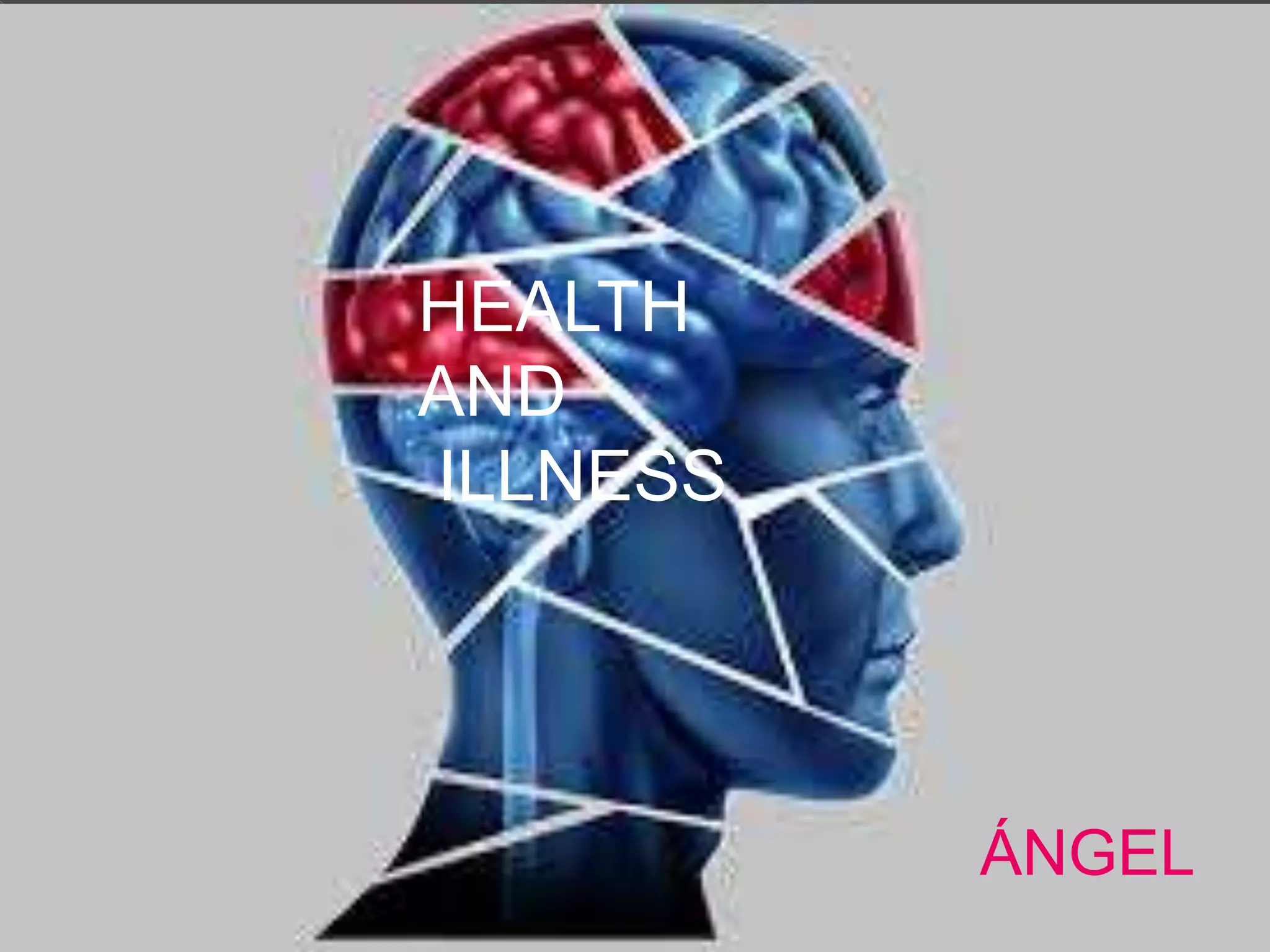
HEALTH
AND
ILLNESS
ÁNGEL
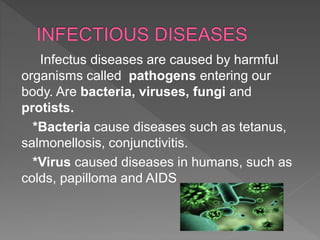
Infectus diseases are caused by harmful
organisms called pathogens entering our
body. Are bacteria, viruses, fungi and
protists.
*Bacteria cause diseases such as tetanus,
salmonellosis, conjunctivitis.
*Virus caused diseases in humans, such as
colds, papilloma and AIDS
 HOW DO INFECTIOUS DISEASES SPREAD?
An infectius disease is considered contagious
if it is easily transmited from one person to
another. Some diseases, such colds, spread from
person thorught the air. The pathogens usually
enter the body through the nose or mouth,
containg the pathogens the air and can then be
breathed by another person.
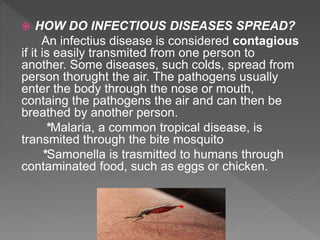
*Malaria, a common tropical disease, is
transmited through the bite mosquito
*Samonella is trasmitted to humans through
contaminated food, such as eggs or chicken.
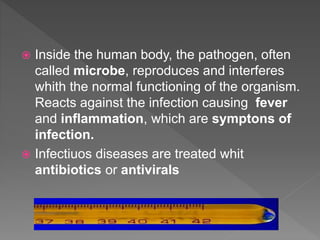
 Inside the human body, the pathogen, often
called microbe, reproduces and interferes
whith the normal functioning of the organism.
Reacts against the infection causing fever
and inflammation, which are symptons of
infection.
 Infectiuos diseases are treated whit
antibiotics or antivirals
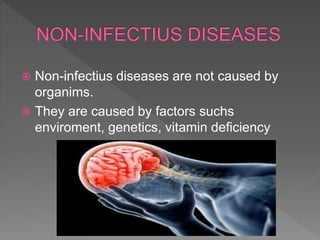
 Non-infectius diseases are not caused by
organims.
 They are caused by factors suchs
enviroment, genetics, vitamin deficiency
ALLERGY
 Is a reaction that some people have when
come into contact whit substances such
as dus, pollen, animal hair.
 Hay fever is an allergy to pollen which is
vey come in springtime.
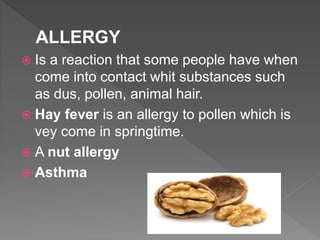
 A nut allergy
 Asthma
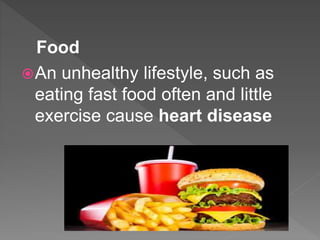
Food
An unhealthy lifestyle, such as
eating fast food often and little
exercise cause heart disease
CANCER
Is another non-infectious disease
in whitch the body´s cells grow
uncontrollably, damaging the
normal cells. Beating cancer
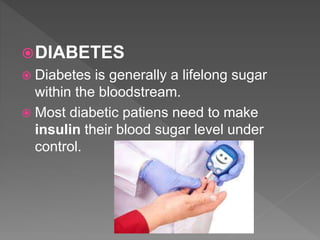
DIABETES
 Diabetes is generally a lifelong sugar
within the bloodstream.
 Most diabetic patiens need to make
insulin their blood sugar level under
control.
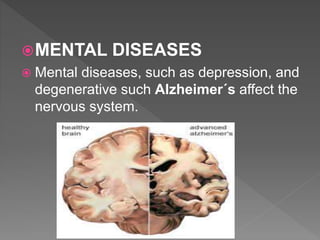
MENTAL DISEASES
 Mental diseases, such as depression, and
degenerative such Alzheimer´s affect the
nervous system.
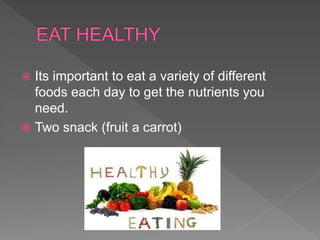
 Its important to eat a variety of different
foods each day to get the nutrients you
need.
 Two snack (fruit a carrot)
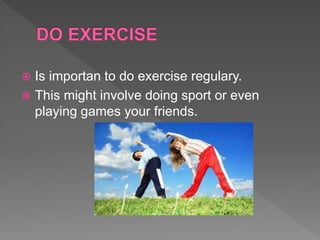
 Is importan to do exercise regulary.
 This might involve doing sport or even
playing games your friends.
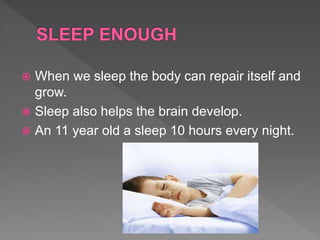
 When we sleep the body can repair itself and
grow.
 Sleep also helps the brain develop.
 An 11 year old a sleep 10 hours every night.
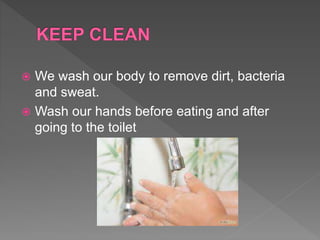
 We wash our body to remove dirt, bacteria
and sweat.
 Wash our hands before eating and after
going to the toilet
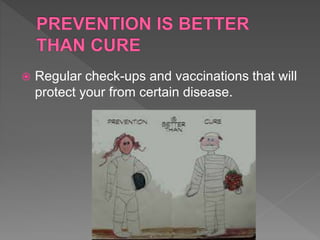
 Regular check-ups and vaccinations that will
protect your from certain disease.
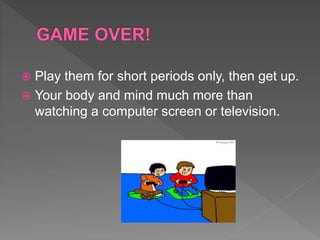
 Play them for short periods only, then get up.
 Your body and mind much more than
watching a computer screen or television.
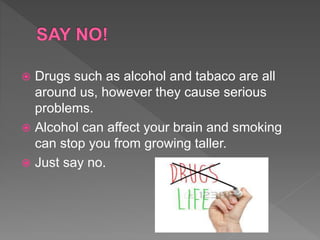
 Drugs such as alcohol and tabaco are all
around us, however they cause serious
problems.
 Alcohol can affect your brain and smoking
can stop you from growing taller.
 Just say no.
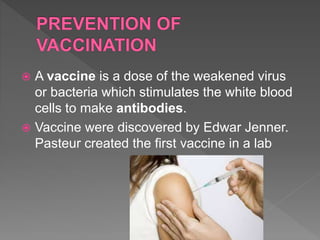
 A vaccine is a dose of the weakened virus
or bacteria which stimulates the white blood
cells to make antibodies.
 Vaccine were discovered by Edwar Jenner.
Pasteur created the first vaccine in a lab
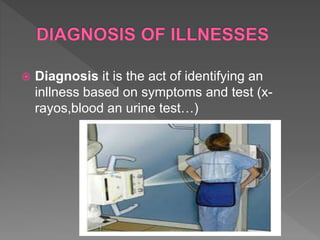
 Diagnosis it is the act of identifying an
inllness based on symptoms and test (x-
rayos,blood an urine test…)
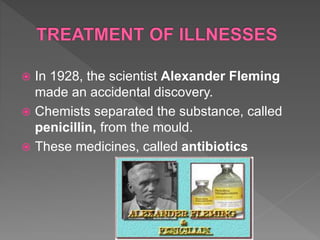
 In 1928, the scientist Alexander Fleming
made an accidental discovery.
 Chemists separated the substance, called
penicillin, from the mould.
 These medicines, called antibiotics
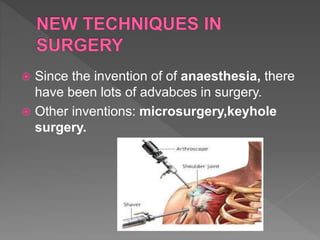
 Since the invention of of anaesthesia, there
have been lots of advabces in surgery.
 Other inventions: microsurgery,keyhole
surgery.
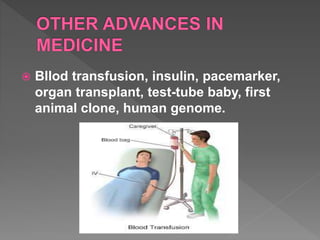
 Bllod transfusion, insulin, pacemarker,
organ transplant, test-tube baby, first
animal clone, human genome.

3. health and illness

  • 1.
  • 3.
    Infectus diseases arecaused by harmful organisms called pathogens entering our body. Are bacteria, viruses, fungi and protists. *Bacteria cause diseases such as tetanus, salmonellosis, conjunctivitis. *Virus caused diseases in humans, such as colds, papilloma and AIDS
  • 4.
     HOW DOINFECTIOUS DISEASES SPREAD? An infectius disease is considered contagious if it is easily transmited from one person to another. Some diseases, such colds, spread from person thorught the air. The pathogens usually enter the body through the nose or mouth, containg the pathogens the air and can then be breathed by another person. *Malaria, a common tropical disease, is transmited through the bite mosquito *Samonella is trasmitted to humans through contaminated food, such as eggs or chicken.
  • 5.
     Inside thehuman body, the pathogen, often called microbe, reproduces and interferes whith the normal functioning of the organism. Reacts against the infection causing fever and inflammation, which are symptons of infection.  Infectiuos diseases are treated whit antibiotics or antivirals
  • 6.
     Non-infectius diseasesare not caused by organims.  They are caused by factors suchs enviroment, genetics, vitamin deficiency
  • 7.
    ALLERGY  Is areaction that some people have when come into contact whit substances such as dus, pollen, animal hair.  Hay fever is an allergy to pollen which is vey come in springtime.  A nut allergy  Asthma
  • 8.
    Food An unhealthy lifestyle,such as eating fast food often and little exercise cause heart disease
  • 9.
    CANCER Is another non-infectiousdisease in whitch the body´s cells grow uncontrollably, damaging the normal cells. Beating cancer
  • 10.
    DIABETES  Diabetes isgenerally a lifelong sugar within the bloodstream.  Most diabetic patiens need to make insulin their blood sugar level under control.
  • 11.
    MENTAL DISEASES  Mentaldiseases, such as depression, and degenerative such Alzheimer´s affect the nervous system.
  • 13.
     Its importantto eat a variety of different foods each day to get the nutrients you need.  Two snack (fruit a carrot)
  • 14.
     Is importanto do exercise regulary.  This might involve doing sport or even playing games your friends.
  • 15.
     When wesleep the body can repair itself and grow.  Sleep also helps the brain develop.  An 11 year old a sleep 10 hours every night.
  • 16.
     We washour body to remove dirt, bacteria and sweat.  Wash our hands before eating and after going to the toilet
  • 17.
     Regular check-upsand vaccinations that will protect your from certain disease.
  • 18.
     Play themfor short periods only, then get up.  Your body and mind much more than watching a computer screen or television.
  • 19.
     Drugs suchas alcohol and tabaco are all around us, however they cause serious problems.  Alcohol can affect your brain and smoking can stop you from growing taller.  Just say no.
  • 21.
     A vaccineis a dose of the weakened virus or bacteria which stimulates the white blood cells to make antibodies.  Vaccine were discovered by Edwar Jenner. Pasteur created the first vaccine in a lab
  • 22.
     Diagnosis itis the act of identifying an inllness based on symptoms and test (x- rayos,blood an urine test…)
  • 23.
     In 1928,the scientist Alexander Fleming made an accidental discovery.  Chemists separated the substance, called penicillin, from the mould.  These medicines, called antibiotics
  • 24.
     Since theinvention of of anaesthesia, there have been lots of advabces in surgery.  Other inventions: microsurgery,keyhole surgery.
  • 25.
     Bllod transfusion,insulin, pacemarker, organ transplant, test-tube baby, first animal clone, human genome.