 We’ve already learned one way of
talking about the past: the
preterite. It’s used to describe
single actions that started and
ended in the past.
 Examples:
 Tomaron el examen el lunes
pasado. Gabriela recibió la mejor
nota de todos los estudiantes.
 El año pasado, fui a Costa Rica de
vacaciones. Lo pasé muy bien.
 Pedro se levantó, fue al baño, y se
duchó.
WHAT ABOUT…?WHAT ABOUT…?
 … actions that
happen more than
once in the past?
 I used to live in
Peoria.
 Every Christmas the
whole family would
get together for a big
dinner.
OR HOW ABOUT…?OR HOW ABOUT…?
 … actions that
started in the past
but didn’t finish (as
far as we know):
 I was walking to
work when I saw an
accident.
 She was tired and
hungry.
THE IMPERFECTTHE IMPERFECT
 These ideas –
 actions repeated in the past
 unfinished actions in the past
 descriptions about the past
 are expressed using a
different verb tense, called
the “imperfect.”
 Think about it: “perfect” means
“complete,” so when a past
action is incomplete, it is
“imperfect.”
OK, WHAT ARE THE FORMS?OK, WHAT ARE THE FORMS?
 Finally! The imperfect
tense is probably the
easiest form to learn
because there are only
three irregulars.
 There are two sets of
endings…
 -AR: add –aba to the base
 ER/IR: add –ía to the base
SOME EXAMPLES, PLEASE!SOME EXAMPLES, PLEASE!
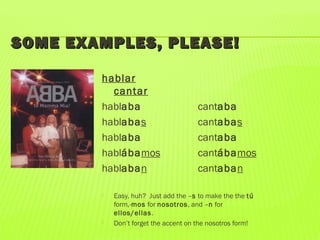
hablar
cantar
hablaba cantaba
hablabas cantabas
hablaba cantaba
hablábamos cantábamos
hablaban cantaban
 Easy, huh? Just add the –s to make the the tú
form,-mos for nosotros, and –n for
ellos/ellas.
 Don’t forget the accent on the nosotros form!
HOW ABOUT FOR –ER & -IR?HOW ABOUT FOR –ER & -IR?
comer vivir
comía vivía
comías vivías
comía vivía
comíamos vivíamos
comían vivían
 Same way… just add the –s to make the the tú
form,-mos for nosotros, and –n for
ellos/ellas.
 Don’t forget the accent on all the forms!
ESTAR…ESTAR…
 yo estaba
 tú estabas
 ella estaba
 nosotros estábamos
 ellos estaban
 How about volver?
VOLVER…VOLVER…
 yo volvía
 tú volvías
 ella volvía
 nosotros volvíamos
 ellos volvían
 Volver is a stem-changing verb in the
present, but stem-changing verbs don’t
change in the imperfect!
 How about conocer?
CONOCER…CONOCER…
 yo conocía
 tú conocías
 ella conocía
 nosotros
conocíamos
 ellos conocían
 Conocer is irregular in the
present, but not in the
imperfect!
 How about decir?
DECIR…DECIR…
 yo decía
 tú decías
 ella decía
 nosotros decíamos
 ellos decían
 Decir is stem-changing and irregular in both
the present and the preterite, but it’s
regular in the imperfect!
 How about levantarse?
LEVANTARSE…LEVANTARSE…
 yo me levantaba
 tú te levantabas
 ella se levantaba
 nosotros nos levantábamos
 ellos se levantaban
 Reflexive verbs work the same as in the
present – don’t forget to put the reflexive
pronoun in front of the verb!
 How about those three irregulars?
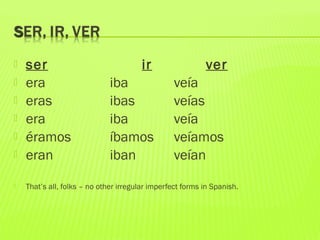
 ser ir ver
 era iba veía
 eras ibas veías
 era iba veía
 éramos íbamos veíamos
 eran iban veían
 That’s all, folks – no other irregular imperfect forms in Spanish.
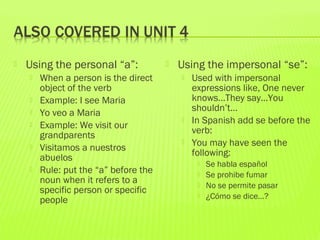
 Using the personal “a”:
 When a person is the direct
object of the verb
 Example: I see Maria
 Yo veo a Maria
 Example: We visit our
grandparents
 Visitamos a nuestros
abuelos
 Rule: put the “a” before the
noun when it refers to a
specific person or specific
people
 Using the impersonal “se”:
 Used with impersonal
expressions like, One never
knows…They say…You
shouldn’t…
 In Spanish add se before the
verb:
 You may have seen the
following:
 Se habla español
 Se prohibe fumar
 No se permite pasar
 ¿Cómo se dice…?
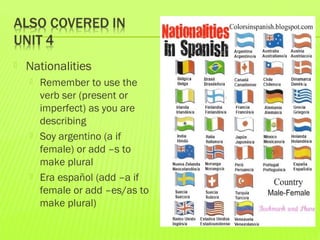
 Nationalities
 Remember to use the
verb ser (present or
imperfect) as you are
describing
 Soy argentino (a if
female) or add –s to
make plural
 Era español (add –a if
female or add –es/as to
make plural)
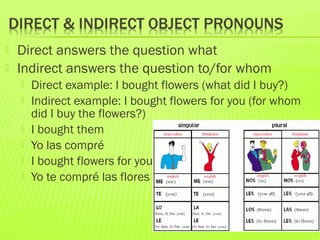
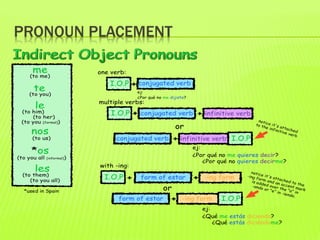
 Direct answers the question what
 Indirect answers the question to/for whom
 Direct example: I bought flowers (what did I buy?)
 Indirect example: I bought flowers for you (for whom
did I buy the flowers?)
 I bought them
 Yo las compré
 I bought flowers for you
 Yo te compré las flores
Unidad 4

Unidad 4

  • 2.
     We’ve alreadylearned one way of talking about the past: the preterite. It’s used to describe single actions that started and ended in the past.  Examples:  Tomaron el examen el lunes pasado. Gabriela recibió la mejor nota de todos los estudiantes.  El año pasado, fui a Costa Rica de vacaciones. Lo pasé muy bien.  Pedro se levantó, fue al baño, y se duchó.
  • 3.
    WHAT ABOUT…?WHAT ABOUT…? … actions that happen more than once in the past?  I used to live in Peoria.  Every Christmas the whole family would get together for a big dinner.
  • 4.
    OR HOW ABOUT…?ORHOW ABOUT…?  … actions that started in the past but didn’t finish (as far as we know):  I was walking to work when I saw an accident.  She was tired and hungry.
  • 5.
    THE IMPERFECTTHE IMPERFECT These ideas –  actions repeated in the past  unfinished actions in the past  descriptions about the past  are expressed using a different verb tense, called the “imperfect.”  Think about it: “perfect” means “complete,” so when a past action is incomplete, it is “imperfect.”
  • 6.
    OK, WHAT ARETHE FORMS?OK, WHAT ARE THE FORMS?  Finally! The imperfect tense is probably the easiest form to learn because there are only three irregulars.  There are two sets of endings…  -AR: add –aba to the base  ER/IR: add –ía to the base
  • 7.
    SOME EXAMPLES, PLEASE!SOMEEXAMPLES, PLEASE! hablar cantar hablaba cantaba hablabas cantabas hablaba cantaba hablábamos cantábamos hablaban cantaban  Easy, huh? Just add the –s to make the the tú form,-mos for nosotros, and –n for ellos/ellas.  Don’t forget the accent on the nosotros form!
  • 8.
    HOW ABOUT FOR–ER & -IR?HOW ABOUT FOR –ER & -IR? comer vivir comía vivía comías vivías comía vivía comíamos vivíamos comían vivían  Same way… just add the –s to make the the tú form,-mos for nosotros, and –n for ellos/ellas.  Don’t forget the accent on all the forms!
  • 9.
    ESTAR…ESTAR…  yo estaba tú estabas  ella estaba  nosotros estábamos  ellos estaban  How about volver?
  • 10.
    VOLVER…VOLVER…  yo volvía tú volvías  ella volvía  nosotros volvíamos  ellos volvían  Volver is a stem-changing verb in the present, but stem-changing verbs don’t change in the imperfect!  How about conocer?
  • 11.
    CONOCER…CONOCER…  yo conocía tú conocías  ella conocía  nosotros conocíamos  ellos conocían  Conocer is irregular in the present, but not in the imperfect!  How about decir?
  • 12.
    DECIR…DECIR…  yo decía tú decías  ella decía  nosotros decíamos  ellos decían  Decir is stem-changing and irregular in both the present and the preterite, but it’s regular in the imperfect!  How about levantarse?
  • 13.
    LEVANTARSE…LEVANTARSE…  yo melevantaba  tú te levantabas  ella se levantaba  nosotros nos levantábamos  ellos se levantaban  Reflexive verbs work the same as in the present – don’t forget to put the reflexive pronoun in front of the verb!  How about those three irregulars?
  • 14.
     ser irver  era iba veía  eras ibas veías  era iba veía  éramos íbamos veíamos  eran iban veían  That’s all, folks – no other irregular imperfect forms in Spanish.
  • 15.
     Using thepersonal “a”:  When a person is the direct object of the verb  Example: I see Maria  Yo veo a Maria  Example: We visit our grandparents  Visitamos a nuestros abuelos  Rule: put the “a” before the noun when it refers to a specific person or specific people  Using the impersonal “se”:  Used with impersonal expressions like, One never knows…They say…You shouldn’t…  In Spanish add se before the verb:  You may have seen the following:  Se habla español  Se prohibe fumar  No se permite pasar  ¿Cómo se dice…?
  • 16.
     Nationalities  Rememberto use the verb ser (present or imperfect) as you are describing  Soy argentino (a if female) or add –s to make plural  Era español (add –a if female or add –es/as to make plural)
  • 17.
     Direct answersthe question what  Indirect answers the question to/for whom  Direct example: I bought flowers (what did I buy?)  Indirect example: I bought flowers for you (for whom did I buy the flowers?)  I bought them  Yo las compré  I bought flowers for you  Yo te compré las flores