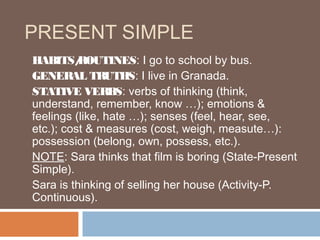
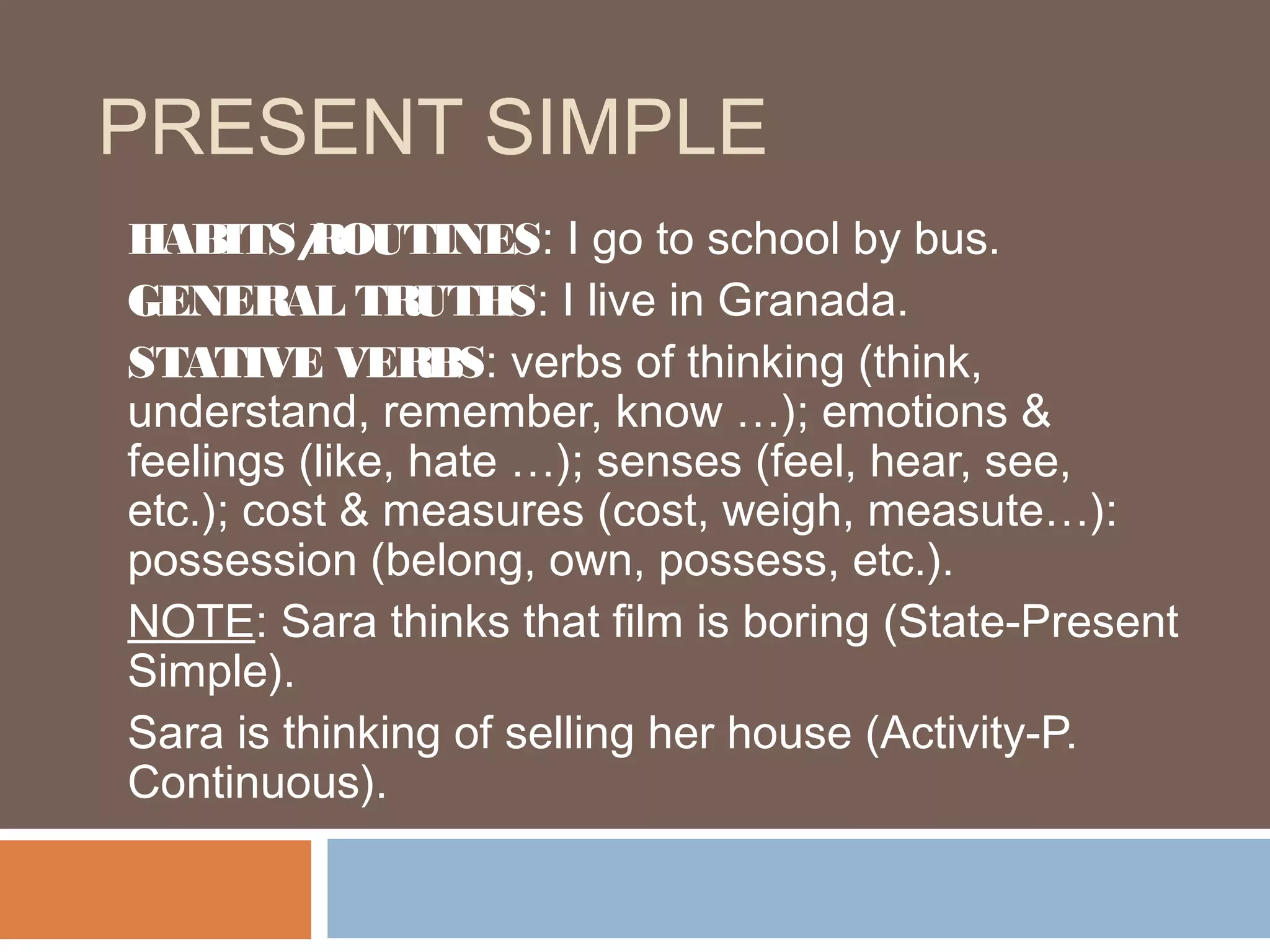
PRESENT SIMPLE
HABITS/   ROUTINES: I go to school by bus.
GENERAL TRUTHS: I live in Granada.
STATIVE VERBS: verbs of thinking (think,
understand, remember, know …); emotions &
feelings (like, hate …); senses (feel, hear, see,
etc.); cost & measures (cost, weigh, measute…):
possession (belong, own, possess, etc.).
NOTE: Sara thinks that film is boring (State-Present
Simple).
Sara is thinking of selling her house (Activity-P.
Continuous).
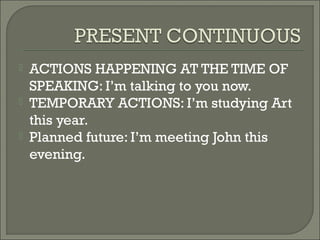
   ACTIONS HAPPENING AT THE TIME OF
    SPEAKING: I’m talking to you now.
   TEMPORARY ACTIONS: I’m studying Art
    this year.
   Planned future: I’m meeting John this
    evening.
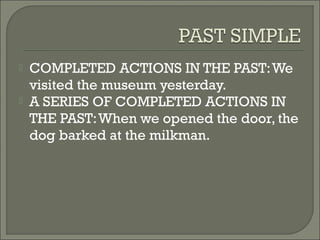
   COMPLETED ACTIONS IN THE PAST: We
    visited the museum yesterday.
   A SERIES OF COMPLETED ACTIONS IN
    THE PAST: When we opened the door, the
    dog barked at the milkman.
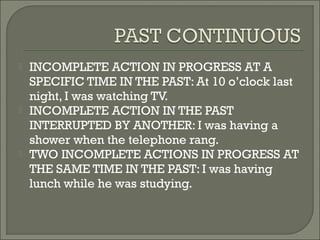
   INCOMPLETE ACTION IN PROGRESS AT A
    SPECIFIC TIME IN THE PAST: At 10 o’clock last
    night, I was watching TV.
   INCOMPLETE ACTION IN THE PAST
    INTERRUPTED BY ANOTHER: I was having a
    shower when the telephone rang.
   TWO INCOMPLETE ACTIONS IN PROGRESS AT
    THE SAME TIME IN THE PAST: I was having
    lunch while he was studying.
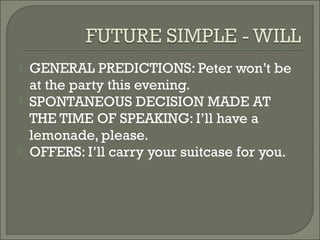
   GENERAL PREDICTIONS: Peter won’t be
    at the party this evening.
   SPONTANEOUS DECISION MADE AT
    THE TIME OF SPEAKING: I’ll have a
    lemonade, please.
   OFFERS: I’ll carry your suitcase for you.
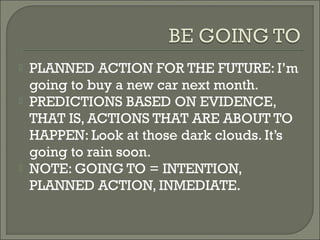
   PLANNED ACTION FOR THE FUTURE: I’m
    going to buy a new car next month.
   PREDICTIONS BASED ON EVIDENCE,
    THAT IS, ACTIONS THAT ARE ABOUT TO
    HAPPEN: Look at those dark clouds. It’s
    going to rain soon.
   NOTE: GOING TO = INTENTION,
    PLANNED ACTION, INMEDIATE.
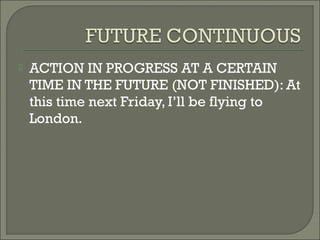
   ACTION IN PROGRESS AT A CERTAIN
    TIME IN THE FUTURE (NOT FINISHED): At
    this time next Friday, I’ll be flying to
    London.
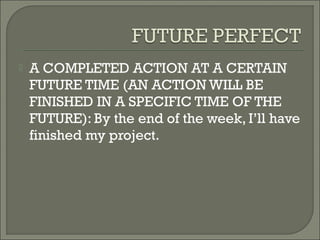
   A COMPLETED ACTION AT A CERTAIN
    FUTURE TIME (AN ACTION WILL BE
    FINISHED IN A SPECIFIC TIME OF THE
    FUTURE): By the end of the week, I’ll have
    finished my project.
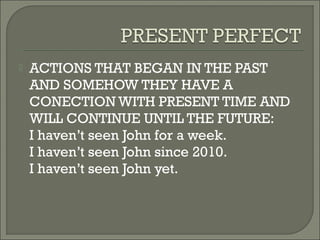
   ACTIONS THAT BEGAN IN THE PAST
    AND SOMEHOW THEY HAVE A
    CONECTION WITH PRESENT TIME AND
    WILL CONTINUE UNTIL THE FUTURE:
    I haven’t seen John for a week.
    I haven’t seen John since 2010.
    I haven’t seen John yet.
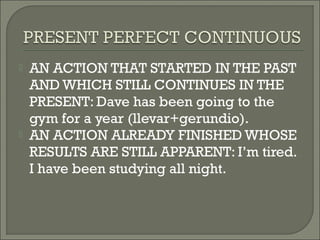
   AN ACTION THAT STARTED IN THE PAST
    AND WHICH STILL CONTINUES IN THE
    PRESENT: Dave has been going to the
    gym for a year (llevar+gerundio).
   AN ACTION ALREADY FINISHED WHOSE
    RESULTS ARE STILL APPARENT: I’m tired.
    I have been studying all night.
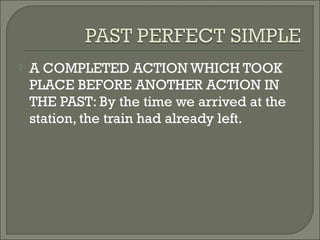
   A COMPLETED ACTION WHICH TOOK
    PLACE BEFORE ANOTHER ACTION IN
    THE PAST: By the time we arrived at the
    station, the train had already left.
   AN ACTION WHICH CONTINUED UP TO
    ANOTHER PAST ACTION: We had been
    travelling for a few hours when it started
    snowing. (llevar + gerundio)

Verbal tenses uses

  • 1.
    PRESENT SIMPLE HABITS/ ROUTINES: I go to school by bus. GENERAL TRUTHS: I live in Granada. STATIVE VERBS: verbs of thinking (think, understand, remember, know …); emotions & feelings (like, hate …); senses (feel, hear, see, etc.); cost & measures (cost, weigh, measute…): possession (belong, own, possess, etc.). NOTE: Sara thinks that film is boring (State-Present Simple). Sara is thinking of selling her house (Activity-P. Continuous).
  • 2.
    ACTIONS HAPPENING AT THE TIME OF SPEAKING: I’m talking to you now.  TEMPORARY ACTIONS: I’m studying Art this year.  Planned future: I’m meeting John this evening.
  • 3.
    COMPLETED ACTIONS IN THE PAST: We visited the museum yesterday.  A SERIES OF COMPLETED ACTIONS IN THE PAST: When we opened the door, the dog barked at the milkman.
  • 4.
    INCOMPLETE ACTION IN PROGRESS AT A SPECIFIC TIME IN THE PAST: At 10 o’clock last night, I was watching TV.  INCOMPLETE ACTION IN THE PAST INTERRUPTED BY ANOTHER: I was having a shower when the telephone rang.  TWO INCOMPLETE ACTIONS IN PROGRESS AT THE SAME TIME IN THE PAST: I was having lunch while he was studying.
  • 5.
    GENERAL PREDICTIONS: Peter won’t be at the party this evening.  SPONTANEOUS DECISION MADE AT THE TIME OF SPEAKING: I’ll have a lemonade, please.  OFFERS: I’ll carry your suitcase for you.
  • 6.
    PLANNED ACTION FOR THE FUTURE: I’m going to buy a new car next month.  PREDICTIONS BASED ON EVIDENCE, THAT IS, ACTIONS THAT ARE ABOUT TO HAPPEN: Look at those dark clouds. It’s going to rain soon.  NOTE: GOING TO = INTENTION, PLANNED ACTION, INMEDIATE.
  • 7.
    ACTION IN PROGRESS AT A CERTAIN TIME IN THE FUTURE (NOT FINISHED): At this time next Friday, I’ll be flying to London.
  • 8.
    A COMPLETED ACTION AT A CERTAIN FUTURE TIME (AN ACTION WILL BE FINISHED IN A SPECIFIC TIME OF THE FUTURE): By the end of the week, I’ll have finished my project.
  • 9.
    ACTIONS THAT BEGAN IN THE PAST AND SOMEHOW THEY HAVE A CONECTION WITH PRESENT TIME AND WILL CONTINUE UNTIL THE FUTURE: I haven’t seen John for a week. I haven’t seen John since 2010. I haven’t seen John yet.
  • 10.
    AN ACTION THAT STARTED IN THE PAST AND WHICH STILL CONTINUES IN THE PRESENT: Dave has been going to the gym for a year (llevar+gerundio).  AN ACTION ALREADY FINISHED WHOSE RESULTS ARE STILL APPARENT: I’m tired. I have been studying all night.
  • 11.
    A COMPLETED ACTION WHICH TOOK PLACE BEFORE ANOTHER ACTION IN THE PAST: By the time we arrived at the station, the train had already left.
  • 12.
    AN ACTION WHICH CONTINUED UP TO ANOTHER PAST ACTION: We had been travelling for a few hours when it started snowing. (llevar + gerundio)