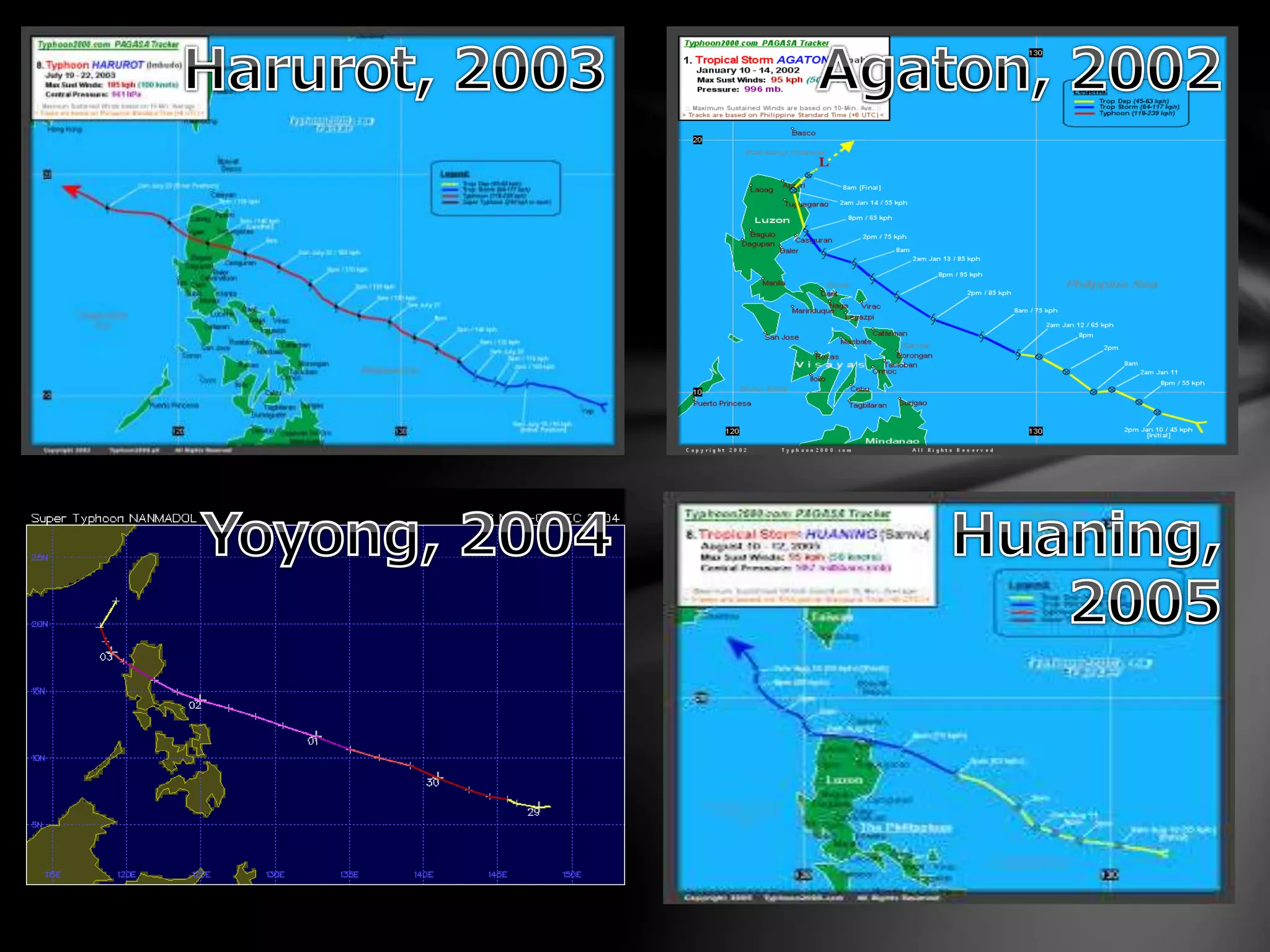
What is a typhoon?
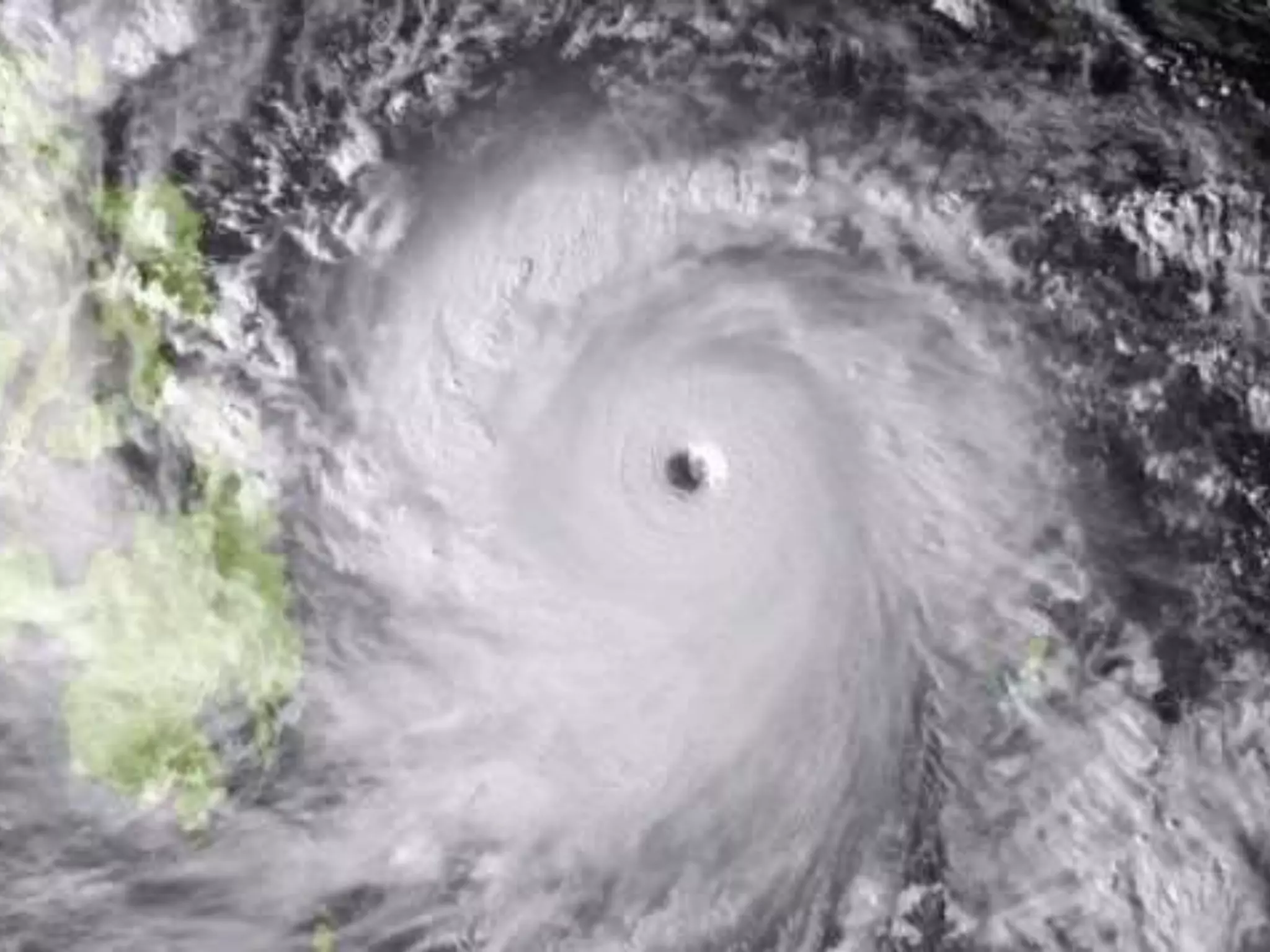
A tropical cyclone/typhoon is
a storm system characterized by
counterclockwise rotating air
mass around a central part called
eye that has a low pressure.
How many typhoons enter the
Philippines every year?
BioBits!
According to the Philippine
Atmospheric, Geophysical, and
Astronomical Services Administration
(PAGASA), about 20 tropical cyclones
enter the Philippine Area of
Responsibility each year.
BioBits!
Winds in a typhoon move in a
certain direction; they go around a
central area called the eye.
The appearance of the clouds
in a typhoon are in a spiral
arrangement; they are being
blown by winds in a counter-
clockwise direction.
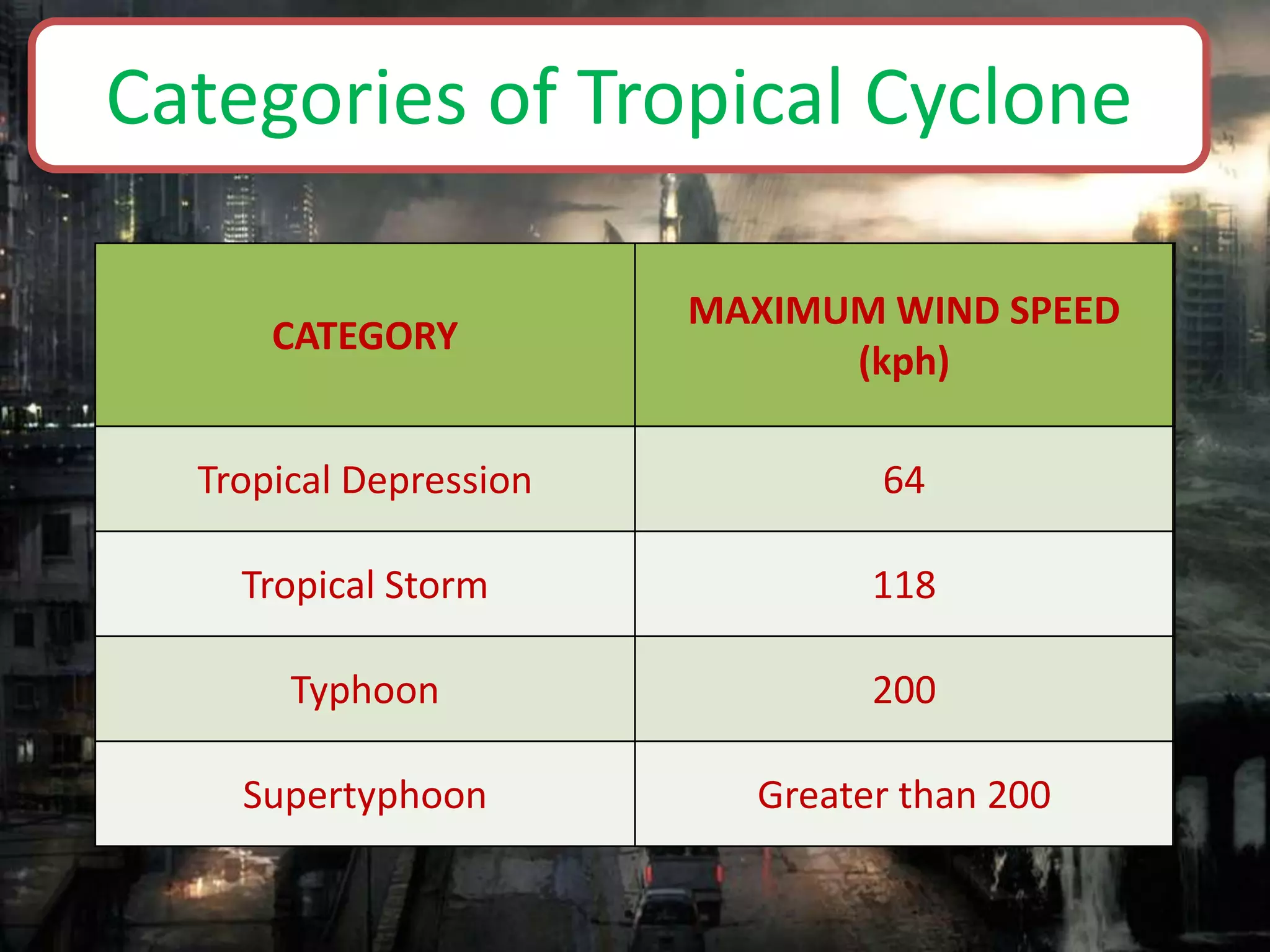
CATEGORY
MAXIMUM WIND SPEED
(kph)
Tropical Depression
Tropical Storm
Typhoon
Supertyphoon
Categories of Tropical Cyclone
MAXIMUM WIND SPEED
(kph)
64
118
200
Greater than 200
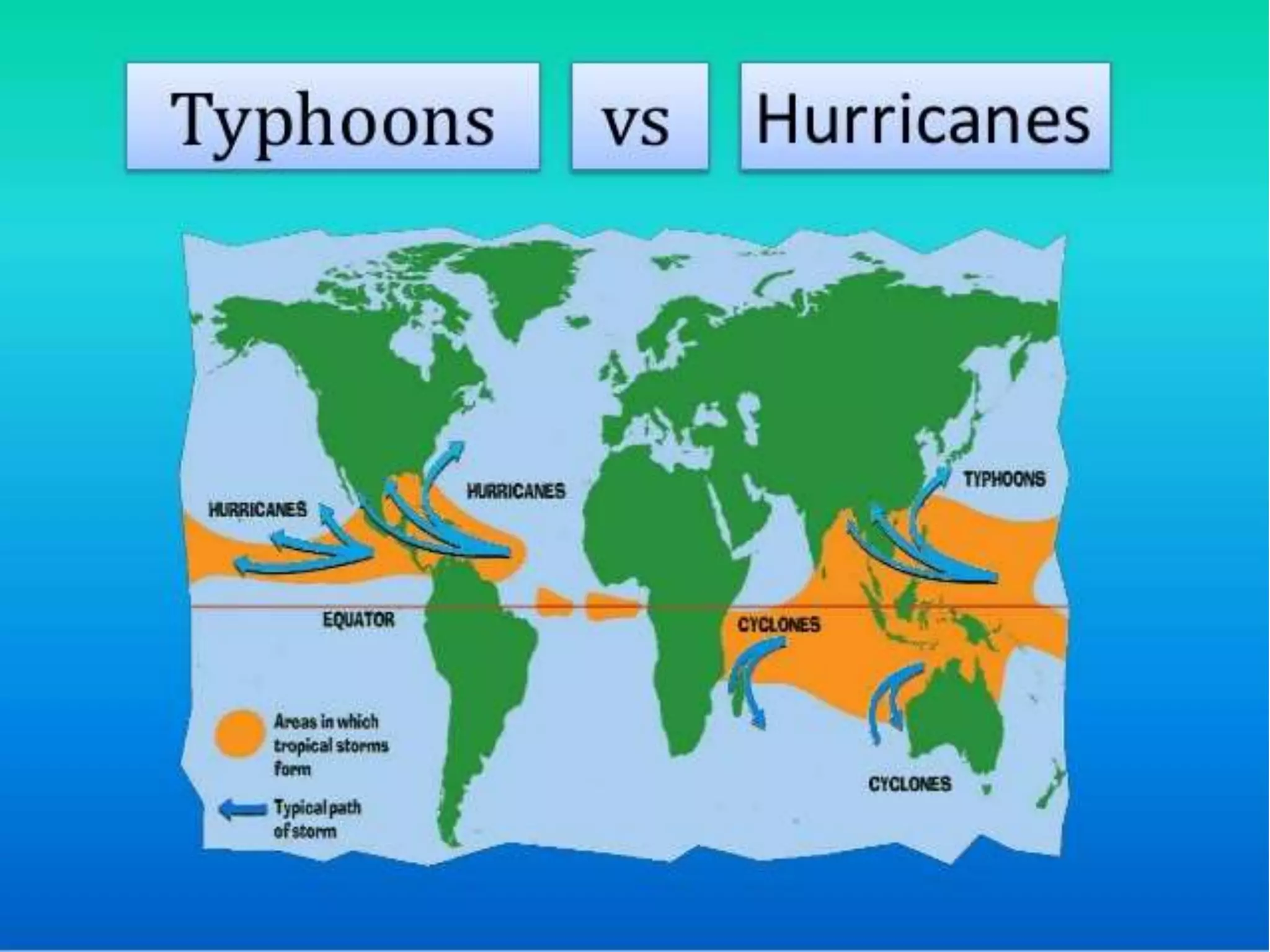
The term typhoon is used only
in the northwestern part of the
Pacific Ocean.
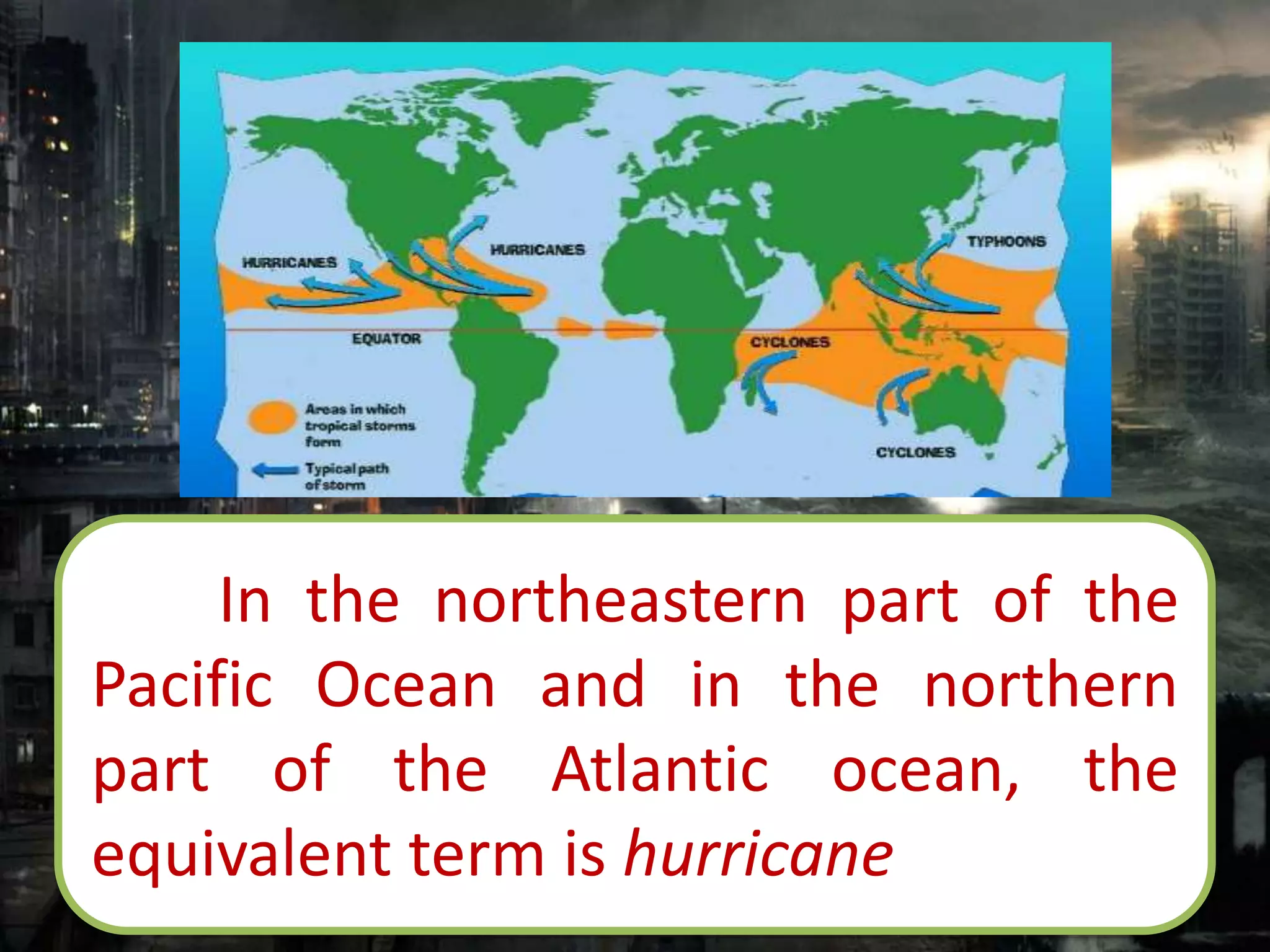
In the northeastern part of the
Pacific Ocean and in the northern
part of the Atlantic ocean, the
equivalent term is hurricane
The difference is the geographical
area where they occur.
1.How many typhoons enter the Philippines every
year?
Daily Checkup!
2. What is PAG ASA?
3. What are the 4 categories of a tropical cyclone?
4. What is the difference between typhoons and
hurricanes?
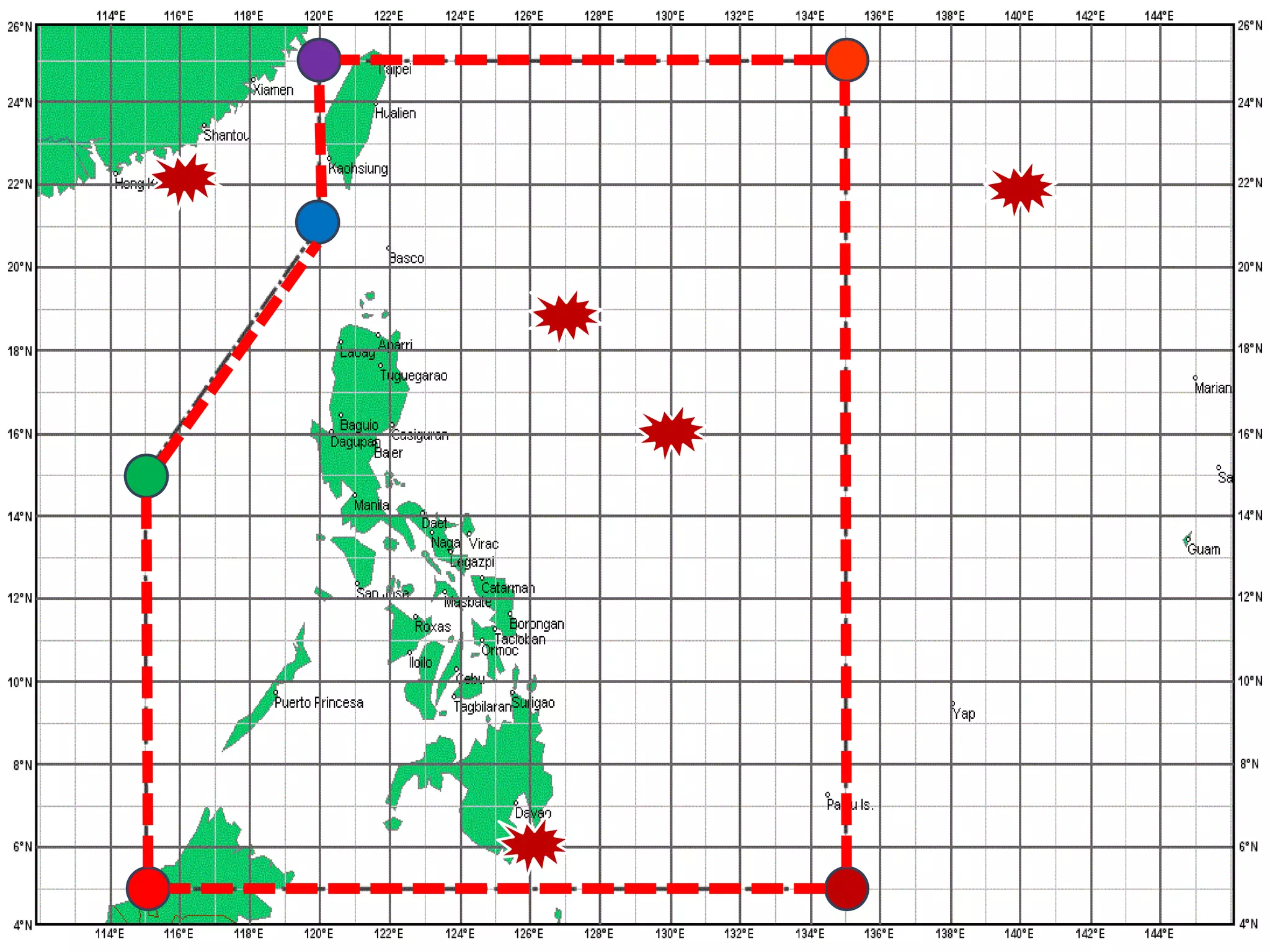
What is P.A.R.?
Where is P.A.R. located?
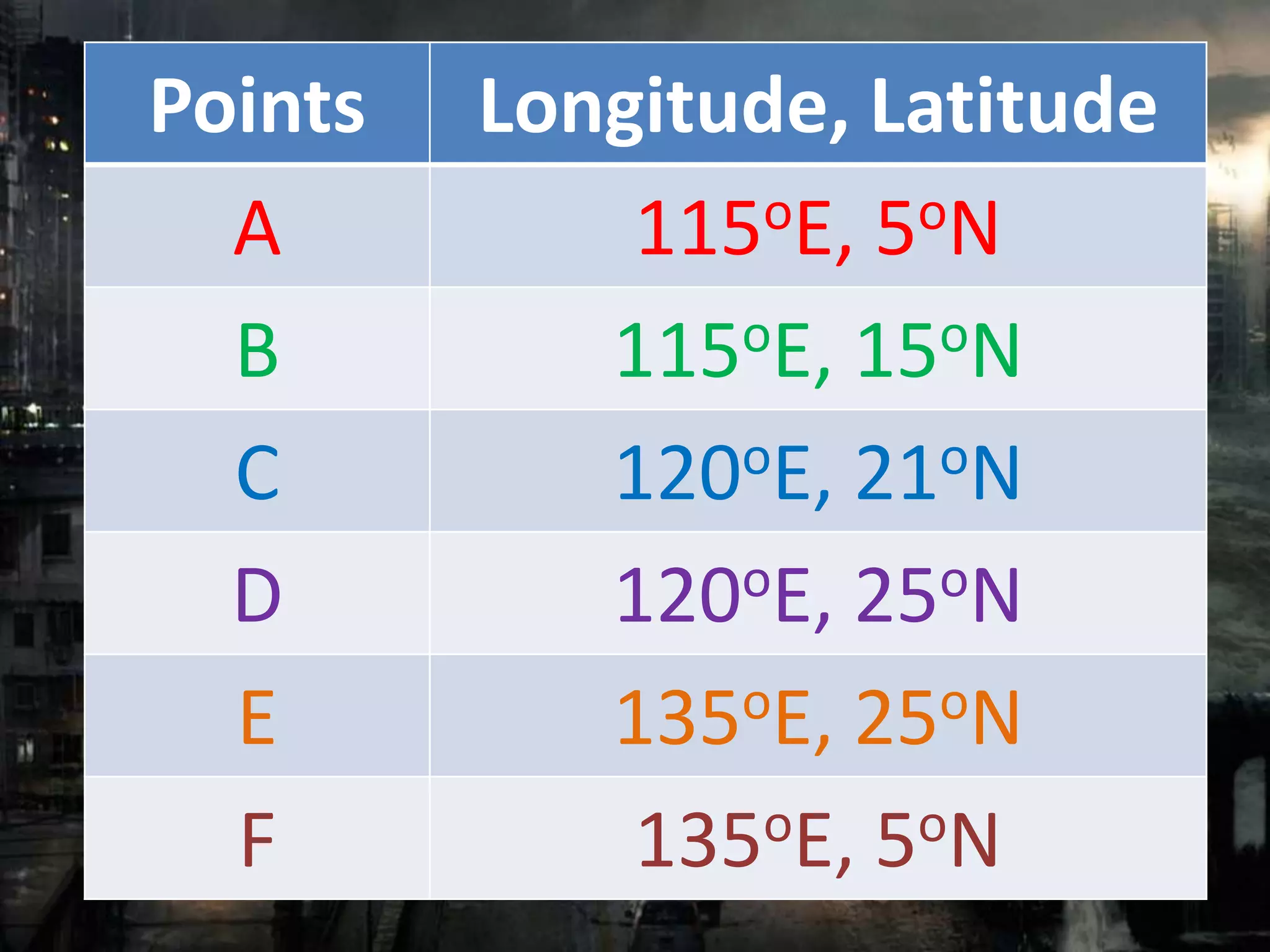
Points Longitude, Latitude
A 115oE, 5oN
B 115oE, 15oN
C 120oE, 21oN
D 120oE, 25oN
E 135oE, 25oN
F 135oE, 5oN
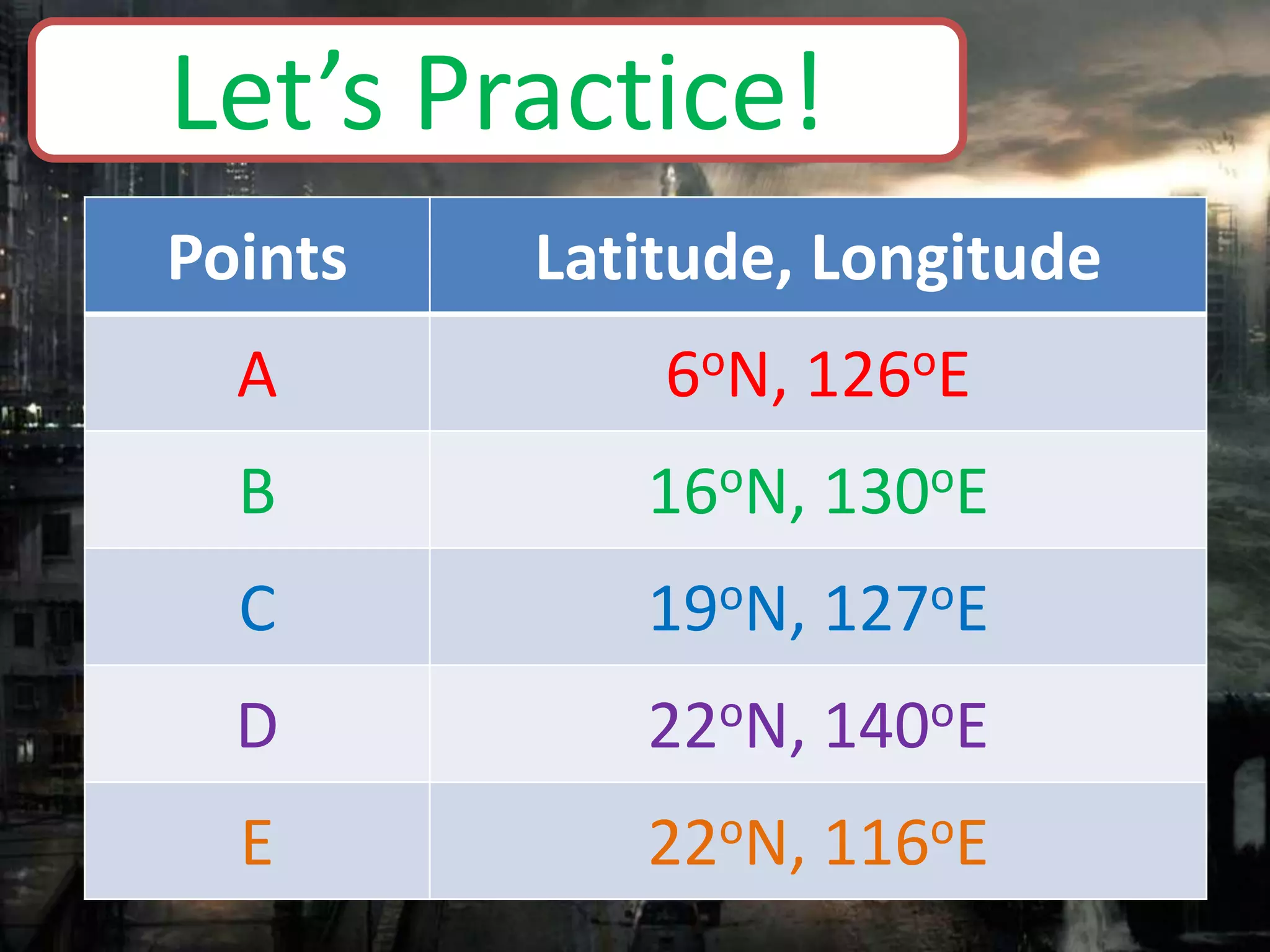
Points Latitude, Longitude
A 6oN, 126oE
B 16oN, 130oE
C 19oN, 127oE
D 22oN, 140oE
E 22oN, 116oE
Let’s Practice!
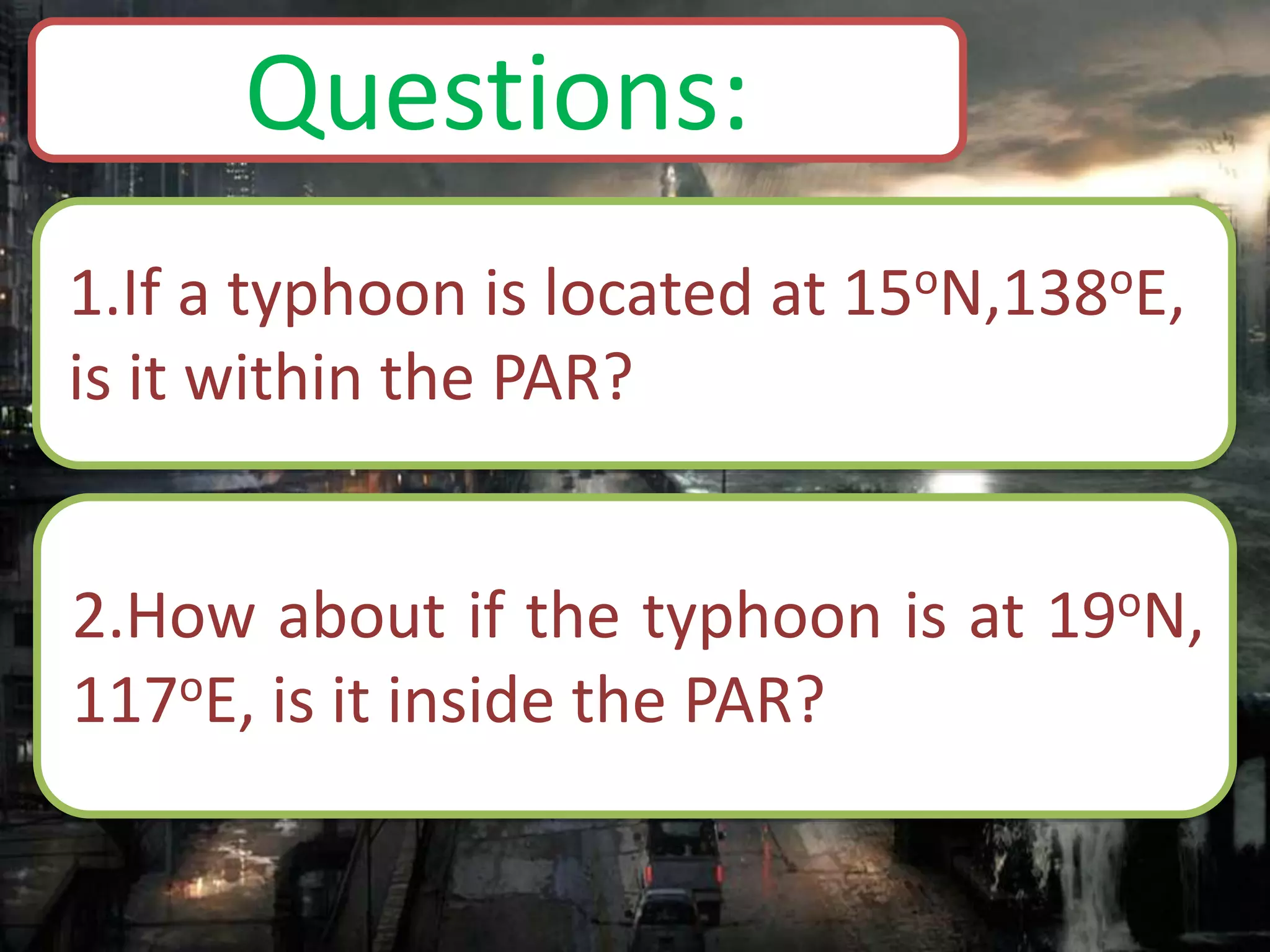
1.If a typhoon is located at 15oN,138oE,
is it within the PAR?
Questions:
2.How about if the typhoon is at 19oN,
117oE, is it inside the PAR?
Location A B C D
Air
pressure*
in
millibars
(mb)
930 960 980 990
Compare the air pressures at A,B,C
and D. What do you notice?
The lowest air pressure is found
at the eye of a tropical cyclone,
in fact all tropical cyclones have
low air pressure at the center.
Air Pressure
Location E F
Wind speed
(km/hour)
10 200
Compare the wind speed within the
eye and at the eyewall. What can
you say?
At the eye of a tropical storm,
wind speed is low. But in the
dense clouds surrounding the
eye or at the eyewall, wind
speed is great.
Air Pressure
One side of the eyewall brings
strong winds, then comes the
eye with its somewhat calm
weather followed by the other
side of the eyewall.
“calm before the storm”
How does air pressure and
wind speed help weathermen
locate the eye of a tropical
cyclone?
Think Pa More!!
1.What do we mean by the statement “calm
before the storm.”
Daily Checkup!
2.How does air pressure and wind speed help
weathermen locate the eye of a tropical cyclone?
Read about the Public
Storm Warning Signals
Assignment:
(6:00am)
In a small pond, there is a fish
that doubles every minute.
(12:00nn)
The pond was full of fishes.
Question:
When was the pond half-filled?
PSWS # 1
 A tropical cyclone will affect the
locality in at least 36 hours
 Winds of 30-60 kph and irregular
rains is expected in at least 36
hours
What it means:
 Twigs and branches of small trees
are broken
 Some houses of very light
materials are partially unroofed
 Rice crops suffer significant
damage in its flowering stage
The following may happen:
 Watch out for big waves
 Listen to severe weather bulletin
issued by PAGASA
What to do:
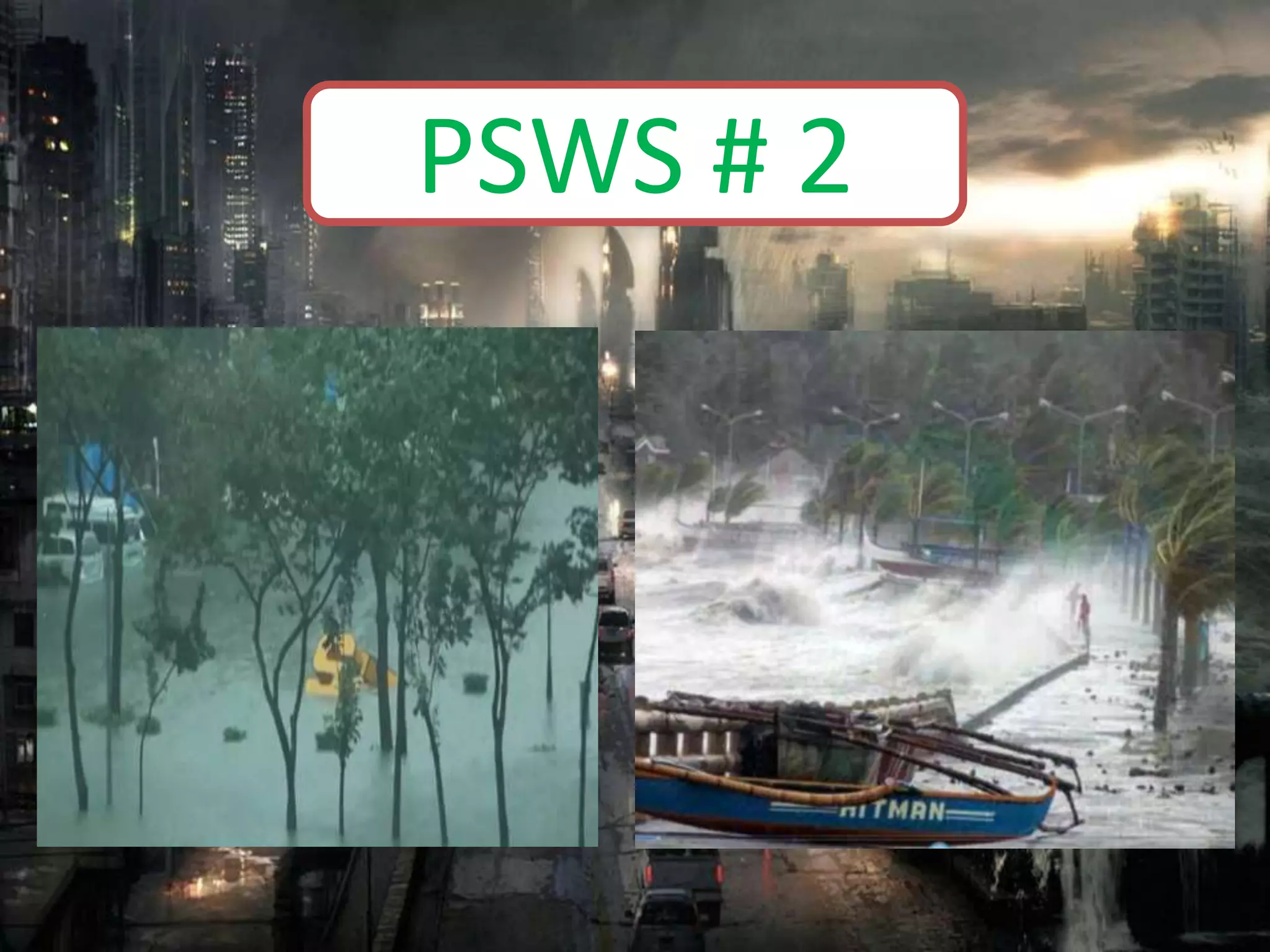
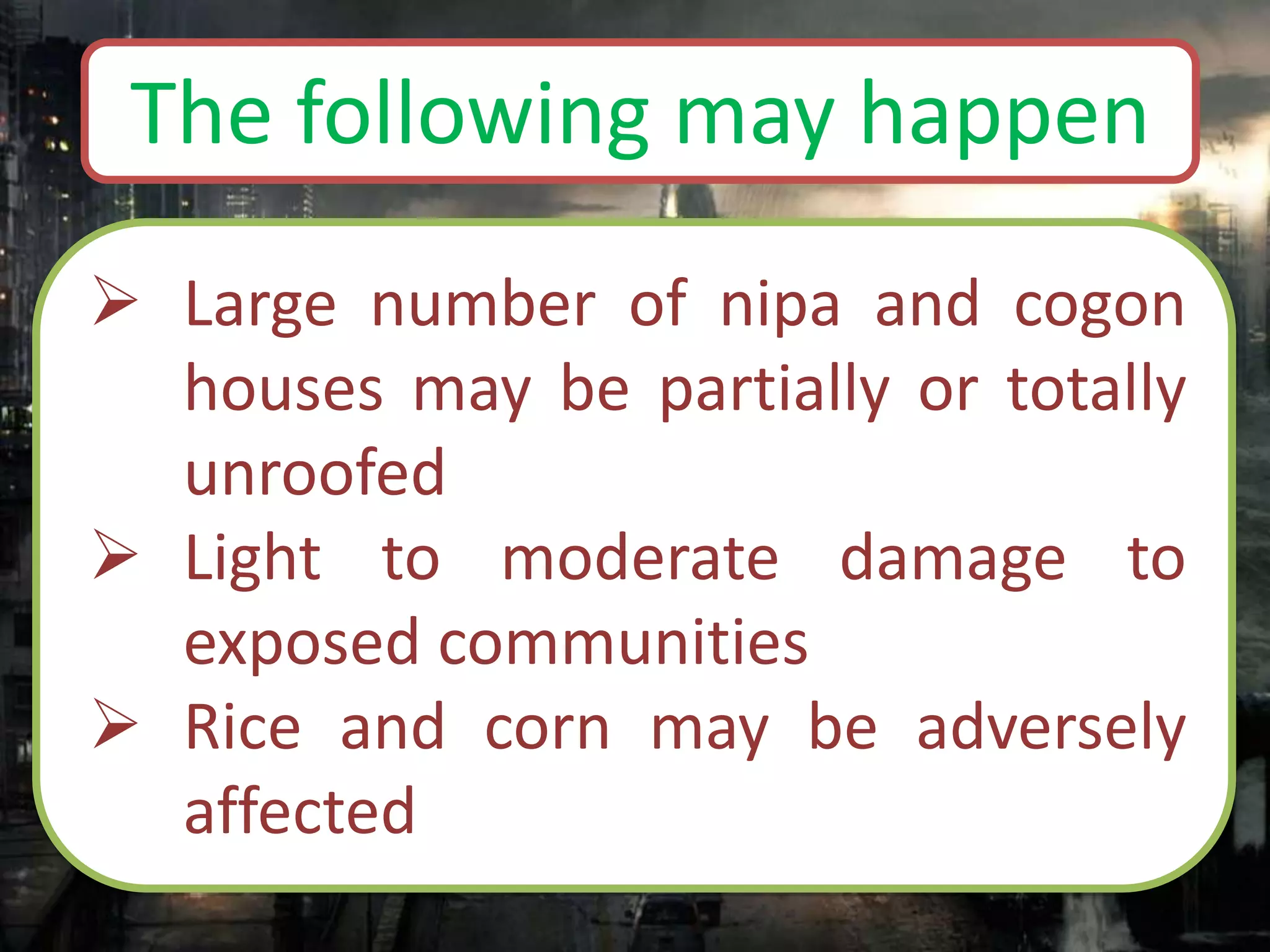
PSWS # 2
 A tropical cyclone with winds of
greater than 60 kph up to 100 kph
will affect the locality in at least 24
hours.
What it means
 Large number of nipa and cogon
houses may be partially or totally
unroofed
 Light to moderate damage to
exposed communities
 Rice and corn may be adversely
affected
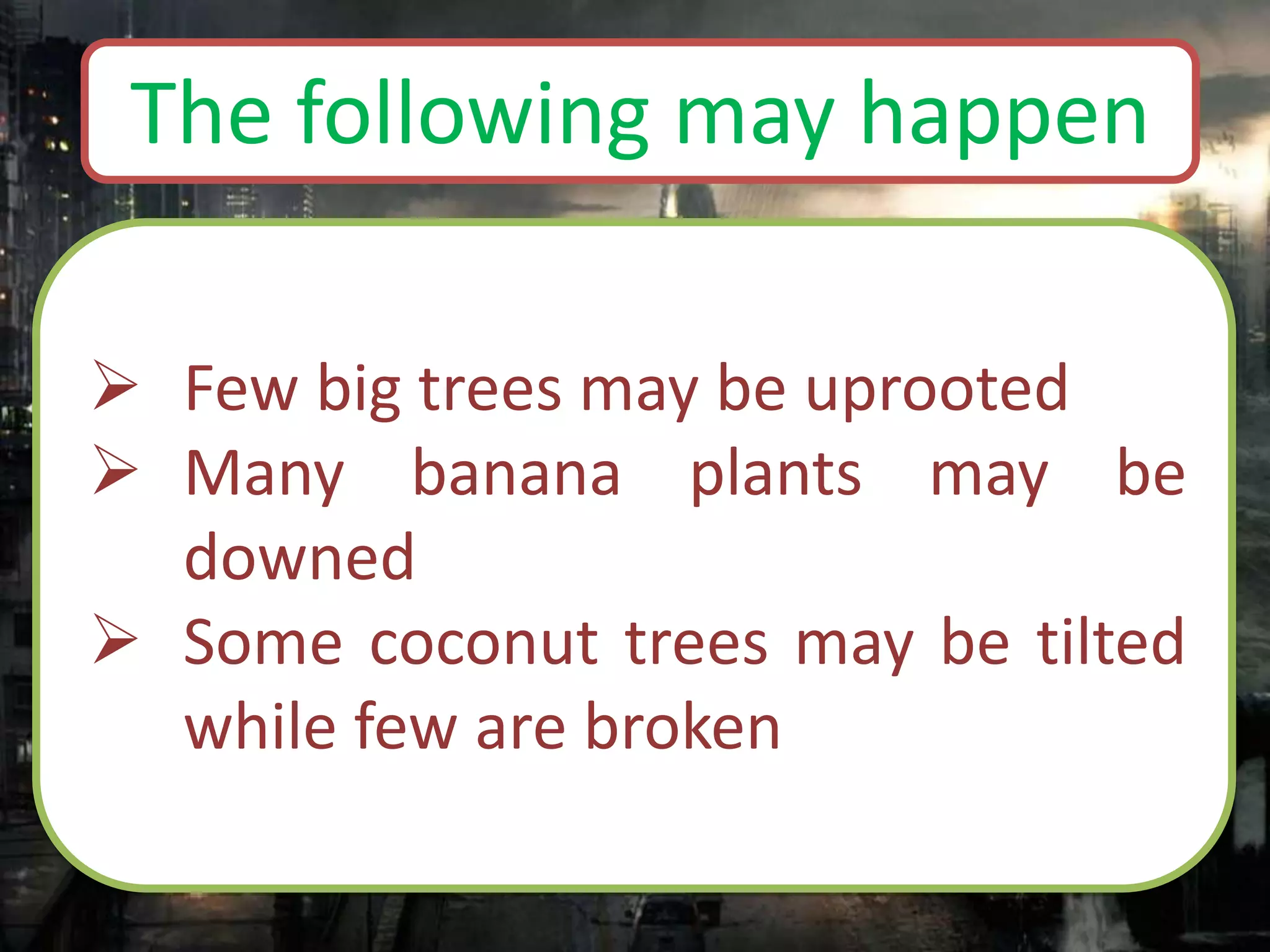
The following may happen
 Few big trees may be uprooted
 Many banana plants may be
downed
 Some coconut trees may be tilted
while few are broken
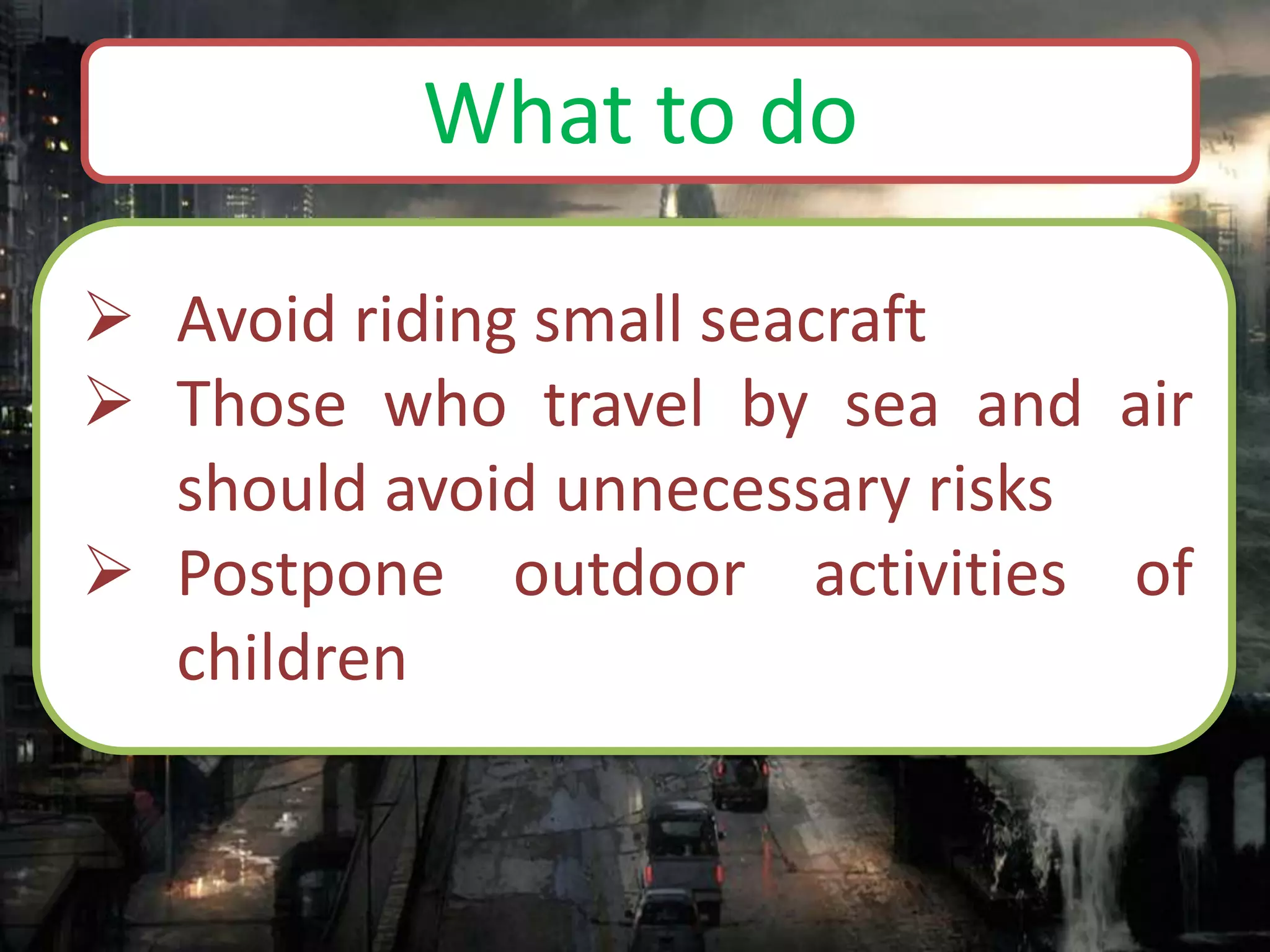
The following may happen
 Avoid riding small seacraft
 Those who travel by sea and air
should avoid unnecessary risks
 Postpone outdoor activities of
children
What to do
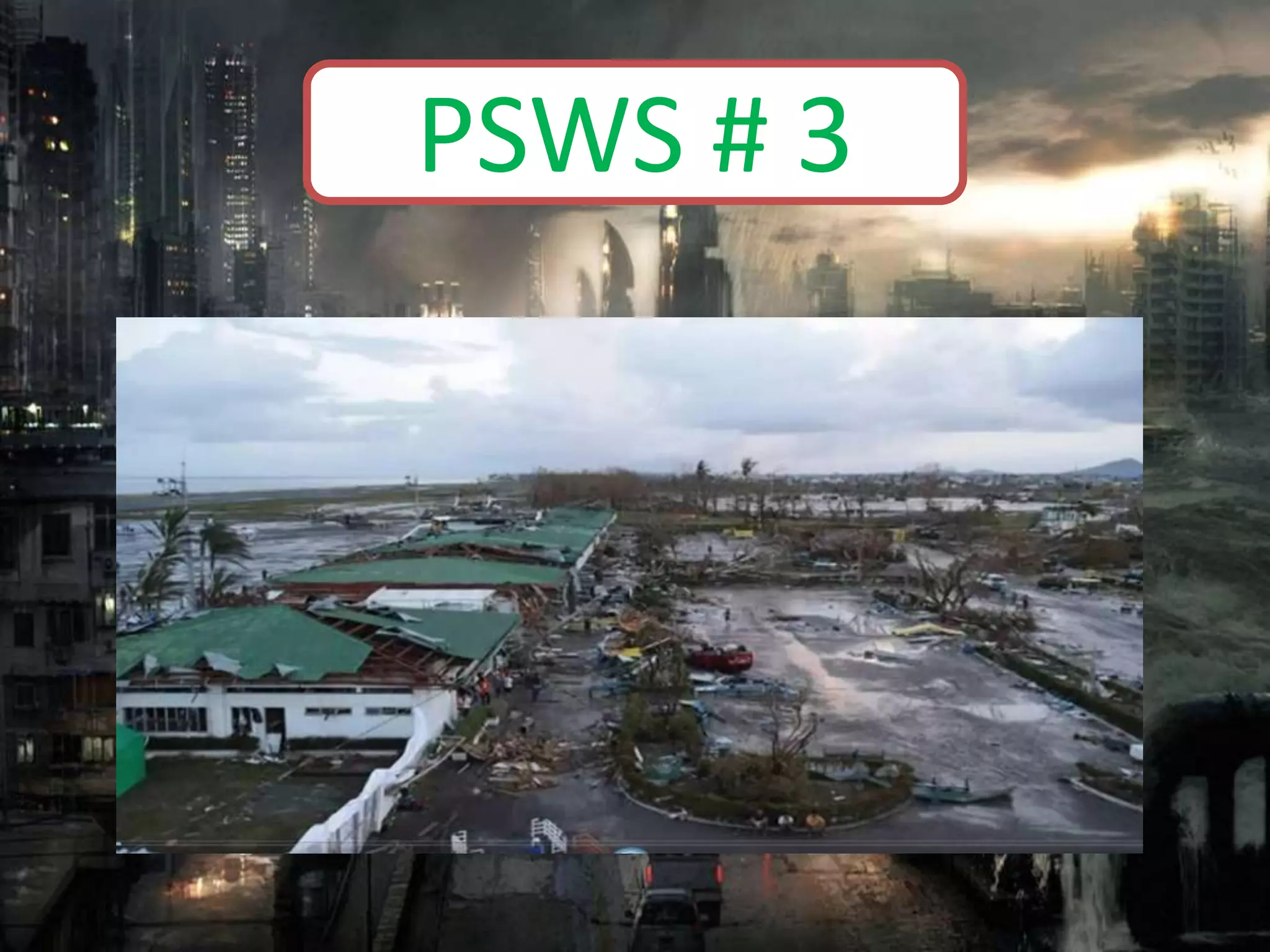
PSWS # 3
 A tropical cyclone with winds of
greater than 100 kph to 185 kph
will affect the locality in at least 18
hours.
What it means
 Many coconut trees are broken or
destroyed
 Almost all banana plants downed
and a large number of trees
uprooted
 Rice and corn crops suffer heavy
losses
The following may happen
 Majority of all nipa and cogon
houses are uprooted or destroyed;
considerable damage to structures
of light to medium construction
The following may happen
 Widespread disruption of
electrical power and
communication services
 Moderate to heavy damage
experienced in agricultural and
industrial sectors
The following may happen
 Avoid riding in any seacraft
 Seek shelter in strong buildings
 Evacuate from low lying areas
 Stay away from coasts and
riverbanks
What to do
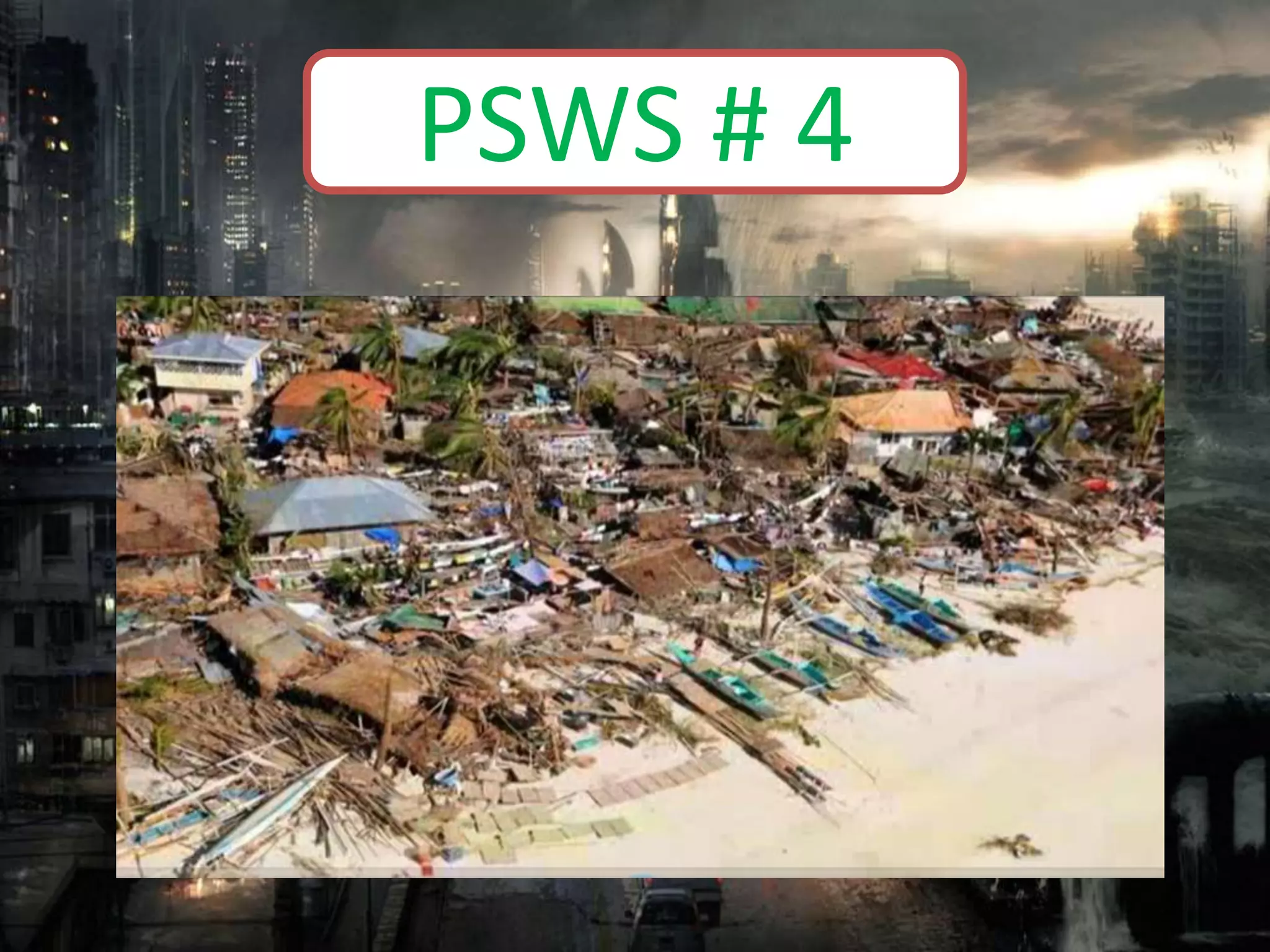
PSWS # 4
 A very intense typhoon carrying
very strong winds of more than
185 kph will affect the locality in at
least 12 hours
What it means
 Coconut plantation may suffer
extensive damage
 Many large trees may be uprooted
 Rice and corn plantation may
suffer severe losses
 Damage to affected communities
can be very heavy
The following may happen
 Most residential and institutional
buildings of mixed construction
may be severely damaged
 Electrical power distribution and
communication services maybe
severely disrupted
The following may happen
 Most residential and institutional
buildings of mixed construction
may be severely damaged
 Electrical power distribution and
communication services maybe
severely disrupted
The following may happen
 All travels and outdoor activities
should be cancelled
 Evacuate to safe shelters
What to do
List 5 important things
that you will include in your
emergency kit. A
representative will present
their work in front.
Directions

Understanding Typhoons

  • 2.
    What is atyphoon?
  • 5.
    A tropical cyclone/typhoonis a storm system characterized by counterclockwise rotating air mass around a central part called eye that has a low pressure.
  • 6.
    How many typhoonsenter the Philippines every year? BioBits!
  • 7.
    According to thePhilippine Atmospheric, Geophysical, and Astronomical Services Administration (PAGASA), about 20 tropical cyclones enter the Philippine Area of Responsibility each year. BioBits!
  • 8.
    Winds in atyphoon move in a certain direction; they go around a central area called the eye.
  • 9.
    The appearance ofthe clouds in a typhoon are in a spiral arrangement; they are being blown by winds in a counter- clockwise direction.
  • 10.
    CATEGORY MAXIMUM WIND SPEED (kph) TropicalDepression Tropical Storm Typhoon Supertyphoon Categories of Tropical Cyclone MAXIMUM WIND SPEED (kph) 64 118 200 Greater than 200
  • 12.
    The term typhoonis used only in the northwestern part of the Pacific Ocean.
  • 13.
    In the northeasternpart of the Pacific Ocean and in the northern part of the Atlantic ocean, the equivalent term is hurricane
  • 14.
    The difference isthe geographical area where they occur.
  • 15.
    1.How many typhoonsenter the Philippines every year? Daily Checkup! 2. What is PAG ASA? 3. What are the 4 categories of a tropical cyclone? 4. What is the difference between typhoons and hurricanes?
  • 17.
  • 18.
  • 19.
    Points Longitude, Latitude A115oE, 5oN B 115oE, 15oN C 120oE, 21oN D 120oE, 25oN E 135oE, 25oN F 135oE, 5oN
  • 21.
    Points Latitude, Longitude A6oN, 126oE B 16oN, 130oE C 19oN, 127oE D 22oN, 140oE E 22oN, 116oE Let’s Practice!
  • 23.
    1.If a typhoonis located at 15oN,138oE, is it within the PAR? Questions: 2.How about if the typhoon is at 19oN, 117oE, is it inside the PAR?
  • 30.
    Location A BC D Air pressure* in millibars (mb) 930 960 980 990 Compare the air pressures at A,B,C and D. What do you notice?
  • 31.
    The lowest airpressure is found at the eye of a tropical cyclone, in fact all tropical cyclones have low air pressure at the center. Air Pressure
  • 32.
    Location E F Windspeed (km/hour) 10 200 Compare the wind speed within the eye and at the eyewall. What can you say?
  • 33.
    At the eyeof a tropical storm, wind speed is low. But in the dense clouds surrounding the eye or at the eyewall, wind speed is great. Air Pressure
  • 34.
    One side ofthe eyewall brings strong winds, then comes the eye with its somewhat calm weather followed by the other side of the eyewall. “calm before the storm”
  • 35.
    How does airpressure and wind speed help weathermen locate the eye of a tropical cyclone? Think Pa More!!
  • 36.
    1.What do wemean by the statement “calm before the storm.” Daily Checkup! 2.How does air pressure and wind speed help weathermen locate the eye of a tropical cyclone?
  • 37.
    Read about thePublic Storm Warning Signals Assignment:
  • 38.
    (6:00am) In a smallpond, there is a fish that doubles every minute. (12:00nn) The pond was full of fishes. Question: When was the pond half-filled?
  • 40.
  • 41.
     A tropicalcyclone will affect the locality in at least 36 hours  Winds of 30-60 kph and irregular rains is expected in at least 36 hours What it means:
  • 42.
     Twigs andbranches of small trees are broken  Some houses of very light materials are partially unroofed  Rice crops suffer significant damage in its flowering stage The following may happen:
  • 43.
     Watch outfor big waves  Listen to severe weather bulletin issued by PAGASA What to do:
  • 44.
  • 45.
     A tropicalcyclone with winds of greater than 60 kph up to 100 kph will affect the locality in at least 24 hours. What it means
  • 46.
     Large numberof nipa and cogon houses may be partially or totally unroofed  Light to moderate damage to exposed communities  Rice and corn may be adversely affected The following may happen
  • 47.
  • 48.
     Few bigtrees may be uprooted  Many banana plants may be downed  Some coconut trees may be tilted while few are broken The following may happen
  • 49.
     Avoid ridingsmall seacraft  Those who travel by sea and air should avoid unnecessary risks  Postpone outdoor activities of children What to do
  • 50.
  • 51.
     A tropicalcyclone with winds of greater than 100 kph to 185 kph will affect the locality in at least 18 hours. What it means
  • 52.
     Many coconuttrees are broken or destroyed  Almost all banana plants downed and a large number of trees uprooted  Rice and corn crops suffer heavy losses The following may happen
  • 53.
     Majority ofall nipa and cogon houses are uprooted or destroyed; considerable damage to structures of light to medium construction The following may happen
  • 54.
     Widespread disruptionof electrical power and communication services  Moderate to heavy damage experienced in agricultural and industrial sectors The following may happen
  • 55.
     Avoid ridingin any seacraft  Seek shelter in strong buildings  Evacuate from low lying areas  Stay away from coasts and riverbanks What to do
  • 56.
  • 57.
     A veryintense typhoon carrying very strong winds of more than 185 kph will affect the locality in at least 12 hours What it means
  • 58.
     Coconut plantationmay suffer extensive damage  Many large trees may be uprooted  Rice and corn plantation may suffer severe losses  Damage to affected communities can be very heavy The following may happen
  • 59.
     Most residentialand institutional buildings of mixed construction may be severely damaged  Electrical power distribution and communication services maybe severely disrupted The following may happen
  • 60.
     Most residentialand institutional buildings of mixed construction may be severely damaged  Electrical power distribution and communication services maybe severely disrupted The following may happen
  • 61.
     All travelsand outdoor activities should be cancelled  Evacuate to safe shelters What to do
  • 63.
    List 5 importantthings that you will include in your emergency kit. A representative will present their work in front. Directions