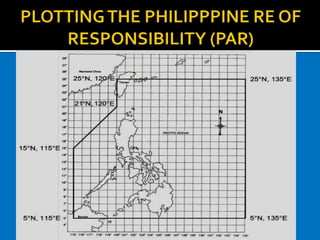
According to the Philippine
Atmospheric, Geophysical,
and Astronomical Services
Administration
(PAGASA), about 20 tropical
cyclones hit the PAR each
year.
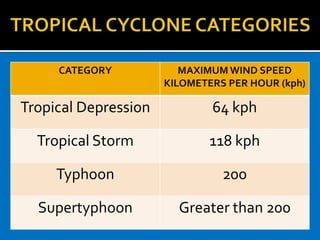
CATEGORY MAXIMUM WIND SPEED
KILOMETERS PER HOUR (kph)
Tropical Depression 64 kph
Tropical Storm 118 kph
Typhoon 200
Supertyphoon Greater than 200
1.Where did the tropical
cyclones form? On land or in
the ocean?
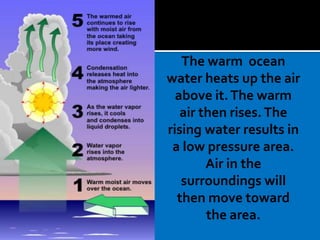
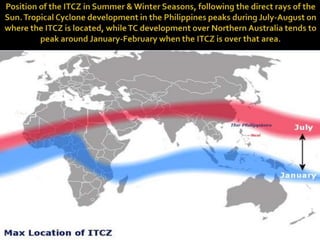
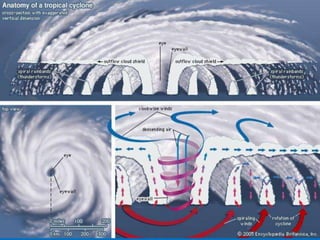
The warm ocean
water heats up the air
above it.The warm
air then rises.The
rising water results in
a low pressure area.
Air in the
surroundings will
then move toward
the area.
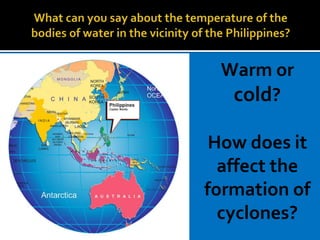
Warm or
cold?
How does it
affect the
formation of
cyclones?
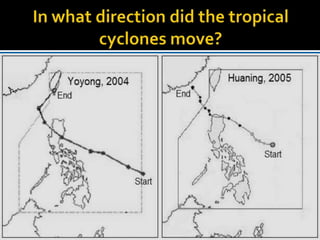
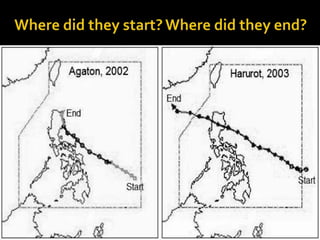
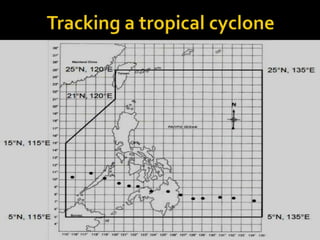
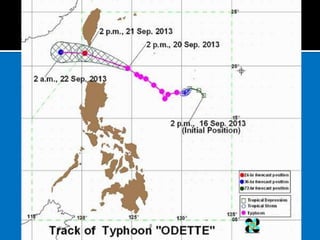
Over the Philippine
Sea,Tropical Cyclones tend
to move on a general west-
northwest (WNW) direction
with an average speed of
19-20 km/hr.
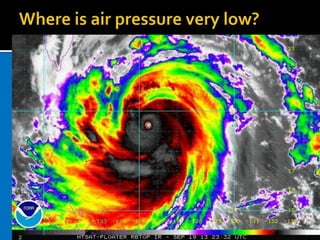
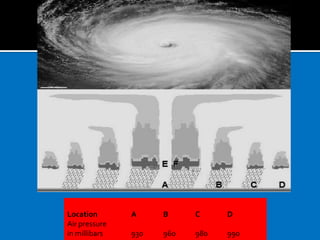
Location A B C D
Air pressure
in millibars 930 960 980 990
Location E F
Wind speed (km/hour) 10 200
Understanding typhoons

Understanding typhoons

  • 3.
    According to thePhilippine Atmospheric, Geophysical, and Astronomical Services Administration (PAGASA), about 20 tropical cyclones hit the PAR each year.
  • 5.
    CATEGORY MAXIMUM WINDSPEED KILOMETERS PER HOUR (kph) Tropical Depression 64 kph Tropical Storm 118 kph Typhoon 200 Supertyphoon Greater than 200
  • 7.
    1.Where did thetropical cyclones form? On land or in the ocean?
  • 8.
    The warm ocean waterheats up the air above it.The warm air then rises.The rising water results in a low pressure area. Air in the surroundings will then move toward the area.
  • 9.
    Warm or cold? How doesit affect the formation of cyclones?
  • 14.
    Over the Philippine Sea,TropicalCyclones tend to move on a general west- northwest (WNW) direction with an average speed of 19-20 km/hr.
  • 20.
    Location A BC D Air pressure in millibars 930 960 980 990
  • 21.
    Location E F Windspeed (km/hour) 10 200