Understanding by Design NESD Model for Curriculum Implementation Presented by DI Team March, 2009
What is Understanding by Design (UbD)? Unit-planning process Created by Grant Wiggins and Jay McTighe Known as “backwards design” Begins with the end in mind Beginning stages of UbD
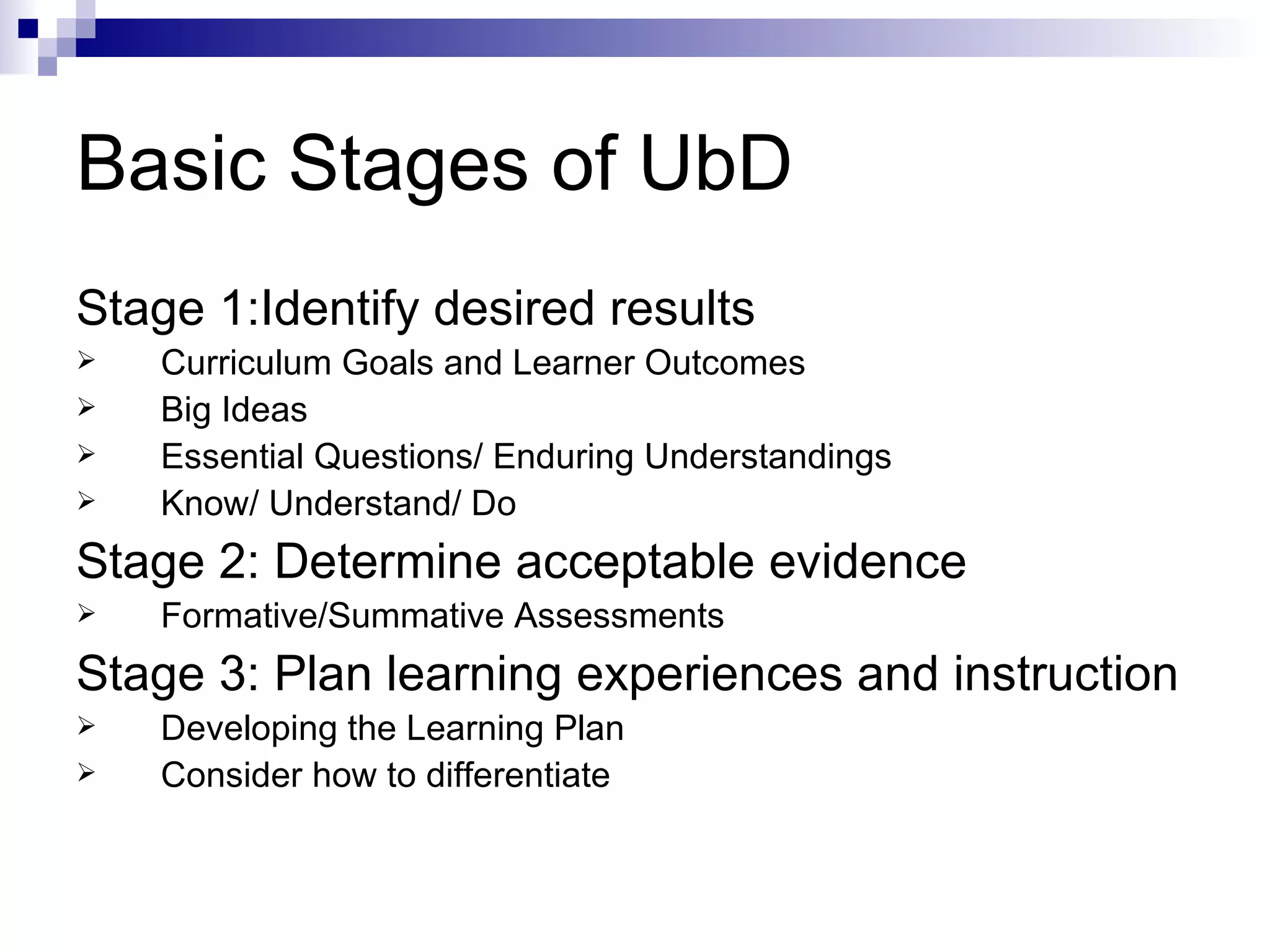
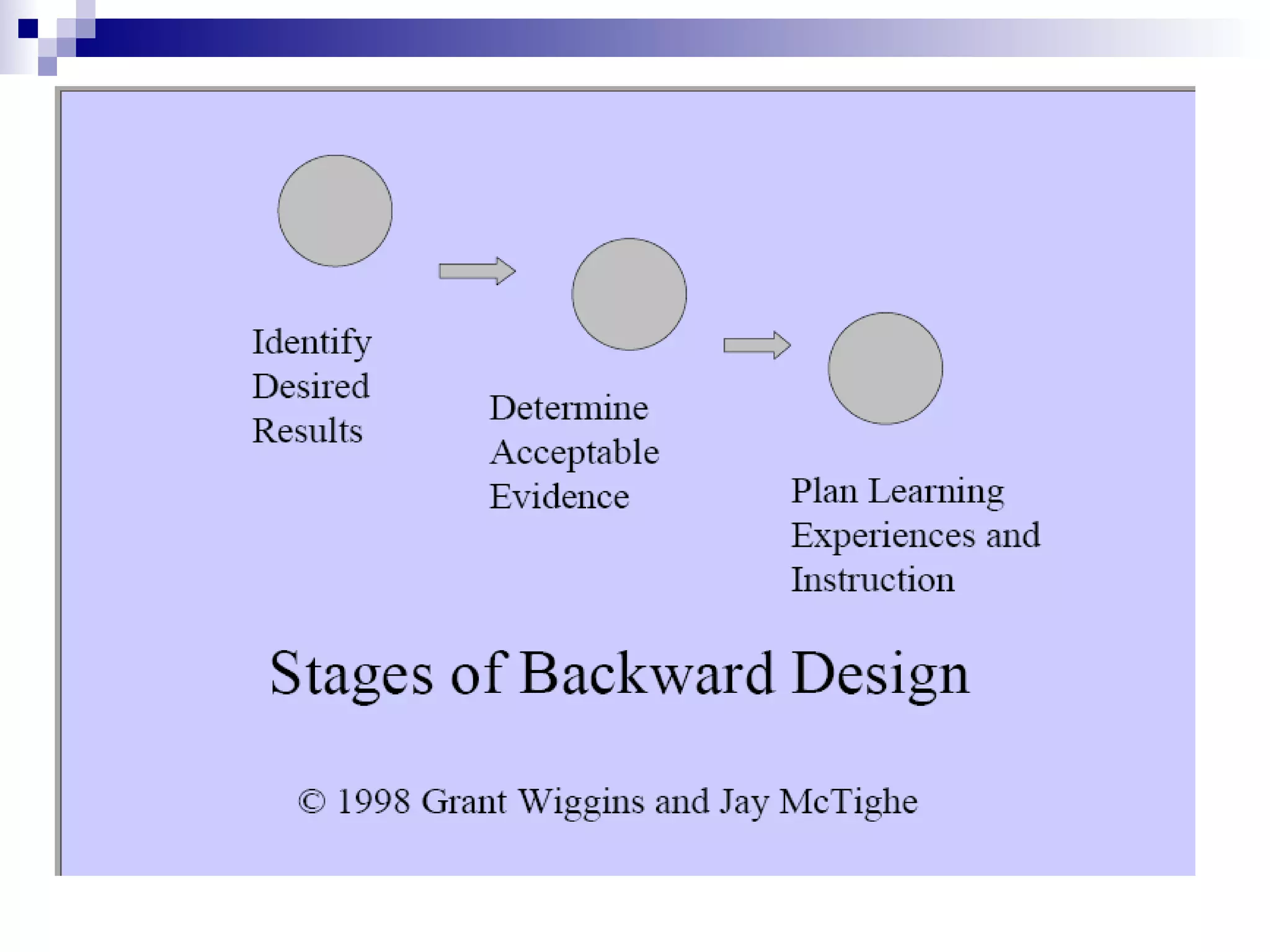
Basic Stages of UbD Stage 1:Identify desired results Curriculum Goals and Learner Outcomes Big Ideas Essential Questions/ Enduring Understandings Know/ Understand/ Do Stage 2: Determine acceptable evidence Formative/Summative Assessments Stage 3: Plan learning experiences and instruction Developing the Learning Plan Consider how to differentiate
Stages of Backward Design
Curriculum Actualization UbD requires teachers to examine curriculum to align the learning plan/assessment with provincial expectations UbD leads students and teachers to higher level of thinking and inquiry Links assessment directly to learning outcomes
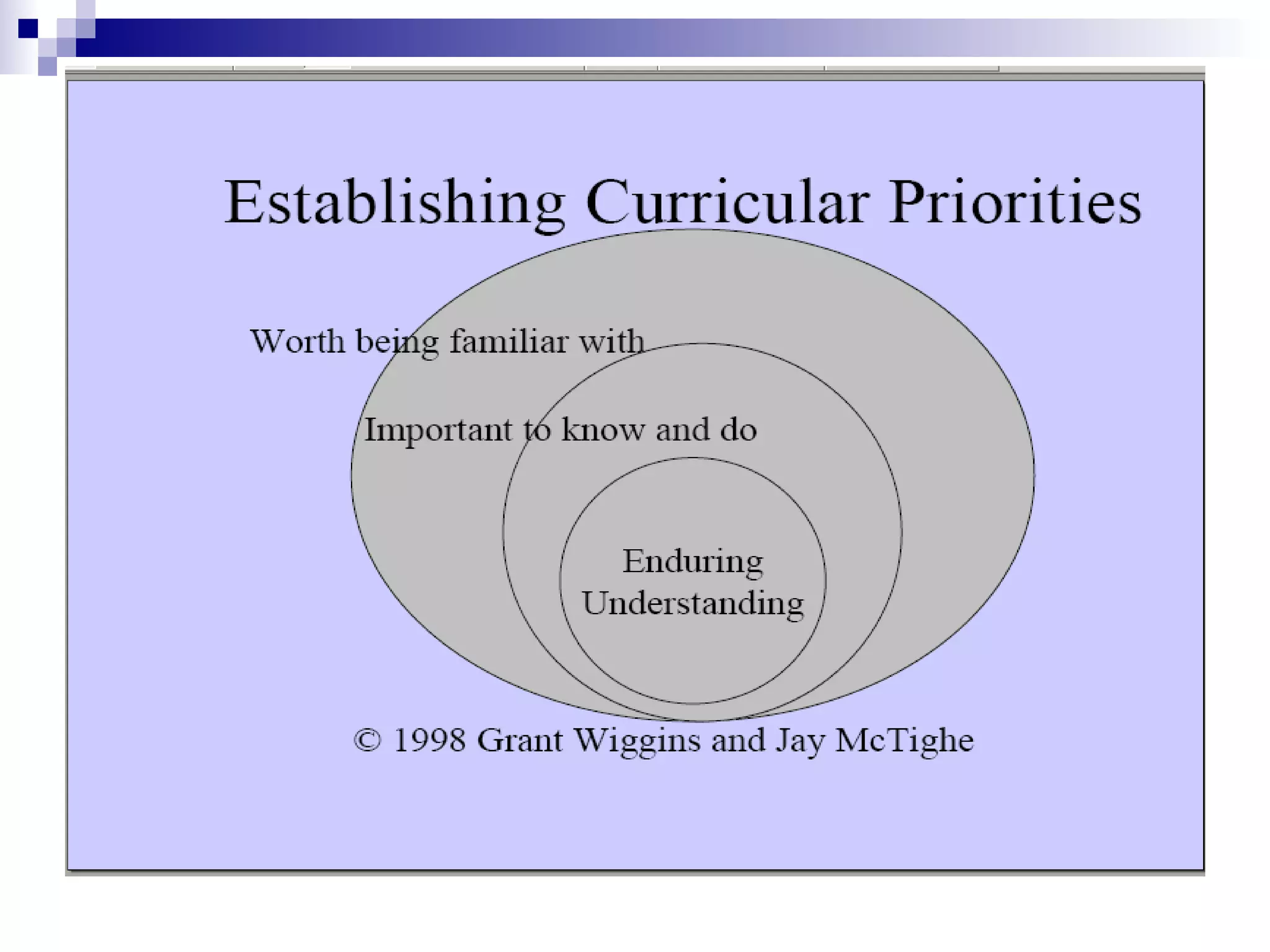
Establishing Curricular Priorities
Meeting the Learner Needs Invites us to attend to the child Allows for scaffolding for students Clarifies outcomes that all children are expected to learn Clarifies what students need to understand, know, do
The How-to’s of UbD Categories within the process are most important Many entry points UbD takes time to do well Units are often revised as teachers reflect on effectiveness  Process may guided by organizer use
Big Ideas Invite higher levels of thinking Requires uncovering throughout the unit Transfers across grades or subject areas ‘ A big idea is a way of usefully seeing connections, not just another piece of knowledge…..it is more like a theme than the facts of a story.’ (Grant Wiggins, 2007)
Essential Questions/Enduring Understandings Stimulates thought, provokes inquiry, and generates questions Interdisciplinary – invites you to transfer and apply learning Links to curriculum
‘ They require new thought rather than the mere collection of facts, second-hand opinions, or “cut-and-paste” thinking…many of us believe that schools should devote more time to essential questions and less time to Trivial Pursuit.’  (Jamie McKenzie, 2008)

Understanding By Design Mar.12

  • 1.
    Understanding by DesignNESD Model for Curriculum Implementation Presented by DI Team March, 2009
  • 2.
    What is Understandingby Design (UbD)? Unit-planning process Created by Grant Wiggins and Jay McTighe Known as “backwards design” Begins with the end in mind Beginning stages of UbD
  • 3.
    Basic Stages ofUbD Stage 1:Identify desired results Curriculum Goals and Learner Outcomes Big Ideas Essential Questions/ Enduring Understandings Know/ Understand/ Do Stage 2: Determine acceptable evidence Formative/Summative Assessments Stage 3: Plan learning experiences and instruction Developing the Learning Plan Consider how to differentiate
  • 4.
  • 5.
    Curriculum Actualization UbDrequires teachers to examine curriculum to align the learning plan/assessment with provincial expectations UbD leads students and teachers to higher level of thinking and inquiry Links assessment directly to learning outcomes
  • 6.
  • 7.
    Meeting the LearnerNeeds Invites us to attend to the child Allows for scaffolding for students Clarifies outcomes that all children are expected to learn Clarifies what students need to understand, know, do
  • 8.
    The How-to’s ofUbD Categories within the process are most important Many entry points UbD takes time to do well Units are often revised as teachers reflect on effectiveness Process may guided by organizer use
  • 9.
    Big Ideas Invitehigher levels of thinking Requires uncovering throughout the unit Transfers across grades or subject areas ‘ A big idea is a way of usefully seeing connections, not just another piece of knowledge…..it is more like a theme than the facts of a story.’ (Grant Wiggins, 2007)
  • 10.
    Essential Questions/Enduring UnderstandingsStimulates thought, provokes inquiry, and generates questions Interdisciplinary – invites you to transfer and apply learning Links to curriculum
  • 11.
    ‘ They requirenew thought rather than the mere collection of facts, second-hand opinions, or “cut-and-paste” thinking…many of us believe that schools should devote more time to essential questions and less time to Trivial Pursuit.’ (Jamie McKenzie, 2008)

Editor's Notes

  • #2 Shelley Pierlot Purpose: define Understanding by Design for you, why is it important to use this specific process, explain two components: big ideas, essential questions. Also, examine video example of a school division implementing UbD to implement curricula. Questions? Please feel free to use stickies for the Parking Lot