UltrasoundContrast
Agents
 Guided by –Dr Anupama Tandon
Department of Radio-Diagnosis
UCMS &GTB Hospital Delhi
Presented by – Satyam Varma.
MSc.R&MIT
UCMS &GTBH Delhi
Ultrasound Contrast agent(UCAs)
 UCAs are microbubbles of gas with a protein, lipid or
polymer shell.
 They are blood pool agents and remain confined to the
intravascular space after intravenous injection as
 they are unable to pass through the vascular
endothelium.
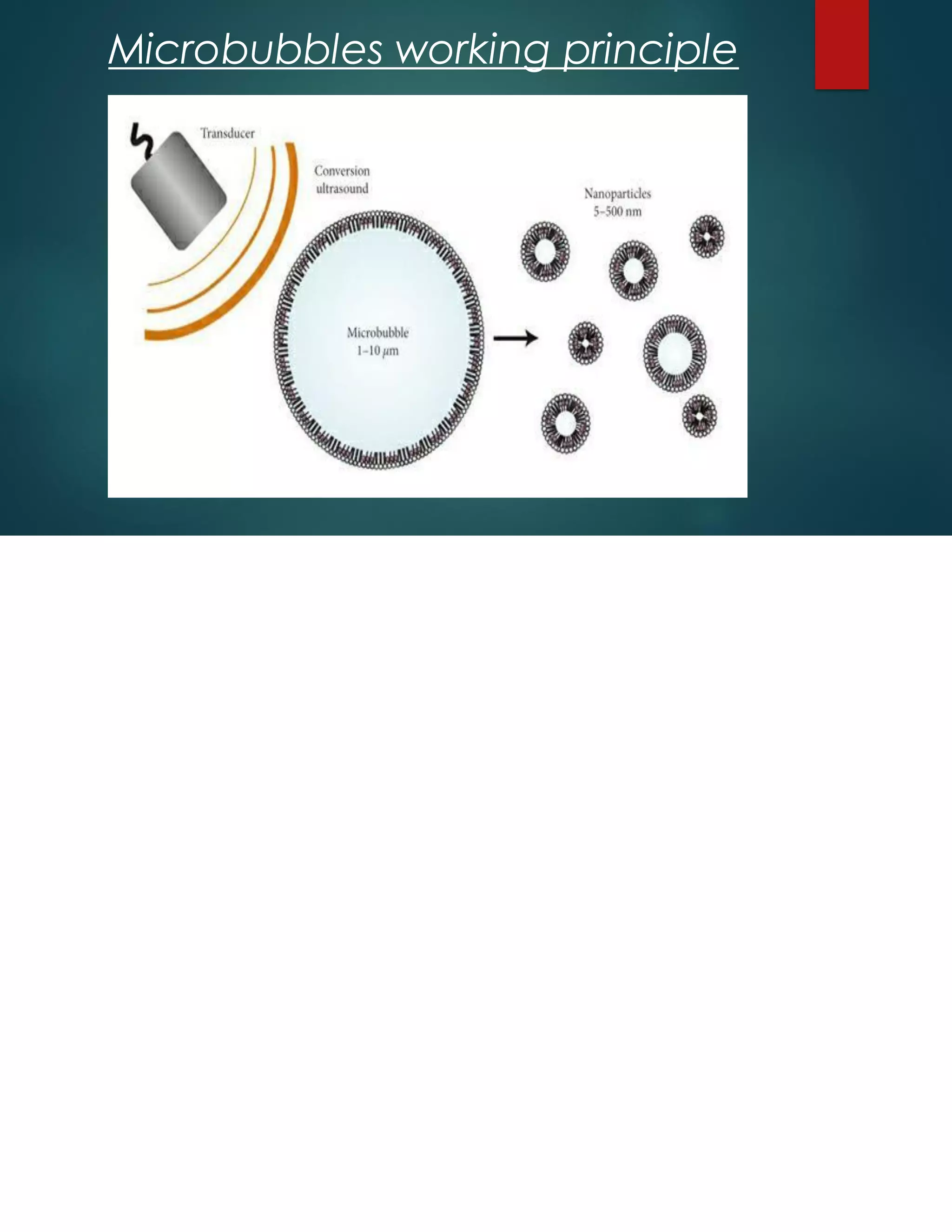
 Small microbubbles (1-10 um) can pass through the lung
capillaries and remain in circulation for a short time and
eventually get dissolved.
 The gas gets exhaled while the shell gets metabolized in
the liver
Ideal Qualities of Ultrasound Contrast Agents
▪ High echogenicity.
▪ Low attenuation
▪ Low blood solubility
▪ Low diffusivity
▪ Ability to pass through pulmonary capillary bed
▪ Lack of biological effects with repeated doses.
▪ Current generation of microbubbles have a diameter
from 1 –5mm
▪ The success of agents depends on the small size andon
the stability of their shell.
Working Principle -
❑ U.S. echo enhancers consist of microscopic gas filled bubbles whose surfaces
reflect sound waves.
❑ These bubbles are smaller than red blood cells, at less than 8 microns in size.
❑ The backscattering effect they create due to the different impedances of
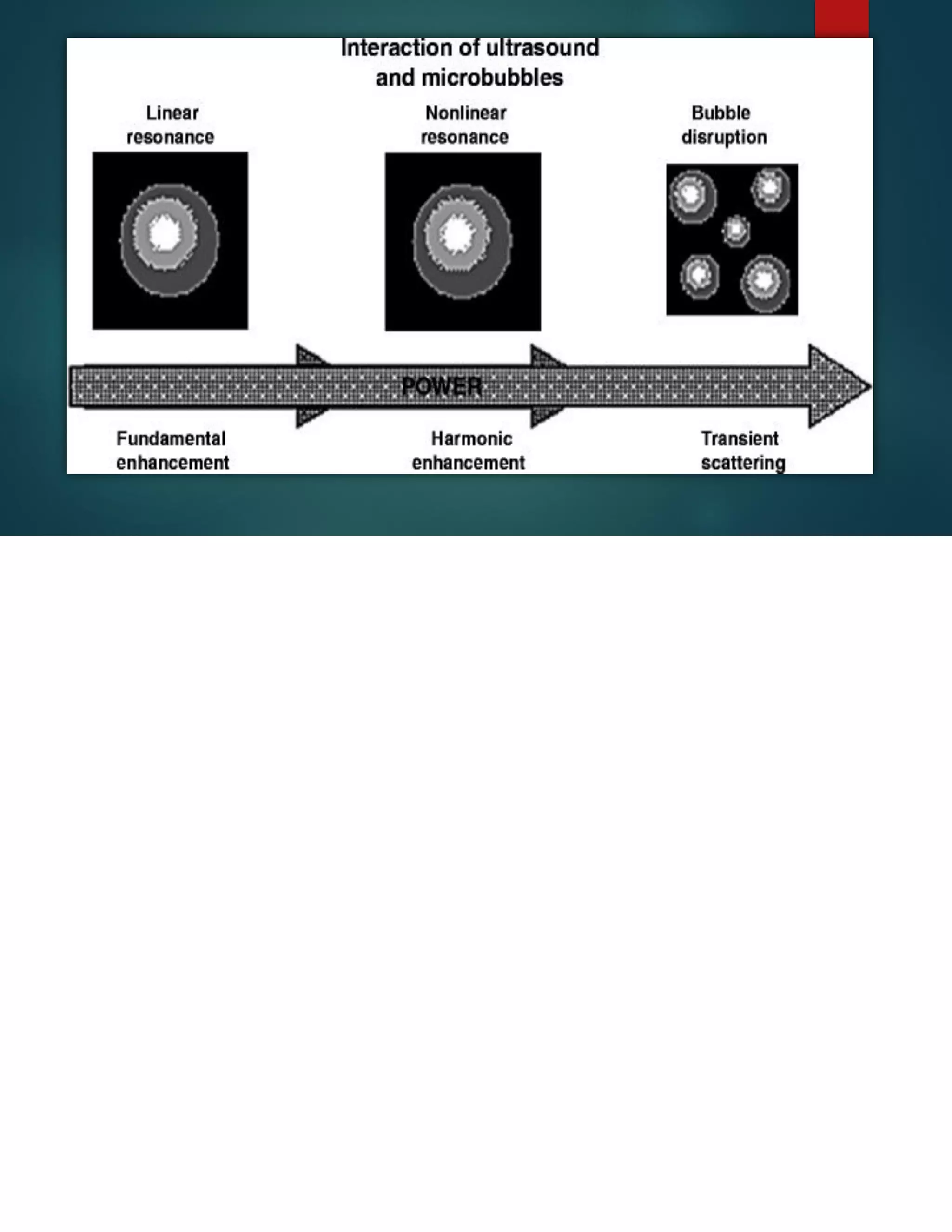
gas and liquid increases the echogenicity of blood. The main mechanism for
signal enhancement are backscattering, bubble resonance, and bubble
rupture .
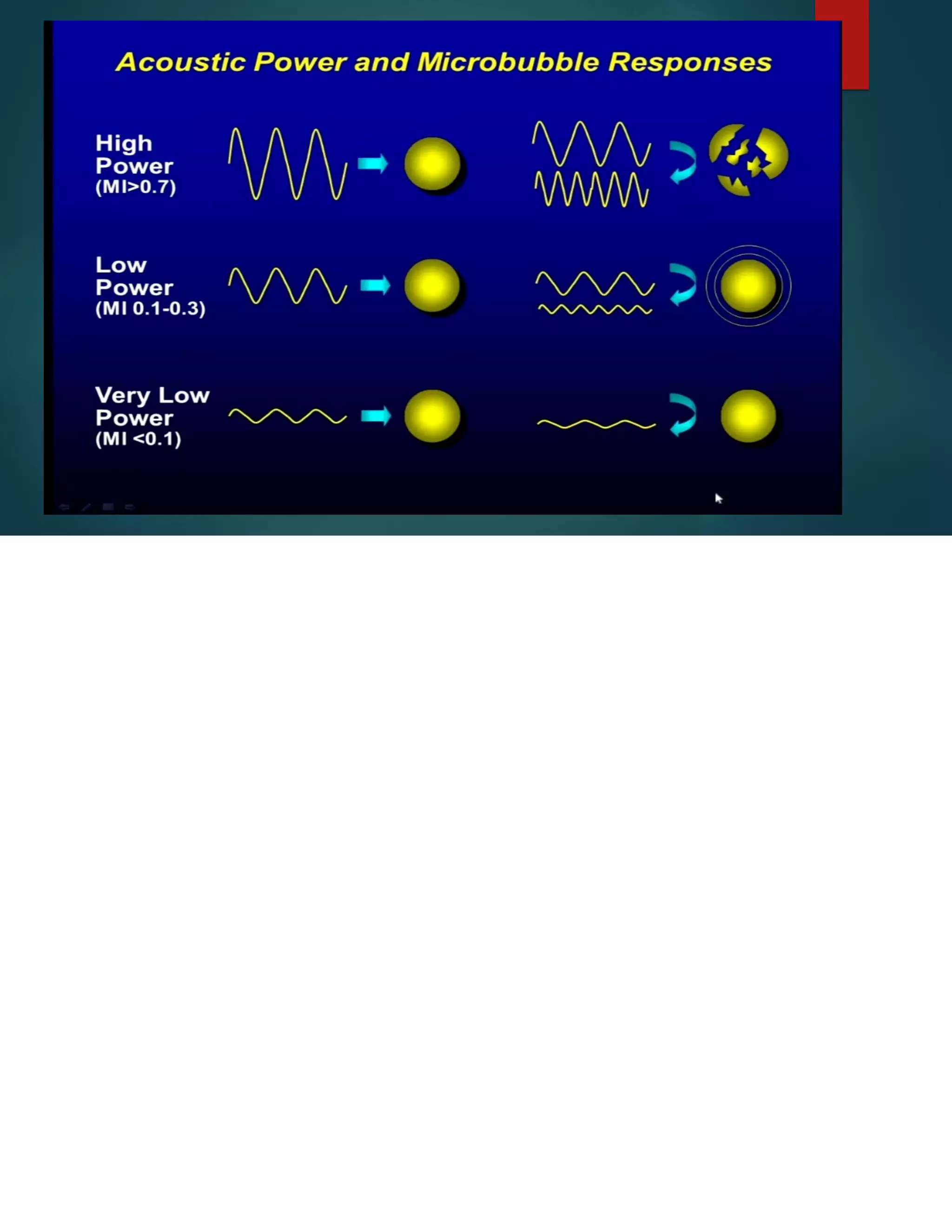
❑ that is highly dependent on the acoustic power of the transmitted ultrasound
also known as MECHANICAL INDEX.
Microbubbles working principle
Generations of Echo Enhancers
 First-came into existence in the late 1960s.
 These comprised of soluble gas and thus had a short life.
 Unstabilised bubbles in indocyanine green (can't survive
 pulmonary passage, therefore used only for cardiac and
large veins studies).
 Echovist –
▪ first commercially available UCA, was introduced.
▪ made of air bubbles coated with galactose
▪ Very short life in the blood
▪ minimal transpulmonary circulation limiting its
clinical utility.
▪ Used –evaluation of the cardiac shunt and the
female genital tract.
Albunex 1994-
▪ first FDA approved contrast agent used clinically.
▪ composed of air filled albumin microspheres suspended in 5 %
w/v human albumin solution.
▪ mean size of approximately 3.5 µm.
▪ Used- predominantly for the evaluation of cardiac shunts and
valvular regurgitation
▪ limited -extra-cardiac applications
❑ Levovist 1996-
▪ It contained air bubbles with a galactose/ palmitic acid
surfactant coating (Schering)
▪ Main indications for use were cardiac, intracranial and
abdominal.
▪ Levovist bubbles easily collapsed under ultrasound
emission owing to its fragile properties
▪ Therefore real time images could not be obtained for a
longer period.
Second generation UCAs
 contain insoluble gases like sulphur hexafluoride
(SF6) or perfluorocarbons and have a surface shell
made of different substances like phospholipids,
albumin or polymers providing better stabilization.
 Their smaller size enables a successful
transpulmonary passage to reach the various
target organs.
 After i.v injection, due to their low solubility in
water, better stabilization and strong harmonic
response,
 prolonged visualization of dynamic
enhancement of the organ can be observed on
real-time ultrasound scanning
❑ Optison (GE Healthcare)-1998 and Luminity-2006
▪ made- of octafluoropropane coated with albumin and lipid
shell
▪ The octafluoropropane gas has low water solubility.
▪ more stable providing longer imaging period.
▪ However, their sole indication for use has been cardiac
imaging.
❑ SonoVue 2001-
▪ which contains sulphur hexafluoride (SF6) stabilized by phospholipid shell.
▪ The second generation UCAs are pure blood pool agents
▪ These pharmacokinetics are different from the contrast used in CT and MRI
which is rapidly cleared from the blood into the extracellular space.
▪ ideal ultrasound contrast agent for vascular phase imaging of different target
organs and is being used widely with promising results.
▪ SonoVue is the only contrast agent available in India.
SonoVue:-
Tissue specific ultrasound contrast agents
Tissue specific ultrasound contrast agents Improves the
assessment of certain organs like liver, kidney, pancreas,
prostate, and ovary by improving the acoustic differences
between normal & abnormal portions of organs.
• Levovist
• Sonovist [Schering]
• Sonozoid [Nycomed-Amersham
Vascular Ultrasound Contrast Agent:
▪ These are gas microbubbles with a diameter less than 5 to 10
mm to pass through lung capillaries and into the systemic
circulation.
▪ These are most likely to be used in imaging of malignant
tumours in liver, kidney, ovary, pancreas & prostate.
▪ It is also used in cardiac evaluation.
▪ Example:-Albunex & infosan.
TECHNIQUE OF CEUS
❑ Recommended dose –
▪ For intravenous use, the usual recommended dose of SonoVue is
2.4 ml.
• A higher dose is used for endoscopic contrast enhanced
ultrasond (CEEUS) and when using high frequency transducers.
• For renal and pancreatic evaluation a low dose of 1.0 ml is used.
• For extravascular use, a few drops of SonoVue in 10 to 100 ml of
saline may be sufficient.
Post procedure, the patient is observed for about an hour for any adverse reaction if any due to
the UCA.
The observation is recorded on the cine mode.
The enhancement characteristics of the target organ is observed on real time by continuously
scanning till the three vascular phases post injection.
The freshly prepared Sonovue is administered as an i.v bolus followed by flushing with 10 ml of
0.9 % normal saline.
Which ensures the target lesion remains in the field of view throughout the study.
A simultaneous display of the tissue and contrast signals can be seen on the monitor as a dual
window
Keeping the lesion in focus the contrast-specific imaging mode
The target organ is visualized on the B mode US
SonoVue is prepared in the soluble form 5 minutes prior.
DIAGNOSTIC APPLICATIONS OF UCAs
❑ Hepatic Imaging
▪ Detection of Focal Liver Lisions (FLL) –CEUS is a useful modality for
the characterization of FLL and can safely be considered as the first
imaging modality for this purpose.
▪ differentiating benign from malignant nodules -It has a high
sensitivity of 98 % and an accuracy of 93 % .
▪ Focal nodular hyperplasia (FNH)
▪ Hepatocellular adenoma (HA)
▪ Liver abscess
▪ Liver cyste
▪ Hepatocellular carcinoma (HCC)
Hemangiomais the most common benign livertumor with a prevalence of 1 to
20 %. CEUS has a sensitivity of 95 % and specificity of 98 % in diagnosing
hemangioma.
❑ Renal Imaging-
▪ The main role of CEUS in renal lesions include the evaluation of a focal
renal lesion
▪ differentiating a renal tumor from a pseudotumor,
▪ the evaluation of renal vascular lesions.
▪ Other applications include guidance to radiofrequency ablation of renal
tumors.
❑ Pancreatic Imaging-
▪ Detection of Focal Pancreatic Lesions
▪ Detection of Pancreatic Necrosis in Acute Pancreatitis
❑ Prostatic Imaging-
▪ Prostatic adenocarcinoma is detection of these micro-vessels is beyond
the resolution of Doppler US.
▪ UCAs can increase the sensitivity of Doppler sonography.
❑ NEWER APPLICATIONS
▪ HSG contrast sonography for evaluation of fallopian tube
patency -ECHOVIST
▪ Reflux sonography as an alternative to MCU, detect or
excludes VUR (Vesicoureteric reflex)- LEVOVIST
cardio-
pulmonary
disease,
use prior to
extra-corporeal
shock wave
therapy,
pregnancy,
breastfeeding
severe
coronary artery
disease.
Cautious use is
recommended
in neonates
SAFETY OF UCAs
▪ UCAs are well tolerated and are safe with few non-specific side effects.
▪ The clearance of UCA is very fast and 80 to 90 % of it gets eliminated
through the lungs in 11 minutes
▪ Life threatening anaphylactoid complications are very rare (0.001%).
▪ Its use in echocardiography, some fatal incidents have been reported
in very ill patients .
▪ The use of UCAs mandate precautionary measures to be ready despite
low incidence of side-effects.
▪ Unlike other contrast agents used for CT or MRI, the UCAs are not
nephrotoxic as they have no renal excretion.
▪ CEUS can be safely done in patients with compromised renal function.
CEUS ADVANTAGES
❑ Many advantages over CT/MRI :
▪ It is a simple procedure which is easily available.
▪ Requires few minutes to perform.
▪ It is free from ionizing radiation and can be safely used for repeated
follow-up.
▪ No laboratory investigations for assessment of renal function are
required prior to the study
▪ The UCAs are not nephrotoxic.
▪ The CEUS machine with the contrast specific modes can be carried
anywhere in the hospital for performing bedside procedures on
immobile patients
Thanks for attention

Ultrasound Contrast agent .ppt

  • 1.
    UltrasoundContrast Agents  Guided by–Dr Anupama Tandon Department of Radio-Diagnosis UCMS &GTB Hospital Delhi Presented by – Satyam Varma. MSc.R&MIT UCMS &GTBH Delhi
  • 2.
    Ultrasound Contrast agent(UCAs) UCAs are microbubbles of gas with a protein, lipid or polymer shell.  They are blood pool agents and remain confined to the intravascular space after intravenous injection as  they are unable to pass through the vascular endothelium.  Small microbubbles (1-10 um) can pass through the lung capillaries and remain in circulation for a short time and eventually get dissolved.  The gas gets exhaled while the shell gets metabolized in the liver
  • 4.
    Ideal Qualities ofUltrasound Contrast Agents ▪ High echogenicity. ▪ Low attenuation ▪ Low blood solubility ▪ Low diffusivity ▪ Ability to pass through pulmonary capillary bed ▪ Lack of biological effects with repeated doses. ▪ Current generation of microbubbles have a diameter from 1 –5mm ▪ The success of agents depends on the small size andon the stability of their shell.
  • 5.
    Working Principle - ❑U.S. echo enhancers consist of microscopic gas filled bubbles whose surfaces reflect sound waves. ❑ These bubbles are smaller than red blood cells, at less than 8 microns in size. ❑ The backscattering effect they create due to the different impedances of gas and liquid increases the echogenicity of blood. The main mechanism for signal enhancement are backscattering, bubble resonance, and bubble rupture . ❑ that is highly dependent on the acoustic power of the transmitted ultrasound also known as MECHANICAL INDEX.
  • 9.
  • 10.
    Generations of EchoEnhancers  First-came into existence in the late 1960s.  These comprised of soluble gas and thus had a short life.  Unstabilised bubbles in indocyanine green (can't survive  pulmonary passage, therefore used only for cardiac and large veins studies).
  • 11.
     Echovist – ▪first commercially available UCA, was introduced. ▪ made of air bubbles coated with galactose ▪ Very short life in the blood ▪ minimal transpulmonary circulation limiting its clinical utility. ▪ Used –evaluation of the cardiac shunt and the female genital tract.
  • 12.
    Albunex 1994- ▪ firstFDA approved contrast agent used clinically. ▪ composed of air filled albumin microspheres suspended in 5 % w/v human albumin solution. ▪ mean size of approximately 3.5 µm. ▪ Used- predominantly for the evaluation of cardiac shunts and valvular regurgitation ▪ limited -extra-cardiac applications
  • 13.
    ❑ Levovist 1996- ▪It contained air bubbles with a galactose/ palmitic acid surfactant coating (Schering) ▪ Main indications for use were cardiac, intracranial and abdominal. ▪ Levovist bubbles easily collapsed under ultrasound emission owing to its fragile properties ▪ Therefore real time images could not be obtained for a longer period.
  • 14.
    Second generation UCAs contain insoluble gases like sulphur hexafluoride (SF6) or perfluorocarbons and have a surface shell made of different substances like phospholipids, albumin or polymers providing better stabilization.  Their smaller size enables a successful transpulmonary passage to reach the various target organs.  After i.v injection, due to their low solubility in water, better stabilization and strong harmonic response,  prolonged visualization of dynamic enhancement of the organ can be observed on real-time ultrasound scanning
  • 16.
    ❑ Optison (GEHealthcare)-1998 and Luminity-2006 ▪ made- of octafluoropropane coated with albumin and lipid shell ▪ The octafluoropropane gas has low water solubility. ▪ more stable providing longer imaging period. ▪ However, their sole indication for use has been cardiac imaging.
  • 17.
    ❑ SonoVue 2001- ▪which contains sulphur hexafluoride (SF6) stabilized by phospholipid shell. ▪ The second generation UCAs are pure blood pool agents ▪ These pharmacokinetics are different from the contrast used in CT and MRI which is rapidly cleared from the blood into the extracellular space. ▪ ideal ultrasound contrast agent for vascular phase imaging of different target organs and is being used widely with promising results. ▪ SonoVue is the only contrast agent available in India.
  • 18.
  • 19.
    Tissue specific ultrasoundcontrast agents Tissue specific ultrasound contrast agents Improves the assessment of certain organs like liver, kidney, pancreas, prostate, and ovary by improving the acoustic differences between normal & abnormal portions of organs. • Levovist • Sonovist [Schering] • Sonozoid [Nycomed-Amersham
  • 20.
    Vascular Ultrasound ContrastAgent: ▪ These are gas microbubbles with a diameter less than 5 to 10 mm to pass through lung capillaries and into the systemic circulation. ▪ These are most likely to be used in imaging of malignant tumours in liver, kidney, ovary, pancreas & prostate. ▪ It is also used in cardiac evaluation. ▪ Example:-Albunex & infosan.
  • 21.
    TECHNIQUE OF CEUS ❑Recommended dose – ▪ For intravenous use, the usual recommended dose of SonoVue is 2.4 ml. • A higher dose is used for endoscopic contrast enhanced ultrasond (CEEUS) and when using high frequency transducers. • For renal and pancreatic evaluation a low dose of 1.0 ml is used. • For extravascular use, a few drops of SonoVue in 10 to 100 ml of saline may be sufficient.
  • 22.
    Post procedure, thepatient is observed for about an hour for any adverse reaction if any due to the UCA. The observation is recorded on the cine mode. The enhancement characteristics of the target organ is observed on real time by continuously scanning till the three vascular phases post injection. The freshly prepared Sonovue is administered as an i.v bolus followed by flushing with 10 ml of 0.9 % normal saline. Which ensures the target lesion remains in the field of view throughout the study. A simultaneous display of the tissue and contrast signals can be seen on the monitor as a dual window Keeping the lesion in focus the contrast-specific imaging mode The target organ is visualized on the B mode US SonoVue is prepared in the soluble form 5 minutes prior.
  • 23.
    DIAGNOSTIC APPLICATIONS OFUCAs ❑ Hepatic Imaging ▪ Detection of Focal Liver Lisions (FLL) –CEUS is a useful modality for the characterization of FLL and can safely be considered as the first imaging modality for this purpose. ▪ differentiating benign from malignant nodules -It has a high sensitivity of 98 % and an accuracy of 93 % . ▪ Focal nodular hyperplasia (FNH) ▪ Hepatocellular adenoma (HA) ▪ Liver abscess ▪ Liver cyste ▪ Hepatocellular carcinoma (HCC)
  • 24.
    Hemangiomais the mostcommon benign livertumor with a prevalence of 1 to 20 %. CEUS has a sensitivity of 95 % and specificity of 98 % in diagnosing hemangioma.
  • 25.
    ❑ Renal Imaging- ▪The main role of CEUS in renal lesions include the evaluation of a focal renal lesion ▪ differentiating a renal tumor from a pseudotumor, ▪ the evaluation of renal vascular lesions. ▪ Other applications include guidance to radiofrequency ablation of renal tumors. ❑ Pancreatic Imaging- ▪ Detection of Focal Pancreatic Lesions ▪ Detection of Pancreatic Necrosis in Acute Pancreatitis ❑ Prostatic Imaging- ▪ Prostatic adenocarcinoma is detection of these micro-vessels is beyond the resolution of Doppler US. ▪ UCAs can increase the sensitivity of Doppler sonography.
  • 26.
    ❑ NEWER APPLICATIONS ▪HSG contrast sonography for evaluation of fallopian tube patency -ECHOVIST ▪ Reflux sonography as an alternative to MCU, detect or excludes VUR (Vesicoureteric reflex)- LEVOVIST
  • 27.
    cardio- pulmonary disease, use prior to extra-corporeal shockwave therapy, pregnancy, breastfeeding severe coronary artery disease. Cautious use is recommended in neonates
  • 28.
    SAFETY OF UCAs ▪UCAs are well tolerated and are safe with few non-specific side effects. ▪ The clearance of UCA is very fast and 80 to 90 % of it gets eliminated through the lungs in 11 minutes ▪ Life threatening anaphylactoid complications are very rare (0.001%). ▪ Its use in echocardiography, some fatal incidents have been reported in very ill patients . ▪ The use of UCAs mandate precautionary measures to be ready despite low incidence of side-effects. ▪ Unlike other contrast agents used for CT or MRI, the UCAs are not nephrotoxic as they have no renal excretion. ▪ CEUS can be safely done in patients with compromised renal function.
  • 29.
    CEUS ADVANTAGES ❑ Manyadvantages over CT/MRI : ▪ It is a simple procedure which is easily available. ▪ Requires few minutes to perform. ▪ It is free from ionizing radiation and can be safely used for repeated follow-up. ▪ No laboratory investigations for assessment of renal function are required prior to the study ▪ The UCAs are not nephrotoxic. ▪ The CEUS machine with the contrast specific modes can be carried anywhere in the hospital for performing bedside procedures on immobile patients
  • 31.