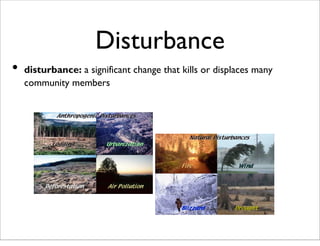
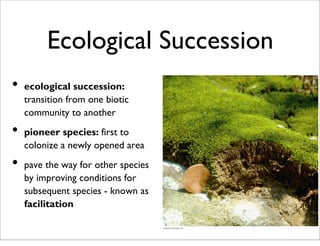
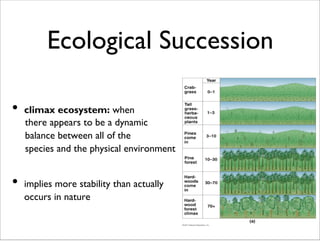
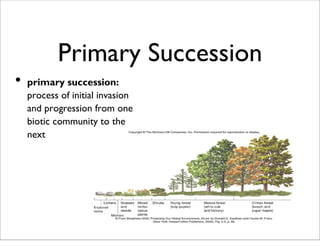
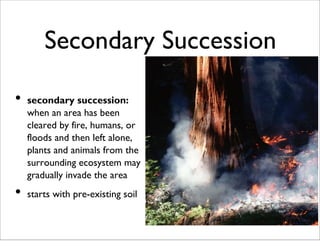
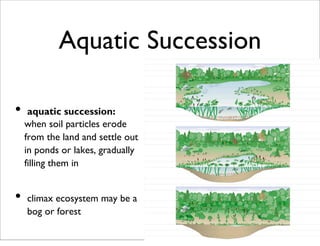
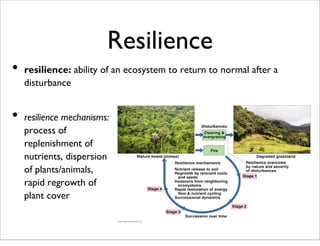
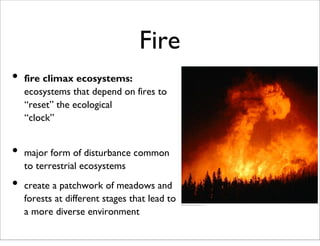
Ecological succession is the process by which the composition or structure of a biological community evolves over time. It is triggered by a disturbance which kills or displaces existing community members. Pioneer species are the first to colonize the disturbed area, improving conditions for subsequent species and facilitating further ecological succession. Over time, the community may progress to a relatively stable climax ecosystem, though disturbances ensure nature remains dynamic. Succession can occur through primary colonization of new areas or secondary regrowth after minor disturbances in previously inhabited areas. Aquatic succession involves sediment filling in bodies of water over time. Fire is a common disturbance supporting fire climax ecosystems through periodic resetting.