
Non-associative and Associative learning
Presented by –
Mamta Supyal
MSc 3rd Sem
Kumaun University
Contents-
 Introduction
 Non-associative learning
 Associative learning
 significance
 References
Introduction
 Learning is a specific change or modification in
behaviour involving the nervous system as a result of
experience with an external event or series of events in a
individuals life.
Non-associative learning
 It is a variety of learning in which the behavior and the
stimulus are not paired or linked together.
 It is of 2 types-
1. Habituation
2. Sensitization
 Habituation – The response to repeated (harmless)
stimulus decreases over time.
E.g. we don’t response to the noise outside our classroom
when we repeatedly hear it for long time.
2. Sensitization – The response to
repeatedly exposed stimulus increases over
time.
Associative learning
 It is defined as learning process in which a new response
becomes associate with a particular stimulus.
 It is of two types-
1) Classical conditioning
2) Trial and error learning
Classical conditioning
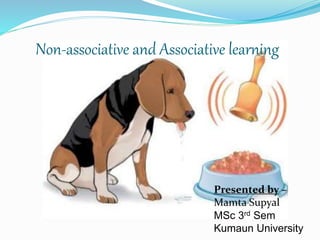
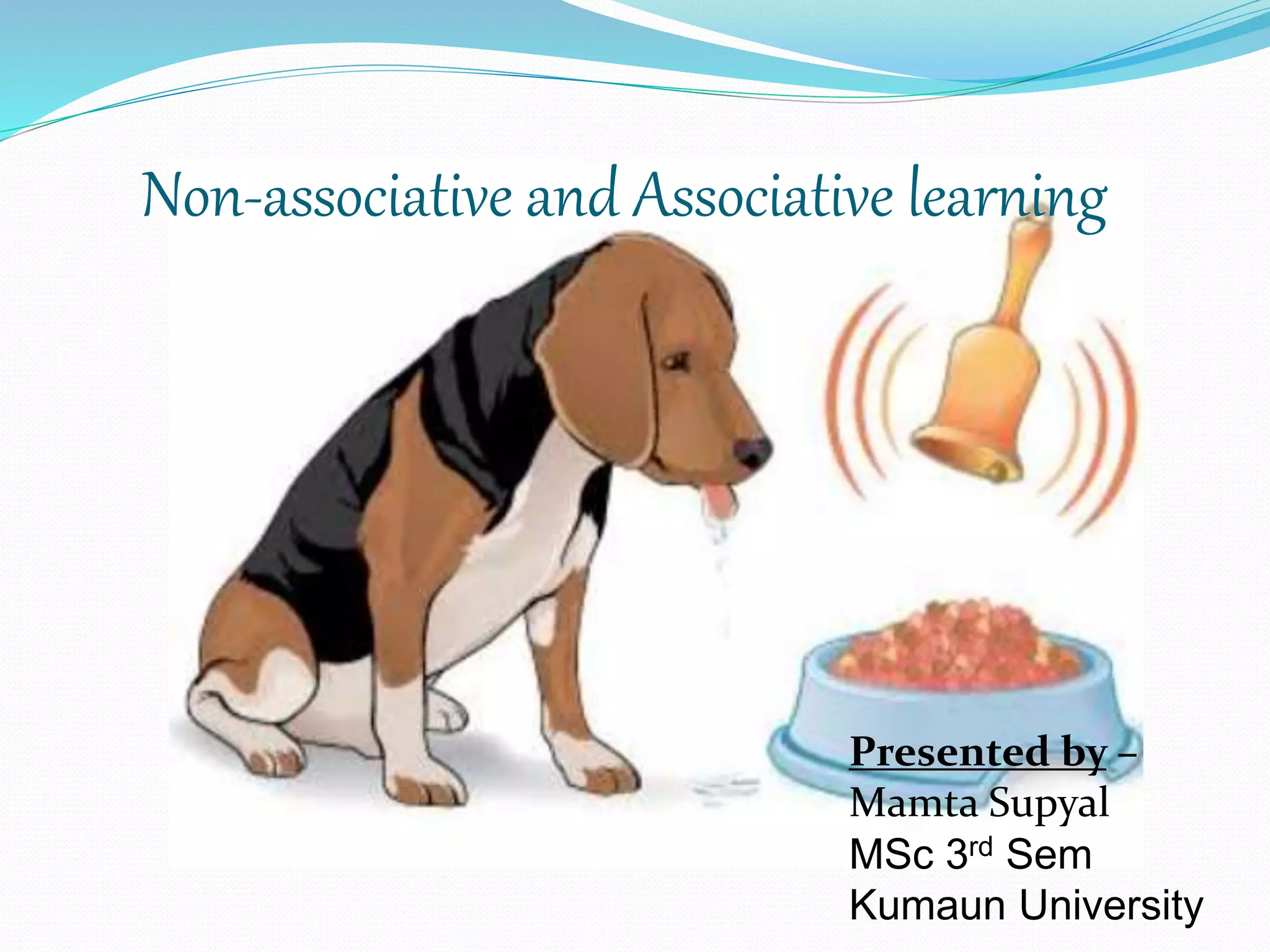
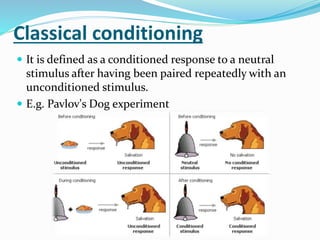
 It is defined as a conditioned response to a neutral
stimulus after having been paired repeatedly with an
unconditioned stimulus.
 E.g. Pavlov's Dog experiment
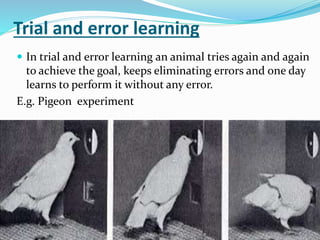
Trial and error learning
 In trial and error learning an animal tries again and again
to achieve the goal, keeps eliminating errors and one day
learns to perform it without any error.
E.g. Pigeon experiment
Significance of Non-associative and
associative learning
 It helps us to understand basic necessities of life, and
gives us a way of acquiring and mastering them.
 It helps to adapt to a new environment.
 It helps responds to dangers and react.
References
 Mathur Reena, Animal Behaviour
 www.khanacademy.org
Thank you

Non associative and associative learning

  • 1.
    Non-associative and Associativelearning Presented by – Mamta Supyal MSc 3rd Sem Kumaun University
  • 2.
    Contents-  Introduction  Non-associativelearning  Associative learning  significance  References
  • 3.
    Introduction  Learning isa specific change or modification in behaviour involving the nervous system as a result of experience with an external event or series of events in a individuals life.
  • 4.
    Non-associative learning  Itis a variety of learning in which the behavior and the stimulus are not paired or linked together.  It is of 2 types- 1. Habituation 2. Sensitization  Habituation – The response to repeated (harmless) stimulus decreases over time. E.g. we don’t response to the noise outside our classroom when we repeatedly hear it for long time.
  • 5.
    2. Sensitization –The response to repeatedly exposed stimulus increases over time.
  • 6.
    Associative learning  Itis defined as learning process in which a new response becomes associate with a particular stimulus.  It is of two types- 1) Classical conditioning 2) Trial and error learning
  • 7.
    Classical conditioning  Itis defined as a conditioned response to a neutral stimulus after having been paired repeatedly with an unconditioned stimulus.  E.g. Pavlov's Dog experiment
  • 8.
    Trial and errorlearning  In trial and error learning an animal tries again and again to achieve the goal, keeps eliminating errors and one day learns to perform it without any error. E.g. Pigeon experiment
  • 9.
    Significance of Non-associativeand associative learning  It helps us to understand basic necessities of life, and gives us a way of acquiring and mastering them.  It helps to adapt to a new environment.  It helps responds to dangers and react.
  • 10.
    References  Mathur Reena,Animal Behaviour  www.khanacademy.org
  • 11.